
Reviewed · GION DISTRICT TOURS
Gion Walking Tour, Geisha Show and Japanese Game in Kyoto
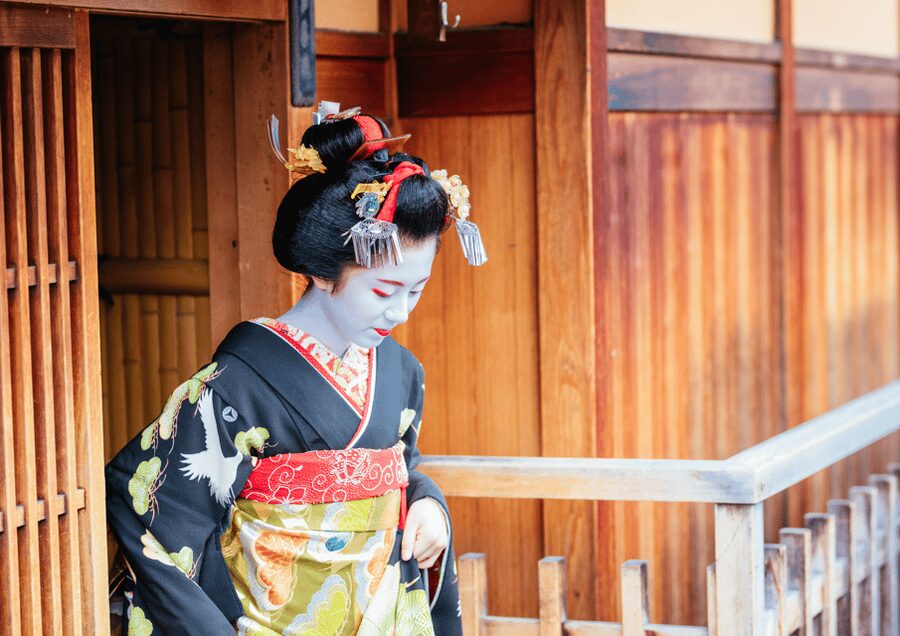
The heart of this Kyoto experience is a close-up meeting with a maiko, a geisha apprentice. You watch her perform a traditional dance, ask questions through your guide, and play a fan game together. It is a rare chance to see the person behind the makeup and costume, not just a fleeting glimpse on a Gion street.
I like the quiet walk through Gion’s smaller lanes, where guides such as Ai and Soichiro explain local customs alongside the area’s past. I also like the small group limit of six, which gives you room to ask questions and makes the tea, dance, and game feel personal. The main consideration is price: at $108 per person, this is not a quick sightseeing stop, and one past booking included stops at designated shops that may not suit everyone.
Key points to know before you book
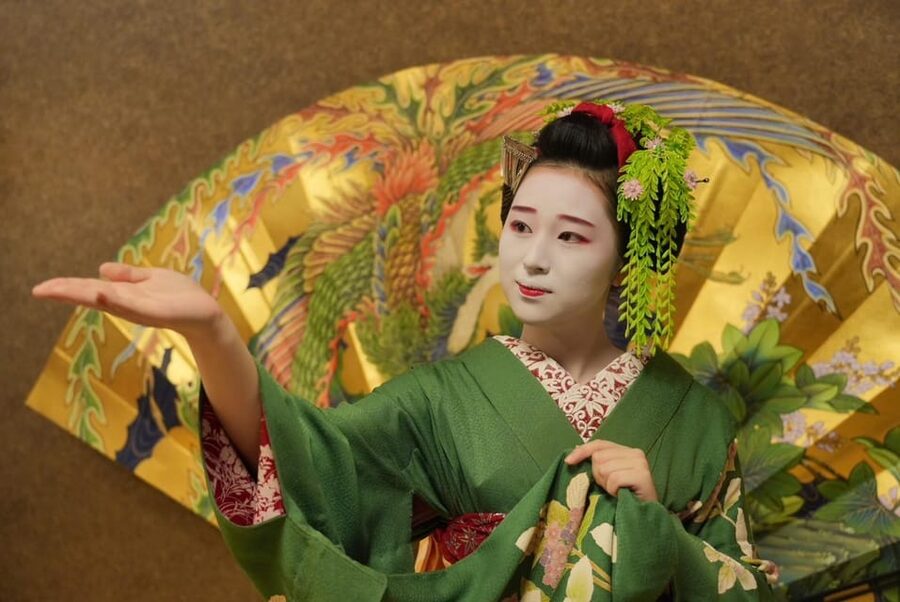
- A maiko performs a traditional dance: The second hour centers on a live performance in a small setting.
- You can ask direct questions: Your English-speaking guide interprets the conversation and helps explain the maiko and geiko traditions.
- The fan game is part of the visit: Each person has the chance to play a traditional Japanese game with the maiko.
- The group is limited to six: This is far more personal than a large cultural show.
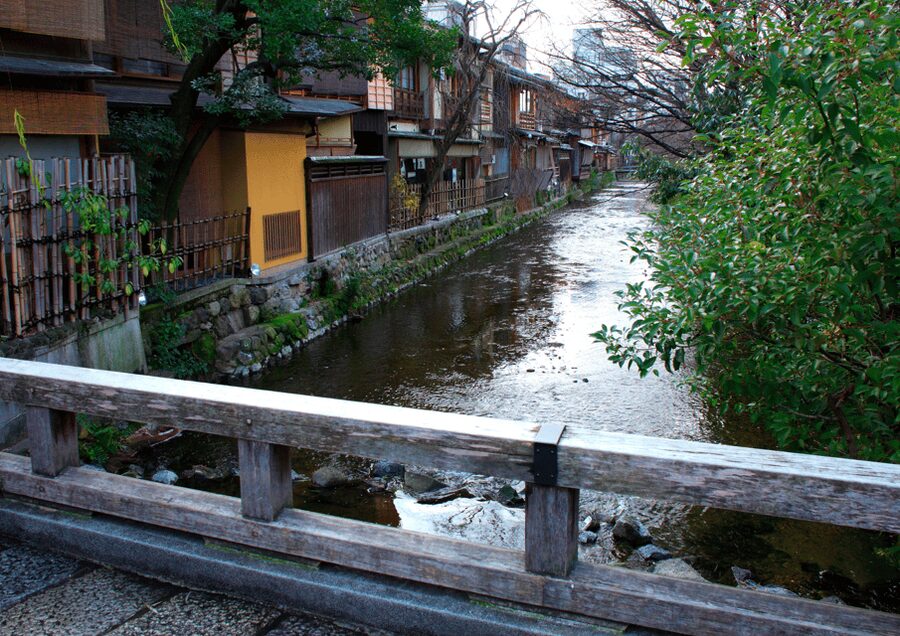
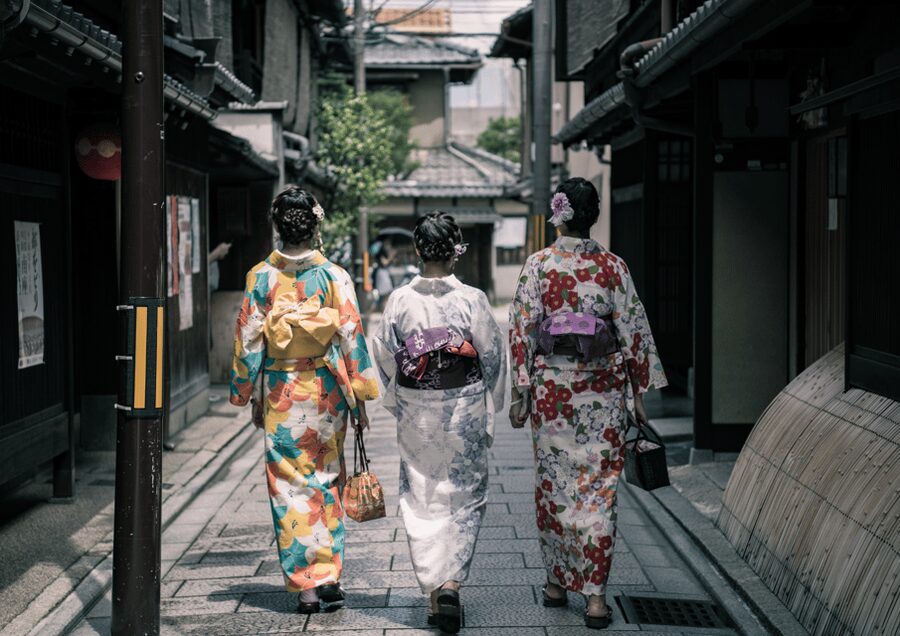
- Gion is explored beyond the main street: Guides take you through quieter lanes, a temple area, and local shops.
- Tea, a Japanese snack, and photos are included: The experience ends at Hangesho, with time for pictures and conversation.
Walking into Gion with a local guide
The tour begins at the Izumo-no-Okuni Statue, directly above Gion Shijo Station. Look for the guide holding a white board marked GuideMe Japan. This is a sensible meeting point because the station is easy to locate, and you are already at the edge of Kyoto’s best-known entertainment district.
The first hour is on foot. You do not simply follow the main road and take a few pictures. Guides have led groups down quieter lanes and toward temple areas, explaining how Gion developed and how maiko and geiko fit into Kyoto’s traditional arts.
That wider context matters. Without it, a maiko appearance can seem like a polished photo opportunity. The walking portion gives you a basic understanding of the district, its customs, and the difference between a maiko and a geiko. You also hear how traditional shops and crafts connect with daily life, rather than treating Gion as a stage set made only for visitors.
Ai, one of the guides praised for her warm manner, has pointed out places such as a shop that engraves names on chopsticks and a traditional candy shop. Those stops can help you see the area through a local lens. They are not merely souvenir shops. Your guide can explain how these items relate to Japanese homes, family customs, and local shopping.
The route also changes with the guide and the group. Ai, Soichiro, Rin, Yoshino, Tang, and Hikaru Kuroki are among the guides associated with particularly well-received outings. Their roles are important because the English explanations frame what you are about to see. A dance without context is beautiful. A dance understood as part of a demanding artistic tradition has more weight.
More ways to walk Gion:
- Kyoto Geisha Walking Tour: Gion District & Hidden Gems
★ 4.7 · 3,273 reviews - Kyoto: Gion Magical Night Walking Tour with Geisha Trivia
★ 4.9 · 2,393 reviews - Kyoto: Gion Geisha District Walking Tour – Stories of Geisha
★ 4.7 · 2,187 reviews
Why the quieter Gion lanes matter
Gion’s main streets can feel crowded, especially when people are hoping to spot a maiko. This tour makes an effort to use less crowded streets as well. That gives you a calmer walk and helps keep the focus on architecture, customs, and daily life.
One especially useful feature is etiquette advice. Ai has explained when it is appropriate to take pictures and how to behave around people working in Gion. That guidance is worth having. The district is not an open-air theater, and a respectful visit means keeping your distance, asking before taking photos, and remembering that maiko and geiko have professional lives beyond public curiosity.
You may also pass shops that your guide considers relevant to the area. This is where the experience can feel less perfectly focused. One person specifically disliked the stops at designated shops. If you prefer a walk with no shopping component, ask your guide early how much time will be spent at those places.
Still, the best part of this hour is not the shopping. It is the move away from the obvious route. You get to see a more ordinary side of Gion, hear local explanations, and arrive at the maiko meeting with enough background to ask better questions.
The maiko performance in the second hour
The show takes place during the second half of the two-hour experience. The setting described by participants is intimate, with visitors sitting on pillows in a separate room inside a fan shop. Tea and a Japanese snack are provided, giving the session a quiet, traditional feel before the performance begins.
The maiko performs a dance for the group. You should expect elegance and control rather than a long theatrical production. The value is in the closeness of the setting and the chance to see details that are easy to miss from a distant stage: the posture, hand movements, costume, and careful rhythm of the performance.
The show is brief enough to leave room for conversation. Afterward, you can ask about the maiko’s training, daily life, work, and the distinction between maiko and geiko. Your guide translates into English, which is essential for a meaningful exchange. Reports of the guides’ interpretation repeatedly point to patience and clear explanations, especially during the question period.
This is also where the group size pays off. With six people or fewer, you are not trying to speak over a crowd. You can ask a follow-up question, listen to someone else’s answer, and take in the atmosphere without feeling rushed by a large queue.
Photography is part of the experience, but follow your guide’s instructions. Some guides make a point of telling the group when pictures are suitable. You may have the chance to take photos with the maiko after the performance, and several outings included plenty of time for this. The exact flow can vary, so treat photos as an included opportunity, not the sole reason to book.
The fan game is more than a photo prop
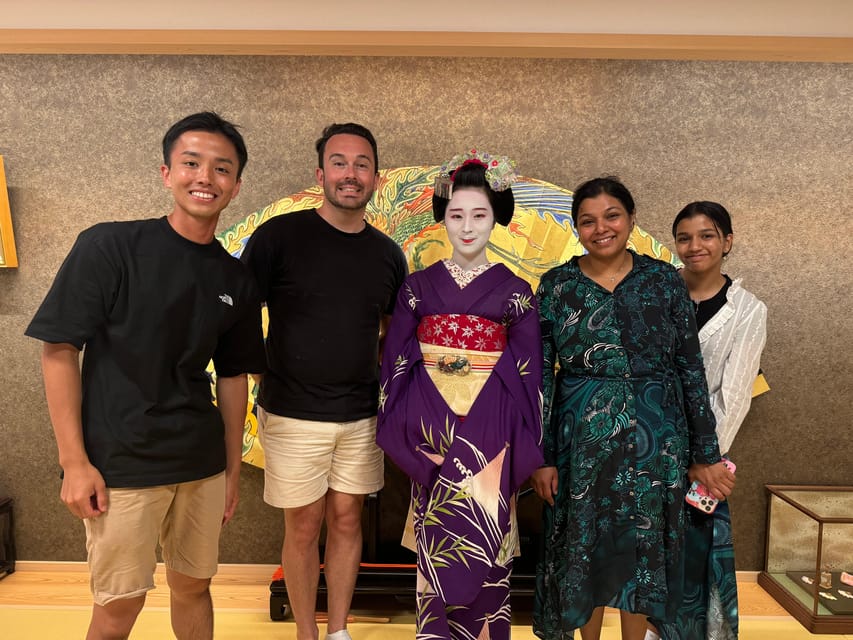
After the dance and questions, you play a traditional Japanese fan game with the maiko. It is a simple, playful contrast to the formal performance. You sit across from her and try your hand at the game, with each person getting a turn.
This is one of the strongest parts of the experience for families and mixed-age groups. A tween or teenager may find the game easier to connect with than a history talk, while adults get an entertaining way to interact without needing advanced knowledge of Japanese culture.
Do not worry about winning. One participant admitted to scoring zero points, and that is part of the fun. The game breaks the formality of the meeting and gives you a shared memory rather than just something to watch.
Some outings have also included a signed fan as a souvenir. That detail is not listed as a standard inclusion, so I would not book this expecting one. If it is offered during your visit, it can be a meaningful keepsake, especially because it connects directly to the fan game and the setting.
More geisha and maiko evenings in Kyoto:
- Best of Kyoto: Gion, Geisha, Pagodas & Cobblestones
★ 4.9 · 2,058 reviews - Night Walk in Gion: Kyoto’s Geisha District
★ 4.5 · 2,003 reviews - Kyoto Gion Geisha District Walking Tour – The Stories of Geisha
★ 5.0 · 1,441 reviews - Kyoto Gion: 2-Hour Geisha Culture & History Walking Tour
★ 5.0 · 1,186 reviews
Tea, snacks, and the value of a small room
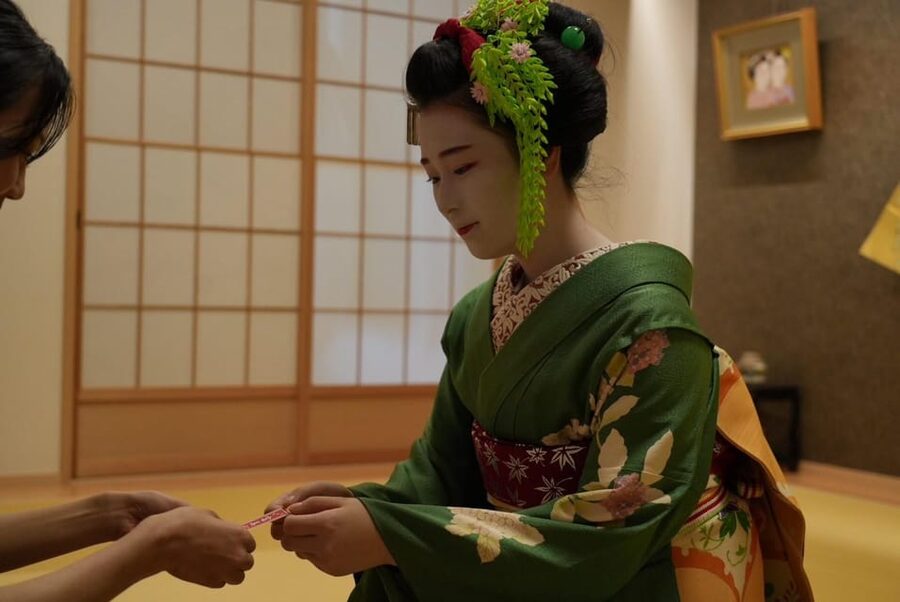
Tea and a Japanese snack are included. They are modest additions, but they help the meeting feel complete. You are not watching a dance in a bare presentation room and leaving immediately. The tea gives you a natural pause before the questions and game.
The small room also helps with conversation. In a large show, you may see a performance but learn little about the performer. Here, the format gives you the chance to ask about the maiko’s life and hear answers through a guide who can explain cultural references.
That does not mean the session is a private dinner or a full evening at an ochaya, a traditional teahouse. The advertised experience lasts one hour for the performance and interaction. It is a carefully arranged introduction, not a complete look at every part of the profession.
That distinction is useful when deciding if the price works for you. You are paying $108 for a two-hour guided visit, an English interpretation, a live dance, tea and a snack, and a direct cultural exchange with a maiko. If you only want to see a dance, you may find the cost high. If you value access, explanation, and a very small group, the price is easier to justify.
How the guides shape the experience
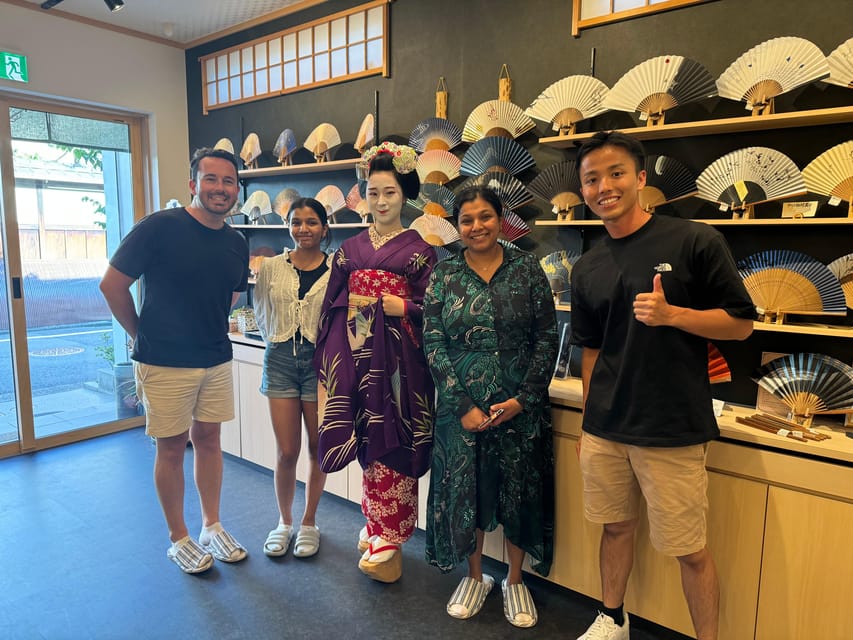
The guide is not just there to lead you from the station to the show. The guide explains what you are seeing, manages etiquette, translates questions, and keeps the conversation comfortable.
Ai has been singled out for finding small points of interest that independent research can miss. She also helped groups move through Gion’s alleyways and gave clear advice about photography. Soichiro has explained the history of geiko and maiko culture while taking groups onto quieter streets. Rin and Yoshino have worked together on some outings, while Tang and Hikaru Kuroki have also received praise for their calm, polite presentation.
Yoshino may be a particularly good match for families. She has been described as patient with children and attentive to a younger visitor. That sort of care can make a difference if your child is shy, tired, or unsure how to approach a formal cultural setting.
The guide names are not a promise that you will receive a particular person. Still, they show the range of staff involved and the importance of interpretation. If your English is limited or you want to ask detailed questions, the guide’s ability to translate matters as much as the dance itself.
Is two hours enough for Gion?
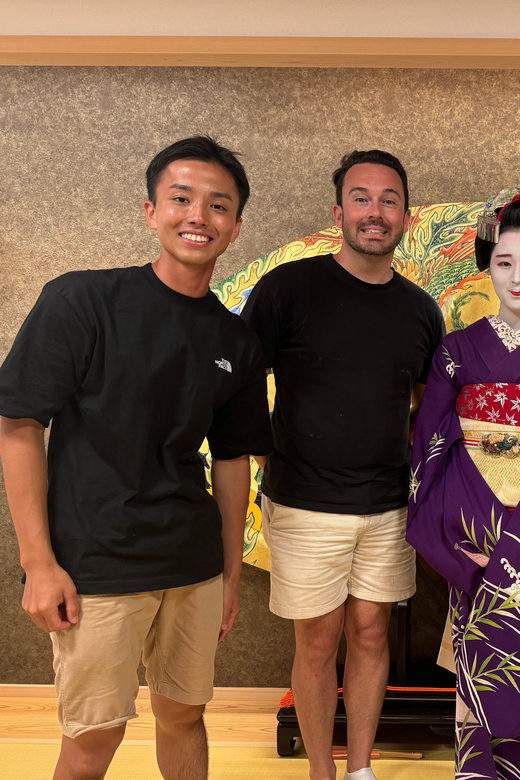
Two hours is enough for a focused introduction, but not enough to see all of Gion. The format divides the time evenly: one hour walking and one hour with the maiko. That balance works well if you want both place and performance.
You will not have time for a long, unhurried tour of every temple, street, and traditional business in the district. You also will not receive a full evening of entertainment. Think of this as a compact cultural experience that fits neatly into a Kyoto day.
The timing can work especially well before dinner or after other sightseeing near central Kyoto. Starting times vary, so check availability when booking. The tour ends at Hangesho, rather than returning you to the statue, so note the finish point when planning your next activity.
Wear shoes that are comfortable for an hour of walking. The supplied information does not promise a specific route length or seating arrangement beyond the small-room setting, so practical comfort is the safe choice.
Who will enjoy this Kyoto experience most?
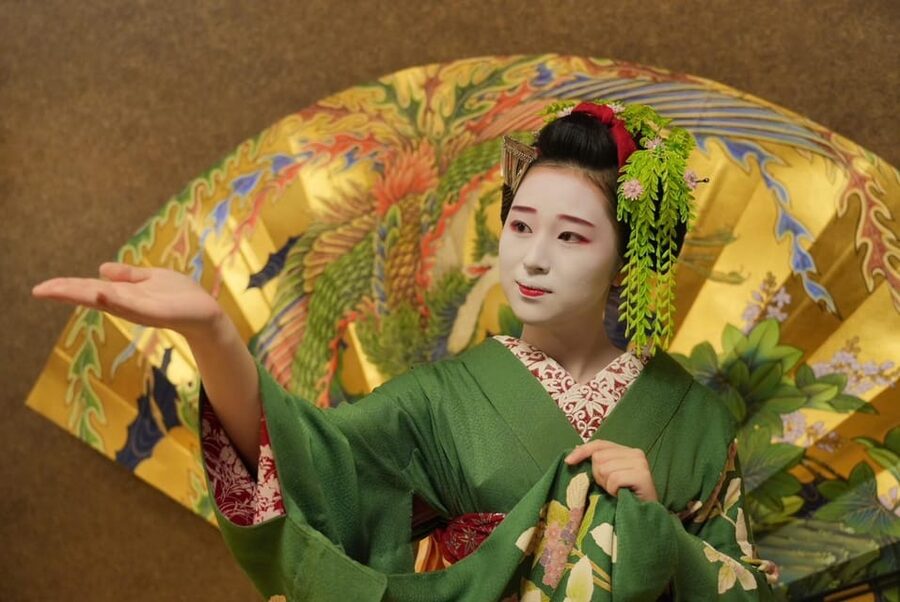
I would choose this for anyone with a real interest in Japanese performing arts, local customs, or the social world of Gion. You get more than a costumed photo. The questions, translation, and background help you understand the person you meet.
It also suits couples looking for a memorable Kyoto evening, families with older children, and first-time visitors who want a guide to make sense of Gion. The fan game gives the experience a lighter side, and the small group keeps it from feeling like a standard bus tour.
You may want to skip it if you dislike organized stops, have little interest in maiko and geiko culture, or are looking for a long walking tour at a lower price. You should also avoid booking it only because you hope to see a maiko walking in the street. The arranged performance is the main event, and the chance encounter is not guaranteed.
For photographers, the tour offers more than a distant street sighting, but the focus is respectful interaction rather than a free-for-all photo session. Follow the guide’s instructions and give the maiko your attention as well as your camera.
Booking details and practical expectations
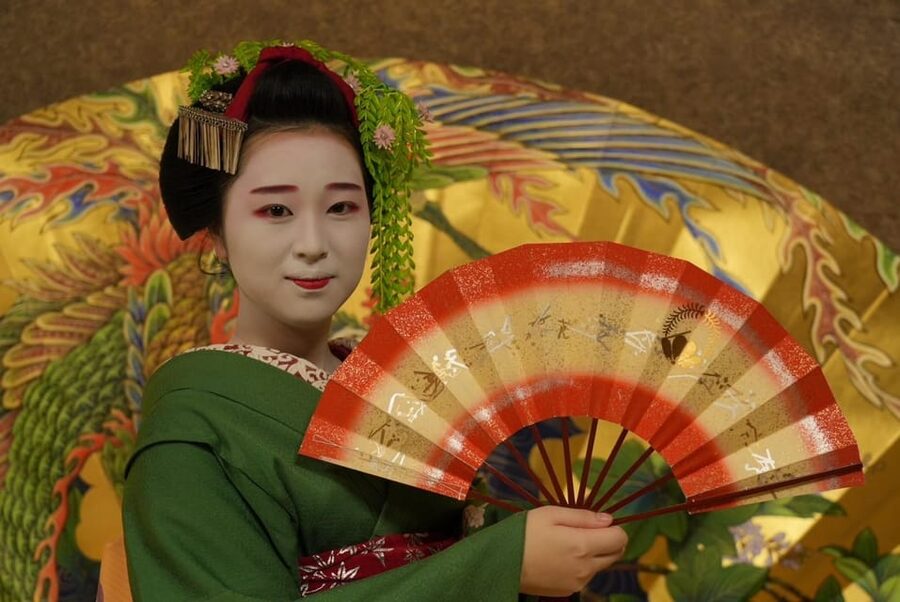
The experience costs $108 per person and lasts two hours. Groups are limited to six participants, and the live tour language is English.
You can cancel up to 24 hours before the start for a full refund. The reserve-now, pay-later option lets you hold a place without paying at the time of booking. Starting times depend on availability.
The meeting point is the Izumo-no-Okuni Statue above Gion Shijo Station. A white GuideMe Japan board identifies the guide. The tour includes the one-hour Gion walk, the one-hour maiko performance, tea, a Japanese snack, the fan game, and the English-speaking guide.
Additional food and personal purchases are not included. The walk may include stops at shops, and the exact guide, maiko, route, and timing can vary.
Should you book the Gion maiko tour?
I would book it if you want a small, well-explained meeting with a maiko and are willing to pay for access and interpretation. The strongest features are the capped group size, the chance to ask real questions, and the fan game, which turns a formal performance into a shared activity.
I would hesitate only if $108 feels too high for two hours or if shopping stops would frustrate you. For most people who care about Kyoto’s traditional arts, the combination of a quieter Gion walk, live dance, tea, questions, and playful interaction gives the price a fair return. It is a focused experience, not a broad tour of Kyoto, but it can become one of your most memorable two hours in the city.
FAQ
Where does the Gion tour begin?
It begins at the Izumo-no-Okuni Statue, directly above Gion Shijo Station. The guide holds a white board marked GuideMe Japan.
How long does the experience last?
The tour lasts two hours. The first hour is a guided walk through Gion, and the second hour includes the maiko dance, questions, tea, and the traditional fan game.
Is the tour conducted in English?
Yes. The tour has a live English-speaking guide, and the guide interprets the conversation with the maiko.
How many people can join the group?
The group is limited to six participants.
What is included in the price?
The price includes the one-hour Gion walk, the one-hour maiko show, tea, a Japanese snack, and the traditional Japanese fan game with the maiko.
Can I cancel the booking?
Yes. You can cancel up to 24 hours before the experience for a full refund. A reserve-now, pay-later option is also available.
More Shows in Kyoto
- Kyoto Gion Cultural Walk & Geisha Show with Dining Options
★ 5.0 · 518 reviews - Kyoto Gion Cultural Walk & Geisha Show with Dining Options
★ 5.0 · 483 reviews - 1 Hour Geisha Show in Kyoto
★ 5.0 · 452 reviews - Kyoto: Samurai Kenbu Traditional Sword Dancing Show
★ 4.5 · 426 reviews
More Walking Tours in Kyoto
- Nishiki Market Brunch Walking Tour (7 Tastings + Brunch)
★ 5.0 · 1,355 reviews - Kyoto Arashiyama Walking Tour: Bamboo, Monkeys, Gardens & Secrets
★ 5.0 · 1,216 reviews - Kyoto: Izakaya Bars Guided Walking Tour
★ 4.9 · 815 reviews - Kyoto Gion Night Walk & Geisha District Guided Tour
★ 5.0 · 786 reviews
Newest Kyoto experiences on the site
- Treasures of Kyoto: Gion & historical Walking Tour★ 5.0 · 6 reviews
- Whisk Your Own Matcha: A Zen Matcha Experience at Temple★ 3.6 · 7 reviews
- Kyoto tea town for matcha lovers★ 5.0 · 16 reviews
- Uji: Private immersion into Kyoto’s tea and reglious culture★ 5.0 · 17 reviews
- Kyoto Matcha Green Tea Tour★ 4.5 · 23 reviews
- Uji and Wazuka Matcha Farm Half Day Private Guided Tour★ 5.0 · 21 reviews
- Utilising upcycled Matcha! Creating matcha incense (Uji, Kyoto)★ 5.0 · 6 reviews
- Sacred Temple Yoga Experience in Japan★ 5.0 · 3 reviews
Gion District Tours, compared.
Kyoto Geisha Walking Tour: Gion District & Hidden Gems
Read our review →
Gion Magical Night Walking Tour with Geisha Trivia
Read our review →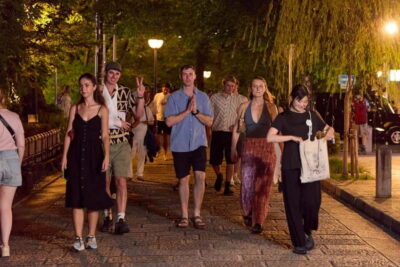
Gion Geisha District Walking Tour – Stories of Geisha
Read our review →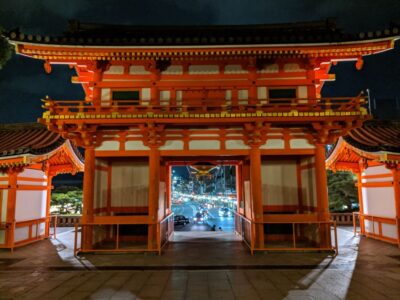
Best of Kyoto: Gion, Geisha, Pagodas & Cobblestones
Read our review →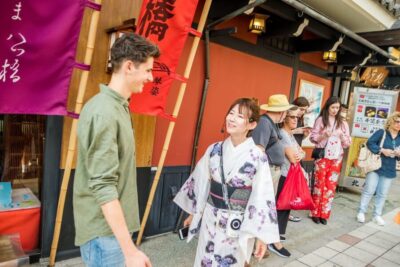

Kyoto Night Foodie Tour in Gion (9+ dishes + 6 Sake tastings)
Read our review →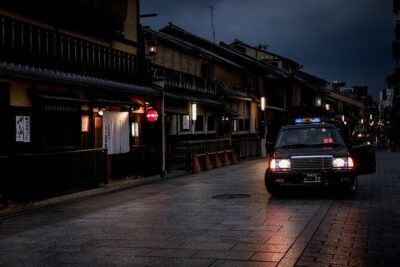
Kyoto Gion Geisha District Walking Tour – The Stories of Geisha
Read our review →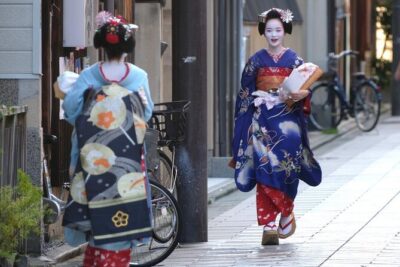
Kyoto Gion: 2-Hour Geisha Culture & History Walking Tour
Read our review →Browse the lists this tour appears in