
Reviewed · KYOTO GEISHA & MAIKO EXPERIENCES
One Hour Geisha Show in Kyoto
Kyoto’s maiko are not a daily street spectacle. With only about 40 maiko in the city, this one-hour encounter gives you a close look at a carefully preserved art form, not just a costumed photo opportunity. I especially like the short traditional dances and the honest Q&A afterward, where you can ask about the maiko’s training, clothing, and life.
I also like the chance to play a Japanese game with her and take photographs and videos afterward. The main consideration is that the dancing does not fill an entire hour. You get two performances of about five minutes each, followed by conversation, explanation, and photos. That is true to the form, but anyone expecting a nonstop stage show should adjust their expectations.
Key Points Before You Book
- Two short dances: A maiko usually performs for only a few minutes at a time, preserving the grace and focus of the art.
- Real conversation: English or Korean guides translate questions and explain the maiko’s makeup, hair, clothing, accessories, and work.
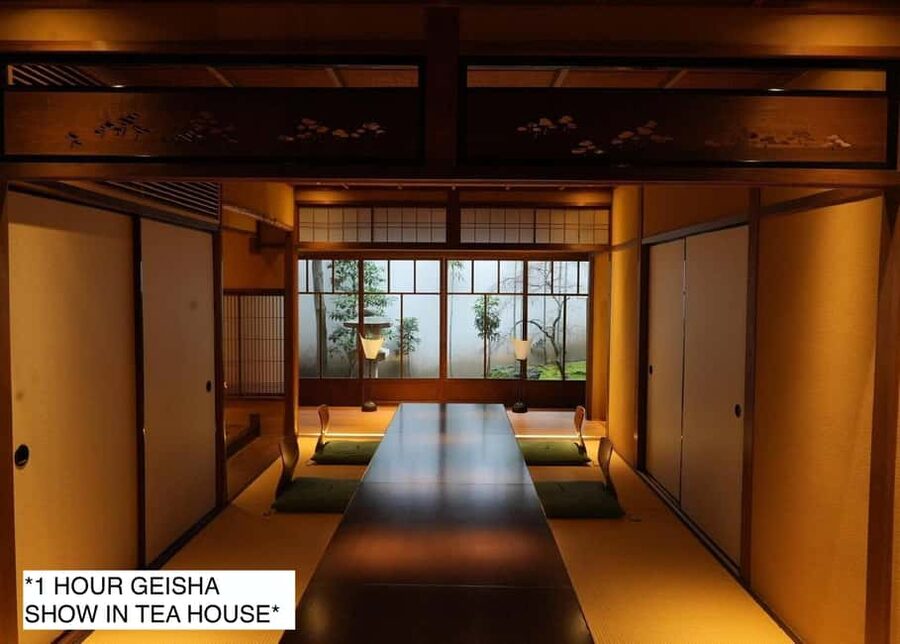
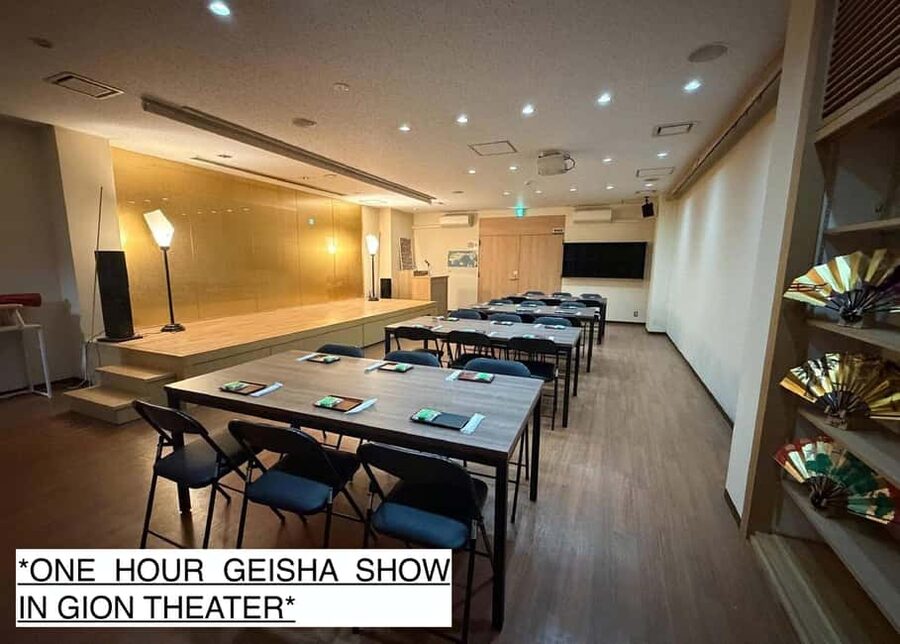
- Tea house or theater: The tea house option takes place in a Kyoto-style Kyo-Machi-ya house and includes the shrine visit. The Gion Theater option uses a showhouse.
- A playful ending: You can join a traditional game, often Konpira Fune Fune, then have a photo opportunity with the maiko.
- Small to medium groups: The tea house accepts up to 23 people, while the Gion Theater option accepts up to 30.
- Simple but important dress rule: Wear socks. Bare feet are not allowed, and the tea house option is not wheelchair accessible.
Why Seeing a Maiko in Kyoto Feels Special
A maiko is an apprentice geisha, and her performance is built around restraint. You will not see an hour of continuous dancing. Instead, the show uses two brief dances, each around five minutes, with the maiko performing from different positions so people around the room can see her movements.
That short format is part of the point. The dance depends on controlled steps, hand movements, posture, costume, and facial expression. It rewards attention rather than noise. You get time to watch the details without the pace of a large theater production rushing you along.
The setting also matters. Kyoto is the only place where you can experience this traditional geisha world in its original cultural setting. The tea house option places you in a Kyo-Machi-ya, a traditional Kyoto-style home. The Gion Theater option is more suited to people who need wheelchair access or prefer a purpose-built showhouse.
GuideMe Japan uses English and Korean guides to bridge the gap between the audience and the performer. Names connected with the experience include Genki, Rin, Ai, Chihiro, Akari, and Taira Yoshino. The exact guide depends on your date and option, but the job is the same: explain the customs clearly and translate questions without interrupting the mood.
More geisha and maiko evenings in Kyoto:
- Kyoto Geisha Walking Tour: Gion District & Hidden Gems
★ 4.7 · 3,273 reviews - Kyoto: Gion Magical Night Walking Tour with Geisha Trivia
★ 4.9 · 2,393 reviews - Kyoto: Gion Geisha District Walking Tour – Stories of Geisha
★ 4.7 · 2,187 reviews
The First Meeting and the Details of Maiko Dress
The experience begins at one of the listed meeting points, depending on your booking. Possible starting locations include UMENO at 302-2 Daikokuchō, near KOHYO Kamishichikenten. Confirm your exact meeting point carefully because the two formats do not use the same setting.
Before the dancing begins, the maiko is introduced. This is one of the most useful parts for first-time visitors because the clothing can otherwise look like one beautiful but confusing whole. The guide explains the meaning of the dress, hairstyle, makeup, and accessories.
Pay attention to the small details. The maiko’s appearance is not simply a costume chosen for an evening performance. Each visible element supports her public role and the formal style of the tradition. You will have a better understanding of what you are seeing before the music and movement begin.
The guides also help with cultural questions that can be hard to ask in a normal sightseeing setting. You can learn more about the maiko’s work and life, rather than leaving with only photographs. The conversation is especially useful if you have visited a geisha district but have only seen performers at a distance.
Two Five-Minute Dances, Not a Nonstop Show
The dancing is the heart of the experience, but it is important to picture it accurately. You get two traditional dances, each about five minutes long. The performances are short by design, since this art depends on exclusivity, precision, and grace.
The maiko may perform once on each side of the table or room so that the group gets a fair view. That arrangement is a practical touch. In a crowded room, a single fixed position could leave some people looking past other heads or missing the details of the footwork.
I would try to watch the first dance without lifting your phone immediately. Notice the pace, the posture, and the way the sleeves and accessories move. Then use the second performance to take photographs or short videos if you wish. Photography and video are welcome during the experience, but you should still follow the guide’s instructions about where to stand or sit.
The short performance may disappoint anyone expecting a full-length cultural show. For me, the advantage is that the format leaves room for explanation and direct contact. You are not merely watching from a dark auditorium. You are learning what the movement means and then meeting the person who performed it.
Q&A, Tea, Snacks, and the Traditional Game
After the dances, the room changes from performance space to conversation space. The guide translates questions between the audience and the maiko, covering subjects such as her training, occupation, clothing, and daily life. The quality of this section depends partly on the group, but guides such as Genki, Ai, Rin, and Chihiro are described as clear and welcoming hosts.
Tea and traditional Japanese snacks are included. You may be offered hot matcha or water, and additional food or drinks cost extra. This is not a meal, so plan to eat beforehand if you need dinner. Think of the refreshments as a small part of the setting, not the main reason to book.
The game is the most relaxed part of the meeting. Konpira Fune Fune is a traditional Japanese rhythm game played with a partner, and the guide explains what to do before you begin. It looks simple until the pace changes. Losing is common, and that is part of the fun. The game gives you a chance to interact with the maiko without turning the meeting into a formal interview.
Afterward, everyone has a chance to take a photograph with her. Some participants have also received a small name sticker for luck. Be ready with your camera, but keep in mind that a group of up to 23 people in the tea house option, or up to 30 in the theater option, means the photo period may move at a steady pace.
More shows and performances in Kyoto:
- Kyoto Gion Cultural Walk & Geisha Show with Dining Options
★ 5.0 · 518 reviews - Kyoto Gion Cultural Walk & Geisha Show with Dining Options
★ 5.0 · 483 reviews - 1 Hour Geisha Show in Kyoto
★ 5.0 · 452 reviews - Kyoto: Samurai Kenbu Traditional Sword Dancing Show
★ 4.5 · 426 reviews
The Tea House Option and Kitano Tenmangu Shrine
Only the tea house option includes the 30-minute guided session at Kitano Tenmangu Shrine with the maiko. The shrine is one of the possible drop-off points, and it gives the experience a second setting beyond the indoor performance.
The walk and shrine visit add value because they connect the maiko with Kyoto itself. Instead of ending as soon as the dancing and photographs finish, you have time to see a major religious site with a guide and the performer. This is also the part that makes the tea house option last closer to 105 minutes rather than only one hour.
The shrine session is not included with the Gion Theater option. Check this carefully before booking. The two choices are not simply different rooms for the same show. The tea house option uses a Kyo-Machi-ya, includes tea and snacks, and adds the shrine walk. The Gion Theater option uses a showhouse and allows wheelchair access.
The visit may suit you if you want a fuller afternoon and a little more movement. It may not suit you if you only want a quick performance near Gion or need a fixed theater setting. Either way, do not assume the shrine stop is part of every departure.
Is $50 a Fair Price?
At $50 per person, this is not the cheapest cultural activity in Kyoto. You are paying for more than a stage performance, though. The price includes the maiko appearance, two dances, translation, cultural explanation, tea, traditional snacks, and, with the tea house option, the Kitano Tenmangu session.
The strongest value comes from the access. A normal visit to a geisha district does not guarantee that you will see a maiko, much less ask questions, play a game, and take a photograph with one. This experience gives you a planned, respectful way to meet a performer rather than asking you to search the streets and hope for a glimpse.
The value is lower if your main goal is a long dance concert. You receive roughly ten minutes of actual dancing, with the rest devoted to discussion, photos, tea, and the game. For me, that is a fair exchange if you want context and contact. If you only want stage time, another performance format may suit you better.
Group Size, Language, and Comfort
The tea house group can reach 23 people, while the Gion Theater can hold up to 30. These are not private meetings. You should expect a shared experience, with several people asking questions and taking photographs.
English and Korean guides are available. One practical issue is that a mixed-language group can make explanations harder to follow if several translations happen close together. Sit where you can hear the guide clearly, and ask for clarification if you miss an important point.
Wear socks. Bare feet are not allowed, which matters especially in a traditional Japanese house where shoes may be removed. Baby strollers, alcohol, and drugs are not allowed.
The tea house option is not wheelchair accessible. The Gion Theater option is wheelchair accessible. The activity is also listed as unsuitable for people over 95. These details are worth checking before you reserve, particularly if your group has mobility needs.
Who Will Enjoy This Experience Most?
I would choose this for you if you want a personal introduction to Kyoto’s traditional arts, enjoy asking questions, and value a small cultural encounter more than a large polished production. It is also a strong choice for photographers, since pictures and videos are welcome and the maiko is available for a group photo.
Families with older children may enjoy the game and the visual appeal of the performance, though the cultural explanations require patience. Couples and solo visitors who want a memorable Kyoto evening should also find plenty here, especially if they select the tea house option and add the shrine visit.
You may want to skip it if you dislike group activities, need a full hour of uninterrupted entertainment, or are uncomfortable sitting through translated explanations. The experience asks you to watch quietly, listen, and take part in a few simple social activities.
Book with a phone number that works in Japan and on WhatsApp. The organizers use it to send clear information and communicate smoothly before the meeting. Reserve the correct option, bring socks, and allow enough time for the tea house version if the shrine visit matters to you.
Should You Book the One Hour Geisha Show?
Yes, if you understand that this is a close cultural meeting rather than a one-hour dance recital. The maiko’s brief performances are graceful, while the Q&A, game, tea, and photograph make the encounter feel personal and easy to remember.
I would choose the tea house option for the fuller experience, especially if you want the Kyo-Machi-ya setting and Kitano Tenmangu Shrine. Choose the Gion Theater option if wheelchair access is important or if you prefer a showhouse. At $50, the activity is worth considering for a rare chance to meet a real maiko, provided you value conversation and context as much as the dancing.
FAQ
How long does the activity last?
The experience lasts between one hour and 105 minutes, depending on the option and schedule. The tea house option includes a 30-minute Kitano Tenmangu Shrine session.
How much does the experience cost?
The listed price is $50 per person.
How much dancing will I see?
You will see two traditional dances, each lasting about five minutes. The maiko does not perform continuously for the full hour.
Can I take photographs and videos?
Yes. Photography and video are welcome, and there is also a chance to take a photograph with the maiko.
Is the shrine visit included with every option?
No. The 30-minute Kitano Tenmangu Shrine visit is included only with the tea house option.
Which languages are available?
Live guides are available in English and Korean.
What should I bring and what is not allowed?
You must wear socks, and bare feet are not allowed. Baby strollers, alcohol, and drugs are also not allowed.
Newest Kyoto experiences on the site
- Treasures of Kyoto: Gion & historical Walking Tour★ 5.0 · 6 reviews
- Whisk Your Own Matcha: A Zen Matcha Experience at Temple★ 3.6 · 7 reviews
- Kyoto tea town for matcha lovers★ 5.0 · 16 reviews
- Uji: Private immersion into Kyoto’s tea and reglious culture★ 5.0 · 17 reviews
- Kyoto Matcha Green Tea Tour★ 4.5 · 23 reviews
- Uji and Wazuka Matcha Farm Half Day Private Guided Tour★ 5.0 · 21 reviews
- Utilising upcycled Matcha! Creating matcha incense (Uji, Kyoto)★ 5.0 · 6 reviews
- Sacred Temple Yoga Experience in Japan★ 5.0 · 3 reviews
Kyoto Geisha & Maiko Experiences, compared.
Kyoto Geisha Walking Tour: Gion District & Hidden Gems
Read our review →
Gion Magical Night Walking Tour with Geisha Trivia
Read our review →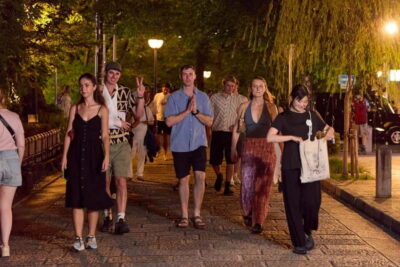
Gion Geisha District Walking Tour – Stories of Geisha
Read our review →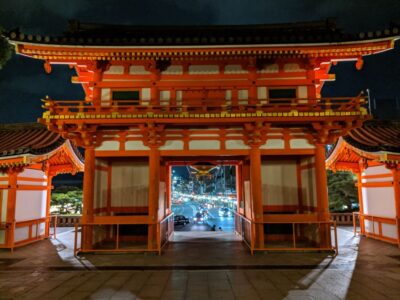
Best of Kyoto: Gion, Geisha, Pagodas & Cobblestones
Read our review →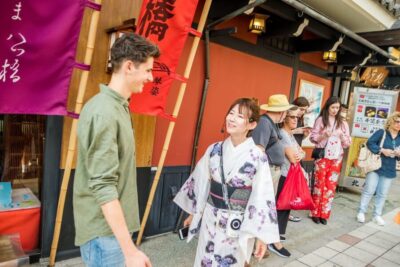
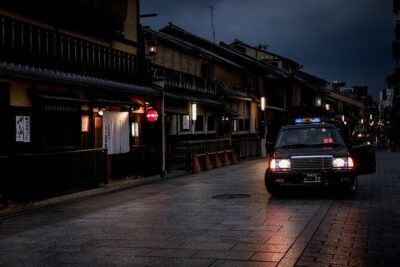
Kyoto Gion Geisha District Walking Tour – The Stories of Geisha
Read our review →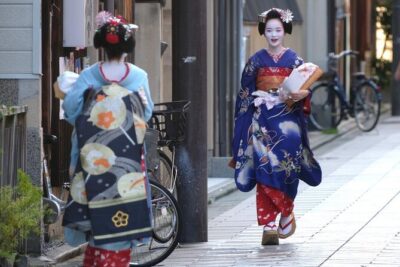
Kyoto Gion: 2-Hour Geisha Culture & History Walking Tour
Read our review →
Kyoto Gion Night Walk & Geisha District Guided Tour
Read our review →Browse the lists this tour appears in