
Reviewed · FUSHIMI INARI TOURS
Kyoto: Top Sights Guided Tour – Gion, Kinkaku, Fushimi, Nijo
Kyoto’s biggest sights are spread across the city, but this eight-hour guided tour links five of them into one clear day. You begin at Fushimi Inari, pass through Kiyomizu-dera and Gion, then finish at Nijo Castle and the Golden Pavilion. It is a smart way to get your bearings when your time is short.
I like two things here: the mix of famous temples and lived-in streets, and the use of local trains, buses, and walking rather than a sealed-off coach. Guide Takashi has earned especially warm praise for being kind, thoughtful, and exceptionally well informed. The main drawback is the pace. Five major stops in one day means you get a strong first look, not hours of quiet exploration at each place.
Key points to know before you book
- Fushimi Inari comes first, when you can start the day among its famous vermilion torii gates.
- Kiyomizu-dera and Gion are linked on foot, with Sannenzaka adding a short but atmospheric old-Kyoto walk.
- Public transport is part of the experience, including a 40-minute train ride and two 30-minute bus or coach journeys.
- Lunch is not included, and the Gion stop allows about 1.5 hours for eating and sightseeing.
- Nijo Castle and Kinkaku-ji bring a different mood, from shogun-era rooms and gardens to the Golden Pavilion beside its pond.
- The tour ends at Kinkaku-ji, not at the original meeting point, so plan your evening from the northwest side of Kyoto.
Why this day works for first-time Kyoto visitors
Kyoto can feel scattered on a map. Fushimi Inari is in the southeast, Kiyomizu-dera sits east of the central districts, Gion lies nearby, Nijo Castle is farther west, and Kinkaku-ji is still farther northwest. Seeing all five independently in one day takes planning, route checking, and a fair amount of confidence with Kyoto transport.
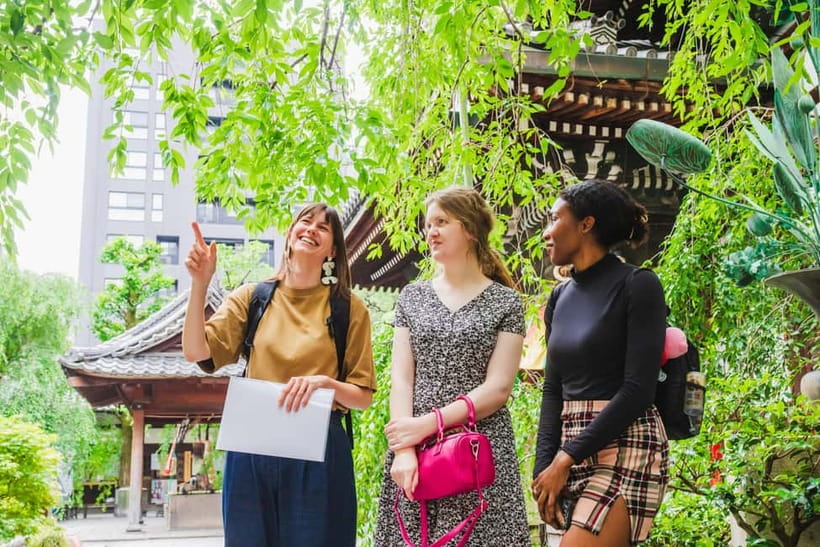
This tour does that organizing for you. You meet at JR Inari Station, visit the first shrine, and then follow a set route across the city. The guide explains what you are seeing while you move between sites, so the day is not just a chain of photo stops.
I would choose this for a first visit or a short stay. It gives you a useful overview of Kyoto’s major visual and cultural markers. If you already know the city well, or if you prefer to spend half a day at one temple, the schedule may feel too tight.
The small-group or private format matters here. Kyoto’s busiest sights are easier to manage when you have a guide who can keep the group together and explain where to focus. English and Japanese guiding are available. The experience is listed at $131 per person, including the guide fee and entry ticket. Lunch costs extra.
More ways to walk Gion:
- Kyoto Geisha Walking Tour: Gion District & Hidden Gems
★ 4.7 · 3,273 reviews - Kyoto: Gion Magical Night Walking Tour with Geisha Trivia
★ 4.9 · 2,393 reviews - Kyoto: Gion Geisha District Walking Tour – Stories of Geisha
★ 4.7 · 2,187 reviews
Starting beneath the torii at Fushimi Inari
The meeting point is specific: in front of the central ticket gate at JR Inari Station. Look for the guide holding a yellow DeepExperience sign. This removes much of the usual morning confusion, especially if you are still learning Kyoto’s stations.
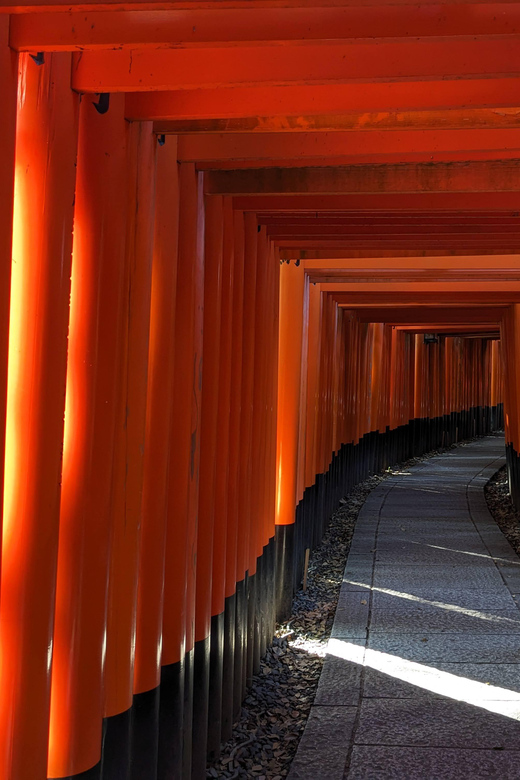
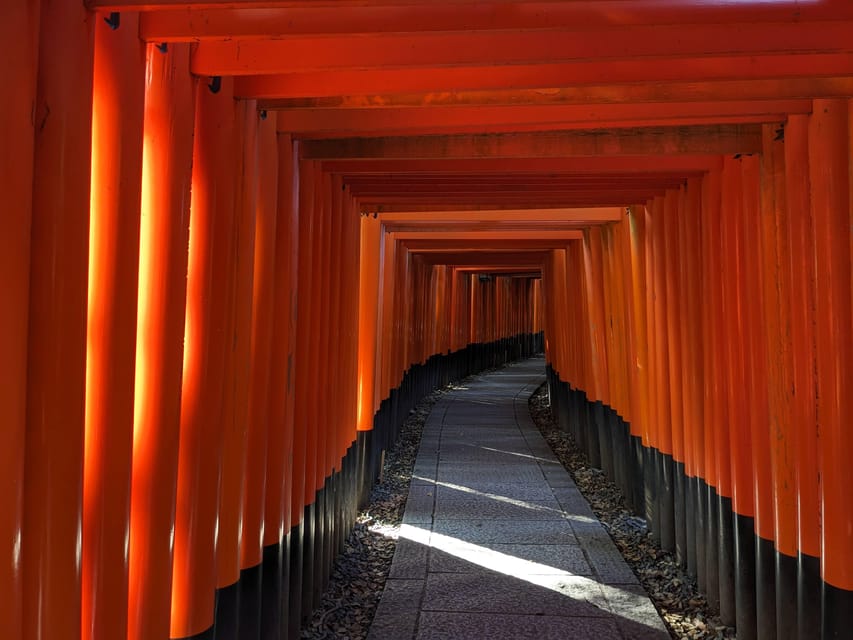
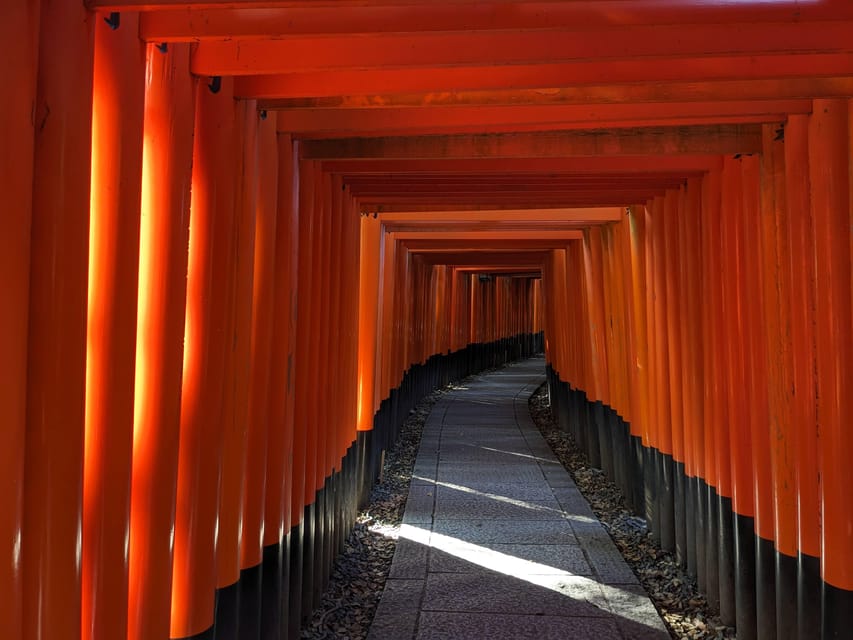
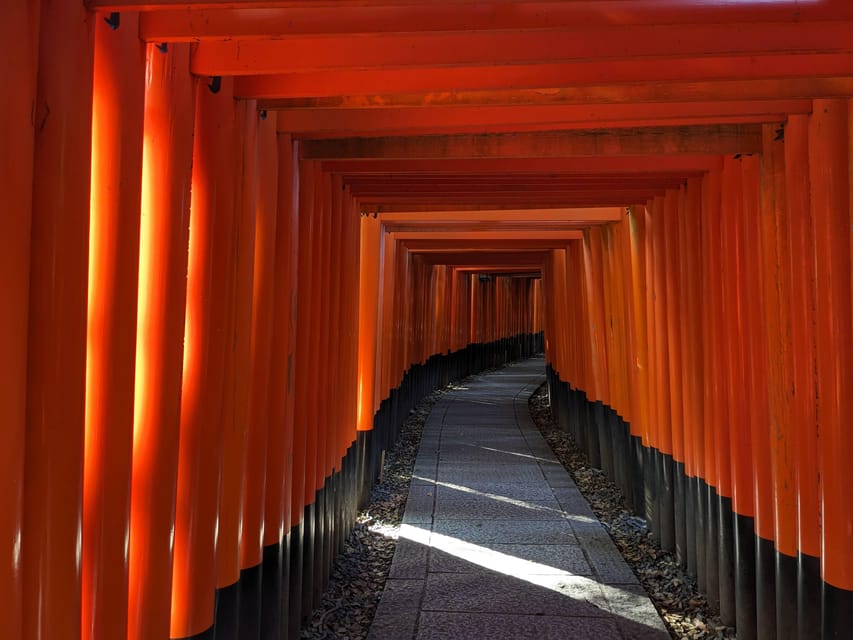
Fushimi Inari Taisha is the right place to begin. Its thousands of orange-red torii gates form long corridors up the wooded slopes behind the shrine. The repeated gates create one of Kyoto’s most recognizable scenes, but the place is more than a picture stop. The gates were donated over time by people and businesses, and they mark a connection between worship, gratitude, and good fortune.
Your guided visit lasts about 40 minutes. That is enough to see the main approach, pass through a section of the torii, and learn what makes the shrine important. It is not enough to walk every trail on the mountain, so keep your expectations in check. The reward here is a focused introduction rather than a full hike.
Starting at Fushimi Inari also gives the day a strong opening image. The gates are close to the station, and you do not spend the first part of the morning searching for a distant meeting point.
The 40-minute train ride to Kiyomizu-dera
After Fushimi Inari, the route includes a 40-minute train journey. That travel time is not dead space. It gives you a break after the first walk and lets the guide connect the southeastern shrine to the next part of the day.
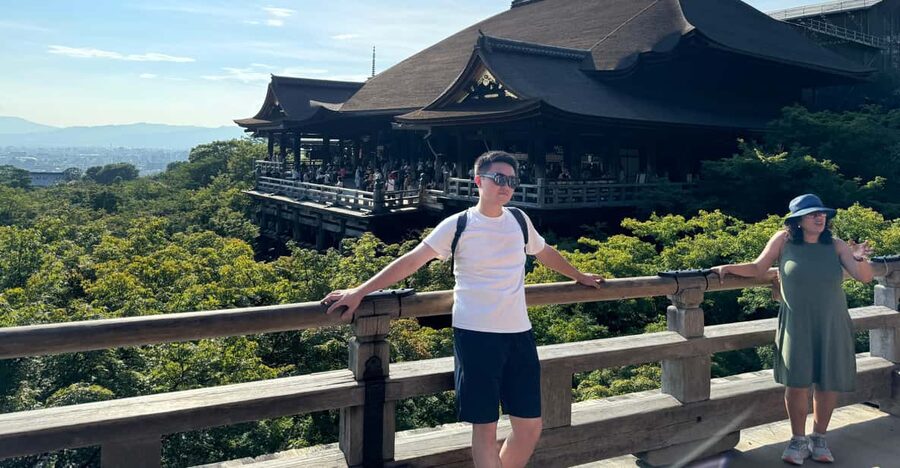
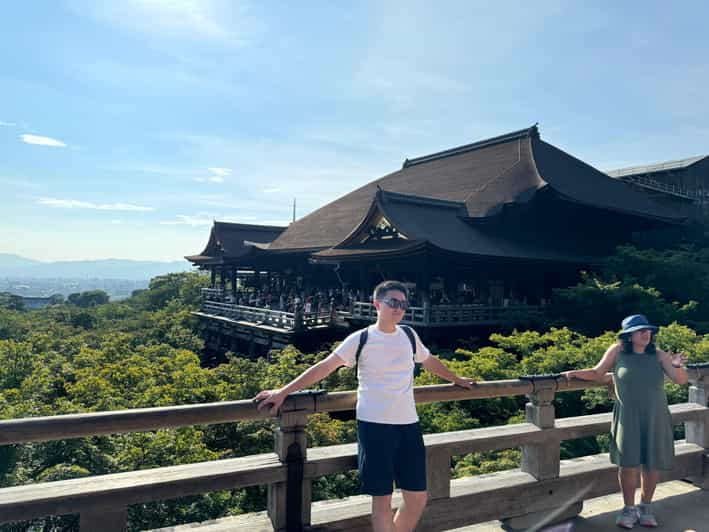
Kiyomizu-dera offers a very different setting. Its wooden stage projects from the hillside and looks across Kyoto. The view is one of the city’s classic sights, with the temple’s timber structure giving the visit its drama. You also get a sense of how Kyoto’s religious buildings work with the surrounding hills rather than sitting apart from them.
The guided visit lasts about 70 minutes, making it one of the longer stops. I see that as a good choice. Kiyomizu-dera has enough detail to reward a slower visit, and its approach leads into some of the city’s most appealing old streets.
The famous wooden stage can be crowded, so the guide’s explanations help you make better use of your time. You can focus on the view, the architecture, and the cultural meaning instead of trying to guess what deserves attention.
Sannenzaka gives you a taste of old Kyoto
From Kiyomizu-dera, you walk for about five minutes to Sannenzaka, where the guided visit lasts 15 minutes. This is a short stop, but it helps bridge the gap between temple grounds and city life.
Sannenzaka is known for its sloping lanes, traditional buildings, and old-style atmosphere. Wooden machiya houses, shops, and paved streets give you the visual sense of Kyoto that many people hope to find. It is also a useful reminder that the city’s appeal is not limited to its major temple gates.
You should not expect an extended shopping break here. Fifteen minutes passes quickly. Treat Sannenzaka as a guided walk and a chance to notice the shape and texture of the district. If you spot something you want to buy, note its location for a later return, since this schedule keeps moving.
More ways to walk the Fushimi Inari gates:
- Kyoto: Fushimi Inari, Kinkakuji, Bamboo Grove 1 Day Bus Tour
★ 4.8 · 4,316 reviews - Fushimi Inari Hidden Hiking Tour (Private Option Available)
★ 5.0 · 1,750 reviews - Osaka/Kyoto:Kinkakuji,Arashiyama,FushimiInariShrine,NaraPark
★ 4.1 · 1,596 reviews - Kyoto/Osaka: Nara, Fushimi Inari Taisha, Arashiyama Bus Tour
★ 4.7 · 1,275 reviews
Gion combines lunch with traditional streets
A 20-minute walk brings you from Sannenzaka to Gion. This is one of the most pleasant parts of the route because the transport changes to walking, and the historic districts connect naturally.
Gion is known for traditional wooden machiya houses and narrow streets. Its charm comes from the relationship between buildings, lanes, and local customs. The guide can help you understand the district without reducing it to a quick photo backdrop.
The stop lasts about 1.5 hours and includes lunch. Food is not included in the $131 price, so budget separately for your meal. The extra time lets you eat and take a guided walk through Gion, though your exact meal choices will depend on what is available during the tour.
I like this arrangement because lunch happens in the middle of the day rather than being treated as an afterthought. You can sit down after the morning’s temple visits, then return to sightseeing with a better sense of Kyoto’s older neighborhoods. Still, the time is shared between dining and exploring, so this is not the place for a long, leisurely meal.
Gion also provides a change of scale. Fushimi Inari and Kiyomizu-dera are large religious sites. Gion asks you to pay attention to details at street level: wooden facades, quiet lanes, and the way traditional buildings shape the neighborhood.
Nijo Castle shows Kyoto’s power and ceremony
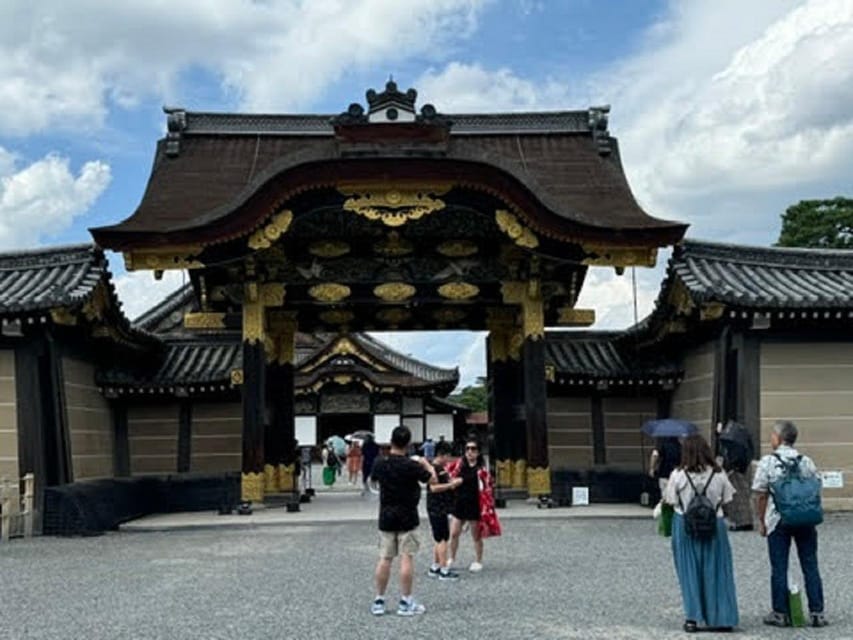
A 30-minute bus or coach journey takes you to Nijo Castle. After shrines, hillside lanes, and old neighborhood streets, the castle adds a political and residential side of Kyoto.
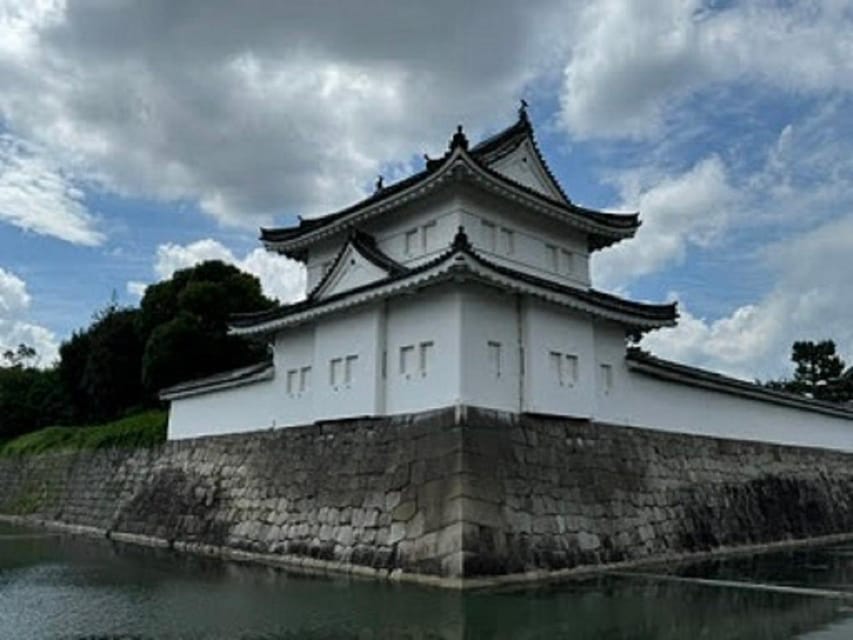
Nijo Castle is celebrated for its opulent architecture, preserved interiors, and formal grounds. It helps you see Kyoto not only as a religious center, but also as a place tied to shogun rule, ceremony, and authority. The interiors are a key part of the visit. The building’s rooms and decoration were designed to make status visible.
You have about one hour here with the guide. That is a sensible amount of time for a first visit. The castle is important for what it shows about power and daily courtly life, but it is less about a single dramatic view than Kiyomizu-dera or Kinkaku-ji.
This stop is also useful for variety. If the day consisted only of temples, the sights could begin to blur together. Nijo Castle breaks that pattern with grand interiors and a different story about Kyoto.
Kinkaku-ji closes the day with gold and water
Another 30-minute bus or coach journey brings you to Kinkaku-ji, also called the Golden Pavilion. This is the final stop, with about one hour for a guided visit.
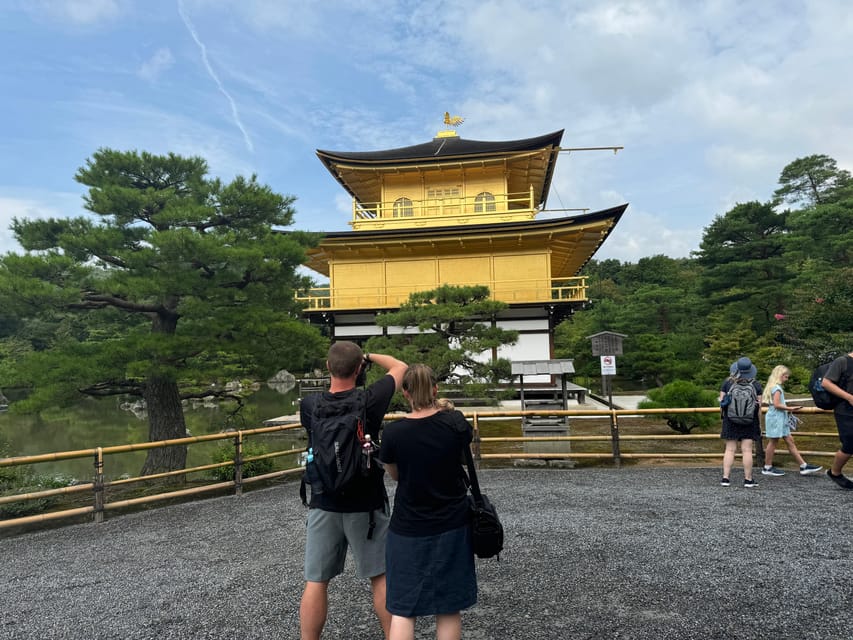
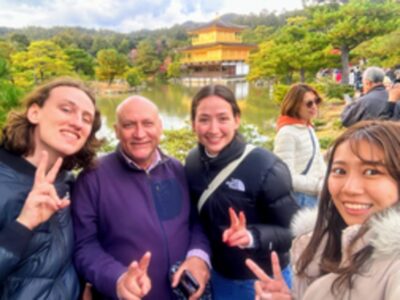
The pavilion’s gold-covered exterior reflects over a pond surrounded by a carefully arranged Japanese garden. It is one of Kyoto’s most instantly recognizable sights, and the setting gives it much of its appeal. The water, trees, building, and surrounding garden are meant to be seen together.
The guide can add context to the architecture and the site’s cultural importance, but allow yourself time to simply look. Kinkaku-ji is a place where the first view often does much of the work. The pavilion is striking, yet the garden keeps the scene from feeling like a single object on display.
Finishing here makes practical sense for the route, but it affects your plans. You do not return to JR Inari Station. The tour ends at Kinkaku-ji, so arrange your evening from that side of Kyoto. The supplied schedule does not give a final end time beyond the eight-hour duration, so allow some flexibility for the final stop and transport.
The pace, walking, and transport
This is an active day, though the schedule does not list strenuous hiking. You walk through Fushimi Inari, Kiyomizu-dera, Sannenzaka, Gion, Nijo Castle, and Kinkaku-ji, with several changes between sites.
The transport mix is one of the tour’s strengths. You take a train after Fushimi Inari, walk between nearby eastern Kyoto sights, then use buses or a coach to reach Nijo Castle and Kinkaku-ji. That gives you a practical look at how the city fits together.
It also means you should not think of this as a sightseeing bus that carries you from gate to gate. You need to stay with the group, follow the guide, and be ready for walking between transport stops and attractions. The pace is likely to feel best if you are comfortable spending a full day on your feet.
A private or small-group departure should help with timing and questions. The most praised guide by name is Takashi, who is described as exceptionally well informed, kind, and thoughtful. Those traits matter on a route with many transitions. A good guide can make the train, walking, and bus portions feel like part of the day rather than interruptions.
Is $131 a fair price?
At $131 per person, this is not the cheapest way to see Kyoto’s temples. You are paying for an eight-hour route, a live English- or Japanese-speaking guide, planning across several districts, and included entry to the listed sights. Lunch is extra.
The value depends on how much planning help you need. If you have only a day or two in Kyoto, the tour can save you from working out a complicated route on your own. It also gives you historical and cultural context at each stop, which is hard to price but central to the experience.
If you are happy using trains and buses, already know Kyoto, or want to linger at one temple, you could spend less by visiting independently. The tour’s value is highest for first-time visitors who want a broad look at the city and do not want to spend their limited holiday time sorting out transport.
Free cancellation up to 24 hours before the tour and the option to reserve now and pay later add useful flexibility. Check available starting times before booking, since the day begins at JR Inari Station and ends at Kinkaku-ji.
Who should book this Kyoto tour?
I would recommend it to you if:
- You have limited time in Kyoto and want to see several major sights.
- You want a guide to explain what you are seeing, not just lead you from gate to gate.
- You enjoy a mix of temples, gardens, old streets, public transport, and walking.
- You prefer a private or small-group setting.
- You want the main logistics handled for you.
I would be cautious if you dislike full-day schedules or need long, quiet visits at individual temples. The tour gives you a strong overview, but it cannot offer deep time at every stop. Lunch is also on your own, and the final location is Kinkaku-ji rather than the morning meeting point.
Should you book it?
Book this tour if you want an efficient first look at Kyoto and value a thoughtful guide. The route covers Fushimi Inari, Kiyomizu-dera, Sannenzaka, Gion, Nijo Castle, and Kinkaku-ji without wasting the day on a single district.
Skip it if you prefer to set your own pace, return to favorite places, or spend a full morning walking the Fushimi Inari trails. For a short visit, though, the combination of famous sights, local transport, and guide support makes the $131 price reasonable, especially on a departure led by someone as highly praised as Takashi.
FAQ
Where does the tour begin?
Meet your guide in front of the central ticket gate at JR Inari Station. The guide will be holding a yellow sign with the DeepExperience logo.
Where does the tour end?
The tour finishes at Kinkaku-ji, also known as the Golden Pavilion.
How long does the tour last?
The full experience lasts eight hours. Starting times vary, so check availability when booking.
Is lunch included?
No. Lunch is not included in the tour price. The Gion portion includes about 1.5 hours for lunch and a guided visit.
What languages are available?
Live guiding is available in English and Japanese.
Are admission tickets included?
Yes. The entry ticket is included, along with the guide fee.
More Nijo Castle Visits
- Kyoto: Nijo-jo Castle and Ninomaru Palace Guided Tour
★ 4.7 · 1,020 reviews - Kyoto: Nijo Castle, Kiyomizu & Fushimi Inari Guided Tour
★ 4.7 · 700 reviews - Kyoto: Imperial Palace & Nijo Castle Guided Walking Tour
★ 4.7 · 453 reviews - Kyoto: Nijo Castle World Heritage Guided Tour with Admission
★ 5.0 · 128 reviews
More Golden Pavilion Trips
- Kyoto: Nijo, Kinkaku-ji, Arashiyama, Kiyomizu & Fushimi Inari
★ 5.0 · 699 reviews - Kyoto: Kinkakuji, Golden Pavilion Guided Tour
★ 4.7 · 71 reviews - Kyoto top must-see Golden pavilion and Bamboo forest half-day Private tour
★ 5.0 · 52 reviews - Kyoto Bamboo Forest & Golden Pavilion E-Bike Tour
★ 5.0 · 50 reviews
Newest Kyoto experiences on the site
- Treasures of Kyoto: Gion & historical Walking Tour★ 5.0 · 6 reviews
- Whisk Your Own Matcha: A Zen Matcha Experience at Temple★ 3.6 · 7 reviews
- Kyoto tea town for matcha lovers★ 5.0 · 16 reviews
- Uji: Private immersion into Kyoto’s tea and reglious culture★ 5.0 · 17 reviews
- Kyoto Matcha Green Tea Tour★ 4.5 · 23 reviews
- Uji and Wazuka Matcha Farm Half Day Private Guided Tour★ 5.0 · 21 reviews
- Utilising upcycled Matcha! Creating matcha incense (Uji, Kyoto)★ 5.0 · 6 reviews
- Sacred Temple Yoga Experience in Japan★ 5.0 · 3 reviews
Fushimi Inari Tours, compared.
Fushimi Inari, Kinkakuji, Bamboo Grove 1 Day Bus Tour
Read our review →
Fushimi Inari Hidden Hiking Tour (Private Option Available)
Read our review →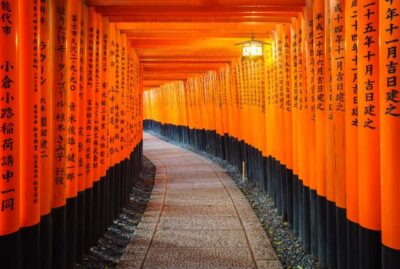
Kinkakuji,Arashiyama,FushimiInariShrine,NaraPark
Read our review →
Nara, Fushimi Inari Taisha, Arashiyama Bus Tour
Read our review →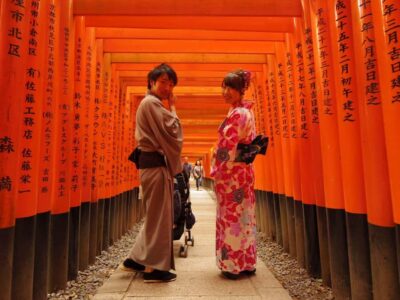
Arashiyama, Nara & Fushimi Inari Shrine w/Lunch
Read our review →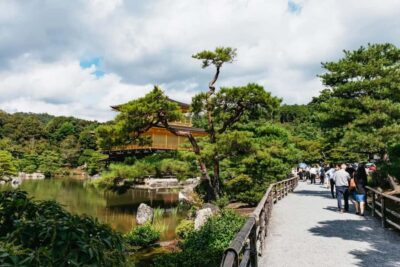
Nijo Castle, Kiyomizu & Fushimi Inari Guided Tour
Read our review →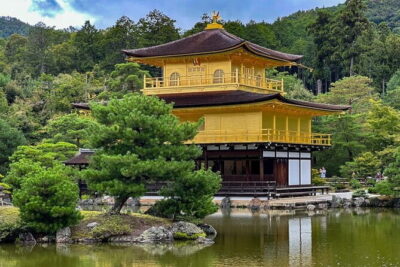
Nijo, Kinkaku-ji, Arashiyama, Kiyomizu & Fushimi Inari
Read our review →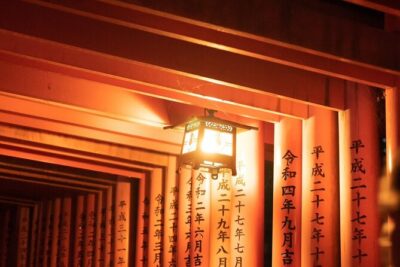
Browse the lists this tour appears in