
Reviewed · GOLDEN PAVILION TOURS
Kyoto top must-see Golden pavilion and Bamboo forest half-day Private tour
Kyoto’s famous sights are spread across the city, and this private half-day tour links the Golden Pavilion with Arashiyama’s bamboo grove without asking you to plan several train and bus connections. Guides such as Chihiro, Fuji, Yoshi, and Mutsumi add history, local customs, family stories, and practical help along the way.
I like the small private format, which lets you move at your group’s pace, and I like the thoughtful finish in Arashiyama, where your guide can point you toward lunch and explain how to reach places such as Fushimi Inari, Kiyomizu Temple, Gion, or Nijo Castle. The main catch is cost clarity: taxis and temple tickets are extra, and the tour does not return you to your hotel.
Key points at a glance
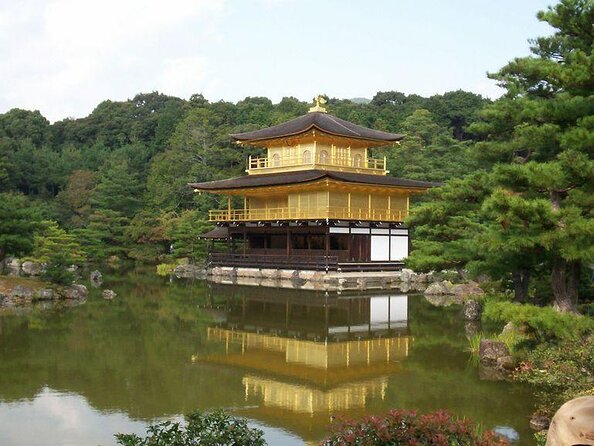
- Golden Pavilion first: Spend about 50 minutes at Kinkakuji, Kyoto’s shimmering gold temple and a UNESCO World Heritage site.
- A quieter temple stop: Jojakkoji gives you a calmer contrast to the city’s busiest attractions.
- A strong private-guide format: Your guide can adjust the pace, answer questions, help with photos, and explain modern Kyoto as well as its past.
- Arashiyama’s classic sights: Tenryuji, Togetsu Bridge, Kimono Forest, and the bamboo street follow in one efficient route.
- Know the extra costs: Taxi fares run about 6,000 yen per taxi, and temple admissions total about 1,500 yen per person.
- The tour ends in Arashiyama: Plan lunch, further sightseeing, or your own return trip from there.
Why this Kyoto route works for a first visit
This tour gives you a fast visual outline of Kyoto. In roughly four hours, you see the city’s best-known gold temple, a less crowded hillside temple, a major Zen temple garden, and Arashiyama’s signature bamboo path.
I like the route because it combines big-name sights with one quieter stop. Kinkakuji and the bamboo grove are popular for good reason, but they can feel intense when crowded. Jojakkoji supplies a pause, while Tenryuji adds a more measured garden visit.
The private format matters here. You are not tied to a large group’s walking speed, and the guide can respond to your interests. Chihiro, for example, is praised for her English, cultural explanations, and ability to answer many questions about Japanese life. She had also lived in the United States, giving her an easy way to explain differences between the two countries.
Guides vary by date. Past guide names include Yoshi, Tammy, Yumi, Kaori, Yoko, Chihiro, Fuji, Mutsumi, and Mieko. The strongest praise centers on friendly service, clear explanations, patience with children, and help with photos. Fuji was especially attentive to a family, making origami birds during a rest and offering lunch and return-trip advice after the tour.
More trips out to the Golden Pavilion:
- Kyoto: Fushimi Inari, Kinkakuji, Bamboo Grove 1 Day Bus Tour
★ 4.8 · 4,316 reviews - Osaka/Kyoto:Kinkakuji,Arashiyama,FushimiInariShrine,NaraPark
★ 4.1 · 1,596 reviews - Kyoto: Nijo, Kinkaku-ji, Arashiyama, Kiyomizu & Fushimi Inari
★ 5.0 · 699 reviews
Kinkakuji, Kyoto’s golden first impression
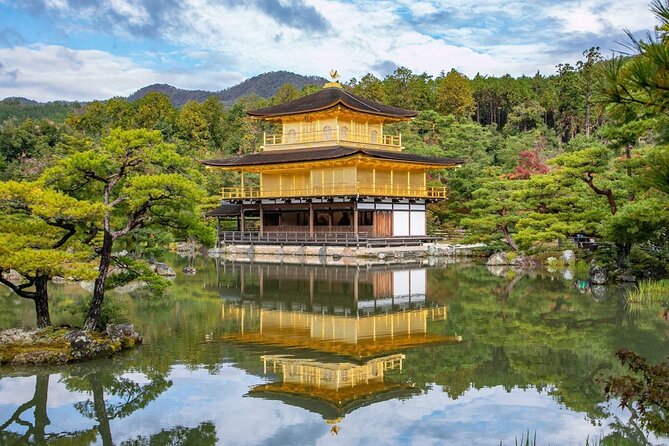
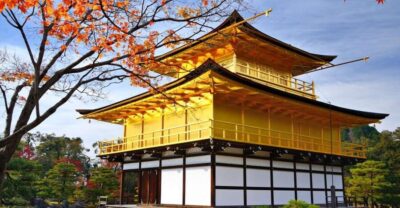
Your first main stop is Kinkakuji, better known as the Golden Pavilion. The building’s gold-covered upper levels reflect in the pond, creating one of Kyoto’s most recognizable views.
You have about 50 minutes here, enough to follow the sightseeing path, pause for photographs, and take in the pavilion from several angles. The temple served as a political center for the shogun, the military leader of samurai-era Japan, before becoming a religious site.
Kinkakuji is a UNESCO World Heritage site, but the visit is more about the powerful image than entering a quiet working temple. The pavilion itself draws attention immediately, and the surrounding grounds give you context for its setting. Your guide can help explain what you are seeing rather than leaving you to photograph the building and move on.
Admission is not included. The total admission cost for all temples is listed at about 1,500 yen per person, so carry extra money beyond the tour price.
Jojakkoji offers a quieter half hour
Jojakkoji is the tour’s change of pace. You spend about 30 minutes at this relatively uncrowded temple, whose name refers to an atmosphere like heaven.
That poetic idea is useful when deciding how much to expect. This is not another blockbuster sight on the scale of Kinkakuji. It is a chance to slow down, look carefully, and hear your guide explain the temple without the same pressure to move through a famous photo stop.
I would value this stop most on a first Kyoto visit because it helps you see a more peaceful side of the city. It also breaks up the day before the tour reaches Arashiyama’s better-known attractions.
Jojakkoji admission is also extra. The supplied timing is about 30 minutes, so this is an introduction rather than a long temple visit. If you want extended time for quiet reflection or photography, the schedule may feel short.
Tenryuji and its famous pond garden
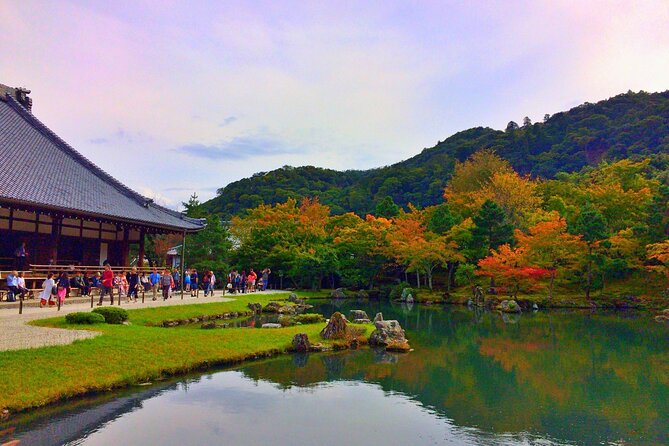
Tenryuji brings a different kind of beauty. The temple is known for its pond garden, designed by one of Japan’s great gardeners, and it is also a UNESCO World Heritage site.
You have about 20 minutes here. That is enough to see the garden’s main character and learn why it matters, but it is not enough for an unhurried exploration of every corner. Keep that in mind if gardens are your main reason for visiting Arashiyama.
The short visit makes sense within this route. Tenryuji sits close to the bamboo forest, so the tour can connect two major Arashiyama sights without wasting much time. Your guide also gives you background that can make the garden easier to read, from the placement of the pond to the relationship between the temple buildings and the surrounding scenery.
Admission is not included. The guide can help with navigation and explain the site, but you should expect to pay temple fees separately.
More mornings in Arashiyama and the bamboo grove:
- Kyoto/Osaka: Nara, Fushimi Inari Taisha, Arashiyama Bus Tour
★ 4.7 · 1,275 reviews - Kyoto Arashiyama Walking Tour: Bamboo, Monkeys, Gardens & Secrets
★ 5.0 · 1,216 reviews - Arashiyama Bamboo, Temple, Monkeys, or Secret Sake Brewery
★ 4.8 · 886 reviews - Kyoto: Arashiyama Bamboo Forest, Monkeys, Matcha & Temple Tour
★ 5.0 · 759 reviews
Togetsu Bridge gives you the classic Arashiyama photo
Togetsu Bridge is a signature Arashiyama scene. The tour includes a stop for photographs, though no separate duration is given.
This is a brief but useful pause. The bridge helps you understand Arashiyama as a district rather than just a bamboo path. It is a recognizable place to photograph, orient yourself, and see how the area’s river setting fits with the temples and wooded hills.
Do not count on a long, quiet bridge visit. The overall tour lasts about four hours, and several major stops still follow. Think of Togetsu Bridge as a photo opportunity within the route, not a full sightseeing session.
Kimono Forest adds color beside the station
The Arashiyama Kimono Forest is a modern photo stop made from about 600 poles in 36 kimono designs. It is free to visit and takes about 10 minutes on this tour.
This stop gives the day a different visual note. After gold leaf, temple wood, ponds, and bamboo, the patterned poles bring in bold fabric designs and a distinctly contemporary presentation of Japanese aesthetics.
Ten minutes is enough for a quick walk and photographs. It is not a museum visit or a formal cultural lesson, but your guide can connect the designs to the broader appeal of kimono patterns and Kyoto craft traditions if you ask.
Because admission is free and the stop is short, it fits neatly into the route. I see it as a pleasant extra rather than a reason to book the tour by itself.
Walking through Arashiyama’s bamboo forest
The bamboo forest street receives about 20 minutes. This is the image many people associate with Arashiyama: tall bamboo rising on both sides of a path, with light filtering through the stalks.
The tour takes you through the grove rather than simply dropping you nearby and leaving you to find it. That is useful because Arashiyama can be confusing when you are trying to link the bamboo path, Tenryuji, Togetsu Bridge, and the station area in a short visit.
Twenty minutes gives you a taste. You can walk through, take pictures, and listen to your guide, but you should not expect a long solitary stroll. The bamboo forest is one of Kyoto’s most popular sights, so the atmosphere can be busy, especially at favored photo points.
That is not a flaw unique to this tour. It is the tradeoff for seeing one of Kyoto’s most famous scenes. A private guide can make the visit more efficient, but cannot remove other people from a public attraction.
The value of a private guide
The guide is the main reason to choose this format over arranging the same sights alone. Pickup is offered, and the guide handles the route between distant parts of Kyoto by taxi.
The personal attention can be especially useful for families. One guide was praised for being attentive to a child, while another made origami birds for children during a short rest. Mutsumi was also praised for taking good photos, a small service that can matter when you want a picture of the whole group.
The best guides do more than recite dates. Tammy explained history while also discussing how she and her family live today. That mix gives you a more useful picture of Japan than temple facts alone. Chihiro was praised for answering many questions about Japanese culture and adjusting the walking pace.
Still, the exact guide is not guaranteed in the information provided. You may meet Chihiro, Fuji, Yoshi, Mutsumi, or another local guide. The overall feedback is very strong, with a 5 out of 5 rating from 52 reviews and 98 percent recommending the tour, but guide personalities and language styles can vary.
Taxi costs and the real price of the tour
The advertised price is $122.20 per person. That covers the selected local guide and pickup service, but it does not cover taxi fares or temple admissions.
Taxi travel is a major part of the route. The listed estimate is about 6,000 yen per taxi, depending on your hotel location and traffic. One taxi can carry a guide plus three guests. If your group has four guests, you need two taxis.
Temple admissions add about 1,500 yen per person for all temples. The extra costs do not make the tour poor value, but they do make the headline price incomplete. You are paying for a private guide, pickup, and a carefully linked route, while also paying separately for the transport that makes the route possible.
For two or three guests, sharing one taxi keeps the transport cost more manageable. Larger groups should calculate carefully before booking, since the second taxi can make a noticeable difference. Ask yourself if saving planning time and gaining a private guide is worth the total cost for your group.
Timing, walking, and the end in Arashiyama
The tour lasts about four hours. The scheduled temple and attraction times add up to about 130 minutes, with the rest used for taxi rides, walking, and transitions.
The description calls it a comfortable cab-based route, but you still walk through temple grounds, between sights, and along the bamboo forest street. One past account described the activity as a walking tour completed at a comfortable pace, so wear practical shoes and be ready to spend much of the visit on your feet.
The tour officially ends in Arashiyama. Return transfer is not included. This can be an advantage if you want to have lunch, continue sightseeing, or spend the afternoon around Togetsu Bridge and the bamboo grove.
It can also surprise you if you expect to be taken back to your hotel. One account raised an issue involving extra public transport after a guide escorted the group beyond the planned endpoint. The practical lesson is simple: treat Arashiyama as the finish, and budget your own return trip from there. Any additional transport arranged outside the stated route may cost extra.
Who should book this private Kyoto tour?
I would choose this tour if you are visiting Kyoto for the first time, have only half a day, and want the city’s major western sights explained in plain English. It suits couples, families, and small groups who value a private guide more than the lowest possible price.
It is also useful if you are uneasy about linking Kinkakuji and Arashiyama on your own. The two areas are not next door, and the taxi route saves time compared with piecing together public transport.
I would think twice if you want long visits at each temple, a slow photography session, or a full day focused only on gardens. The 20-minute Tenryuji visit and 20-minute bamboo forest visit are introductions, not deep explorations.
The route is also less suitable if you need a hotel return included. The finish in Arashiyama is clear, and you should plan what comes next before setting out.
Final decision: a useful first look at Kyoto
Book this tour if you want an efficient private introduction to Kyoto’s most recognizable sights. The combination of Kinkakuji, quiet Jojakkoji, Tenryuji, Togetsu Bridge, Kimono Forest, and bamboo gives you a broad first taste in four hours.
I especially like the contrast between the dazzling Golden Pavilion and the calmer temple stop, plus the practical advice offered at the end. Guides such as Chihiro, Fuji, and Mutsumi have added warmth through cultural explanations, family care, photography help, and small personal touches.
Go in with clear expectations about the price. Add roughly 6,000 yen per taxi and about 1,500 yen per person for temple admission, then arrange your own return from Arashiyama. If that cost and ending suit your plans, this is a smart way to get your Kyoto bearings fast.
FAQ
How long does the tour last?
The tour lasts approximately four hours.
Is hotel pickup included?
Yes. Pickup service is included, although the exact taxi cost depends on your hotel location and traffic conditions.
Are taxi fares included in the price?
No. Taxi fares are extra and cost about 6,000 yen per taxi, depending on the hotel location and traffic.
How many people can ride in one taxi?
One taxi can carry the guide plus three guests. A group of four guests needs two taxis.
Are temple admission fees included?
No. Admission fees are extra and total around 1,500 yen per person for all temples.
Where does the tour end?
The tour ends in the Arashiyama area. Return transfer to your hotel is not included.
Is this a private tour?
Yes. Only your group participates in the private activity.
Can I cancel for a full refund?
Yes, if you cancel at least 24 hours before the experience start time. Cancellations or changes made less than 24 hours in advance are not refunded or accepted.
Newest Kyoto experiences on the site
- Treasures of Kyoto: Gion & historical Walking Tour★ 5.0 · 6 reviews
- Whisk Your Own Matcha: A Zen Matcha Experience at Temple★ 3.6 · 7 reviews
- Kyoto tea town for matcha lovers★ 5.0 · 16 reviews
- Uji: Private immersion into Kyoto’s tea and reglious culture★ 5.0 · 17 reviews
- Kyoto Matcha Green Tea Tour★ 4.5 · 23 reviews
- Uji and Wazuka Matcha Farm Half Day Private Guided Tour★ 5.0 · 21 reviews
- Utilising upcycled Matcha! Creating matcha incense (Uji, Kyoto)★ 5.0 · 6 reviews
- Sacred Temple Yoga Experience in Japan★ 5.0 · 3 reviews
Golden Pavilion Tours, compared.
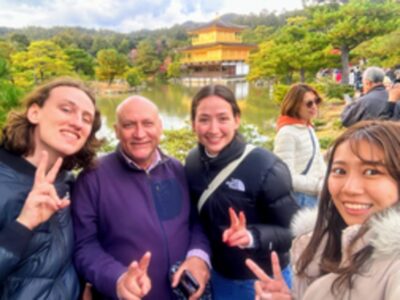
Fushimi Inari, Kinkakuji, Bamboo Grove 1 Day Bus Tour
Read our review →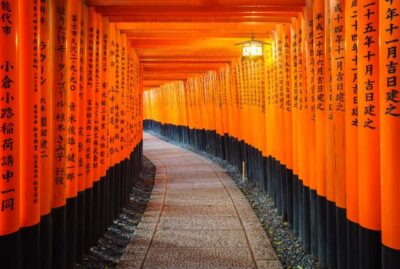
Kinkakuji,Arashiyama,FushimiInariShrine,NaraPark
Read our review →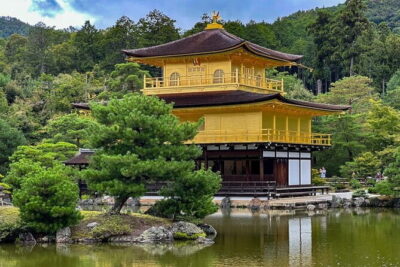
Nijo, Kinkaku-ji, Arashiyama, Kiyomizu & Fushimi Inari
Read our review →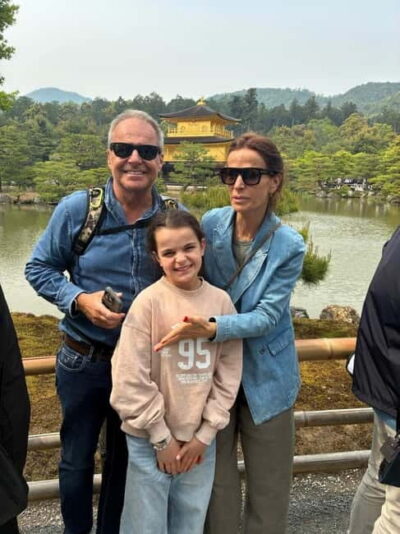
Kyoto Bamboo Forest & Golden Pavilion E-Bike Tour
Read our review →
Golden Pavilion, Nijo Castle, & Nishiki Market Half day tour
Read our review →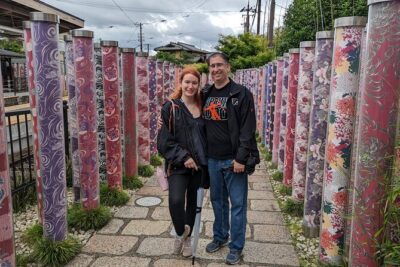
Full day Kyoto Walk in Fushimi, Arashiyama, Monkey, and Kinkakuji
Read our review →Browse the lists this tour appears in