
Reviewed · FUSHIMI INARI TOURS
From Osaka/Kyoto: Kyoto, Nara, and Fushimi Inari Day Trip
A single day links Arashiyama’s towering bamboo, Fushimi Inari’s red torii gates, and Nara’s free-roaming deer. I like the private van setup and the chance to shape the day around your own group. I also like that the route covers three very different sides of Japan without asking you to change trains.
The tradeoff is pace. You get a generous list of famous places, but ten hours can feel tight once you add walking and the road time between stops. Guides Hamza and Usama have earned praise for punctual, thoughtful service, including helping with a child’s chair and speaking respectfully with local people.
Key points at a glance
- A private van for up to six people keeps the group together and makes pickup from Osaka or Kyoto simple.
- Arashiyama comes first, giving you bamboo paths before the day’s later temple and shrine visits.
- Fushimi Inari offers a flexible walk, from a short look at the gates to a longer climb up the wooded hill.
- Nara Park brings you close to sacred deer, with Todai-ji and Kasuga Taisha nearby.
- Hamza and Usama are praised for careful service, punctual pickups, and helpful attention to families.
- The $516 group price favors small parties, especially when six people share the cost.
A full day from Kyoto’s bamboo to Nara’s lanterns
This is a packed sightseeing day with a clear appeal: you see major highlights in Kyoto and Nara without organizing several separate outings. The private format matters here. Your party of up to six can ride together, and pickup and drop-off are available in either Osaka or Kyoto.
The published driving sections add up to about two and a half hours, not counting traffic or time spent getting in and out. That leaves roughly seven and a half hours for sightseeing within the ten-hour schedule. I would treat the day as a highlights tour, not a slow study of every temple garden and shrine path.
The van also gives you a break between walks. That is useful in summer heat, winter chill, or on a day when children and older family members need regular rests. The activity is marked wheelchair accessible, though the stops include outdoor paths, temple grounds, and shrine walks. If someone in your group uses a wheelchair, confirm the practical route with the host before setting out.
More ways to walk the Fushimi Inari gates:
- Kyoto: Fushimi Inari, Kinkakuji, Bamboo Grove 1 Day Bus Tour
★ 4.8 · 4,316 reviews - Fushimi Inari Hidden Hiking Tour (Private Option Available)
★ 5.0 · 1,750 reviews - Osaka/Kyoto:Kinkakuji,Arashiyama,FushimiInariShrine,NaraPark
★ 4.1 · 1,596 reviews
Arashiyama Bamboo Forest, your first major stop
Arashiyama opens the day with one of Kyoto’s most recognizable sights: a path lined with tall bamboo. The green stalks rise well above you, and the narrow walk creates a calm visual rhythm that feels very different from central Kyoto streets.
You have a self-guided visit here, so this stop works best if you already know what pace you want. Take a short walk for photographs, or use the time to slow down and enjoy the quiet sections. The supplied timing does not state exactly how long you remain, so ask your host how the day’s schedule is being managed.
The main drawback is that the bamboo forest is famous for good reason, which means it can be hard to experience as a private, silent retreat. The attraction is also mainly about the path itself. If you expect a long guided explanation or several formal exhibits, this stop may feel brief.
I like having it at the start. You are fresh for walking, and the first 40-minute van ride gives you a sensible transition from your pickup point into Kyoto sightseeing. Wear shoes that can handle uneven outdoor surfaces, and bring weather-appropriate clothing rather than relying on the forecast alone.
Fushimi Inari and its long red tunnel
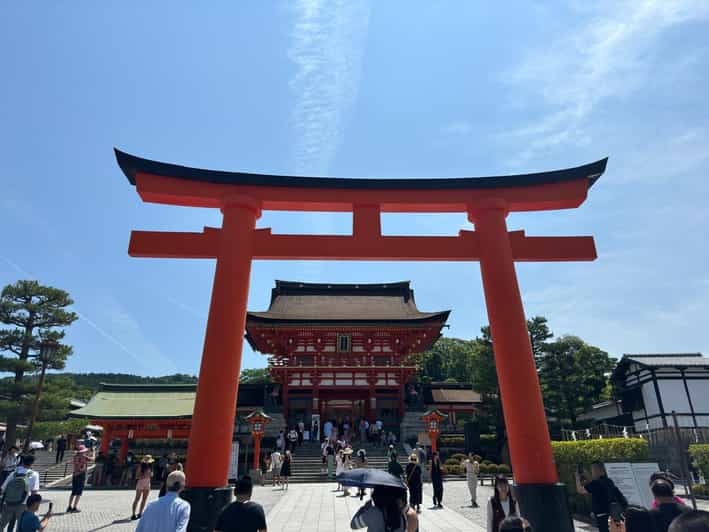
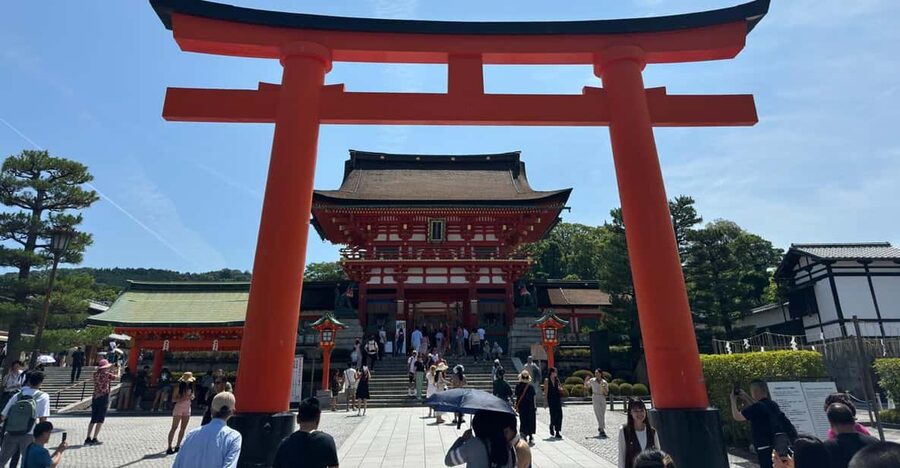
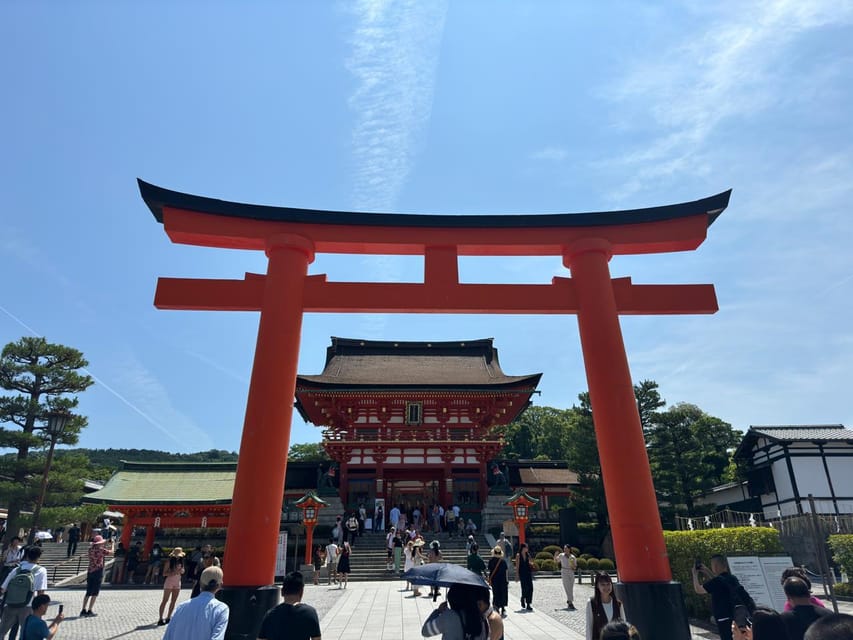
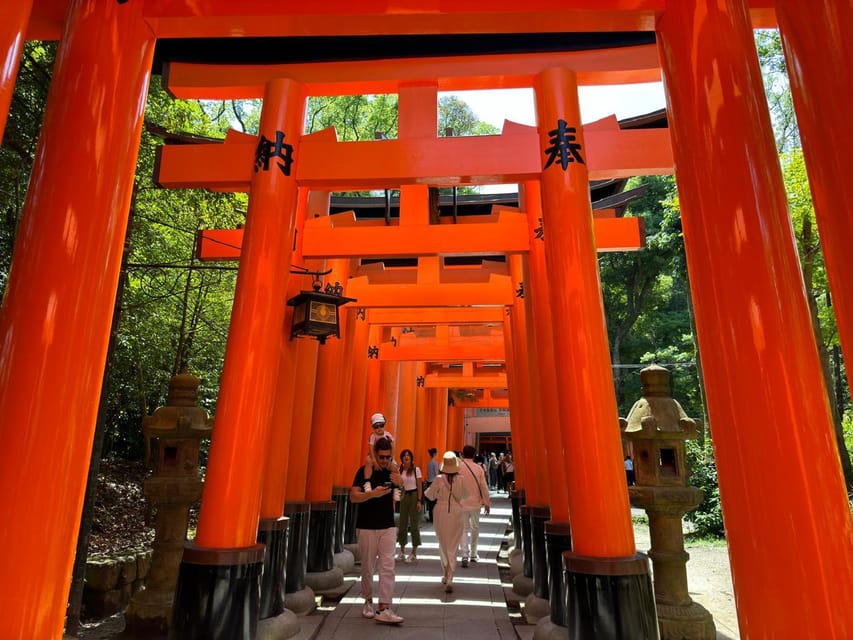
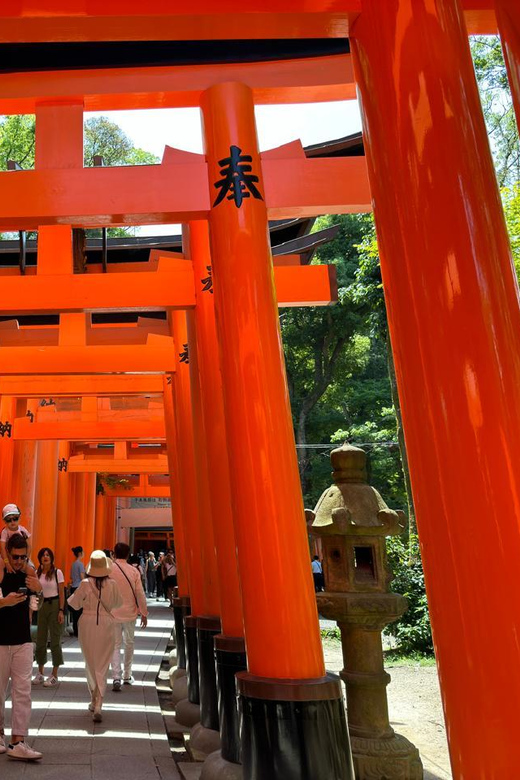
After about 30 minutes by van, you reach Fushimi Inari Taisha. The shrine is known for thousands of vermilion torii gates, which form striking passages through the wooded hillside.
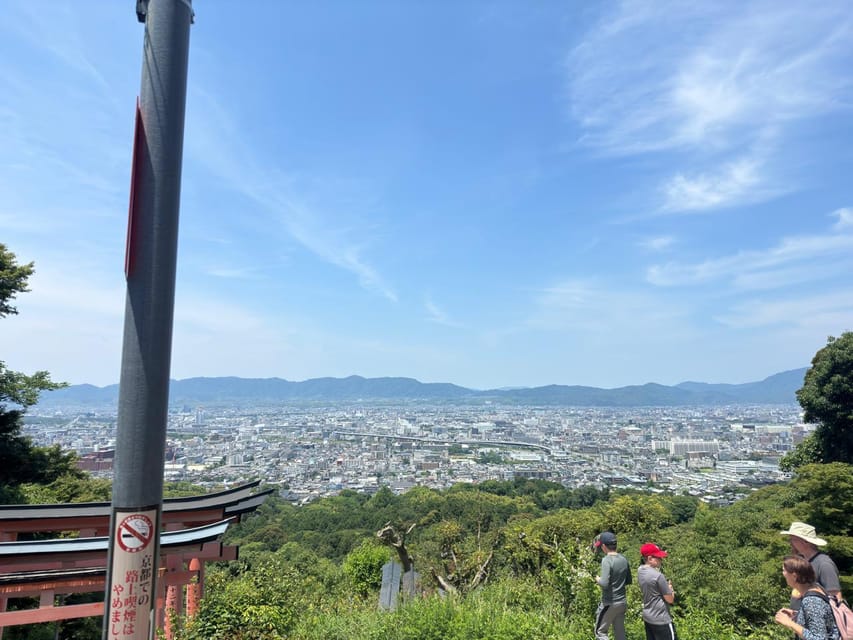
This is not just a quick photo stop unless you choose to make it one. You can walk through the lower gates and get a strong sense of the place, or continue farther along the winding route. The higher you go, the more the visit becomes a hill walk rather than a simple shrine stop. The tour description specifically points to views over Kyoto, so the climb can reward you with more than the gates themselves.
Your time is the key issue. Fushimi Inari can absorb a full morning, while this tour must also reach Nara. I would decide before arrival how far you want to walk. Families, people with limited mobility, and anyone tired from Arashiyama may prefer the lower section. Strong walkers may want to use every available minute here, but should remember that Todai-ji and Kasuga Taisha still lie ahead.
The spiritual atmosphere is part of the appeal. The torii are not merely decorative arches placed for tourists. They create a repeated passage from the shrine grounds into the forest, with the color and shape changing as you move uphill. Keep your voice low and follow local guidelines, especially around worship areas.
Nara Park and the deer
The next 40-minute drive takes you to Nara, Japan’s first permanent capital. Nara Park is the most relaxed part of the day in one sense, because you can stroll among open grounds rather than follow one narrow route.
The deer are the obvious draw. They roam through the park and are regarded as sacred messengers of the gods. You can see them at close range, but the right attitude is respectful wildlife etiquette, not treating them like pets. Follow local guidance, avoid littering, and keep your movements calm.
The deer also make Nara especially appealing for families. Children get a memorable introduction to a living part of Japanese religious culture, rather than only looking at buildings. At the same time, the animals are still animals. I would keep snacks and loose items under control and follow instructions given locally.
Nara Park is also your chance to recover between the more structured visits. The walking is still real, but the setting is open and scenic. Comfortable shoes matter more here than fashionable footwear. The activity asks you to bring a camera, and this is one of the stops where you will likely want it close by.
More day trips down to Nara:
- Kyoto/Osaka: Nara, Fushimi Inari Taisha, Arashiyama Bus Tour
★ 4.7 · 1,275 reviews - Osaka/Kyoto: Arashiyama, Nara & Fushimi Inari Shrine w/Lunch
★ 4.4 · 754 reviews - Kyoto and Nara Day Trip from Kyoto
★ 4.5 · 445 reviews - Full Day Guided Tour to Kyoto and Nara from Osaka by Van
★ 5.0 · 420 reviews
Todai-ji and the Great Buddha Hall
Todai-ji gives the Nara portion its architectural centerpiece. The temple’s Great Buddha Hall houses the world’s largest bronze statue of Buddha, making this more than a quick stop for a few exterior photographs.
The scale is what you should expect to notice first. After walking through Nara Park, entering a major temple hall shifts your attention from animals and open paths to wood, ceremony, and the huge Buddha image. The visit is listed as a walk, so plan for time on your feet around the temple grounds.
This is also where the tour’s broad range works well. In one day you move from Kyoto’s bamboo, to a shrine lined with torii, to Nara’s deer, and then to one of Japan’s most important Buddhist sites. Each stop offers a different visual language and a different reason to pay attention.
The schedule may not allow for an in-depth study of every part of the temple complex. I would focus on the Great Buddha Hall and use any spare time to notice the scale of the grounds. Admission details are not specified in the supplied information, so confirm what is covered before booking if entrance fees matter to your budget.
Kasuga Taisha and the lantern-lined finish
Kasuga Taisha is the final major stop. The shrine is known for thousands of lanterns, and they give the grounds a special mood when the light begins to soften toward dusk.
The timing could make this one of the most atmospheric stops of the day. The description presents a magical glow at dusk, but the exact departure time is not stated. I would ask your host whether the schedule is expected to place you there late in the day, since road conditions and the length of earlier walks can affect the timing.
Kasuga Taisha is a good contrast to Fushimi Inari. Fushimi is defined by long rows of bright torii gates climbing a hill. Kasuga is defined by lanterns and a more subdued shrine setting. Seeing both in one day helps you notice how different sacred places can feel, even when both involve forest paths and religious buildings.
Because this comes after Nara Park and Todai-ji, tired legs are a reasonable concern. If your group includes children, older adults, or anyone who needs a slower pace, tell the guide early. The activity is described as wheelchair accessible, but the amount of walking across multiple historic sites still deserves practical discussion.
Private transport, guide service, and group comfort
The private van is the backbone of this experience. Pickup is available in Osaka or Kyoto, followed by roughly 40 minutes to Arashiyama, 30 minutes to Fushimi Inari, 40 minutes to Nara, and another 40 minutes back toward the drop-off location. The listed return options are Osaka and Kyoto.
That arrangement saves you from piecing together rail routes and local connections on a day with several stops. It also means the driver must deal with traffic, so keep some flexibility in your expectations. The ten-hour duration is fixed, but road time can influence how long you have at each site.
The host or greeter speaks English. Hamza has been praised for punctual pickup, opening the vehicle door, and adjusting a chair so children could sit comfortably in the back. He also handled a conversation with an elderly okonomiyaki cook in Japanese with courtesy. Those details suggest the kind of practical, attentive service that can matter more than a long lecture on dates and names.
Usama has also been praised as a helpful driver. The available feedback is limited, so I would not assume every booking has the same guide. Still, asking for Hamza or Usama by name, if they are available, may be useful for families who care about patient assistance and smooth coordination.
What the $516 group price means
The price is $516 per group of up to six people. For six people, that works out to $86 per person. For four people, it is $129 per person, and for two people, $258 per person.
That makes the tour much better value for a full family or friend group than for a couple. You are paying for a private vehicle, pickup and drop-off, and a full ten-hour route across two major destinations. You are not simply paying for entry to one attraction.
The value is also about time. Organizing Arashiyama, Fushimi Inari, and Nara independently can require careful transfers and more attention to the clock. The van keeps the day under one arrangement, which is useful if you are staying in Osaka and want to include Kyoto, or staying in Kyoto and want to add Nara.
For one or two people, compare the cost with other transport options before booking. For a group of five or six, the shared rate becomes easier to justify, especially if door-to-door service and a private schedule are high priorities. Entrance costs, food, and any items not listed as included should be confirmed separately.
Practical advice before you go
Wear comfortable shoes. You will walk at four separate sightseeing areas, and Fushimi Inari can involve an uphill route if you choose to continue beyond the lower gates.
Bring a camera, but do not let photographs turn every stop into a rushed checklist. At Fushimi Inari, decide how far you want to go. At Nara, leave enough attention for the deer and the setting. At Kasuga Taisha, watch the light if the timing reaches dusk.
Dress for changing weather. The tour advises weather-appropriate clothing, and much of the day takes place outdoors. Smoking, alcohol, drugs, fireworks, littering, and alcoholic drinks in the vehicle are not allowed.
Free cancellation is available up to 24 hours before the activity for a full refund. You can also reserve now and pay later, which helps if your Osaka or Kyoto plans are still shifting. The activity is not suitable for people over 95, according to the stated conditions.
Who should book this Kyoto and Nara day trip?
I would choose this for a group of up to six that wants the major sights without managing several train journeys. It is especially practical for families, since the private van provides a shared base and the deer give children a memorable focus.
It also suits first-time visitors who want a broad introduction rather than a slow, single-city day. You see bamboo, Shinto shrines, Buddhist architecture, woodland paths, and Nara’s deer in one sweep.
I would hesitate if you want long, unhurried time at each site, or if you dislike spending part of a sightseeing day in a vehicle. The route is full and the walking adds up. Couples should also examine the per-person cost carefully.
Should you book it?
Book this tour if your priority is coverage, convenience, and a private vehicle for your own group. The strongest reasons are the door-to-door setup, the rare chance to join Kyoto and Nara in one day, and the careful service associated with guides such as Hamza and Usama.
Skip it if you would rather spend a full day in one place, climb all of Fushimi Inari at your own pace, or keep your budget low for a small party. For six people who want to see a lot without handling the transport themselves, the $516 group price can make practical sense.
FAQ
How long does the tour last?
The tour lasts 10 hours.
Where can pickup and drop-off take place?
Pickup and drop-off options are available in Kyoto and Osaka.
How many people can join the private group?
The price covers one private group of up to six people.
What language does the host or greeter speak?
The host or greeter speaks English.
Is the activity wheelchair accessible?
Yes, the activity is described as wheelchair accessible. Since the route includes walking at several outdoor sites, you should discuss practical needs with the host before the day begins.
What sights are included?
The route includes Arashiyama Bamboo Forest, Fushimi Inari Taisha, Nara Park, Todai-ji, and Kasuga Taisha.
Can I cancel for a full refund?
Yes. You can cancel up to 24 hours in advance for a full refund.
What should I bring?
Bring comfortable shoes, a camera, and clothing suited to the weather. Smoking, alcohol, drugs, fireworks, and littering are not allowed, and alcoholic drinks cannot be brought into the vehicle.
More Days That Pair Kyoto With Osaka
- One-Day Tour of Kyoto’s Highlights from Osaka/Kyoto
★ 4.5 · 1,092 reviews - Nara Afternoon Tour from Kyoto or Osaka
★ 4.5 · 390 reviews - Kyoto Morning Tour from Kyoto or Osaka
★ 4.0 · 281 reviews - Kyoto/Osaka: Kyoto and Nara Customized Private Guided Tour
★ 4.6 · 258 reviews
Newest Kyoto experiences on the site
- Treasures of Kyoto: Gion & historical Walking Tour★ 5.0 · 6 reviews
- Whisk Your Own Matcha: A Zen Matcha Experience at Temple★ 3.6 · 7 reviews
- Kyoto tea town for matcha lovers★ 5.0 · 16 reviews
- Uji: Private immersion into Kyoto’s tea and reglious culture★ 5.0 · 17 reviews
- Kyoto Matcha Green Tea Tour★ 4.5 · 23 reviews
- Uji and Wazuka Matcha Farm Half Day Private Guided Tour★ 5.0 · 21 reviews
- Utilising upcycled Matcha! Creating matcha incense (Uji, Kyoto)★ 5.0 · 6 reviews
- Sacred Temple Yoga Experience in Japan★ 5.0 · 3 reviews
Fushimi Inari Tours, compared.

Fushimi Inari, Kinkakuji, Bamboo Grove 1 Day Bus Tour
Read our review →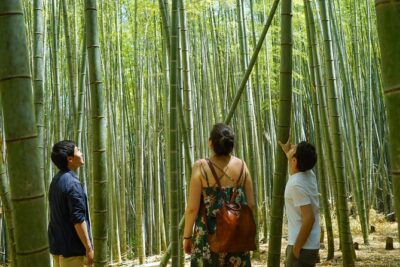
Fushimi Inari Hidden Hiking Tour (Private Option Available)
Read our review →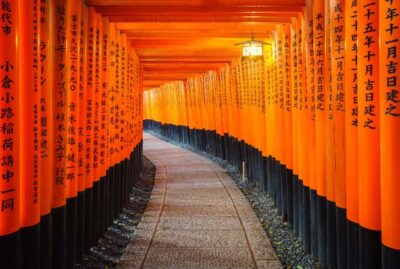
Kinkakuji,Arashiyama,FushimiInariShrine,NaraPark
Read our review →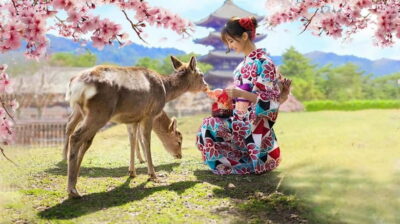
Nara, Fushimi Inari Taisha, Arashiyama Bus Tour
Read our review →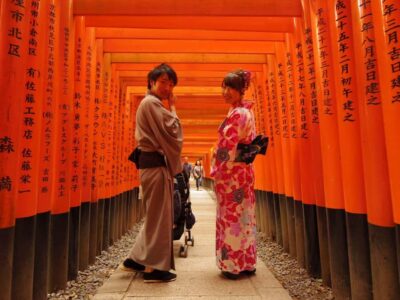
Arashiyama, Nara & Fushimi Inari Shrine w/Lunch
Read our review →
Nijo Castle, Kiyomizu & Fushimi Inari Guided Tour
Read our review →
Nijo, Kinkaku-ji, Arashiyama, Kiyomizu & Fushimi Inari
Read our review →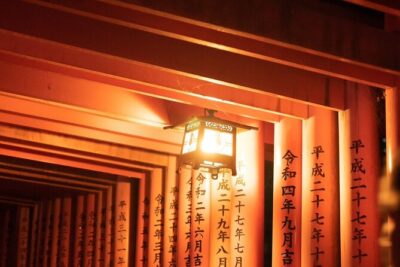
Browse the lists this tour appears in