
Reviewed · KYOTO COOKING CLASSES
Private Kyoto Market Tour and Authentic Cooking Class with Aki
Kyoto’s best food lessons often begin away from the famous sights. With Aki, you spend about 45 minutes at Demachiyanagi Shoutengai, choosing ingredients at a local market before taking a short bus ride to her home kitchen. I like the market-to-table format and the chance to learn dishes that may not appear on restaurant menus.
I also like the private setting, where Aki can adjust the lesson to beginners, experienced cooks, vegetarians, and people with dietary needs. The main consideration is the firm cancellation policy, and the four-hour experience requires getting to the meeting point at 10:30 a.m. without hotel pickup.
Key points to know before booking
- You shop before you cook: The market visit gives you context for the vegetables, regional produce, and everyday Japanese ingredients used in the meal.
- Aki teaches in her home: After a roughly 10-minute bus ride, the cooking class takes place in her private kitchen, not a commercial school.
- The class is fully private: Only your group participates, so the pace and food choices can be personalized.
- The meal is part of the lesson: You prepare the dishes, then sit down to eat what you made with beverages included.
- English recipes are provided: You leave with written guidance for making the dishes again at home.
- Plan carefully: The tour starts at 10:30 a.m., lasts about four hours, and cannot be refunded or changed after booking.
Why this Kyoto cooking class feels different
A cooking class can be little more than a recipe demonstration. This one adds the part many food lovers value most: learning how ingredients enter a Japanese kitchen in the first place.
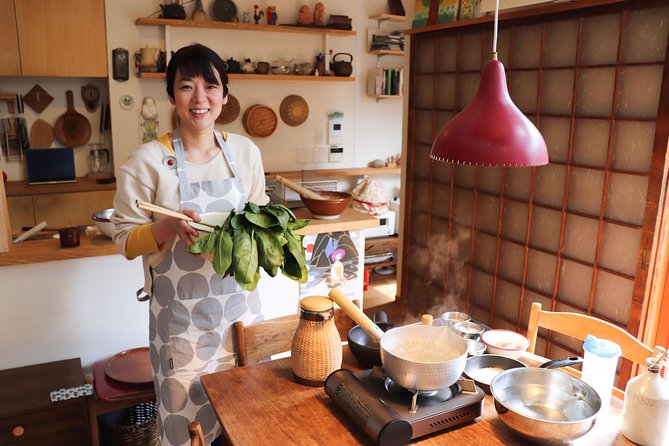
Your morning begins at Demachi Futaba, at 236 Seiryūchō in Kyoto’s Kamigyo Ward. From there, Aki takes you through Demachiyanagi Shoutengai, a neighborhood street market with basic Japanese food ingredients, seasonal vegetables, and higher-quality regional produce. You are not simply handed a prepared basket of food. You help select some of what will later appear on your plate.
That small change matters. It helps you connect the finished dish with the produce, season, and shopping habits of daily life in Kyoto. Aki can also explain ingredients as you encounter them, which is especially useful if Japanese food terms are familiar only from restaurant menus.
The market visit lasts about 45 minutes, so it is focused rather than exhausting. You will not spend half the morning wandering through every stall. Instead, the time is used to choose a few vegetables and ingredients for the cooking lesson.
More cooking classes in Kyoto:
- Ramen Cooking Class at Ramen Factory in Kyoto
★ 5.0 · 1,937 reviews - Kyoto: Ramen Cooking Class at a Ramen Factory with Souvenir
★ 4.9 · 532 reviews - Kyoto: Ramen, Gyoza, and Onigiri Cooking Class
★ 5.0 · 445 reviews
Demachiyanagi Shoutengai: a useful first stop
Demachiyanagi Shoutengai offers a view of Kyoto beyond its major temples and sightseeing streets. The experience takes you into a local shopping area, where the emphasis is on food and neighborhood life rather than big-ticket attractions.
You might find the market visit most rewarding if you enjoy asking questions about ingredients. Aki helps bridge the language gap with shop owners, and the experience gives you a better sense of how Japanese food is bought before it is cooked.
The market is also where the private format starts to pay off. Aki can explain why one item is chosen over another, point out regional produce, and shape the meal around what is suitable and available. The menu changes with the season, so you should not book expecting a fixed list of dishes.
That seasonal approach is a plus for repeat visitors to Japan and anyone interested in food culture. It also means the experience is less predictable than a class built around a permanent menu. If you need particular dishes, mention your preferences when booking, but understand that the final menu may still vary.
A short Kyoto bus ride to Aki’s home
After the market, you take a bus to Aki’s home. The ride takes about 10 minutes and covers four bus stops. This is a modest transfer, but it is worth factoring into your expectations: the class is not located at the market, and the experience includes moving through the city between its two parts.
I like this transition because it keeps the morning connected to ordinary Kyoto life. You shop in a neighborhood market, ride public transport, and then cook in a local home. The sequence feels more personal than a lesson held in a purpose-built studio.
The trade-off is that you need to follow the timing closely. The meeting point is the starting and ending point, and hotel pickup and drop-off are not included. Give yourself enough time to reach Demachi Futaba for the 10:30 a.m. start.
An hour of hands-on cooking in a private kitchen
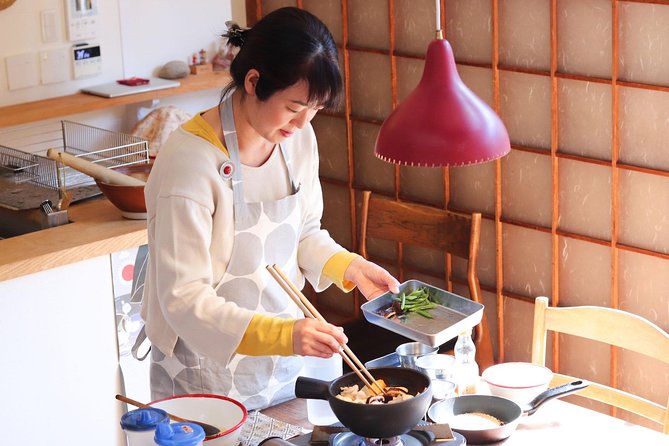
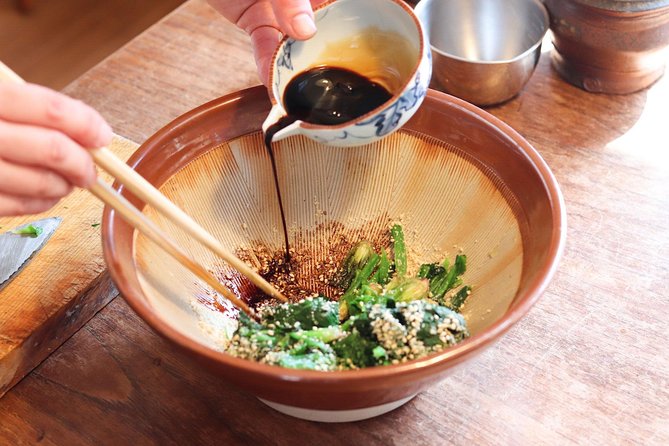
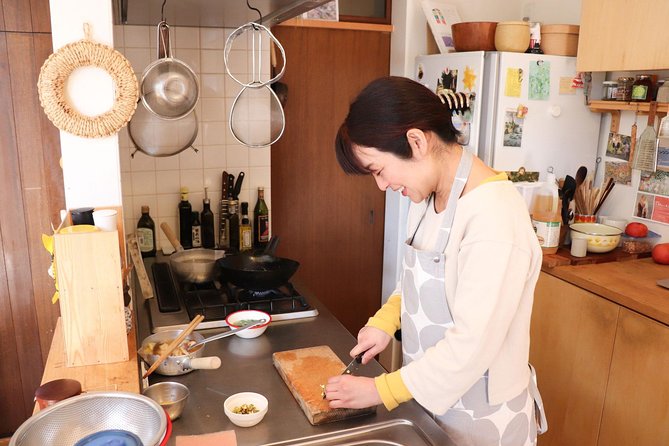
The cooking portion lasts about one hour. Aki provides recipes in English and guides you through the preparation, with the focus on doing the work yourself rather than simply watching her cook.
That makes the experience suitable for a wide range of ability levels. If you are new to Japanese cooking, you can learn the basic process under close guidance. If you already cook, you can focus on Aki’s methods and the small tips that are hard to pick up from a cookbook.
The lesson includes familiar Japanese food, along with dishes that may not be served in restaurants. Miso soup is one example of a familiar classic where Aki can share less obvious preparation tips. The class therefore has two useful layers: learning how to make a meal, and learning how home cooking differs from restaurant food.
A private lesson also gives you room to speak up. You can ask about ingredients, cooking steps, or substitutions as they arise. That is harder to do in a large class, where the instructor must keep everyone moving at the same pace.
The available information does not provide a fixed dish list, so you should treat the menu as seasonal and flexible. Tell the provider about allergies, dietary restrictions, or cooking preferences when you book. A vegetarian option is available if requested in advance.
Same city, a completely different kind of day:
- PERFECT KYOTO 1-Day Bus Tour
★ 5.0 · 13,518 reviews - Kyoto: Fushimi Inari, Kinkakuji, Bamboo Grove 1 Day Bus Tour
★ 4.8 · 4,316 reviews - Kyoto: Tea Ceremony in a Traditional Tea House in Kiyomizu
★ 4.9 · 3,519 reviews - Kyoto Geisha Walking Tour: Gion District & Hidden Gems
★ 4.7 · 3,273 reviews
Eating the meal you helped prepare
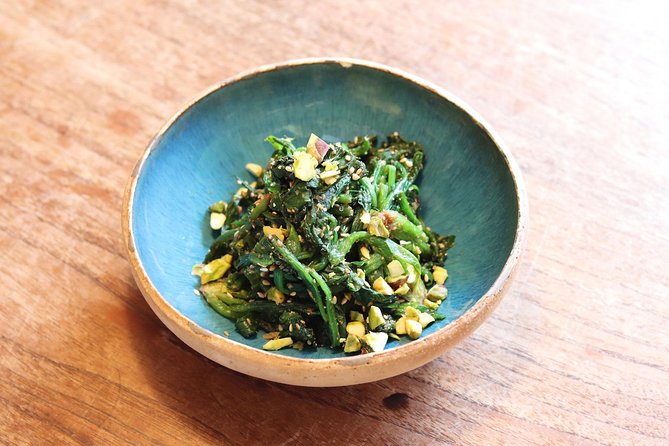
After the cooking, you sit down to eat the meal you made. This is not a separate restaurant visit tacked onto the end. It is the payoff for the shopping and preparation that came before it.
A home meal also lets you see how locals live and dine, at least in the limited setting of Aki’s kitchen and dining space. That personal setting is one of the strongest reasons to choose this experience over a standard cooking school.
The meal includes nonalcoholic beverages. The experience details also state that one or two glasses of local alcohol are included, so if that matters to you, confirm the current serving arrangement when booking. You can still participate without alcohol, since nonalcoholic beverages are listed as included.
The strongest praise for this experience centers on the warmth of the meal and the quality of the time with Aki. One family described the cooking in her home as especially memorable for their daughter. Another called the meal the best they had in Japan. Those are personal impressions, not guarantees, but they point to the experience’s real strength: the food is tied to hospitality and conversation, not just technique.
What the private format is worth at $119
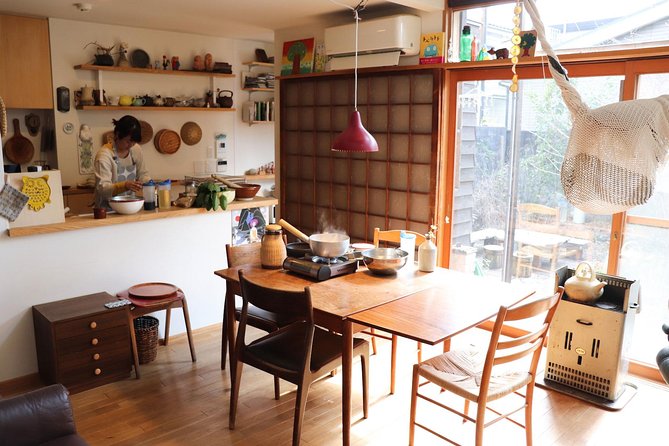
At $119 per person, this is not the cheapest way to eat in Kyoto. You could spend far less on a market snack or a casual restaurant meal. The price makes more sense when you count the separate elements included in one morning: a private market tour, a guided cooking lesson, a home-cooked meal, recipes in English, beverages, and personal attention.
The four-hour length also helps explain the cost. You are paying for time with Aki, not only for ingredients. A group class may offer a lower price, but it may not provide the same freedom to ask questions or discuss your own food preferences.
The value is strongest for people who want to recreate Japanese dishes after returning home. The recipes and market explanations give the class a life beyond the meal itself. You learn what to look for, how ingredients fit together, and how a familiar dish may be handled in a home kitchen.
The price is less compelling if you mainly want to eat, see a market quickly, and move on. The cooking is central, and you should be ready to spend about an hour preparing food before sitting down to eat.
This experience is often booked well ahead, with an average booking time of 97 days in advance. That is useful planning information, especially if your Kyoto dates are fixed. Confirmation is sent within 48 hours of booking, subject to availability.
Who will get the most from this experience
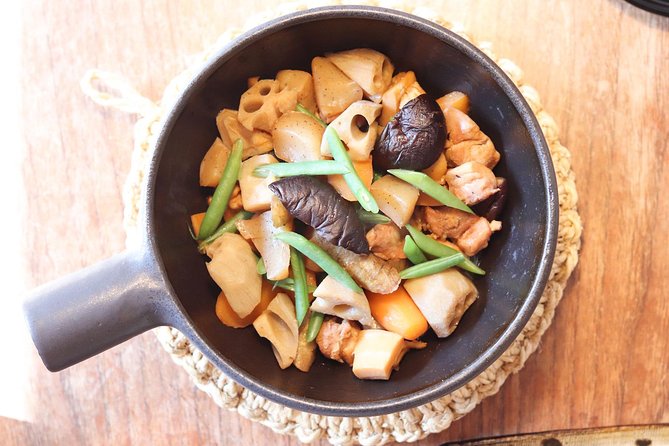
I would choose this class if you fit one or more of these descriptions:
- You love Japanese food and want to make it at home.
- You prefer a private lesson to a large group class.
- You enjoy markets and want help understanding what you see.
- You want a home-based experience rather than a restaurant meal.
- You are a beginner who benefits from close instruction.
- You already cook and want practical tips on Japanese dishes.
- You are traveling as a family or small group and want an activity that encourages conversation.
It is also a good option for someone who has already seen Kyoto’s main temples and wants a morning centered on ordinary food culture. The tour does not replace sightseeing, and it is not designed as a broad introduction to every part of the city. Its focus is narrower and more useful: shop, cook, eat, and learn from one local host.
I would hesitate if you have a tight morning schedule, dislike public buses, or want complete control over the menu. The bus ride is short, but it is part of the plan. The menu changes by season, and the cancellation terms are strict: the experience is non-refundable and cannot be changed after booking.
Practical details that matter on the day
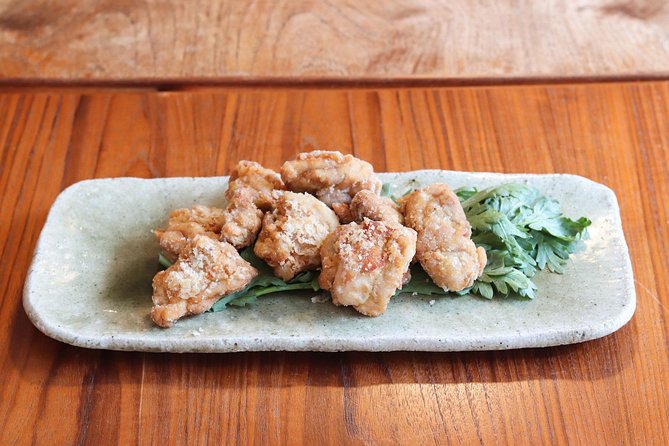
Plan to arrive at the meeting point before the 10:30 a.m. start. The tour begins at Demachi Futaba, 236 Seiryūchō, Kamigyo Ward, Kyoto, 602-0822, Japan, and ends back at the meeting point.
Bring any dietary information to the booking stage, not the morning itself. Vegetarian cooking is available with advance notice, and allergies, restrictions, and cooking preferences should be shared when you reserve.
The mobile ticket is convenient, but it does not include transportation to the starting point. Hotel pickup and drop-off are not offered. You will also take a local bus between the market and Aki’s home, so allow for the fixed sequence rather than treating this as a drop-in cooking lesson.
The experience is private, meaning only your own group participates. That is particularly helpful if your group has mixed cooking ability or wants to ask many questions. It also makes the class a better fit for families and close friends than for solo visitors hoping to meet a larger social group.
Is Aki’s market and cooking tour worth booking?
Yes, if you want a personal food experience with a clear connection between Kyoto shopping and home cooking. The private market visit, short bus ride, English recipes, and meal prepared in Aki’s kitchen give the morning a natural rhythm. You do not just watch Japanese food being made. You see ingredients chosen, learn how they are handled, and then eat the result.
Book it if Aki’s home setting and personal instruction appeal to you, especially if you plan to cook Japanese food after your trip. Skip it if you want a fixed menu, hotel transportation, or a quick food stop with no hands-on work.
At $119, the value depends on your interest in the full experience. For a food lover, the private attention and home meal make the price reasonable. For someone seeking only a cheap lunch, it is not the right choice.
FAQ
How long does the Kyoto market and cooking experience last?
The experience lasts approximately four hours.
What time does the tour begin?
It begins at 10:30 a.m.
Where does the experience start and end?
It starts at Demachi Futaba, 236 Seiryūchō, Kamigyo Ward, Kyoto, 602-0822, Japan, and ends back at the meeting point.
Is the cooking class private?
Yes. Only your group participates in the activity.
Is vegetarian cooking available?
Yes. A vegetarian option is available, but you should request it when booking.
Are food and drinks included?
A home-cooked Japanese meal and nonalcoholic beverages are included. The experience details also state that one or two glasses of local alcohol are included.
Can the booking be canceled or changed?
No. The experience is non-refundable and cannot be changed for any reason after booking.
Newest Kyoto experiences on the site
- Treasures of Kyoto: Gion & historical Walking Tour★ 5.0 · 6 reviews
- Whisk Your Own Matcha: A Zen Matcha Experience at Temple★ 3.6 · 7 reviews
- Kyoto tea town for matcha lovers★ 5.0 · 16 reviews
- Uji: Private immersion into Kyoto’s tea and reglious culture★ 5.0 · 17 reviews
- Kyoto Matcha Green Tea Tour★ 4.5 · 23 reviews
- Uji and Wazuka Matcha Farm Half Day Private Guided Tour★ 5.0 · 21 reviews
- Utilising upcycled Matcha! Creating matcha incense (Uji, Kyoto)★ 5.0 · 6 reviews
- Sacred Temple Yoga Experience in Japan★ 5.0 · 3 reviews
Kyoto Cooking Classes, compared.
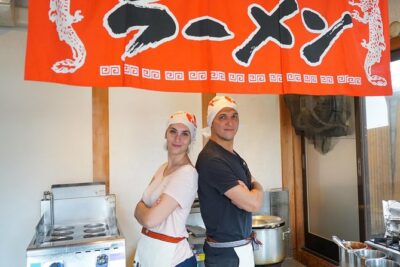
Ramen Cooking Class at Ramen Factory in Kyoto
Read our review →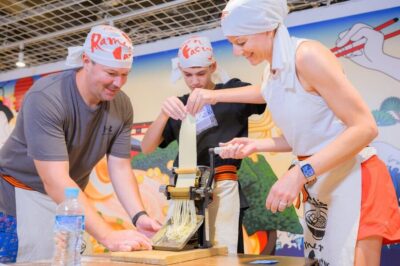
Ramen Cooking Class at a Ramen Factory with Souvenir
Read our review →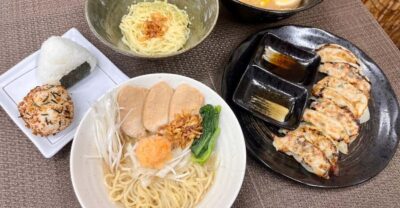
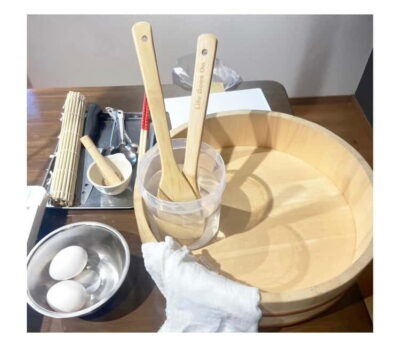
Japanese Washoku Bento Small Group Cooking Class
Read our review →
Kyoto Ramen and Gyoza Cooking Class with Professional Chefs
Read our review →
Gyoza Cooking Class in Kyoto: Traditional Japanese Dumplings
Read our review →Browse the lists this tour appears in