
Reviewed · KYOTO COOKING CLASSES
Gyoza Cooking Class in Kyoto: Traditional Japanese Dumplings
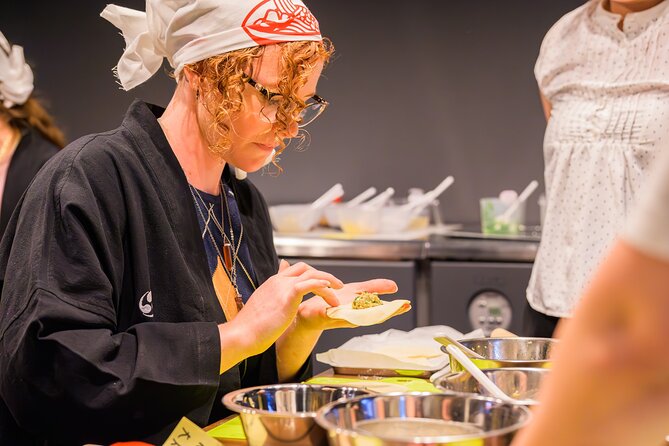
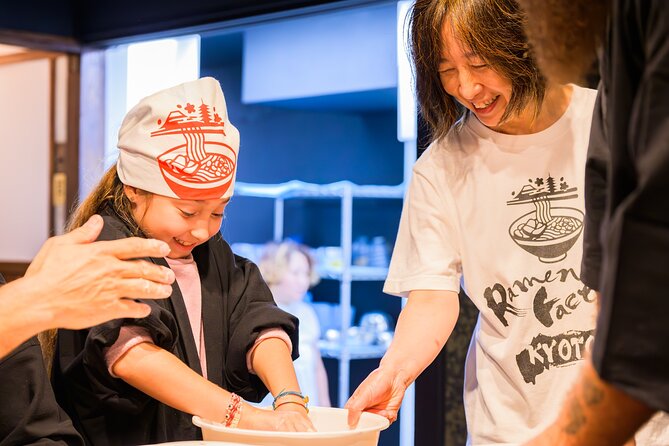
The best part of this Kyoto class is that you do not simply eat gyoza, you make the whole dumpling from scratch. You choose a filling, prepare wrappers, learn the folding technique, and cook roughly 10 to 12 dumplings per person. Hama, Maya, Ryo, and Yo are among the instructors, and all teaching is in English.
I like the hands-on format and the setting in a traditional Kyoto townhouse. I also like the small cultural layer: you learn about gyoza, Japanese history, and Samurai culture before choosing whether to wear Samurai armor for photographs. The main thing to consider is price. At $118.19 per person, this costs more than a simple meal, so it makes the most sense if you want a practical activity and a take-home skill, not just lunch.
Key points to know before booking
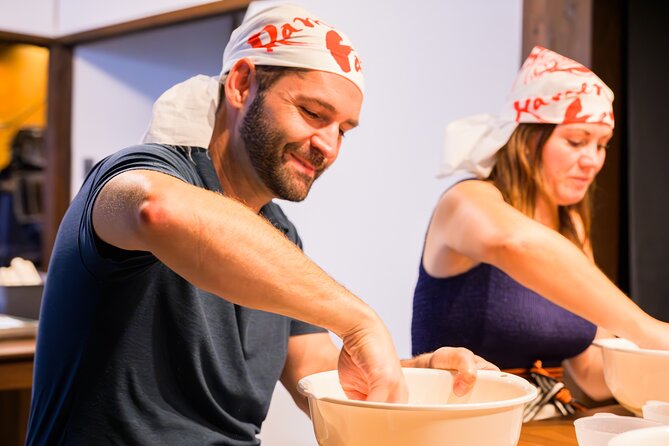
- Make every part of the dumpling: Choose a filling, make wrappers from scratch, fold the gyoza, and cook them yourself.
- Expect about 90 minutes: Some sessions have taken closer to two hours, so avoid placing a tight appointment immediately afterward.
- Learn with English-speaking instructors: Hama, Maya, Ryo, and Yo have all led sessions, with friendly, easy-to-follow teaching.
- Plan for a filling meal: You may make around 10 to 12 gyoza per person, so arrive ready to eat.
- Samurai photos are optional: Armor dress-up adds a memorable cultural touch, but it is not required.
- You leave with more than photographs: A souvenir apron is provided, and recipe instructions may be available if you request them.
Making gyoza in a Kyoto townhouse
Gyoza began in China, but Japan developed its own style of the dumpling. This class gives you a practical way to see that difference: rather than ordering a plate at a restaurant, you handle the dough, filling, folding, and cooking yourself.
The setting matters. You meet at 230-1 Kamimyōkakujichō in Nakagyo Ward, inside a traditional Kyoto townhouse. That gives the class a more local feel than a modern demonstration kitchen. You are there to work, not simply watch an instructor prepare food at a distance.
The class is designed for beginners. You do not need prior cooking experience, and the tools are provided. Each person can work through the steps directly, which helps explain why the activity suits families with older children and teenagers as well as adults.
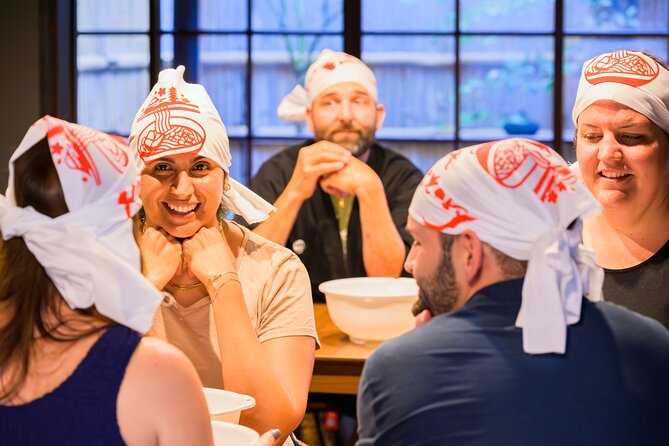
The group can include up to 20 people. That is a reasonable size for a social cooking activity, though the amount of personal attention can vary with the number attending. Several sessions have been private or nearly private when demand was light, which can make the lesson feel more relaxed. You should not book on the assumption that you will receive a private class, but it is a pleasant possibility.
More cooking classes in Kyoto:
- Ramen Cooking Class at Ramen Factory in Kyoto
★ 5.0 · 1,937 reviews - Kyoto: Ramen Cooking Class at a Ramen Factory with Souvenir
★ 4.9 · 532 reviews - Kyoto: Ramen, Gyoza, and Onigiri Cooking Class
★ 5.0 · 445 reviews
Choosing a filling and preparing the wrappers
The class starts with the basic building blocks of gyoza. You choose your preferred filling before working on the wrappers. The ability to choose is a useful touch because it gives you some control over the final flavor and makes the food feel like your own creation.
Making wrappers from scratch is the most instructive part for many people. It shows you that gyoza are not just a filling sealed inside a ready-made skin. You learn how the wrapper is prepared and then use it to build the dumpling.
This is also where the class earns some of its price. A restaurant meal gives you a finished dish. Here, you learn a method you can repeat at home. Several people have left eager to make gyoza for family and friends, and that practical value is stronger than a souvenir that stays in a drawer.
The instruction is in English, and the class has been led by Hama, Maya, Ryo, and Yo. Maya has been praised for making the steps easy to follow, while Hama has a warm teaching style that works well for families. Ryo has been described as personable and a good fit for older children and teenagers. Your instructor will depend on the date and schedule, but the format remains the same.
Folding 10 to 12 dumplings by hand
Folding gyoza looks simple until you try to make a neat row of pleats. The class takes you through the technique instead of expecting you to copy a finished example without help. Your first dumpling may look less tidy than the last, which is part of the fun.
You can expect to make around 10 to 12 gyoza per person. That is enough to practice the fold several times and still have a satisfying portion to eat. It also keeps the lesson active. You are not waiting for the instructor to finish a long demonstration.
I like this part because the skill transfers easily to a home kitchen. You can repeat it with family or friends after returning home, even if your dumplings are not perfectly shaped. The class is less about producing restaurant-grade presentation and more about learning a workable technique.
Paper practice has also been used in the teaching process, giving you a chance to understand the fold before handling the actual food. Take-home instructions may be available, and the provider has offered to send a recipe when someone forgot to collect it. If you want the recipe, ask before leaving rather than assuming it will automatically be handed to you.
Cooking the gyoza with a professional machine
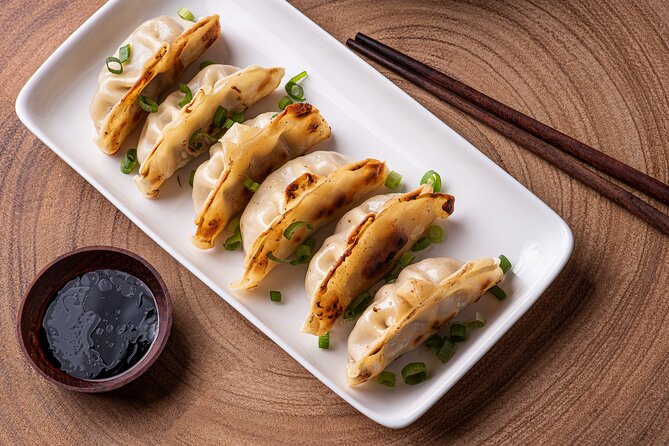
After the dumplings are shaped, you cook them using a professional baking machine. This takes some uncertainty out of the final stage and helps the class move along at a steady pace.
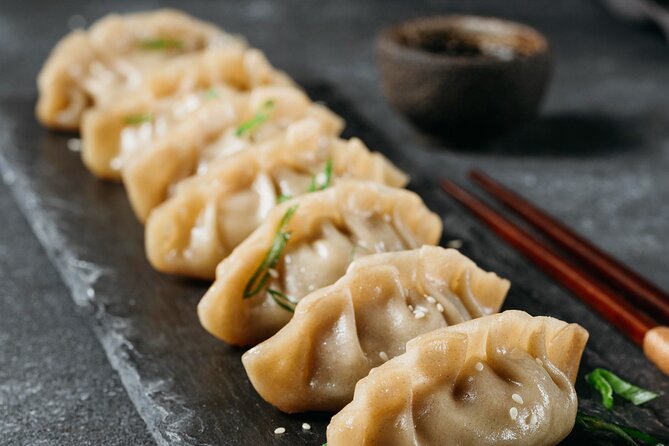
You will get to see the result of your work quickly: crisp, cooked gyoza made from the wrappers and filling you prepared. The cooking stage also gives the instructor a chance to explain how the dumplings should be handled and when they are ready.
Food quality depends partly on your folding and partly on the cooking process. That makes this a useful beginner class rather than a staged food show. You participate in the parts that affect the result, then use the equipment provided to finish the dish.
Come hungry. A portion of 10 to 12 gyoza can make a proper light meal, especially after the work of preparing them. The class does not list additional food or private transportation as included, so you should think of the dumplings as the food component of the activity rather than expecting a larger meal or a wider tasting menu.
Same city, a completely different kind of day:
- PERFECT KYOTO 1-Day Bus Tour
★ 5.0 · 13,518 reviews - Kyoto: Fushimi Inari, Kinkakuji, Bamboo Grove 1 Day Bus Tour
★ 4.8 · 4,316 reviews - Kyoto: Tea Ceremony in a Traditional Tea House in Kiyomizu
★ 4.9 · 3,519 reviews - Kyoto Geisha Walking Tour: Gion District & Hidden Gems
★ 4.7 · 3,273 reviews
Samurai culture and optional armor photographs
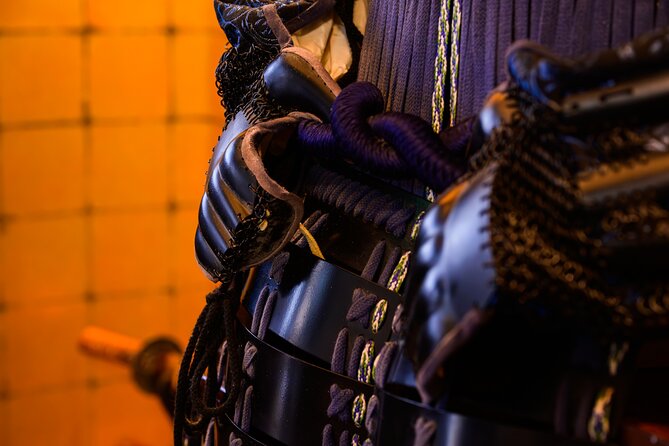
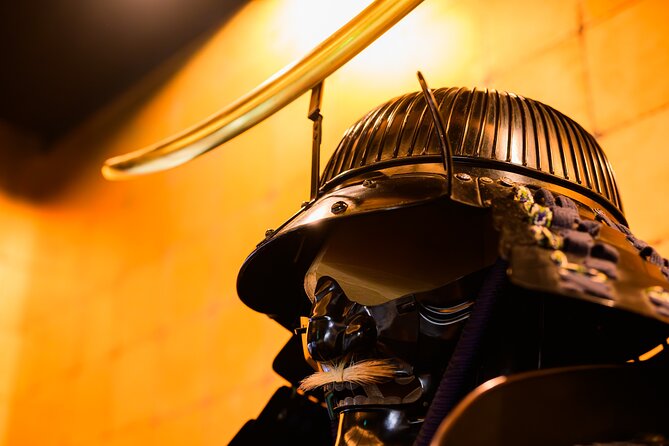
The cooking is the main event, but the Samurai element gives the class a second theme. Along the way, you learn some Japanese history and Samurai culture in addition to learning about gyoza.
After cooking, you can choose to dress in Samurai armor and take photographs. This is optional, so you can enjoy the food lesson without posing if that is not your style. For families, the armor can be a fun finish, and for adults it provides a distinctive Kyoto photograph beyond the usual temple snapshot.
Keep your expectations practical. This is a short cooking class with a cultural addition, not a dedicated Samurai museum visit or historical tour. The history component supports the activity rather than taking it over.
I see the armor as a bonus that helps justify the class for people who want a broader memory of Kyoto. If your sole aim is to master restaurant-level gyoza technique, the Samurai portion will matter less. If you are planning a family day or want an activity with a strong visual element, it adds value.
Timing, meeting point, and group size
The stated duration is about one hour and 30 minutes. Allow more time if your schedule is tight, since one session was described as taking about two hours. Cooking activities can run long when people need extra help with folding or when the group is enjoying the cultural discussion.
The activity begins and ends at 230-1 Kamimyōkakujichō, Nakagyo Ward, Kyoto, 604-0025, Japan. It is near public transportation, but private transportation is not included. You will need to make your own way to the townhouse and return from the same location.
A mobile ticket is provided, which is convenient for a day of sightseeing. Still, check the address carefully before setting out, especially if you are coming from another part of Kyoto. The meeting point is specific, and the activity does not include a transfer from your hotel or railway station.
The maximum group size is 20. That is large enough for a social atmosphere but small enough that the class remains organized. If you prefer very personal instruction, a lightly booked time may suit you better. If you are booking for a family, the individual workstations reported in one family session are useful because each person can take part rather than simply share one station.
How the $118.19 price holds up
At $118.19 per person, this is not a budget meal. You can find gyoza for far less in Kyoto, and a restaurant will require much less time and effort.
The price becomes easier to defend if you value the full package: an English-speaking instructor, tools, hands-on food preparation, cultural information, a traditional townhouse setting, a filling meal, and optional Samurai photographs. You also receive a souvenir apron, which adds a small but practical reminder of the class.
The best comparison is not between this and a plate of dumplings. Compare it with other short cultural activities in Kyoto. You are paying for instruction and participation, not only ingredients. The skill has value because you can make the dish again at home.
I would book it for a special afternoon, a family activity, or a trip where you want something other than temples and shopping. I would skip it if your budget is tight or if you already plan several cooking classes in Japan. The class is strongest when you want one memorable food experience with a cultural extra.
Who will enjoy this class most
This activity suits first-time cooks because the instructions are simple and the work is broken into clear stages. You can enjoy it even if your dumplings are uneven. In fact, the hands-on format gives beginners a better sense of accomplishment than a polished demonstration.
Families with older children and teenagers are a particularly good match. Everyone can choose a filling, shape dumplings, and take part in the cooking. The optional armor photos give younger participants another reason to stay engaged after the food is finished.
Couples and solo visitors can also find value here. One solo participant received a private class when the evening session had no other bookings, though that should be treated as luck rather than a guaranteed feature. A private or small group setting can give you more time for questions and cultural discussion.
The class is less suitable if you want a quiet, formal meal or an advanced culinary course. It is social, practical, and designed around making food together. The duration is short enough to fit into a Kyoto itinerary, but the activity is still substantial enough to feel like a main event rather than a quick stop.
Booking details worth keeping in mind
Confirmation is provided at booking, and the ticket can be shown on a mobile device. The activity ends at the same place where it begins.
Free cancellation is available if you cancel at least 24 hours before the local start time. Cancellations or changes made within 24 hours are not accepted for a refund, so check your Kyoto plans before booking.
The experience is operated by Japan food entertainment Ltd. Since the class can fill up and the maximum group size is 20, reserving ahead is sensible if you have a fixed date or want a particular time.
Should you book the Kyoto gyoza class?
Book this class if you want to make rather than merely eat Japanese food. You will learn a repeatable gyoza method, eat what you prepare, hear about Japanese culture, and possibly finish in Samurai armor. Hama, Maya, Ryo, and Yo have all been praised for friendly, clear instruction, and the format works well for families and beginners.
Think twice if $118.19 feels high for a short activity or if you are seeking an advanced cooking lesson. The advertised time is about 90 minutes, sometimes closer to two hours, and transportation is not included.
For most visitors who want one hands-on Kyoto food experience, I would book it, especially for a family or a special evening. The souvenir apron and photographs are nice extras, but the real value is leaving with a skill you can use at home.
FAQ
How long does the gyoza cooking class last?
The stated duration is approximately one hour and 30 minutes. Some sessions have taken around two hours, so allow extra time if you have another booking afterward.
Where does the class begin and end?
The class begins at 230-1 Kamimyōkakujichō, Nakagyo Ward, Kyoto, 604-0025, Japan. It ends back at the same meeting point.
Is the class taught in English?
Yes. An English-speaking instructor leads the activity. Instructors who have led sessions include Hama, Maya, Ryo, and Yo.
What is included in the activity?
Cooking tools and an English-speaking instructor are included. A souvenir apron has also been provided during the class.
Is Samurai armor part of the class?
Samurai armor dress-up is optional. You can wear the armor and take photographs after cooking, or skip that part.
Can I cancel for a full refund?
Yes, if you cancel at least 24 hours before the experience start time. Cancellations or changes made less than 24 hours before the local start time are not eligible for a refund.
Newest Kyoto experiences on the site
- Treasures of Kyoto: Gion & historical Walking Tour★ 5.0 · 6 reviews
- Whisk Your Own Matcha: A Zen Matcha Experience at Temple★ 3.6 · 7 reviews
- Kyoto tea town for matcha lovers★ 5.0 · 16 reviews
- Uji: Private immersion into Kyoto’s tea and reglious culture★ 5.0 · 17 reviews
- Kyoto Matcha Green Tea Tour★ 4.5 · 23 reviews
- Uji and Wazuka Matcha Farm Half Day Private Guided Tour★ 5.0 · 21 reviews
- Utilising upcycled Matcha! Creating matcha incense (Uji, Kyoto)★ 5.0 · 6 reviews
- Sacred Temple Yoga Experience in Japan★ 5.0 · 3 reviews
Kyoto Cooking Classes, compared.
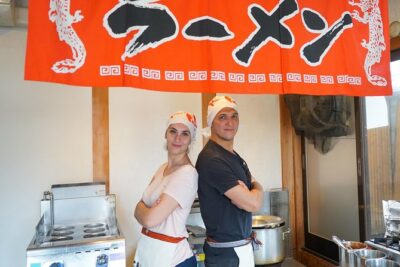
Ramen Cooking Class at Ramen Factory in Kyoto
Read our review →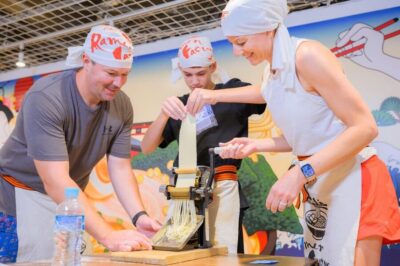
Ramen Cooking Class at a Ramen Factory with Souvenir
Read our review →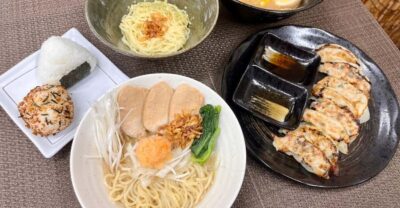
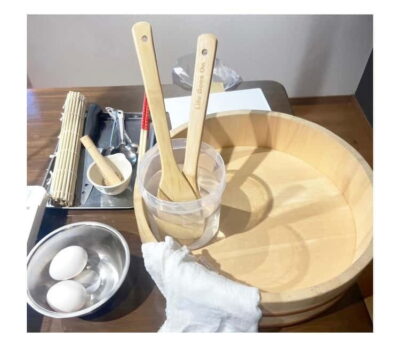
Japanese Washoku Bento Small Group Cooking Class
Read our review →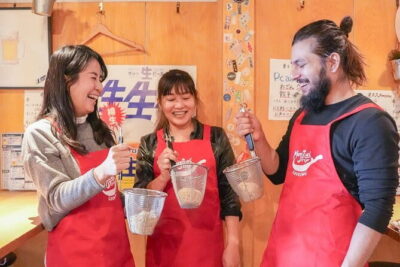
Kyoto Ramen and Gyoza Cooking Class with Professional Chefs
Read our review →
Browse the lists this tour appears in