
Reviewed · KYOTO EARLY MORNING TOURS
Explore Hidden Alleyway with a Local Expert (Morning tour)
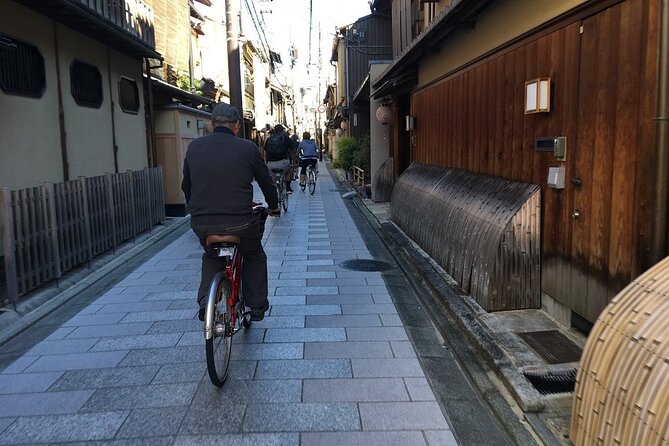
Kyoto’s best moments are often found between the headline sights: a narrow lane of wooden houses, willow trees beside a stream, or a quiet stretch of river where locals sit. This three-hour private e-bike tour links those smaller scenes with major sights such as Gion and Kyoto Imperial Palace, saving you a lot of walking.
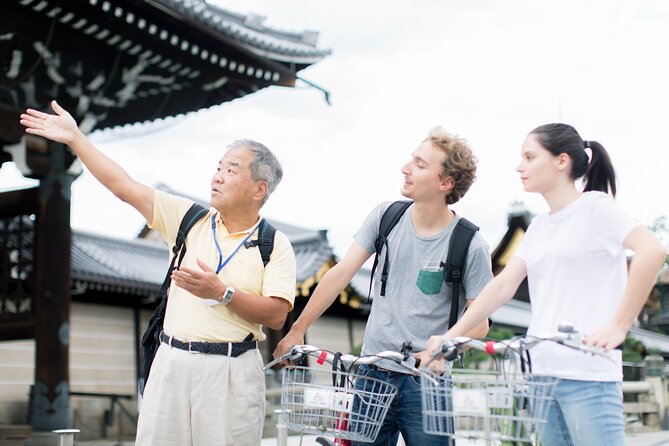
I like the small-group format, which keeps the pace personal, and I like that the guide can respond to your interests. Past guides have included Rich, Yuichi, and Annie, with particular praise for clear explanations, patience, and useful Kyoto tips. The main drawback is simple: three hours can feel short, especially if you want long stops or a relaxed coffee break.
Key points to know before you book
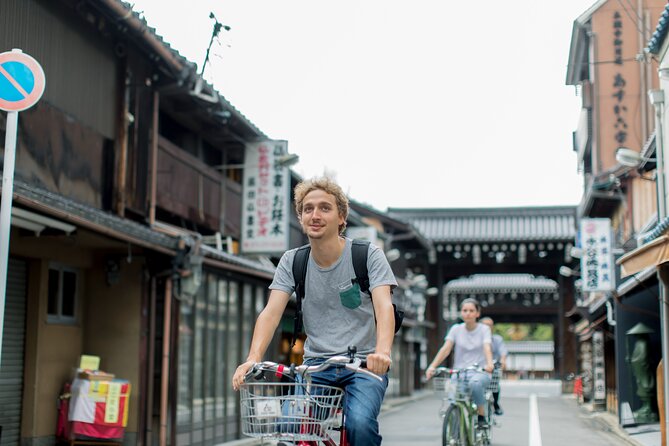
- Ride Kyoto’s old quarters: Pedal through Miyagawacho and Gion, two districts closely tied to Kyoto’s geisha culture.
- A private group of two to six: You do not have to keep up with a large cycling tour, and the pace can suit your group.
- A smart first or second day activity: You cover a wide part of central Kyoto without walking several miles.
- Five contrasting stops: The route combines wooden townhouses, a willow-lined stream, palace grounds, and a river rest.
- Rain does not automatically cancel the tour: You can continue by bike with a free poncho or switch to walking and public transport.
- Know the cycling requirement: Children must be at least 10 years old, 145 centimeters or taller, and able to ride safely on roads without help.
Why an e-bike works well in Kyoto
Kyoto is spread out. Gion, the Imperial Palace, the Kamo River, and the older lanes around central Kyoto are not all next door to one another. Walking between them can eat up much of a morning, especially in summer heat.
An e-bike changes the equation. You still move slowly enough to notice shopfronts, canals, gardens, and old houses, but you can cover more ground with less effort. One especially useful detail is that the electric assistance matters on a hot day. You still pedal, but the ride feels easier than a standard bicycle, leaving more energy for listening and looking around.
The tour starts at 9:00 a.m. from 552-13 Higashiaburanokōjichō in Shimogyo Ward. It ends back at the same meeting point. Since the activity is private, your guide can adjust the speed and, if the morning allows, respond to requests such as riding along the river or spending more time around the Imperial gardens.
This is not a race or a bike lesson. You need to be comfortable riding on roads without assistance. The minimum group size is two people, and one-person bookings are not accepted. A guide can take up to six people, while groups of seven to twelve can arrange an additional guide.
More early starts in Kyoto:
- Kyoto Early Morning Tour with English-Speaking Guide
★ 5.0 · 1,427 reviews - Kyoto: Early Morning Tour with English-Speaking Guide
★ 4.9 · 1,128 reviews - Arashiyama Bamboo Forest & Hidden Gems Bike Tour (Early Bird)
★ 5.0 · 613 reviews
Miyagawacho, where Kyoto’s old streets feel close
The first stop is Miyagawacho Kaburenjo, in Miyagawacho, described as the second-largest of Kyoto’s five geisha districts. The area is lined with traditional wooden houses, and the narrow streets offer a calmer start than the more famous parts of Gion.
You have about 15 minutes here, with no admission fee. That is enough time to absorb the setting and hear how geisha districts function, but not enough for a long look inside buildings. The value is in the street itself: wooden facades, close-set lanes, and the feeling of an older Kyoto still present in the middle of a modern city.
Your guide is also useful here because a quiet lane can mean little if you do not know what you are seeing. Guides such as Rich, Yuichi, and Annie have been singled out for answering questions about Japanese history, culture, and religion. You can ask about the role of maiko and geiko, the district’s traditions, or the difference between a working neighborhood and a sightseeing display.
Keep your expectations sensible. You are passing through a living district, not entering a staged performance. The short stop gives you an introduction rather than a full cultural program.
Gion gives you Kyoto’s most recognizable mood
Next comes Gion, another 15-minute stop. This is the part of Kyoto many people picture first: refined streets, traditional wooden buildings, and the long connection between the district and geisha culture.
Gion developed as a major district for maiko and geiko. The old atmosphere remains, but the area is also a real neighborhood and a popular sightseeing zone. A guide helps you read the streets with some care. You will get context about the district rather than simply riding through, taking photographs, and moving on.
The brief stop is a strength if you want an overview of central Kyoto. It is a limitation if Gion is your main reason for booking. You will not have much time for a slow wander, shopping, or a long stop at a particular street. If you want a more detailed visit, return on foot later and explore at your own pace.
The early start helps. At 9:00 a.m., you are making your way through Gion before the day reaches its busiest pace. The tour does not promise empty streets, but a morning ride is a sensible way to see the district before spending the rest of the day at more crowded sights.
Tatsumi Bridge adds water, willows, and a slower pause
Tatsumi Bridge changes the feel of the route. Here, you follow a stream with willow trees moving in the breeze. The stop lasts about 15 minutes and is free.
This is one of the route’s quieter pleasures. After the traditional houses and cultural explanation of Gion, the water gives you a chance to slow down. The setting is graceful without requiring a formal attraction ticket or a long visit. You simply take in the path, the stream, and the trees before getting back on the bike.
I would think of Tatsumi Bridge as a mood-setting stop rather than a major sightseeing destination. It may be less memorable if you want a packed schedule of famous buildings, but that slower rhythm is part of what makes the ride different from a checklist tour.
It also shows why a bicycle is useful in Kyoto. You can connect small scenic corners that would be easy to skip on a walking route focused only on temples and shrines.
Same city, a completely different kind of day:
- PERFECT KYOTO 1-Day Bus Tour
★ 5.0 · 13,518 reviews - Kyoto: Fushimi Inari, Kinkakuji, Bamboo Grove 1 Day Bus Tour
★ 4.8 · 4,316 reviews - Kyoto: Tea Ceremony in a Traditional Tea House in Kiyomizu
★ 4.9 · 3,519 reviews - Kyoto Geisha Walking Tour: Gion District & Hidden Gems
★ 4.7 · 3,273 reviews
Kyoto Imperial Palace brings scale and open space
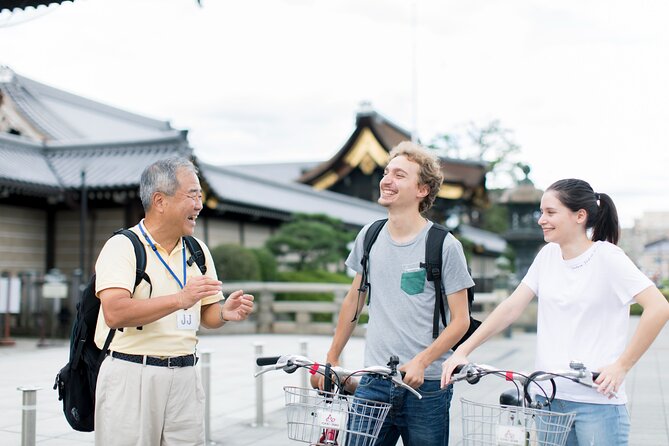
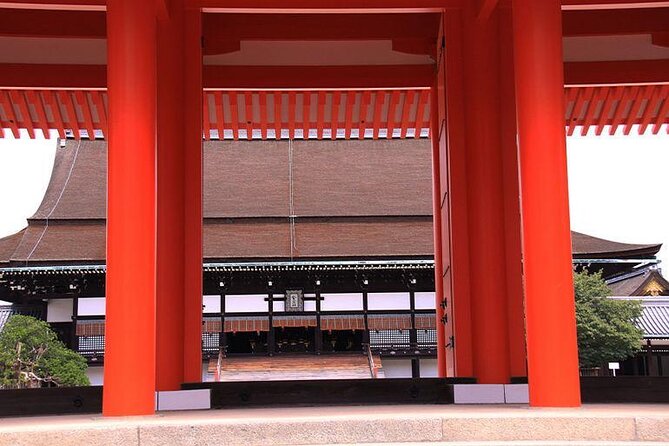
The tour then heads to Kyoto Imperial Palace, once the residence of Japan’s Imperial Family. Today, the palace area is open to the public as a national garden with seasonal flowers.
You spend about 20 minutes here and cycle along gravel paths. That detail matters. This is not simply a roadside view or a quick photograph from outside. You get a sense of the broad grounds and open space, though the time is still fairly short for a full palace visit.
The palace area provides a useful contrast to Gion. Gion feels close, intricate, and built around narrow streets. The Imperial Palace grounds offer room to breathe. You can also ask your guide about the palace’s role in Japan’s past and how Kyoto’s imperial connection shaped the city.
The gravel paths may feel less smooth than paved streets, and anyone unused to cycling might notice the seat after a couple of hours. One useful practical tip is to wear comfortable clothing, and consider padded cycling shorts if you are not used to bicycle seats. The electric assistance helps with effort, but it does not remove the physical contact of riding.
Kamo River is the natural place to take a breath
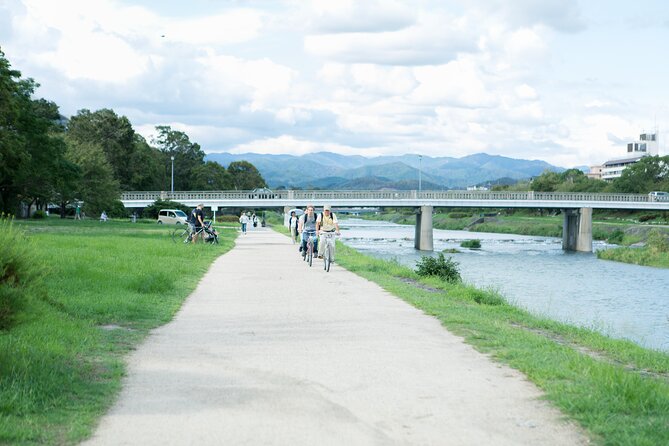
The last listed stop is Kashiwayacho, where you can relax beside the Kamo River. This stop lasts about 20 minutes and includes admission.
The river is a favorite place for local residents, and it gives the morning a casual finish. Rather than ending at another formal sight, the route gives you time to sit, talk, and watch the water. It is also a good point to ask your guide for suggestions for the rest of your Kyoto stay.
The private setup works especially well here. You can use the time to ask about restaurants, neighborhoods, temples, or practical ways to get around. One group asked for a coffee break, and the guide was able to fit it in. That kind of flexibility is a real benefit, although it depends on the day’s timing and your guide.
If you want to spend a long time by the river, remember that the official stop is about 20 minutes. The guide can tailor the pace, but the tour still needs to complete its route and return to the starting point.
The guides shape the experience
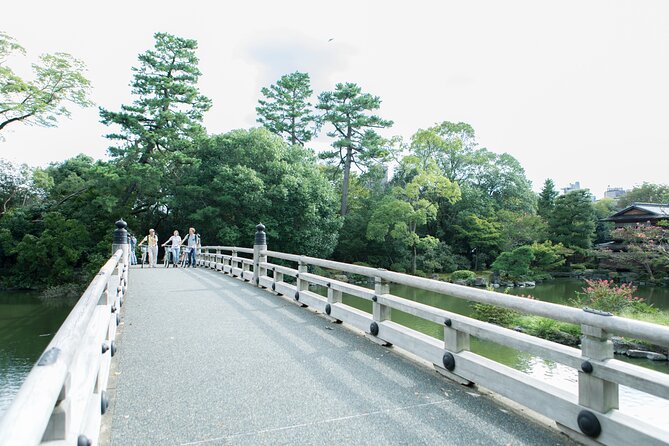
The route is appealing, but the guide is the part that can make it useful or merely pleasant. The strongest feedback centers on guides who explain Kyoto clearly, answer a steady stream of questions, and adapt to what the group wants to see.
Rich has been praised for giving detailed answers and explaining history, culture, and religion in a clear way. Yuichi helped one group follow its interest in the river and Imperial Gardens, then arranged a cafe pause. Annie was described as attentive, well informed, generous with her time, and careful with the group.
Names are not a guarantee that a particular guide will lead your tour. Still, they show the kind of experience KCTP aims to provide. You should use the private format to ask questions rather than simply follow silently. If you want more time at the river, more background on geisha culture, or a quicker pace between stops, say so early.
Language ability can vary. One rainy-day experience was less satisfying because the guide’s English made detailed conversation difficult. That does not define every tour, but it is a fair reason to keep your expectations balanced if guide-led discussion is your top priority.
Price, pace, and the real value
The price is $103.04 per person. That is not the cheapest way to see Kyoto, but the comparison should be made with a private half-day activity, not with renting a bicycle for a few hours.
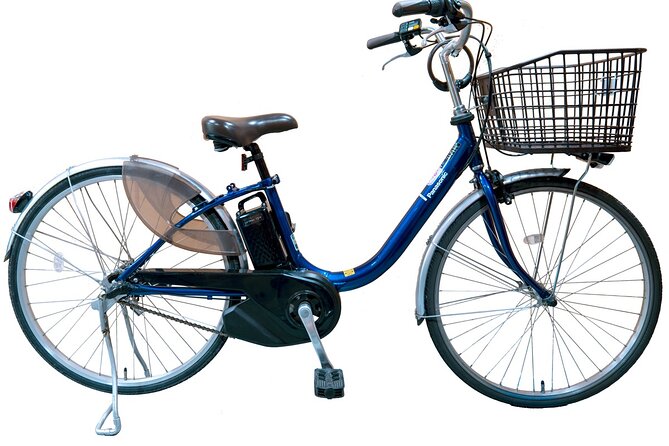
Your fee covers the e-bike and equipment, a private guide, and a route that connects several parts of central Kyoto. You are also paying for navigation and local context. You do not have to stop every few minutes to check a map or work out the safest way to reach the next district.
The value is strongest for a first or second day in Kyoto. You get a broad orientation, see how the neighborhoods connect, and collect ideas for places to revisit. It is also good value for a couple or small family group that prefers a private outing rather than joining a large tour.
The value is weaker if you mainly want to linger. Three hours includes cycling, stops, explanations, and the return ride. If you want lengthy visits inside the palace area, a long coffee break, or extensive time in Gion, you may find the schedule tight.
The tour is booked an average of 47 days ahead, so advance planning is sensible. Confirmation is sent within 48 hours, subject to availability. The experience has a 4.9 rating from 61 reviews and a 98 percent recommendation rate, which points to a consistently strong experience, while the rain-related complaint and language concern are worth keeping in mind.
Rain, clothing, and basic practical details
The tour operates in rain. You have two choices: continue by bike with a free rain poncho, or change to a walking tour using buses or the metro, with that public transport included in the tour fee.
That policy gives you flexibility, but it does not make a wet morning comfortable for everyone. If rain is heavy, the walking and public transport option may be the wiser choice. One poor-weather experience felt less satisfying because the group could not properly enjoy the cycling portion.
Wear clothes that let you pedal easily. Padded pants can help if you are not accustomed to bicycle seats. On a hot day, the e-bike reduces effort, but you are still outside for three hours, so water and sun protection are sensible choices.
Children must be at least 10 years old and at least 145 centimeters tall. They must also be able to ride a bicycle safely on the road without assistance. Most people can take part, but this is not the right choice for anyone who is nervous on roads or has trouble controlling a bike.
The supplied booking information gives two cancellation statements: one says to request a cancellation at least three days before the tour by 6:00 p.m. Japan time for a refund, while another says the experience is non-refundable and cannot be changed. Because those terms conflict, confirm the applicable policy before paying.
Should you book this Kyoto e-bike tour?
I would book it if you want a fast, friendly introduction to central Kyoto and prefer local streets to a standard sightseeing bus. The combination of Miyagawacho, Gion, Tatsumi Bridge, Kyoto Imperial Palace, and the Kamo River gives you five very different views of the city in one morning.
It is especially suited to couples, families with older children, and first-time visitors who want to cover ground without exhausting themselves. It also works well for anyone who enjoys asking questions and shaping the pace around personal interests.
I would choose another activity if you dislike cycling on roads, need a fully indoor plan for bad weather, or want long visits at one major attraction. At $103.04, this is best understood as a private orientation ride with cultural context, not a detailed palace tour or a full-day history program.
For most people who are comfortable on a bicycle, the private format, electric assistance, and mix of quiet lanes and major sights make the price reasonable. Book it near the start of your Kyoto stay, listen carefully to your guide, and use the final river stop to decide where you want to return on foot.
FAQ
What time does the Kyoto e-bike tour start?
The tour starts at 9:00 a.m. and lasts approximately three hours.
Where does the tour begin and end?
It begins at 552-13 Higashiaburanokōjichō, Shimogyo Ward, Kyoto, 600-8235, Japan. The tour ends back at the meeting point.
How many people can join the private tour?
The minimum is two people, and the maximum is six guests per guide. Groups of seven to twelve can arrange an additional guide.
Are the e-bike and equipment included?
Yes. The tour includes e-bike equipment rental.
What happens if it rains?
The tour can continue by bike with a free rain poncho. You can also switch to a walking tour using public transportation, with the bus or metro fare included in the tour fee.
Can children join the tour?
Children must be at least 10 years old, at least 145 centimeters tall, and able to ride a bicycle safely on the road without assistance.
Is the tour wheelchair accessible?
The provided information says most people can participate, but it does not state that the tour is wheelchair accessible. If accessibility is important, confirm directly with KCTP before booking.
Newest Kyoto experiences on the site
- Treasures of Kyoto: Gion & historical Walking Tour★ 5.0 · 6 reviews
- Whisk Your Own Matcha: A Zen Matcha Experience at Temple★ 3.6 · 7 reviews
- Kyoto tea town for matcha lovers★ 5.0 · 16 reviews
- Uji: Private immersion into Kyoto’s tea and reglious culture★ 5.0 · 17 reviews
- Kyoto Matcha Green Tea Tour★ 4.5 · 23 reviews
- Uji and Wazuka Matcha Farm Half Day Private Guided Tour★ 5.0 · 21 reviews
- Utilising upcycled Matcha! Creating matcha incense (Uji, Kyoto)★ 5.0 · 6 reviews
- Sacred Temple Yoga Experience in Japan★ 5.0 · 3 reviews
Kyoto Early Morning Tours, compared.
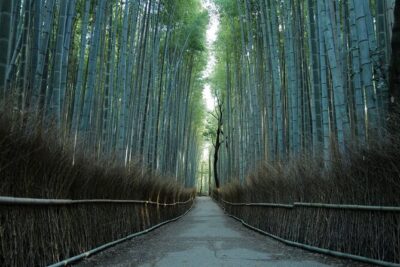
Kyoto Early Morning Tour with English-Speaking Guide
Read our review →Early Morning Tour with English-Speaking Guide
Read our review →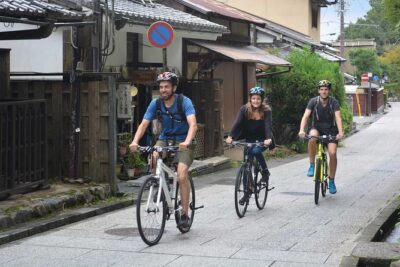
Arashiyama Bamboo Forest & Hidden Gems Bike Tour (Early Bird)
Read our review →
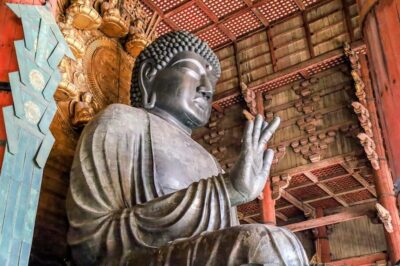
Kyoto Early Bird English Tour: Fushimi-Inari and Arashiyama
Read our review →
Kyoto Early Bird English Tour: Fushimi Inari & Gion(Private opt)
Read our review →Browse the lists this tour appears in