
Reviewed · KYOTO COOKING CLASSES
Kyoto Udon and Tempura Cooking Class with Professional Chefs
Making udon by hand is the heart of this Kyoto class. You start with flour and water, then knead, roll, and cut the dough into noodles with help from a local udon master and an English-speaking guide. The result is a meal you helped build from the ground up, not just another dish placed in front of you.
I like the small maximum of eight people, which should leave room for instruction and questions. I also like the broad menu: you make fresh udon, onigiri, inari sushi, and tempura, then eat it all with two drinks, including a mini sake tasting. The main consideration is timing. At 2.5 hours, this is a focused cooking session, not a leisurely half-day food tour.
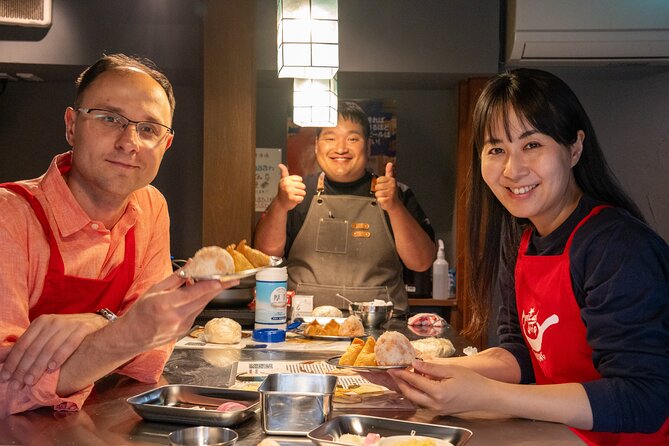
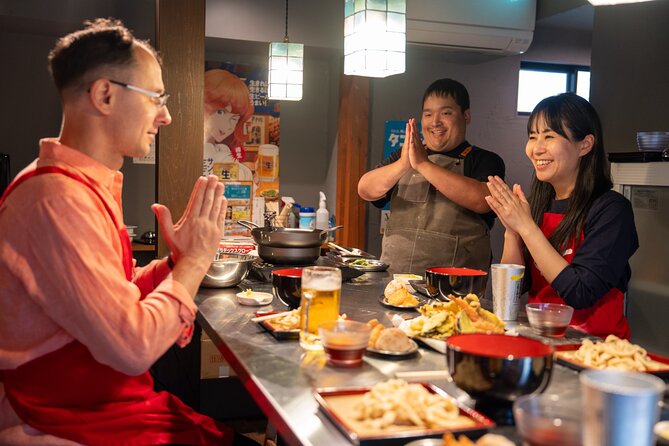
Josh and Nakajima-san have led family groups through the class, and the format is designed for beginners. Bring a serious appetite, since one family made hot and cold udon, shrimp and vegetable tempura, sushi, and more during the lesson.
Key points to know before booking
- Hand-cut udon is the main event: You knead, roll, and cut the noodles yourself with guidance from a local udon master.
- Four Japanese dishes are included: The class covers udon, tempura, onigiri, and inari sushi from scratch.
- The class suits beginners: English-speaking help and practical instruction keep the cooking accessible.
- You eat what you make: The finished meal includes the dishes you prepared, plus two drinks and a mini sake tasting.
- The group is capped at eight people: This gives the lesson a more personal feel than a large demonstration.
- Recipes and photos come afterward: You receive downloadable English recipes and tour photos by email.
Turning flour and water into Kyoto-style udon
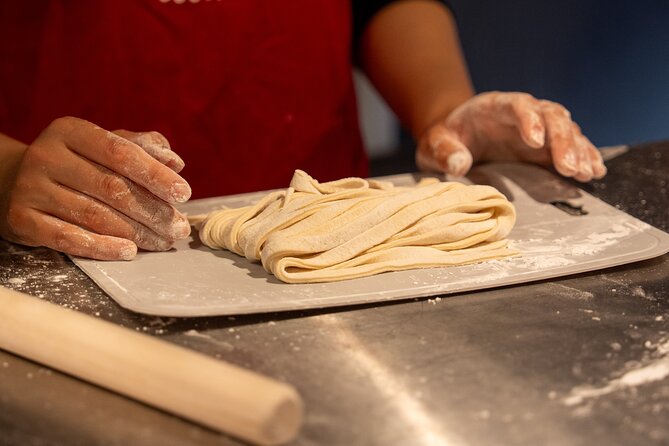
The class begins with the simplest possible base: flour and water. From there, you learn the physical work that gives udon its pleasing chew. You knead the dough, roll it out, and cut it into noodles by hand.
This is the part I would value most. Udon can look simple in a bowl, but the texture depends on how the dough is handled. Making it yourself lets you see the process rather than treating the noodles as a mystery ingredient. You also get a useful skill to repeat at home, especially with the English recipe provided after the class.
The lesson is built for people with no cooking background. You do not need to arrive knowing Japanese food terms or noodle technique. The cooking is hands-on, and the guide helps you move through each stage.
The class includes both hot and cold udon according to the details provided by a family who took the lesson. That gives you a useful comparison. Hot udon often highlights the broth and soft warmth of the dish, while cold udon puts more attention on the noodles themselves. The exact serving style can depend on the session, but you should expect the noodles you prepare to become part of the meal.
A practical tip: do not eat a large breakfast before the 10:00 a.m. start. You will prepare several substantial dishes, and the final meal is a major part of the experience.
More cooking classes in Kyoto:
- Ramen Cooking Class at Ramen Factory in Kyoto
★ 5.0 · 1,937 reviews - Kyoto: Ramen Cooking Class at a Ramen Factory with Souvenir
★ 4.9 · 532 reviews - Kyoto: Ramen, Gyoza, and Onigiri Cooking Class
★ 5.0 · 445 reviews
Making four Japanese staples in one lesson
Udon is only one part of the menu. You also prepare onigiri, inari sushi, and tempura. Each dish introduces a different basic technique, so the class does not feel like repeating one recipe four times.
Onigiri are rice shapes that can be formed by hand. They are familiar in Japan as a practical food, but making them yourself helps you understand their simple appeal. The task is less about complicated equipment and more about handling rice correctly and shaping it into a neat portion.
Inari sushi uses rice in a sweetened tofu pouch. It is different from the rolled sushi many visitors picture first, and it gives you another way to work with prepared rice. Since both onigiri and inari sushi are included, you get two contrasting forms of everyday Japanese rice food.
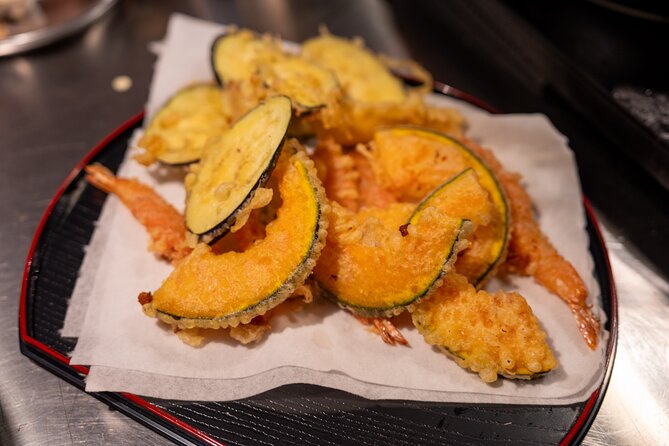
Then comes tempura, where you fry shrimp and vegetables until crisp and golden. This is likely the most active part of the cooking, since the batter and hot oil need attention. The supplied details specifically mention shrimp and vegetable tempura, so you can expect both seafood and produce in the meal.
A cooking class can be useful here because tempura is easy to oversimplify. The important lesson is not just coating food and frying it. You also get a sense of how a light batter behaves and how the finished pieces should look. Still, keep your expectations in check. This is a short introductory class, not professional kitchen training.
Eating the meal you prepared
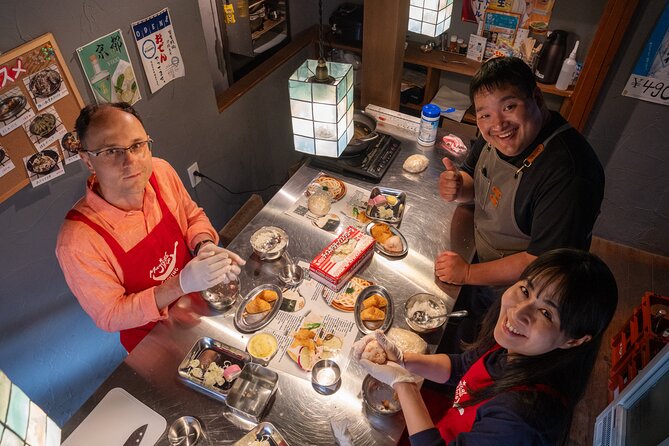
After the cooking, you sit down to eat the udon, sushi, and tempura you made. That payoff matters. You are not only watching a demonstration or sampling tiny portions. The class is organized around preparing enough food to serve as your meal.
You receive two drinks. The options include alcoholic and non-alcoholic choices, and the experience includes a mini sake tasting. If you do not drink alcohol, the inclusion of non-alcoholic options makes the class easier to fit into a family schedule.
The food also gives the lesson a clear rhythm. First you work through the ingredients and techniques. Then you see how the separate dishes fit together as a Japanese meal. Freshly prepared noodles, rice dishes, and fried food offer plenty of variety within one sitting.
This is where the price begins to make more sense. At $85.39 per person, the class is not a cheap meal. You are paying for instruction, ingredients, a 2.5-hour activity, two drinks, recipes, and photos, along with the meal itself. If you only want to eat udon, a restaurant will cost less. If you want to learn several dishes and take the recipes home, the value is stronger.
Why the small group matters
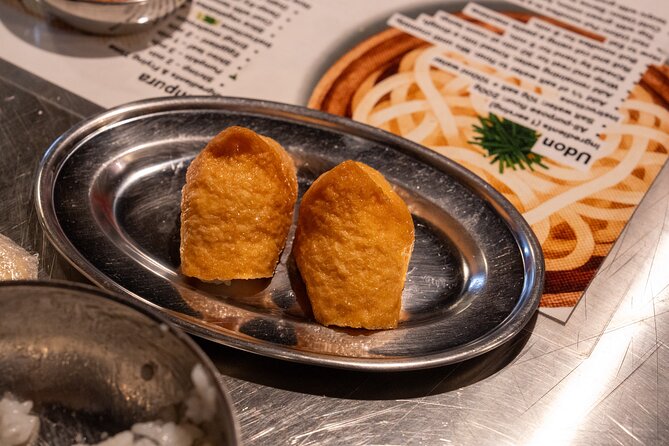
The maximum group size is eight people. That is one of the most useful details for judging the experience. A cooking class depends on access to the instructor, especially when you are kneading dough, cutting noodles, or working with hot oil.
A group of eight is still large enough to feel social, but it should be easier to get individual help than in a big demonstration. The class includes both a local udon master and an English-speaking guide, giving you two points of support during the session.
Josh and Nakajima-san have worked together as friendly instructors for family groups. Their names are useful to know if you are looking for a class with a personal feel rather than a formal school setting. The provided details do not promise that both will lead every single session, so you should treat them as instructors associated with the experience, not guaranteed hosts for your date.
The class also received a top rating from 17 reviews, with 100 percent recommending it. That is a small sample, but it supports the idea that the welcoming instruction and family-friendly format are central strengths.
Same city, a completely different kind of day:
- PERFECT KYOTO 1-Day Bus Tour
★ 5.0 · 13,518 reviews - Kyoto: Fushimi Inari, Kinkakuji, Bamboo Grove 1 Day Bus Tour
★ 4.8 · 4,316 reviews - Kyoto: Tea Ceremony in a Traditional Tea House in Kiyomizu
★ 4.9 · 3,519 reviews - Kyoto Geisha Walking Tour: Gion District & Hidden Gems
★ 4.7 · 3,273 reviews
A good fit for families and first-time cooks
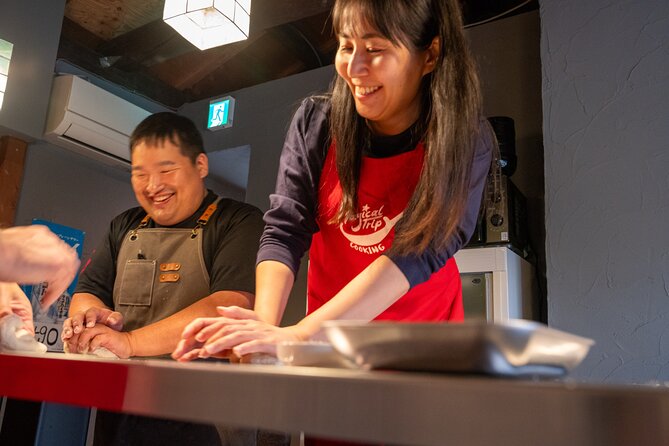
This class makes particular sense for families. Children and adults can take part in the same activity, and the menu has several stages to keep the session moving. Shaping rice, cutting noodles, and preparing tempura offer different kinds of tasks.
The class also suits couples and solo visitors who want an active meal rather than a standard restaurant stop. You can meet other people in a small group, but the cooking gives everyone something to do, so conversation does not have to carry the whole experience.
You should book it if you enjoy learning by doing. The class is less suitable if you prefer a quiet meal, have little interest in cooking, or want a detailed tour of Kyoto’s food culture beyond the kitchen. The focus is practical preparation and eating the results.
The 10:00 a.m. start is worth considering when planning your day. It ends back at the meeting point after about 2.5 hours, so you should have the afternoon available for other Kyoto plans. Since transportation is not included, you need to arrange your own way to the start point.
Meeting at 7-Eleven on Uraderacho
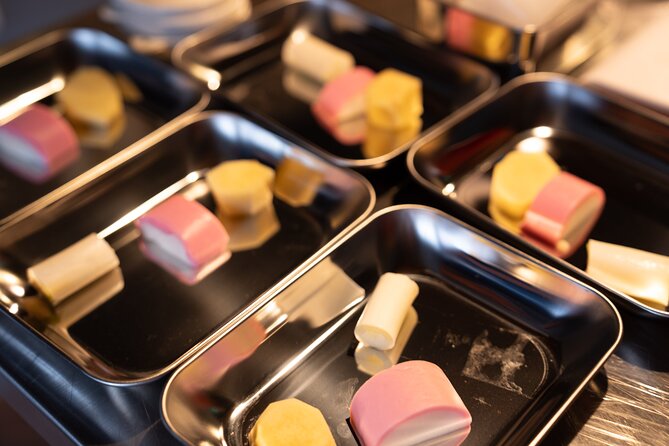
The class starts at the 7-Eleven at 599 Uraderacho, Nakagyo Ward, Kyoto, postal code 604-8041. The activity ends at the same meeting point.
The location is near public transportation, which helps when you are working around Kyoto’s busy sightseeing schedule. Still, allow enough time to find the exact convenience store and arrive before the 10:00 a.m. start. Transportation to and from the meeting point is not included.
A mobile ticket is provided, and booking confirmation arrives at the time of booking. Keep the ticket accessible on your phone, especially if you are moving between stations and the meeting point.
The return to the starting location is convenient. You do not have to finish the class in an unfamiliar part of Kyoto, and you can continue to another nearby plan after eating.
Recipes and photos that extend the value
The class includes downloadable recipes in English. This is important because cooking lessons can fade quickly once you leave the room. A recipe gives you a chance to repeat the udon, tempura, onigiri, and inari sushi at home.
The recipes will not turn you into a noodle master after one class, but they can help you remember the order of steps and the basic ingredients. Udon is especially worth repeating because the main process begins with flour and water rather than a long shopping list.
You also receive photos taken during the tour by email afterward. This is a nice extra for families and couples. It records the practical part of the experience, not only the finished meal. You should make sure the provider has the correct email address for delivery.
These extras do not replace the lesson itself, but they add some lasting value to the $85.39 cost. You leave with more than a full stomach. You also have recipes and a visual record of the session.
What the $85.39 price really covers
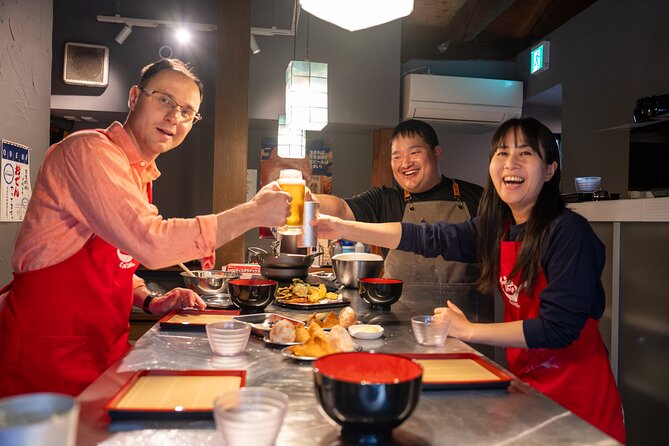
The price needs to be judged against the full package. You receive approximately 2.5 hours of instruction, ingredients for four dishes, two drinks, a mini sake tasting, downloadable recipes, and photos.
That is a fair package for someone who wants both a meal and an activity. The cost is harder to justify if you mainly want to eat inexpensive local food. Kyoto has many cheaper dining choices, and this class is not intended as a budget lunch.
The small group helps support the price. You are not paying only for food. You are also paying for guidance while handling dough, rice, batter, and frying. The English-speaking guide makes the session more useful for visitors who cannot follow Japanese instructions.
The meal itself is also more satisfying because you take part in preparing it. That does not make the class automatically good value for everyone. It simply means the price covers a hands-on experience, not a restaurant bill.
Timing, cancellation, and practical limits
The class lasts about 2.5 hours and begins at 10:00 a.m. It ends back at the meeting point. Plan your morning around the full session rather than assuming you can leave early.
Free cancellation is available if you cancel at least 24 hours before the start time. If you cancel later than that, the amount paid is not refunded, and changes made within the final 24 hours are not accepted. Cutoff times use local Kyoto time.
The activity has a maximum of eight participants, but the provided information does not give a detailed accessibility statement or list specific dietary accommodations. If those details matter to you, ask the provider before booking.
Should you book this Kyoto cooking class?
Book this class if you want a friendly, practical introduction to Japanese cooking and like the idea of eating a meal you helped prepare. The hand-cut udon lesson is the strongest reason to go, while the sushi, tempura, drinks, recipes, and photos make the 2.5-hour session feel full.
It is especially suitable for families, first-time cooks, and visitors who want something more active than sightseeing. The small group, English-speaking guidance, and experienced instructors Josh and Nakajima-san add confidence for beginners.
Skip it if you are looking only for the cheapest meal in Kyoto, or if you want a long cultural lecture rather than a focused kitchen session. For everyone else, this is a well-rounded way to spend a morning, with enough food to count as lunch and enough practical instruction to keep the experience useful after you return home.
FAQ
Where does the cooking class start?
It starts at the 7-Eleven at 599 Uraderacho, Nakagyo Ward, Kyoto, 604-8041, Japan.
What time does the class begin?
The activity starts at 10:00 a.m.
How long does the experience last?
The cooking class lasts approximately 2 hours and 30 minutes.
What dishes will I make?
You will learn to make udon, tempura, onigiri, and inari sushi.
Are drinks included?
Yes. Two drinks are included, with alcoholic and non-alcoholic options available. The experience also includes a mini sake tasting.
What happens after the class?
The activity ends back at the meeting point. You receive downloadable English recipes and tour photos by email afterward.
Newest Kyoto experiences on the site
- Treasures of Kyoto: Gion & historical Walking Tour★ 5.0 · 6 reviews
- Whisk Your Own Matcha: A Zen Matcha Experience at Temple★ 3.6 · 7 reviews
- Kyoto tea town for matcha lovers★ 5.0 · 16 reviews
- Uji: Private immersion into Kyoto’s tea and reglious culture★ 5.0 · 17 reviews
- Kyoto Matcha Green Tea Tour★ 4.5 · 23 reviews
- Uji and Wazuka Matcha Farm Half Day Private Guided Tour★ 5.0 · 21 reviews
- Utilising upcycled Matcha! Creating matcha incense (Uji, Kyoto)★ 5.0 · 6 reviews
- Sacred Temple Yoga Experience in Japan★ 5.0 · 3 reviews
Kyoto Cooking Classes, compared.
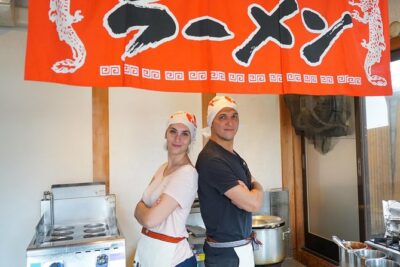
Ramen Cooking Class at Ramen Factory in Kyoto
Read our review →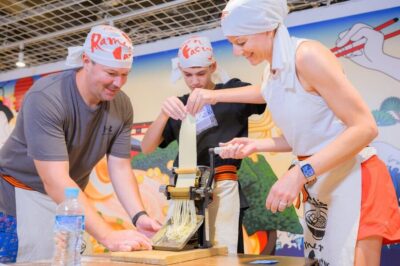
Ramen Cooking Class at a Ramen Factory with Souvenir
Read our review →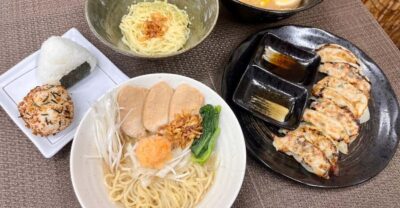
Japanese Washoku Bento Small Group Cooking Class
Read our review →
Kyoto Ramen and Gyoza Cooking Class with Professional Chefs
Read our review →
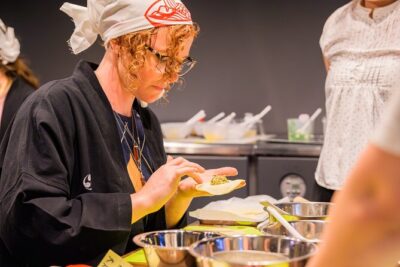
Gyoza Cooking Class in Kyoto: Traditional Japanese Dumplings
Read our review →Browse the lists this tour appears in