
Reviewed · FUSHIMI INARI TOURS
Kyoto Fushimi District Food and History Tour
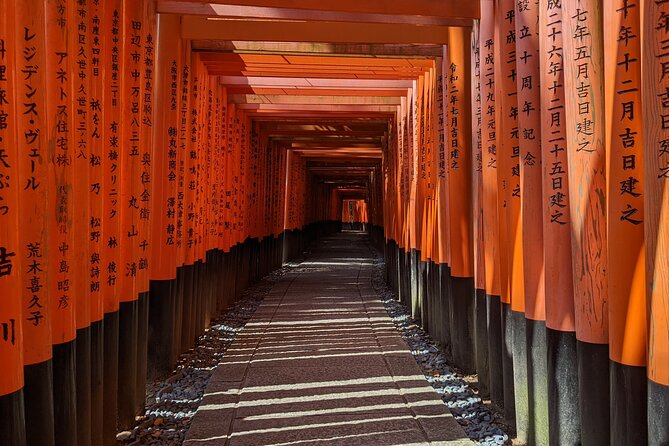
Fushimi is best known for Fushimi Inari’s orange torii gates, but this tour uses the shrine as only the opening chapter. You then move into an old sake-making district, follow a canal, hear how the Battle of Fushimiguchi helped bring on the Meiji Restoration, and finish among local shops and sweets. I like the strong mix of food and history, and I like that the route reaches places many Kyoto visitors skip.
The tour also earns points for personal help. Guide Remi has assisted visitors with rail plans as well as the tour itself, which can be useful early in a Japan trip. The main caution is that lunch, drinks, shopping, and souvenirs cost extra, and a solo booking can be canceled if at least two people do not sign up.
Key points at a glance
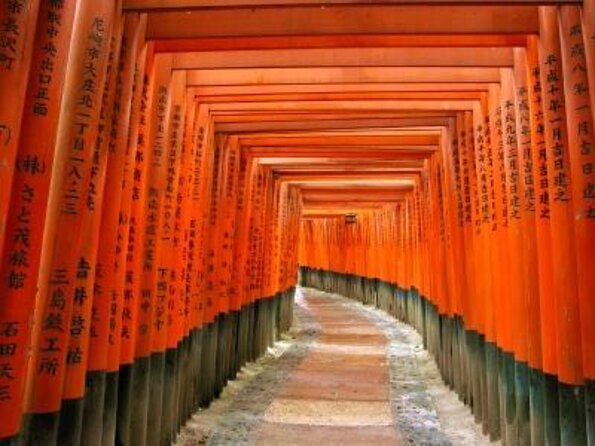
- Fushimi Inari is only the starting point: You learn about Inari and see lesser-known spots before leaving the shrine area.
- Sake takes center stage: Gekkeikan’s museum explains the district’s brewing trade and includes admission.
- Samurai-era history comes alive: The route covers the Fushimiguchi battlefield and Teradaya, linked to Sakamoto Ryoma.
- Local food is part of the walk: Your guide helps you choose lunch on Ryoma Shopping Street, with a taiyaki and up to two sweets included.
- Small groups keep the pace personal: The maximum is 10 people, with full guiding for about five hours.
- Language needs planning: English and Japanese are guaranteed, while French requires advance contact and may be shared with English.
Why Fushimi deserves a full morning
Fushimi sits only a short ride from Kyoto Station, but it feels separate from the city’s main sightseeing circuit. The district is known for sake breweries, traditional streets, waterways, and important events from Japan’s 19th-century political upheaval.
That makes this a good choice if you have already seen Kyoto’s headline temples and want a more local-feeling day. It also works early in your visit because the guide can help you understand public transportation. Remi, one guide associated with this experience, has helped visitors sort out rail plans after the tour, a small service that can save time and confusion.
The route begins at 9:30 a.m. beside the fox statue at the entrance to Fushimi Inari Taisha. You receive a mobile ticket, and the tour ends back at the meeting point. Plan on about five hours, with walking, museum visits, historic stops, food, and time to browse.
More ways to walk the Fushimi Inari gates:
- Kyoto: Fushimi Inari, Kinkakuji, Bamboo Grove 1 Day Bus Tour
★ 4.8 · 4,316 reviews - Fushimi Inari Hidden Hiking Tour (Private Option Available)
★ 5.0 · 1,750 reviews - Osaka/Kyoto:Kinkakuji,Arashiyama,FushimiInariShrine,NaraPark
★ 4.1 · 1,596 reviews
Starting beneath Fushimi Inari’s famous gates
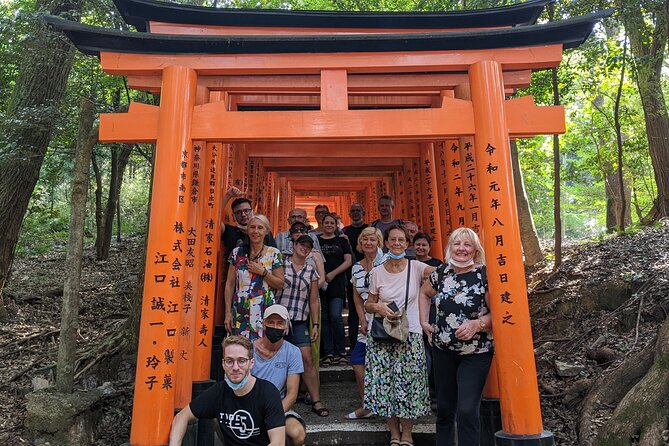
The first hour is spent at Fushimi Inari Taisha, one of Japan’s best-known sights. The shrine is dedicated to Inari, a deity connected with rice, prosperity, and business, and its fox figures are a key part of the setting.
You will learn about the origin of Inari’s spirit and visit a few spots that many people pass by. That matters because Fushimi Inari can feel crowded and confusing if you simply arrive, take photographs, and follow the main path uphill. A guide gives the shrine some structure and explains what you are seeing.
This is not a full-day hike through every torii gate. The schedule allows about one hour here, so you should not expect to cover the entire mountain route. Instead, the shrine serves as an introduction to the religious and commercial identity of Fushimi before the tour turns toward sake and local history.
Wear shoes that are comfortable for walking. The experience includes several stops after the shrine, so this is not a good day for footwear meant only for photographs.
Gekkeikan and the story of Fushimi sake
Sake is one of the main reasons to choose this tour. At the Gekkeikan Okura Sake Museum, you spend about an hour learning how one of Japan’s oldest brewing companies developed. Admission is included.
The museum is especially relevant to Fushimi because sake is tied to the district’s identity. You are not just visiting a generic alcohol museum. You are seeing the role of brewing in a neighborhood that still has traditional sake connections.
The supplied tour information describes Gekkeikan as the first distillery to export Japanese alcohol overseas. That gives the stop a wider angle: local brewing became part of Japan’s contact with the outside world.
The museum visit should suit you if you enjoy food traditions, production methods, and the way local industries shape a city. If you are not interested in sake, this hour may feel long, though the guide’s explanation of Fushimi’s past can still make the stop worthwhile.
Some tour guests particularly enjoyed the sake history and tastings. However, the stated inclusions specifically guarantee entry to the museum, not a separate tasting allowance. If tasting is important to you, confirm what is offered on your date rather than assuming it is included.
A quiet walk beside Fushimi Canal
After the museum, the route follows the Fushimi Canal for about 30 minutes. This is a welcome change of pace after the shrine and indoor museum.
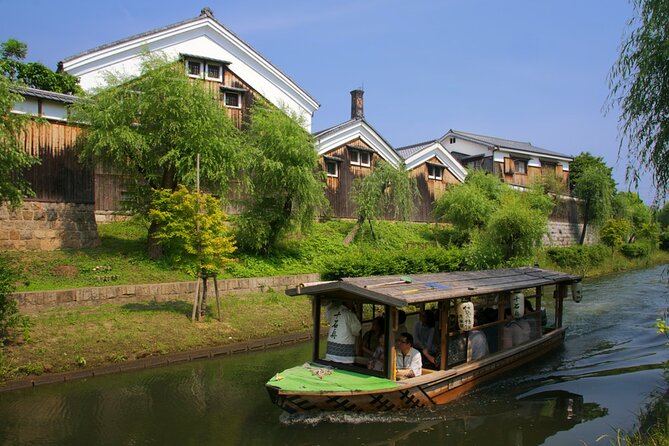
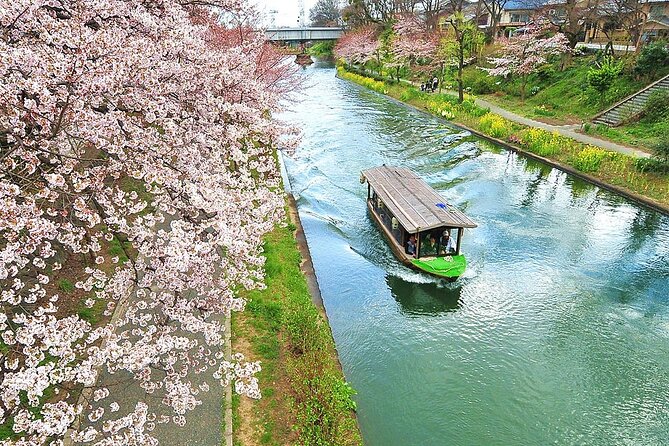
The canal is known for outdoor views, traditional buildings, and cherry blossoms in season. The route gives you time to walk without rushing from one major attraction to the next. It also shows why Fushimi feels different from central Kyoto. The district’s character comes from water, brewing, older streets, and daily life rather than only from grand temple grounds.
Cherry blossoms are seasonal, so do not book this tour solely for flowers. The canal walk remains part of the route, but the timing of blossoms depends on the season.
More food tours in Kyoto:
- Kyoto Night Foodie Tour in Gion (9+ dishes + 6 Sake tastings)
★ 5.0 · 1,762 reviews - Kyoto: Insider Sake Brewery Tour with Sake and Food Pairing
★ 5.0 · 704 reviews - Kyoto Nishiki Market Food and Culture Walking Tour
★ 5.0 · 412 reviews - Kyoto: Gion Food Tour 13 Dishes at 4 Eateries
★ 5.0 · 408 reviews
The Fushimiguchi battlefield and Japan’s political turning point
The stop at the Battle of Fushimiguchi Battlefield Trace is brief, about 15 minutes, but it adds an important layer to the day. Your guide explains the battle that helped lead to the beginning of the Meiji Restoration.
This is one of the tour’s strongest features for history-minded visitors. Kyoto is often presented through temples and gardens, yet the city was also central to the conflicts that ended the Tokugawa shogunate. A battlefield trace may not look dramatic on its own, so the guide’s explanation is essential. You are there for the story and location, not a large museum or a preserved battlefield scene.
The short timing is sensible. It keeps the tour moving while giving you enough context to understand why Fushimi mattered during Japan’s shift toward modern government.
Teradaya and the escape of Sakamoto Ryoma
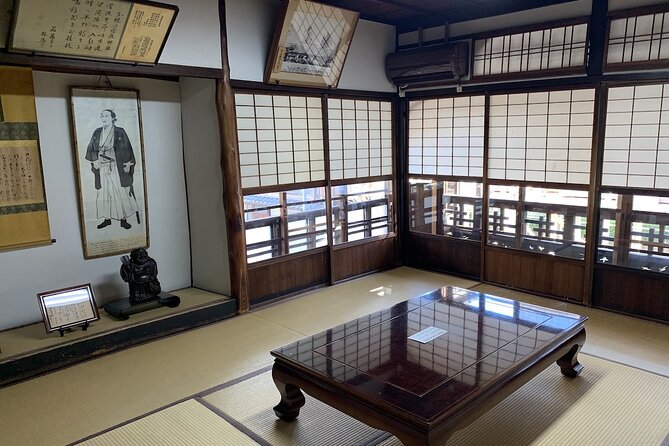
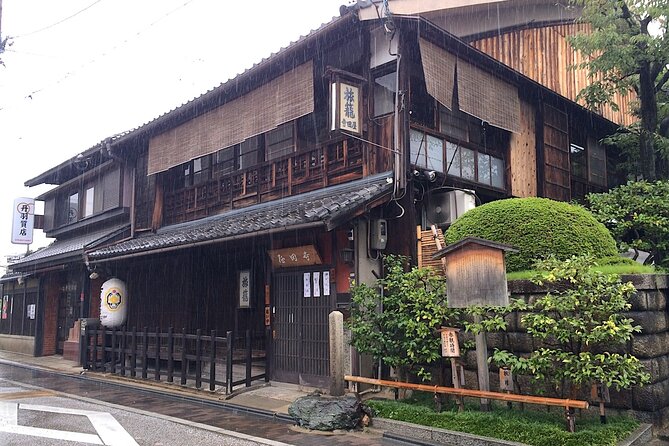
At the Teradaya Historic Site, you spend about 30 minutes learning about Sakamoto Ryoma. He was an important figure in the political changes of 19th-century Japan and was nearly killed at the inn by the Shinsengumi. The story includes his narrow escape from the attack.
Entrance to Teradaya is included. This gives the earlier battlefield stop a human face. Instead of hearing only about armies and political change, you hear about one person caught in the danger of the period.
Teradaya is a compact historic stop, not a huge complex. Its value comes from the story attached to the building and from the guide’s ability to connect it with the wider events of the Meiji Restoration. If you prefer long visits inside major museums, this may feel modest. If you enjoy seeing the places where political figures lived and faced danger, it is a useful stop.
Lunch and shopping on Ryoma Street
The longest part of the itinerary is about 70 minutes at Ryoma Shopping Street. The route compares this area with Nishiki Market, but with more of its traditional character intact.
This is where the tour shifts from guided history to practical local eating and shopping. Lunch is not included, but your guide helps you choose food and can assist with translation. That support is valuable if you want to try unfamiliar dishes or need help ordering.
You also have time to browse. The street gives you a chance to buy food or souvenirs, but remember that those purchases are your responsibility. The tour price does not cover lunch, shopping, or gifts.
An hour and 10 minutes is enough for a meal and some browsing, though not enough for a long market crawl. You will get the most from this stop if you already know whether you want a quick lunch, local snacks, or small gifts. Your guide’s help can make the decision easier.
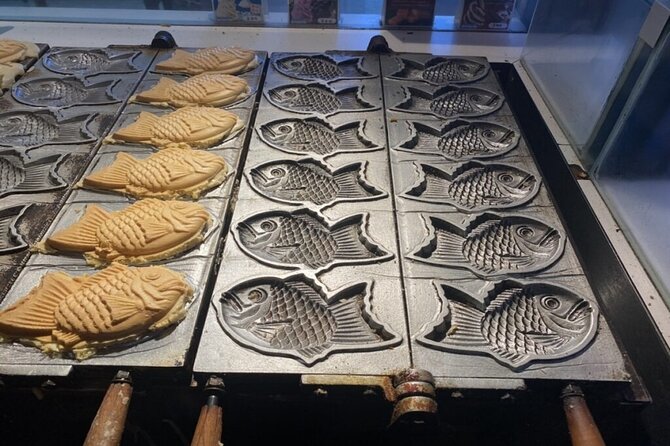
The inclusion of a taiyaki for each person is a nice touch. Taiyaki is a fish-shaped Japanese cake, often filled with sweet filling. It is a snack rather than a full meal, so you should still budget for lunch.
Traditional sweets before the finish
The final scheduled stop is Fusuikagura’s main shop, where you enjoy traditional Japanese sweets and have time to relax. Up to two sweets per person are included. Coffee and tea are not included.
This pause works well after the food street and history stops. You can sit, try something sweet, and ask final questions before returning to the train or meeting point. It is also useful for anyone who wants a calmer end to a walking tour.
The tour information suggests coffee as a possible choice, but you pay separately for drinks. Keep that in mind when comparing the advertised price with your likely total cost.
What the $78.04 price really covers
At $78.04 per person, the tour is not simply a guided walk. The fee includes about five hours of guiding, admission to the Gekkeikan Sake Museum, admission to Teradaya, one taiyaki, and up to two sweets at the cafe.
That is fair value if you want context at each stop and expect to use the guide for food choices or translation. A private guide would normally cost more, while this shared tour keeps the price down with a maximum of 10 people.
The price does not cover lunch, coffee, tea, shopping, souvenirs, or any tasting not specifically included. Your final spending will depend on what you eat and buy on Ryoma Street.
The tour is booked an average of 67 days ahead, so it is sensible to reserve early if your Kyoto dates are fixed. You receive confirmation at booking, and the mobile ticket makes entry and meeting details easier to manage.
Group size, language, and the minimum booking rule
The group can include up to 10 people. That is small enough for questions and translation help, but it is still a shared tour, not a private experience.
English and Japanese are the minimum languages spoken by all guides. French may be possible, but it is not guaranteed on a shared departure. The guide may alternate between English and French if a French-speaking guide is available, so contact the provider before booking if French matters to you.
Solo visitors can book directly, but the tour requires at least two participants to operate. If the minimum is not reached, the session may be canceled, with a rescheduled date or full refund offered. This is the main booking risk for a single traveler.
Most people can participate, and the meeting point is near public transportation. Since the experience lasts about five hours and includes several walking sections, I would still plan for a normal day of walking rather than a short sightseeing stop.
Who will enjoy this Fushimi tour most
I would choose this experience if you want three things in one morning: sake culture, food guidance, and Japanese political history. It is also a good fit if you have already visited Kyoto’s major temples and want a district with a more everyday feel.
History fans get the Battle of Fushimiguchi and Teradaya. Food-focused visitors get sake, taiyaki, sweets, and help choosing lunch. First-time visitors can also benefit from the guide’s transportation help, especially if Remi leads the group.
I would think twice if you want a long hike through all of Fushimi Inari, a private guide, or a tour with lunch and drinks fully covered. This experience gives you samples of several subjects rather than a deep visit to one attraction.
Should you book the Kyoto Fushimi District Food and History Tour?
Book it if you want to see Fushimi beyond the torii gates and prefer a guided route with real local context. The combination of the Gekkeikan museum, canal, Meiji Restoration history, Teradaya, and Ryoma Street is well planned, and the included snacks add value.
I especially like the practical help with lunch, shopping, translation, and rail plans. Those details can make the day easier, not just more informative. The main limits are the extra cost of lunch and drinks, the shared English-first format, and the possibility of cancellation for solo bookings if the minimum is not met.
For a compact introduction to Fushimi’s food, sake, and political past, this is a strong choice. Reserve early, contact the provider ahead of time for French, and leave room in your budget for lunch and anything you want to take home.
FAQ
Where does the tour begin?
The meeting point is beside the fox statue at the entrance to Fushimi Inari Taisha in Fushimi Ward, Kyoto.
What time does the tour start?
The tour starts at 9:30 a.m.
How long does the experience last?
The tour lasts approximately five hours.
Where does the tour end?
The activity ends back at the meeting point.
Is admission to Fushimi Inari included?
Admission to Fushimi Inari Taisha is free.
Is the Gekkeikan Sake Museum included?
Yes. Entrance to the Gekkeikan Sake Museum is included in the tour price.
Is Teradaya admission included?
Yes. Entrance to Teradaya Inn is included.
Is lunch included?
No. Lunch is not included, but the guide can assist you with choosing food on Ryoma Shopping Street.
Are coffee and tea included?
No. Coffee and tea drinks are not included.
What food is included?
Each participant receives one taiyaki, and up to two traditional sweets are included at the cafe.
Can a solo traveler book the tour?
Yes, a solo traveler can book directly, but at least two participants are required for the tour to operate. If the minimum is not reached, the session may be canceled with a rescheduled option or full refund.
Is French guaranteed?
No. English and Japanese are guaranteed, while French depends on guide availability. Contact the provider in advance to check whether a French-speaking guide can be confirmed.
More History-Led Days in Kyoto
- Kyoto Gion: 2-Hour Geisha Culture & History Walking Tour
★ 5.0 · 1,186 reviews - Kyoto Gion Historical Walking Tour
★ 5.0 · 188 reviews - Historical Kyoto E-Bike Tour
★ 5.0 · 181 reviews - Kyoto: Nijo Castle World Heritage Guided Tour with Admission
★ 5.0 · 128 reviews
Newest Kyoto experiences on the site
- Treasures of Kyoto: Gion & historical Walking Tour★ 5.0 · 6 reviews
- Whisk Your Own Matcha: A Zen Matcha Experience at Temple★ 3.6 · 7 reviews
- Kyoto tea town for matcha lovers★ 5.0 · 16 reviews
- Uji: Private immersion into Kyoto’s tea and reglious culture★ 5.0 · 17 reviews
- Kyoto Matcha Green Tea Tour★ 4.5 · 23 reviews
- Uji and Wazuka Matcha Farm Half Day Private Guided Tour★ 5.0 · 21 reviews
- Utilising upcycled Matcha! Creating matcha incense (Uji, Kyoto)★ 5.0 · 6 reviews
- Sacred Temple Yoga Experience in Japan★ 5.0 · 3 reviews
Fushimi Inari Tours, compared.
Fushimi Inari, Kinkakuji, Bamboo Grove 1 Day Bus Tour
Read our review →
Fushimi Inari Hidden Hiking Tour (Private Option Available)
Read our review →
Kinkakuji,Arashiyama,FushimiInariShrine,NaraPark
Read our review →
Nara, Fushimi Inari Taisha, Arashiyama Bus Tour
Read our review →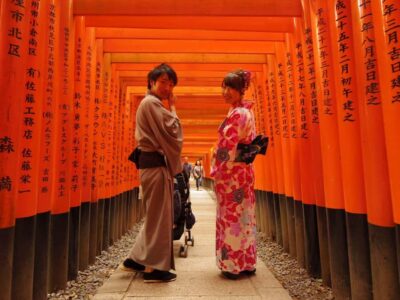
Arashiyama, Nara & Fushimi Inari Shrine w/Lunch
Read our review →
Nijo Castle, Kiyomizu & Fushimi Inari Guided Tour
Read our review →
Nijo, Kinkaku-ji, Arashiyama, Kiyomizu & Fushimi Inari
Read our review →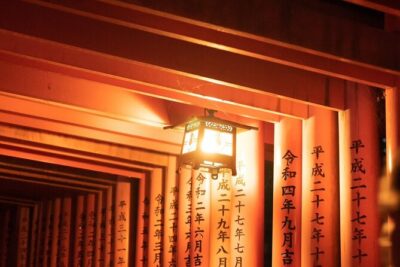
Browse the lists this tour appears in