
Reviewed · KYOTO RAMEN EXPERIENCES
Kyoto Ramen Noodle Making Class
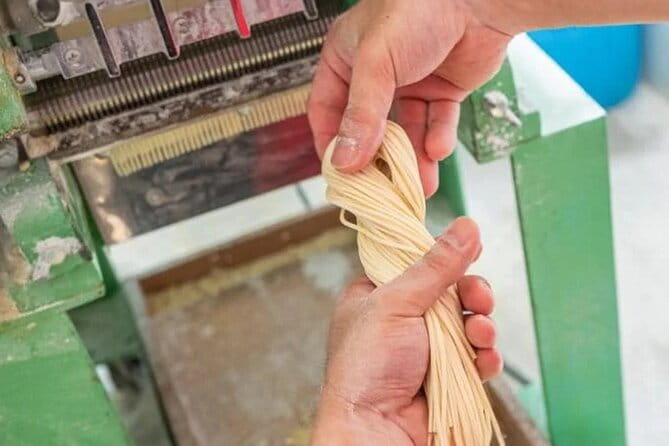
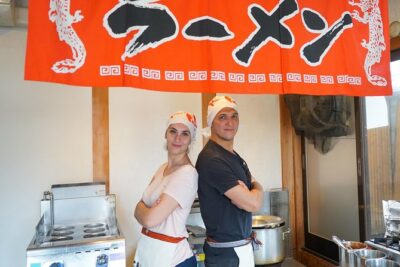
The best part of this Kyoto experience is that you do not just eat ramen, you help make the noodles. At Musoshin Gion, an English-speaking instructor guides you through mixing water with two types of wheat flour, kneading the dough, then rolling and cutting it with a professional noodle machine. You finish with a hot bowl prepared by the restaurant’s chef.
I like the hands-on format, since you are doing real kitchen work rather than watching a demonstration. I also like the small group limit of six, which gives the instructor room to help with the dough and answer questions. The main drawback is that this is a noodle-making workshop, not a full ramen cooking class, so you do not prepare the broth from scratch.
Key Points at a Glance
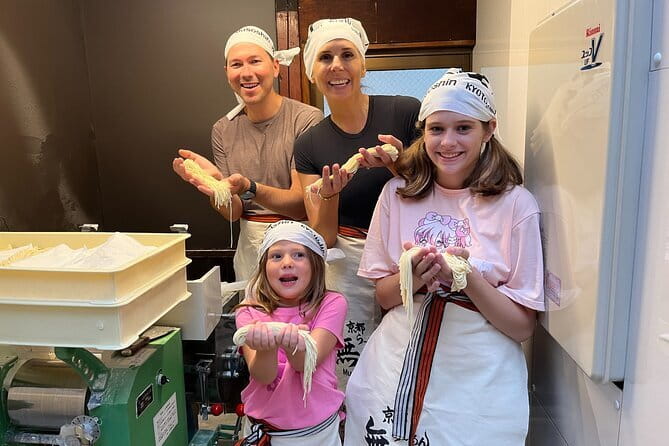
- Work with two types of flour: Mix, knead, roll, and cut the dough into chewy ramen noodles.
- Use a professional noodle machine: The equipment lets you see how restaurant-quality noodles are shaped.
- Learn at Musoshin Gion: The class takes place at the restaurant’s central Kyoto location, not at Musoshin Ramen Academy.
- Eat a chef-made bowl afterward: Your reward includes ramen prepared with a vegetable-based broth and local ingredients.
- Suitable for several diets: Vegetarian, vegan, and pescetarian tasting options are available with advance notice.
- Take home a small souvenir: The bandana used during the workshop is yours to keep.
Making Noodles in Kyoto’s Gion District
The class takes place at Musoshin Gion, at 558-2 Komatsucho in Kyoto’s Higashiyama Ward. This puts you in central Kyoto, near public transportation and within the wider Gion area, where narrow streets, traditional buildings, and busy sightseeing routes make a food activity easy to pair with other plans.
Do not confuse this venue with Musoshin Ramen Academy. The workshop is held at the Gion restaurant itself. That detail matters when you are arranging directions, especially since the experience begins and ends at the same meeting point.
The setting also gives the class a useful sense of place. You are not making noodles in a generic cooking studio. You are working inside a ramen restaurant connected to the Musoshin name, a business with three Kyoto locations and a Michelin Guide recognized location in Toronto. The class keeps the focus on noodles, but the restaurant setting helps connect the technique to the food you eat at the end.
You should allow about one hour from start to finish. That makes this a good choice for a short gap between major sights. It is also manageable for families and for anyone who wants a practical activity without giving up half a day of sightseeing.
More ramen nights in Kyoto:
- Ramen Cooking Class at Ramen Factory in Kyoto
★ 5.0 · 1,937 reviews - Kyoto: Ramen Cooking Class at a Ramen Factory with Souvenir
★ 4.9 · 532 reviews - Kyoto: Ramen, Gyoza, and Onigiri Cooking Class
★ 5.0 · 445 reviews
Mixing Dough With Two Types of Flour
The instructor starts by explaining the basic noodle-making process. You pour the water, combine it with the flour, and begin working the dough. The activity uses two types of wheat flour, a detail that helps explain why ramen noodles have a different bite from ordinary pasta or packaged noodles.
This is a useful lesson because the dough is not treated as a finished ingredient that appears by magic. You get to see how flour and water become something firm enough to roll and cut. The kneading stage is simple, but it gives you a feel for the texture and effort involved.
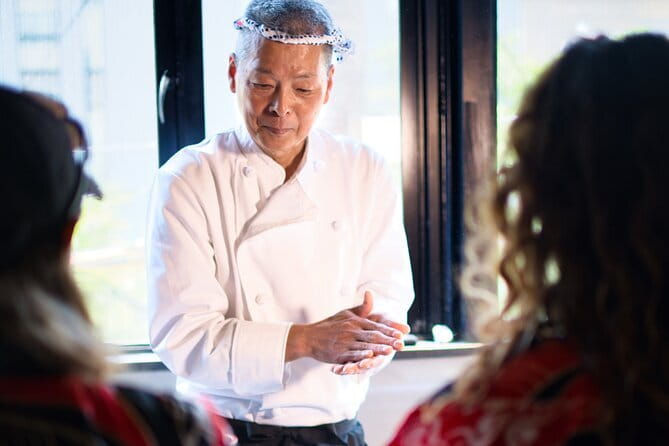
English instruction is included, and the class has been led by instructors including Kaz, Azu, and Amiru. Their role is practical: demonstrate each step, guide your hands when needed, and keep the process moving. The small group size, capped at six people, should help you follow along without standing at the back of a crowded room.
The workshop is hands-on rather than lecture-heavy. You should expect to take part at each stage instead of simply watching an instructor make a perfect batch. That makes it a good pick for children and families, provided everyone is comfortable handling flour and following kitchen directions.
Rolling and Cutting With a Professional Machine
Once the dough is kneaded, you roll and cut it into noodles using a professional noodle-making machine. This is the most distinctive piece of equipment in the class. It gives you a closer look at how a ramen restaurant produces uniform noodles while keeping the experience accessible to beginners.
The machine also makes the difference between homemade dough and finished ramen easier to understand. Thickness and shape affect how the noodle feels in your mouth and how it works with broth. You do not need to arrive with cooking skills, but you do need to pay attention to the instructor’s directions as you handle the dough and machine.
The process is interactive, but it is worth setting your expectations correctly. You are learning the noodle-making stage, not mastering every part of professional ramen production in an hour. You will not be preparing the broth, toppings, or full bowl from beginning to end.
That limitation is not necessarily a weakness. A short class works better when it concentrates on one skill. If you want a full cooking lesson covering soup, toppings, seasoning, and noodles, this is not the right activity. If you want to understand how ramen noodles are made and then eat a good bowl, the focus makes sense.
The Chef-Made Bowl at the End
After the workshop, the restaurant’s chef prepares a bowl of ramen for you. The broth is made from a blend of vegetables, and the Kyoto location adds local touches such as high-quality Kyotamba rice and condiments from regional makers.
This final meal is important to the value of the experience. You are not left with a bag of dough or a few uncooked noodles and sent on your way. You get to taste ramen made in the restaurant, with the cooking handled by the chef.
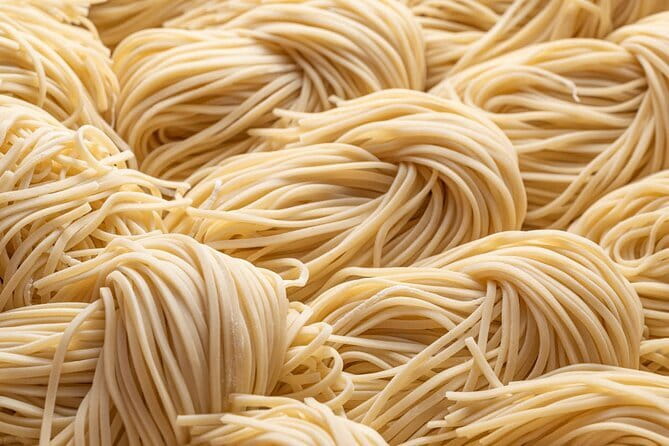
The bowl also lets you connect your work to the finished dish. After handling flour and shaping the noodles, you can notice how the texture fits with the broth. The noodles are described as chewy, which is part of the appeal of making them fresh.
A soft drink is included as well. The meal is not an extra purchase within the activity, although other personal expenses are not covered. The class includes the bowl and one soft drink, so you can plan around that without guessing what will be added at the end.
More craft workshops in Kyoto:
- Kyoto: 45-Minute Tea Ceremony Lesson Experience
★ 4.3 · 2,378 reviews - Kyoto : Chopsticks Making Workshop in Gion with Engraving Option
★ 5.0 · 958 reviews - Kyoto: Samurai Sword Class by Experts in Traditional Arts
★ 4.9 · 657 reviews - Ninja 1-hour Hands-on Lesson by Japanese master in Kyoto -Entry
★ 5.0 · 489 reviews
Vegetarian and Vegan Options
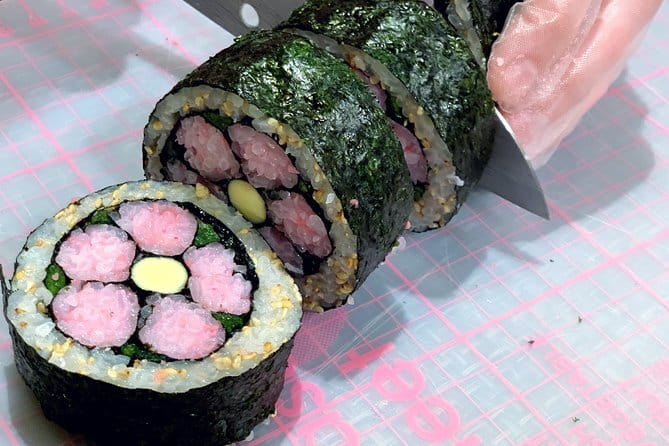
The tasting session can accommodate vegetarian, vegan, and pescetarian diets. You need to tell the provider about your dietary restrictions in advance. This is especially important with ramen, since broth and toppings can contain meat or fish even when the noodles themselves are made only from wheat flour and water.
The broth for the standard experience is vegetable-based, but you should still provide accurate dietary information before the class. The available information specifically confirms vegetarian, vegan, and pescetarian options for the tasting session. It does not promise every possible allergy accommodation, so you should contact the provider if your needs go beyond those categories.
The noodles contain wheat flour. Anyone avoiding gluten should treat this as unsuitable unless the provider gives you different instructions. The class is about wheat-based ramen noodles, not a gluten-free substitute.
A Small Class With Friendly English Instruction
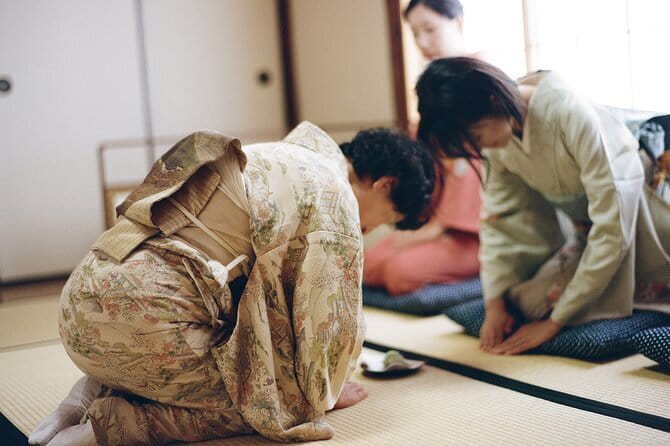
The group limit is one of the strongest practical features. With no more than six people, the instructor can keep the process personal and give you help with kneading, rolling, and cutting. A large class might make this kind of activity feel like a demonstration. Six people keeps it closer to a shared workshop.
English-speaking instruction is included. The available feedback highlights Kaz as a strong instructor and describes Azu and Amiru as friendly and clear. You should still expect a working kitchen environment rather than a formal language lesson. The important steps are demonstrated, and the activity is designed to be followed by doing.
The friendly tone also makes this a sensible family activity. The class is short, the task is visual, and the final meal gives younger participants a clear payoff. Adults who already know a lot about ramen may find the technique introductory, but the machine and fresh noodles still make the hour worthwhile.
You receive a rental apron for the workshop. The bandana used during the class is yours to take home. These are small details, but they make the activity feel more like a proper kitchen session than a quick restaurant add-on.
What the $48.27 Price Buys You
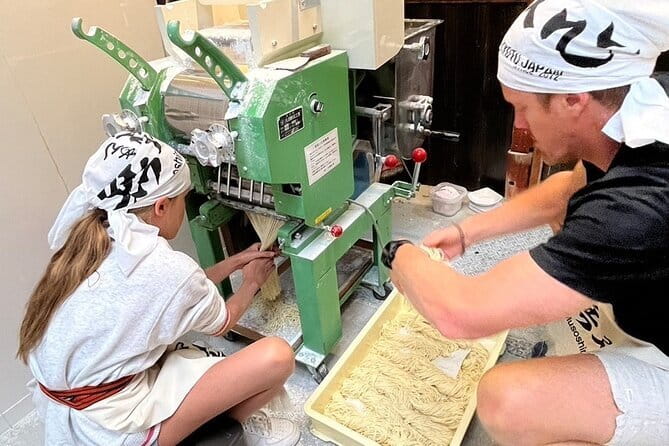
At $48.27 per person, this is not the cheapest ramen meal in Kyoto. You can eat noodles for much less if all you want is lunch. The price needs to be judged as a combined food and activity cost.
For that amount, you receive an English-speaking instructor, the ingredients and tools, use of the noodle-making machine, a rental apron, the ramen bowl, one soft drink, and the workshop bandana. You are also paying for the chance to work in a professional ramen setting with a group of no more than six.
I think the price makes the most sense if you value participation. If you only want to taste Musoshin’s ramen, ordering a bowl at a restaurant will be a simpler and likely cheaper choice. If you want a compact activity that teaches you how the noodles are made and includes lunch, the package is easier to justify.
The one-hour length keeps the cost from turning into a major time commitment. You can schedule it around Gion sightseeing, shopping, or another central Kyoto visit. Just remember to leave enough time to reach the meeting point and to avoid booking another activity too tightly afterward.
Getting There and Planning Your Day
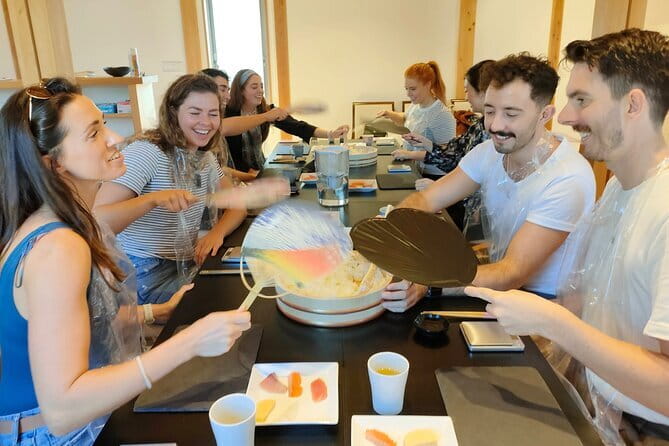
The meeting point is 558-2 Komatsucho, Higashiyama Ward, Kyoto, postal code 605-0811. The activity is near public transportation and returns to the same location when finished.
Since the venue is in Gion, this works well as part of a central Kyoto day. You could place it before or after sightseeing in the surrounding Higashiyama area, but the schedule should remain realistic. The class lasts about one hour, and confirmation can take up to 48 hours after booking, subject to availability.
A mobile ticket is included, which keeps the entry process simple. You should still check the meeting address carefully because the workshop is specifically at Musoshin Gion, not Musoshin Ramen Academy.
The cancellation policy is friendly if your plans change early. You can cancel for a full refund up to 24 hours before the start time. Cancellations or changes made less than 24 hours before the activity are not refunded or accepted, and the cut-off follows Kyoto local time.
Who Should Book This Experience?
I would recommend this class to you if you want a food activity with real participation but limited time. It suits first-time ramen makers, families, couples, and curious eaters who want more context than a restaurant meal provides.
It is also a good fit if you want English instruction and a small group. The class does not require previous cooking experience, and the steps are practical enough to follow as you go.
Vegetarians, vegans, and pescetarians can join the tasting portion if they give advance notice. Wheat-free diners should think twice, since the noodles are made from wheat flour.
You may want to skip it if you are looking for a full Japanese cooking class. The broth is prepared by the chef, and the workshop centers on noodles. You also may not find the price worthwhile if your only goal is to eat ramen.
Should You Book the Kyoto Ramen Noodle Making Class?
Book it if you want to make the noodles yourself, use a professional machine, and sit down to a chef-made bowl afterward. The small group, English instruction, friendly teaching style, local Kyoto ingredients, and included meal give the experience more substance than a quick demonstration.
Skip it if you want a long cooking lesson or need gluten-free food. For most food-loving visitors with an hour to spare in Gion, this is a neat, focused way to turn a familiar dish into a hands-on Kyoto memory.
FAQ
Where does the ramen noodle-making class take place?
The class takes place at Musoshin Gion, located at 558-2 Komatsucho, Higashiyama Ward, Kyoto, 605-0811, Japan.
Is the class held at Musoshin Ramen Academy?
No. The cooking venue is Musoshin Gion in central Kyoto, not Musoshin Ramen Academy.
How long does the experience last?
The activity lasts approximately one hour.
How many people can join the class?
The group has a maximum of six travelers.
Is English instruction available?
Yes. An English-speaking noodle-making instructor leads the workshop.
What will I learn to make?
You will make ramen noodles from scratch using two types of wheat flour, water, kneading, rolling, and a professional noodle-making machine.
Is ramen included after the workshop?
Yes. The experience includes one bowl of ramen prepared by the chef and one soft drink.
Are vegetarian and vegan options available?
Yes. Vegetarian, vegan, and pescetarian options are available for the tasting session. You should provide your dietary restrictions in advance.
Can I cancel for a full refund?
Yes. You can cancel at least 24 hours before the scheduled start time for a full refund. Cancellations or changes made less than 24 hours before the start time are not accepted or refunded.
Newest Kyoto experiences on the site
- Treasures of Kyoto: Gion & historical Walking Tour★ 5.0 · 6 reviews
- Whisk Your Own Matcha: A Zen Matcha Experience at Temple★ 3.6 · 7 reviews
- Kyoto tea town for matcha lovers★ 5.0 · 16 reviews
- Uji: Private immersion into Kyoto’s tea and reglious culture★ 5.0 · 17 reviews
- Kyoto Matcha Green Tea Tour★ 4.5 · 23 reviews
- Uji and Wazuka Matcha Farm Half Day Private Guided Tour★ 5.0 · 21 reviews
- Utilising upcycled Matcha! Creating matcha incense (Uji, Kyoto)★ 5.0 · 6 reviews
- Sacred Temple Yoga Experience in Japan★ 5.0 · 3 reviews
Kyoto Ramen Experiences, compared.
Ramen Cooking Class at Ramen Factory in Kyoto
Read our review →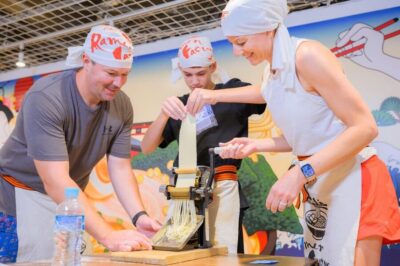
Ramen Cooking Class at a Ramen Factory with Souvenir
Read our review →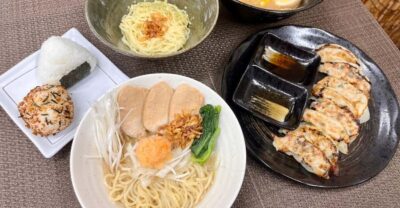
Kyoto Ramen and Gyoza Cooking Class with Professional Chefs
Read our review →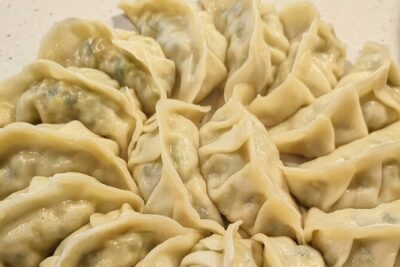
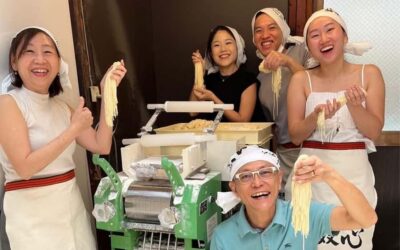
Kyoto Michelin Ramen Workshop or Painting Ramen Essentials
Read our review →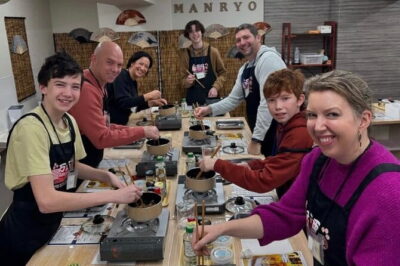
Ramen Gyoza Onigiri Japanese Cooking Class in Kyoto
Read our review →
Kyoto Ramen Spoon Painting & Michelin Cooking Class
Read our review →Browse the lists this tour appears in