Reviewed · SHOW
Traditional Japanese Music show & Experience Tour in Kyoto
Kyoto’s traditional music is not just something you watch from a dark theater seat here. You get a 25-minute concert, then pick up an instrument and try it yourself. Shamisen, koto, and wadaiko may be available, along with other Japanese instruments.
I like the small-group format, capped at 12 people, because it gives you a fair chance to ask questions and handle an instrument. I also like the clear one-hour plan: music first, hands-on practice second, photos at the end.
The main consideration is that this is a short introduction, not a full music lesson. The activity runs only at 11:00 am on Monday, Tuesday, Thursday, and Friday, and at least two people must book for it to take place.
Key points to know before booking
- You hear a live 25-minute concert first, with the exact program changing by day.
- You play traditional Japanese instruments yourself, including possible time with shamisen, koto, or wadaiko.
- The group maximum is 12 people, making this more personal than a large stage show.
- The full visit lasts about one hour, including 10 minutes for photographs.
- The meeting point is on the fifth floor at 306 Higashidaimonjicho in Nakagyo Ward.
- The price is $46.24 per person, with free cancellation up to 24 hours before the start time.
A short Kyoto concert with a hands-on finish
This experience works because it combines two things that are often separated: watching skilled performers and having a go yourself. You first hear the instruments in a proper concert setting, then learn enough to make your own sounds under guidance.
The concert lasts about 25 minutes. You might hear shamisen, a three-stringed Japanese lute, koto, a long zither often described as a Japanese harp, and wadaiko, the large Japanese drum. The exact instruments and music can change depending on the day, so the program is not identical every time.
That variation is useful if you return to Kyoto or are planning two visits on different days. It also means you should not book expecting one fixed performance with a guaranteed sequence of instruments. The published information says other instruments may appear as well.
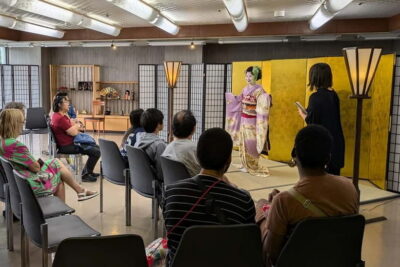
This is a cultural activity rather than a formal theater performance. The scale is small, and the music is presented as a way to help you understand Japanese traditions. In one session, the performers also sang and invited participants to join in with parts of some songs. That makes the event feel more active than a standard recital.
More shows and performances in Kyoto:
- Kyoto Gion Cultural Walk & Geisha Show with Dining Options
★ 5.0 · 518 reviews - Kyoto Gion Cultural Walk & Geisha Show with Dining Options
★ 5.0 · 483 reviews - 1 Hour Geisha Show in Kyoto
★ 5.0 · 452 reviews
The 25-minute performance: listen for contrast
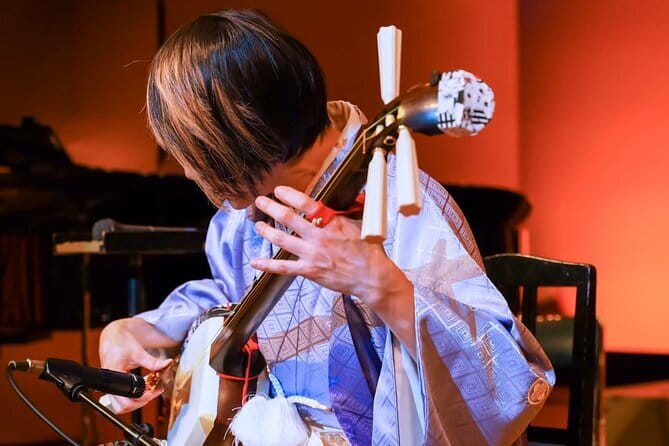
The concert is the part where you can simply sit back and listen. That matters because Japanese instruments can be difficult to understand from a picture or a quick museum display. You hear their sound, rhythm, volume, and texture before someone asks you to play.
The shamisen can give the music a crisp, percussive quality. The koto offers a different sound, with plucked strings and a more measured tone. Wadaiko brings physical force and rhythm. The point is not only to identify each instrument, but to notice how differently they work together.
The performance may include songs from different parts of Japan and traditional instruments. Since the concert changes by day, I would treat the program as a pleasant surprise rather than trying to plan your whole morning around one particular piece.
A useful tip is to arrive ready to listen closely. The concert is only 25 minutes, so it moves at a good pace. You will have the chance to play later, but the first section gives you the sound and setting that make the hands-on portion more meaningful.
Choosing an instrument and making your own music
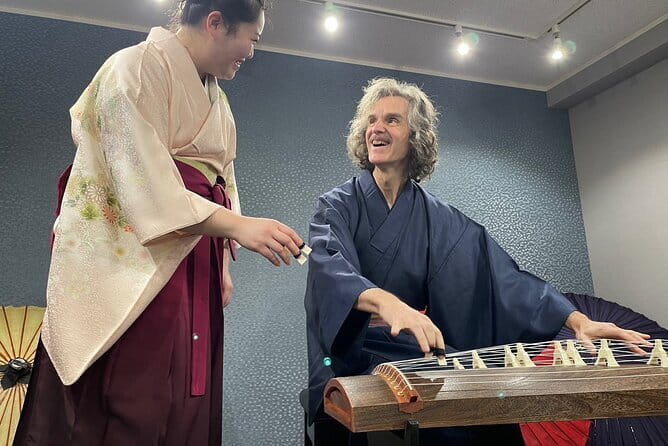
After the concert, you spend another 25 minutes trying traditional instruments. You can choose the instrument that interests you most from the available selection. The information specifically names shamisen, koto, and wadaiko, but the selection can include more.
You do not need previous musical experience. The instructors guide you through the basics, and the small group makes it easier to receive direct help. That is important because these instruments are unfamiliar to most visitors. You should expect a first attempt, not a polished performance.
One of the most useful parts of this format is the chance to feel the instruments in your hands. A koto string, a shamisen pick, or a wadaiko drumstick gives you a better sense of how the sound is made. Even a few minutes of practice can change the way you listen to the concert that came before it.
If you are not musical, do not let that stop you. One participant described their playing as lopsided, while also noting that the two organizers showed a lot of patience. That is exactly the right expectation: this is designed for beginners, and making an imperfect sound is part of the fun.
The experience also works well for families and mixed-age groups because the task is simple to understand. The available information says most people can participate, and service animals are allowed. Still, you should contact the provider with any special request before booking, rather than assuming every need can be handled on the day.
Why the small group matters
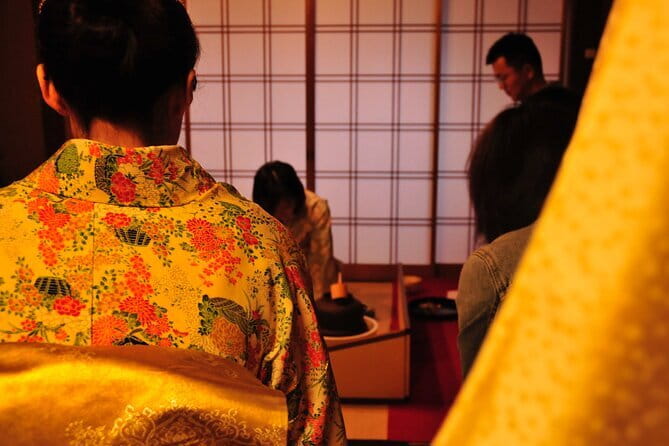
The maximum group size is 12 people. That is small enough to make the instrument session feel personal, but it is not a private lesson. Your experience will depend partly on the final group size and on which instruments are available that day.
A small group helps in two ways. First, you are less likely to spend the entire practice period waiting for a turn. Second, it gives you a better chance to ask how to hold or play the instrument correctly.
This format also makes it easier for the performers to include the group in a song or activity. That participation has been one of the most enjoyable parts of the event for people who wanted more than a passive concert.
The tradeoff is that you will not receive an in-depth lesson on every instrument. With only 25 minutes for the hands-on section, the goal is sampling and cultural understanding. If you want serious technical instruction on shamisen, koto, or wadaiko, you will need a longer, more specialized class.
A few more Kyoto tours worth putting on the shortlist
- PERFECT KYOTO 1-Day Bus Tour
★ 5.0 · 13,518 reviews - Kyoto: Fushimi Inari, Kinkakuji, Bamboo Grove 1 Day Bus Tour
★ 4.8 · 4,316 reviews - Kyoto: Tea Ceremony in a Traditional Tea House in Kiyomizu
★ 4.9 · 3,519 reviews - Kyoto Geisha Walking Tour: Gion District & Hidden Gems
★ 4.7 · 3,273 reviews
The final 10 minutes: photos and a natural stopping point
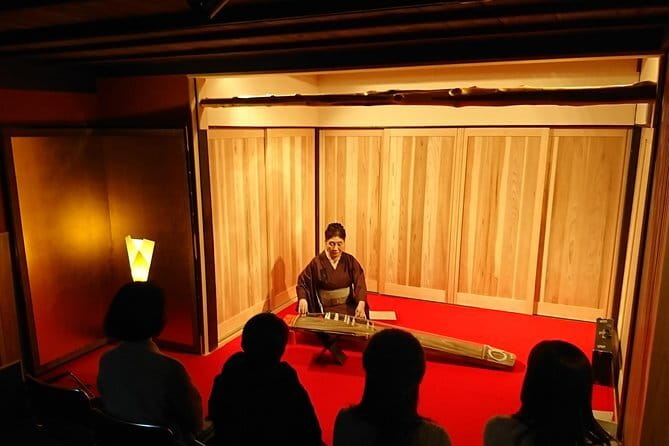
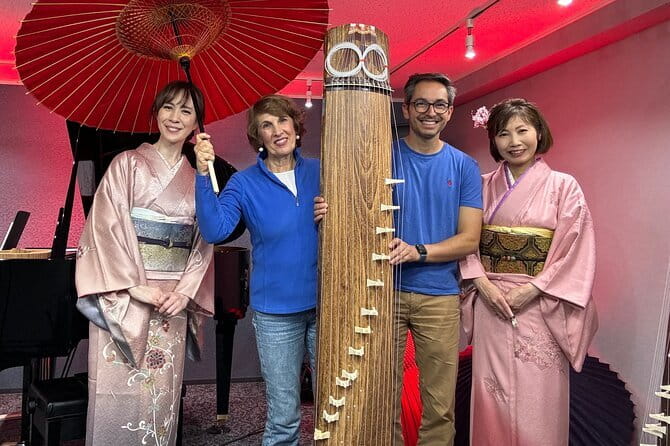
The last 10 minutes are set aside for photographs with the instruments and performers. This is a practical ending. You have already watched the music and tried an instrument, so the photos record the experience without taking time away from the concert or practice.
Ten minutes is enough for a few group or individual pictures, but it is not a long portrait session. Keep your expectations modest and follow the staff’s direction so everyone has a turn.
The photo period also gives you a moment to look again at the instruments after playing them. For many people, that will be more meaningful than a quick photograph taken before they understand what they are holding.
The activity ends at the same place where it begins. There is no private transportation included, so you arrange your own way to the venue and continue your Kyoto plans from there.
Location and timing in central Kyoto
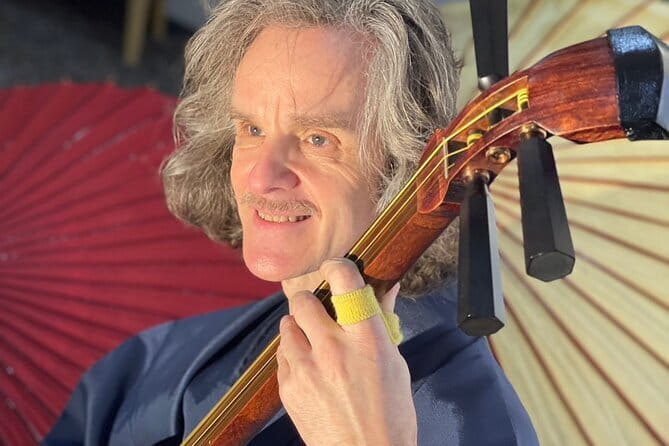
The meeting point is 5F, 306 Higashidaimonjicho, Nakagyo Ward, Kyoto, postal code 604-8043. The activity starts at 11:00 am and is offered on Monday, Tuesday, Thursday, and Friday.
This fixed morning schedule is easy to fit before lunch, but it gives you fewer choices than an activity with several daily departures. There is no listed Wednesday, weekend, or afternoon session, so check the date carefully before you build your Kyoto itinerary around it.
The venue is near public transportation, which is helpful in Kyoto, where walking and local transit are often the simplest ways to move around. The address is on the fifth floor, so allow enough time to find the building and reach the meeting point. The supplied information does not give a landmark or detailed arrival instructions, so use the exact address and your booking confirmation.
Because the total activity lasts about an hour, you can pair it with other central Kyoto plans. I would avoid scheduling something immediately afterward if you need to cross the city. The activity itself is short, but finding a building in an unfamiliar neighborhood can take longer than expected.
Is $46.24 a fair price?
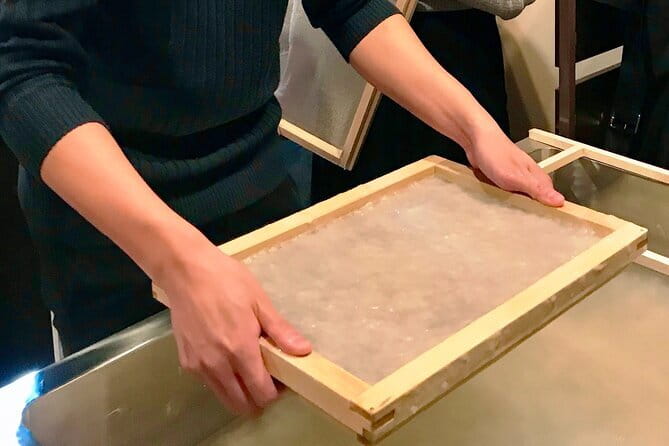
At $46.24 per person, the value comes from the combination of a live concert and instrument use. You are not paying only for a 25-minute show. You also receive guided practice, the chance to handle traditional instruments, and a short photo session.
For someone who would otherwise only see Japanese instruments behind glass or hear them in a large performance hall, that added contact makes the price reasonable. You gain context through sound and touch, which is hard to get from a standard sightseeing stop.
The value is strongest if you enjoy participation. If you want only a polished concert, you may find the hands-on section less important. The concert is relatively short, and the activity is designed as an introduction rather than a full evening of music.
The small group helps support the price. You are not part of a huge demonstration where the instrument session becomes a quick turn for everyone. With a maximum of 12 people, the format offers a better chance for personal guidance.
What the 57 five-star ratings tell you about the fit
The experience has a 5.0 rating from 57 reviews, with 100 percent recommendation shown in the supplied information. The praise focuses on the same features that define the activity: clear information, the live performance, participation in songs, and the chance to play the instruments.
The strongest pattern is the successful mix of demonstration and hands-on practice. That balance matters because a concert alone can feel distant, while a lesson without a performance gives you little sense of how the instruments sound in skilled hands.
The staff’s patience is another useful detail. Beginners can feel self-conscious when their first sounds are uneven. Here, the tone appears suited to trying without worrying about musical ability.
A Japanese-language review also described the direct impact of hearing the instruments performed nearby, including both their power and their delicate qualities. That is a good reason to choose a live session over a recording. You can hear the force of the drum and the finer details of string instruments at close range.
These comments do not mean every session will feel identical. The concert changes by day, and the group makeup can vary. Still, the activity has a clear design: show you the music, let you try it, and keep the mood friendly for beginners.
Who should book this Kyoto activity?
I would recommend it to you if you want a compact cultural experience with real participation. It fits especially well for:
- First-time visitors who want more than temple photos
- Families and groups with mixed musical ability
- People curious about shamisen, koto, or wadaiko
- Visitors who prefer a small session to a large staged show
- Anyone with only a free morning in Kyoto
- Beginners who want to try an instrument without prior training
It is also a good choice if you like understanding how things work. You hear the instruments, receive instructions, and feel the physical action required to produce the sound.
You may want to skip it if you need a flexible schedule, want a long concert, or expect formal instruction on one instrument. The one-hour format is intentionally light. It gives you a taste, not a complete course.
The activity is also not a sightseeing tour through Kyoto. You will not be transported between landmarks, and there is no private vehicle included. Think of it as a focused cultural appointment that you add to a day of independent exploring.
Booking, cancellation, and practical details
Confirmation is provided when you book, and the activity uses a mobile ticket. Keep the ticket easy to access on your phone, especially since the meeting point is in a multi-floor building.
At least two participants are required for the activity to run. If that minimum is not met and the session is canceled, you are offered a different date or experience, or a full refund.
You can cancel for a full refund up to 24 hours before the start time. Cancellations or changes made less than 24 hours before the 11:00 am start are not accepted for a refund. The cut-off follows Kyoto local time.
Most people can participate, and service animals are allowed. If you have a special request, contact Harmony in Japan Tour before the date. The provider is listed as Harmony in Japan Tour.
Should you book the traditional music experience?
Book this if you want a friendly, affordable introduction to Japanese music where you do more than sit and watch. The strongest reason is the two-part structure: a live concert gives you the sound and cultural setting, then guided practice lets you understand the instruments with your own hands.
The $46.24 price is fair for that combination, especially with a group limited to 12 people. Just remember that the music program varies, the session is offered only at 11:00 am on four weekdays, and the lesson is a short beginner experience rather than serious training.
If those limits suit your schedule, this is a smart one-hour addition to a Kyoto morning.
FAQ
How long does the traditional Japanese music experience last?
The activity lasts approximately 60 minutes. It includes a 25-minute concert, 25 minutes of trying traditional instruments, and 10 minutes for photos with the instruments and performers.
What time does the activity start?
The activity starts at 11:00 am.
On which days is the experience available?
It is offered on Monday, Tuesday, Thursday, and Friday.
Where is the meeting point?
The meeting point is 5F, 306 Higashidaimonjicho, Nakagyo Ward, Kyoto, 604-8043, Japan. The activity ends at the same location.
Which instruments can I try?
The listed instruments include shamisen, koto, and wadaiko. Other traditional Japanese instruments may also be available.
Do I need previous musical experience?
No. Expert guidance is provided, and no prior experience is required.
How many people can join the activity?
The maximum group size is 12 people. At least two participants are required for the activity to take place.
Can I cancel for a refund?
Yes. You can receive a full refund if you cancel at least 24 hours before the experience start time. Cancellations or changes made less than 24 hours beforehand are not accepted for a refund.
Newest Kyoto experiences on the site
- Treasures of Kyoto: Gion & historical Walking Tour★ 5.0 · 6 reviews
- Whisk Your Own Matcha: A Zen Matcha Experience at Temple★ 3.6 · 7 reviews
- Kyoto tea town for matcha lovers★ 5.0 · 16 reviews
- Uji: Private immersion into Kyoto’s tea and reglious culture★ 5.0 · 17 reviews
- Kyoto Matcha Green Tea Tour★ 4.5 · 23 reviews
- Uji and Wazuka Matcha Farm Half Day Private Guided Tour★ 5.0 · 21 reviews
- Utilising upcycled Matcha! Creating matcha incense (Uji, Kyoto)★ 5.0 · 6 reviews
- Sacred Temple Yoga Experience in Japan★ 5.0 · 3 reviews
Show, compared.
Kyoto Gion Cultural Walk & Geisha Show with Dining Options
Read our review →Kyoto Gion Cultural Walk & Geisha Show with Dining Options
Read our review →