
Reviewed · KYOTO SAKE TASTINGS
Kyoto Sake Brewery Tour with Lunch
Kyoto’s Fushimi district is one of Japan’s best places to make sense of sake. This three-hour walk takes you from a small producer to the large Gekkeikan operation, then adds museum displays, several tastings, and a seasonal yakitori lunch with sake. It gives you the useful contrast between handmade scale and major production, rather than treating sake as just another drink to sample.
I like two things here. First, the small-to-large brewery comparison gives the tour a clear purpose. Second, lunch is part of the plan, so you can try sake with food instead of judging every pour on its own. The main caution is that active brewing areas are inaccessible, and the guide may rely heavily on printed sheets when explaining technical points.
Key points at a glance
- Fushimi’s sake district: Walk through a historic Kyoto neighborhood known for sake production, local shops, temples, and old streets.
- Two scales of production: Compare the feel of a small brewery with the reach of a major maker such as Gekkeikan.
- Gekkeikan Okura Sake Museum: Learn how rice wine was made over the past several hundred years through historic tools and displays.
- Sake with lunch: Enjoy a seasonal local meal, including yakitori, with sake served alongside it.
- Small group format: The maximum group size is 10 people, making questions easier than on a large bus tour.
- Clear limitations: You cannot enter active brewing areas, and transportation, hotel pickup, and drop-off are not included.
Why Fushimi is the right place to learn about sake
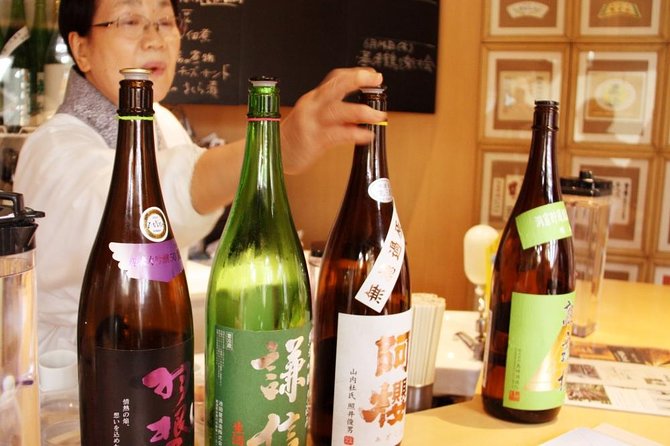
Fushimi is more than a convenient Kyoto neighborhood for a tasting. It is the city’s sake district, and the tour uses that setting to connect the drink with the places where it has been made and sold.
Your meeting point is in front of the SoftBank shop in Otesuji Shotengai at 11:00 a.m. The address is 4-chōme-291 Ryōgaemachi in Fushimi Ward. That puts you near the Fushimi-Momoyama Station area, with the tour ending nearby at Fushimi Momoyama Station.
The first few minutes are used to gather the group and set off through the district. From there, the walk can include nearby sights such as Fushimi Inari Taisha, Chokenji Temple, Fushimi Park, and Teradaya. The exact stops may change because of restaurant schedules, public holidays, weather, or other local conditions.
That flexibility is worth understanding before you book. You are not signing up for a fixed sightseeing circuit with every stop guaranteed. You are signing up for a guided introduction to Fushimi, with sake as the main subject and the surrounding streets providing context.
More sake tastings in Kyoto:
- Kyoto Night Foodie Tour in Gion (9+ dishes + 6 Sake tastings)
★ 5.0 · 1,762 reviews - 3-Hour Kyoto Insider Sake Brewery Tour with Tastings & Pairings
★ 5.0 · 917 reviews - Arashiyama Bamboo, Temple, Monkeys, or Secret Sake Brewery
★ 4.8 · 886 reviews
Comparing a small brewery with a major producer
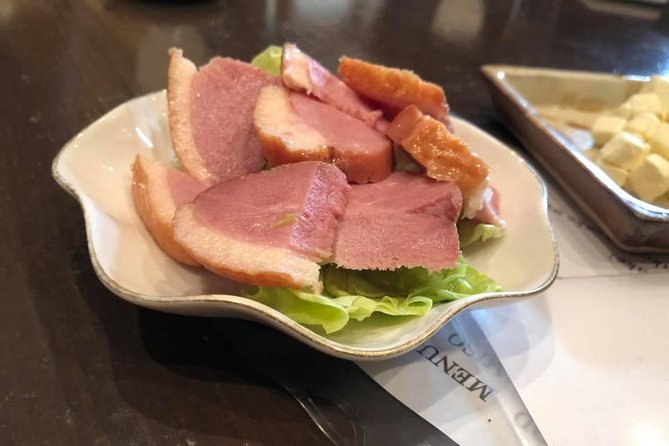
One of the most useful parts of the tour is the contrast between small and large sake makers. A small brewery helps you think about limited production and local character. A large brewery shows how the same basic drink can be made and distributed on a far greater scale.
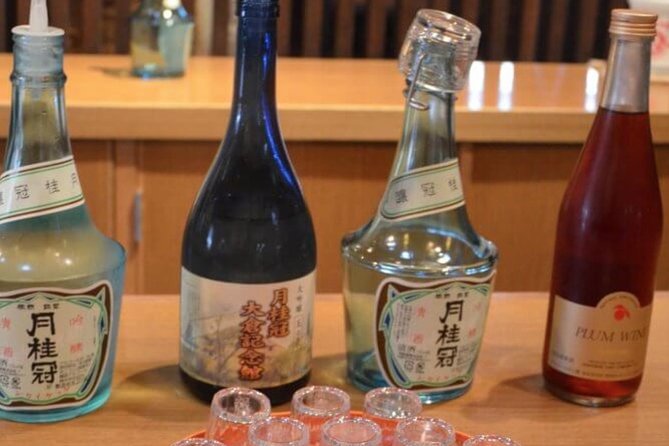
You will have opportunities to try sake and other local products along the way. The goal is not simply to identify a favorite bottle. It is to notice how different producers approach the same raw material and how the size of a brewery affects the experience.
The tour description promises visits to both a small and large brewery, but the practical detail matters: active brewing areas are not accessible. You should expect public-facing brewery spaces, tastings, and explanations rather than a walk through working fermentation rooms or a behind-the-scenes production floor.
That limitation does not ruin the visit, but it changes what you are paying for. This is a guided cultural and tasting experience, not a technical brewery inspection. If you want to see tanks, workers, and every stage of active production, you may find the access too limited.
Inside the Gekkeikan Okura Sake Museum
The Gekkeikan Okura Sake Museum gives the tour its historical backbone. Gekkeikan has been making sake since 1637, and the museum uses that long record to explain how Japanese rice wine was produced in earlier periods.
Expect displays about traditional tools, techniques, and the work involved in turning rice into sake. For someone new to the drink, this can answer basic questions that a tasting alone cannot. You begin to see why rice polishing, fermentation, water, yeast, and timing all matter.
The museum visit is listed at about 30 minutes. That is enough for a focused introduction, but not enough for an exhaustive study of sake production. I see that as a reasonable balance on a three-hour tour. You get the essential background, then return to tasting and the neighborhood instead of spending the entire morning indoors.
One point deserves a little honesty. A guide who leans too much on laminated information sheets can make a complicated process feel flat. Technical ideas about brewing do not always translate smoothly through prepared notes, especially when the subject involves unfamiliar Japanese terms.
You can improve the experience by asking direct questions. Ask what you are tasting, how it differs from the previous sample, and which part of the process affects the flavor. The small group, capped at 10 people, should make that possible.
Sake tasting for beginners
Sake can seem mysterious because it does not fit neatly into the categories many drinkers already know. It is not simply wine made from rice, and it does not behave exactly like beer, even though fermentation methods share some broad ideas with both.
This tour is designed to take some of that mystery away. Several sake tastings are included, and you will sample drinks from the district rather than receiving only a lecture about them.
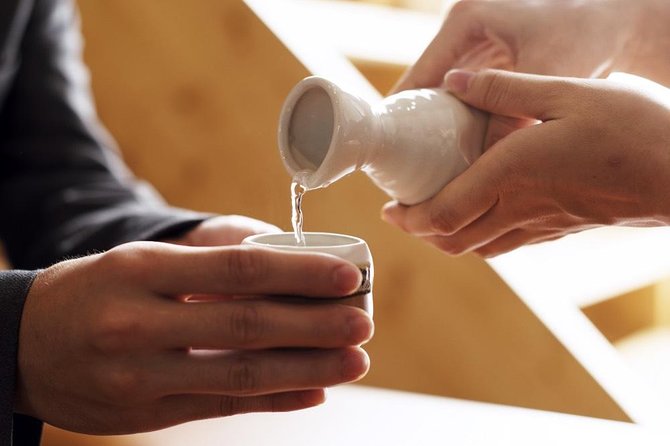
I would approach the tasting as a comparison exercise. Notice the differences in aroma, sweetness, dryness, weight, and finish. You do not need specialist vocabulary. Start with simple observations, such as whether a sake feels light or full, clean or strong, sweet or dry.
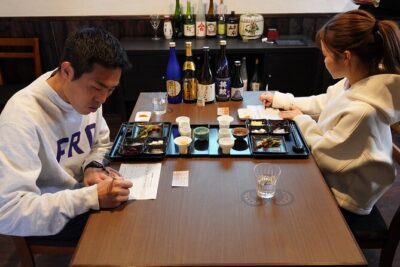
The tasting is also more useful because it is paired with food. Sake can taste very different alongside grilled chicken than it does by itself. A drink that seems sharp on its own may work well with a savory dish.
The minimum drinking age is 21. That age rule applies even though the activity also includes a museum and neighborhood walk. Anyone who does not drink should check with the provider before booking, since several tastings are central to the experience.
Same city, a completely different kind of day:
- PERFECT KYOTO 1-Day Bus Tour
★ 5.0 · 13,518 reviews - Kyoto: Fushimi Inari, Kinkakuji, Bamboo Grove 1 Day Bus Tour
★ 4.8 · 4,316 reviews - Kyoto: Tea Ceremony in a Traditional Tea House in Kiyomizu
★ 4.9 · 3,519 reviews - Kyoto Geisha Walking Tour: Gion District & Hidden Gems
★ 4.7 · 3,273 reviews
A seasonal yakitori lunch with sake
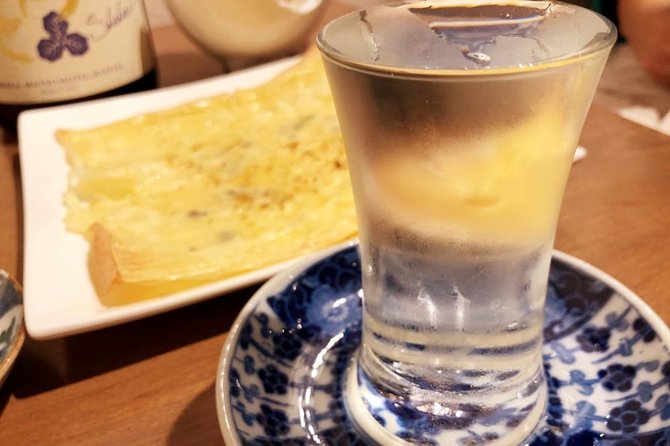
Lunch is included at a local restaurant, and the meal features yakitori paired with sake. This is one of the tour’s strongest practical features. You do not have to leave the group to find food during a short three-hour schedule, and the meal gives you a more grounded way to taste the drinks.
Yakitori is grilled chicken served in small portions, often seasoned simply enough for the flavor of the meat and the accompanying drink to remain clear. The tour describes the meal as seasonal, so the exact dishes may vary.
The wording also makes clear that lunch and specified tastings are included, while other food and drinks are not. If you want additional beverages or dishes, plan to pay separately.
Dietary needs are accommodated for vegan, vegetarian, pescetarian, and gluten-free diets. You should communicate your needs when booking, rather than assuming the restaurant will know. The description does not specify the exact substitute dishes, so the meal may differ from the standard yakitori lunch.
For me, the important value is not the size of the meal. It is the chance to connect sake with ordinary local dining. A tasting room can make every drink feel like a special event. A meal shows you how the drink fits into a normal Japanese food setting.
The neighborhood walk beyond the museum
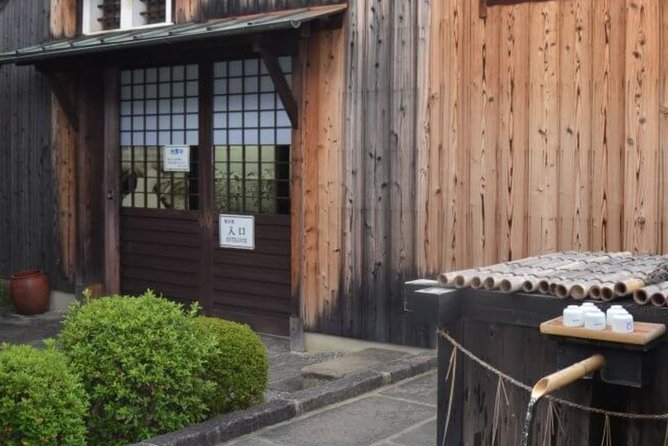
The tour is not confined to the museum. The route may take in Fushimi’s local streets and sights, including Chokenji Temple, Fushimi Park, Teradaya, and possibly areas near Daigo-ji and Fushimi Inari Taisha.
These names should not be read as a promise of a full temple tour. The available schedule gives only a few minutes for the opening meeting and about 30 minutes for the museum, leaving the rest of the three hours for walking, tastings, lunch, and neighborhood orientation.
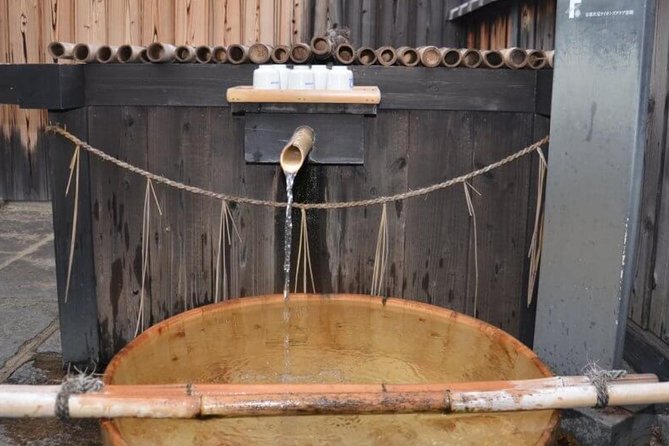
That is still valuable. Fushimi has a different feel from Kyoto’s most crowded central sightseeing corridors. You can browse local shops, see the setting around the breweries, and understand why sake production developed here.
The walk requires a moderate level of physical fitness. You will be on your feet and moving between stops, though the supplied details do not specify the total walking distance. Comfortable shoes are a sensible choice.
Weather can affect the experience. If poor weather forces cancellation, you will be offered another date or a full refund. The provider may also substitute stops if conditions or local schedules require it.
What $227 means for the value
At $227 per person, this is not a cheap tasting. The price needs to be judged as a package rather than as the cost of a few pours.
You are paying for roughly three hours with a local English-speaking guide, several sake tastings, a restaurant lunch, museum admission, and a guided walk through Fushimi. The group maximum of 10 is another part of the value. A small group usually gives you more room to ask questions and less waiting while the guide manages people.
The price makes more sense if you are new to sake and want the history, setting, food, and tasting in one appointment. It is less attractive if you already know Fushimi, can visit the museum on your own, and mainly want inexpensive samples.
Transportation costs are not included, and hotel pickup and drop-off are not provided. You need to reach the meeting point yourself and make your own way home from the Fushimi-Momoyama Station area.
The experience is usually booked well ahead, with an average booking time of about 68 days before the tour. That does not guarantee every date will sell out, but it is a good reason to reserve early if your Kyoto schedule is fixed.
Where the guide makes the difference
The guide is a local English speaker, and that matters because sake production involves unfamiliar processes and vocabulary. A good explanation can turn a museum display into something you remember when you see a bottle on a restaurant menu.
The available feedback gives a mixed but useful warning. The guide was described as nice, and the food and sake were considered good. The weak point was an overreliance on laminated sheets, with some brewing concepts not translating clearly.
I would not treat that as a reason to dismiss the tour. It is a reason to take an active role. Ask for examples. Ask the guide to compare two samples in plain terms. If an explanation feels abstract, connect it to the drink in your glass.
There are no guide names supplied for this departure, so you should not book expecting a particular host. The quality may depend on the individual guide assigned that day.
Who will enjoy this tour most
This experience suits you best if you want a structured introduction to sake and prefer learning through a mix of walking, food, museum displays, and tasting.
It is especially useful for:
- First-time sake drinkers who want basic context before choosing bottles.
- Couples or small groups looking for a food-and-drink activity in Kyoto.
- Visitors interested in traditional production methods but not requiring access to working brewery floors.
- People who value an English-speaking guide and a small group.
- Anyone who wants to explore Fushimi beyond a single temple visit.
You may want another option if you dislike alcohol tastings, need a fully private experience, or want an industrial look at active brewing. The tour also may not suit you if you want a long temple-focused outing, since the sake district and museum remain the main subjects.
Should you book the Kyoto Sake Brewery Tour?
Book it if you want a compact, well-rounded introduction to Fushimi sake. The best features are the comparison of small and large producers, the Gekkeikan museum, several tastings, and a seasonal lunch served with yakitori. Together, they give you more context than a short bar tasting.
Think twice if $227 feels high for a three-hour activity or if you expect to enter active production rooms. The guide may also explain some technical material from prepared sheets, which could feel less lively than a hands-on brewery tour.
For a first sake experience in Kyoto, I think the format is strong. You learn where the drink comes from, taste it in more than one setting, eat a local meal, and finish near a convenient station area. That combination makes the price easier to justify, provided you understand that this is an educational neighborhood tour, not a working-floor brewery visit.
FAQ
How long does the Kyoto Sake Brewery Tour last?
The tour lasts approximately three hours.
What time and where does the tour start?
It starts at 11:00 a.m. in front of the SoftBank shop in Otesuji Shotengai, at 4-chōme-291 Ryōgaemachi, Fushimi Ward, Kyoto.
Where does the tour end?
The tour ends in the Fushimi-Momoyama Station area.
Is lunch included?
Yes. A seasonal local lunch at a restaurant is included, with yakitori paired with sake.
Are brewery tastings included?
Yes. Several sake tastings are included. Other food and drinks are not included unless specifically stated.
Can guests with dietary restrictions join?
The experience is listed as suitable for vegan, vegetarian, pescetarian, and gluten-free diets. Tell the provider about your needs when booking so the restaurant can prepare appropriately.
More Bars and Sake Stops in Kyoto
- Kyoto: Izakaya Bars Guided Walking Tour
★ 4.9 · 815 reviews - Kyoto Bar Hopping Night Tour
★ 5.0 · 613 reviews - Kyoto Local Bar Crawl in Kawaramachi Area
★ 5.0 · 378 reviews - 1.5-Hour Kyoto Insider Sake Experience with 7 Tastings & Pairings
★ 5.0 · 297 reviews
More Sake Breweries in Kyoto
- Kyoto: Insider Sake Brewery Tour with Sake and Food Pairing
★ 5.0 · 704 reviews - Kyoto Sake Brewery & Tasting Walking Tour
★ 5.0 · 623 reviews - Kyoto: Fushimi Sake Brewery Tour – 18 Tastings in 2.5 Hours
★ 4.7 · 36 reviews - KYOTO Sake Tasting Tour at Local Breweries(tasting fee included)
★ 5.0 · 16 reviews
Newest Kyoto experiences on the site
- Treasures of Kyoto: Gion & historical Walking Tour★ 5.0 · 6 reviews
- Whisk Your Own Matcha: A Zen Matcha Experience at Temple★ 3.6 · 7 reviews
- Kyoto tea town for matcha lovers★ 5.0 · 16 reviews
- Uji: Private immersion into Kyoto’s tea and reglious culture★ 5.0 · 17 reviews
- Kyoto Matcha Green Tea Tour★ 4.5 · 23 reviews
- Uji and Wazuka Matcha Farm Half Day Private Guided Tour★ 5.0 · 21 reviews
- Utilising upcycled Matcha! Creating matcha incense (Uji, Kyoto)★ 5.0 · 6 reviews
- Sacred Temple Yoga Experience in Japan★ 5.0 · 3 reviews
Kyoto Sake Tastings, compared.
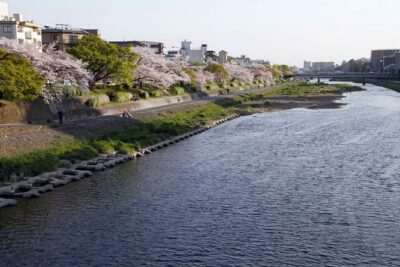
Kyoto Night Foodie Tour in Gion (9+ dishes + 6 Sake tastings)
Read our review →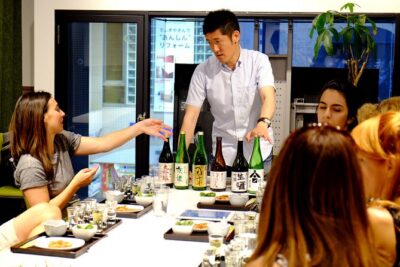
3-Hour Kyoto Insider Sake Brewery Tour with Tastings & Pairings
Read our review →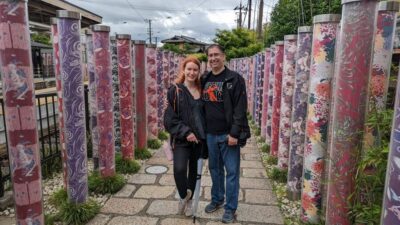
Arashiyama Bamboo, Temple, Monkeys, or Secret Sake Brewery
Read our review →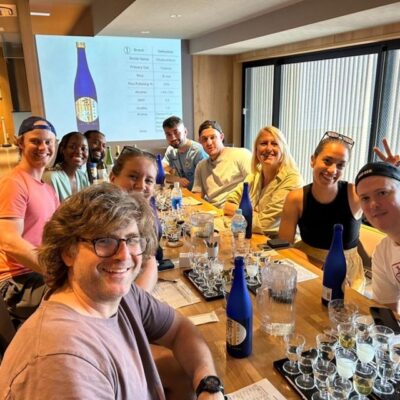
Insider Sake Brewery Tour with Sake and Food Pairing
Read our review →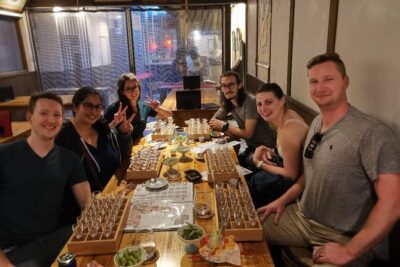
1.5-Hour Kyoto Insider Sake Experience with 7 Tastings & Pairings
Read our review →
Insider Sake Experience with 7 Tastings and Snacks
Read our review →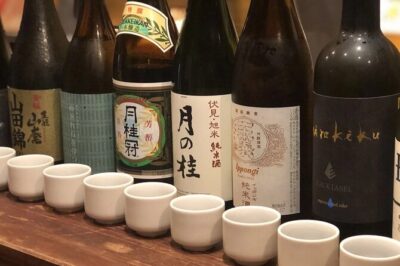
Private Tea Ceremony and Sake Tasting in Kyoto Samurai House
Read our review →Browse the lists this tour appears in