
Reviewed · KYOTO MATCHA EXPERIENCES
Kyoto: Nighttime Zen Meditation and Matcha Tea Experience
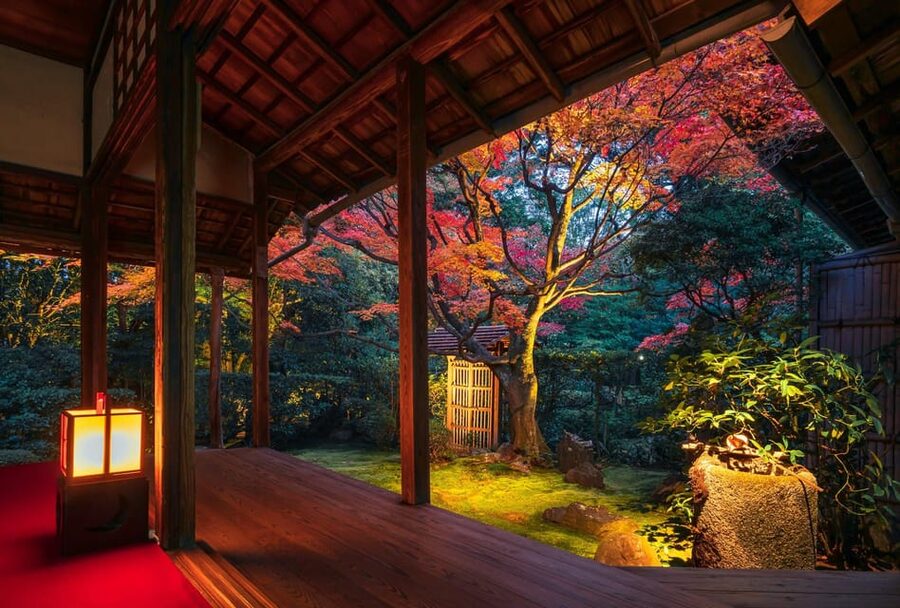
At night, Keishunin Temple trades the usual sightseeing rush for darkened corridors, softly lit gardens, and long stretches of quiet. This 90-minute private visit brings you close to four gardens, the tucked-away Sehakuan tea room, Kano Sansetsu’s painted fusuma panels, and a guided zazen session led by Deputy Chief Priest Yasumasa Arashima.
I like the clear sense of place and the small-group setting. I also like that the meditation is not treated as a photo stop: you receive guidance, learn a little about temple customs, and finish with matcha and a Japanese sweet. The main consideration is price. At $206 per person, this is a costly 90 minutes, and the evening is best for people who value calm, access, and cultural context more than a long sightseeing itinerary.
Key points to know
- Four illuminated gardens: See Keishunin’s nationally designated historical sites and scenic spots after dark.
- A private temple visit: The private-group format gives the evening a quieter, more personal feel.
- Zazen with Yasumasa Arashima: The deputy chief priest leads the meditation and explains how to approach it.
- Sehakuan tea room: Tour a concealed tea room that adds a rare architectural and cultural detail.
- Matcha and a Japanese sweet: The evening closes with a traditional tea tasting rather than a rushed exit.
- Plan for comfort: Wear warm, comfortable clothes, and note that the experience is not suitable for wheelchair users.
Why Keishunin feels different after dark
Kyoto has no shortage of temples, but many visits take place in daylight and follow a familiar pattern: enter, photograph the garden, read a sign, and move on. Keishunin’s nighttime program slows that rhythm down.
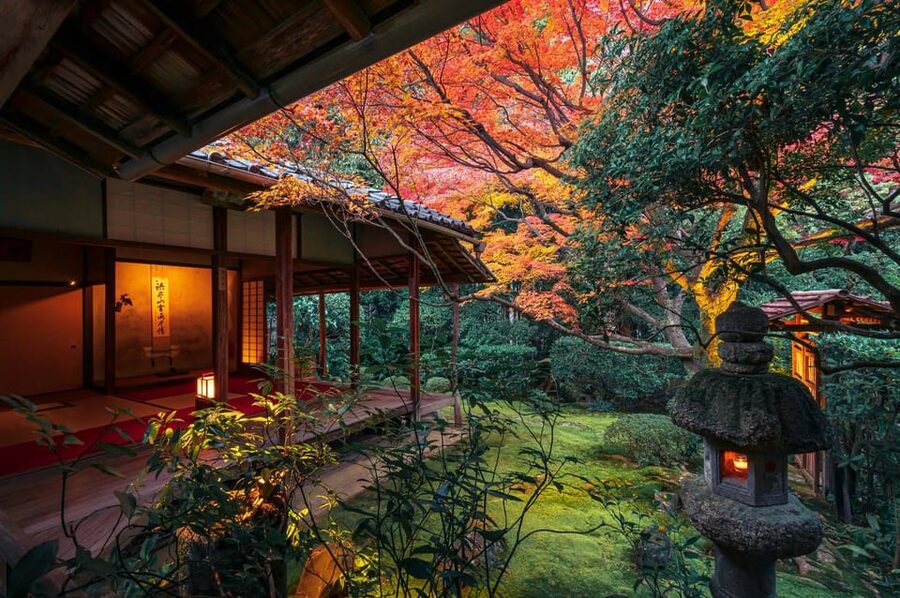
You meet your guide at the temple and begin with the grounds. The four gardens are designated as nationally designated historical sites and scenic spots, and the evening lighting changes how you read them. You may notice shapes, shadows, and empty space more clearly than you would beneath the strong light of midday.
That quieter setting matters. The point is not to cover a large part of Kyoto. It is to spend focused time in one religious site, with someone explaining what you are seeing and helping you take part in a practice rather than simply observing one.
Keishunin is a sub-temple of the larger Myoshinji Temple complex. The visit gives you a more intimate look at temple culture than a quick pass through a major sightseeing site. You should still keep your expectations realistic: the experience lasts 90 minutes, so it offers a concentrated introduction, not a full study of Zen Buddhism or Japanese tea culture.
More matcha experiences in Kyoto:
- Kyoto: Arashiyama Bamboo Forest, Monkeys, Matcha & Temple Tour
★ 5.0 · 759 reviews - Kyoto: Tea Museum Tickets and Matcha Grinding Experience
★ 4.9 · 739 reviews - Kyoto: Tea Ceremony Meditation – Make Matcha with Tea Master
★ 4.8 · 406 reviews
The four gardens under evening light
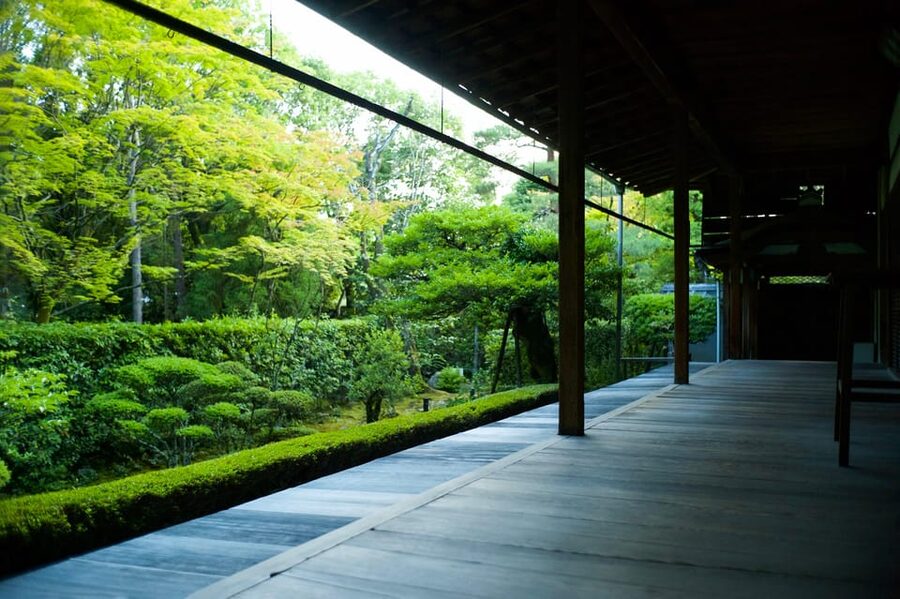
The gardens are the first major reason to book this experience. Their formal design and official cultural status give the visit substance, but the lighting is what makes the nighttime program distinct.
I like the idea of seeing these gardens as a sequence rather than as one quick viewpoint. A guide can point out how the spaces relate to the temple buildings and explain details that may otherwise blend together. The dark surroundings also encourage you to look slowly. You are less likely to treat the garden as a background for a quick photograph.
The lighting is described as fantastic, but do not expect a bright spectacle. This is a temple visit, not a projection show. The appeal is the contrast between the illuminated garden elements and the surrounding darkness.
Photography is allowed only without flash. That rule is practical as well as respectful. Flash would disrupt the mood, interfere with other people, and flatten the careful lighting. Bring a camera if you like, but treat photography as secondary. The most worthwhile parts of the visit are likely to be the quiet pauses between explanations.
Sehakuan and Kano Sansetsu’s painted doors
The program includes a tour of Sehakuan, described as a hidden tea room, along with a look at fusuma paintings by Kano Sansetsu. These are the details that give the visit depth beyond garden viewing.
A tea room is not simply a small room for drinking tea. Its design reflects the careful control of space, movement, and attention found in traditional tea culture. You can expect the guide to place Sehakuan within Keishunin’s story and explain why this room matters.
The fusuma paintings add another layer. Sliding panels help divide and shape Japanese interiors, so painted doors are part of the room itself, not just wall art hung afterward. Kano Sansetsu’s work gives you something specific to look at during the explanation.
This portion may appeal most to visitors who enjoy architecture, art, and small historical details. If you mainly want meditation, it is still useful because it helps you understand the setting before you sit quietly in it.
Zazen with Deputy Chief Priest Yasumasa Arashima
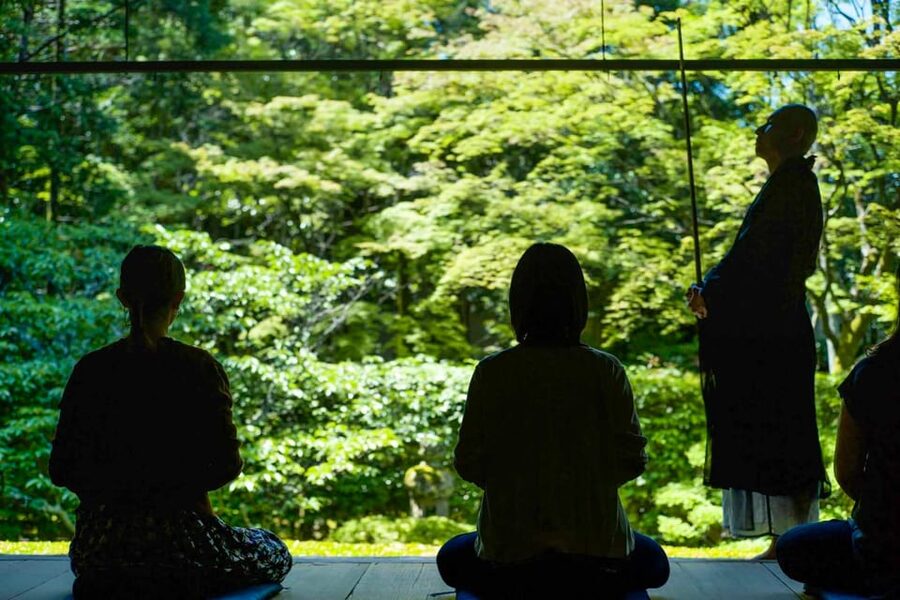
The central activity is zazen, seated Zen meditation. Deputy Chief Priest Yasumasa Arashima leads the session, giving the meditation a direct connection to the temple rather than presenting it as a generic wellness exercise.
You do not need to arrive with meditation experience. The activity is meant as an introduction, and the evening includes guidance on the practice. One especially interesting point is the temple custom mentioned during the meditation: if a practitioner becomes too tired and needs a refreshing reminder to continue, there is a traditional way to receive that prompt.
That detail is worth understanding before you sit down. Zazen is not simply a few minutes of relaxing with your eyes closed. It asks you to remain still and attentive, which can feel challenging if your body is tired after a full day in Kyoto. The experience is not designed as entertainment, and you may find the silence more demanding than expected.
A translation guide can help convey the instructions for English-speaking participants. English and Chinese are the listed tour languages. If precise instruction matters to you, pay attention during the introduction and ask your guide for clarification before the meditation begins.
I like that the meditation is paired with the temple visit instead of sold on its own. You first see the gardens and cultural spaces, then practice within the setting you have just learned about. That progression makes the zazen feel connected to Keishunin rather than added on as a tourist activity.
More zen sittings and garden visits in Kyoto:
- Kyoto Zen Meditation & Garden Tour at a Zen Temple with Lunch
★ 5.0 · 441 reviews - Kyoto: Zen Experience in a Hidden Temple
★ 5.0 · 437 reviews - Kyoto: Zen Meditation at a Private Temple with a Monk
★ 5.0 · 202 reviews - Kyoto: Zen Garden, Zen Mind (Private)
★ 5.0 · 126 reviews
Matcha, sweets, and a gentle finish
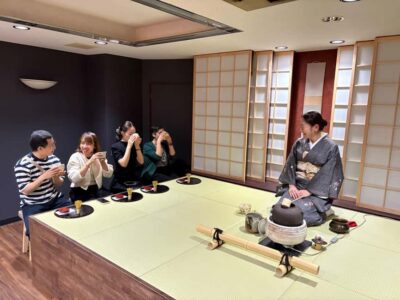
After meditation, you try matcha and a traditional Japanese sweet. This gives the evening a social ending after the quiet concentration of zazen.
The tea service should not be confused with a long, formal tea ceremony. The information provided describes matcha and sweets tasting, along with a traditional tea experience. You will have an opportunity to savor the flavors and speak about the experience, but the visit remains a compact 90-minute program.
The sweet matters because Japanese tea is often paired with a small confection designed to balance the tea’s bitterness. It also gives you a simple way to shift from inward focus back to conversation.
One appealing part of this finish is the chance to exchange impressions in a calm setting. The experience includes a brief conversation after tea, so you are not sent straight back into Kyoto’s nightlife the moment meditation ends. If you want an evening built around food, this is not the right choice. If you want one carefully chosen taste paired with cultural explanation, it works well.
What $206 buys you in 90 minutes
At $206 per person, this is a premium activity. The price is difficult to justify if you measure value by time alone. Ninety minutes is short, and transportation to and from the meeting point is not included.
The value comes from access and structure. You receive a private-group visit, a nighttime look at four important gardens, entry to Sehakuan, viewing of Kano Sansetsu’s fusuma paintings, guided zazen, and matcha with a Japanese sweet. You are also meeting a temple representative who leads the meditation, rather than simply following an audio guide or reading posted information.
I would compare this with the cost of a standard temple visit plus a separate tea or meditation activity. That comparison will not produce an exact answer, but it helps clarify your priorities. If you are happy to visit temples independently, this will feel expensive. If you want a quiet, guided encounter with places and practices that are not part of a quick self-guided walk, the fee may feel reasonable for a special Kyoto evening.
The private format is important here. A large group could make zazen feel awkward and reduce the quiet appeal of the gardens. Since this is a private group, you can expect a more focused setting, though the exact group size is not specified.
Timing, clothing, and practical limits
The program is offered at set starting times, so you need to check availability for your date. It excludes the Obon and New Year holiday periods. Reserve ahead because a reservation is required.
Bring warm clothing. Kyoto evenings can feel cool, and sitting still during zazen makes warmth more important than it might be during a walking tour. Comfortable clothes are also a good idea. Avoid treating this as a dress-up event unless you can remain comfortable while seated.
Smoking and flash photography are not allowed. These rules are easy to follow and fit the atmosphere of a temple meditation visit.
Transportation is not included, and the meeting point is at the temple. Plan your route before the start time and leave enough margin to arrive without rushing. Since the experience depends on quiet attention, arriving flustered would work against the evening’s purpose.
The activity is not suitable for wheelchair users. The stated age information also needs attention: primary school students and above are welcome, while the activity is listed as unsuitable for children under 12. Each guest below junior high school age must be accompanied by a parent or guardian. Families should confirm the age requirement before booking.
How the language support works
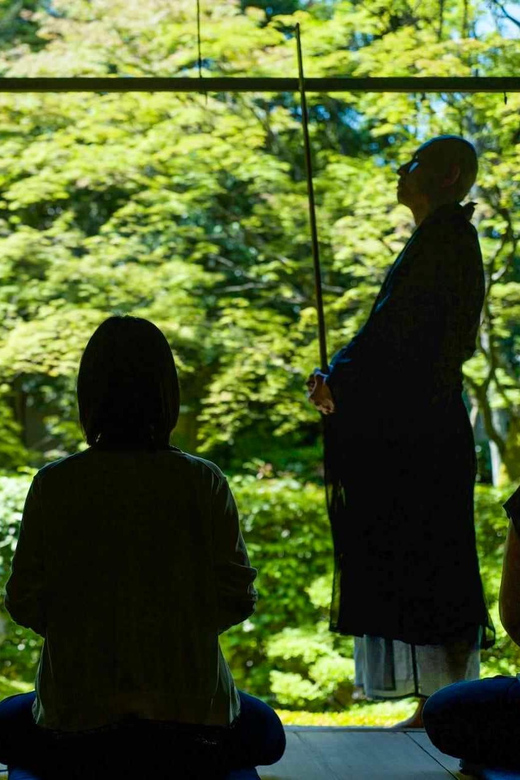
The experience is offered in English and Chinese. The meditation is led by Arashima, and translation support may be provided for participants who need it.
This matters because zazen instruction can depend on small details. You want to understand how to sit, what to do with your attention, and how to respond if you need guidance during the practice. A translation guide helped one group follow the deputy chief priest’s explanation, including the custom related to a refreshing reminder during meditation.
The temple visit also includes cultural and historical information, so language support affects more than the meditation. It helps you understand the gardens, tea room, and paintings rather than merely looking at them.
Who will appreciate this Kyoto evening
I would recommend this experience to you if you want a quieter side of Kyoto and enjoy learning through participation. It suits people who are curious about Zen practice, traditional tea, Japanese gardens, and temple interiors.
It is also a good fit if your sightseeing schedule has become crowded. The evening provides a deliberate pause, and the combination of gardens, meditation, and tea gives the visit a clear shape.
You may want to skip it if you dislike sitting still, have limited mobility, or prefer activities with more movement and a longer itinerary. The $206 price also makes it a poor match for a tight budget.
Families with older children should read the age rules carefully. Primary school students and above are accepted according to the activity information, but children under 12 are also listed as not suitable. The safest approach is to confirm eligibility before payment, especially for younger children.
Booking and cancellation details
You can cancel at least three days before the experience for a full refund. The stated charges are 20 percent from three days before the start date through the day before, 50 percent on the day, and 100 percent for non-participation without notice or for arriving after the activity has started.
Because the visit is private and reservation-only, do not count on joining at the last moment. Check the available start time, plan transportation to the temple, and allow time to arrive in warm, comfortable clothing.
Should you book this Keishunin experience?
Book it if you want a quiet, highly focused Kyoto evening rather than another major sightseeing stop. The illuminated gardens, Sehakuan tea room, Kano Sansetsu’s fusuma paintings, and zazen with Yasumasa Arashima give the 90 minutes a clear cultural purpose.
I would think twice if $206 feels high for a short activity or if you mainly want photographs. The real value is the chance to slow down, receive context from a local guide, and take part in meditation and tea inside Keishunin.
For the right visitor, this can be a meaningful pause in a busy Japan itinerary. Just arrive prepared for stillness, warmth, and respectful attention.
FAQ
Where does the experience take place?
It takes place at Keishunin Temple, a sub-temple of Myoshinji Temple in Kyoto, on Honshu, Japan.
How long does the activity last?
The experience lasts 90 minutes.
What is included in the experience?
It includes a special nighttime visit to Keishunin, a tour of four gardens, a visit to the Sehakuan tea room, viewing of Kano Sansetsu’s fusuma paintings, a zazen meditation experience, and matcha with a Japanese sweet.
Who leads the meditation?
Deputy Chief Priest Yasumasa Arashima leads the zazen meditation.
Which languages are available?
The live tour guide service is available in English and Chinese.
Is this a private activity?
Yes. The activity is offered as a private group experience.
What should I wear or bring?
Bring warm clothing and wear comfortable clothes.
Is the experience suitable for wheelchair users?
No. The activity is not suitable for wheelchair users.
More of Kyoto After Dark
- Kyoto: Gion Magical Night Walking Tour with Geisha Trivia
★ 4.9 · 2,393 reviews - Night Walk in Gion: Kyoto’s Geisha District
★ 4.5 · 2,003 reviews - Kyoto Night Foodie Tour in Gion (9+ dishes + 6 Sake tastings)
★ 5.0 · 1,762 reviews - Kyoto Gion Night Walk & Geisha District Guided Tour
★ 5.0 · 786 reviews
Newest Kyoto experiences on the site
- Treasures of Kyoto: Gion & historical Walking Tour★ 5.0 · 6 reviews
- Whisk Your Own Matcha: A Zen Matcha Experience at Temple★ 3.6 · 7 reviews
- Kyoto tea town for matcha lovers★ 5.0 · 16 reviews
- Uji: Private immersion into Kyoto’s tea and reglious culture★ 5.0 · 17 reviews
- Kyoto Matcha Green Tea Tour★ 4.5 · 23 reviews
- Uji and Wazuka Matcha Farm Half Day Private Guided Tour★ 5.0 · 21 reviews
- Utilising upcycled Matcha! Creating matcha incense (Uji, Kyoto)★ 5.0 · 6 reviews
- Sacred Temple Yoga Experience in Japan★ 5.0 · 3 reviews
Kyoto Matcha Experiences, compared.
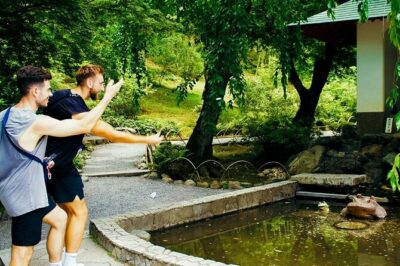
Arashiyama Bamboo Forest, Monkeys, Matcha & Temple Tour
Read our review →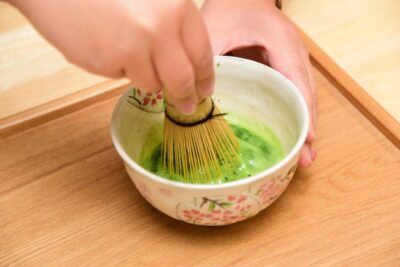
Tea Museum Tickets and Matcha Grinding Experience
Read our review →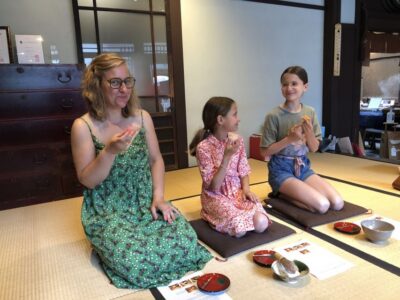
Tea Ceremony Meditation – Make Matcha with Tea Master
Read our review →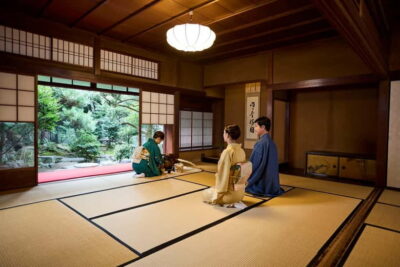
Arashiyama Bamboo, Temple, Matcha, Monkeys & secret spots
Read our review →
Traditional Tea Ceremony with Matcha & Sweets in Gion
Read our review →Browse the lists this tour appears in