
Reviewed · FUSHIMI INARI TOURS
Inside of Fushimi Inari – exploring and lunch with locals
Fushimi Inari is famous for its endless orange torii gates, but the most memorable parts of this experience happen away from the main flow of people. Your guide leads you through bamboo and cedar paths, quieter worship sites, a waterfall, and even a torii gate workshop where you may see a craftsman at work. The route reaches the 233-meter summit shrine, then returns by way of good photo spots and a Kyoto viewpoint.
I like the local scale of the tour, especially the chance to meet people connected to the shrine and see how torii gates are made. I also like the steady pacing, with breaks for tea, a salted boiled egg, snacks, and a proper soba lunch. Guides such as Ko, Go, Kenji, and Taishi are praised for making the religious setting easier to understand without turning the walk into a lecture.
The main drawback is simple: this is a hike. The paths are orderly, but you will climb and descend stairs for about three hours. The summit route takes around 20 minutes uphill, and the schedule can shift if your group walks slowly.
Key points to know before booking
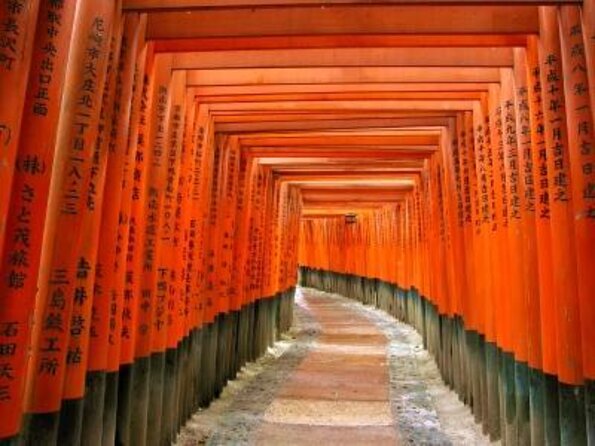
- A quieter side of Fushimi Inari: The route leaves the busiest torii gate paths for bamboo, cedar forest, worship stones, a waterfall, and less crowded viewpoints.
- A real summit walk: You reach the shrine at 233 meters, with stairs and some uphill effort along the way.
- A rare craft stop: The tour may include a look at a local workshop where torii columns are carved.
- Food is part of the experience: Soba noodles, inari sushi, mountain tea, and a salted boiled egg are included.
- Small English-speaking group: The group is limited to 10 people, which allows time for questions and a more relaxed pace.
- Plan dietary needs early: Vegan and other dietary options are available, but you need to tell the provider in advance.
Why this Fushimi Inari walk feels different
Many people come to Fushimi Inari for one quick photograph beneath the first rows of torii gates. That gives you the famous image, but not much sense of how the shrine works or why the mountain matters.
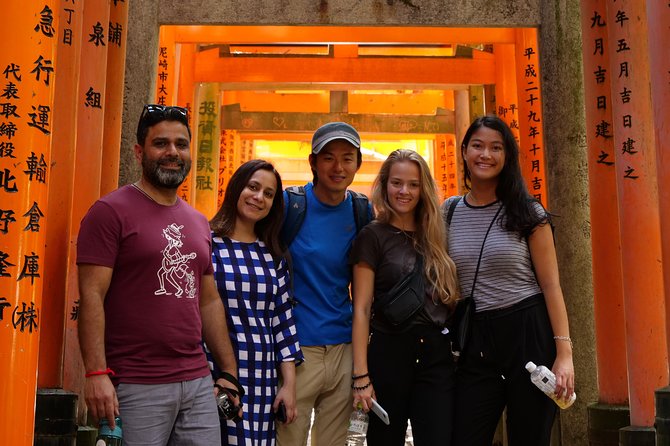
This four-hour experience gives you time to move beyond the entrance area. You begin at the Great Torii Gate, across from the JR Inari Station exit, then work your way through the main shrine and the long corridors of red-orange gates. Your guide explains the meaning and background of the shrine, including the connection between the torii and offerings made by individuals and businesses.
The value here is not just seeing more gates. It is having someone explain what you are looking at. Fushimi Inari is a Shinto site, and the route includes places of worship that can be easy to pass without understanding their purpose. A guide can also help you behave respectfully around worship stones, shrines, and other sacred spots.
The group size matters. With no more than 10 people, you can ask questions and hear the guide without needing to stay in a tight cluster. The guides who have led this experience, including Ko, Go, Kenji, Yuya, and Taishi, are described as friendly and ready to adjust the pace.
More ways to walk the Fushimi Inari gates:
- Kyoto: Fushimi Inari, Kinkakuji, Bamboo Grove 1 Day Bus Tour
★ 4.8 · 4,316 reviews - Fushimi Inari Hidden Hiking Tour (Private Option Available)
★ 5.0 · 1,750 reviews - Osaka/Kyoto:Kinkakuji,Arashiyama,FushimiInariShrine,NaraPark
★ 4.1 · 1,596 reviews
From the Great Torii Gate to the first shrine buildings
The meeting point is the stone pillar at the Great Torii Gate, directly across from the JR Inari Station exit. If you arrive on the Keihan line, Fushimi-Inari Station is about a 10-minute walk away. The same Great Torii Gate is used at the end of the tour, so you do not need to figure out a new pickup point later.
The opening section covers the main shrine and the first great run of torii gates. This is the most recognizable part of Fushimi Inari, and it can be busy, especially around the lower sections. Your guide helps you take in the scale while explaining the cultural setting.
The gates are not just decorative. They are connected to offerings and prayers, and their presence gives the mountain a very particular feel. You will hear about their history and cultural role as you walk, rather than trying to piece it together later from a sign or guidebook.
Bring a hands-free backpack if possible. You will want both hands free for stairs, photographs, and steady walking. Comfortable shoes are essential, even though the paths are well organized.
Bamboo, cedar, worship stones, and a waterfall
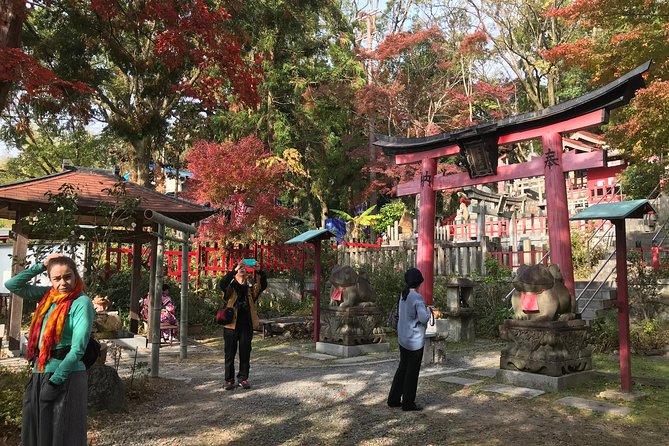
After the main shrine area, the route becomes quieter. You walk through a forest of bamboo and cedar trees, with more shade and fewer people than around the lower torii gates. This portion gives the tour its strongest sense of place.
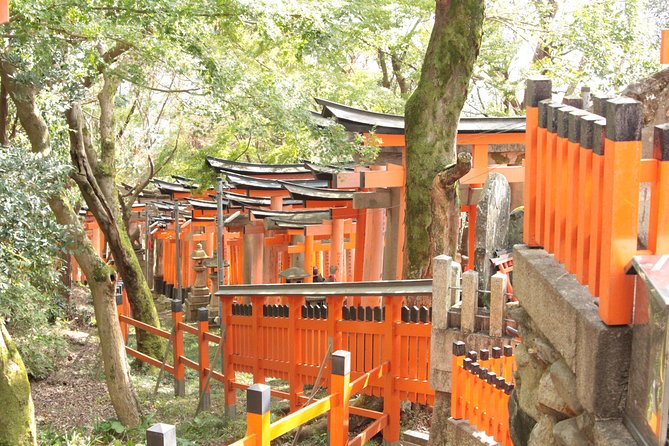
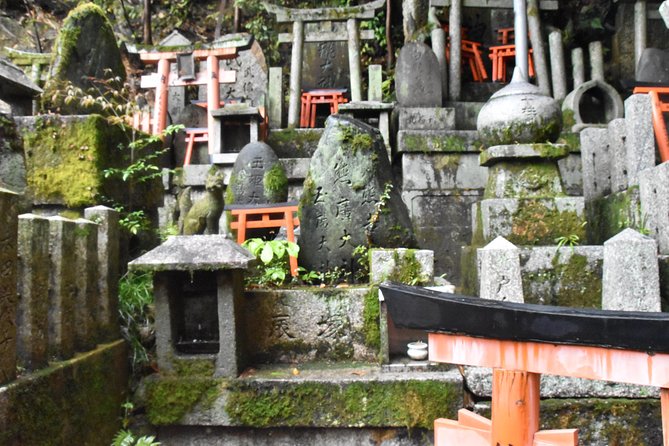
The forest path includes authentic holy spots such as worship stones and a waterfall. These are not simply scenic pauses. They show how religious activity continues away from the main shrine buildings, and they give you a chance to see a less polished side of the mountain.
You may also visit a local factory or workshop. One especially unusual possibility is seeing a torii column maker at work. A guest named Kat described watching a master carve torii columns, while other visitors praised the chance to meet the actual maker of the gates. This is the sort of stop that turns a familiar tourist symbol into a physical object made by local hands.
The exact order of the stops can change. Walking speed affects the schedule, and the tour may spend more or less time at particular points depending on the group.
The 233-meter summit and the uphill section
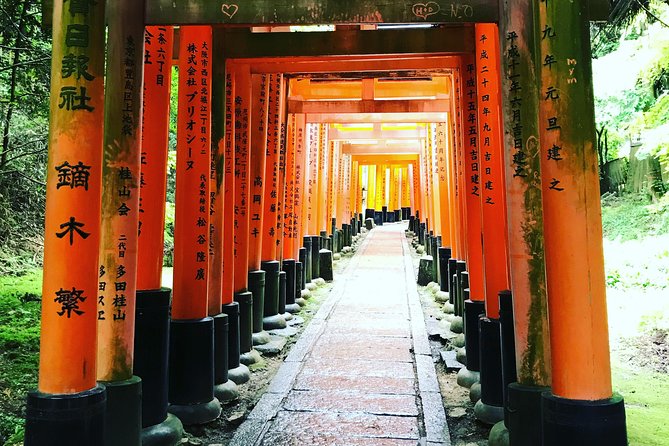
The route goes up to the summit shrine at 233 meters. The final climb to the summit shrine takes about 20 minutes, but the full mountain walk includes additional stairs and changes in elevation. It is best viewed as an easy to moderate hike, not a flat sightseeing stroll.
Your guide shows you around the summit shrine and explains what you are seeing. The climb gives you a clearer sense of Fushimi Inari as a mountain pilgrimage site, rather than just a series of gates arranged for photographs.
The pace is described as casual, with breaks along the way. Still, do not book this if you want to avoid stairs or if you expect to spend the entire four hours sitting and listening. The route is manageable for many people who are comfortable walking, but you should wear proper shoes and bring water or a small hands-free pack.
A useful feature is the guide’s willingness to let people move at their own pace. That helps a mixed group, though it also means the schedule is not rigid. If you have a train or reservation immediately after the tour, leave some extra time.
More long lunches in Kyoto:
- Bike Tour Exploring North Kyoto plus Lunch
★ 5.0 · 1,087 reviews - Osaka/Kyoto: Arashiyama, Nara & Fushimi Inari Shrine w/Lunch
★ 4.4 · 754 reviews - Kyoto Zen Meditation & Garden Tour at a Zen Temple with Lunch
★ 5.0 · 441 reviews - 4.5-Hour Kyoto Bike Tour with Lunch and UNESCO Zen Temples
★ 5.0 · 122 reviews
Photo stops away from the main crowds
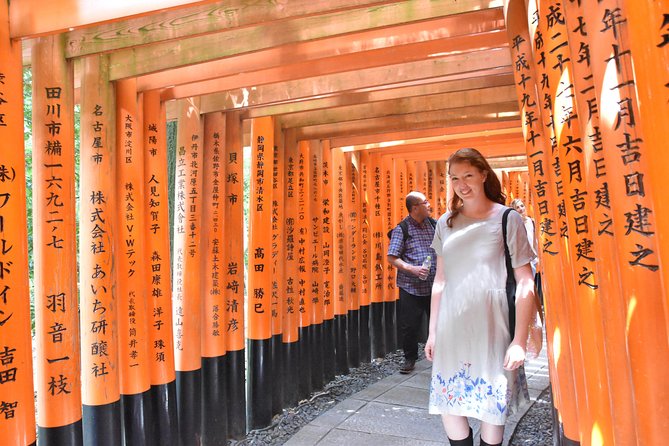
The way down includes several photo locations that are usually less crowded. This is a practical advantage because the lower torii paths can become difficult places for relaxed photographs. Your guide can point out angles and sections that are easier to enjoy without blocking the walkway.
The tour does not treat photographs as an afterthought. There is a specific photo-shooting part, and the descent is used to find quieter settings. You should still expect the famous gates to have other people in them, particularly near the start, but the later stops offer more breathing room.
The bamboo forest is another strong photo opportunity. It adds a different texture from the torii gates, with tall green stalks and a softer forest setting. The combination of shrine buildings, gates, bamboo, cedar, and mountain paths gives you a fuller set of images than a short visit near the entrance.
Your guide can also help you avoid spending the whole time stopping for pictures. That balance matters. Fushimi Inari is best experienced as a working religious site, not only as a backdrop.
Tea, a boiled egg, and a Kyoto panorama
During the mountain walk, you stop at a scenic mountain hut for Japanese hot tea and a boiled egg with salt. The snack is modest, but it arrives at the right moment. After stairs and forest paths, a short seated break makes the rest of the route easier.
The tea break also adds a local touch that a standard shrine visit usually lacks. You are not simply moving from one photo point to another. You get a pause to look out toward Kyoto, ask questions, and let the pace settle.
The viewpoint provides a broad panorama of Kyoto city. The view is one of the rewards for making the climb, although the exact visibility will depend on the day. The tour includes a drink at the mountain hut, but drinks ordered at the lunch restaurant are not included.
Soba lunch and included inari sushi
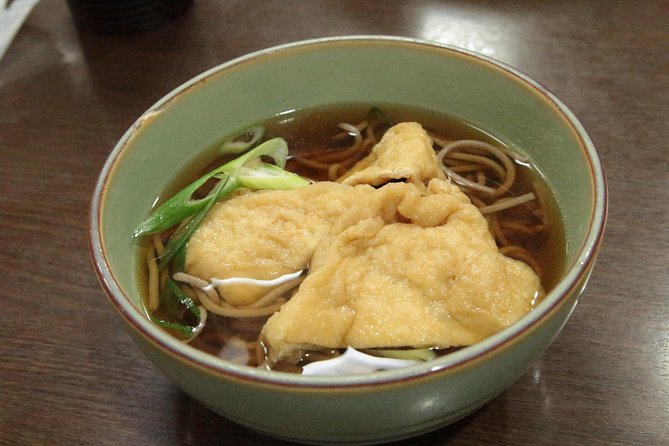
Lunch takes place at a traditional local soba restaurant and lasts about 30 minutes. Japanese noodle soba is included, along with fried sweet sushi, or inari sushi. The meal gives you a proper taste of everyday Japanese food after the mountain walk, rather than leaving you to find lunch on your own.
Soba is a sensible meal for this tour. It is familiar enough for many first-time visitors, but still distinctly Japanese, and it fits the setting better than a rushed meal near a major station. The inari sushi adds a sweet-savory side that connects nicely with Fushimi Inari, whose name is closely associated with Inari worship.
Restaurant drinks are extra, so allow for that small additional cost. Vegan options and choices for allergies or other dietary restrictions are available, but you must tell the provider in advance. Do not wait until you sit down to mention a strict dietary requirement.
The meal is one of the reasons the $67 price can make sense. You are paying for four hours of guiding, cultural explanation, a mountain route, the tea break and snack, and lunch. If you only want to photograph the torii gates, a free self-guided visit costs less. If you want food, local contact, and a clearer understanding of the shrine, the added price is easier to justify.
What the small group and guides add
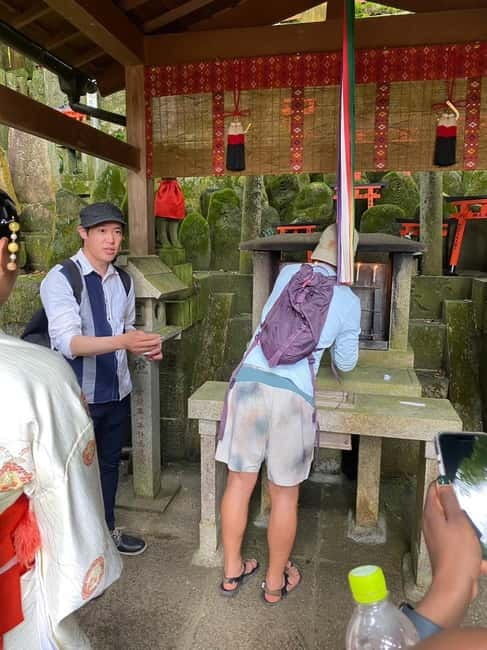
An English-speaking guide is especially useful at Fushimi Inari because the site combines tourism, worship, local work, and mountain walking. The best guides do more than point out the largest gate. They explain Shinto customs, answer questions, and help you move through the sacred areas with care.
The guides connected with this experience have included Ko, Go, Kenji, Yuya, Taishi, and assistants working with them. Specific praise has focused on friendly conversation, clear explanations, local restaurant advice, and the ability to lead people away from crowded routes.
That last point is important in practical terms. Fushimi Inari is one of Kyoto’s most popular sights, and a guide who knows quieter paths can change the mood of the visit. You may still meet other groups, but you are less likely to spend the entire walk in a slow-moving stream beneath the gates.
A group of up to 10 is small enough for personal attention, though it is not a private tour. If you want complete control over stops and timing, a private guide would suit you better. If you like meeting other people and want a lower price, this format is a good middle ground.
Who should book this experience
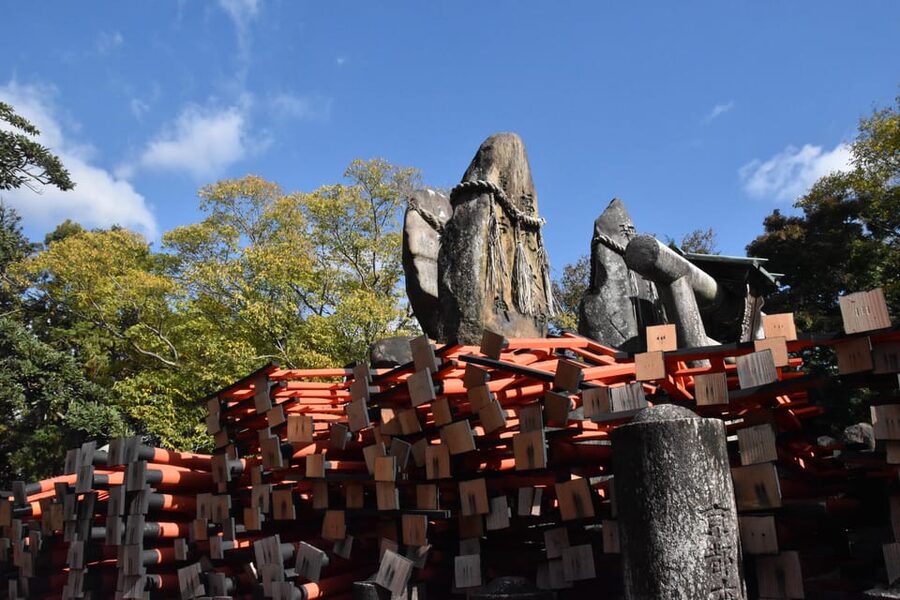
I would choose this for someone visiting Fushimi Inari for the first time who wants more than the standard entrance photograph. It also suits repeat visitors who have seen the lower gates but missed the forest routes, summit shrine, and local craft connection.
It is a good match for:
- People interested in Shinto and Japanese religious customs
- Visitors who want quieter paths and better photo opportunities
- Anyone who enjoys a moderate walk with regular stops
- Food-focused visitors who want soba and inari sushi included
- Vegetarians and vegans who notify the provider in advance
- Small groups who prefer conversation over a large guided crowd
I would think twice if you have difficulty with stairs, need a fixed four-hour schedule, or dislike walking uphill. The route is not described as strenuous, but it is still a mountain walk with stairs both up and down.
Free cancellation is available up to 24 hours before the experience, and you can reserve now and pay later. Those terms help if your Kyoto schedule is still moving, but they do not change the basic need for suitable shoes and a reasonable level of walking fitness.
Should you book the Fushimi Inari local walk?
Book it if you want the less obvious side of Fushimi Inari: bamboo and cedar forest, quiet worship places, a torii gate workshop, a summit shrine, a Kyoto view, and lunch with local food. The combination is much more useful than simply hiring a guide to lead you through the first few rows of gates.
The price is fair for a four-hour small-group experience with lunch and refreshments included. The strongest value comes from the route and the local access, not from the food alone.
Skip it if you only want a quick visit or if stairs are a serious problem. For everyone else, this is a well-planned way to turn Fushimi Inari from a famous photo stop into a fuller morning or afternoon in Kyoto.
FAQ
Where does the tour meet?
Meet at the Great Torii Gate, at the stone pillar by the first gate across from the JR Inari Station exit.
Where does the tour finish?
The experience finishes at the same Great Torii Gate where you meet.
How long does the experience last?
The experience lasts four hours, though the exact schedule can change depending on the walking speed of the group.
Is the tour conducted in English?
Yes. The tour has a live English-speaking guide.
How large is the group?
The group is limited to 10 participants.
How much walking is involved?
You walk through the shrine, torii gate paths, bamboo and cedar forest, and up to the 233-meter summit shrine. The route includes stairs and takes about three hours of hiking within the four-hour experience.
What food is included?
Lunch includes Japanese soba noodles and inari sushi. A mountain hut break includes Japanese hot tea and a salted boiled egg.
Are vegan or allergy-friendly options available?
Yes. Vegan options and choices for allergies or other dietary restrictions are available, but you must notify the provider in advance.
Are drinks at the lunch restaurant included?
No. Drinks ordered at the lunch restaurant are not included in the price.
Newest Kyoto experiences on the site
- Treasures of Kyoto: Gion & historical Walking Tour★ 5.0 · 6 reviews
- Whisk Your Own Matcha: A Zen Matcha Experience at Temple★ 3.6 · 7 reviews
- Kyoto tea town for matcha lovers★ 5.0 · 16 reviews
- Uji: Private immersion into Kyoto’s tea and reglious culture★ 5.0 · 17 reviews
- Kyoto Matcha Green Tea Tour★ 4.5 · 23 reviews
- Uji and Wazuka Matcha Farm Half Day Private Guided Tour★ 5.0 · 21 reviews
- Utilising upcycled Matcha! Creating matcha incense (Uji, Kyoto)★ 5.0 · 6 reviews
- Sacred Temple Yoga Experience in Japan★ 5.0 · 3 reviews
Fushimi Inari Tours, compared.
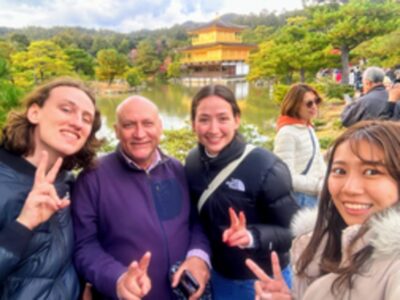
Fushimi Inari, Kinkakuji, Bamboo Grove 1 Day Bus Tour
Read our review →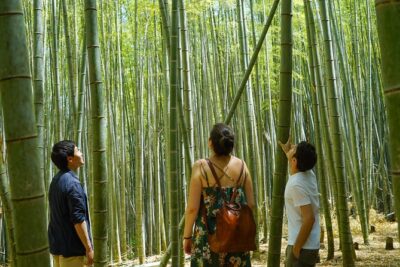
Fushimi Inari Hidden Hiking Tour (Private Option Available)
Read our review →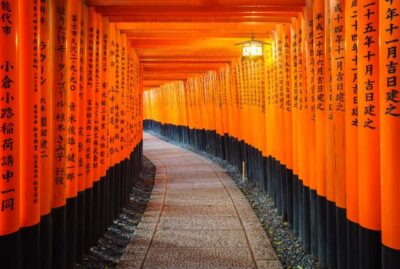
Kinkakuji,Arashiyama,FushimiInariShrine,NaraPark
Read our review →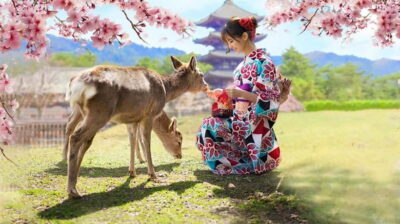
Nara, Fushimi Inari Taisha, Arashiyama Bus Tour
Read our review →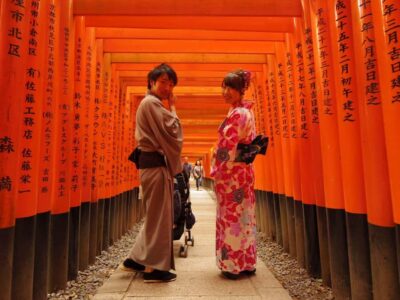
Arashiyama, Nara & Fushimi Inari Shrine w/Lunch
Read our review →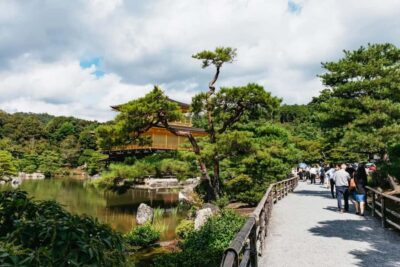
Nijo Castle, Kiyomizu & Fushimi Inari Guided Tour
Read our review →
Nijo, Kinkaku-ji, Arashiyama, Kiyomizu & Fushimi Inari
Read our review →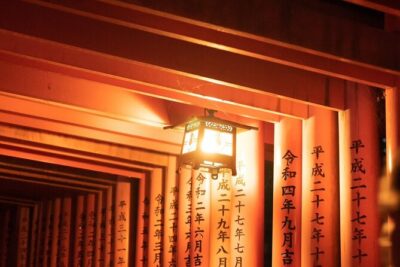
Browse the lists this tour appears in