
Reviewed · ARASHIYAMA BAMBOO GROVE TOURS
Half Day Kyoto Sagano Bamboo Grove & Arashiyama Walking Tour
Arashiyama’s famous bamboo grove is only one piece of this outing. The better part is the way the route links bamboo, hillside temples, a Zen garden, and the Hozu River into one morning. Tenryu-ji’s garden gives the walk real substance, while the ride and views near Togetsukyo Bridge provide a welcome pause.
I like that your guide takes care of the local train and entrance fees, and I like that the tour finishes at Kyoto Station, leaving your afternoon open. Guides such as Sachiko, Donna, June, and Michiharu have led departures, with personal stories, local suggestions, and directions to places such as the monkey park. The main drawback is crowd control: a group of up to 25 can feel large in narrow lanes and at popular photo spots.
Key points to know before booking
- The bamboo grove is part of a longer 3-km walk, not the entire experience.
- Tenryu-ji’s garden is the major cultural stop, with admission included.
- Jojakko-ji sits on a wooded hillside and offers broad views over Sagano and Kyoto.
- Public transport is part of the tour, with non-reserved seats and possible standing during busy periods.
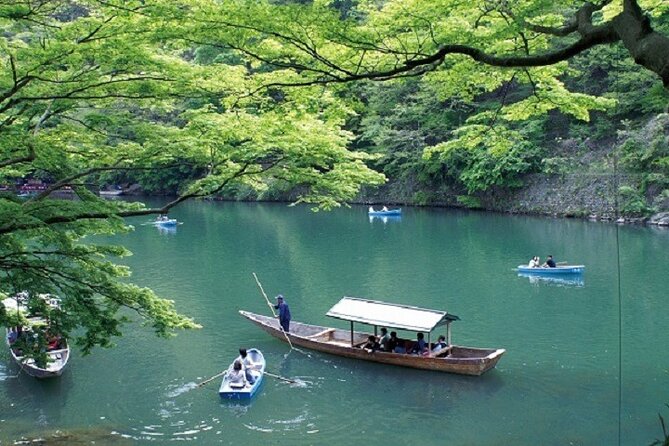
- The boat portion near Togetsukyo Bridge offers a restful change of pace, along with views of the river and wooded hills.
- The tour ends at Kyoto Station, so you can stay in Arashiyama afterward only if you make your own way back.
Why this Arashiyama morning works
This is a good way to see several of Kyoto’s best-known sights without spending your first hours figuring out trains, temple entrances, and the order of the route. The experience lasts about four hours and covers roughly 3 kilometers on foot, though stairs at Jojakko-ji and temple grounds add effort.
The route feels more varied than a simple bamboo-forest visit. You begin with a local train from Kyoto Station to Saga-Arashiyama Station, then walk through a district where small shrines, temple grounds, shops, river views, and forest paths sit close together.
The guide is the main reason to choose this over going alone. Guides including Sachiko, Donna, June, and Michiharu have been praised for clear explanations, friendly conversation, useful Kyoto suggestions, and help with onward plans. Michiharu, for example, has pointed guests toward the Budo Centre, while Sachiko has helped people find the monkey park and lunch after the tour.
Still, you should not expect a private, slow-paced walk. Group sizes can reach 25, and some departures have felt unwieldy when people fell behind or disappeared into busy temple grounds. If you want complete freedom for photographs and long stops, going independently may suit you better.
More mornings in Arashiyama and the bamboo grove:
- Kyoto: Fushimi Inari, Kinkakuji, Bamboo Grove 1 Day Bus Tour
★ 4.8 · 4,316 reviews - Osaka/Kyoto:Kinkakuji,Arashiyama,FushimiInariShrine,NaraPark
★ 4.1 · 1,596 reviews - Kyoto/Osaka: Nara, Fushimi Inari Taisha, Arashiyama Bus Tour
★ 4.7 · 1,275 reviews
Getting to Sagano by local train
The meeting point is the JTB Sunrise Tours Desk in the basement of Kyoto Avanti, near Kyoto Station. From there, the group uses public transport to Saga-Arashiyama Station.
The seats are not reserved. During busy periods, you may need to stand, and the tour price does not guarantee a seat. This is a small but important detail for anyone expecting a coach-style excursion with a guaranteed place to sit.
The train transfer gives the guide a chance to explain the plan and answer questions. It also removes some of the stress of reaching Arashiyama, especially if Kyoto is your first stop in Japan. On the other hand, you are still using regular public transport, so the trip can feel crowded during popular seasons such as cherry-blossom time and autumn color.
The exact order can change because of congestion and conditions at the destinations. Keep that flexibility in mind if you are planning a tightly timed lunch or another paid activity afterward.
Jojakko-ji and the wooded hills of Sagano
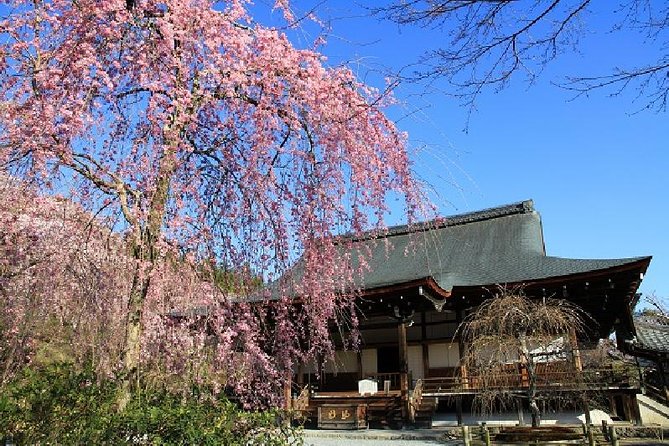
The itinerary places Jojakko-ji among the early temple stops, with about 30 minutes set aside. This temple sits on the slope of Mt. Ogura, above the flatter streets of Sagano. Its hillside position gives you wide views across the area and toward Kyoto.
The setting changes with the seasons. In autumn, maple trees cover the slope in red, orange, and yellow. In summer, the trees provide a cooler setting, although the tour changes during the July to September 22 period. During those months, Jojakko-ji is replaced by Okochi Sanso Villa Garden, and the start time is moved earlier to avoid the strongest heat.
Look for the Jizo statue and the pagoda among the trees. The temple is also linked with the Tale of the Heike and the story of Empress Dowager Kenrei-mon-in, who is said to have lived at the site. That connection gives the guide a useful opening to explain how Japanese literature, religious life, and local places overlap.
Jojakko-ji is not the easiest stop for anyone with limited mobility. The tour notes a moderate fitness level, and the route includes stairs up and down. Wear shoes with a firm grip, not the footwear you would choose for a short city stroll.
Walking through the Sagano bamboo grove
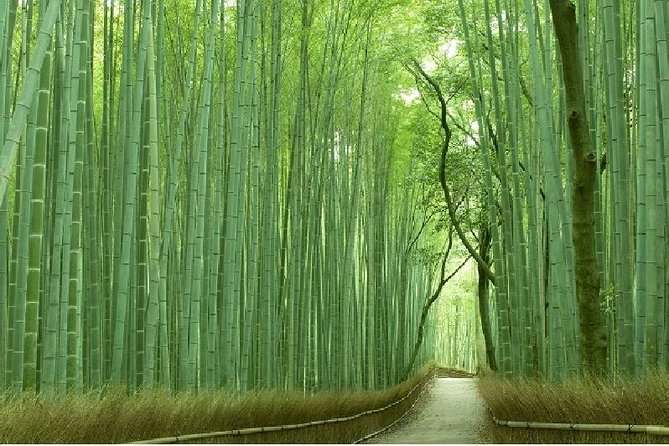
From Jojakko-ji, the group heads toward Tenryu-ji along the Sagano bamboo grove. The total walk through the area is described as about 2 miles, or 3 kilometers, though the day includes temple paths and connecting streets as well.
The bamboo is impressive because of its height, sound, and changing light. Tall green stalks close in around the path, while the Arashiyama hills appear beyond the trees. The grove is a peaceful place in principle, but it is also one of Kyoto’s best-known photo stops. At popular times, you should expect other groups and frequent pauses for pictures.
That is the central tradeoff here. A guide helps you move through the area without wasting time on navigation, but a group cannot stop every few steps. One departure may feel intimate with only three or twelve people, while another may approach the maximum of 25.
You may have only about 15 minutes of actual bamboo-grove walking before continuing to the temples. If the grove is your main reason for coming, plan to remain in Arashiyama after the organized portion ends. The tour allows you to return with the guide or continue exploring independently, depending on the departure arrangements.
More walking tours in Kyoto:
- Kyoto Geisha Walking Tour: Gion District & Hidden Gems
★ 4.7 · 3,273 reviews - Kyoto: Gion Magical Night Walking Tour with Geisha Trivia
★ 4.9 · 2,393 reviews - Kyoto: Gion Geisha District Walking Tour – Stories of Geisha
★ 4.7 · 2,187 reviews - Night Walk in Gion: Kyoto’s Geisha District
★ 4.5 · 2,003 reviews
Tenryu-ji and its classic Zen garden
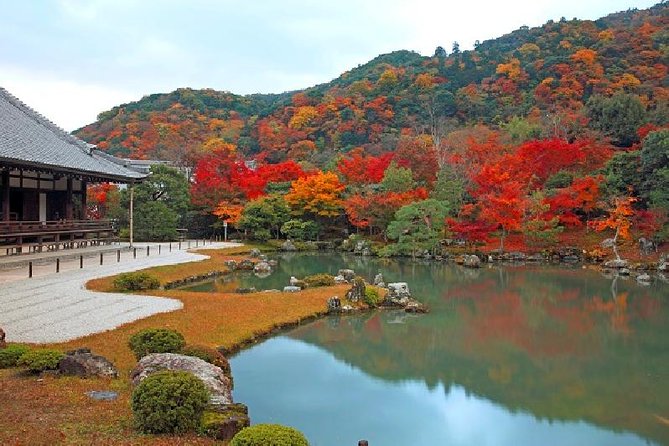
Tenryu-ji is the cultural center of the morning. Founded in 1339 by Takauji of the Ashikaga Shogunate, it is one of the principal temples of the Rinzai Zen school and a World Heritage site.
The garden is the key attraction. Its original design survives, with ponds, carefully placed rocks, trees, and views toward the Arashiyama hills. The surrounding scenery is not just a backdrop. The garden was planned to work with the distant mountains, a classic Japanese approach that makes the temple grounds feel larger than they are.
Admission is included, so you do not need to handle another ticket line. The scheduled visit is about 30 minutes. That is enough for an introduction and a purposeful walk, but not enough for a slow examination of every corner.
The tour’s focus is mainly the garden rather than a full exploration of the temple buildings. That may disappoint you if you expect a long interior visit or an extended lesson in Zen practice. I see the limited time as a fair compromise for a half-day route, but you should return on your own if Tenryu-ji is high on your list.
Togetsukyo Bridge and the river views
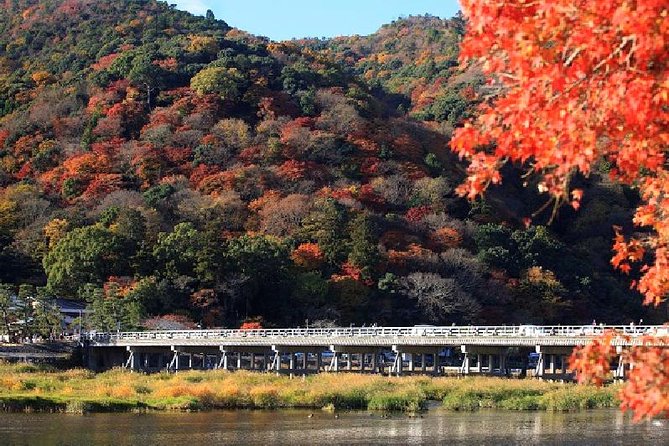
The final major stop is Togetsukyo Bridge, the 250-meter Crossing Moon Bridge over the Hozu River. The current bridge is a reconstruction from 1934, replacing an earlier structure.
The bridge offers broad views in both directions. Look toward the forest-covered hills and along the river, especially during cherry blossom season or autumn foliage. The scene is one of Arashiyama’s classic views, and it gives the morning a strong finish after the enclosed bamboo paths and temple gardens.
The itinerary also includes views from a yakatabune, a traditional-style sightseeing boat. This is one of the most useful parts of the route physically. After the train ride, temple stairs, and walking, sitting on the water gives you time to rest while taking in Sagano and the riverbanks.
Boat arrangements can vary with conditions and congestion, so do not treat this as a long cruise. Think of it as a short scenic element within the walking tour. The contrast is what makes it worthwhile: quiet water after crowded paths, open views after the bamboo corridor.
What the price includes at $79.26
At $79.26 per person, this tour is not the cheapest way to reach Arashiyama. The train ride itself is easy to arrange, and independent visitors can visit the bamboo grove, Togetsukyo Bridge, and temples with a little preparation.
The price makes more sense if you value an English-speaking guide, included admission, and a planned route. You also avoid spending time deciding which temple to visit first or finding your way between the grove, Jojakko-ji, Tenryu-ji, and the bridge. For a first visit to Kyoto, that structure can be worth paying for.
The strongest value comes from the guide. A good guide turns the train ride and walks between stops into useful time, explaining the area and adjusting suggestions to your interests. Past guides have offered help with lunch, the monkey park, and other Kyoto sights.
The value drops if you want a quiet, flexible morning. You can easily spend much longer in the bamboo grove, temple gardens, or Arashiyama streets than this four-hour schedule permits. The tour is best understood as an organized introduction, not a complete day in the district.
Group size, pace, and practical effort
The maximum group size is 25. That is manageable when everyone stays together, but the narrow paths and busy temple grounds can make the group feel larger. Some departures have included only three people, while others have been much fuller.
The pace is generally described as leisurely, but the route includes steady walking and stairs. Comfortable shoes are essential. Rain can also slow the group, and wet paths may make the hillside temple more tiring.
Children from birth through age five can join free if they do not need separate seats. Written parental permission is required for participants under 18. Anyone under 15, or not yet enrolled in middle school, must be accompanied by a parent or guardian.
The activity is not designed for someone looking for a fully seated or highly accessible outing. The train may require standing, and the tour specifically calls for moderate physical fitness.
How to use the rest of your day
The tour ends at Kyoto Station, where you continue independently. That ending is convenient if you have a train reservation, hotel plans, or another Kyoto sight on your schedule.
If you want more Arashiyama time, stay behind only if you are prepared to make your own way back. The monkey park is a popular add-on, but it involves its own uphill walk. Past guides have given directions and lunch ideas to people continuing on their own.
You might also use the extra time for more temple grounds, local food, or shops around the bridge. The tour itself does not provide a full free afternoon, so think of it as a morning framework that leaves room for your own choices afterward.
The experience is often booked about 35 days in advance, which suggests that popular dates can fill early. Confirmation arrives within 48 hours, subject to availability. If the minimum of two adults is not reached four days before departure, the date may be canceled and you will be offered another date, another experience, or a full refund.
Should you book this Arashiyama tour?
Book it if you want a guided first look at Arashiyama, prefer having transport and entrance fees handled, and enjoy moving through several different settings in one morning. The guide can add context that you would miss on a quick independent walk, and the route gives you bamboo, temples, gardens, river views, and a boat ride without requiring a full day.
Skip it if the bamboo grove is your only priority, if you dislike group pacing, or if you want to spend an hour lingering at each temple. Arashiyama is easy enough to visit independently from Kyoto Station, and you may have more time for photographs and food on your own.
For most first-time visitors with moderate mobility, I see this as a useful orientation tour. Choose an early summer departure, allow extra time after the tour, and treat the four hours as an introduction to Arashiyama rather than the final word on the district.
FAQ
How long does the tour last?
The tour lasts approximately four hours.
How much walking is involved?
The total walking distance is approximately 3 kilometers, or about 2 miles. The route also includes stairs, particularly around the hillside temple areas.
Where does the tour begin?
It begins at the JTB Sunrise Tours Desk in the basement of Kyoto Avanti near Kyoto Station.
Where does the tour finish?
The tour ends at Kyoto Station. You make your own arrangements for your next destination.
Is transportation included?
Yes. Public transportation costs and other listed admission fees are included. The train uses non-reserved seats, so seating is not guaranteed.
How large can the group be?
The maximum group size is 25 people.
Are temple entrance fees included?
Yes. Admission fees listed for the tour are included. Jojakko-ji admission is not included during July and September.
Does the tour visit Jojakko-ji all year?
No. From July through September 22, the itinerary changes. Okochi Sanso Villa Garden replaces Jojakko-ji, and the tour starts earlier to avoid peak heat.
Is the boat ride included?
The itinerary includes scenery from the yakatabune near Togetsukyo Bridge. The exact order and arrival times can change because of conditions and congestion.
Can children join the tour?
Children aged 0 to 5 can join free if they do not occupy separate seats. Written parental permission is required for participants under 18, and anyone under 15 or not yet enrolled in middle school must be accompanied by a parent or guardian.
Newest Kyoto experiences on the site
- Treasures of Kyoto: Gion & historical Walking Tour★ 5.0 · 6 reviews
- Whisk Your Own Matcha: A Zen Matcha Experience at Temple★ 3.6 · 7 reviews
- Kyoto tea town for matcha lovers★ 5.0 · 16 reviews
- Uji: Private immersion into Kyoto’s tea and reglious culture★ 5.0 · 17 reviews
- Uji and Wazuka Matcha Farm Half Day Private Guided Tour★ 5.0 · 21 reviews
- Kyoto Matcha Green Tea Tour★ 4.5 · 23 reviews
- Utilising upcycled Matcha! Creating matcha incense (Uji, Kyoto)★ 5.0 · 6 reviews
- Sacred Temple Yoga Experience in Japan★ 5.0 · 3 reviews
Arashiyama Bamboo Grove Tours, compared.
Fushimi Inari, Kinkakuji, Bamboo Grove 1 Day Bus Tour
Read our review →
Kinkakuji,Arashiyama,FushimiInariShrine,NaraPark
Read our review →
Nara, Fushimi Inari Taisha, Arashiyama Bus Tour
Read our review →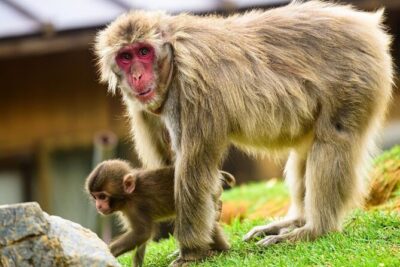
Kyoto Arashiyama Walking Tour: Bamboo, Monkeys, Gardens & Secrets
Read our review →
Arashiyama Bamboo, Temple, Monkeys, or Secret Sake Brewery
Read our review →
Arashiyama Bamboo Forest, Monkeys, Matcha & Temple Tour
Read our review →
Arashiyama, Nara & Fushimi Inari Shrine w/Lunch
Read our review →
Nijo, Kinkaku-ji, Arashiyama, Kiyomizu & Fushimi Inari
Read our review →Browse the lists this tour appears in