
Reviewed · FUSHIMI INARI TOURS
Discover the Secrets of Fushimi Inari and Gion with a Local Guide
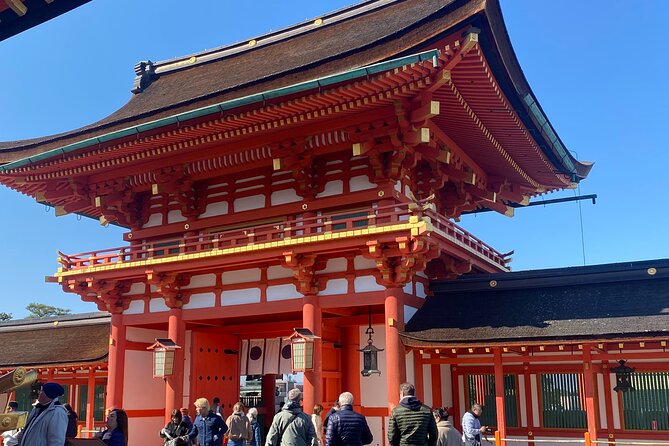
Kyoto’s famous east side is packed into four focused hours here, from Gion’s wooden streets to the endless orange gates of Fushimi Inari. You see Shinto shrines, Buddhist temples, a pagoda, and geisha culture without spending a full day on one large temple complex.
I like the small group limit of eight, which gives the guide room to adjust the pace. I also like the route’s range: Kōdaiji and Kiyomizu-dera offer paid temple access, while Gion, Yasaka Shrine, Yasaka Pagoda, and Fushimi Inari add major sights without extra admission. The main caution is pace. Six stops in about four hours means plenty of walking and only a short look at each place.
Key points at a glance
- Six major Kyoto sights in four hours: Gion, Yasaka Shrine, Kōdaiji Temple, Yasaka Pagoda, Kiyomizu-dera, and Fushimi Inari.
- A small group capped at eight: You get a more personal setting than a large coach-style outing.
- Fushimi Inari receives the longest visit: The schedule allows about one hour for its torii gate paths.
- Two temple admissions are included: Kōdaiji and Kiyomizu-dera are covered in the tour price.
- The tour uses a train: Budget an additional ¥220 per person for transportation.
- The route ends near Fushimi Inari Station: The station is on the Keihan Line and a short walk from the shrine.
A smart way to connect Kyoto’s east-side sights
At $78.04 per person, this is not the cheapest way to see Kyoto. You are paying for a personal guide, a compact group, and the time saved in arranging a route between several well-known places. Kōdaiji and Kiyomizu-dera admissions are included, while the train costs an extra ¥220 per person and food and drinks are not covered.
The value is strongest if you have only one free half-day in Kyoto or want an introduction before exploring on your own. The guide can explain how Shinto shrines, Buddhist temples, traditional streets, and Kyoto’s entertainment districts fit together. That context can be hard to build when you move from one site to the next by yourself.
You should also set realistic expectations. This is a sampler, not a slow temple day. The schedule allows 20 minutes in Gion, 30 minutes at Yasaka Shrine, 30 minutes at Kōdaiji, 30 minutes at Yasaka Pagoda, 30 minutes at Kiyomizu-dera, and one hour at Fushimi Inari. Walking between sights and taking the train uses part of the four-hour window.
More ways to walk Gion:
- Kyoto Geisha Walking Tour: Gion District & Hidden Gems
★ 4.7 · 3,273 reviews - Kyoto: Gion Magical Night Walking Tour with Geisha Trivia
★ 4.9 · 2,393 reviews - Kyoto: Gion Geisha District Walking Tour – Stories of Geisha
★ 4.7 · 2,187 reviews
Starting in Gion near Minamiza Theater
The meeting point is Minamiza Theater at the eastern end of Shijo Bridge. This places you right beside Gion, one of Kyoto’s best-known historic districts. The area is known for wooden machiya houses, teahouses, and cobblestone streets.
The first stop lasts about 20 minutes and has no admission fee. That is enough time to get your bearings, look at the traditional streetscape, and hear how Gion relates to Kyoto’s geisha culture. It is not enough time for a long wander through every lane, so keep your camera ready and listen closely as the guide points out what matters.
Gion is also a place where good behavior counts. Walk quietly, avoid blocking narrow streets, and treat private homes and working businesses with respect. A guide is useful here because the district can look like a beautiful photo set if you do not understand that it is also a living neighborhood.
Yasaka Shrine and Kyoto’s Shinto traditions
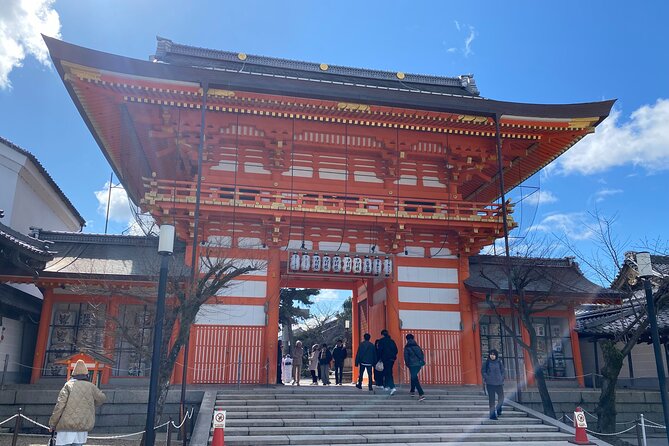
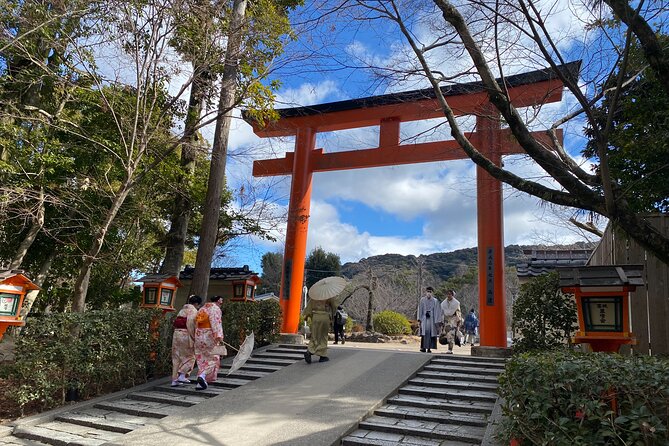
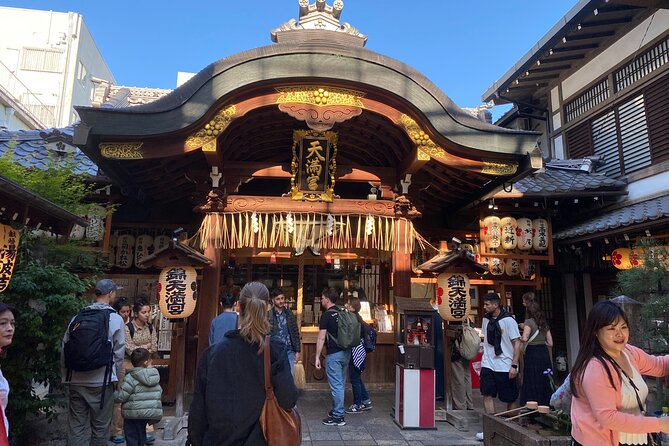
From Gion, the route continues to Yasaka Shrine for about 30 minutes. The shrine is more than 1,350 years old and is dedicated to Susanoo-no-Mikoto. Its position at the eastern end of Gion makes it a natural bridge between the district’s entertainment culture and Kyoto’s religious traditions.
Admission is free, so you are not paying extra to enter. The value comes from having someone explain what you are seeing and how Shinto shrines differ from Buddhist temples later in the route.
Thirty minutes is a useful amount of time for an overview, but it will not let you linger over every detail. If you enjoy quiet spaces and careful photography, you may want to return on your own. During this tour, the shrine works best as a clear introduction to Shinto practice before the itinerary shifts to Buddhist sites.
Kōdaiji adds gardens and a personal story
Kōdaiji Temple receives about 30 minutes, and admission is included. This Zen Buddhist temple was founded in 1606 by the wife of Toyotomi Hideyoshi to honor her late husband. That personal reason for its creation gives the stop a human story, rather than presenting the temple as just another old building.
Kōdaiji is known for its temple setting and gardens. The visit gives you a change of mood after the streets around Gion and Yasaka Shrine. You can expect the guide to explain the temple’s Zen setting and its place in Kyoto’s religious and political past.
The limitation is the clock. Thirty minutes can introduce the grounds, but it leaves little room for a leisurely garden visit. If Kōdaiji becomes one of your favorite stops, note its name and consider coming back with more time.
More ways to walk the Fushimi Inari gates:
- Kyoto: Fushimi Inari, Kinkakuji, Bamboo Grove 1 Day Bus Tour
★ 4.8 · 4,316 reviews - Fushimi Inari Hidden Hiking Tour (Private Option Available)
★ 5.0 · 1,750 reviews - Osaka/Kyoto:Kinkakuji,Arashiyama,FushimiInariShrine,NaraPark
★ 4.1 · 1,596 reviews - Kyoto/Osaka: Nara, Fushimi Inari Taisha, Arashiyama Bus Tour
★ 4.7 · 1,275 reviews
Yasaka Pagoda gives you a classic Higashiyama view
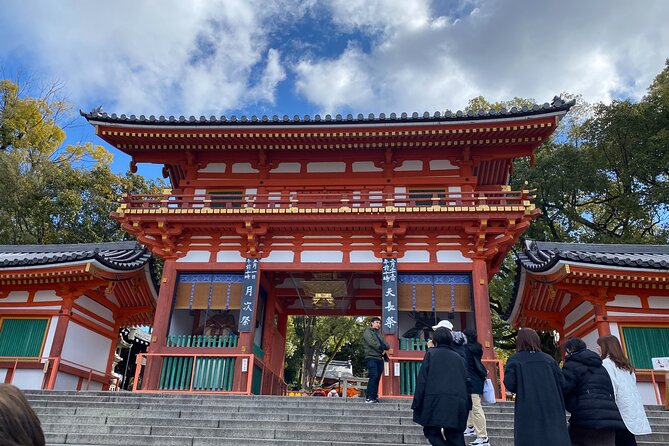
Yasaka Pagoda, officially Hōkan-ji Temple, is one of Kyoto’s most recognizable sights. The five-story pagoda dates in origin to the sixth century and sits in the Higashiyama district near Gion. The tour allows about 30 minutes, with no separate admission fee listed.
This stop is especially useful for understanding Kyoto’s old streets as a whole. The pagoda rises above the surrounding district and helps explain why the area is so closely associated with traditional Kyoto. The short visit should leave you time to take in the exterior and nearby streets.
Do not expect a long interior exploration from the schedule. The itinerary gives you a visual landmark and a chance to hear its story, then moves on. That is a fair trade in a four-hour tour, especially if your priority is seeing several different sides of the city.
Kiyomizu-dera is the major temple visit
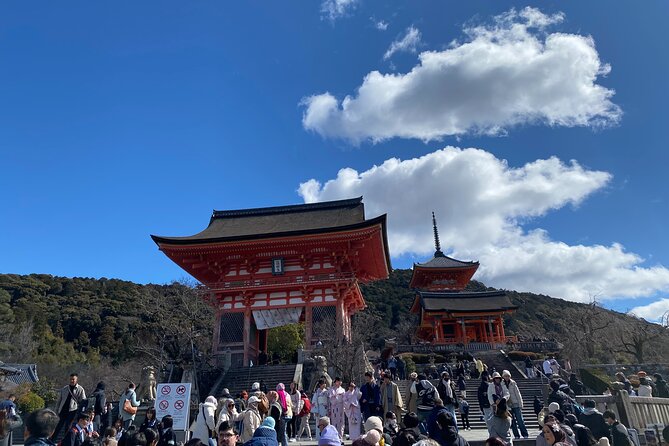
Kiyomizu-dera receives another 30 minutes, and admission is included. Founded in 778, the temple is perched on the slopes of Mount Otowa in eastern Kyoto. It is one of the city’s most famous Buddhist sites, known for its large wooden stage and elevated setting.
This is one of the tour’s key inclusions. Since the entrance fee is covered, you can focus on the temple instead of stopping to arrange payment. The guide can also help you connect Kiyomizu-dera to the Buddhist temples and Shinto shrines seen earlier.
The drawback is again time. Kiyomizu-dera has enough to see for a much longer visit, and half an hour gives you a taste rather than a full examination. If you want to photograph every view, browse the surrounding streets, or explore the temple grounds slowly, plan a separate return visit.
The temple is also one reason to wear comfortable shoes. Even without making assumptions about the exact route, this tour combines several walking stops, slopes in eastern Kyoto, and a later visit to Mount Inari’s torii paths.
Fushimi Inari gets the final hour
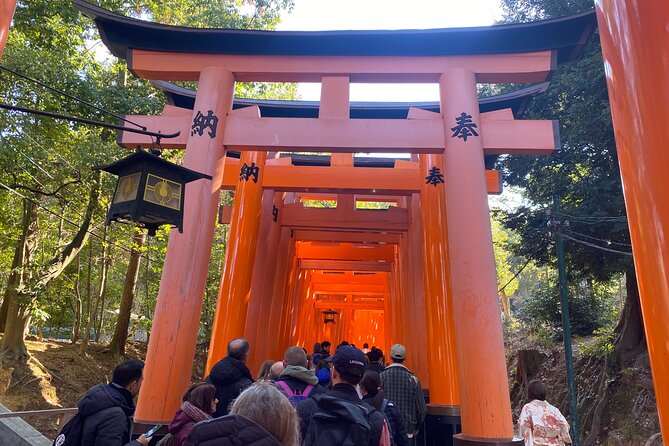
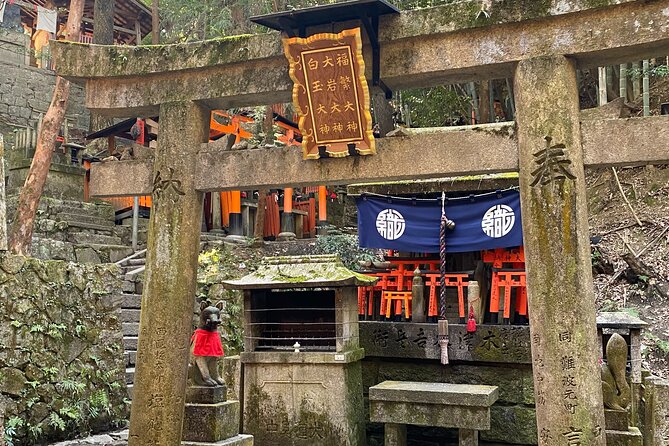
The tour finishes at Fushimi Inari Taisha, with about one hour devoted to the shrine. This is the centerpiece for many visitors, thanks to its thousands of red torii gates forming paths up Mount Inari. The shrine was established in the early eighth century and is dedicated to Inari, a Shinto deity associated with rice and prosperity.
The final hour is a good design choice. Fushimi Inari is not a single viewpoint that you see and leave. Its gates create a route through the mountain, and even a short visit gives you a sense of how the shrine continues beyond the first crowded section.
Still, one hour cannot cover all of Mount Inari. You will need to choose between lingering near the lower gates, walking farther up the path, and stopping for photos. Ask the guide how to use the available time. If Fushimi Inari is your main reason for booking, the tour gives you a useful introduction, but you may want to return independently for a longer walk.
The tour ends at Fushimi-Inari Station, a short walk from the shrine. The station is on the Keihan Line, making it practical to continue elsewhere in Kyoto after the tour.
What the small group changes
The group limit is eight people. That matters on a walking route where narrow streets, temple entrances, and busy shrine paths can make a large group awkward.
A small group also gives the guide a better chance to answer questions and adjust the pace. The tour is described as suitable for most participants, and the guide has adjusted timing to match the group in at least one reported experience. You should not read that as a promise of a private tour, but it does suggest a more flexible format than a fixed, large-group excursion.
The guide named in the supplied material is Tomoki. His tours have included historical temples, modern architecture, traditional sweets, and matcha, showing the kind of wider cultural explanation you may receive. Guide assignment can vary, so book this for the route and format rather than for a guaranteed individual guide.
A private tour and pickup may be possible if you contact Sparrow Travel. Those options are not part of the standard description, so confirm the details before assuming they are included.
How to prepare for the four-hour route
Wear shoes you can walk in for several hours. The route includes cobblestone streets, temple grounds, city walking, and the torii paths at Fushimi Inari. You should also carry water and keep your day bag light, since meals and drinks are not included.
The train costs ¥220 per person in addition to the tour price. The exact train timing is part of the guided route, so you do not have to plan that connection yourself, but you should have the transport money ready.
The mobile ticket and booking confirmation make the basic arrival process straightforward. Meet at Minamiza Theater, not at Fushimi Inari. The endpoint is Fushimi-Inari Station, which is useful if you want to continue your day from the south side of Kyoto.
Free cancellation is available if you cancel at least 24 hours before the local start time. Cancellations or changes made inside that window are not accepted for a refund.
Who will get the most from this tour
I would choose this for a first visit to Kyoto, a short stay, or a day when you want a guide to connect major sights efficiently. It is also a good fit if Fushimi Inari is high on your list but you do not want to spend the morning figuring out the city’s east-side route.
It suits curious first-time visitors who want more than photographs. The combination of Gion, Shinto shrines, Zen Buddhism, a pagoda, Kiyomizu-dera, and Fushimi Inari gives you a useful picture of Kyoto’s culture in a compact format.
I would hesitate if you prefer slow travel. Thirty minutes at Kōdaiji or Kiyomizu-dera will feel short if you like reading every sign, studying gardens, or taking your time with photographs. Independent visitors who already know Kyoto may get better value from choosing one or two sites and exploring them at length.
Should you book Discover the Secrets of Fushimi Inari and Gion?
Book it if you want a guided Kyoto overview with a group no larger than eight and a strong mix of famous sights. The tour’s best features are its efficient route, included admissions at Kōdaiji and Kiyomizu-dera, and the full hour reserved for Fushimi Inari.
Skip it if you want a relaxed temple day, a guaranteed specific guide, or a long climb up Mount Inari. At $78.04 plus ¥220 for the train, it is a reasonable convenience purchase for a short Kyoto visit, but its value depends on how much you appreciate explanation and saved planning time.
FAQ
How long is the tour?
The tour lasts approximately four hours.
What sights are included?
The route includes Gion, Yasaka Shrine, Kōdaiji Temple, Yasaka Pagoda, Kiyomizu-dera Temple, and Fushimi Inari Taisha Shrine.
Where does the tour start?
It starts at Minamiza Theater, located at the eastern end of Shijo Bridge in Kyoto’s Higashiyama Ward.
Where does the tour finish?
The tour finishes at Fushimi-Inari Station, which is a short walk from Fushimi Inari Shrine and is served by the Keihan Line.
Is transportation included?
Transportation by train is not included. The stated cost is ¥220 per person.
Are temple admission fees included?
Admission to Kōdaiji Temple and Kiyomizu-dera Temple is included. The other listed stops have no admission fee stated in the tour details.
How many people can join the group?
The tour has a maximum of eight participants.
Are meals and drinks included?
No. Meals, food, and drinks are not included.
Can I cancel for a full refund?
Yes, if you cancel at least 24 hours before the experience start time. Cancellations or changes made less than 24 hours in advance are not accepted for a refund.
Newest Kyoto experiences on the site
- Treasures of Kyoto: Gion & historical Walking Tour★ 5.0 · 6 reviews
- Whisk Your Own Matcha: A Zen Matcha Experience at Temple★ 3.6 · 7 reviews
- Kyoto tea town for matcha lovers★ 5.0 · 16 reviews
- Uji: Private immersion into Kyoto’s tea and reglious culture★ 5.0 · 17 reviews
- Kyoto Matcha Green Tea Tour★ 4.5 · 23 reviews
- Uji and Wazuka Matcha Farm Half Day Private Guided Tour★ 5.0 · 21 reviews
- Utilising upcycled Matcha! Creating matcha incense (Uji, Kyoto)★ 5.0 · 6 reviews
- Sacred Temple Yoga Experience in Japan★ 5.0 · 3 reviews
Fushimi Inari Tours, compared.
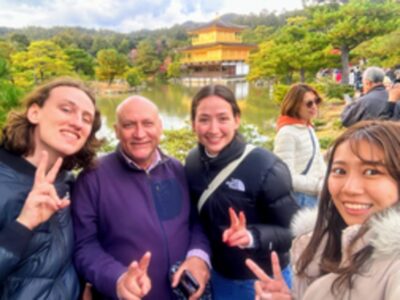
Fushimi Inari, Kinkakuji, Bamboo Grove 1 Day Bus Tour
Read our review →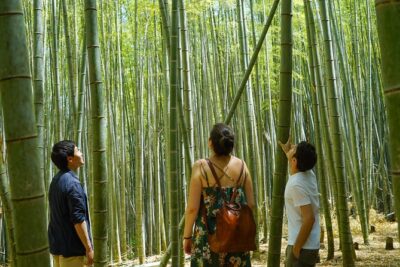
Fushimi Inari Hidden Hiking Tour (Private Option Available)
Read our review →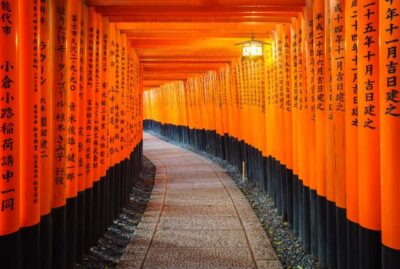
Kinkakuji,Arashiyama,FushimiInariShrine,NaraPark
Read our review →
Nara, Fushimi Inari Taisha, Arashiyama Bus Tour
Read our review →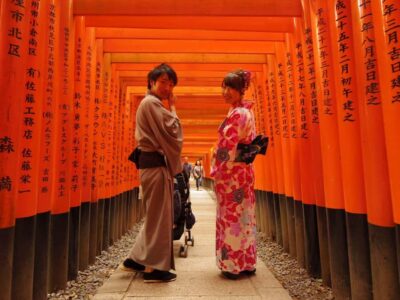
Arashiyama, Nara & Fushimi Inari Shrine w/Lunch
Read our review →
Nijo Castle, Kiyomizu & Fushimi Inari Guided Tour
Read our review →
Nijo, Kinkaku-ji, Arashiyama, Kiyomizu & Fushimi Inari
Read our review →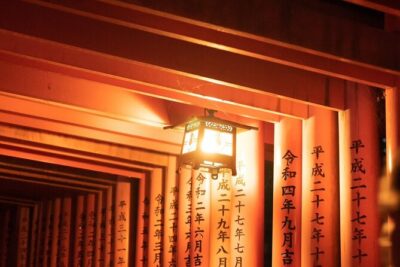
Browse the lists this tour appears in