
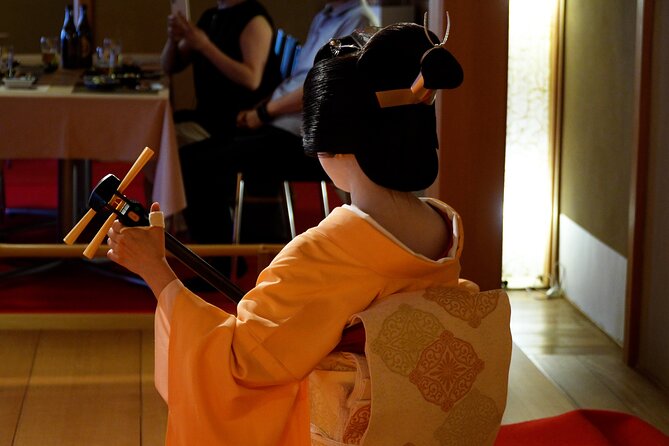
Reviewed · KYOTO GEISHA & MAIKO EXPERIENCES
Authentic Maiko Experience&Kyoto Lunch (Free drink) at Noh Stage
Kyoto’s maiko tradition can feel distant if you only see a dancer across a crowded street. This two-hour program at Okazaki-an brings the performance, questions, games, and conversation into one small gathering on a Noh stage. You share a Kyoto meal, watch graceful dances, and meet a real maiko with help from a Kyoto-certified interpreter guide.
I like the close contact and plain human conversation, not just the formal show. I also like the Ozashiki parlor games, which turn a quiet cultural presentation into something playful. The main consideration is the price: at $149.85 per person, this is a special-occasion activity rather than a cheap add-on, and the fixed schedule leaves little room for lingering.
Key Points
- Noh stage setting: The performance takes place at Okazaki-an, giving the meal and dances a distinctly Kyoto atmosphere.
- Several ways to connect: You watch dances, ask questions, talk with the maiko, play Ozashiki games, and take a two-shot photo.
- Meal and drinks included: Your booking covers the Kyoto-style meal and free drinks for the two-hour program.
- Interpreter support: A Kyoto-certified interpreter guide helps make the conversation and cultural explanation accessible.
- Small maximum group: The experience accepts up to 24 people and requires at least two participants.
- Useful timing: Doors open at 12:20 p.m., the program begins at 12:30 p.m., and it ends at 2:30 p.m.
Meeting a Maiko on a Noh Stage
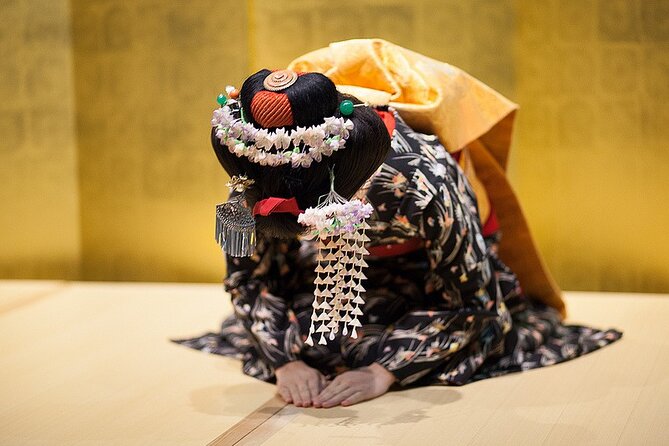
The setting does much of the work here. Okazaki-an, at 9165 Okazaki Enshōjichō in Sakyo Ward, offers a Noh stage rather than an ordinary restaurant room. That matters. The stage gives the dances a proper frame, while the meal and conversation keep the event from feeling like a performance you simply watch and leave.
You are not being asked to decode Kyoto’s geisha districts from a distance. The program puts a maiko in front of you, then gives you structured chances to ask questions, talk, play, and take photographs. That mix is important because a dance alone can be beautiful but brief. Here, the dance is one part of a larger cultural meeting.
The experience is presented by GEISHA JAPAN, an organization with more than 12 years of ties to Kyoto’s traditional arts. Its network allows more than one maiko or geiko to appear at some gatherings, although the specific program details provided here center on an intimate meeting with a charming maiko. I would treat the exact lineup as something that can vary rather than assume a particular number of performers.
A Kyoto-certified interpreter guide is included. You should not need to rely on hand gestures or limited English to follow the explanation, ask questions, or understand the games. That support makes a real difference in an experience built around conversation.
More geisha and maiko evenings in Kyoto:
- Kyoto Geisha Walking Tour: Gion District & Hidden Gems
★ 4.7 · 3,273 reviews - Kyoto: Gion Magical Night Walking Tour with Geisha Trivia
★ 4.9 · 2,393 reviews - Kyoto: Gion Geisha District Walking Tour – Stories of Geisha
★ 4.7 · 2,187 reviews
What Happens Between 12:20 and 2:30
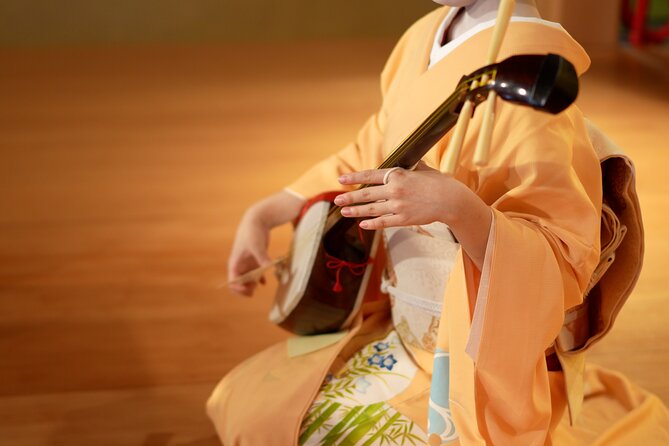
The schedule is compact and carefully arranged. Doors open at 12:20 p.m., ten minutes before the formal start. If you arrive early, you can wait in the first-floor café space rather than crowding the entrance.
At 12:30 p.m., the meal begins. The description calls it a Kyoto traditional meal, and food is included in the ticket. The meal is served at the start, so this works well as a midday cultural outing rather than a show you squeeze between lunch plans. I would avoid booking another substantial lunch at the same time. The program calls the meal dinner in one part of the schedule, but the start time and tour title clearly make this a lunchtime experience.
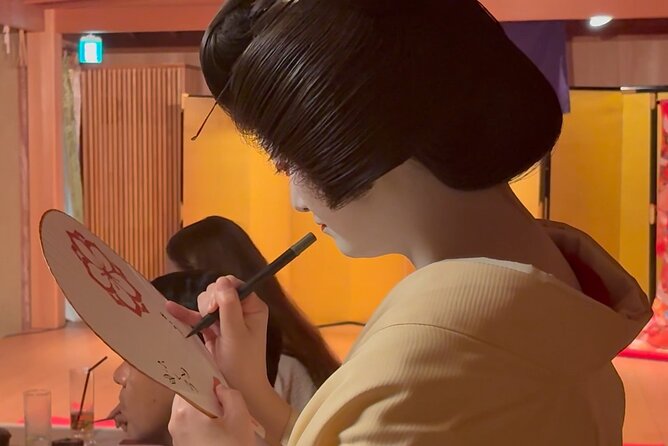
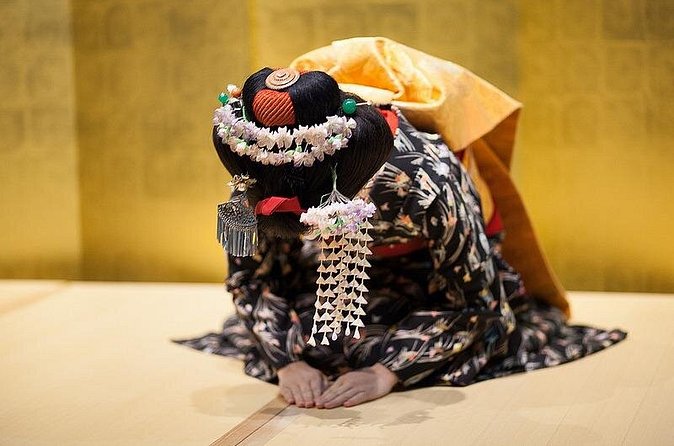
At 12:45 p.m., the first maiko dance begins. You then receive an explanation of the dance and the costumes. This is a valuable part of the program because the clothing, gestures, and movement can otherwise be hard to read if you are encountering them for the first time.
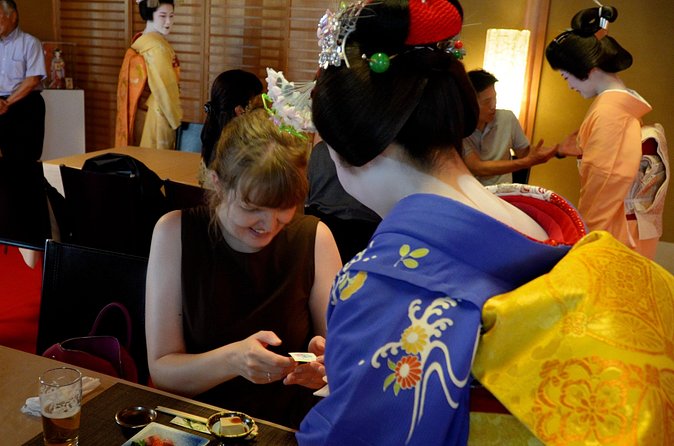
The presentation moves into a question-and-answer session. You can ask the maiko questions, with the interpreter helping as needed. The schedule then allows time for photographs and conversation. This is where the activity becomes more personal than a standard stage performance.
At 1:40 p.m., Ozashiki Asobi begins on the Noh stage. These traditional parlor games are designed for participation, not silent observation. The exact game details are not specified, so you should expect an organized cultural game rather than assume a particular activity. The format adds laughter and motion to an otherwise formal program.
Conversation continues afterward, followed by a final dance at 2:20 p.m. The event ends at 2:30 p.m. at the same location. With only two hours, the schedule gives you a good range of activities, but it also means the transitions are brisk. If you want a long, unhurried private conversation, this is not that kind of booking.
Why the Conversation Matters
The most meaningful part for many people will not be the dance itself. It will be the chance to ask a question and hear an answer in a setting that allows some back-and-forth.
Maiko culture is often misunderstood by first-time visitors. A staged explanation, interpreter assistance, and direct questions can help you see the person behind the formal appearance. The program also gives you a chance to ask about the dance and costume rather than simply admire them without context.
The format appears friendly rather than stiff. You can talk, laugh, and take part in games. That makes it suitable for someone who wants more than a photograph taken from a sidewalk. It is also a good choice for a small family group, a couple, or friends who want one shared cultural activity.
Keep your questions respectful and focused on the art, training, performance, clothing, and Kyoto customs. The point is to meet a professional artist within an appropriate setting, not to treat the maiko as a costume prop.
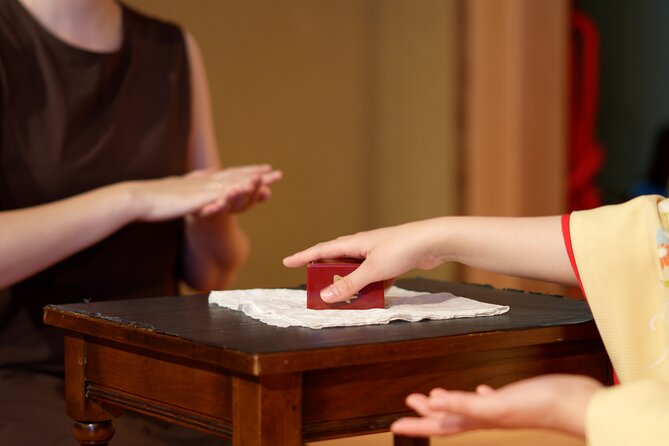
The two-shot photograph is included. You receive a planned photo with the maiko, not only the chance to take pictures during the dance. Because the schedule includes a dedicated photo period, you can enjoy the performance first and think about the camera afterward.
The Dance, Costume, and Stage Atmosphere
The dance is the formal heart of the experience. The setting on a Noh stage gives the movement a quiet visual focus, and the explanation afterward helps you notice more than the kimono and white makeup.
The costume itself is part of the lesson. The program includes an explanation of the dance and costumes by the geiko and maiko. You may find that this changes the way you watch the second dance later in the schedule. The final performance gives you another chance to appreciate the movements after you have heard some context.
One useful feature is the two separate dance moments. The first comes shortly after the meal, while the last begins near the end of the program. That arrangement breaks up the meal, conversation, games, and photos. It also gives the event a clear beginning and ending rather than one long presentation.
The atmosphere is likely to appeal to you if you want a distinctly Kyoto setting. One of the supplied accounts specifically appreciated the feeling of sitting in a Noh-stage environment and taking in the atmosphere of Kyoto. That is a better reason to choose this activity than expecting a large theatrical production. The appeal is closeness and setting, not scale.
More long lunches in Kyoto:
- Bike Tour Exploring North Kyoto plus Lunch
★ 5.0 · 1,087 reviews - Osaka/Kyoto: Arashiyama, Nara & Fushimi Inari Shrine w/Lunch
★ 4.4 · 754 reviews - Kyoto Zen Meditation & Garden Tour at a Zen Temple with Lunch
★ 5.0 · 441 reviews - 4.5-Hour Kyoto Bike Tour with Lunch and UNESCO Zen Temples
★ 5.0 · 122 reviews
Ozashiki Games Make the Event Less Formal
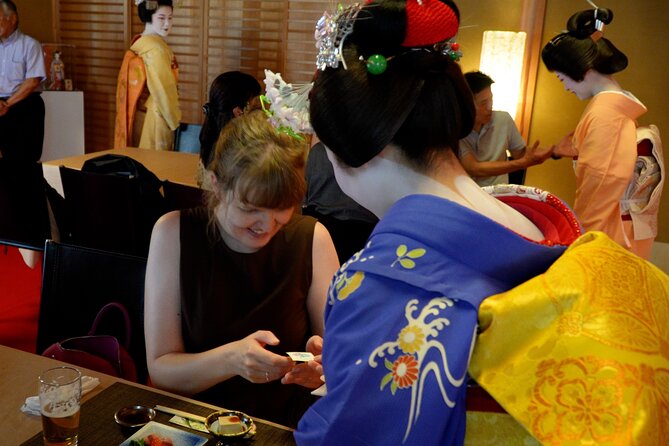
Ozashiki Asobi, or traditional parlor games, is the most playful portion of the afternoon. You are not just watching a maiko perform. You are invited into an activity connected with the social world of traditional entertainment.
The games also help solve a common problem with cultural demonstrations: the audience can become quiet and passive. Here, you have a simple way to participate, laugh, and share the room with the performer. The game section may be especially useful for families or younger participants who could find a long lecture difficult.
The supplied information does not name the specific games or explain their rules in advance. That is worth knowing. You should come ready to follow instructions rather than expect a particular contest or skill. The interpreter guide should help with the directions, but the event is still presented as a live cultural experience, not a rehearsed show where every moment is spelled out beforehand.
I like this part because it puts traditional entertainment in a social context. The maiko is not only presenting a dance for an audience. The program shows another side of the work through play and direct interaction.
Food and Free Drinks at $149.85
The price is $149.85 per person. That is a serious amount for a two-hour activity, but the ticket combines several costs and experiences: a Kyoto meal, drinks for two hours, dance performances, an interpreter guide, questions, conversation, Ozashiki games, and a two-shot photograph.
If you priced this as only a meal or only a show, it would be hard to justify. The value comes from the access. You are paying for a structured introduction to an art form that is not normally available through casual sightseeing. The chance to speak with the maiko and join the games is the part that separates this from a standard performance ticket.
The meal also makes the timing practical. You do not need to arrange a separate lunch before or after, and drinks are included throughout the program. The description says unlimited drinks for two hours, so you can order within that period without paying a separate beverage charge.
Still, I would not book this if your main goal is simply to see a dance. Kyoto offers many lower-cost cultural performances, and this program is priced for personal access as much as entertainment. Book it when the conversation, photograph, food, and games matter to you.
Group Size and the Feel of the Room
The maximum group size is 24 people, with a minimum of two participants. That is small enough to support questions and interaction, but it is not a private session.
A group of 24 can feel different from a gathering of six or eight. Some questions may take time, and not every person will have the same amount of direct conversation. The listed schedule helps by setting aside specific communication periods, but you should keep your expectations realistic. You are joining a shared cultural program, not booking exclusive access.
The minimum of two makes this easy to arrange for a couple, siblings, or two friends. It is also useful if you do not want to join a large bus tour. The experience is aimed at first-time visitors and smaller groups, and I agree with that fit. You can arrive without prior knowledge and still follow the program.
The program’s published score is 4.9 out of 5 from eight ratings. The strongest themes in the feedback are consistent: close conversation, graceful dancing, welcoming interaction, enjoyable games, a filling meal, and the special feel of the Noh-stage setting. Those points match the basic design of the experience and help explain its appeal.
Practical Details Before You Book
The meeting point is Okazaki-an in Kyoto’s Sakyo Ward, near public transportation. The activity begins at 12:30 p.m., but doors open at 12:20 p.m. I would aim to arrive before the formal start so you can settle in and avoid missing the opening of the meal.
Your mobile ticket is accepted, and booking confirmation is provided at the time of purchase. The experience ends at the same place where it starts, so you can plan another Kyoto activity afterward without arranging a separate return transfer.
Transportation to the venue is not included. You are responsible for getting there from your accommodation, and no private transportation is provided. Oversize luggage is not included either, so this is best treated as a stop during your sightseeing day, not a place to bring large bags.
The provided information also lists bare feet as not included. That wording is unusual, so I would pay attention to any venue instructions supplied after booking and avoid assuming that going barefoot is part of the program. The activity is near public transportation, and most people can participate.
Free cancellation is available up to 24 hours before the local start time for a full refund. Cancellations or changes made less than 24 hours before the start are not accepted for a refund. That deadline matters because the event has a fixed schedule and limited capacity.
Who Will Like This Experience Most
I would recommend this to you if you want cultural context and personal contact in the same outing. It works particularly well for a first visit to Kyoto, when you may want an accessible introduction to maiko and geiko traditions without arranging a private specialist tour.
It also suits couples, siblings, and small groups who enjoy shared activities. The games and photo period give the event a social rhythm, while the interpreter makes the questions easier to handle.
Families may like the mix of food, performance, conversation, and play. The two-hour length is manageable, though younger children may need help staying attentive during the explanations and dance portions.
I would think twice if you dislike scheduled activities or prefer to explore at your own pace. You will be eating, watching, talking, playing, and taking photographs according to a set timetable. The program is intimate, but it is not spontaneous.
Should You Book the Maiko Experience?
Book this experience if you want more than a distant glimpse of Kyoto’s geisha culture. The strongest reasons are the Noh-stage setting, direct conversation with a maiko, interpreter support, Ozashiki games, and the fact that a meal, drinks, and a photograph are included.
At $149.85, it is not a bargain meal or a simple dance ticket. It is a compact cultural occasion that gives you access, explanation, and participation in one package. I would choose it for a meaningful first introduction, a special afternoon, or a small group looking for something beyond temples and shopping.
Skip it if your budget is tight, if you only want a short performance, or if you expect a private meeting. For everyone else, the balance of graceful dance, good food, conversation, and playful participation makes this one of Kyoto’s more approachable ways to meet a living tradition.
FAQ
Where does the Maiko experience take place?
It takes place at Okazaki-an, located at 9165 Okazaki Enshōjichō in Kyoto’s Sakyo Ward.
What time does the experience start?
Doors open at 12:20 p.m., and the formal program begins at 12:30 p.m.
How long does the program last?
The experience lasts about two hours and ends at 2:30 p.m.
Is a meal included?
Yes. The program includes a meal featuring traditional Kyoto food.
Are drinks included?
Yes. Free drinks are included for the two-hour experience.
Can I ask the maiko questions?
Yes. The schedule includes a question-and-answer session and communication time with the maiko.
Is a photograph included?
Yes. The program includes a two-shot photograph with the maiko.
What is the cancellation policy?
You can cancel up to 24 hours before the local start time for a full refund. Cancellations or changes made less than 24 hours before the start are not accepted for a refund.
Newest Kyoto experiences on the site
- Treasures of Kyoto: Gion & historical Walking Tour★ 5.0 · 6 reviews
- Whisk Your Own Matcha: A Zen Matcha Experience at Temple★ 3.6 · 7 reviews
- Kyoto tea town for matcha lovers★ 5.0 · 16 reviews
- Uji: Private immersion into Kyoto’s tea and reglious culture★ 5.0 · 17 reviews
- Kyoto Matcha Green Tea Tour★ 4.5 · 23 reviews
- Uji and Wazuka Matcha Farm Half Day Private Guided Tour★ 5.0 · 21 reviews
- Utilising upcycled Matcha! Creating matcha incense (Uji, Kyoto)★ 5.0 · 6 reviews
- Sacred Temple Yoga Experience in Japan★ 5.0 · 3 reviews
Kyoto Geisha & Maiko Experiences, compared.
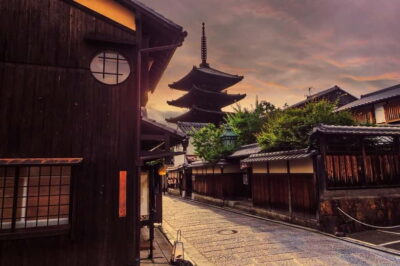
Kyoto Geisha Walking Tour: Gion District & Hidden Gems
Read our review →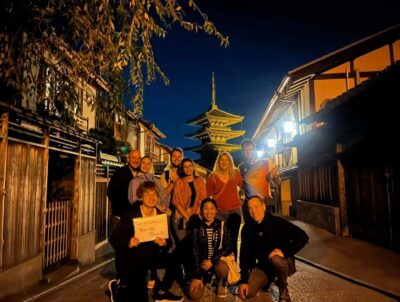
Gion Magical Night Walking Tour with Geisha Trivia
Read our review →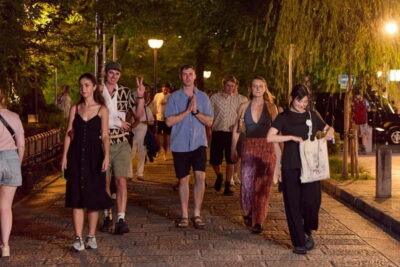
Gion Geisha District Walking Tour – Stories of Geisha
Read our review →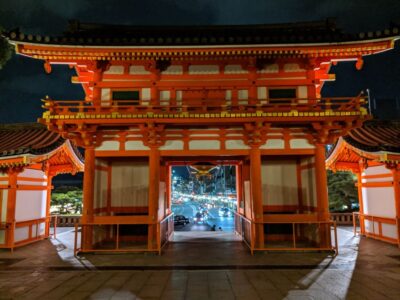
Best of Kyoto: Gion, Geisha, Pagodas & Cobblestones
Read our review →
Kyoto Gion Geisha District Walking Tour – The Stories of Geisha
Read our review →
Kyoto Gion: 2-Hour Geisha Culture & History Walking Tour
Read our review →
Kyoto Gion Night Walk & Geisha District Guided Tour
Read our review →Browse the lists this tour appears in