
Reviewed · OSAKA DAY TRIPS
Private Osaka Tour from Kyoto with guide by public transportation
Osaka is best understood on foot, by train, and at the street-food counter. This private day trip from Kyoto gives you all three, with a local guide leading the way from your hotel to four of the city’s major sights. Akihiro, one of the guides associated with the tour, is praised for being prompt, patient, and attentive to questions.
I like the private format, since your group can ask for explanations, adjust the pace, and focus on what interests you. I also like the useful mix of Osaka: a high-rise view at Umeda Sky Building, history at Osaka Castle, food at Kuromon Market, and neon-lit entertainment around Dotonbori.
The main consideration is the physical effort. This is an eight-hour day using public transportation and walking, so it suits you best if you can stay on your feet for much of the day. Lunch is not included, and Osaka’s popular food districts can tempt you into spending extra.
Key points to know before you book
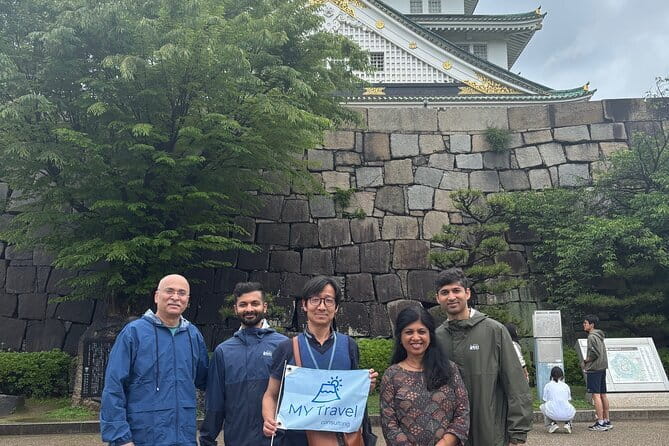
- A private day from Kyoto to Osaka: Your own group joins the guide, rather than a large shared party.
- Four very different Osaka stops: The route covers city views, castle history, market food, and nightlife scenery.
- Public transportation is part of the experience: You will travel around Osaka by train or other local transit instead of sitting in a private vehicle.
- Two admission fees are included: Entry to Umeda Sky Building and Osaka Castle is covered.
- Guide Akihiro receives especially warm praise: His punctuality, patience, communication, and careful planning are useful qualities on a full city day.
- Food needs can be noted in advance: Vegetarian, vegan, and gluten-free requests can be accommodated when included with the booking.
Why this private Osaka day works well from Kyoto
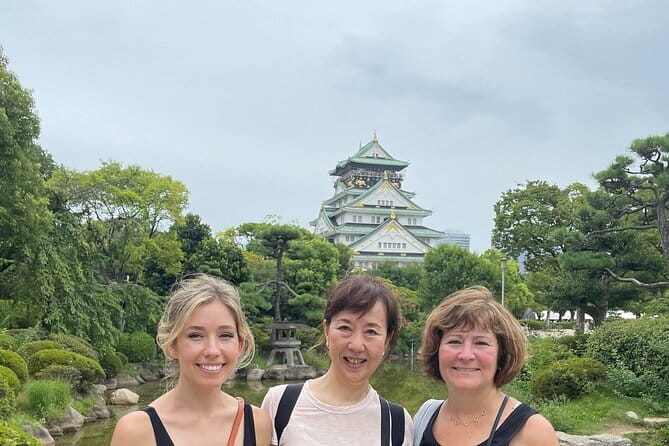
Kyoto and Osaka are close enough to combine, yet they offer very different moods. Kyoto is known for temples, old lanes, and traditional settings. Osaka is louder, more urban, and more focused on food, shopping, entertainment, and big city energy.
This tour is designed for you if you want Osaka in one concentrated day without spending time sorting out each train connection or deciding which major sights fit together. Your guide meets you at your Kyoto hotel, then handles the route using public transportation. That matters because the day includes several parts of Osaka, not one small neighborhood.
The tour lasts about eight hours. The listed visits add up to roughly seven and a half hours, before accounting for travel between stops, meeting arrangements, and changes in pace. I would treat this as a full day, not a relaxed half-day outing.
The private setup is the strongest feature. You can ask why Osaka Castle matters, stop to clarify a menu item, or spend more time at a place that catches your interest. A guide can also help connect the modern city you see today with the historical figures and events behind it.
The tour is led by a National Licensed Guide Interpreter. English is included, and other language preferences can be requested. Akihiro is specifically associated with strong communication before and during the tour. He kept in touch ahead of time, outlined the planned places, and arrived early for the meeting. Those details may sound small, but punctuality matters when a day depends on several train rides and timed stops.
More days that pair Kyoto with Osaka:
- Osaka/Kyoto:Kinkakuji,Arashiyama,FushimiInariShrine,NaraPark
★ 4.1 · 1,596 reviews - Kyoto/Osaka: Nara, Fushimi Inari Taisha, Arashiyama Bus Tour
★ 4.7 · 1,275 reviews - One-Day Tour of Kyoto’s Highlights from Osaka/Kyoto
★ 4.5 · 1,092 reviews
Umeda Sky Building: Osaka from above
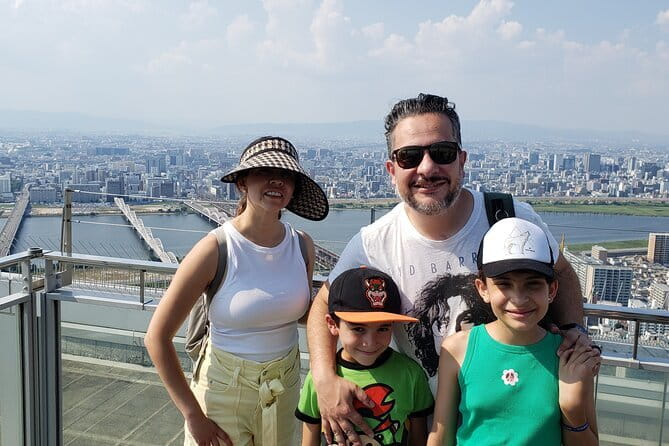
The first listed stop is Umeda Sky Building, in Osaka’s Kita district near Umeda Station. You have about an hour and a half here, and admission is included.
The building is one of Osaka’s most recognizable modern structures. Its unusual design gives the stop more character than a standard office tower. The main reason to visit is the high view over the city, which helps you understand Osaka’s size and layout before you move through its streets.
I like beginning with a view. It gives you a useful sense of place, especially if Osaka is new to you. After seeing the city from above, the later market and entertainment districts feel less like separate stops and more like parts of one large urban center.
Your guide can also make this stop more useful than a quick photo break. Ask about the neighborhoods below, how Osaka differs from Kyoto, and which parts of the city you will visit later. Since the tour is private, you have room for questions rather than simply following a group from one viewing point to another.
The limitation is that this is a popular landmark, and the experience depends on visibility and weather. On a clear day, the view should be the main reward. On a cloudy or rainy day, the building’s design still makes it worth seeing, but the outlook may be less impressive. The operator notes that weather or other conditions can change the itinerary.
Osaka Castle: history with a major-city setting
Osaka Castle receives about two hours, with admission included. This is the longest historical stop on the route and one of the day’s main anchors.
The original castle was built in 1583 by Toyotomi Hideyoshi, a major daimyo and important figure in Japanese history. That background gives the castle more weight than its polished appearance might suggest. It connects Osaka to the political struggles that shaped Japan during the late sixteenth century.
The castle itself is also a visual contrast to the city around it. You move from modern Umeda to a landmark tied to Japan’s past, then later return to food stalls and neon signs. That range is one of the best reasons to choose this particular route.
Two hours gives you time to visit the castle area and spend time inside without treating it as a rushed photo stop. Your guide can explain the historical setting and answer questions as you go. The exact order or amount of time at each part can vary, especially if conditions require a change.
I would keep expectations realistic. Osaka Castle has been restored and is not a completely untouched medieval building. If you want a quiet old fortress with original interiors, this may not be that experience. Its value is in the story, the striking exterior, and the chance to understand Hideyoshi’s place in Osaka’s past.
The castle area also adds walking to your day. After the observation stop and public transportation, the two-hour visit can feel substantial. Wear comfortable shoes and keep your pace practical rather than trying to squeeze in every possible photo.
Kuromon Market: Osaka’s food center
Kuromon Ichiba Market gets about two hours and has no separate admission fee. It is known as Osaka’s Kitchen, with fresh seafood, street food, and local specialties.
This is where you can experience Osaka through taste rather than monuments. You may find food being prepared for immediate eating, along with stalls selling ingredients used in everyday cooking. The supplied information does not promise a fixed tasting menu, so you should expect to choose and pay for food yourself.
That flexibility is useful. You can ask your guide what looks appealing, explain dietary needs, and decide how much you want to spend. Vegetarian, vegan, and gluten-free requests can be accommodated when you provide them in the special requirements section at booking. Since lunch is not included, Kuromon Market is the natural place to make your own lunch plans.
Two hours gives you enough time to look around, eat, and ask questions without racing through the market. I would not assume that every stall will suit every diet, though. Advance notice helps the operator prepare, but your guide may still need to help you identify suitable choices on the day.
Markets can also be crowded and noisy. That is part of the appeal, but it can be tiring if you prefer quiet museums or seated meals. Keep your belongings close, allow time to stop, and do not spend the whole visit trying to sample everything.
A few more Kyoto tours worth putting on the shortlist
- PERFECT KYOTO 1-Day Bus Tour
★ 5.0 · 13,518 reviews - Kyoto: Fushimi Inari, Kinkakuji, Bamboo Grove 1 Day Bus Tour
★ 4.8 · 4,316 reviews - Kyoto: Tea Ceremony in a Traditional Tea House in Kiyomizu
★ 4.9 · 3,519 reviews - Kyoto Geisha Walking Tour: Gion District & Hidden Gems
★ 4.7 · 3,273 reviews
Dotonbori: Osaka after dark, even in daylight
The final listed stop is Dotonbori, with about two hours and no admission fee. This district is known for neon signs, restaurants, entertainment, and the canal-side city atmosphere that many people associate with Osaka.
Dotonbori is a good finish because it brings the day into the present. After the castle’s historical story and the market’s food focus, you get Osaka as a place to wander, eat, look around, and take in the lights and signs.
The two-hour window gives you time to explore without treating the district as a quick photograph. You can ask your guide about local food, decide where you want to eat after the tour, or simply enjoy the energy of the area. If your group has different interests, a private guide can help you use the time in a way that suits you.
The tradeoff is that Dotonbori can be crowded and commercial. It is not a quiet introduction to Japanese life, nor is every restaurant or shop aimed at a local experience. Still, it is an important part of Osaka’s personality, and the contrast with Kyoto is exactly why many people add Osaka to a Kyoto stay.
Because lunch is excluded, Dotonbori also gives you another chance to buy food at your own cost. Your guide can help you understand the choices, but personal expenses are not covered in the tour price.
Public transportation and the physical pace
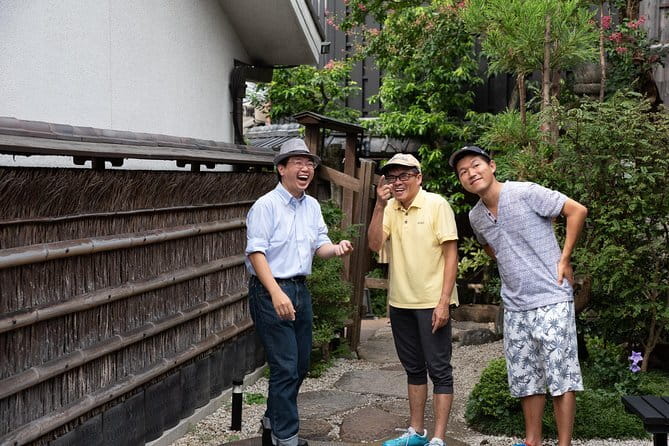
This is not a chauffeured sightseeing day. Public transportation is included, and using it is part of how you move between Osaka’s districts.
I consider that a plus if you want to see how the city functions. Trains put you closer to ordinary city life than a private vehicle does, and you avoid sitting in traffic. A licensed guide also makes the process less stressful, especially when you are unfamiliar with the stations or the Japanese transit system.
The practical cost is walking and transfers. You should have a moderate level of physical fitness, as the day includes standing, station movement, sightseeing, and time on your feet at markets and busy streets. Comfortable shoes are more important than stylish ones here.
Hotel pickup is included, but the supplied information identifies the location as Kyoto rather than naming every eligible hotel or pickup boundary. Confirm your exact pickup details when booking. If you book within seven days of the tour, confirmation may take up to 48 hours and remains subject to availability.
The itinerary may change because of weather or other conditions. That is worth accepting before you reserve. A private route gives the guide some flexibility, but it does not remove the effects of rain, crowds, closures, or transport changes.
Is $280 per person good value?
At $280 per person, this is not the cheapest way to see Osaka. You are paying for a private eight-hour service from Kyoto, a National Licensed Guide Interpreter, hotel pickup, public transportation, and admission to both Umeda Sky Building and Osaka Castle.
The value depends heavily on group size. For one or two people, the price is a considerable outlay. For a family or small group, the private format can make more sense because the guide’s attention is shared only among your party. Group discounts are available, though the exact amount is not provided.
I see the price as paying for structure and personal help rather than transportation alone. You get a planned route through several parts of Osaka, help with public transit, explanations at major sights, and the ability to ask questions all day. If you would otherwise spend hours planning train routes and choosing between Osaka Castle, the market, and Dotonbori, that assistance has real value.
Lunch and personal expenses are extra. Your final cost will depend on what you eat, buy, and do outside the included admissions. If you prefer to travel independently and already feel comfortable with Japanese trains, you can likely see some of these places for less.
Who should book this Osaka tour?
I would choose this tour if you are staying in Kyoto and want one organized day in Osaka without changing hotels. It is especially suitable for first-time visitors who want a guide’s context, families who prefer a private pace, and small groups that value direct help with trains and food choices.
It also suits you if your interests are broad. The route does not focus only on history, food, architecture, or shopping. Instead, it gives you a useful sample of each: a skyline view, a major castle, a food market, and Osaka’s best-known entertainment district.
I would think twice if you want a slow day with long meals, quiet temples, or extensive time at one museum. The route covers a lot, and public transit adds movement between stops. It is also less suitable if walking and standing for much of the day would be difficult.
The private nature gives the tour its best chance to fit your needs. Mention dietary restrictions in advance, request another language if needed, and tell the operator what matters most to you. The guide can work with preferences, but the tour still has four planned areas to cover.
Should you book it?
Book it if you want a well-organized Osaka introduction from Kyoto, prefer a private guide, and like the idea of mixing history, food, city views, and nightlife in one day. The strongest reasons are the private format, included admissions, hotel pickup, and Akihiro’s reported care with communication and timing.
Skip it if you are seeking the lowest-cost route or a slow, self-directed day. At $280 per person, the tour makes the most sense when you value time, guidance, and a smoother route more than saving every yen. For a small group that wants to understand Osaka quickly and comfortably, it is a practical choice.
FAQ
Is this tour private?
Yes. Only your group participates in the activity, with a private guide.
How long does the Osaka tour last?
The tour lasts approximately eight hours.
Where does the tour start?
Hotel pickup is offered in Kyoto. Confirm the exact pickup details for your accommodation when booking.
Is transportation included?
Yes. Public transportation is included for moving between the Osaka stops.
Are admission fees included?
Admission to Umeda Sky Building and Osaka Castle is included. Kuromon Market and Dotonbori have no admission fee listed.
Is lunch included?
No. Lunch and personal expenses are not included, so you should plan to pay for food separately. Dietary needs such as vegetarian, vegan, and gluten-free requests can be noted in advance.
Newest Kyoto experiences on the site
- Treasures of Kyoto: Gion & historical Walking Tour★ 5.0 · 6 reviews
- Whisk Your Own Matcha: A Zen Matcha Experience at Temple★ 3.6 · 7 reviews
- Kyoto tea town for matcha lovers★ 5.0 · 16 reviews
- Uji: Private immersion into Kyoto’s tea and reglious culture★ 5.0 · 17 reviews
- Kyoto Matcha Green Tea Tour★ 4.5 · 23 reviews
- Uji and Wazuka Matcha Farm Half Day Private Guided Tour★ 5.0 · 21 reviews
- Utilising upcycled Matcha! Creating matcha incense (Uji, Kyoto)★ 5.0 · 6 reviews
- Sacred Temple Yoga Experience in Japan★ 5.0 · 3 reviews
Osaka Day Trips, compared.
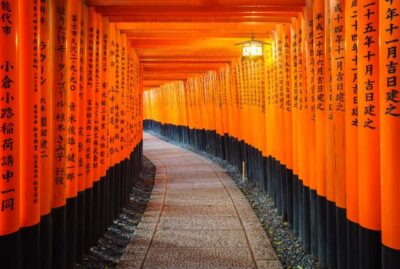
Kinkakuji,Arashiyama,FushimiInariShrine,NaraPark
Read our review →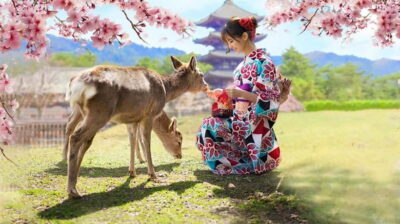
Nara, Fushimi Inari Taisha, Arashiyama Bus Tour
Read our review →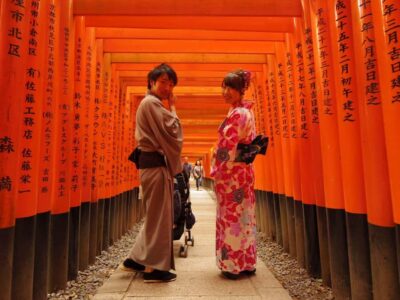
Arashiyama, Nara & Fushimi Inari Shrine w/Lunch
Read our review →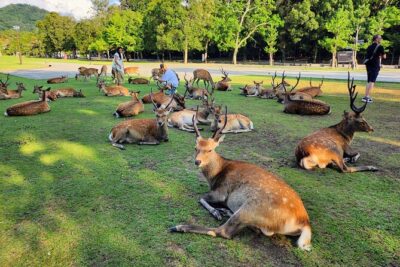
Full Day Guided Tour to Kyoto and Nara from Osaka by Van
Read our review →
Nara Park, Osaka & Kobe from Kyoto Full Day tour
Read our review →Browse the lists this tour appears in