
Reviewed · FUSHIMI INARI TOURS
Crowd-Free Kyoto: Fushimi Inari, Nijo Castle & Kinkaku-ji
The smartest part of this Kyoto tour is its timing. Fushimi Inari is far more enjoyable before the crowds fill the famous red gate paths, and this private outing is planned around an early start when needed. You then move on to Nijo Castle and Kinkaku-ji, two major sights that show very different sides of the city.
I like the private format because your guide can set a more relaxed pace and explain details you might miss on your own. I also like the range of guides available, including Tom, Ryu, Kazuya, and Maki, who have been praised for friendly conversation, local knowledge, and clear explanations of Kyoto’s past.
The main thing to consider is cost beyond the $91.96 tour price. Fushimi Inari is free, but admission to Nijo Castle and Kinkaku-ji is not included, and you’ll need to arrange your own food and drinks. The five-hour schedule is efficient, but it is designed for major sights rather than long, leisurely visits.
Key points to know before booking
- Early access to Fushimi Inari: The tour aims to reach Kyoto’s most famous torii gate route before the busiest crowds.
- Three essential Kyoto sights: You visit Fushimi Inari-taisha Shrine, Nijo Castle, and Kinkaku-ji in about five hours.
- Private attention: Only your group takes part, giving you more room to ask questions and adjust the pace.
- Guides with different strengths: Tom has been praised for cultural explanations, Ryu for friendly energy, Kazuya for personal attention, and Maki for making Nijo Castle especially engaging.
- Extra entrance fees: Fushimi Inari has no admission charge, while Nijo Castle and Kinkaku-ji require separate tickets.
- Simple route planning: You start at South Square in Kyoto Station Building and finish at Kinkaku-ji, with a local guide handling the sightseeing plan.
Why this five-hour Kyoto route works
Kyoto has more temples, shrines, gardens, and old streets than you can reasonably see in a short stay. That creates a common problem: you either spend too much time figuring out transport, or you visit famous places at the worst possible hour.
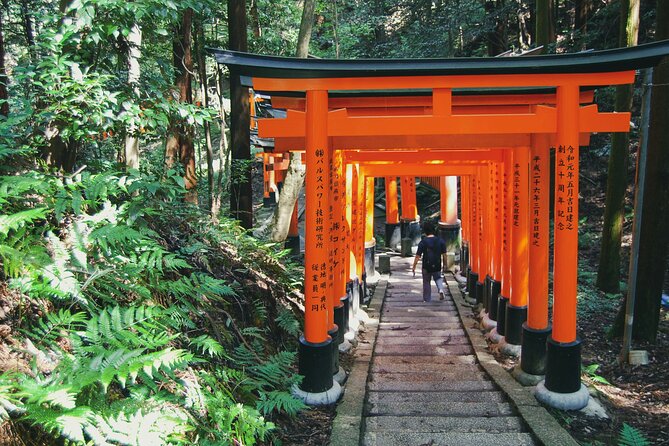
This tour tackles that problem with a focused route. It links three of Kyoto’s best-known sights, each with a different character. Fushimi Inari offers a walk through thousands of red torii gates. Nijo Castle brings you into the world of the Tokugawa shoguns. Kinkaku-ji finishes the morning or afternoon with the Golden Pavilion beside its reflecting pond.
I see the private guide as the main reason to choose this experience instead of simply buying admission and going alone. The sites are easy to recognize, but they are not always easy to understand. A guide can explain why the places matter, point out details in the buildings, and add local stories that do not appear on a basic map.
The tour lasts about five hours. That is enough time to see all three highlights without turning the day into a full marathon, but it does require sensible expectations. You are covering a large slice of Kyoto in one outing. If you want extended time at every building, a long meal, or a slow walk through each site, you may prefer to visit fewer places independently.
More ways to walk the Fushimi Inari gates:
- Kyoto: Fushimi Inari, Kinkakuji, Bamboo Grove 1 Day Bus Tour
★ 4.8 · 4,316 reviews - Fushimi Inari Hidden Hiking Tour (Private Option Available)
★ 5.0 · 1,750 reviews - Osaka/Kyoto:Kinkakuji,Arashiyama,FushimiInariShrine,NaraPark
★ 4.1 · 1,596 reviews
Fushimi Inari before the gates fill up
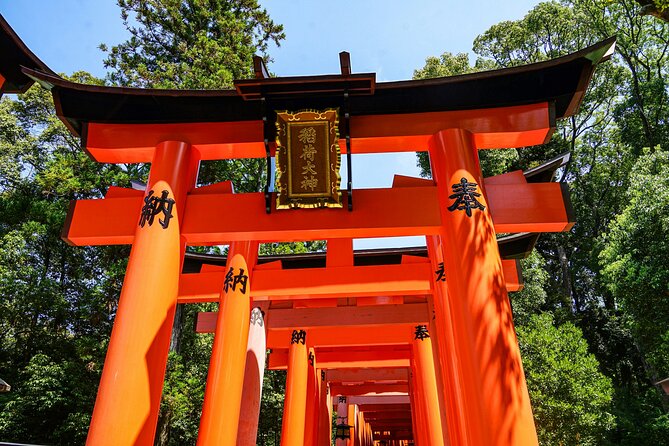
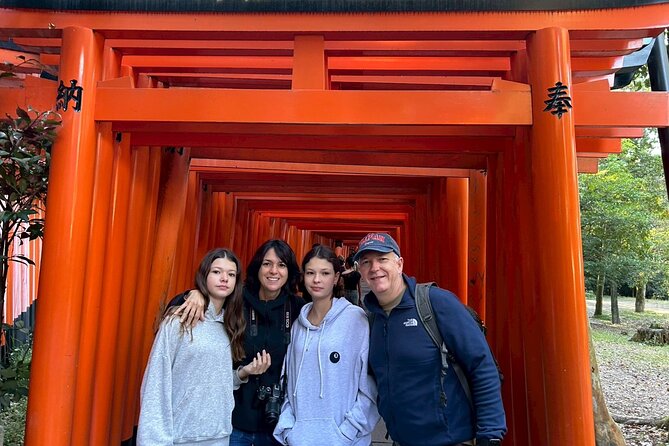
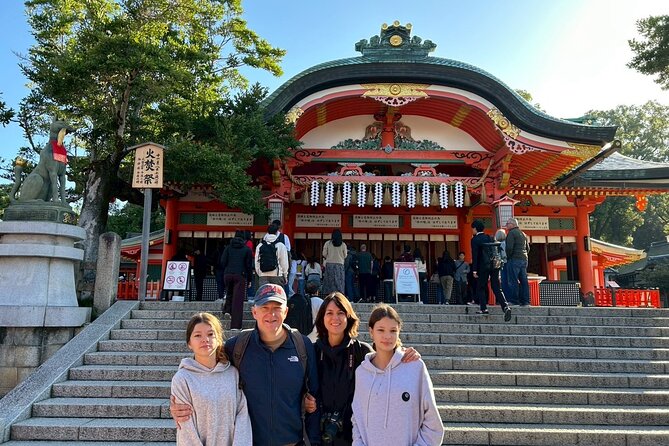
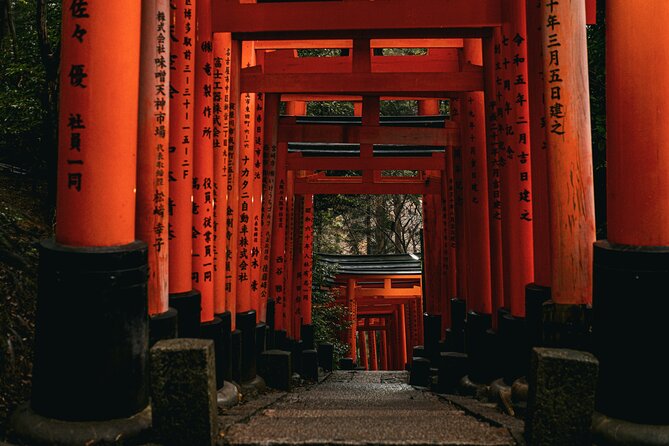
Your first stop is Fushimi Inari-taisha Shrine, one of Kyoto’s most recognizable sights. The main attraction is the Senbon Torii, a long route lined with thousands of red-orange gates that climb the sacred mountain.
The early timing matters here more than at the other two stops. Fushimi Inari is open to the public and has no admission fee, so it draws people throughout the day. The lower section can become crowded, especially around the most photographed gates. Arriving early gives you a better chance to walk beneath the torii with fewer interruptions.
You should still prepare for a walk. The route heads uphill, and the experience changes as you move away from the entrance. Near the bottom, the gates are close together and make the familiar tunnel seen in photographs. Higher up, the path becomes quieter and more wooded, though the tour description does not promise that you will reach the summit.
That distinction matters. One of the strongest comments about this tour came from someone who climbed all the way to the top and felt the view made the effort worthwhile. You should not assume that every departure includes that full climb, but you can ask your guide about the available time and your group’s pace.
Fushimi Inari is not just a photo stop. It is a working Shinto shrine, and the torii gates represent offerings made by individuals and businesses. The guide can help you read the site as a place of worship rather than only as a famous walkway.
Wear comfortable shoes and bring water. One review humorously noted paying 300 yen for water during the climb. That small detail is useful advice: the route can be more strenuous than the short stop description suggests, and carrying a bottle may save you a purchase.
Nijo Castle and the world of the shoguns
Nijo Castle gives the tour a very different mood. Instead of a mountain path and shrine gates, you enter a formal compound tied to Japan’s samurai rulers and the Tokugawa shogunate.
The key sight is Ninomaru Palace, once the residence of the Tokugawa Shogun. The palace’s decorative interiors and polished rooms show the power and ceremony of the ruling class. This is a place where a guide’s explanation can make a real difference. Without context, you may notice elaborate architecture but miss the political message behind it.
One guest singled out Nijo Castle as the best part of the tour, which makes sense for visitors interested in castles, court life, and Japanese government. The experience is less about dramatic height or sweeping scenery and more about how people moved, received visitors, and displayed authority.
The tour allows about an hour here. That should give you a useful introduction, but Nijo Castle is not a tiny attraction. You may need to keep moving to stay with the schedule, especially if your group wants time inside Ninomaru Palace and around the grounds.
Admission is not included. The listed price covers the local guide, not every entrance ticket, so factor this extra expense into your budget. The same applies to Kinkaku-ji later in the route.
Maki has guided this tour and was especially praised for making Nijo Castle memorable. Guide quality can shape this stop because the building’s importance is not always obvious from its exterior. If you are interested in Japanese history, tell your guide early. That gives them a chance to focus on the details that matter most to you.
Kinkaku-ji closes the route with Kyoto’s famous gold
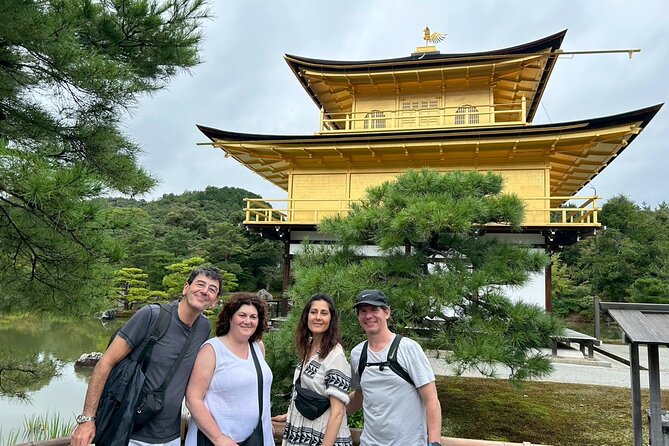
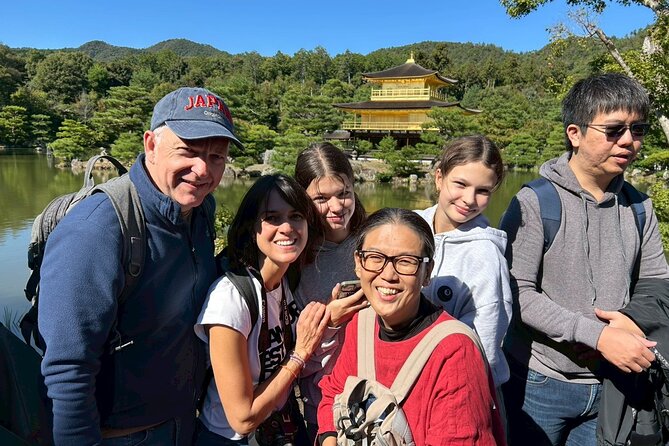
Kinkaku-ji, also called the Golden Pavilion, is the final stop. The Zen Buddhist temple is covered in gold leaf and sits beside a pond, creating the image most often associated with classic Kyoto sightseeing.
This is the tour’s most immediately visual stop. You do not need much background to appreciate the pavilion, but the guide can add useful context about its role as a Zen temple and explain what you are seeing beyond the gold surface.
Weather can affect the experience. On a clear day, the pavilion’s reflection in the pond can be striking. On a cloudy or wet day, the gold still catches light, but the view may feel less dramatic. The tour specifically notes that the experience is weather dependent, so keep that in mind when planning your day.
Kinkaku-ji is popular for good reason, but popularity also means crowds. The private format helps your group move at a reasonable pace, yet it cannot make the site private. You should expect other people around the main viewing area, especially during busy periods.
Admission is not included here either. Since this is the ending point, you can continue sightseeing in the area afterward, but no return transportation is provided in the details supplied. That makes the finish convenient if Kinkaku-ji is your next planned stop, but you should check your onward route before booking.
One person joined mainly to see Kinkaku-ji and found the visit to be the highlight. That makes this tour a good choice if the Golden Pavilion is high on your list and you also want two major Kyoto sights without arranging separate visits.
More trips out to the Golden Pavilion:
- Kyoto: Nijo, Kinkaku-ji, Arashiyama, Kiyomizu & Fushimi Inari
★ 5.0 · 699 reviews - Kyoto: Kinkakuji, Golden Pavilion Guided Tour
★ 4.7 · 71 reviews - Kyoto top must-see Golden pavilion and Bamboo forest half-day Private tour
★ 5.0 · 52 reviews - Kyoto Bamboo Forest & Golden Pavilion E-Bike Tour
★ 5.0 · 50 reviews
What the private guide adds
A private tour changes the feel of a busy sightseeing day. You are not waiting for a large group to gather, and only your party takes part. That can make it easier to ask questions, pause briefly, or tell the guide what interests you.
The named guides associated with the experience bring different personalities. Tom has been praised for cultural explanations and for answering questions about Kyoto. Ryu is described as friendly and entertaining. Kazuya created such an easy connection with one person that the outing felt like spending time with an old friend. Maki received particular praise for her handling of Nijo Castle.
These details suggest an important benefit: the guide is not simply there to point out entrances. The strongest part of the experience is the human explanation between the major photo stops. You get a clearer sense of why the shrine gates, castle rooms, and golden pavilion matter.
Still, a private guide is not the same as a fully customized luxury tour. The route and three main stops are set, and the overall duration remains about five hours. If you want to add Gion, Arashiyama, a tea ceremony, or a long restaurant break, this is not the right format based on the information provided.
Price, admissions, and what you really receive
At $91.96 per person, the tour is not the cheapest way to see these attractions. You can visit public sites on your own for less, especially if you already understand Kyoto’s rail and bus network and are comfortable planning around opening times.
The value comes from the guide and the time saved. A private tour takes away much of the work involved in arranging three separate stops. You do not have to build the route, decide how long to spend at each place, or research every site before arriving.
The value is stronger for a first visit or a short stay. If you have only a day or two in Kyoto, seeing Fushimi Inari, Nijo Castle, and Kinkaku-ji in one organized outing can help you cover the essentials. The guide also gives you historical context while you are there, instead of leaving you to read everything later.
Remember the extra costs:
- Fushimi Inari has free admission.
- Nijo Castle admission is not included.
- Kinkaku-ji admission is not included.
- Food and drinks are not included.
- The local guide is included.
- Group discounts are available.
- A mobile ticket is available.
The tour ends at Kinkaku-ji rather than returning you to Kyoto Station. That is neither good nor bad by itself. It is useful if you plan to continue in northern Kyoto, but less convenient if your hotel or train connection is near the station. Check your plans before you commit.
Who will enjoy this tour most
I would recommend this experience to a first-time Kyoto visitor who wants the city’s best-known sights with less planning. It also suits couples, families, and small groups who prefer asking their own questions rather than following a large shared party.
It is a particularly good fit for you if:
- You want to see three major Kyoto sights in one half-day.
- You care about reaching Fushimi Inari before the heaviest crowds.
- You like history and local stories, not just photographs.
- You prefer a private guide to a fixed large-group tour.
- You are comfortable paying admission fees separately.
- You can manage the uphill walk at Fushimi Inari.
It may not suit you if you want a slow, flexible day. The schedule is efficient, and the route covers a lot of ground. It is also less appealing if you have already visited these sights and want smaller temples, quiet neighborhoods, or food-focused experiences.
Most people can participate, and the meeting point is near public transportation at South Square in the Kyoto Station Building. Since the tour finishes at Kinkaku-ji, plan your next move before the tour begins.
Practical timing and comfort advice
The strongest reason to book is the early approach to Fushimi Inari. Ask for the exact start time when you reserve, since the supplied details explain that early starts are used where needed but do not give a fixed departure hour.
Wear shoes suitable for walking uphill. The shrine route can require more effort than a quick visit to the entrance gates, particularly if you want to go farther up the mountain. Bring water, since a small purchase during the climb can cost more than expected.
You should also budget for the two paid attractions. The tour price is not an all-inclusive entrance package. Food and drinks are your responsibility, so plan accordingly if you need a meal during or after the outing.
The experience requires good weather. If poor weather causes cancellation, you will be offered another date or a full refund. You can cancel for a full refund up to 24 hours before the start time, but changes or cancellations inside that window are not accepted.
Should you book Crowd-Free Kyoto?
Book this tour if you want an efficient introduction to Kyoto and value a guide who can connect famous places with local stories. The combination of early Fushimi Inari, samurai-era Nijo Castle, and photogenic Kinkaku-ji gives you a strong first look at the city.
The best reason to choose it is not simply the list of sights. It is the chance to see them in a sensible order with a private guide and less time spent organizing the day. Tom, Ryu, Kazuya, and Maki have each been praised for making the visits personal and informative.
Skip it if you want a cheap, slow day or if the extra entrance fees strain your budget. But if you have limited time in Kyoto and want three major landmarks handled in one five-hour outing, this is a practical choice with a clear focus.
FAQ
How long does the Kyoto tour last?
The tour lasts approximately five hours.
Which attractions are included?
The route includes Fushimi Inari-taisha Shrine, Nijo Castle, and Kinkaku-ji Temple, also known as the Golden Pavilion.
Is this a private tour?
Yes. Only your group participates in the private activity.
Where does the tour begin?
The meeting point is South Square in the Kyoto Station Building, in Higashishikōjichō, Shimogyo Ward, Kyoto.
Where does the tour finish?
The tour ends at Kinkaku-ji, at 1 Kinkakujichō in Kyoto’s Kita Ward.
Is admission to Fushimi Inari included?
Fushimi Inari has free admission, so no admission ticket is required.
Are Nijo Castle and Kinkaku-ji admission fees included?
No. Admission to Nijo Castle and Kinkaku-ji is not included in the tour price.
Are food and drinks included?
No. Food and drinks are not included.
Is the tour suitable for most people?
Yes. Most people can participate, and the experience is near public transportation. Keep in mind that Fushimi Inari includes an uphill route.
What happens if bad weather cancels the tour?
If poor weather causes cancellation, you will be offered a different date or a full refund.
Can I cancel for a full refund?
Yes. You can cancel at least 24 hours before the start time for a full refund. Cancellations or changes made less than 24 hours before the start time are not accepted.
More Nijo Castle Visits
- Kyoto: Nijo-jo Castle and Ninomaru Palace Guided Tour
★ 4.7 · 1,020 reviews - Kyoto: Nijo Castle, Kiyomizu & Fushimi Inari Guided Tour
★ 4.7 · 700 reviews - Kyoto: Imperial Palace & Nijo Castle Guided Walking Tour
★ 4.7 · 453 reviews - Kyoto: Nijo Castle World Heritage Guided Tour with Admission
★ 5.0 · 128 reviews
Newest Kyoto experiences on the site
- Whisk Your Own Matcha: A Zen Matcha Experience at Temple★ 3.6 · 7 reviews
- Treasures of Kyoto: Gion & historical Walking Tour★ 5.0 · 6 reviews
- Kyoto tea town for matcha lovers★ 5.0 · 16 reviews
- Uji: Private immersion into Kyoto’s tea and reglious culture★ 5.0 · 17 reviews
- Kyoto Matcha Green Tea Tour★ 4.5 · 23 reviews
- Uji and Wazuka Matcha Farm Half Day Private Guided Tour★ 5.0 · 21 reviews
- Utilising upcycled Matcha! Creating matcha incense (Uji, Kyoto)★ 5.0 · 6 reviews
- Sacred Temple Yoga Experience in Japan★ 5.0 · 3 reviews
Fushimi Inari Tours, compared.
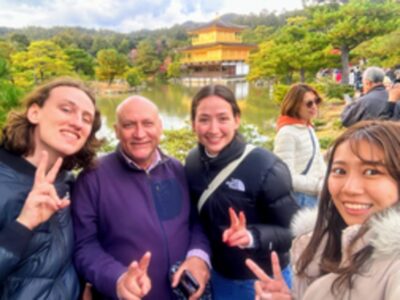
Fushimi Inari, Kinkakuji, Bamboo Grove 1 Day Bus Tour
Read our review →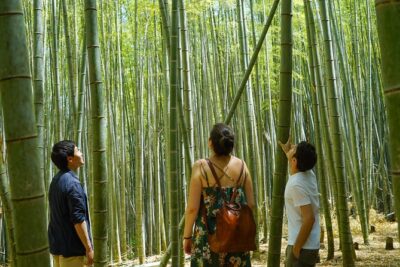
Fushimi Inari Hidden Hiking Tour (Private Option Available)
Read our review →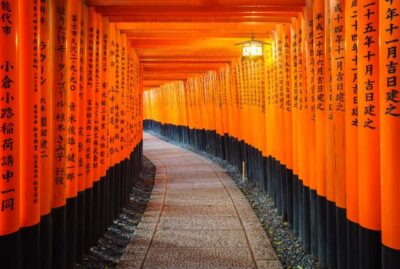
Kinkakuji,Arashiyama,FushimiInariShrine,NaraPark
Read our review →
Nara, Fushimi Inari Taisha, Arashiyama Bus Tour
Read our review →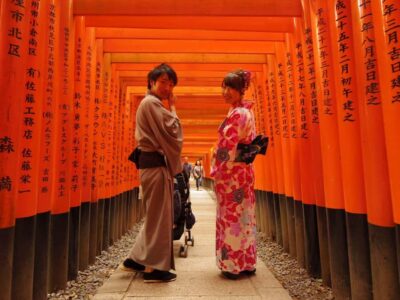
Arashiyama, Nara & Fushimi Inari Shrine w/Lunch
Read our review →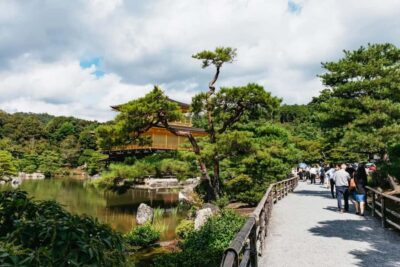
Nijo Castle, Kiyomizu & Fushimi Inari Guided Tour
Read our review →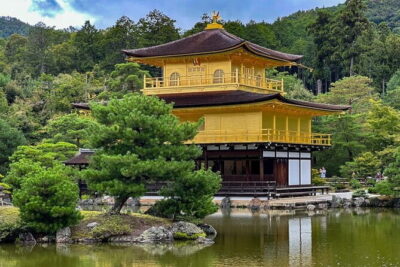
Nijo, Kinkaku-ji, Arashiyama, Kiyomizu & Fushimi Inari
Read our review →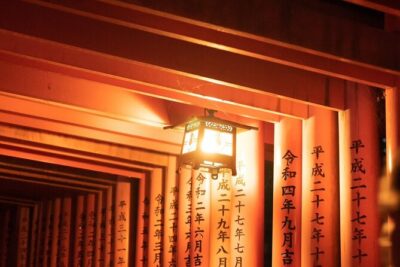
Browse the lists this tour appears in