
Reviewed · KYOTO GEISHA & MAIKO EXPERIENCES
KYOTO-NARA: Giant Buddha Deer Pagoda “Geisya” (Italian, full day)
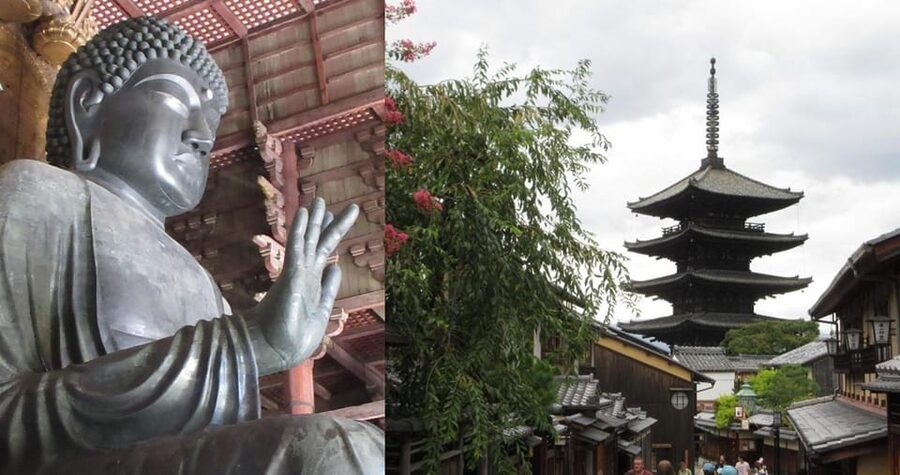
Todai-ji’s giant Buddha is the star here, but the day gives you two very different views of Japan. In Nara, you walk among sacred buildings and free-roaming deer. Back in Kyoto, you follow old pilgrimage streets toward Kiyomizu-dera, then finish in Gion, where Maiko and Geiko artists work.
I like the Italian-speaking guidance and the smart pairing of Nara with Kyoto. I also like that the small group is limited to 15 people, with train and bus fares and monument admissions included. Guide Omae receives especially strong praise for fluent Italian, humor, clear explanations, and a willingness to let people stop for photos.
The catch is the pace. You cover two cities in one long day, with several train, bus, and walking sections. At $176 per person, it offers useful support and convenience, but you should book it for interpretation and company, not simply for transportation.
Key points at a glance
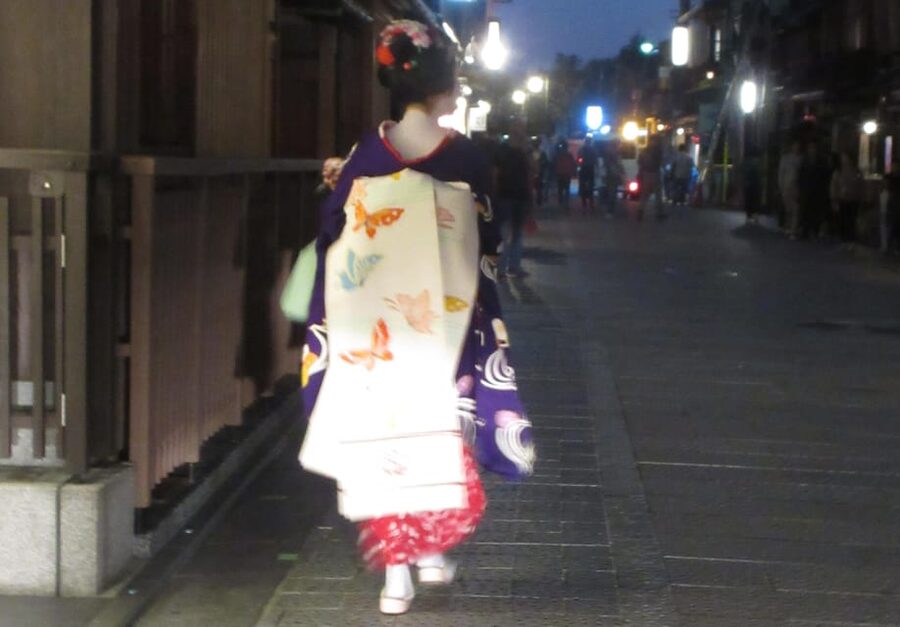
- Todai-ji and the Great Buddha: Spend about 90 minutes at Nara’s best-known temple and learn about its national treasures and Buddhist traditions.
- Deer in Nara Park: Feed the tame deer with special cookies sold at stalls near the park.
- Italian-speaking guide: Guide Omae has been praised for polished Italian, warmth, humor, and detailed answers.
- Kiyomizu-dera pilgrimage streets: Walk through an old approach lined with food shops, sweets, bars, and souvenirs.
- Gion and Pontocho finish: End near Gion, the traditional entertainment district, with the tour finishing at Pontocho.
- Small-group convenience: A maximum of 15 people, included scheduled transport, entrance fees, and assistance during the day.
Why this full-day pairing works
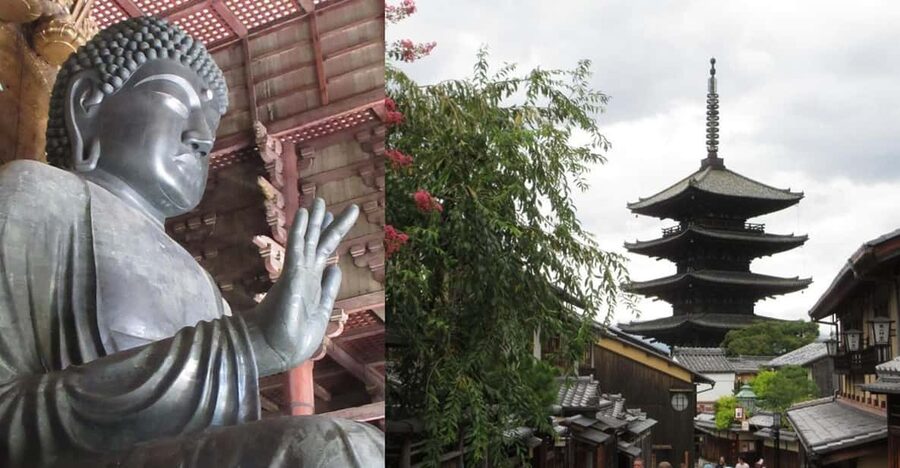
This experience is built around contrast. Nara was Japan’s imperial capital in the eighth century, and its main sights sit in a broad park where temple grounds, paths, deer, and city life mix together. Kyoto, also a former capital, gives you a more urban and commercial approach to its sacred sites.
That makes the day useful if you have limited time in the Kansai region. You do not spend the whole day at one temple complex. Instead, you see a major Buddhist monument in Nara in the morning, return to Kyoto for a break, and then visit two famous areas in the afternoon.
The tradeoff is simple: breadth instead of leisure. You will see a lot, but you will not have unlimited time at each stop. The schedule includes a one-hour break at Kyoto Station before the afternoon portion, which gives the day some breathing room.
The tour begins at Kyoto Station, in the space between the four escalators in front of the taxi terminal. This is east of the north central entrance. Look toward Kyoto Tower, which should be in front of you toward the upper left, not the right. The meeting instructions are unusually specific because Kyoto Station can be confusing, so read the confirmation message sent the day before.
More day trips down to Nara:
- Osaka/Kyoto:Kinkakuji,Arashiyama,FushimiInariShrine,NaraPark
★ 4.1 · 1,596 reviews - Kyoto/Osaka: Nara, Fushimi Inari Taisha, Arashiyama Bus Tour
★ 4.7 · 1,275 reviews - Osaka/Kyoto: Arashiyama, Nara & Fushimi Inari Shrine w/Lunch
★ 4.4 · 754 reviews
Morning train to Nara and Todai-ji
The morning starts with a train ride of about 45 minutes from Kyoto to Nara Station. From there, you take a bus for roughly 15 minutes to reach the temple area.
That transport plan matters. Nara’s major sights are not directly beside Kyoto Station, and arranging the sequence alone means checking train routes, finding the right bus, and judging how much time to allow. Here, the guide handles the scheduled transport and helps keep the group moving.
The main visit lasts about an hour and a half at Todai-ji. The temple is famous for its enormous bronze Buddha, one of Japan’s largest, housed in a massive wooden building. The scale is the obvious first impression, but the guide’s explanation is what gives the visit more meaning.
You receive information about the temple’s monuments, including features designated as national treasures. The tour also focuses on Buddhist devotion and local beliefs, including legends and details that are not always included in short guidebook descriptions. Guide Omae has been praised for explaining these stories in polished Italian and for answering questions carefully.
This is a good part of the tour for visitors who want context without having to prepare a long reading list. You can look at the statue and the architecture on your own, but a guide can explain why the site matters and how religious practice shaped it.
There is also time for shopping and general sightseeing around Todai-ji. The temple area can be busy, and the large scale of the complex means you should expect a public sightseeing setting rather than a quiet private visit. If you want perfect stillness for photographs, this may not be the ideal time or place. If you want a clear introduction to one of Japan’s most important Buddhist sites, it works well.
Deer among the temple grounds
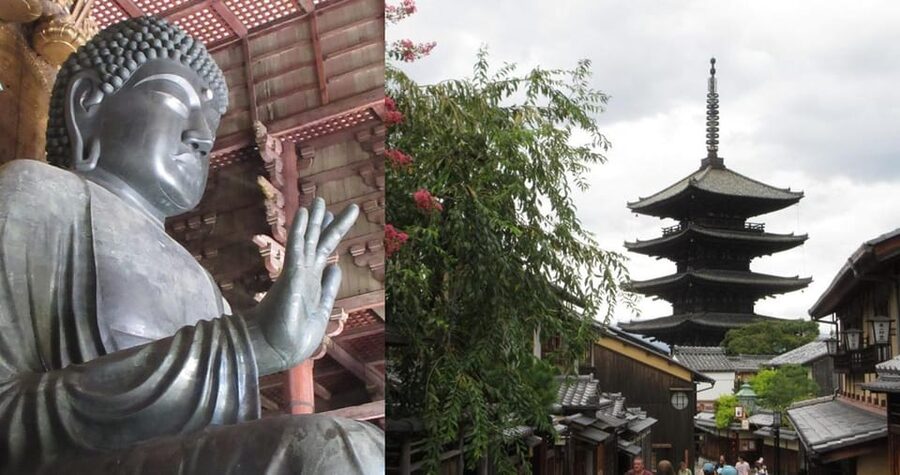
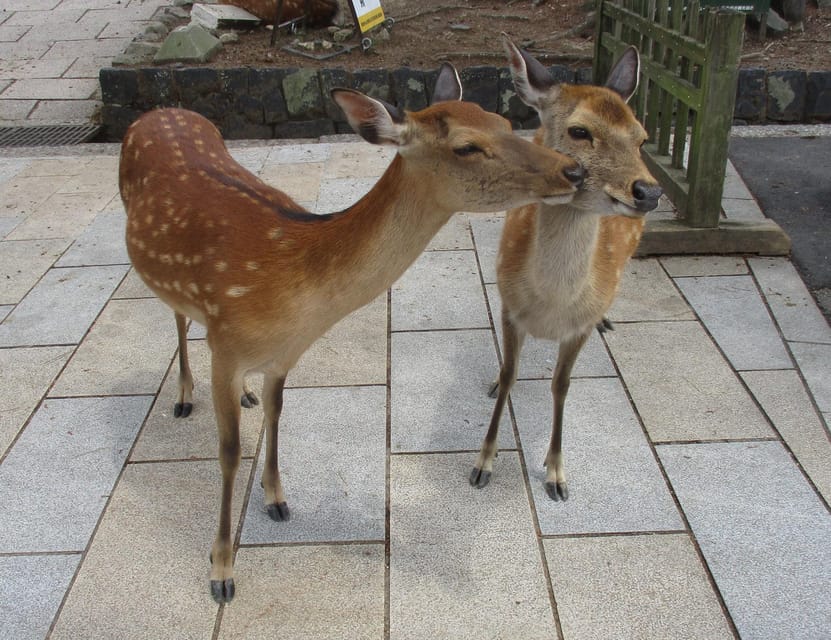
The walk around Nara includes encounters with deer that roam freely in the large city park. These animals have lived alongside local residents for centuries and are one of the area’s defining sights.
Special deer cookies are sold at stalls, and you can feed the animals. This is an entertaining part of the morning, especially for families, but it is worth treating it as a real interaction rather than a staged animal show. The deer move around on their own, and the guide can help you understand how to approach the experience.
The route also includes Ukimido, reached by about five minutes on foot from Todai-ji, followed by another ten-minute walk. The stop is brief, around ten minutes, and is listed as a visit, walk, and pass-by point. That means you should not expect a long independent exploration there.
These short walks are part of the day’s physical demand. None is described as extreme, and the tour is marked wheelchair accessible, but you should still expect movement between buses, trains, temples, and pedestrian streets. Comfortable shoes will make the day easier.
Returning to Kyoto for a proper break
After the Nara portion, you take another train ride of about 45 minutes back to Kyoto Station. A one-hour break follows before the afternoon program.
I like this pause because it prevents the day from becoming one continuous march. You can eat, rest, use station facilities, or simply reset before the Kyoto portion. The information provided does not specify a restaurant or meal arrangement, so plan to handle food yourself during the break.
The morning and afternoon are also separate in character. Nara is more open and park-based, while the Kyoto section involves a bus ride, uphill or sloping pedestrian streets, temple grounds, and commercial lanes. The break gives you a chance to adjust before the second half.
More geisha and maiko evenings in Kyoto:
- Kyoto Geisha Walking Tour: Gion District & Hidden Gems
★ 4.7 · 3,273 reviews - Kyoto: Gion Magical Night Walking Tour with Geisha Trivia
★ 4.9 · 2,393 reviews - Kyoto: Gion Geisha District Walking Tour – Stories of Geisha
★ 4.7 · 2,187 reviews - Best of Kyoto: Gion, Geisha, Pagodas & Cobblestones
★ 4.9 · 2,058 reviews
Walking the approach to Kiyomizu-dera
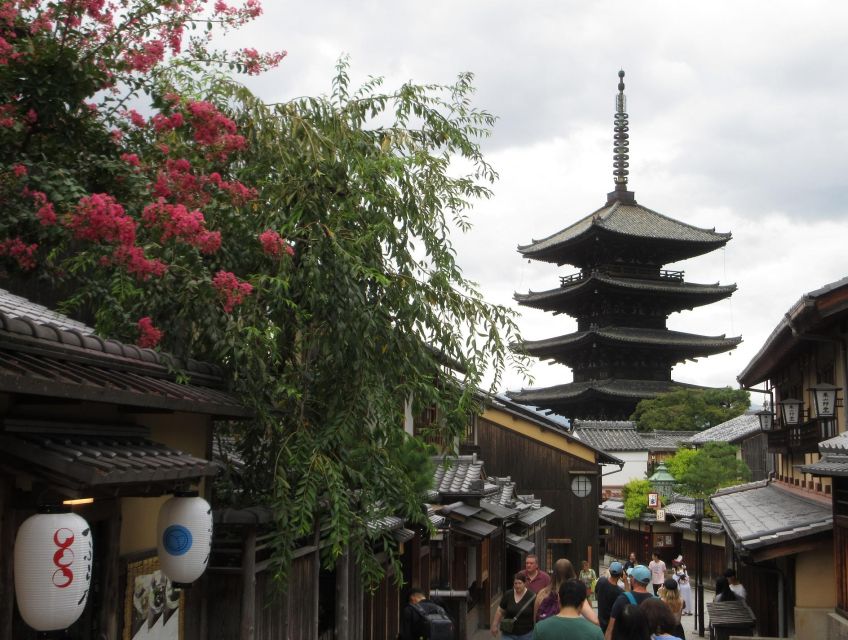
The afternoon begins with a 15-minute bus ride, followed by about 15 minutes on foot to Kiyomizu-dera. The temple visit itself lasts around one hour.
Kiyomizu-dera is reached through old pilgrimage routes that have developed over many centuries. The approach is lined with souvenir shops, sweet shops, bars, and other businesses serving people of all ages. This is not just a route to the temple. It is part of the experience.
You will see the practical side of Japanese temple tourism here: food, gifts, local treats, and crowds moving toward a major religious site. Some people love this mix of devotion and daily commerce. Others may find the shopping streets more tourist-focused than the quieter parts of Kyoto.
The guide’s role is especially useful along this approach. Instead of treating the streets as a simple walk uphill, the tour connects them with Kyoto’s religious and cultural development. You can ask questions as you go, then receive a more focused explanation once you reach the temple.
The one-hour temple visit is enough for a guided introduction, but it is not an open-ended visit. If Kiyomizu-dera is your single most important Kyoto sight, you may want a separate return visit with more time. On this day, the advantage is that you also see Nara and Gion.
Gion and the finish near Pontocho
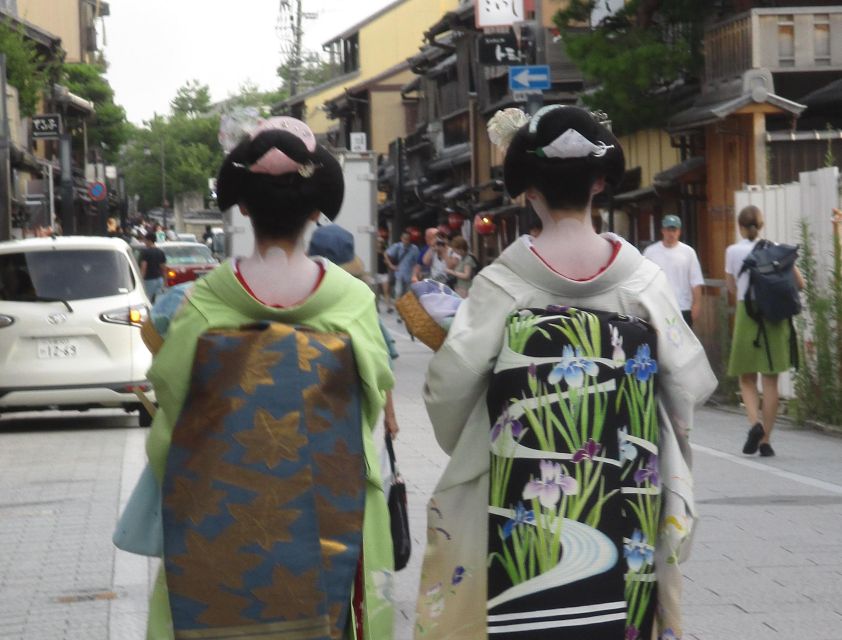
After Kiyomizu-dera, the group walks for about 20 minutes to Gion. The guided visit lasts around 20 minutes, followed by another 10-minute walk to the finish at Pontocho.
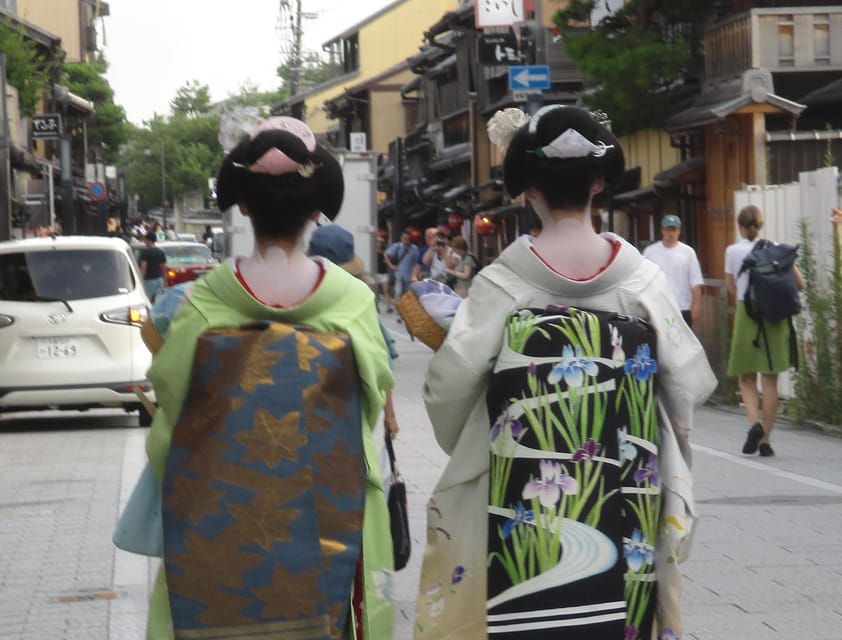
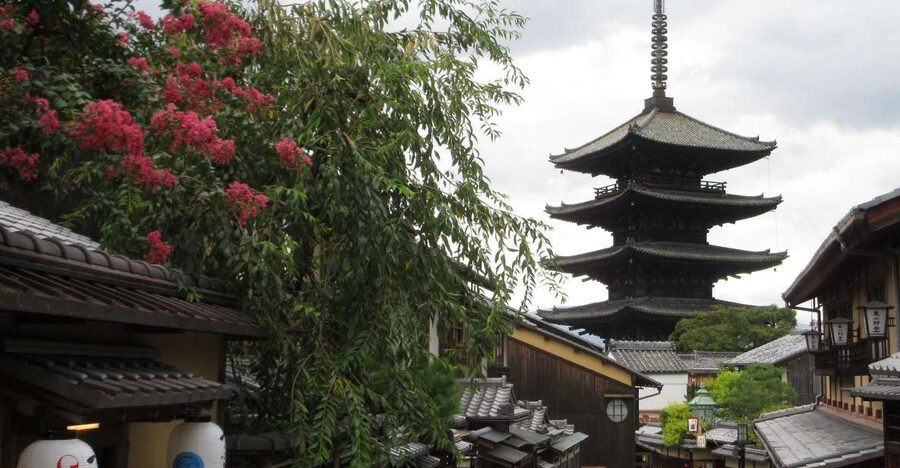
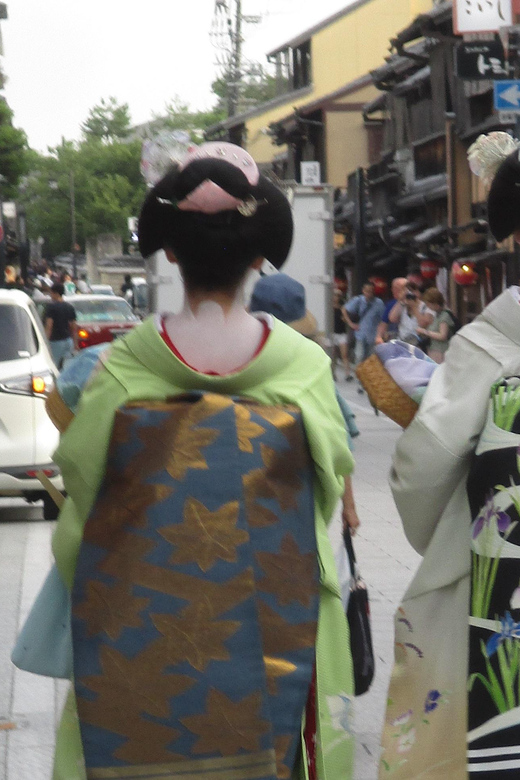
Gion-kobu is associated with professional Maiko and Geiko artists, often loosely called Geisya by visitors. The district has a long connection with traditional entertainment, and the guide explains the cultural setting rather than treating it as a photo opportunity.
Keep your expectations sensible. The provided schedule allows only a short guided visit in Gion, and there is no promise of seeing a particular performer. You are visiting the area where these artists work, not attending a guaranteed performance.
Finishing at Pontocho is practical. You are not returned to Kyoto Station, so you should be prepared to continue your evening from the final location. The exact amount of free time after the guided walk is not specified, but Pontocho gives you a useful base for the next part of your night.
The Italian guide makes the difference
The most praised feature of this experience is the guide. Guide Omae is described as Japanese, fluent in Italian, and someone who lived in Italy for more than a decade. That background helps explain why the language feels natural rather than translated word by word.
The useful distinction is not simply that the tour is offered in Italian. It is that you can ask about legends, religious customs, objects, and local life in your own language. Several strong ratings specifically highlight Omae’s preparation, humor, clear explanations, and ability to answer questions.
The guiding style also appears flexible within the limits of a group tour. The guide can leave room for photographs and personal exploration, while still keeping the schedule together. Assistance is available during the route, and flexible timing or itinerary changes can be requested as far as practical.
One rating gives a useful warning: the experience may feel less complete for someone expecting every possible detail from a full day. That is fair. The tour covers a lot, and the guide has to balance explanation with transport and walking. If you want a specialist-level study of Buddhist art, architecture, or Geiko culture, a focused private tour may suit you better.
Is $176 a fair price?
At $176 per person, this is not a budget sightseeing day. Its value depends on what you need.
The price includes scheduled train and bus fares, entrance fees for the monuments on the program, Italian explanations, and practical help during the day. For a first visit to Japan, that combination can reduce stress, especially when you are not comfortable navigating Japanese stations or bus stops.
You are also paying for a small group of no more than 15 people. That is a better setup for questions than a large coach group, though it is not the same as a private tour. The guide can respond to requests and allow some freedom, but the group still has to follow the day’s route.
The price is harder to justify if you are already comfortable with Kyoto and Nara public transport, speak another shared language confidently, and prefer to spend as long as you like at one site. In that case, you could arrange the basic route yourself and keep more control over the timing.
For an Italian-speaking visitor who wants one organized day and strong cultural explanation, the cost is easier to defend. Included admissions and transport also make the final price more predictable.
Who should book this experience?
I would recommend it to an Italian-speaking visitor who wants to combine Nara and Kyoto without handling every transfer alone. It is especially suitable for first-time visitors, families that value assistance, and anyone who wants explanations about Buddhist practice and local traditions rather than only photographs.
It also suits people who like a full schedule. You will travel by train and bus, walk between several points, visit two cities, and finish in a central Kyoto entertainment district.
I would hesitate if you want a slow day, long meals, extensive shopping, or several hours at Kiyomizu-dera. I would also hesitate if your main goal is a guaranteed Maiko or Geiko performance. The tour takes you through Gion-kobu, but the program does not promise a performance or a personal encounter.
Wheelchair access is listed, though the schedule includes public transport, temple grounds, and multiple walking sections. If you have specific mobility needs, ask about the route and timing before booking. Free cancellation is available up to 24 hours before departure, and you can reserve now and pay later, which helps if your plans are still changing.
FAQ
Where does the tour begin?
It begins at Kyoto Station, in the space between the four escalators in front of the taxi terminal east of the north central entrance. Kyoto Tower should be visible in front of you toward the upper left.
Where does the tour finish?
The tour finishes at Pontocho after the visit to Gion and a final walk of about 10 minutes.
How long does the experience last?
It is a full-day experience. The listed schedule includes morning travel to Nara, the Todai-ji visit, a return to Kyoto, a one-hour break, and afternoon visits to Kiyomizu-dera and Gion.
What language is the tour conducted in?
The live tour guide language is Italian. Italian explanatory material about the historical monuments is also included.
Is transportation included?
Yes. Scheduled train and bus fares listed for the tour are included in the price.
Are entrance fees included?
Yes. Entrance fees for the monuments included in the program are covered.
How large is the group?
The tour is limited to 15 participants.
Can the tour be canceled for a refund?
You can cancel up to 24 hours in advance for a full refund. Reserve now and pay later is also available.
Should you book it?
Book this tour if you want Nara’s Great Buddha, the deer park, Kiyomizu-dera, and Gion in one Italian-guided day. Guide Omae’s fluent Italian and thoughtful explanations add real value, and the included transport keeps the complicated parts manageable.
Skip it if you prefer to set your own pace or spend a full morning at one temple. At $176, the tour is best viewed as a supported cultural day, not a cheap way to get from Kyoto to Nara. For the right visitor, the combination of language help, local insight, and a well-packed route makes the price reasonable.
Newest Kyoto experiences on the site
- Treasures of Kyoto: Gion & historical Walking Tour★ 5.0 · 6 reviews
- Whisk Your Own Matcha: A Zen Matcha Experience at Temple★ 3.6 · 7 reviews
- Kyoto tea town for matcha lovers★ 5.0 · 16 reviews
- Uji: Private immersion into Kyoto’s tea and reglious culture★ 5.0 · 17 reviews
- Kyoto Matcha Green Tea Tour★ 4.5 · 23 reviews
- Uji and Wazuka Matcha Farm Half Day Private Guided Tour★ 5.0 · 21 reviews
- Utilising upcycled Matcha! Creating matcha incense (Uji, Kyoto)★ 5.0 · 6 reviews
- Sacred Temple Yoga Experience in Japan★ 5.0 · 3 reviews
Kyoto Geisha & Maiko Experiences, compared.
Kyoto Geisha Walking Tour: Gion District & Hidden Gems
Read our review →
Gion Magical Night Walking Tour with Geisha Trivia
Read our review →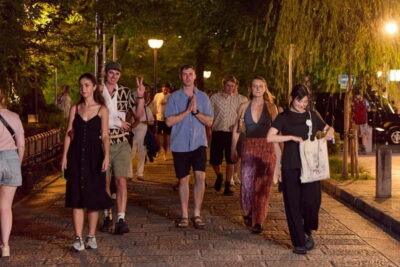
Gion Geisha District Walking Tour – Stories of Geisha
Read our review →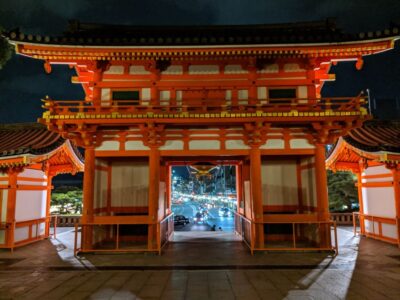
Best of Kyoto: Gion, Geisha, Pagodas & Cobblestones
Read our review →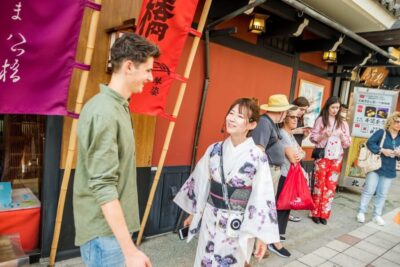
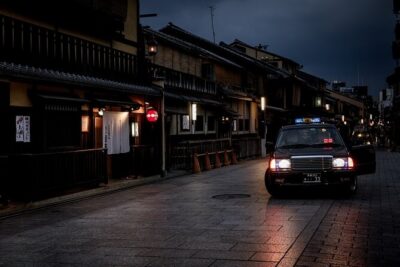
Kyoto Gion Geisha District Walking Tour – The Stories of Geisha
Read our review →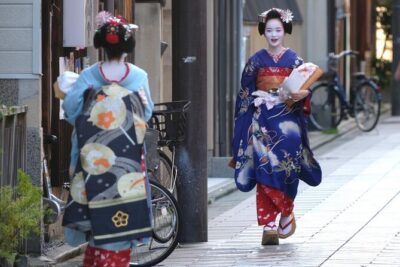
Kyoto Gion: 2-Hour Geisha Culture & History Walking Tour
Read our review →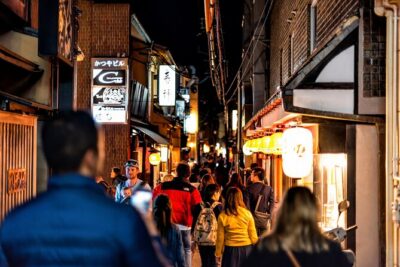
Kyoto Gion Night Walk & Geisha District Guided Tour
Read our review →Browse the lists this tour appears in