
Reviewed · GION DISTRICT TOURS
Kyoto: Gion Geisha District & Sake-in-Hand Walking Tour
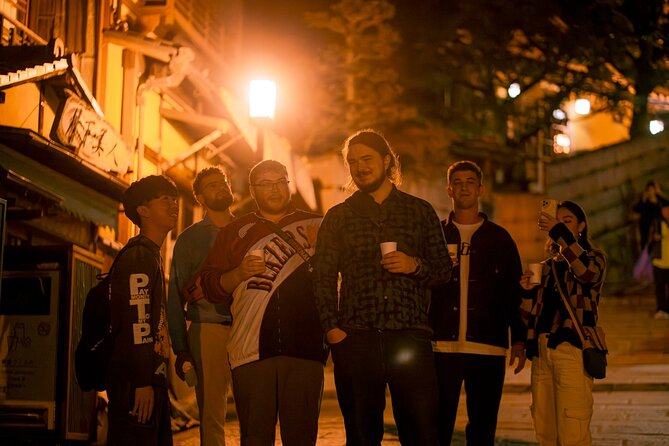
Kyoto’s Gion district takes on a different character after dark. Lanterns soften the wooden facades, the lanes grow quieter, and a guide can help you make sense of the geisha world without wandering into private spaces. This tour pairs that evening walk with sake tasting, which gives the outing a social, distinctly Japanese touch.
I like the small maximum of 10 people, since it should be easier to hear the guide and ask questions. I also like the route itself: it links Gion’s narrow streets with Yasaka Shrine, Yasaka Pagoda, Ninenzaka, Sannenzaka, and Nene-no-Michi instead of staying on one busy street.
The main consideration is the pace and amount of walking. The advertised time is about one to one and a half hours, but one experience ended after roughly 70 minutes. A small number of people also found the guide interaction too limited, so this works best if you want a relaxed evening stroll rather than a fully staged cultural show.
Key points to know before booking

- Nighttime Gion is the main attraction: Lantern-lit streets and wooden machiya houses create the mood.
- Sake is part of the walk: The tasting may include sake from different parts of Japan, with snacks mentioned on some outings.
- The route covers several Kyoto sights: Expect Gion, Hanamikoji Street, Yasui-Konpiragu, Yasaka Pagoda, Ninenzaka, Sannenzaka, Nene-no-Michi, and Yasaka Shrine.
- The group stays small: The maximum is 10 people, which suits guests who prefer a quieter walk.
- Guides can shape the evening: Shumpei and Mune are praised by name for being friendly and informative, but guide engagement may vary.
- You need to be 20 or older: Alcohol is included, and comfortable shoes are essential.
Why Gion works best after sunset
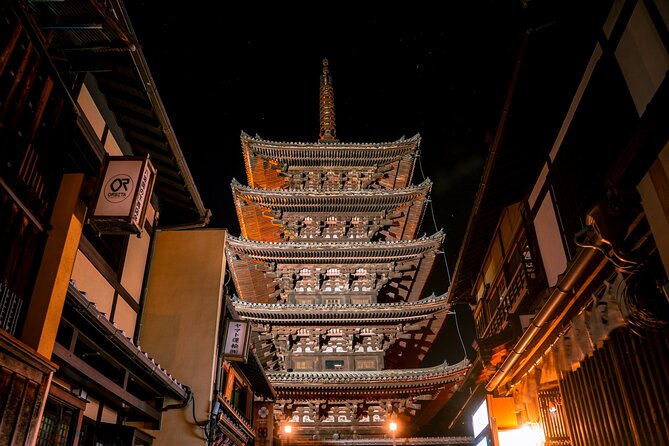
Gion is famous for geisha culture, but it is not a theme park. It is a real Kyoto neighborhood with homes, businesses, shrines, restaurants, and narrow lanes. At night, the district can feel more atmospheric because the visual clutter fades and the old wooden buildings catch the light from shopfronts and lanterns.
That setting is the strongest reason to book this walk. You are not simply ticking off a shrine. You are moving through a district where details matter: the shape of a machiya facade, a quiet side lane, a glimpse of a traditional teahouse, or the sound of footsteps on stone.
A guide also helps you understand the difference between a geiko, Kyoto’s term for a geisha, and a maiko, an apprentice. The tour promises commentary on geisha culture and advice about where you might spot one, but you should not treat the evening as a guaranteed geisha sighting. If one passes by, enjoy the moment respectfully. Do not block the lane, follow her, or photograph aggressively.
The walk begins near Kikunoi Roan in the Saitocho area, close to the Kamo River. It ends at Yasaka Shrine. That point-to-point design is useful because you finish in one of Kyoto’s best-known evening areas rather than returning to the start.
More ways to walk Gion:
- Kyoto Geisha Walking Tour: Gion District & Hidden Gems
★ 4.7 · 3,273 reviews - Kyoto: Gion Magical Night Walking Tour with Geisha Trivia
★ 4.9 · 2,393 reviews - Kyoto: Gion Geisha District Walking Tour – Stories of Geisha
★ 4.7 · 2,187 reviews
The Kamo River gives the walk a calm opening
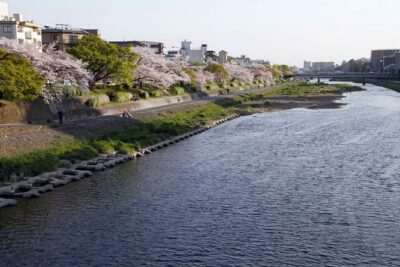
The Kamo River runs through central Kyoto and provides a peaceful start near the meeting point. The riverbanks are known for scenic views and cherry trees, especially in spring. Even outside blossom season, the water and open sky offer a welcome break from the tight streets ahead.
This opening also helps you get your bearings. From the river, the route moves toward Gion and its smaller lanes. You should arrive ready to walk, since the experience is conducted on foot rather than by vehicle.
The meeting point is listed at Kikunoi Roan, at 118 Saitocho, Shimogyo Ward. Check the exact location on your mobile ticket before setting out. The tour is near public transportation, but the end time can be late enough that many buses may have stopped running. The operator can help arrange a taxi or guide you back toward the start.
Gion and Hanamikoji Street set the tone
The first major section takes you through Gion, Kyoto’s best-known geisha district. Traditional wooden machiya houses and teahouses line parts of the area, though modern businesses and crowds are also part of the picture. The point is not to expect an untouched old quarter. The appeal comes from seeing historic streets still used as part of daily city life.
Hanamikoji Street is one of the prettiest and most recognizable roads in Gion. Its preserved wooden buildings give you the classic Kyoto view, but the street can be busy and carefully managed. Your guide can point out what you are seeing and help you avoid getting lost in the surrounding alleys.
This is where the tour’s cultural explanation matters most. Without context, you might see only attractive buildings and people in traditional dress. With a good guide, you can learn how the entertainment districts developed, how tea houses function, and why respectful behavior matters.
The guide quality is worth considering. Shumpei receives especially warm praise for answering questions about everyday life in Japan, while Mune is described as friendly and informative. Those details suggest the tour can be more rewarding when you take an active role and ask questions. If your group stays quiet, the walk may feel less interactive.
Yasui-Konpiragu adds a personal piece of Kyoto
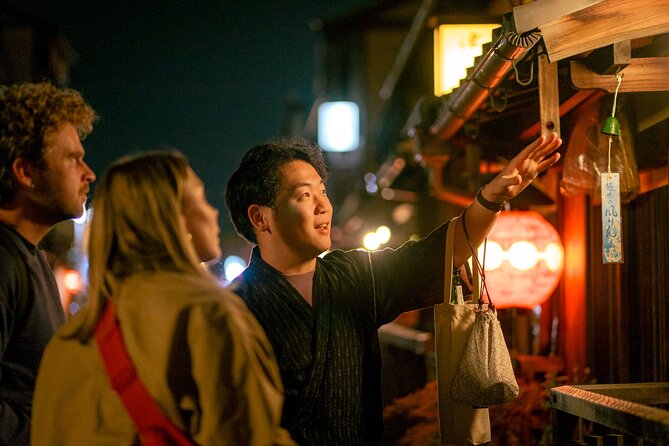
Yasui-Konpiragu Shrine is known for its large enmusubi and en-kiri stone. The shrine is associated with cutting harmful relationships and forming good ones. Visitors pass through a hole in the stone as part of the ritual, making this more than a quick photo stop.
The stop lasts about 15 minutes, enough time for an explanation and a brief look around. It gives the walk a more personal side. Gion is often presented through geisha culture and architecture, but shrines like this show how Kyoto’s religious life connects with ordinary hopes, worries, and relationships.
You should follow the guide’s instructions here. Shinto shrines are active places of worship, not just sightseeing stops. Keep your voice low and observe what people around you are doing.
More geisha and maiko evenings in Kyoto:
- Best of Kyoto: Gion, Geisha, Pagodas & Cobblestones
★ 4.9 · 2,058 reviews - Night Walk in Gion: Kyoto’s Geisha District
★ 4.5 · 2,003 reviews - Kyoto Gion Geisha District Walking Tour – The Stories of Geisha
★ 5.0 · 1,441 reviews - Kyoto Gion: 2-Hour Geisha Culture & History Walking Tour
★ 5.0 · 1,186 reviews
Yasaka Pagoda is the route’s strongest photo stop
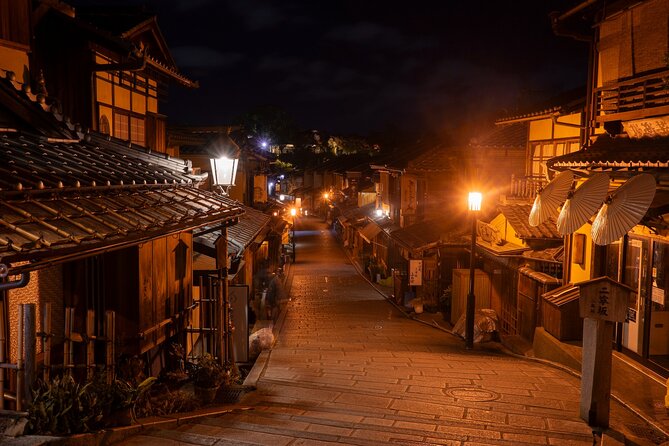
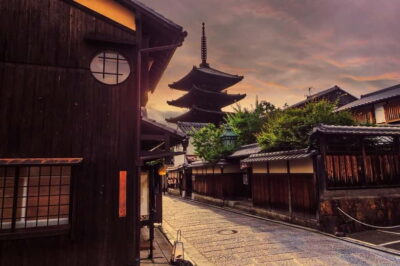
Hokan-ji Temple, usually called Yasaka Pagoda, is one of Higashiyama’s most recognizable sights. The five-story pagoda rises above the surrounding streets and gives the neighborhood its classic Kyoto profile. The route allows about 15 minutes here.
This is likely one of the evening’s best photo opportunities, especially when the surrounding streets are softly lit. Several people particularly enjoyed the views, shrines, and temples at night. Rain can also add atmosphere, with reflections on the stone streets and fewer people outside, though poor weather may lead to cancellation.
Do not expect a long temple visit. The itinerary treats Yasaka Pagoda as a short exterior stop, not an in-depth temple tour. That is fine if you want a scenic walk, but less satisfying if your main goal is detailed Buddhist architecture or a formal temple explanation.
Ninenzaka and Sannenzaka bring you onto stone streets

Ninenzaka and Sannenzaka are historic pedestrian slopes in Higashiyama. Their wooden buildings, tea shops, and stone paving create one of Kyoto’s most recognizable old-town scenes. The planned stops are brief, about five minutes each, so think of them as sections of the walk rather than full visits.
These lanes can be crowded during the day. An evening visit may feel calmer, though the exact mood depends on the date and weather. You will be walking on sloped, uneven surfaces, so sturdy shoes are more useful than stylish but flimsy footwear.
The short timing has both an advantage and a drawback. You keep moving and see more of Higashiyama, but you will not have much time to browse shops or study every building. If you want to shop, eat, or take many photographs, plan to return independently.
Nene-no-Michi offers a quieter stretch

Nene-no-Michi is a stone-paved path named for Nene, the wife of Toyotomi Hideyoshi. It links the Kodaiji Temple area with Maruyama Park and is generally more subdued than the best-known shopping streets.
The route allows about 10 minutes here. That is enough to enjoy the setting and hear the story behind the name, but not enough for a detailed visit to nearby temples. I like this section because it breaks up the more famous stops and gives the walk a slower feel.
This is also a good place to remember the tour’s request for quiet voices. You will be passing through residential areas at night. The operator asks people to respect local residents, and that is sound advice for any evening walk in Gion.
Yasaka Shrine provides a fitting finish
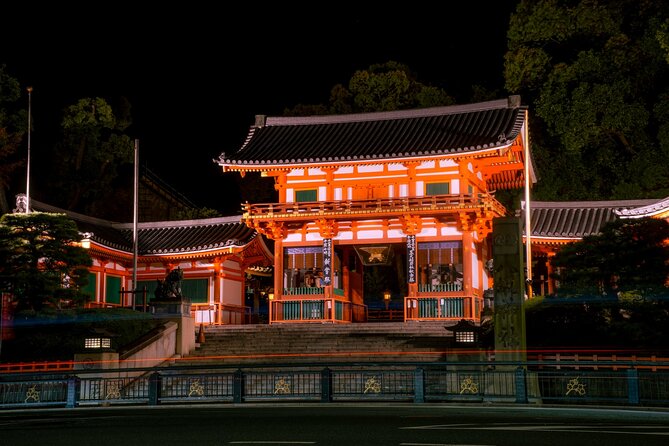
The tour ends at Yasaka Shrine, also called Gion Shrine. The shrine dates to 656 and is closely tied to the Gion area. Its gates and grounds provide a strong final stop after the narrow lanes and old streets.
The planned visit is about 20 minutes, the longest stop on the route. That gives you time to look around and hear more about the shrine’s role in Kyoto. It also makes the ending practical: Yasaka Shrine is a useful landmark for continuing your night in Higashiyama or arranging a taxi.
The route does not return you to the original meeting point. If you need to get back to a hotel on the other side of Kyoto, allow extra time and money for the return journey. The operator can help with a taxi, and it is wise to check transport before the walk begins.
Sake makes the walk more social
The included sake tasting is the feature that separates this outing from a standard Gion stroll. The experience is described as sake in hand, and some accounts refer to snacks as well. One tasting included several sake varieties from different Japanese regions, giving you a chance to compare flavors rather than simply receive one drink.
At $27.84 per person, the tasting helps the price make sense. You are paying for a small-group guide, local commentary, a scenic evening route, and alcohol. It is not a bargain if you want a long formal sake lesson or a large meal, but it is fair for a short cultural walk with a tasting included.
Drink responsibly. The tour involves slopes, steps, and uneven paving, and alcohol can make walking harder. Participants must be at least 20 years old, in line with Japan’s legal drinking age.
The sake may also affect the mood. Many people enjoy the relaxed conversation it encourages, while one critical account found the street tasting and snack offering too basic for the price. That is a useful warning. Treat the sake as a pleasant addition to the walk, not as a complete brewery or bar experience.
The pace, group size, and guide make the difference
The advertised duration is approximately 60 to 90 minutes. The route includes many stops, so the guide will need to keep the group moving. Most of the walk sounds relaxed rather than rushed, but do not expect long periods at each landmark.
A group of up to 10 is a real advantage in Gion. You can hear better than in a large tour, and the guide has a better chance to respond to individual questions. On one rainy departure, the group was only two people plus the guide, which created a particularly personal outing. Group size will depend on bookings, so do not assume you will receive a private tour.
Guide personality matters here. Shumpei is praised for being friendly, answering questions about Japanese life, and making the walk fun. Mune is also singled out for a warm and informative approach. At the same time, some people felt there was too little conversation or cultural content. I would book this for a flexible, human-led walk, not if you need a guaranteed lecture packed with facts.
Who will get the most from this tour
I would recommend this experience to first-time Kyoto visitors who want an easy introduction to Gion after dark. It suits couples, solo visitors, and small groups who like walking, local stories, shrine visits, and a modest drink along the way.
It is also a good fit if you want to see several famous Higashiyama locations without planning the route yourself. The guide handles the turns, which is helpful in the narrow lanes around Gion and Hanamikoji Street.
You may want another option if you dislike alcohol, cannot walk comfortably for up to 90 minutes, or want extensive time inside temples. It is also not suited to anyone under 20. Wear comfortable shoes and clothing, and keep your voice down in residential areas.
The tour requires good weather. If rain or other poor conditions cause a cancellation, you are offered another date or a full refund. You can cancel for a full refund up to 24 hours before the start time. Within 24 hours, refunds are not provided, and changes are not accepted.
Should you book the Gion sake walk?
Book it if you want an atmospheric evening introduction to Gion, with a small group, a local guide, and sake folded into the experience. The lantern-lit lanes, Yasaka Pagoda, stone streets, and final stop at Yasaka Shrine give the route plenty of visual appeal.
Keep your expectations in check. This is a short walking tour, not a full geisha performance, temple tour, or sake seminar. The best value comes when your guide, such as Shumpei or Mune, is engaged and you ask questions. At $27.84, it is a sensible choice for a relaxed Kyoto night, especially if you value atmosphere and conversation more than depth or guaranteed timing.
FAQ
How long does the Gion sake walking tour last?
The experience is advertised as approximately one hour to one and a half hours. The timing can vary, so allow for a walk closer to either end of that range.
Where does the tour start?
The meeting point is Kikunoi Roan at 118 Saitocho, Shimogyo Ward, Kyoto, near the Kamo River.
Where does the tour end?
The tour ends at Yasaka Shrine, at 625 Gionmachi Kitagawa in Kyoto’s Higashiyama Ward.
Is sake included?
Yes. A local sake tasting is included. Some departures also include snacks, and the tasting may feature sake from different regions of Japan.
What age must participants be?
Participants must be at least 20 years old because alcohol is provided.
How large is the group?
The maximum group size is 10 people.
What sights are visited?
The route includes the Kamo River area, Gion, Hanamikoji Street, Yasui-Konpiragu Shrine, Hokan-ji Temple and Yasaka Pagoda, Ninenzaka, Sannenzaka, Nene-no-Michi, and Yasaka Shrine.
Is the tour suitable for people with limited fitness?
The tour requires a moderate level of physical fitness and includes a lot of walking. Comfortable clothing and shoes are recommended.
Does the tour run in poor weather?
The experience requires good weather. If it is canceled because of poor weather, you can choose a different date or receive a full refund.
Can I cancel for a full refund?
Yes. You must cancel at least 24 hours before the local start time for a full refund. Cancellations within 24 hours are not refunded.
More Walking Tours in Kyoto
- Nishiki Market Brunch Walking Tour (7 Tastings + Brunch)
★ 5.0 · 1,355 reviews - Kyoto Arashiyama Walking Tour: Bamboo, Monkeys, Gardens & Secrets
★ 5.0 · 1,216 reviews - Kyoto: Izakaya Bars Guided Walking Tour
★ 4.9 · 815 reviews - Kyoto Gion Night Walk & Geisha District Guided Tour
★ 5.0 · 786 reviews
More Sake Tastings in Kyoto
- Kyoto Night Foodie Tour in Gion (9+ dishes + 6 Sake tastings)
★ 5.0 · 1,762 reviews - 3-Hour Kyoto Insider Sake Brewery Tour with Tastings & Pairings
★ 5.0 · 917 reviews - Arashiyama Bamboo, Temple, Monkeys, or Secret Sake Brewery
★ 4.8 · 886 reviews - Kyoto: Insider Sake Brewery Tour with Sake and Food Pairing
★ 5.0 · 704 reviews
Newest Kyoto experiences on the site
- Treasures of Kyoto: Gion & historical Walking Tour★ 5.0 · 6 reviews
- Whisk Your Own Matcha: A Zen Matcha Experience at Temple★ 3.6 · 7 reviews
- Kyoto tea town for matcha lovers★ 5.0 · 16 reviews
- Uji: Private immersion into Kyoto’s tea and reglious culture★ 5.0 · 17 reviews
- Kyoto Matcha Green Tea Tour★ 4.5 · 23 reviews
- Uji and Wazuka Matcha Farm Half Day Private Guided Tour★ 5.0 · 21 reviews
- Utilising upcycled Matcha! Creating matcha incense (Uji, Kyoto)★ 5.0 · 6 reviews
- Sacred Temple Yoga Experience in Japan★ 5.0 · 3 reviews
Gion District Tours, compared.
Kyoto Geisha Walking Tour: Gion District & Hidden Gems
Read our review →
Gion Magical Night Walking Tour with Geisha Trivia
Read our review →
Gion Geisha District Walking Tour – Stories of Geisha
Read our review →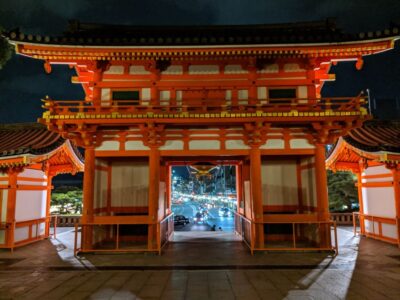
Best of Kyoto: Gion, Geisha, Pagodas & Cobblestones
Read our review →
Kyoto Night Foodie Tour in Gion (9+ dishes + 6 Sake tastings)
Read our review →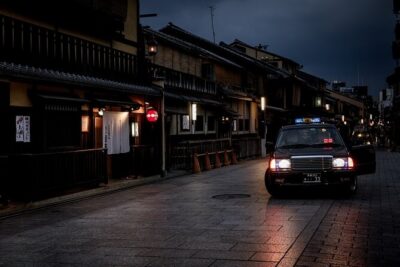
Kyoto Gion Geisha District Walking Tour – The Stories of Geisha
Read our review →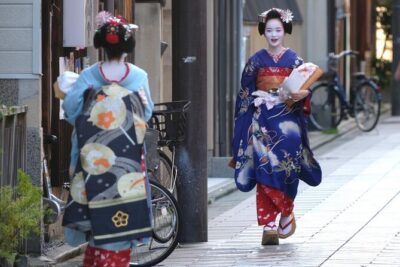
Kyoto Gion: 2-Hour Geisha Culture & History Walking Tour
Read our review →Browse the lists this tour appears in