
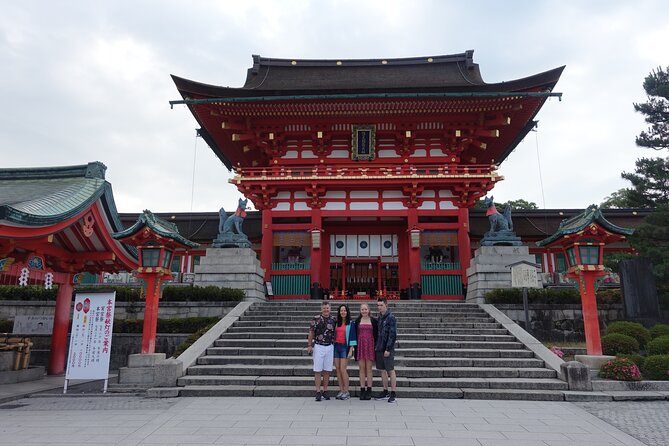
Reviewed · FUSHIMI INARI TOURS
TREASURES of Kyoto: Fushimi Inari, Kiyomizu Temple, and more!
Kyoto is at its best early, before tour buses and large crowds fill the lanes. This four-hour outing gets you to Fushimi Inari-taisha and Kiyomizu-dera at a useful hour, then moves between sights by taxi rather than making you figure out the city on your own.
I like two things right away: the small maximum of 12 people, which gives you a fair chance to ask questions, and the included taxi rides between stops. Guide and owner Niall has also earned praise for his enthusiasm for Japanese culture. The tradeoff is simple: at $98.53, you pay for convenience and guidance, not just entry to two places you can visit independently.
Key points at a glance
- 7:00 am start: Early timing is designed to bring you to Kyoto’s major sights before the heaviest crowds.
- Fushimi Inari in 45 minutes: Walk through the famous maze of sacred torii gates and stop for photographs.
- Kiyomizu-dera for one hour: See one of Kyoto’s best-known temples and its broad city views, with admission included.
- Taxi transport included: Fares between the stops are covered, a useful benefit in a city where saving time matters.
- Small group of up to 12: You get a more direct connection with the guide than on a large bus tour.
- 4.8 rating from 20 reviews: The strongest praise centers on Niall’s information, warmth, and early-morning timing.
Why the 7:00 am start matters in Kyoto
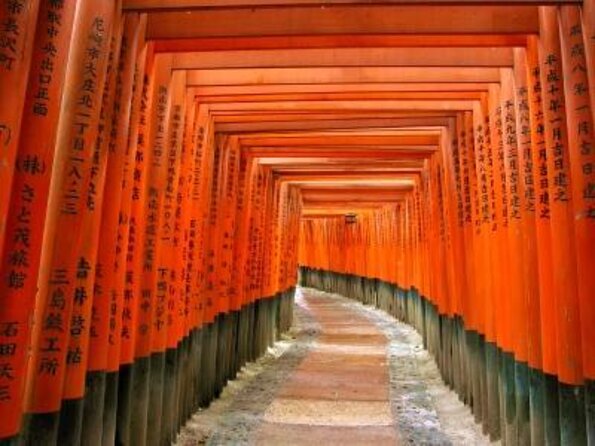
Kyoto’s most famous sights can feel very different in the early morning. Fushimi Inari’s torii gates are still photogenic later in the day, but the quiet atmosphere is harder to find once the site fills with people. Kiyomizu-dera is also described as especially calm in the morning, when its city views have room to breathe.
That early start is the main reason to choose this experience instead of a later sightseeing circuit. You meet at Inari Station at 7:00 am, a practical starting point for the first shrine. From there, the schedule gives you a focused morning rather than a full-day program packed with extra stops.
The timing also helps if your Kyoto visit is short. You can see two major sights and a preserved old district in about four hours, leaving the rest of your day open for lunch, shopping, museums, or another temple.
There is one practical catch: you need to be ready early. If you prefer slow mornings, breakfast at your hotel, or wandering without a clock, this may feel rushed. The early departure is a feature, but only if you can make good use of it.
More ways to walk the Fushimi Inari gates:
- Kyoto: Fushimi Inari, Kinkakuji, Bamboo Grove 1 Day Bus Tour
★ 4.8 · 4,316 reviews - Fushimi Inari Hidden Hiking Tour (Private Option Available)
★ 5.0 · 1,750 reviews - Osaka/Kyoto:Kinkakuji,Arashiyama,FushimiInariShrine,NaraPark
★ 4.1 · 1,596 reviews
Walking beneath the torii gates at Fushimi Inari
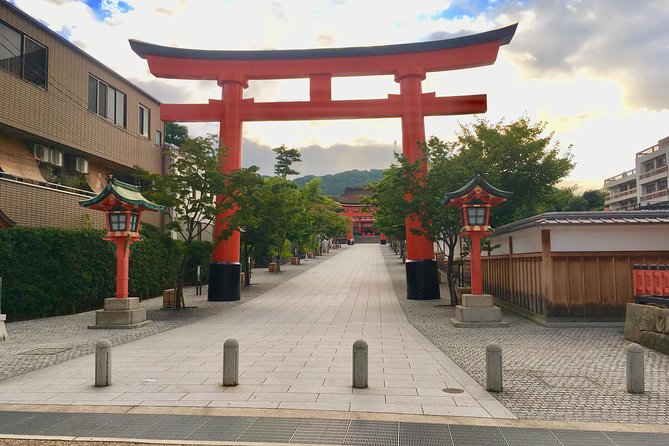
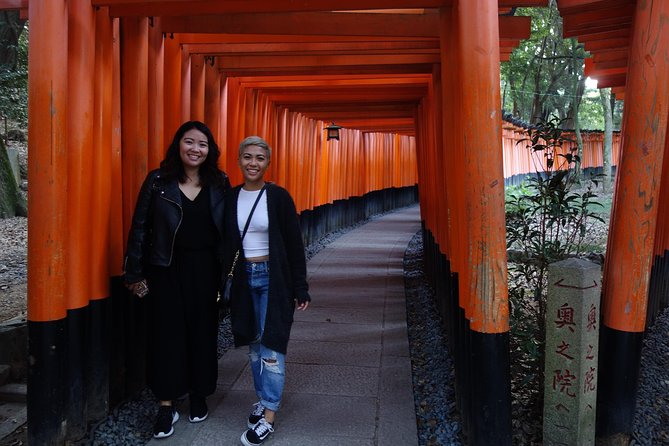
Fushimi Inari-taisha is the tour’s first stop. The shrine is known for its long passages of orange-red torii gates, which create a tunnel-like path up the wooded hillside. The experience is less about one single building and more about moving through this maze of repeated gates, stopping for photos, and hearing about the site’s importance.
You have about 45 minutes here. That is enough for an introduction and a short walk through the gates, but not enough to explore every path or climb the entire mountain. This distinction matters. If your dream is a long hike through the full Fushimi Inari trail, you will need more time on your own.
For a first visit, though, the shorter stop makes sense. You get the visual heart of Fushimi Inari without using half your morning on a strenuous climb. The guide can point out details and explain the setting while keeping the group moving toward the next sight.
The shrine admission is free, so the value here comes from the timing, orientation, and transport rather than an entry ticket. If you already know the shrine well and are comfortable navigating by yourself, you may not need much help. If this is your first Kyoto morning, the guide can save you the work of researching what to see and how long to stay.
Bring a phone or camera with enough battery. The torii-lined paths are the most obvious photo opportunity of the morning, and the tour specifically allows time for pictures. The route is still an active walking stop, so comfortable footwear is a sensible choice.
Kiyomizu-dera and Kyoto’s wide city views
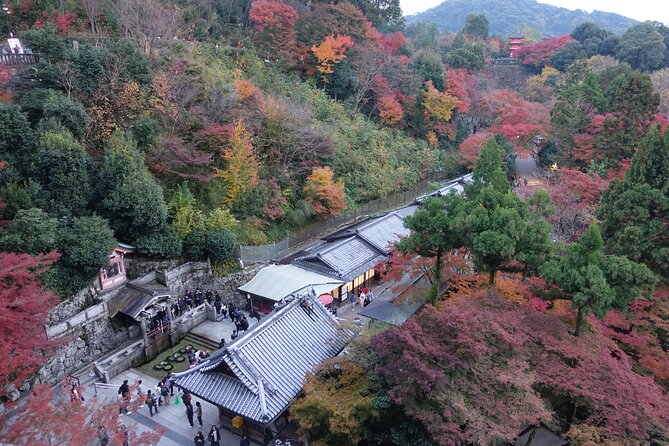
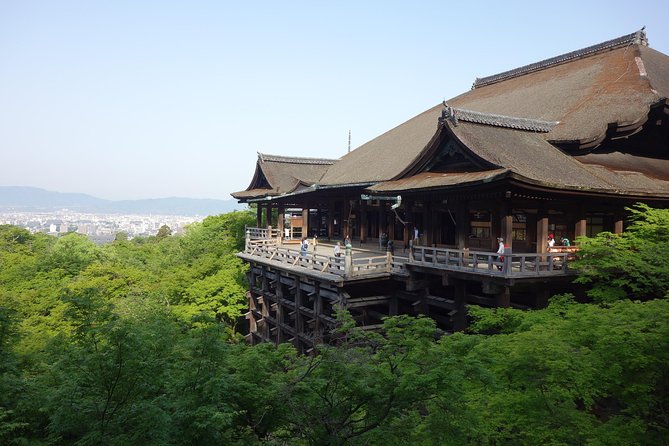
The second major stop is Kiyomizu-dera, one of Kyoto’s best-known temples and an icon of Japan. You have about one hour here, with admission included.
The temple is valued not only for its religious setting but also for its position above the city. From the grounds, you can look across Kyoto and understand how the temple fits into the larger city. The morning light and lower crowds are part of the appeal, giving you more room to notice the buildings, views, and hillside setting.
One hour is enough for a useful first look, but it is not an invitation to examine every corner at a leisurely pace. Kiyomizu-dera sits in an area with old streets and shops, so you may want more time than the tour provides if you enjoy browsing, shopping, or stopping often for photographs.
That limited time is the price of a highlights tour. You get a clear introduction to an important place, then continue on rather than spending the whole morning in one neighborhood. I see this as a good fit for a first visit, especially if you want a guided overview instead of a slow temple morning.
The included admission also makes the price easier to understand. You are not paying $98.53 only for someone to point out the entrance. Part of the fee covers access here, plus the guide’s time and the taxi transfers. It still costs more than visiting independently, but the comparison is not simply ticket price versus tour price.
The preserved streets after the temples
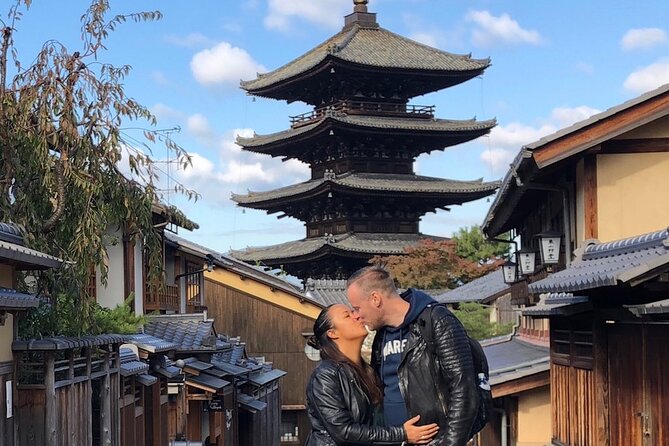
The schedule also includes time to wander through a preserved district with cobblestoned streets, traditional townhouses, and small shops. The exact length of this portion is not specified, so you should think of it as part of the walking route rather than a separate long tour.
This is an important contrast to the two major religious sites. Fushimi Inari gives you the torii gates. Kiyomizu-dera gives you temple architecture and city views. The old district adds the texture of Kyoto’s streets, where the experience comes from the buildings, lanes, and shopfronts rather than a single grand monument.
The tour ends at Sanjūsangendō Temple in the Higashiyama Ward. Since the end point is different from the starting point, you are not returned to Inari Station. That can be helpful if you plan to continue sightseeing in eastern Kyoto, but you should account for it when arranging lunch, transport, or your next reservation.
The route is therefore useful as a morning bridge between major sights. You start near Fushimi Inari and finish near Sanjūsangendō, with Kiyomizu-dera and an old district along the way. It is not a circular excursion, and that is worth knowing before you book.
More Kiyomizu-dera visits and hillside walks:
- Kyoto: Tea Ceremony in a Traditional Tea House in Kiyomizu
★ 4.9 · 3,519 reviews - Kyoto: Nijo Castle, Kiyomizu & Fushimi Inari Guided Tour
★ 4.7 · 700 reviews - Kyoto: Nijo, Kinkaku-ji, Arashiyama, Kiyomizu & Fushimi Inari
★ 5.0 · 699 reviews - Kyoto Tea Ceremony & Kiyomizu-dera Temple Walking Tour
★ 5.0 · 115 reviews
Included taxis make the short schedule work
Taxi fares between the tour stops are included. This is one of the strongest practical benefits.
Kyoto’s major sights are spread across different parts of the city. Moving by taxi keeps the four-hour schedule from being swallowed by transfers and route planning. You do not have to decide which train, bus, or walking route is fastest between Fushimi Inari and the eastern temple area.
The taxi arrangement is also useful if you do not enjoy navigating an unfamiliar city first thing in the morning. After the walking at Fushimi Inari, a direct ride gives the group a clear reset before Kiyomizu-dera.
Still, taxis do not remove all walking. The tour is built around shrine grounds, temple grounds, and old streets. A previous complaint about value also raised concern about walking and the guide’s help, while the response explained that the group uses taxis from one stop to the next. The fair reading is that transport is handled, but this is not a ride-only sightseeing trip.
If you normally do not walk much, take the four-hour length seriously. You will be on your feet at the sights, even though the longer transfers are by taxi. The experience is easier than a full walking tour, but it is not effortless.
What the small group changes
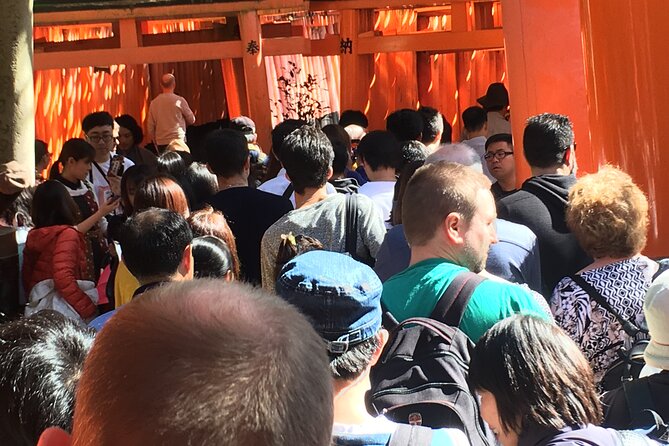
The maximum group size is 12 people. That is small enough to make questions practical, especially at sites where a large group can scatter along a path.
A small group also gives the guide more room to adjust explanations. If something catches your eye at the shrine or temple, you can ask about it without shouting across a bus or waiting for a formal stop. This matters most if you want context rather than a quick checklist of names.
Guide and owner Niall receives especially strong praise for his enthusiasm for Japanese culture and for making the morning informative. That personal interest is important here because the sights are easy to photograph but harder to understand without some explanation.
The experience depends partly on the guide on your chosen date. The strongest account describes Niall as warm, informative, and deeply interested in the places he presents. A separate experience was much less satisfied, calling the tour poor value and finding the guide unhelpful. That difference is a useful warning: the tour offers access to a guide, but a paid group tour cannot guarantee that every guest will connect with the guide’s style.
The rating is 4.8 from 20 reviews, and 95 percent of people recommend it. Those are encouraging numbers, but the sample is modest. I would book it for the structure, early timing, and included taxis, not on the assumption that the guide will transform every stop.
Is $98.53 a fair price?
At $98.53 per person, this is not the cheapest way to see Fushimi Inari and Kiyomizu-dera. Both locations are accessible independently, and Fushimi Inari has free admission. A confident visitor who is comfortable with Kyoto’s public transport can spend much less.
The price begins to make more sense if you value time. You receive a planned four-hour route, a small group, taxi fares between stops, and admission to Kiyomizu-dera. You also avoid researching the order of the sights and working out how to move between them during a short morning.
The real question is what your Kyoto time is worth. If you have only one or two days, the tour can give you a clean start and leave the afternoon free. If you have a longer stay and enjoy planning, the independent option will likely feel more satisfying and cheaper.
I would also compare the cost with the effort of arranging several taxi rides yourself. Included transport gives you a known structure, though it does not mean every possible expense during the morning is covered. The supplied details specify taxi fares during the tour and Kiyomizu-dera admission, but not meals, personal purchases, or other admissions.
Who should book this Kyoto morning?
This tour suits you best if you:
- Have limited time in Kyoto and want several famous sights in one morning.
- Prefer a guide to explain the cultural setting rather than reading up in advance.
- Like the idea of a group small enough for questions.
- Want taxi transfers instead of managing connections between eastern Kyoto sights.
- Can start at 7:00 am and handle a fair amount of walking at the sites.
- Prefer an organized route with a clear end point.
You may want to skip it if you are comfortable doing your own research, want long visits at each temple, or are mainly trying to save money. Independent sightseeing gives you more control over pace and costs.
The experience also may not suit you if a four-hour group schedule feels restrictive. Fushimi Inari receives 45 minutes, Kiyomizu-dera receives one hour, and the preserved district has no stated time. Those limits are useful for a quick introduction, but not for slow, detailed exploration.
Booking details worth knowing
You meet at Inari Station at Fukakusa Inarionmaecho in Fushimi Ward at 7:00 am. The tour ends at Sanjūsangendō Temple, so plan your next move from the eastern Kyoto area rather than expecting to return to the start.
A mobile ticket is provided, and confirmation is received when you book. The activity is near public transportation, and most people can participate according to the supplied details.
The group has a maximum of 12 people. Free cancellation is available if you cancel at least 24 hours before the local start time. Changes or cancellations inside that window are not refunded, and changes are not accepted. Poor weather or failure to reach the minimum group size can also lead to a different date or a full refund.
Should you book this tour?
Book it if you want an early, organized introduction to Kyoto’s most recognizable sights and you place a real value on saving time between them. The included taxis, Kiyomizu-dera admission, small group, and guide-led explanations make the $98.53 easier to justify for a short visit.
Skip it if you are happy to wake early and visit Fushimi Inari and Kiyomizu-dera independently. You can spend less, move at your own pace, and give each place more time.
My practical call: choose this for your first Kyoto morning when planning feels like work and your schedule is tight. Choose self-guided sightseeing when your budget is tighter than your calendar.
FAQ
How long does the tour last?
The experience lasts approximately four hours.
What time does the tour start?
It starts at 7:00 am.
Where do I meet the group?
The meeting point is Inari Station at Fukakusa Inarionmaecho, Fushimi Ward, Kyoto, 612-0881, Japan.
Where does the tour end?
The tour ends at Sanjūsangendō Temple, 657 Sanjūsangendōmawari, Higashiyama Ward, Kyoto, 605-0941, Japan.
Which major sights are included?
The main stops are Fushimi Inari-taisha Shrine and Kiyomizu-dera Temple. The route also includes a preserved district with cobblestoned streets, traditional townhouses, and small shops.
Is transportation included?
Taxi fares between the tour stops are included.
Is admission included?
Admission to Kiyomizu-dera is included. Fushimi Inari-taisha Shrine has no admission charge.
How many people can join the tour?
The tour has a maximum of 12 participants.
Can I cancel for a full refund?
Yes. You can cancel for a full refund up to 24 hours before the experience’s start time. Poor weather or failure to meet the minimum number of participants may also lead to a new date or a full refund.
More Temples in Kyoto
- Kyoto: Tea Ceremony Ju-An at Jotokuji Temple
★ 4.9 · 3,207 reviews - Arashiyama Bamboo, Temple, Monkeys, or Secret Sake Brewery
★ 4.8 · 886 reviews - Kyoto: Arashiyama Bamboo Forest, Monkeys, Matcha & Temple Tour
★ 5.0 · 759 reviews - Kyoto Zen Meditation & Garden Tour at a Zen Temple with Lunch
★ 5.0 · 441 reviews
Newest Kyoto experiences on the site
- Treasures of Kyoto: Gion & historical Walking Tour★ 5.0 · 6 reviews
- Whisk Your Own Matcha: A Zen Matcha Experience at Temple★ 3.6 · 7 reviews
- Kyoto tea town for matcha lovers★ 5.0 · 16 reviews
- Uji: Private immersion into Kyoto’s tea and reglious culture★ 5.0 · 17 reviews
- Kyoto Matcha Green Tea Tour★ 4.5 · 23 reviews
- Uji and Wazuka Matcha Farm Half Day Private Guided Tour★ 5.0 · 21 reviews
- Utilising upcycled Matcha! Creating matcha incense (Uji, Kyoto)★ 5.0 · 6 reviews
- Sacred Temple Yoga Experience in Japan★ 5.0 · 3 reviews
Fushimi Inari Tours, compared.

Fushimi Inari, Kinkakuji, Bamboo Grove 1 Day Bus Tour
Read our review →
Fushimi Inari Hidden Hiking Tour (Private Option Available)
Read our review →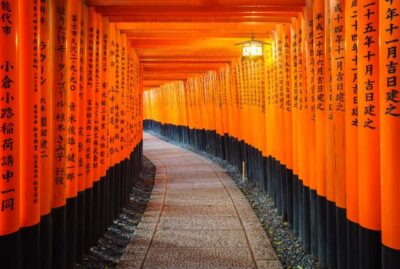
Kinkakuji,Arashiyama,FushimiInariShrine,NaraPark
Read our review →
Nara, Fushimi Inari Taisha, Arashiyama Bus Tour
Read our review →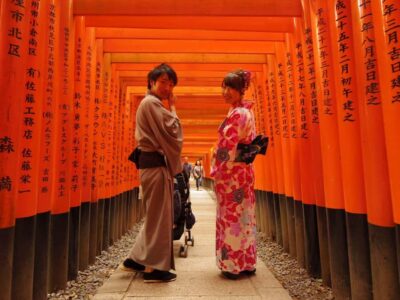
Arashiyama, Nara & Fushimi Inari Shrine w/Lunch
Read our review →
Nijo Castle, Kiyomizu & Fushimi Inari Guided Tour
Read our review →
Nijo, Kinkaku-ji, Arashiyama, Kiyomizu & Fushimi Inari
Read our review →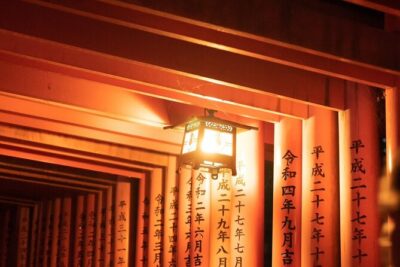
Browse the lists this tour appears in