
Reviewed · GOLDEN PAVILION TOURS
Kyoto Bamboo Forest & Golden Pavilion E-Bike Tour
Kyoto’s famous sights are spread across the city, and this e-bike tour connects them in a way a walking tour cannot. You ride through ordinary neighborhoods, then stop at Kinkaku-ji, Kitano Tenmangu, Tenryu-ji, and the Arashiyama Bamboo Forest. The result is a fuller picture of Kyoto, not just a string of temple gates.
I like the small-group format, with a maximum of eight people, and the practical help from guides such as Diego, Jody, Jorge, and Pohan. I also like that the electric assistance makes roughly 20 kilometers manageable. The main consideration is pace: this is an active half-day with traffic, temple walking, and several major stops, not a slow sightseeing outing.
Key points at a glance
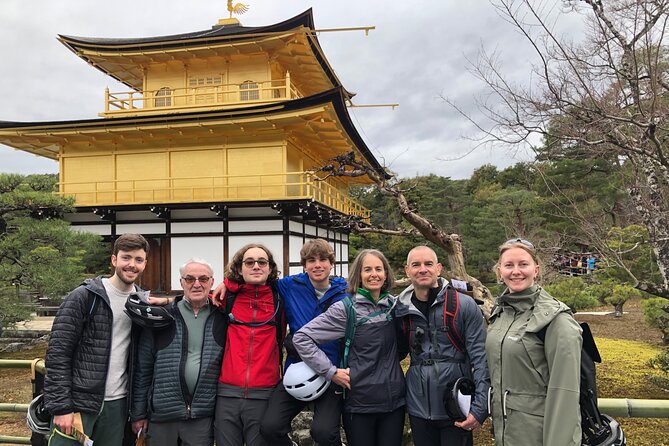
- E-bike access to four major sights: Visit Kinkaku-ji, Kitano Tenmangu, Tenryu-ji, and the Arashiyama Bamboo Forest in one outing.
- A route through everyday Kyoto: Ride backstreets, local neighborhoods, main roads, and smaller lanes between the headline attractions.
- Useful guide support: Guides including Diego, Jody, and Jorge provide history, customs, stories, and help with practical details.
- About 20 kilometers of riding: Electric assistance takes much of the strain out of the distance, though you still need to be comfortable on a bicycle.
- A compact group: The stated maximum is eight people, though one past outing had a group of 10, so confirm the size when booking.
- Weather matters: The tour runs only in suitable weather, with a new date or full refund offered if poor conditions cancel it.
Why Kyoto works so well by e-bike
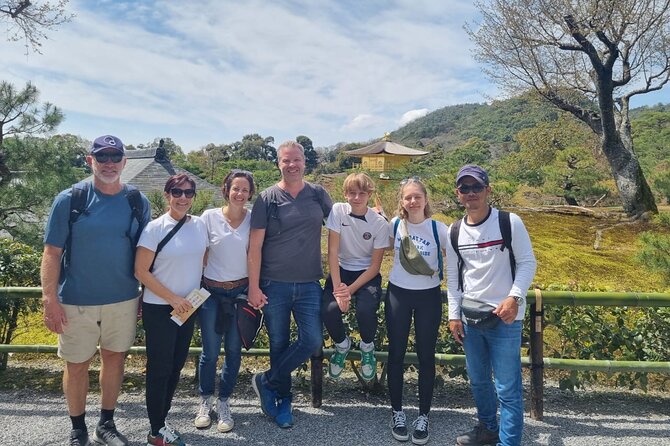
Kyoto is not difficult to explore on foot, but its major sights are widely separated. Kinkaku-ji sits in the northwest, while Arashiyama lies farther west. Public transport can get you between them, yet you lose the quieter parts of the city along the way.
On this tour, the ride itself becomes part of the sightseeing. You pass through residential streets and back roads rather than spending the whole day inside buses or stations. That gives you a look at the less polished but more ordinary side of Kyoto: places where people live, shop, and go about their day.
The e-bike matters most on the longer stretches. You still pedal, but the motor helps keep the ride from becoming a test of endurance. One outing covered about 20 kilometers, a distance that would feel demanding for many casual cyclists, especially after temple visits and walking.
You should still expect a physical day. The tour lasts about five to six hours, and the bikes do not eliminate traffic, crossings, or the need to stay alert. If you are comfortable riding a bicycle but do not want to work hard on every stretch, this is a useful middle ground.
More trips out to the Golden Pavilion:
- Kyoto: Fushimi Inari, Kinkakuji, Bamboo Grove 1 Day Bus Tour
★ 4.8 · 4,316 reviews - Osaka/Kyoto:Kinkakuji,Arashiyama,FushimiInariShrine,NaraPark
★ 4.1 · 1,596 reviews - Kyoto: Nijo, Kinkaku-ji, Arashiyama, Kiyomizu & Fushimi Inari
★ 5.0 · 699 reviews
Starting at Kitano Tenmangu Shrine
The listed meeting point is Memory Kyoto Bike Tour at 8-6 Umaryo-cho, Nishikyo Nakagyo-ku, Kyoto. The area is near public transportation, and the tour returns to this same meeting point at the end.
Kitano Tenmangu Shrine gives the day a thoughtful beginning. It is dedicated to Sugawara no Michizane, a scholar and political figure revered as a deity of learning. That connection makes the shrine especially meaningful for students and anyone interested in how Japanese religious traditions overlap with education, scholarship, and public life.
You will have about 30 minutes here. That is enough for the guide to explain the shrine’s background and point out important features, but it is not long enough for a slow, detailed exploration of every corner.
The shrine is also known for roughly 1,000 plum trees. They bloom in early spring, when the grounds take on a particularly attractive look. If you visit outside that season, the trees remain part of the setting, but you should not expect the same floral display.
Starting here rather than at a major tourist gate helps set the tone. You begin with a place that is important to Kyoto’s culture, then move through city streets before reaching the most photographed temples.
Kinkaku-ji and the famous golden reflection
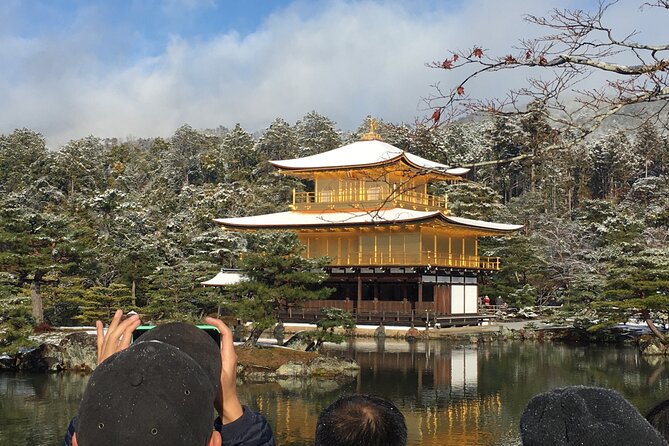
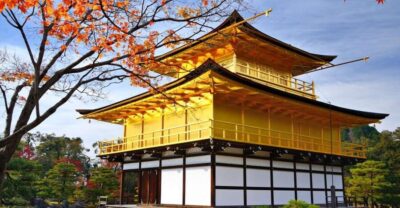
Kinkaku-ji, also called the Golden Pavilion, is the visual centerpiece of the outing. The temple’s gold-leaf exterior reflects over a pond, creating the classic Kyoto scene that appears in guidebooks and photographs around the world.
The guide explains how the building began as a retirement villa before becoming a Zen Buddhist temple. That change gives the site more meaning than its glittering surface alone. You see how Kyoto’s grand residences and religious institutions have often shared the same spaces and architectural traditions.
The planned visit lasts about 45 minutes, with admission included. That keeps the stop simple: you do not need to arrange a separate ticket, and the guide can help you make good use of the limited time.
Kinkaku-ji can be crowded. One family outing encountered a very long line, but the guide helped the group enter without waiting. That kind of assistance can make a real difference, though you should treat it as helpful guide support rather than a guaranteed skip-the-line service.
The drawback is that the pavilion itself is not a quiet, solitary sight. You will likely share the pond and viewing paths with many other people. The tour’s value here comes from combining the famous view with an explanation of the building’s past, then moving on instead of leaving you to manage the crowds and directions alone.
The ride between Kyoto’s temple districts
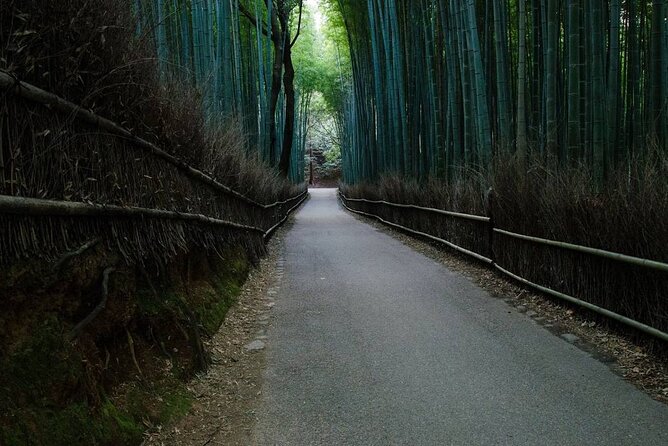
The spaces between the sights are not filler. They are where this outing differs most from a standard coach tour or a self-guided temple checklist.
You ride through a mixture of local neighborhoods, main streets, and small alleys. The route gives you changing views of Kyoto and breaks up the indoor and outdoor temple visits. It also lets you ask questions as the guide leads the way, rather than trying to interpret the city from a train window.
Guides named in past outings include Diego, Jody, Jorge, and Pohan. The strongest part of their role is not simply reciting dates. They explain customs, local details, and the reasons certain sites matter. Diego, in particular, is described as articulate and attentive to the group, while Jody has helped with both practical needs and an unexpected medical emergency.
You should pay attention to group spacing at crossings. One outing with 10 riders found that the group sometimes spread out and had trouble getting through a pedestrian light together. The advertised maximum is eight, which should be easier to manage, but road awareness remains your responsibility.
More mornings in Arashiyama and the bamboo grove:
- Kyoto/Osaka: Nara, Fushimi Inari Taisha, Arashiyama Bus Tour
★ 4.7 · 1,275 reviews - Kyoto Arashiyama Walking Tour: Bamboo, Monkeys, Gardens & Secrets
★ 5.0 · 1,216 reviews - Arashiyama Bamboo, Temple, Monkeys, or Secret Sake Brewery
★ 4.8 · 886 reviews - Kyoto: Arashiyama Bamboo Forest, Monkeys, Matcha & Temple Tour
★ 5.0 · 759 reviews
Tenryu-ji’s Zen garden
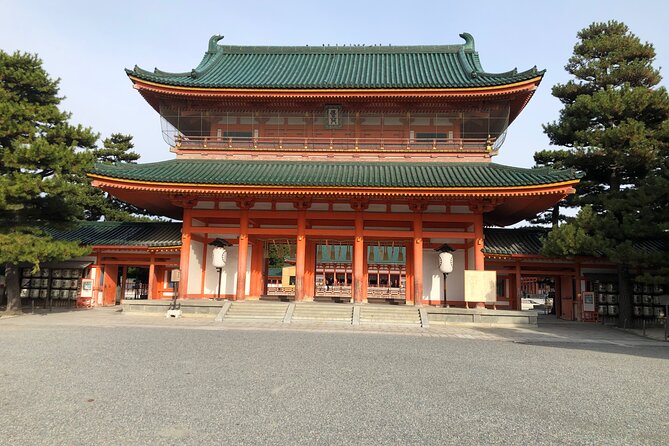
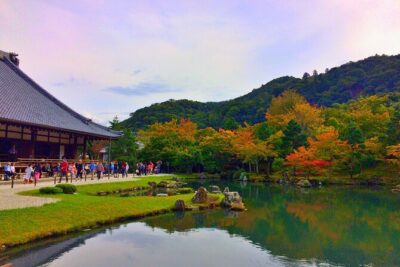
Tenryu-ji is the day’s quieter counterpoint to Kinkaku-ji. The temple is a UNESCO World Heritage Site, listed since 1994, and its garden is the reason to slow down here.
You spend about 45 minutes walking through the garden. The design reflects Zen ideas about balance, borrowed scenery, water, rocks, and space. Even if you are not familiar with Japanese garden design, the setting gives you a chance to notice how carefully framed views can create calm without relying on elaborate decoration.
The guide’s explanation adds useful context. Instead of simply taking a few pictures and moving on, you can learn why the garden is arranged as it is and how the temple fits into Kyoto’s religious history.
Tenryu-ji also prepares you for Arashiyama. Both stops are in the same general western district, but they offer different experiences. The temple garden asks you to look slowly and quietly. The bamboo path is more dramatic and more crowded.
Forty-five minutes is a reasonable amount of time for an introduction, but it will not cover every garden path or building in detail. If Tenryu-ji is your main reason for visiting Arashiyama, you may prefer a dedicated temple visit later.
Walking beneath the Arashiyama bamboo
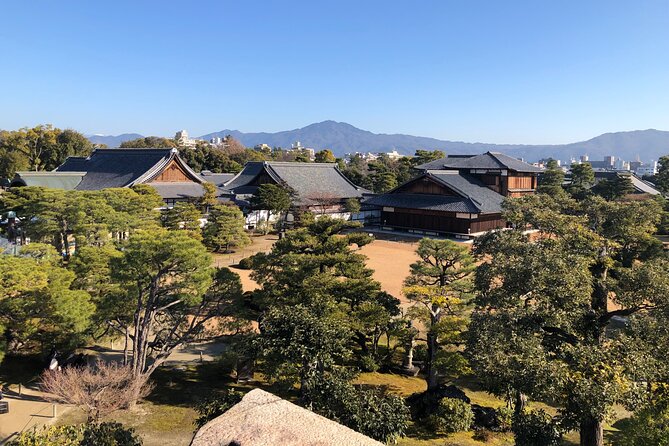
The Bamboo Forest Trail is one of Kyoto’s most recognizable sights. Tall bamboo trunks rise on both sides of the path, and wind can make the stalks sway overhead. The effect is striking, especially when the light filters through the narrow corridor.
You have about 45 minutes here. That allows time for photographs and a walk through the main section, but not a long wander across every part of Arashiyama.
The bamboo’s physical qualities also give the guide something interesting to explain. It is strong, flexible, durable, and resilient, which helps explain its long place in Japanese craft and daily life. Those details turn a familiar photo stop into a more grounded visit.
You should set realistic expectations. This is a famous public path, not a private forest walk. At busy times, you may find other people sharing the route and popular photo spots. The e-bike gets you to the district efficiently, but once you arrive, you leave the bicycle and continue on foot.
The combination of Tenryu-ji and the bamboo forest works well. You see a carefully designed garden, then experience a natural corridor with a completely different mood. Together, they make the Arashiyama portion more satisfying than a quick photo stop alone.
Lunch and the value of local help
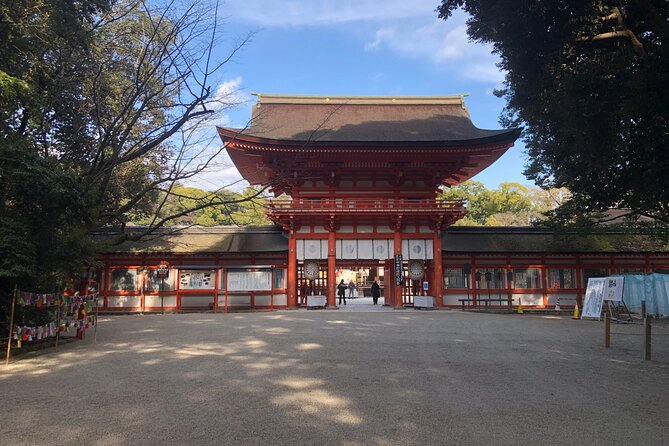
Lunch is not clearly listed as a fixed part of the official schedule, so you should not book this tour solely for a guaranteed meal. However, some outings have included a local diner or a ramen stop, with the guide helping the group order.
That kind of assistance is useful if you are unsure how to read a menu or want to eat somewhere less geared toward international visitors. It also gives the day a welcome pause after cycling and temple walking.
Ask your guide at the start whether a meal stop is planned for your departure. If lunch is not included, carry enough money and allow for the possibility of eating before or after the tour. The stated price covers the tour experience and included admissions, but no separate meal price is provided.
Is $99.08 a fair price?
At $99.08 per person, this is not the cheapest way to see Kyoto’s temples. You are paying for the e-bike, a guide, route planning, admissions to the listed paid sites, and the convenience of joining several distant areas in one half-day.
The value is strongest if you have limited time in Kyoto. Instead of spending part of the day working out train connections and finding each entrance, you can cover four significant places with a guide handling the route. The backstreet riding adds something you would miss by simply taking taxis between temples.
The price is less attractive if you already know Kyoto well, prefer to move slowly, or want a long visit inside each temple. The schedule gives you an introduction to several places rather than a full study of any one site.
For many first-time visitors, the e-bike also replaces some transport costs and planning effort. I would judge the price as reasonable for an active, guided day, particularly if your group values local explanation and does not want to organize the route alone.
Who should book this ride?
I would choose this tour if you want to see major Kyoto sights while also getting beyond the usual station-to-temple routine. It suits couples, families, and small groups who enjoy moving around and asking questions.
The outing has worked for families with children aged 10 and 12, with both children riding e-bikes. That does not mean every child will find the distance easy, so consider your family’s cycling experience and stamina before booking.
It is also a good fit for visitors who want a guide to manage the day. Guides have helped with ordering food, temple entry, historical explanations, and unexpected problems. That support lets you focus on the sights instead of making every small decision yourself.
I would be more cautious if you dislike cycling in city traffic, have difficulty riding for several hours, or want a completely relaxed temple day. The e-bike reduces effort, but it does not turn the tour into a passive sightseeing trip.
Timing, group size, and cancellation details
Plan on five to six hours, including cycling, temple visits, and walking. The maximum group size is listed as eight, though one past departure had 10 people. If a small group is important to you, confirm the number before booking.
The activity ends where it begins, at the Memory Kyoto Bike Tour meeting point. Confirmation is provided when you book, and the location is near public transportation.
You can cancel up to 24 hours before the start time for a full refund. Changes or cancellations inside that 24-hour window are not accepted and are not refunded. Since the tour requires good weather, a weather cancellation brings the choice of another date or a full refund.
Should you book the Kyoto Bamboo Forest and Golden Pavilion E-Bike Tour?
Book it if you want efficient sightseeing with a local voice, especially during a short Kyoto stay. The route links four major cultural sites, but the strongest feature is the ride between them through regular neighborhoods and backstreets.
The e-bike makes the distance practical, while guides such as Diego, Jody, and Jorge add history, customs, food help, and calm problem-solving. Just allow for crowds at Kinkaku-ji and Arashiyama, keep your expectations realistic about the half-day schedule, and be ready for an active outing.
If you want to linger for hours at one temple or avoid cycling altogether, choose a slower walking or transport-based tour. For everyone else, this is a lively and useful way to connect Kyoto’s golden pavilion, shrine traditions, Zen gardens, and bamboo paths in one well-planned ride.
FAQ
How long does the Kyoto e-bike tour last?
The tour lasts approximately five to six hours, including cycling, temple visits, shrine time, and walking through the bamboo forest.
How much does the tour cost?
The listed price is $99.08 per person.
Which sights are included?
The route includes Kinkaku-ji, Kitano Tenmangu Shrine, Tenryu-ji Temple, and the Arashiyama Bamboo Forest Trail.
Are admission tickets included?
Admission to Kinkaku-ji and the Bamboo Forest Trail is listed as included. Kitano Tenmangu has free admission. Tenryu-ji is included in the planned tour, but the provided details do not specify a separate admission arrangement.
Where does the tour begin and end?
It begins at Memory Kyoto Bike Tour, 8-6 Umaryo-cho, Nishikyo Nakagyo-ku, Kyoto, and ends back at the same meeting point.
How many people can join?
The stated maximum is eight participants. One past outing had a group of 10, so confirm the group size if this matters to you.
Are e-bikes provided?
The experience is described as an e-bike tour, and the e-bikes are used for the ride between Kyoto’s sights.
Is lunch included?
Lunch is not clearly listed as an included feature. Some outings have included a local diner or ramen stop, so ask whether a meal stop is planned for your departure.
What happens if the weather is poor?
The tour requires good weather. If the operator cancels because of poor conditions, you can choose another date or receive a full refund.
More Bike Days Around Kyoto
- Hidden Kyoto E-Biking tour
★ 5.0 · 1,843 reviews - Bike Tour Exploring North Kyoto plus Lunch
★ 5.0 · 1,087 reviews - Arashiyama Bamboo Forest & Hidden Gems Bike Tour (Early Bird)
★ 5.0 · 613 reviews - 5 Top Highlights of Kyoto Full Day Bike Tour (E-bike option)
★ 5.0 · 511 reviews
Newest Kyoto experiences on the site
- Treasures of Kyoto: Gion & historical Walking Tour★ 5.0 · 6 reviews
- Whisk Your Own Matcha: A Zen Matcha Experience at Temple★ 3.6 · 7 reviews
- Kyoto tea town for matcha lovers★ 5.0 · 16 reviews
- Uji: Private immersion into Kyoto’s tea and reglious culture★ 5.0 · 17 reviews
- Kyoto Matcha Green Tea Tour★ 4.5 · 23 reviews
- Uji and Wazuka Matcha Farm Half Day Private Guided Tour★ 5.0 · 21 reviews
- Utilising upcycled Matcha! Creating matcha incense (Uji, Kyoto)★ 5.0 · 6 reviews
- Sacred Temple Yoga Experience in Japan★ 5.0 · 3 reviews
Golden Pavilion Tours, compared.
Fushimi Inari, Kinkakuji, Bamboo Grove 1 Day Bus Tour
Read our review →
Kinkakuji,Arashiyama,FushimiInariShrine,NaraPark
Read our review →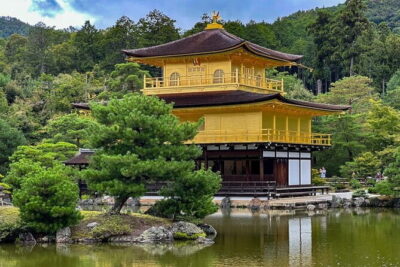
Nijo, Kinkaku-ji, Arashiyama, Kiyomizu & Fushimi Inari
Read our review →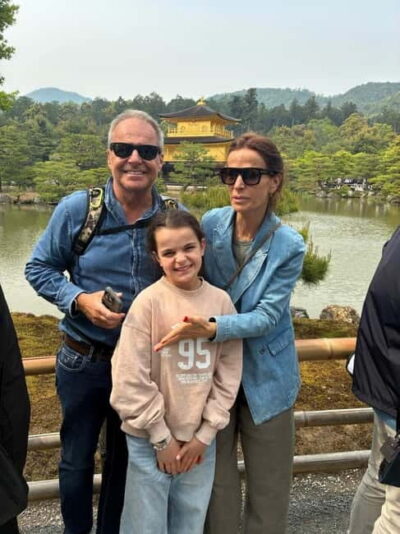
Kyoto top must-see Golden pavilion and Bamboo forest half-day Private tour
Read our review →
Golden Pavilion, Nijo Castle, & Nishiki Market Half day tour
Read our review →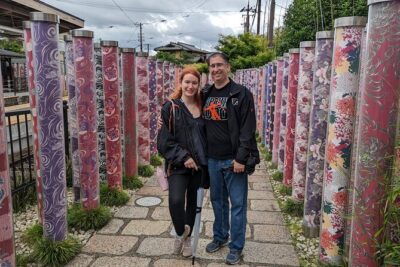
Full day Kyoto Walk in Fushimi, Arashiyama, Monkey, and Kinkakuji
Read our review →Browse the lists this tour appears in