
Reviewed · FUSHIMI INARI TOURS
Kyoto & Nara Day Tour: Golden Pavilion, Fushimi Inari & Deer Park
Kyoto’s Golden Pavilion and Fushimi Inari Shrine make a strong opening pair: one is polished, golden, and still; the other is a long red gateway path climbing into the woods. Add Arashiyama and Nara’s free-roaming deer, and you get a very full picture of Japan’s old imperial heartland in one day.
I like the included Kinkakuji ticket, which removes one small chore, and I like the air-conditioned transport between widely scattered sights. The guide also uses WhatsApp to pass along instructions and answer questions, a useful touch when the group is moving quickly.
The main concern is the pace and reliability of the route. Ten to 11 hours is a long day, and some bookings have experienced changes to the Arashiyama portion without advance notice. Confirm the day’s stops, final price, and meeting point before you set out.
Key points to know before booking
- Six major stops in one day: Kinkakuji, Fushimi Inari, Arashiyama Bamboo Forest, Tenryuji, Togetsukyo Bridge, and Nara Park.
- Only Kinkakuji admission is clearly included: Nara deer crackers, meals, drinks, and personal purchases cost extra.
- The day begins at 9:00 a.m.: Arrive at least 10 minutes early because the vehicle leaves on time.
- Fushimi Inari may be skipped at New Year: Traffic restrictions can remove this stop from the route.
- The group can reach 40 people: That keeps the price low but may make boarding and meeting up slower.
- The advertised route can change: Confirm whether Arashiyama, Fushimi Inari, and the Nara sights will all operate on your date.
What this Kyoto and Nara day actually tries to do
This is a sightseeing sweep, not a slow cultural walk. You cover places that sit in different parts of Kyoto and Nara, so the vehicle does much of the connecting work while the guide handles basic direction and commentary.
The appeal is simple. If you have only one free day, you can see a famous Zen temple, a major Shinto shrine, Kyoto’s bamboo grove, a celebrated garden, a historic bridge, and Nara’s deer park without learning several train and bus routes.
The tradeoff is time. The listed stops add up to about five hours, leaving the remaining hours for transfers, boarding, traffic, and the return journey. At several sights, you will have enough time for a focused visit and photographs, but not enough for a slow meal, a long climb, or a detailed museum stop.
The vehicle type depends on group size, and the maximum group size is 40. At $93 per person, that is a fair price for transport, a professional English-speaking guide, and the Kinkakuji admission. It is less attractive if you value quiet pacing or want to choose your own lunch and shrine time.
More ways to walk the Fushimi Inari gates:
- Kyoto: Fushimi Inari, Kinkakuji, Bamboo Grove 1 Day Bus Tour
★ 4.8 · 4,316 reviews - Fushimi Inari Hidden Hiking Tour (Private Option Available)
★ 5.0 · 1,750 reviews - Osaka/Kyoto:Kinkakuji,Arashiyama,FushimiInariShrine,NaraPark
★ 4.1 · 1,596 reviews
Starting at the Kyoto VIP Lounge
The meeting point is the Kyoto VIP Lounge, with departure scheduled for 9:00 a.m. The information also mentions departure from VIP Villa Namba, so check the exact pickup wording on your confirmation. This matters because a small mistake at the start can ruin a tightly timed day.
Arrive 10 minutes early. There is no good reason to test the departure rule, especially with a large group and several long transfers ahead.
The guide is English-speaking, and WhatsApp may be used for instructions and questions. Keep your phone charged and check messages before departure. No guide names are provided in the tour details, so you should not expect a particular guide unless the operator confirms one directly.
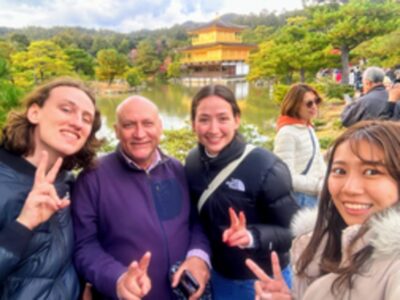
Kinkakuji, the Golden Pavilion in 40 minutes
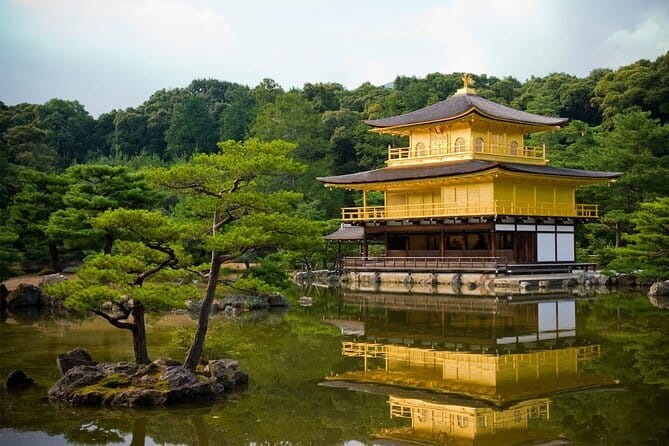
Kinkakuji is the visual hit of the morning. The upper floors of the pavilion are covered in gold leaf, and the building reflects in a pond bordered by trees and carefully arranged garden features.
You follow a set walking route through the grounds, with views of the pavilion, small stone structures, koi ponds, and a tea house. The visit is designed for a quick look rather than a long study session. Forty minutes gives you time to see the main view and walk through part of the garden, but you should keep moving if you want photographs from more than one angle.
The included admission is useful. You do not need to queue separately for a ticket, and the guide can get the group into the grounds without making this first stop more complicated than it needs to be.
Kinkakuji is one of Kyoto’s busiest sights. The famous pond view is worth seeing, but do not expect solitude. Your best approach is to enjoy the architecture, take your photographs, and accept that this stop is about the classic image rather than private contemplation.
Fushimi Inari and its thousands of red torii
Fushimi Inari Taisha gives you a different kind of Kyoto. The shrine is dedicated to Inari, associated with rice, prosperity, and business. Its hillside route is lined with thousands of red torii gates, creating a long tunnel through the trees.
You have about 1 hour and 20 minutes here. That is enough to walk through the lower shrine grounds and begin the climb toward the halfway point. The path continues much farther up Mount Inari, but this tour does not allow time for a full ascent and return.
Fox statues appear throughout the shrine grounds. Inari’s fox messengers are part of what makes this place feel different from a standard temple visit. The lower area can be crowded, while the path generally becomes quieter as you climb. Wear shoes that feel secure, because even a short uphill walk takes effort.
The views toward Kyoto improve as you gain height. If you want the best use of your time, move beyond the first gate tunnel before stopping for photographs. Also keep track of the guide’s meeting instructions. A shrine with many branching paths is not the place to wander off without a clear return time.
The tour warns that Fushimi Inari may be removed during the year-end and New Year period because of traffic restrictions. If this shrine is one of your main reasons for booking, ask about its operation before paying.
More trips out to the Golden Pavilion:
- Kyoto: Nijo, Kinkaku-ji, Arashiyama, Kiyomizu & Fushimi Inari
★ 5.0 · 699 reviews - Kyoto: Kinkakuji, Golden Pavilion Guided Tour
★ 4.7 · 71 reviews - Kyoto top must-see Golden pavilion and Bamboo forest half-day Private tour
★ 5.0 · 52 reviews - Kyoto Bamboo Forest & Golden Pavilion E-Bike Tour
★ 5.0 · 50 reviews
Arashiyama Bamboo Forest in 40 minutes
Arashiyama changes the mood again. The bamboo grove is a narrow walking route surrounded by tall green stalks that filter the light and create a calm, enclosed setting.
Forty minutes is enough to walk through a section of the grove and take photographs. It is not enough for a long exploration of the entire Arashiyama district. Crowding can also affect the experience, especially at the most photographed portions of the path.
The bamboo itself is the attraction, but the value of Arashiyama comes from the wider area too. The Katsura River and Togetsukyo Bridge are nearby, and the district offers several historic places within walking distance. This tour gives you a taste, not a full day in Arashiyama.
There is an important practical warning here. The route is advertised with Arashiyama, but at least one booking was changed to a shorter Kyoto and Nara program without advance notice. Another account specifically described the omission of Arashiyama as disappointing. Contact TREVOPEDIA before departure and ask for written confirmation that the bamboo grove, Tenryuji, and Togetsukyo Bridge are operating on your date.
Tenryuji and the garden beside the bamboo grove
Tenryuji is a Zen Buddhist temple founded in the 14th century. Its garden is the reason this stop matters. A pond, arranged rocks, clipped plants, and the Arashiyama hills form a carefully composed view.
The scheduled 40 minutes lets you see the garden and appreciate the temple’s traditional buildings. It does not leave much room for a slow seated visit or a detailed look at every part of the grounds.
The tour information lists this stop as free, but only Kinkakuji admission is clearly included in the package details. Ask the guide or operator whether any Tenryuji entry fee applies on your date. That small question can prevent an awkward surprise when the group arrives.
Tenryuji is also the stop most vulnerable to a rushed schedule. If the vehicle arrives late or the group needs extra time to gather, the garden visit may feel brief. I would treat it as a scenic introduction rather than a complete temple visit.
Togetsukyo Bridge and the Katsura River
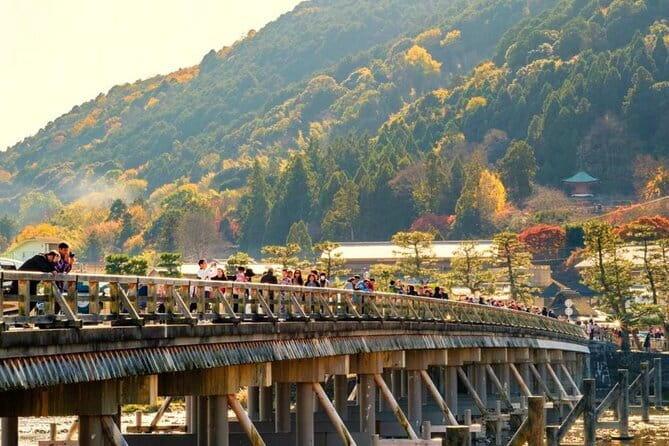
Togetsukyo means Moon Crossing Bridge. The bridge spans the Katsura River and provides one of Arashiyama’s best broad views, with water, hills, and seasonal trees around it.
You have 20 minutes here. That is enough to walk onto the bridge, take photographs, and look along the river. It is not enough for a leisurely riverside stroll or a relaxed stop at nearby shops.
This short visit works well after the bamboo grove and Tenryuji because it gives you open space after the narrow forest paths. It also helps you understand Arashiyama as a district rather than just a single photo stop.
Do not expect a separate long bridge crossing if the group is behind schedule. Keep your return time in mind, since the vehicle still has to reach Nara.
Nara Park and the sacred deer
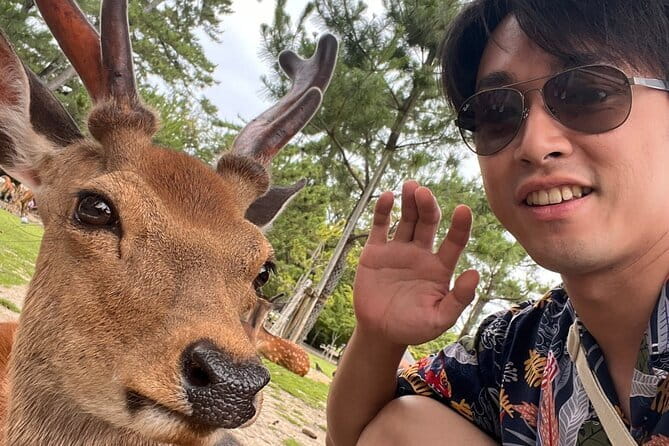
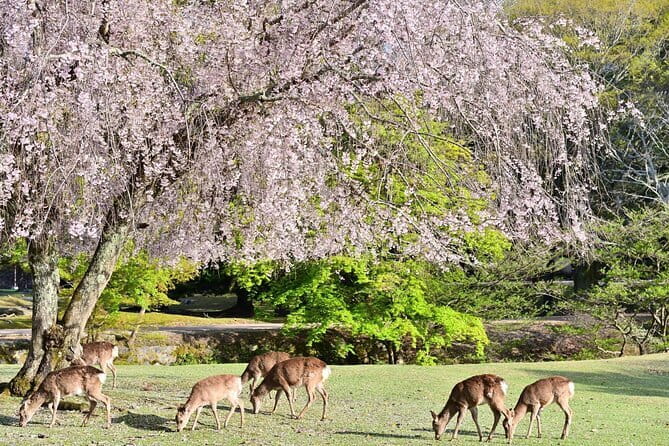
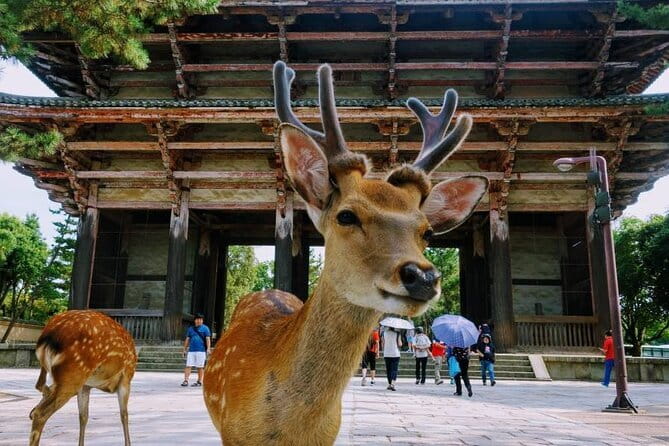
Nara Park is the most playful stop of the day. More than 1,000 deer roam freely through the park, and Shinto tradition regards them as sacred messengers of the gods.
You have about 1 hour and 20 minutes. That gives you time to walk among the deer, buy shika senbei deer crackers, and visit the area around Todaiji Temple. The deer are accustomed to people and may approach quickly when they see food. Feed them one cracker at a time, and keep the empty paper moving out of reach.
The famous bowing behavior is part of the fun, but you should treat the animals with care. They are not toys, and a crowd of deer can become pushy when food is visible. Keep snacks meant for yourself stored away.
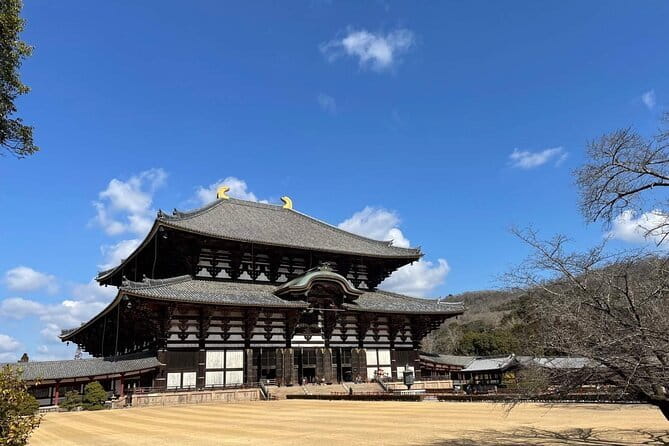
The tour overview includes Todaiji, home of the world’s largest bronze Buddha. However, the detailed stop description focuses on Nara Park and does not clearly list a separate Todaiji admission ticket. Ask whether the group will enter the temple or only see the area around it. That distinction matters, since the Buddha hall is a major reason many people visit Nara.
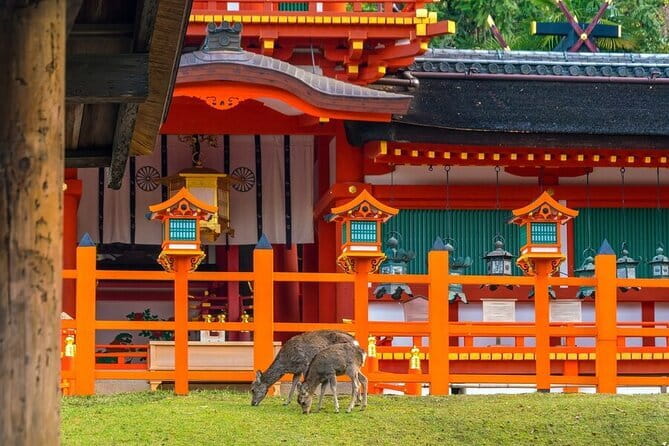
Nara Park is also where the day may feel most rewarding. The deer, lanterns, old temple buildings, and open paths offer something different from Kyoto’s formal gardens and shrine corridors. Families often appreciate the direct animal encounter, while adults may value the connection between the park and Nara’s religious traditions.
Food, costs, and the real value of $93
The $93 price includes round-trip transportation, an English-speaking guide, and Kinkakuji admission. Meals, drinks, deer crackers, and personal expenses are extra.
No meal is included, and the published schedule does not identify a dedicated lunch break. Bring water and plan to buy food when the guide allows time. With a full-day route, you should not assume that you can stop wherever you like for a long restaurant meal.
The price is good if you want to cover several distant sights without handling Kyoto and Nara transportation yourself. It is especially practical for a first visit with limited time.
The value falls if the route loses Arashiyama or another major stop. One booking described paying $114 for a shortened program and felt the price should have been reduced. Confirm the exact amount at checkout and ask what happens if an advertised stop is removed.
Who will enjoy this day most
I would choose this tour if you want a broad first look at Kyoto and Nara, prefer a guide and vehicle, and accept that each stop will be brief. It suits couples, families, and first-time visitors who want the major sights without managing several train connections.
I would not choose it for a slow temple holiday. You will have little control over how long you spend at each place, and a group of up to 40 can make the day feel organized around meeting points rather than personal discovery.
The tour is also a poor match if you are set on hiking far up Fushimi Inari, spending half a day in Arashiyama, or exploring Todaiji in detail. Those activities need more time than this route provides.
Final call: book it only after confirming the route
Book this tour if the confirmed itinerary includes the stops you care about and you value transport more than flexibility. At the stated $93, the combination of vehicle service, guide, Kinkakuji entry, Kyoto highlights, and Nara Park is reasonable.
Before booking, ask three direct questions: Will Arashiyama operate on my date? Will the group enter Todaiji or only visit Nara Park? What is the final price, including any changes to the route?
If the answers are clear, this is a useful one-day sampler. If the operator cannot confirm the route, choose a smaller or more focused tour instead. Kyoto and Nara reward time, and a missing stop can make an already long day feel poor value.
FAQ
How long does the Kyoto and Nara tour last?
The experience lasts approximately 10 to 11 hours, including transfers between the meeting point and the attractions.
What time does the tour depart?
Departure is scheduled for 9:00 a.m. from the Kyoto VIP Lounge. The information also references VIP Villa Namba, so check your confirmation for the exact meeting location.
Is transportation included?
Yes. Round-trip transportation in an air-conditioned vehicle is included. The vehicle type depends on the number of people booked.
Is the Kinkakuji admission ticket included?
Yes. Admission to Kinkakuji Temple is included. Meals, drinks, and personal expenses are not included.
Is the tour available during the year-end and New Year holidays?
Fushimi Inari may be removed during this period because of traffic restrictions. Confirm the operating route before booking if this shrine is important to you.
How large can the group be?
The tour can have a maximum of 40 people. Most people can participate, and children under three enter free if they do not occupy a seat. You must notify the operator when booking.
More Day Trips to Nara
- Kyoto/Osaka: Nara, Fushimi Inari Taisha, Arashiyama Bus Tour
★ 4.7 · 1,275 reviews - Osaka/Kyoto: Arashiyama, Nara & Fushimi Inari Shrine w/Lunch
★ 4.4 · 754 reviews - Kyoto and Nara Day Trip from Kyoto
★ 4.5 · 445 reviews - Full Day Guided Tour to Kyoto and Nara from Osaka by Van
★ 5.0 · 420 reviews
Newest Kyoto experiences on the site
- Treasures of Kyoto: Gion & historical Walking Tour★ 5.0 · 6 reviews
- Whisk Your Own Matcha: A Zen Matcha Experience at Temple★ 3.6 · 7 reviews
- Kyoto tea town for matcha lovers★ 5.0 · 16 reviews
- Uji: Private immersion into Kyoto’s tea and reglious culture★ 5.0 · 17 reviews
- Kyoto Matcha Green Tea Tour★ 4.5 · 23 reviews
- Uji and Wazuka Matcha Farm Half Day Private Guided Tour★ 5.0 · 21 reviews
- Utilising upcycled Matcha! Creating matcha incense (Uji, Kyoto)★ 5.0 · 6 reviews
- Sacred Temple Yoga Experience in Japan★ 5.0 · 3 reviews
Fushimi Inari Tours, compared.
Fushimi Inari, Kinkakuji, Bamboo Grove 1 Day Bus Tour
Read our review →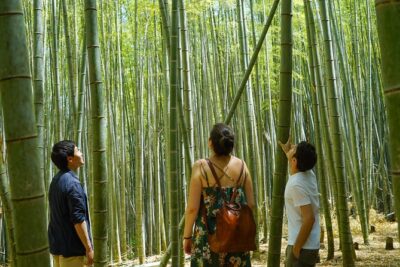
Fushimi Inari Hidden Hiking Tour (Private Option Available)
Read our review →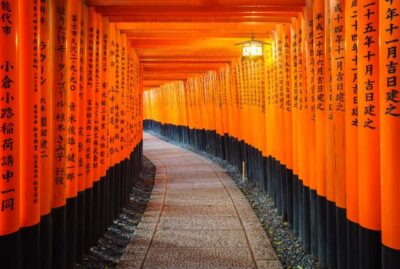
Kinkakuji,Arashiyama,FushimiInariShrine,NaraPark
Read our review →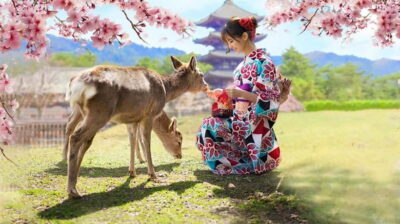
Nara, Fushimi Inari Taisha, Arashiyama Bus Tour
Read our review →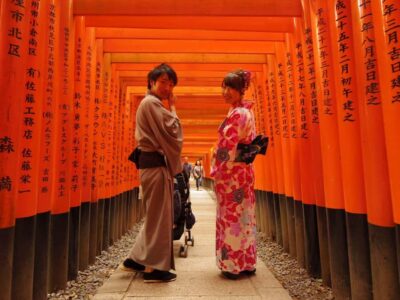
Arashiyama, Nara & Fushimi Inari Shrine w/Lunch
Read our review →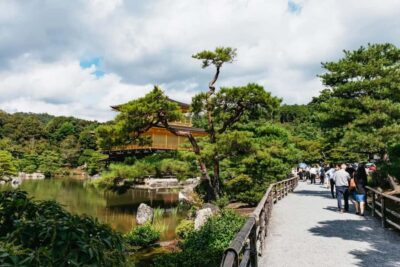
Nijo Castle, Kiyomizu & Fushimi Inari Guided Tour
Read our review →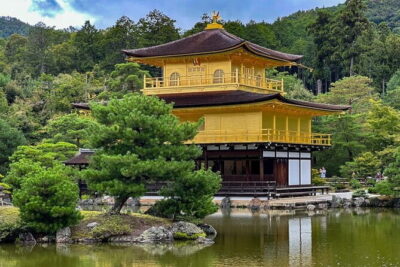
Nijo, Kinkaku-ji, Arashiyama, Kiyomizu & Fushimi Inari
Read our review →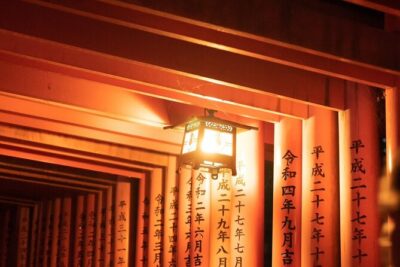
Browse the lists this tour appears in