
Reviewed · KIYOMIZU-DERA TEMPLE TOURS
Kyoto Tea Ceremony & Kiyomizu-dera Temple Walking Tour
Kiyomizu-dera is one of Kyoto’s essential sights, but its steep lanes and maze of souvenir shops can make a first visit feel scattered. This tour puts the temple, Otowa Waterfall, and a traditional tea ceremony into one tidy three-hour outing.
I like the small maximum of six people, which gives you room to ask questions, and I like the way the walk adds context to the temple instead of treating it as a quick photo stop. Guides such as Hide explain Shinto and Buddhism in plain language, take photos, and keep the mood easy with the occasional baseball chat or dad joke.
The main drawback is the price, $109.39 per person, especially if you only want to see the temple. The value improves if you want a guide, snacks, matcha, photos, and a cultural activity in one morning. The meeting point at Yasaka Shrine also needs a little care, since one person had trouble finding the guide there.
Key points to know before booking
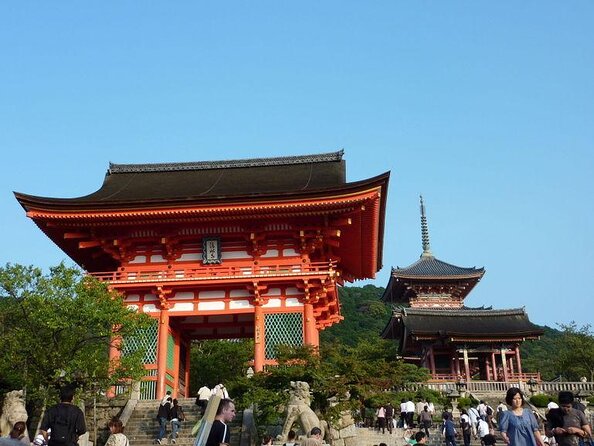
- Kiyomizu-dera is the centerpiece: Enter one of Kyoto’s best-known UNESCO World Heritage temples and reach its wooden stage, about 13 meters above the ground.
- The group stays small: A maximum of six people makes it easier to hear the guide and ask about worship, architecture, and local customs.
- The morning mixes sights with culture: You get temple time, old streets, food samples, matcha, and a traditional tea ceremony.
- The walking is real: Kiyomizu-zaka, Sannenzaka, and Ninenzaka include sloping streets and uneven temple approaches.
- Guide quality matters here: Hide is praised for clear explanations, a relaxed manner, helpful photos, and good conversation.
- Plan for Kyoto’s weather: Summer can be hot and humid, so bring water and wear a hat.
Why this three-hour Kyoto walk works
This experience is designed for you if Kyoto is new and you want a useful introduction without spending a full day on one neighborhood. The route begins at Yasaka Shrine, then moves through the old streets around Kiyomizu-dera before reaching the temple itself and a tea ceremony.
That order makes sense. You start with orientation, then see how the approach to a major temple is part of the experience. Kyoto’s famous sights are not always isolated behind gates. They are tied to narrow lanes, food shops, religious customs, steep slopes, and small local businesses.
The tour starts at 9:00 am and ends back at the meeting point. A morning start is helpful around Kiyomizu-dera, where the approach can become busy later in the day. You should still expect a steady walk, not a gentle stroll. The route includes hills and historic streets, so comfortable shoes matter more than stylish ones.
The experience includes entrance to Kiyomizu-dera, the tea ceremony, matcha, a few food samplings, and photos taken during the walk. Additional food and drinks cost extra. For $109.39, you are paying for more than temple admission, but you are also paying a fairly high price for a three-hour activity. I would choose it when the guide and cultural explanation are important to you, not when you simply want a low-cost temple visit.
More Kiyomizu-dera visits and hillside walks:
- Kyoto: Tea Ceremony in a Traditional Tea House in Kiyomizu
★ 4.9 · 3,519 reviews - Kyoto: Nijo Castle, Kiyomizu & Fushimi Inari Guided Tour
★ 4.7 · 700 reviews - Kyoto: Nijo, Kinkaku-ji, Arashiyama, Kiyomizu & Fushimi Inari
★ 5.0 · 699 reviews
Meeting at Yasaka Shrine and getting oriented
The meeting point is Yasaka Jinja’s Nishiromon Gate, also called the Western Tower Gate, at 625 Gionmachi Kitagawa in Kyoto’s Higashiyama Ward. The area is close to public transportation, but the gate name matters. Yasaka Shrine has more than one entrance, so check the exact location before leaving your hotel.
This is the one logistical weak spot worth taking seriously. One person initially panicked after having difficulty finding the guide. The tour itself went very well once the meeting was sorted, but I would arrive early and keep the mobile ticket and meeting instructions ready on your phone.
Starting at Yasaka Shrine gives you an immediate taste of Kyoto’s religious side. The walk can help you understand the difference between Shinto and Buddhism, two traditions that often appear side by side in Japan. Hide, one of the guides praised for this tour, is especially good at explaining those customs without turning the morning into a lecture.
The small-group format helps here. With no more than six people, you can ask why a gate looks a certain way, what a particular ritual means, or how to behave at a shrine. In a large group, those questions often get lost.
Kiyomizu-zaka and Yasakakoshindo
From Yasaka Shrine, the route heads toward Kiyomizu-zaka, an area made up of several traditional streets. The old-style atmosphere is part of the appeal: tea shops, Japanese sweets, sundried foods, and souvenir stores line the slopes toward Kiyomizu-dera.
You might see people dressed in kimono, and the area is associated with Kyoto’s geisha and maiko culture. Keep your camera ready, but remember that a traditional-looking street is also a working shopping district. The tour gives you a guide to help separate cultural details from simple tourist decoration.
One unusual stop is Yasakakoshindo, described as one of Kyoto’s most colorful temples. It adds variety before the grand scale of Kiyomizu-dera. The color and compact setting make it a good photo stop, while the guide can explain why the place matters rather than leaving you with only a quick snapshot.
This section is also where you’ll notice the tradeoff between charm and crowds. The streets feel old, but they are lined with shops aimed at people visiting the temple. You may find traditional sweets and pickles, but you should not expect a quiet village lane.
The guide’s presence is useful because you do not have to study a map while walking. You can pay attention to the buildings, ask questions, and learn what you are seeing. I especially like this kind of route early in a Kyoto trip because it helps you get your bearings fast.
Entering Kiyomizu-dera and reaching the wooden stage
Kiyomizu-dera was built on the site of Otowa Waterfall about 1,200 years ago. Its name comes from the waterfall’s pure water, and the temple remains one of Kyoto’s most recognizable sights.
The temple’s wooden stage is the main visual reward. It sits about 13 meters above the ground and looks over trees and the city beyond. Depending on the season, the view includes cherry trees or maple trees, making spring and autumn especially appealing. The tour information does not promise a particular level of seasonal color, so treat those views as a possibility rather than a guarantee.
A guide adds real value inside a place this famous. Without context, it is easy to take a photograph, glance at the buildings, and move on. With Hide or another local guide, you can ask about the temple’s history, the formalities of worship, and the links between the site and Japanese religious practice.
The tour is not only about sightseeing. It teaches you how to approach a temple respectfully. You can learn what to do at the worship areas and why people follow certain customs. Those details make the visit feel more connected to daily religious life.
The wooden stage can be busy, and the approach involves slopes and steps. If you prefer a slow, quiet temple visit, the fixed schedule may feel brisk. If you want the main sights explained within a limited morning, the pace should suit you.
More tea ceremonies in Kyoto:
- Kyoto: Tea Ceremony Ju-An at Jotokuji Temple
★ 4.9 · 3,207 reviews - Kyoto: 45-Minute Tea Ceremony Lesson Experience
★ 4.3 · 2,378 reviews - Kyoto: Table-Style Tea Ceremony at a Kyo-Machiya
★ 4.9 · 1,211 reviews - Kimono Tea Ceremony at Kyoto Maikoya, NISHIKI
★ 5.0 · 911 reviews
Choosing your stream at Otowa Waterfall
Otowa Waterfall is built into the identity of Kiyomizu-dera. The water is divided into three streams, with each linked to a different benefit. You choose one stream, use a cup attached to a long pole, and drink the water as part of the worship experience.
This is a small but memorable detail. You are not simply looking at a waterfall. You are taking part in a custom that connects the site’s name, its water, and the hopes people bring to the temple.
The guide can show you how to approach the waterfall and explain the meaning behind the three streams. That is exactly the sort of moment when a local guide earns the fee. You could watch other people do it on your own, but you might not know why they choose one stream or how the practice fits the temple.
Do not treat the water as a promise of guaranteed luck. Think of it as a symbolic act, much like many religious customs around the world. The fun is in choosing your intention and taking part respectfully.
Walking Kiyomizu-zaka, Sannenzaka, and Ninenzaka
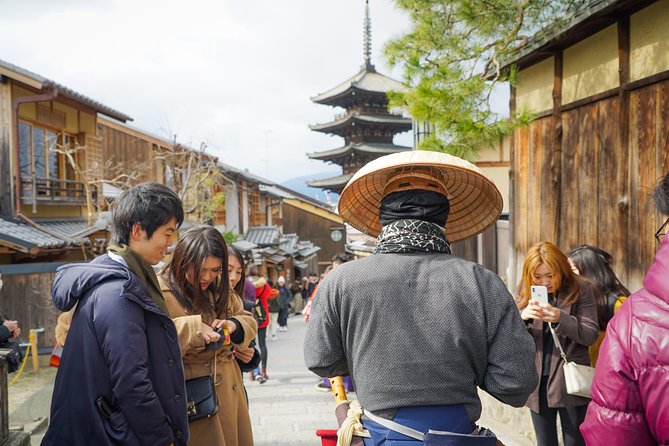
The route passes along Kiyomizu-zaka, the roughly one-kilometer approach to Kiyomizu-dera. It begins near the crossing of Matsubara-dori and Higashioji-dori, then climbs toward the temple gate.
The lower part can feel quieter, while the upper stretch has more souvenir shops and calls from shopkeepers. You will find Kyoto specialties such as pickles and yatsuhashi, a sweet associated with the city. There is also a Kiyomizu doll shop near the temple gate.
These streets are enjoyable partly because the route is not a straight march to the temple. The buildings, shopfronts, slopes, and views all prepare you for the temple above. A guide can point out what is old, what is traditional in style, and what is simply part of today’s visitor economy.
Sannenzaka and Ninenzaka add another layer of atmosphere. Sannenzaka is linked to several origin stories, including the claim that it dates to the third year of the Daido era in 808. The exact history has different versions, so it is best to enjoy the story as local tradition rather than a settled fact.
The most famous tale says that falling on Sannenzaka means you will die within three years or lose three years from your life. The practical message is clearer than the legend: watch your step. The slopes can be awkward, especially when the street is crowded, and the surface may not feel as easy as a modern pavement.
You should wear shoes with a good grip and avoid carrying more than you need. This is not a difficult hike, but it is not fully flat. In summer, heat and humidity add to the work, so bring water and a hat.
The tea ceremony and matcha
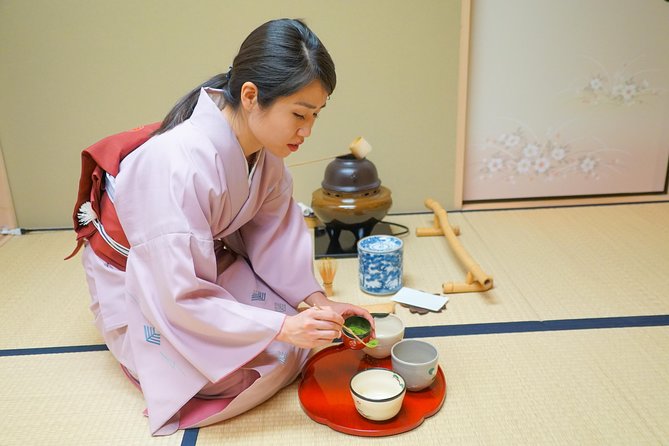
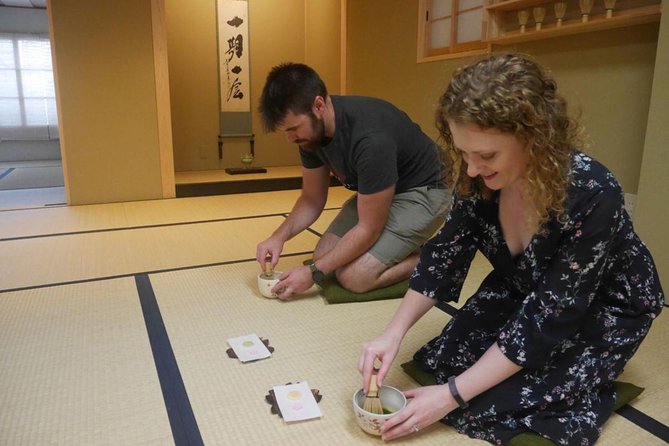
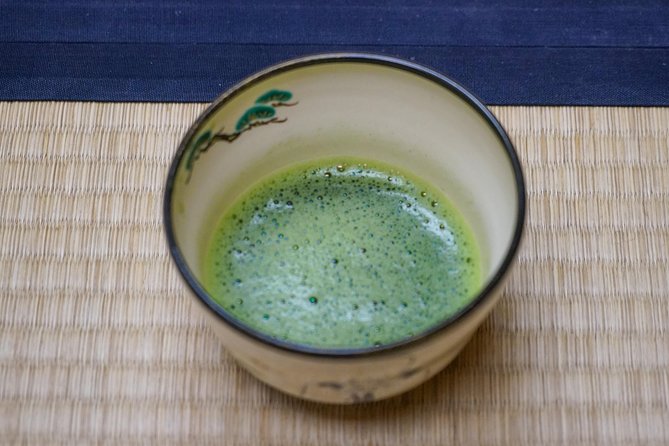
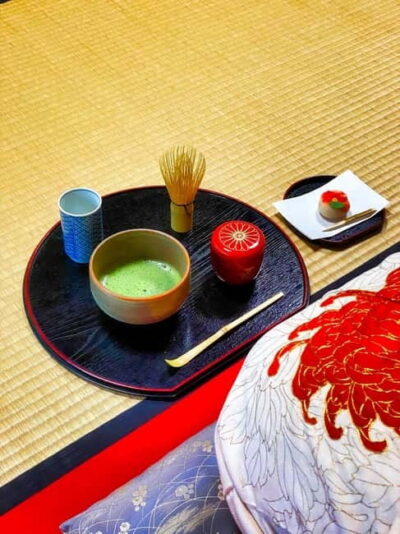
The tea ceremony is the cultural heart of the experience for many people. After the walking and temple visit, you sit down for a traditional presentation of tea and drink matcha.
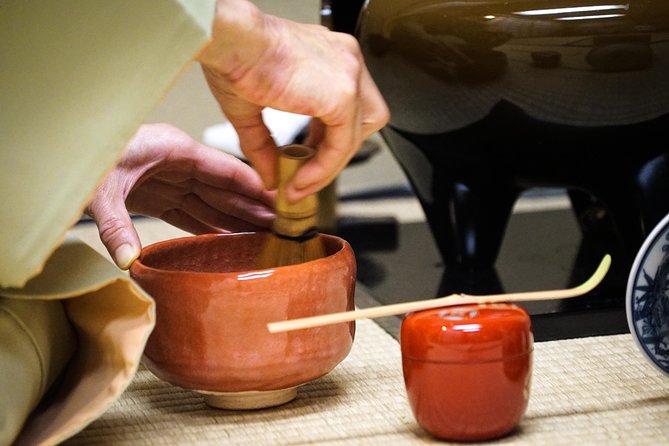
The ceremony is not just a chance to taste green tea. It shows how movement, preparation, attention, and hospitality come together in Japanese culture. You can watch the careful handling of the tea and learn the basic etiquette without needing prior knowledge.
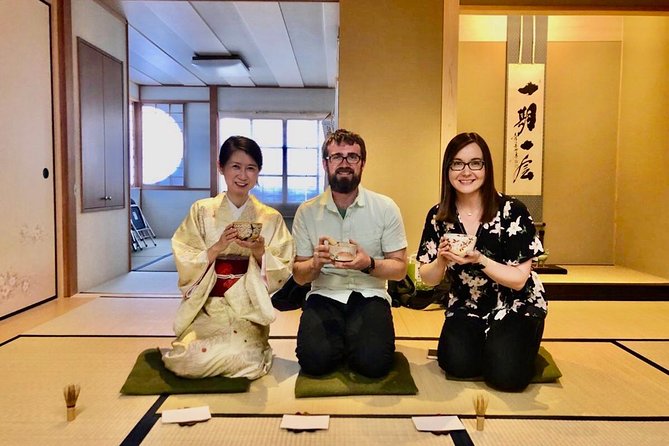
The tea ceremony host may be different from your walking guide. Haruki is specifically praised for being warm and entertaining, while another account highlights the skill and care of a woman performing the ceremony. The experience seems to place real emphasis on the person presenting the tea, not just on serving a drink.
That personal element matters. A formal ceremony can feel hard to approach if you do not know what to do. A friendly host helps you relax and notice the details. The tea portion is also a useful contrast to the busy shopping streets and open temple views.
The ceremony may be the best reason to choose this tour instead of visiting Kiyomizu-dera alone. If you already have plans for a tea experience elsewhere in Kyoto, the package may offer less new value. If you have never attended one, adding it to a temple morning is convenient and culturally useful.
Snacks, photos, and the real value of $109.39
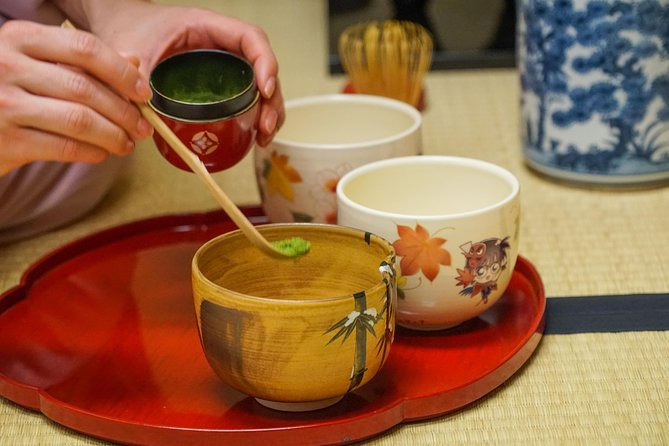
The fee includes a few food samplings, matcha, the temple entrance fee, the tea ceremony, and photos during the tour. You pay separately for additional food and drinks.
The snacks help turn the walk into more than a sightseeing circuit. Kyoto’s sweets and preserved foods are part of the local food culture, and small samples let you try things without committing to a full meal. Still, this is not a food tour. If you expect generous portions or a complete lunch, you will be disappointed.
The photo service is a practical bonus. Hide is praised for taking photos, which can be helpful when you are traveling alone or want pictures of your whole group. It also means you can spend less time asking strangers to use your camera.
At $109.39, the tour is not a bargain in the narrow sense. The temple admission itself is only one part of what you receive, and the walk could be done independently for much less. The price makes more sense when you count the small group, a local guide for three hours, the tea ceremony, matcha, samples, and the convenience of combining several stops.
I would compare the price with your priorities. Pay it if you value explanation, a set route, and a first-day introduction to Higashiyama. Skip it if you prefer wandering alone, already know Kyoto’s religious customs, or are trying to keep every sightseeing cost low.
Who should book this morning?
I would recommend this experience to first-time Kyoto visitors who want structure without a full-day commitment. It is also a good fit for solo visitors, couples, and small families with children aged six or older who enjoy walking and cultural activities.
The tour suits you especially well if you want to ask questions. The small group gives the guide time to explain Shinto, Buddhism, temple etiquette, local legends, and the meaning of the tea ceremony.
It is less suitable for anyone who dislikes slopes, crowded shopping streets, or fixed schedules. Children under six cannot join. People with food allergies or dietary restrictions should be cautious, since the food is prepared in kitchens outside the tour company’s control, substitutions may not always be possible, and allergy-free preparation is not guaranteed.
The summer warning is worth following. Kyoto can be very hot and humid, so carry water and use a hat. The tour lasts about three hours, but the combination of walking, heat, and slopes can make the morning feel longer than the clock suggests.
The tour offers free cancellation if you cancel at least 24 hours before the local start time. Changes or cancellations within 24 hours are not accepted for a refund, so keep that deadline in mind when making plans.
Should you book the Kiyomizu-dera tea ceremony tour?
Book this tour if you want Kiyomizu-dera explained by a local, prefer a group of no more than six, and like the idea of pairing a major temple with old lanes, snacks, matcha, and a tea ceremony. Guides such as Hide add warmth, useful history, photos, and a relaxed tone that helps the morning feel personal.
Do not book it only for temple admission. You can visit Kiyomizu-dera independently for less money, and the route includes shopping streets that may feel crowded. But for a first Kyoto morning, the combination is strong: a famous temple, a hands-on religious custom, a calm tea ceremony, and enough neighborhood walking to help you understand where you are.
FAQ
Where does the tour begin?
The tour begins at Yasaka Jinja Nishiromon Gate, also called the Western Tower Gate, at 625 Gionmachi Kitagawa in Kyoto’s Higashiyama Ward.
What time does the tour start?
The start time is 9:00 am.
How long does the experience last?
The tour lasts approximately three hours and ends back at the meeting point.
Is Kiyomizu-dera admission included?
Yes. The entrance fee to Kiyomizu-dera Temple is included.
Is the tea ceremony included?
Yes. The experience includes a traditional tea ceremony and matcha green tea.
How many people can join the tour?
The tour has a maximum of six participants. Children under six years old are not allowed.
More Walking Tours in Kyoto
- Kyoto Geisha Walking Tour: Gion District & Hidden Gems
★ 4.7 · 3,273 reviews - Kyoto: Gion Magical Night Walking Tour with Geisha Trivia
★ 4.9 · 2,393 reviews - Kyoto: Gion Geisha District Walking Tour – Stories of Geisha
★ 4.7 · 2,187 reviews - Night Walk in Gion: Kyoto’s Geisha District
★ 4.5 · 2,003 reviews
More Temples in Kyoto
- Arashiyama Bamboo, Temple, Monkeys, or Secret Sake Brewery
★ 4.8 · 886 reviews - Kyoto: Arashiyama Bamboo Forest, Monkeys, Matcha & Temple Tour
★ 5.0 · 759 reviews - Kyoto Zen Meditation & Garden Tour at a Zen Temple with Lunch
★ 5.0 · 441 reviews - Kyoto: Zen Experience in a Hidden Temple
★ 5.0 · 437 reviews
Newest Kyoto experiences on the site
- Treasures of Kyoto: Gion & historical Walking Tour★ 5.0 · 6 reviews
- Whisk Your Own Matcha: A Zen Matcha Experience at Temple★ 3.6 · 7 reviews
- Kyoto tea town for matcha lovers★ 5.0 · 16 reviews
- Uji: Private immersion into Kyoto’s tea and reglious culture★ 5.0 · 17 reviews
- Kyoto Matcha Green Tea Tour★ 4.5 · 23 reviews
- Uji and Wazuka Matcha Farm Half Day Private Guided Tour★ 5.0 · 21 reviews
- Utilising upcycled Matcha! Creating matcha incense (Uji, Kyoto)★ 5.0 · 6 reviews
- Sacred Temple Yoga Experience in Japan★ 5.0 · 3 reviews
Kiyomizu-dera Temple Tours, compared.
Tea Ceremony in a Traditional Tea House in Kiyomizu
Read our review →
Nijo Castle, Kiyomizu & Fushimi Inari Guided Tour
Read our review →
Nijo, Kinkaku-ji, Arashiyama, Kiyomizu & Fushimi Inari
Read our review →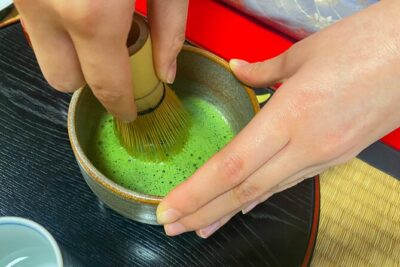
Kyoto Kiyomizu Tea Ceremony with Scenic Garden Views
Read our review →
Kimono/Yukata Rental 5 Minute from Kiyomizu-dera
Read our review →
Kyoto Gion Kiyomizudera Kimono Yukata Hairstyle | Photoshoot
Read our review →
Kiyomizu Temple and Backstreets of Gion, Half Day Group Tour
Read our review →
Best of Kyoto: Red Gates of Fushimi Inari & Kiyomizu Temple
Read our review →Browse the lists this tour appears in