
Reviewed · NIJO CASTLE TOURS
Kyoto Imperial Palace & Nijo Castle Guided Walking Tour – 3 Hours
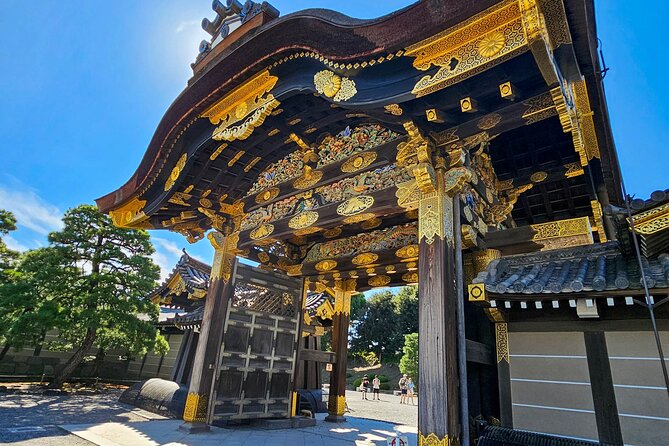
Kyoto’s past comes into focus when you visit Nijo Castle and the Kyoto Imperial Palace together. One site tells the story of shoguns, painted rooms, and power behind closed doors. The other recalls the imperial court that shaped Japan for more than a thousand years. I like the small maximum of nine, and I like having an English-speaking guide explain details you could easily walk past.
I also like the sensible three-hour length. You get about 90 minutes at each site, enough time for the main buildings, gardens, and key stories without giving up an entire day. The main catch is the transfer between the sites: you may need to arrange your own transport, and a badly managed connection can eat into the tour.
Key points to know before booking
- Two major Kyoto sights in one morning or afternoon: Spend roughly 90 minutes at Nijo Castle and 90 minutes at the Imperial Palace.
- Small group size: The tour accepts a maximum of nine people, which makes questions and photo stops easier.
- Strong guide feedback: Jasmine, Taku, Atsushi, Cecilia, Vincent, Raphael, and others are praised for clear English and helpful historical detail.
- Entry fees included: You do not need to buy admission separately at either location.
- Transport needs attention: Nijo Castle and the Imperial Palace are not next door. The connection can take about 30 minutes by foot or public transport.
- Good value at $55: The price is reasonable if you want context, structure, and two admissions, but less appealing if you prefer to explore quietly at your own pace.
Why these two Kyoto landmarks work well together
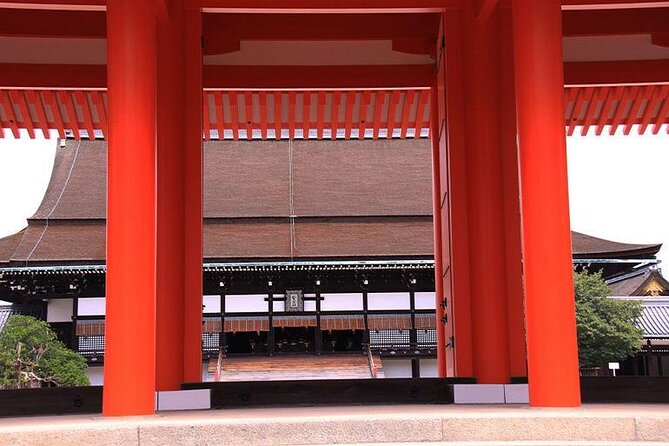
This tour links two centers of Japanese power. Nijo Castle represents the authority of the shogun, the military ruler who governed Japan for long stretches. Kyoto Imperial Palace represents the emperor and the court, whose presence remained important even when political control sat elsewhere.
That contrast gives the outing a useful shape. At Nijo Castle, you look at how power was displayed through grand rooms, guarded movement, gardens, and architecture. At the palace, you see a more formal court setting, with broad grounds and buildings designed for imperial life and ceremony.
I find this pairing more useful than visiting either site alone. Without context, Nijo Castle can look like a handsome collection of rooms and gardens. The palace can feel spacious and restrained. A guide helps connect the buildings to the people and systems that used them.
The tour is also practical for a first stay in Kyoto. You see two major historical sites in half a day, then finish near Imadegawa Station. That leaves room for lunch, the Philosopher’s Path, a museum, or another part of the city.
The experience has a 4.7 rating from 106 ratings, with 92 percent recommending it. That is a strong result, though it does not erase the transport concern or guarantee that every guide will offer the same depth of explanation.
More Nijo Castle visits:
- Kyoto: Nijo-jo Castle and Ninomaru Palace Guided Tour
★ 4.7 · 1,020 reviews - Kyoto: Nijo Castle, Kiyomizu & Fushimi Inari Guided Tour
★ 4.7 · 700 reviews - Kyoto: Nijo, Kinkaku-ji, Arashiyama, Kiyomizu & Fushimi Inari
★ 5.0 · 699 reviews
Starting at Nijo Castle and the shogun’s world
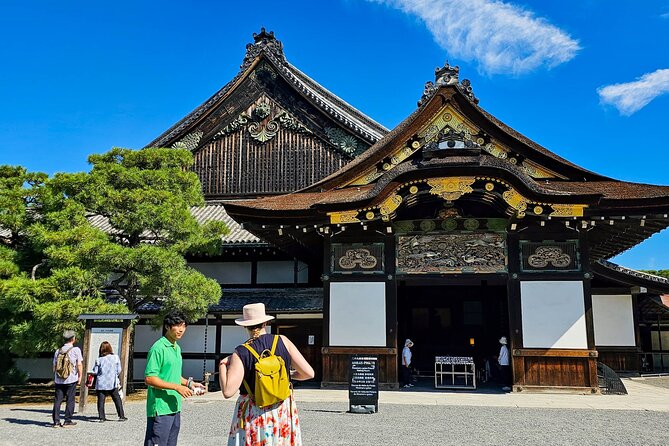
You meet at Nijojo-mae Station, beside Nijo Castle in Nakagyo Ward. Starting here makes sense because the castle is the more visually dense of the two sites, and it rewards an introduction before you begin looking around.
The castle was built to display shogun power in Kyoto, the former imperial capital. Inside, your guide can point out the relationship between architecture, rank, movement, and ceremony. The painted interiors are not simply decoration. They helped create the proper setting for audiences and official encounters.
One detail that makes Nijo Castle especially memorable is its famous floor design. The wooden floors are associated with nightingale sounds underfoot, a feature traditionally understood as a security measure. Your guide can add meaning to details like this, while also explaining how the rooms were arranged and what the artwork suggested about status.
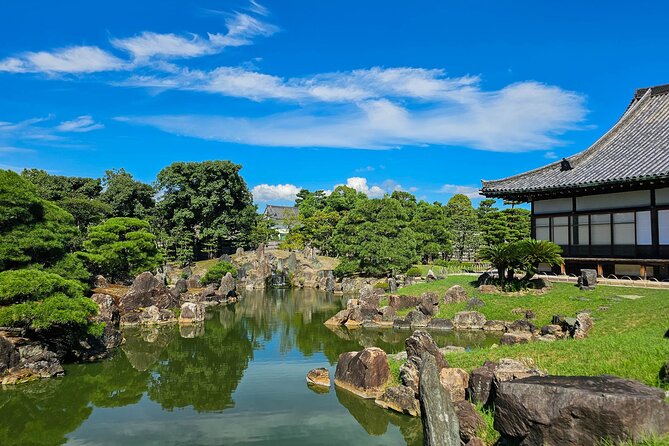
You should expect a walking visit through castle interiors and gardens rather than a quiet museum stop. The grounds give you room to slow down for photographs, while the interior requires attention to architectural details, wall paintings, and the way the rooms open toward the gardens.
The strongest part of the tour, based on the supplied feedback, is often the guide’s explanation of shogun-era symbolism and customs. Jasmine receives repeated praise for explaining architecture, art, and cultural meaning in clear English. Other guides, including Taku and Atsushi, are singled out for their command of Kyoto history and stories connected with the castle.
A good guide matters here because Nijo Castle can otherwise become a sequence of rooms. You may notice a grand painting, a threshold, or a change in room size without knowing why it matters. The guide turns those details into a story about authority and social order.
The pace seems to be one of the tour’s better features. Several comments describe enough time for photos and sights, while still keeping the group moving. That balance is useful in Kyoto, where a slow start can make the second half feel rushed.
Families should also find this stop manageable. Jasmine is praised for answering children’s questions, and another guide is praised for taking family photographs. Those small acts can make a difference when you are touring with children or older relatives.
The transfer between Nijo Castle and the Imperial Palace
This is the part I would plan carefully. Nijo Castle and Kyoto Imperial Palace are separate sites, and they are not immediately beside each other. One account puts the journey at about 30 minutes by walking or public transport, which is a meaningful share of a three-hour tour.
The published meeting point is at Nijojo-mae Station, while the tour ends at Imadegawa Station. The route between the sites is therefore part of the practical experience, even though it is not described as one of the formal stops.
Some guide experiences include help with transport, and one guide made sure the group knew how to reach its next destination. But the information also warns that you may need your own transportation between the castle and palace. Do not assume that a vehicle transfer is included in the $55 price.
This matters more during peak periods, when public transport and roads can be crowded. It also matters in hot or humid weather. Walking for half an hour in Kyoto heat can reduce the time and energy you have for the palace.
I recommend checking the route before the tour begins and keeping your phone charged. If the guide is organizing a taxi or public transport connection, confirm the meeting place and destination clearly. One poor experience involved a group being split between taxis, with one cab going to the wrong gate. The result was waiting, extra expense, and a shortened palace visit.
That incident appears to have been a communication failure rather than a problem with the guide’s historical content. Still, it is a fair warning. Ask where the group will meet after leaving Nijo Castle, and ask who is responsible for the fare. Clear instructions can prevent a simple transfer from becoming the weakest part of your afternoon.
Kyoto Imperial Palace and the quieter side of court life
The second 90-minute stop is Kyoto Imperial Palace. This was the residence of Japan’s imperial family for more than a thousand years, and the grounds offer a different mood from Nijo Castle.
Expect broad paths, formal buildings, gardens, and open space. The palace is less about the close detail of a castle interior and more about ceremony, court life, and the setting of imperial authority. Your guide can explain how the palace functioned and how the emperor’s role fit into Japan’s political story.
The palace grounds can seem simple at first glance. That is where a guide earns the fee. The value is not only in identifying a building. It is in explaining who used it, what happened there, and why its design looks the way it does.
Several guides are praised for adding links to present-day Japanese culture. That kind of connection can help you understand that the palace is not just a preserved historic site. It remains part of Kyoto’s identity and Japan’s national story.
You should have time for photographs, though the pace will depend on the group and the transfer. The best feedback describes guides who kept things moving while allowing time at attractive viewpoints. On a very hot day, one guide added water and air-conditioning breaks, which is exactly the sort of practical care you want in Kyoto’s summer.
The palace is likely to suit you if you enjoy context more than spectacle. If you want dramatic interiors at every turn, Nijo Castle will probably be your favorite stop. If you like formal spaces, gardens, and the story of imperial Japan, the palace may be the more rewarding half.
The tour ends at Imadegawa Station. That is useful because you finish near public transport rather than being left at the second site without direction. Guides have also helped some groups work out onward transportation, but you should still know your next destination before the tour ends.
More Imperial Palace and villa visits:
- Kyoto: Imperial Palace & Nijo Castle Guided Walking Tour
★ 4.7 · 453 reviews - Kyoto: Nijo Castle and Kyoto Imperial Palace Guided Tour
★ 4.6 · 98 reviews - Nijo Castle and Imperial Palace Visit with Guide
★ 5.0 · 53 reviews - Kyoto: Discover Every Bit of Kyoto Imperial Palace
★ 4.4 · 21 reviews
The guides make the biggest difference
The provider uses several English-speaking guides, so the experience is not identical every day. The names receiving the strongest praise include Jasmine, Taku, Atsushi, Cecilia, Vincent, Raphael, Kata, Alex, and Katsuhiko.
Jasmine appears often in the feedback. She is praised for clear English, a friendly manner, historical detail, flexible pacing, and a willingness to take photographs. One particularly useful detail is that she was comfortable saying when she was unsure rather than guessing. That is a good habit in a history tour.
Taku is described as a local certified guide with extensive experience at both Nijo Castle and the Imperial Palace. Atsushi is praised for special stories about both sites. Cecilia receives praise for being enthusiastic and easy to follow, while Raphael is noted for patience with many questions.
The most useful guide style for this tour is conversational rather than heavily scripted. You want enough structure to understand the sites, but also room to ask about architecture, customs, modern Japan, or the details that catch your eye.
The group limit of nine supports that style. A small group makes it easier to hear the guide, stop for photographs, and ask follow-up questions. It also means the group’s pace affects you more directly. If one person asks many questions, the guide may need to adjust the route.
The feedback is not entirely perfect. One person felt the guide was focused on finishing on time and did not add enough cultural context. That is a useful reminder that a small group does not automatically create a personal tour. The guide’s energy and preparation still matter.
Is $55 a fair price?
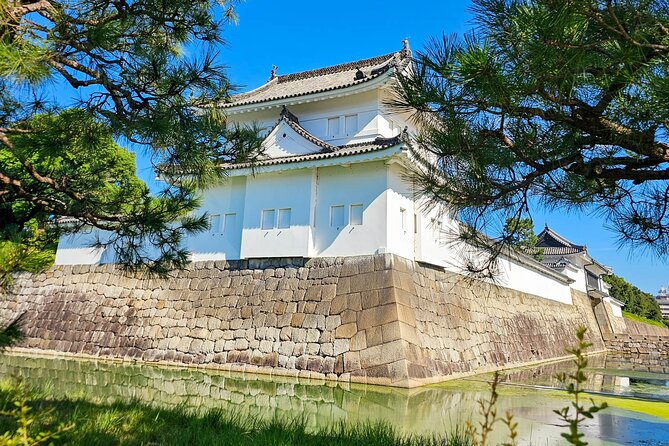
At $55 per person, I see this as a reasonable middle ground between exploring alone and paying for a private guide. Admission to both sites is included, as is the three-hour English-language walking tour.
The strongest value comes from the explanation. You are paying to understand why the castle rooms, gardens, palace buildings, and court customs matter. If you would otherwise buy an audio guide or spend time reading signs, the tour can save effort and give you a clearer story.
One comment judged the experience worth twice the price, while another suggested an audio tour could have covered much of the castle visit. Both points are fair. The fee is good value if your guide is active, clear, and willing to answer questions. It is weaker value if you receive only directions and basic facts.
Transport is the main value question. The price does not clearly include a transfer between the sites, and you may spend about 30 minutes walking or arranging public transport. Include that time and any fare when comparing this tour with a private taxi-based option.
Group discounts are available, and the mobile ticket makes the booking simple. Free cancellation applies when you cancel at least 24 hours before the start time. Changes or cancellations within 24 hours are not refunded, based on local time.
Who should book this Kyoto walking tour?
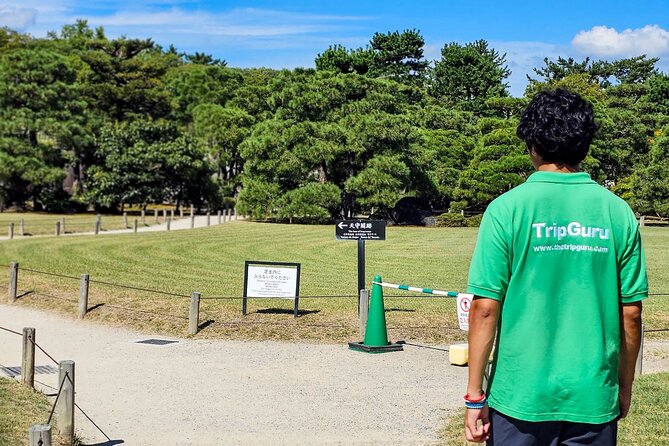
I would choose this tour if you are visiting Kyoto for the first time and want a clear introduction to two major historic sites. It is also a good fit for families, couples, and solo visitors who prefer questions and conversation rather than reading every sign alone.
The tour suits you especially well if:
- You want both the shogun’s castle and the imperial palace in one outing.
- You value English explanations of art, architecture, and customs.
- You prefer a group capped at nine people.
- You want included admission and a fixed three-hour plan.
- You are comfortable arranging or confirming transport between the sites.
- You want help with photographs and onward travel at the end.
I would think twice if you dislike group pacing or want to spend hours in one location. Nijo Castle and the palace each deserve more time if you want to inspect every room, garden feature, and sign. I would also avoid booking it too tightly against another timed activity, since the transfer can be unpredictable.
Weather deserves attention. Kyoto can be very hot, and the tour involves outdoor walking. Wear comfortable shoes, carry water, and leave enough room for rest. The guides may add breaks, but the itinerary still covers two large sites.
Final call: book it for context, not just access
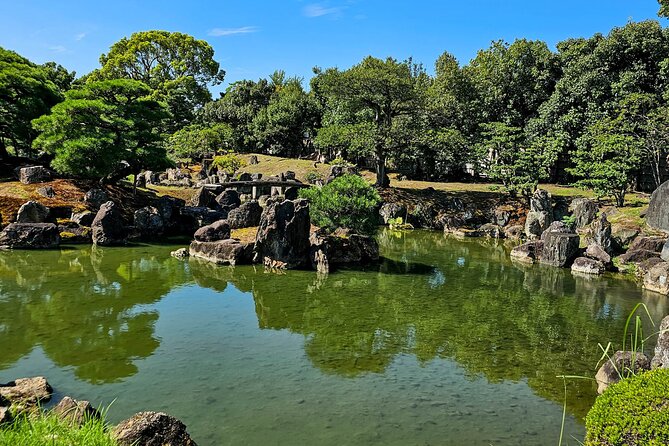
I recommend this tour for the reader who wants Kyoto’s major landmarks to make sense, not merely to check them off. The combination of Nijo Castle’s shogun-era interiors and the Imperial Palace’s court setting gives you a useful view of two sides of Japanese power.
The strongest reasons to book are the small group, included admission, three-hour length, and the many positive comments about guides such as Jasmine, Taku, and Atsushi. The main reason to hesitate is the transfer. Confirm how you will get from the castle to the palace before you start.
If you are happy to plan that connection and want a human guide to explain the details, $55 is a fair price. If you prefer complete independence or need every minute tightly controlled, visit the sites on your own and use the tour money elsewhere.
FAQ
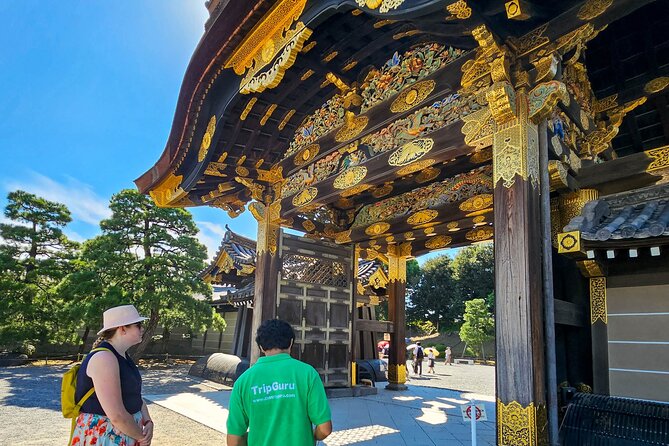
How long is the Kyoto Imperial Palace and Nijo Castle tour?
The tour lasts approximately three hours, with about 90 minutes scheduled at Nijo Castle and 90 minutes at Kyoto Imperial Palace.
Where does the tour start?
The tour starts at Nijojo-mae Station near Nijo Castle in Nijojocho, Nakagyo Ward, Kyoto.
Where does the tour end?
The tour ends at Imadegawa Station in Kamigyo Ward, Kyoto.
Is transportation between Nijo Castle and Kyoto Imperial Palace included?
The provided information does not clearly include transportation between the two sites. You may need to walk or use public transport, and the transfer can take about 30 minutes.
Are admission fees included?
Yes. Entrance fees for Nijo Castle and Kyoto Imperial Palace are included in the tour price.
What is the maximum group size?
The tour has a maximum of nine participants.
Is the tour conducted in English?
Yes. An English-speaking guide leads the walking tour.
Can I cancel for a full refund?
Yes, if you cancel at least 24 hours before the experience begins. Cancellations or changes made less than 24 hours before the start time are not refunded.
More Walking Tours in Kyoto
- Kyoto Geisha Walking Tour: Gion District & Hidden Gems
★ 4.7 · 3,273 reviews - Kyoto: Gion Magical Night Walking Tour with Geisha Trivia
★ 4.9 · 2,393 reviews - Kyoto: Gion Geisha District Walking Tour – Stories of Geisha
★ 4.7 · 2,187 reviews - Night Walk in Gion: Kyoto’s Geisha District
★ 4.5 · 2,003 reviews
Newest Kyoto experiences on the site
- Treasures of Kyoto: Gion & historical Walking Tour★ 5.0 · 6 reviews
- Whisk Your Own Matcha: A Zen Matcha Experience at Temple★ 3.6 · 7 reviews
- Kyoto tea town for matcha lovers★ 5.0 · 16 reviews
- Uji: Private immersion into Kyoto’s tea and reglious culture★ 5.0 · 17 reviews
- Kyoto Matcha Green Tea Tour★ 4.5 · 23 reviews
- Uji and Wazuka Matcha Farm Half Day Private Guided Tour★ 5.0 · 21 reviews
- Utilising upcycled Matcha! Creating matcha incense (Uji, Kyoto)★ 5.0 · 6 reviews
- Sacred Temple Yoga Experience in Japan★ 5.0 · 3 reviews
Nijo Castle Tours, compared.
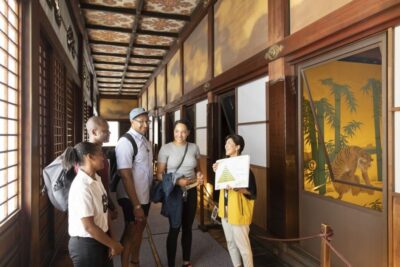
Nijo-jo Castle and Ninomaru Palace Guided Tour
Read our review →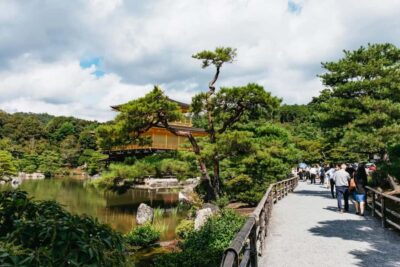
Nijo Castle, Kiyomizu & Fushimi Inari Guided Tour
Read our review →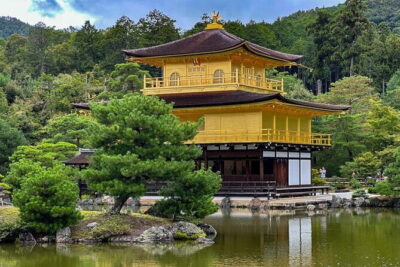
Nijo, Kinkaku-ji, Arashiyama, Kiyomizu & Fushimi Inari
Read our review →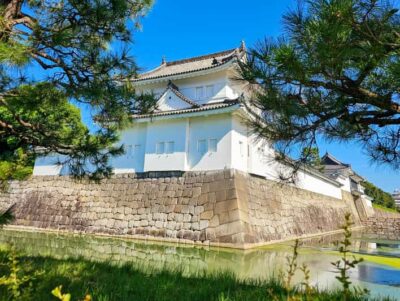
Imperial Palace & Nijo Castle Guided Walking Tour
Read our review →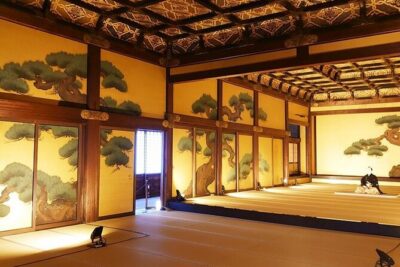
Nijo Castle World Heritage Guided Tour with Admission
Read our review →
Nijo Castle and Kyoto Imperial Palace Guided Tour
Read our review →
Nijo Castle and Imperial Palace Visit with Guide
Read our review →
Golden Pavilion, Nijo Castle, & Nishiki Market Half day tour
Read our review →Browse the lists this tour appears in