
Reviewed · KYOTO IMPERIAL PALACE TOURS
Kyoto: Discover Every Bit of Kyoto Imperial Palace
The most interesting part of this Kyoto tour is the chance to see where Japan’s imperial family lived and held formal ceremonies before the capital moved to Tokyo in 1869. Inside the palace grounds, the grand Shishinden hall gives the visit its main sense of occasion, while the emperor’s former residence offers a more personal look at court life. I like the historical setting and the chance to ask questions as you walk. The gardens are another strong point, offering a quiet change from Kyoto’s busier sights.
The main drawback is that your experience depends heavily on the guide. Yoshi received especially warm praise for explaining Japanese history and pointing out small details, but one booking reported little useful information. Also, the advertised duration needs checking, since the booking details describe one hour while the scheduled palace visit is listed as one and a half hours.
Key points to know before you book
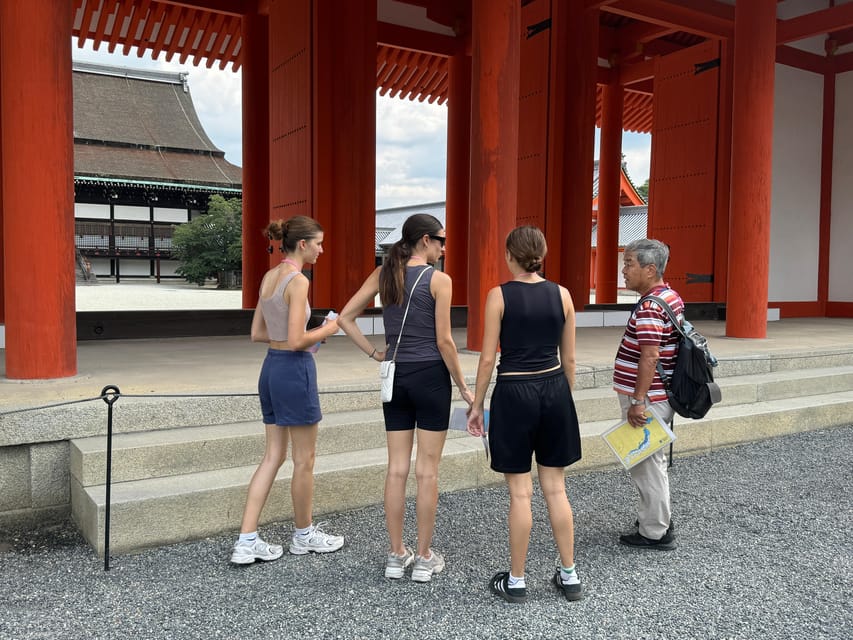
- Meet at Hamaguri Gate: Look for the guide holding a yellow DeepExperience sign in front of Hamagurigomon.
- See the Shishinden: This imposing hall was used for major imperial ceremonies and is the visual center of the palace.
- Connect buildings with court life: The tour covers both formal halls and the emperor’s personal residence.
- Gardens add calm and beauty: The carefully arranged grounds make the palace visit feel spacious and unhurried.
- Guide quality matters: Yoshi was praised for clear explanations, but the standard may vary by guide.
- Good for history-minded visitors: The tour is most useful if you want context, questions answered, and help noticing details you might pass on your own.
Why Kyoto Imperial Palace matters
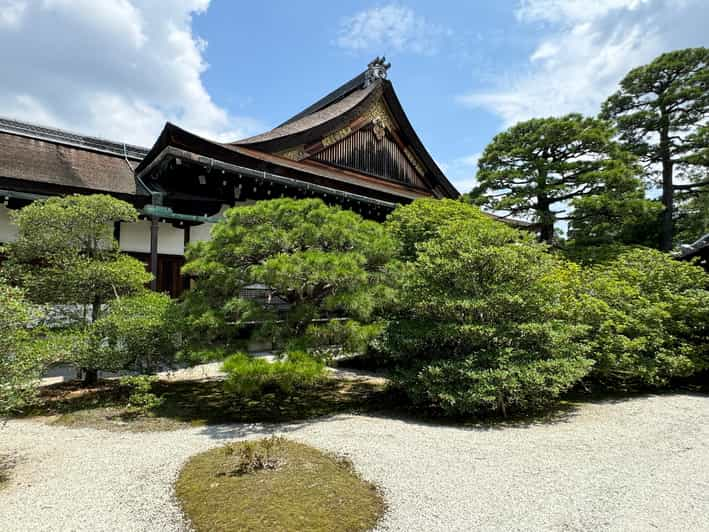
Kyoto Imperial Palace is not simply an old building in a park. It was the home of Japan’s imperial family until the capital moved to Tokyo in 1869. That gives the site a special role in understanding Kyoto, Japan’s court traditions, and the formal side of imperial life.
You enter through the grounds of Kyoto Gyoen National Garden, a large green area in the middle of the city. The palace complex itself contains traditional wooden buildings, ceremonial halls, court spaces, and gardens. It is a place where architecture explains social rank and ceremony. The size of a hall, the arrangement of a courtyard, and the separation between public and private areas all tell you something about how the court operated.
I find this sort of visit more rewarding with a guide than with a quick walk past buildings. Japanese palace architecture can look restrained at first glance. A guide can explain why one hall mattered, how a space was used, or what separated an official ceremony from everyday court life. Without that context, you may admire the roofs and gardens but miss the meaning behind them.
More Imperial Palace and villa visits:
- Kyoto: Imperial Palace & Nijo Castle Guided Walking Tour
★ 4.7 · 453 reviews - Kyoto Imperial Palace & Nijo Castle Guided Walking Tour – 3 Hours
★ 4.5 · 106 reviews - Kyoto: Nijo Castle and Kyoto Imperial Palace Guided Tour
★ 4.6 · 98 reviews
Meeting at Hamaguri Gate
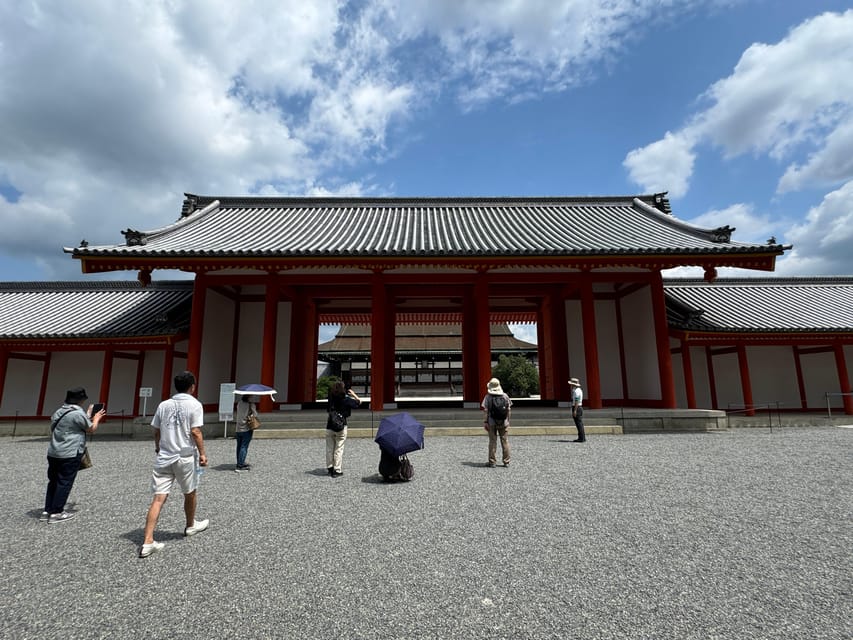
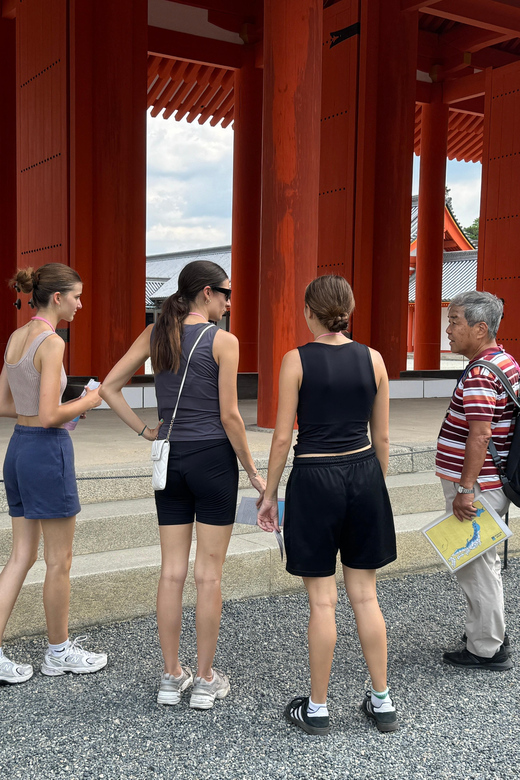
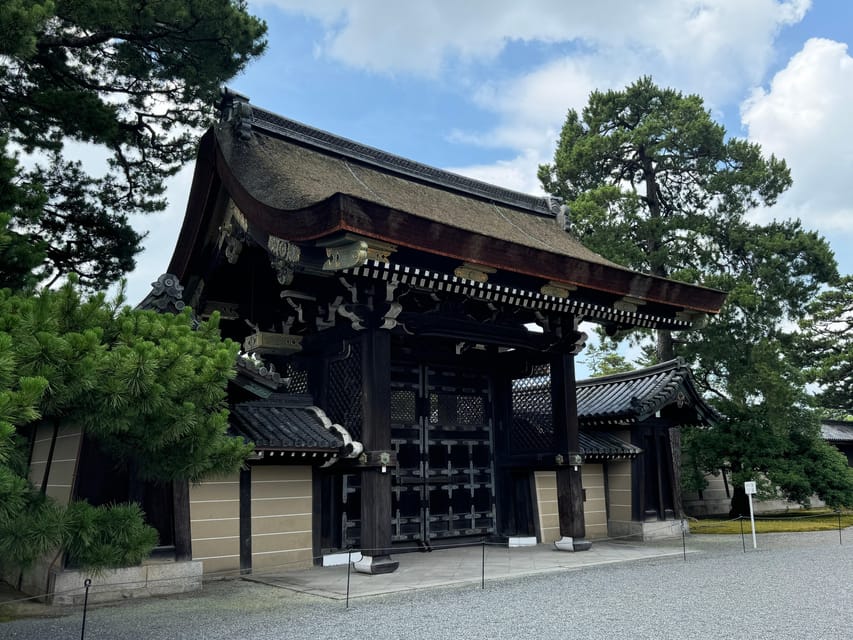
Your meeting point is in front of Hamaguri Gate, also called Hamagurigomon, at the Kyoto Imperial Palace. This is an important detail, since a large palace complex can make a vague meeting point frustrating. You should look for a guide holding a yellow sign marked DeepExperience.
Arrive with enough time to locate the gate and settle in. The tour begins and ends at the same place, so you do not need to arrange a separate pickup or figure out where the walk finishes. That simple start and finish works well if you are fitting the palace between other Kyoto sights.
The tour is offered in English, with private or small-group options available. A small group should make it easier to hear explanations and ask questions. If you care about a more personal pace, check the exact group arrangement before paying, since the experience can feel quite different in a private group than in a larger one.
The imperial grounds and traditional buildings
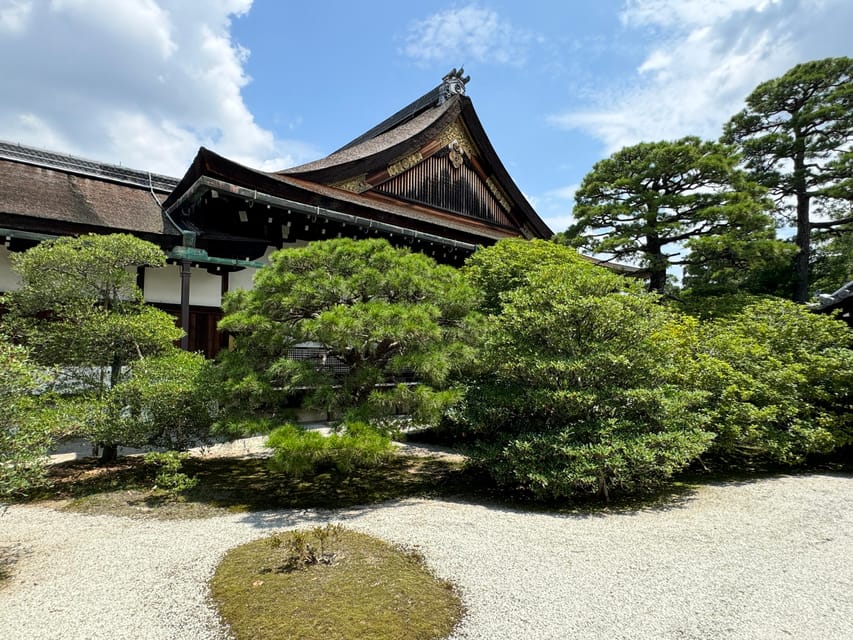
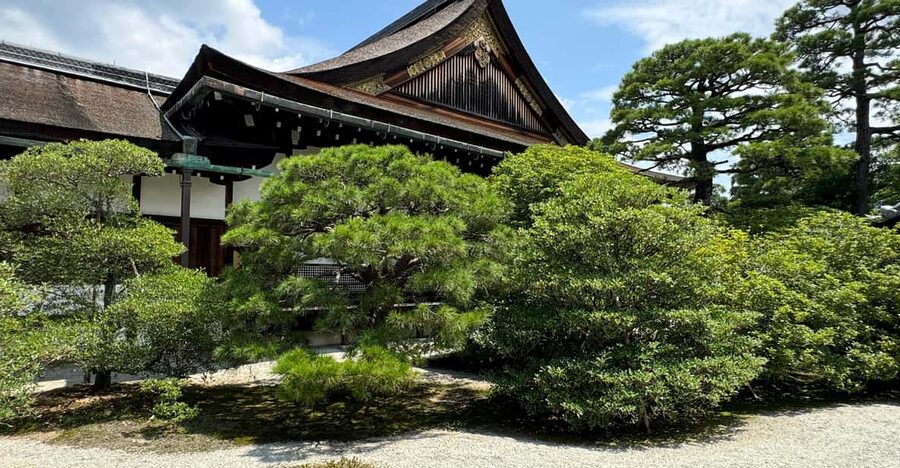
Once inside, expect a walking tour through a series of formal buildings and open spaces rather than one single palace interior. The complex includes the main hall, ceremonial structures, and areas connected to official functions. The buildings are valued for their traditional Japanese design, with careful proportions and a strong connection between architecture and garden space.
The appeal here is not flashy decoration. You will notice clean lines, wooden structures, broad roofs, and spaces designed for ceremony and order. The setting asks you to slow down and look. A guide can point out how the buildings relate to one another and help you understand which spaces were meant for public ritual and which belonged to private life.
You should also expect some walking between stops. The total tour is short, but the grounds cover enough space that comfortable shoes make sense. The supplied details describe the activity as one hour, while the guided palace visit is also described as one and a half hours. Check the start time and duration available for your chosen date so you know how much room to leave in your day.
Shishinden, the ceremonial heart of the visit
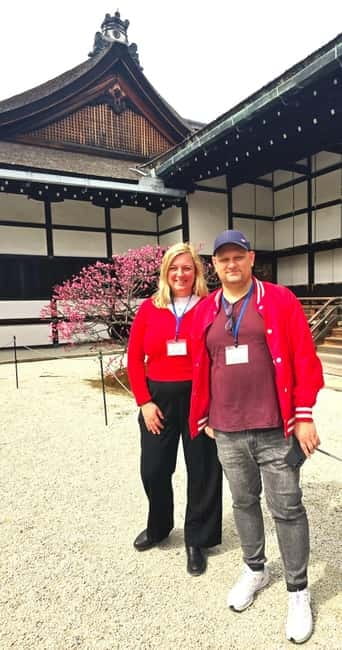
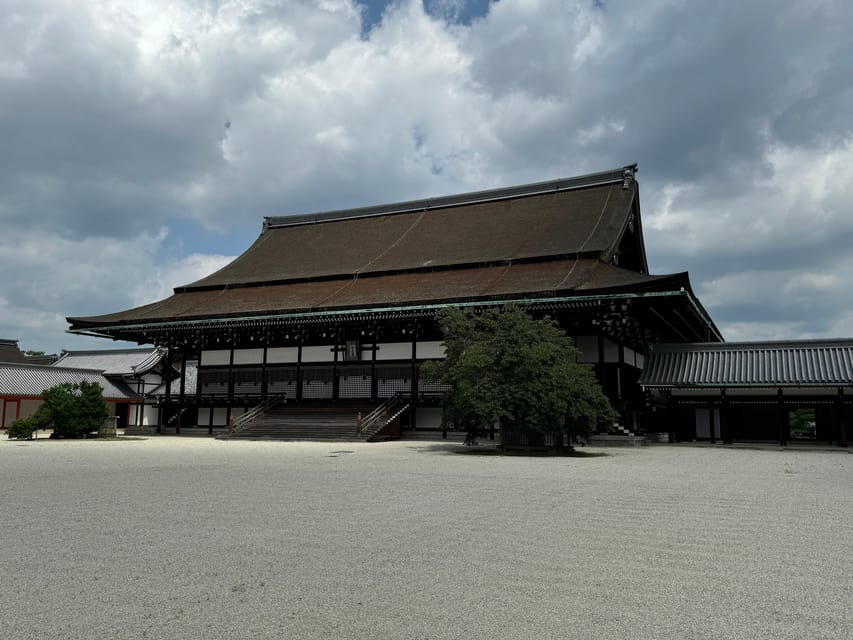
The Shishinden is the palace’s most important visual stop. This majestic hall was used for major imperial ceremonies, giving you a direct connection to the formal side of Japan’s monarchy.
The building is impressive because of its scale and position, not because it tries to overwhelm you with ornament. It represents ceremony, rank, and tradition. When you stand before it, you can picture the careful choreography required for important occasions, even if the quiet setting feels far removed from court life.
I would pay close attention to the guide here. This is the point where a few clear explanations can turn a beautiful building into a meaningful historical site. Ask about the ceremonies held there, who used the hall, and how it fit into the rest of the palace. The tour description specifically highlights the historical importance of the halls, so this is where you should expect the strongest connection between architecture and imperial tradition.
The grounds around the hall also give you good opportunities for photographs. Just remember that the visit is about more than collecting an image of a grand roof. The guide’s explanation helps you understand why this particular hall matters.
A few more Kyoto tours worth putting on the shortlist
- PERFECT KYOTO 1-Day Bus Tour
★ 5.0 · 13,518 reviews - Kyoto: Fushimi Inari, Kinkakuji, Bamboo Grove 1 Day Bus Tour
★ 4.8 · 4,316 reviews - Kyoto: Tea Ceremony in a Traditional Tea House in Kiyomizu
★ 4.9 · 3,519 reviews - Kyoto Geisha Walking Tour: Gion District & Hidden Gems
★ 4.7 · 3,273 reviews
The emperor’s residence and daily court life
The tour also brings you closer to the emperor’s personal residence. This part changes the mood of the visit. The Shishinden represents public ceremony, while the personal residence helps you think about daily life inside the imperial court.
That contrast is one of the best reasons to choose a guided walk. You are not only looking at official spaces used for major events. You are also considering how the imperial family lived between ceremonies, how private areas differed from public halls, and how court life was organized.
The information supplied for this experience does not promise access to every interior room, so you should not book it expecting a house tour in the modern sense. Instead, think of the residence as part of a wider story about imperial routine and tradition. The guide can help you connect the building to the people who used it.
For me, this is where the palace becomes easier to picture as a home, not just a symbol. The formal halls tell you how the imperial family appeared to the nation. The personal residence gives you a smaller, more human frame for understanding that world.
Gardens that slow the pace
The palace gardens provide a welcome pause between historical explanations. They are carefully arranged, quiet, and attractive in their own right. One visitor gave special praise to the inner garden, calling it breathtaking, and that description points to the visual strength of this part of the experience.
You will see how traditional architecture and gardens work together. Paths, open views, trees, and water features help shape the way you experience the buildings. The garden is not just background decoration. It creates space around the palace and gives the formal structures a calmer setting.
I like that the gardens keep this from becoming a purely academic tour. You can listen to an explanation about court customs, then pause to take in the setting. If you enjoy Japanese design, photography, or quiet historic places, the gardens may be as memorable as the halls.
The gardens also make the short tour feel varied. You move between history, architecture, and scenery instead of spending the entire time looking at similar buildings. Still, the visit is not a long garden walk. If garden design is your main interest, you may want to allow extra time in Kyoto Gyoen National Garden beyond the guided portion.
How much help does the guide add?
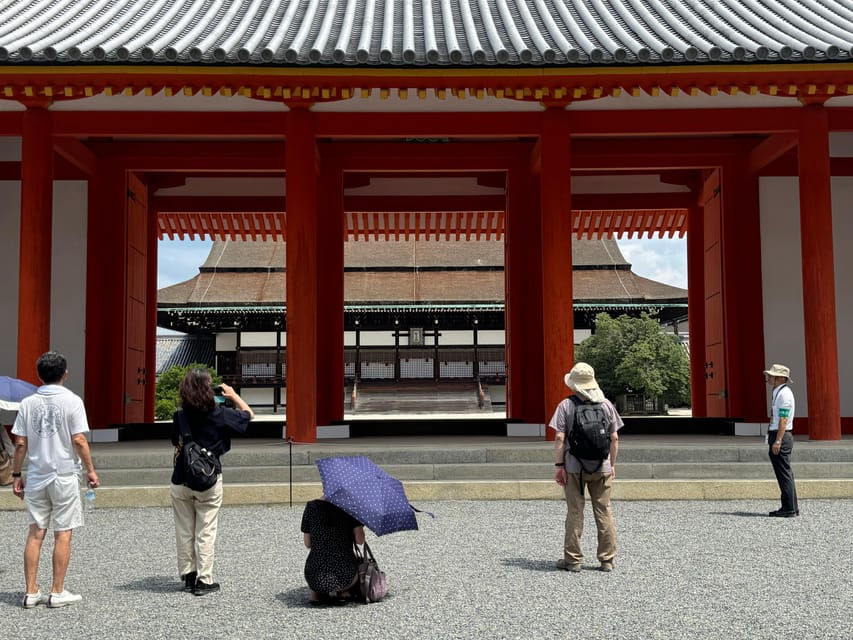
At $38 per person, the value rests mainly on the quality of the explanation. Entry to Kyoto Imperial Palace is free, so you are paying for the guide, the structure of the visit, and the chance to ask questions rather than for admission.
That can be a fair price if you want context. A good guide can explain the imperial family’s role, identify the purpose of the halls, and draw your attention to details that are easy to overlook. The visit becomes more than a free walk through attractive grounds.
But this is not automatic. Guide quality appears to vary. Yoshi was praised for his grasp of Japanese history and for showing interesting details around the grounds. Another booking described a guide who offered very little information and mainly walked alongside the group while taking photographs. That is a major difference for a tour whose main product is interpretation.
I would book this if you are likely to ask questions and care about historical background. If you are comfortable reading signs and simply want to see the grounds, you may decide that the free entry is enough. The paid tour makes the most sense for visitors who want a guided explanation in English and prefer not to research the palace on their own.
Timing, group size, and practical fit
The experience is short enough to fit into a busy Kyoto schedule. The details describe a one-hour activity, while the guided palace visit is listed as one and a half hours. Confirm the exact timing when you select a date, especially if you have a restaurant reservation, train, or another timed attraction afterward.
The private or small-group format is a useful option. A smaller group usually gives you a better chance to hear the guide clearly and ask about details that interest you. It can also make the pace feel less fixed. The actual group size matters, so check the available choice rather than assuming every departure is private.
The tour starts and ends at Hamaguri Gate. That makes planning simple, but you are responsible for reaching the gate yourself. The meeting instructions are clear: find the yellow DeepExperience sign in front of Hamagurigomon.
English is the only language specified. If you need another language, this is not the right choice based on the information available. Cancellation is flexible up to 24 hours before the activity for a full refund, and you can reserve now while paying later. Those terms are helpful if your Kyoto schedule is still changing.
Who will enjoy this palace walk?
I would recommend it to first-time Kyoto visitors who want a clear introduction to the imperial family and traditional court life. It also suits anyone interested in Japanese architecture, ceremony, or the relationship between buildings and gardens.
Families may find the short format manageable, especially if children respond well to stories about emperors, formal events, and palace life. History-minded visitors will get the most from it, but you do not need prior knowledge to appreciate the site.
You may want to skip it if you only want independent sightseeing and do not care about explanations. Since palace entry is free, the tour fee is hard to justify if your ideal visit is a quiet walk with no guide. It is also not the best choice if you need a guaranteed high level of commentary, since the available feedback shows that the guide can make or break the experience.
Should you book this Kyoto Imperial Palace tour?
Book it if you want a compact, English-language introduction to Kyoto’s imperial past, especially if you can join a private or small group. The Shishinden, the emperor’s former residence, and the gardens give the tour a good balance of ceremony, daily life, and scenery.
Before booking, confirm the exact duration and group size. I would also keep expectations realistic: you are paying $38 for guiding and interpretation, not admission. If you receive a guide with the energy and historical command shown by Yoshi, the price can be worthwhile. If you prefer to explore at your own pace and are happy with free entry, visiting independently may suit you better.
FAQ
Where does the tour meet?
Meet in front of Hamaguri Gate, also called Hamagurigomon, at Kyoto Imperial Palace. Your guide will hold a yellow sign marked DeepExperience.
Where does the tour finish?
The tour returns to Hamaguri Gate, the same location where it begins.
How long does the experience last?
The activity is described as lasting one hour, while the guided palace visit is listed as one and a half hours. Check the exact duration and start time for your selected date.
Is entry to Kyoto Imperial Palace included?
Yes. Entry to Kyoto Imperial Palace is included and is listed as free. The $38 price pays for the guided experience.
What language is the tour offered in?
The live tour guide speaks English. No other language is specified.
Can I cancel or pay later?
You can cancel up to 24 hours in advance for a full refund. You can also reserve now and pay later.
Newest Kyoto experiences on the site
- Whisk Your Own Matcha: A Zen Matcha Experience at Temple★ 3.6 · 7 reviews
- Treasures of Kyoto: Gion & historical Walking Tour★ 5.0 · 6 reviews
- Kyoto tea town for matcha lovers★ 5.0 · 16 reviews
- Uji: Private immersion into Kyoto’s tea and reglious culture★ 5.0 · 17 reviews
- Kyoto Matcha Green Tea Tour★ 4.5 · 23 reviews
- Uji and Wazuka Matcha Farm Half Day Private Guided Tour★ 5.0 · 21 reviews
- Utilising upcycled Matcha! Creating matcha incense (Uji, Kyoto)★ 5.0 · 6 reviews
- Sacred Temple Yoga Experience in Japan★ 5.0 · 3 reviews
Kyoto Imperial Palace Tours, compared.
Imperial Palace & Nijo Castle Guided Walking Tour
Read our review →
Kyoto Imperial Palace & Nijo Castle Guided Walking Tour – 3 Hours
Read our review →
Nijo Castle and Kyoto Imperial Palace Guided Tour
Read our review →
Nijo Castle and Imperial Palace Visit with Guide
Read our review →
Kyoto Imperial Palace and Nijo Castle Walking Tour
Read our review →
Visiting to Katsura Imperial villa and tea ceremony experience
Read our review →Browse the lists this tour appears in