
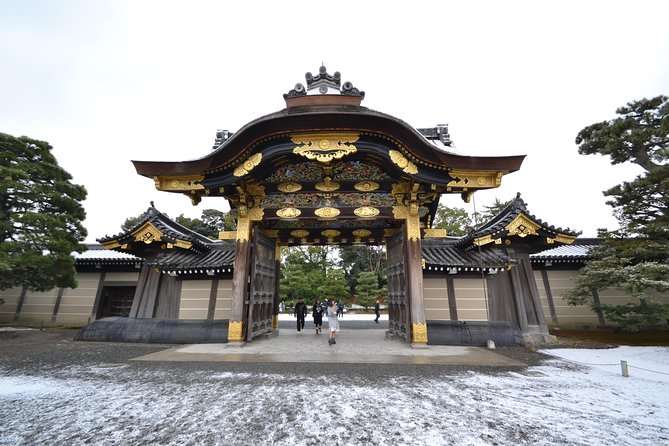
Reviewed · NIJO CASTLE TOURS
Nijo Castle and Imperial Palace Visit with Guide
Nijo Castle gives you an unusually clear look at how the shoguns ran Japan, while Kyoto Imperial Palace shows the older imperial side of the story. With guides such as Mia, Mie, and Choko, the visit connects buildings, political change, ceremony, and culture instead of leaving you to guess what each room meant.
I like the included public transport, since getting from the castle to the palace is part of the experience rather than a puzzle. I also like the guide-led access to Nijo Castle’s interior, where details such as the shogun’s meetings and symbolic decoration are easy to miss on your own. The main drawback is the brisk timing: about one hour at each site leaves little room for lingering.
Key points to know before booking
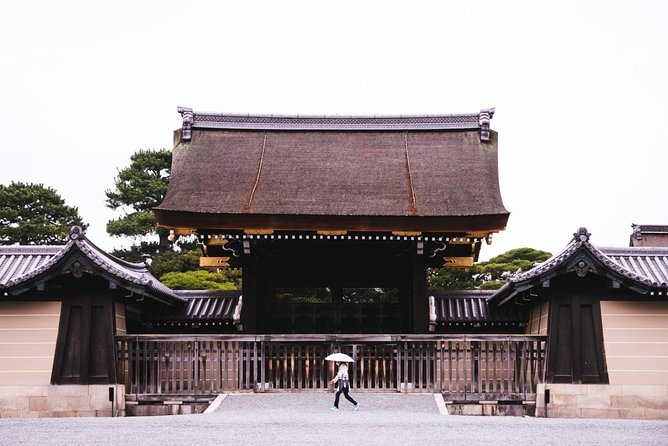
- See two sides of old Kyoto: Nijo Castle explains shogunal power, while Kyoto Imperial Palace brings the imperial household into the picture.
- Guides add the meaning: Mia is often praised for humor, visual aids, and clear explanations of Tokugawa rule and the Meiji-era transfer of power.
- Admission and transit are covered: You pay one tour price for entry to both sites and the public transport between them.
- Choose morning or afternoon: The two time slots make it easier to fit the visit around a Kyoto sightseeing day.
- Plan for walking: Comfortable shoes matter, with substantial walking through buildings, grounds, and the route between the two stops.
- The group setup needs a careful read: It is presented as a private experience for your party, with a small-group description under eight people and a maximum listed elsewhere as 11.
Why these two sites tell a better story together
A visit to only Nijo Castle can leave you with a picture of samurai government. A visit to only Kyoto Imperial Palace can leave you focused on court ceremony and imperial life. Put them together and you get a useful outline of Japan’s changing power structure.
Nijo Castle was tied to the Tokugawa shogunate, the military government that controlled Japan during the Edo period. Kyoto Imperial Palace represents the imperial court and the long role of the emperor in the old capital. The guide’s job is to connect those two worlds, then explain how power shifted again with Emperor Meiji.
That connection is the real reason to book this tour. You are not simply walking through two attractive compounds. You are following the movement of authority between shogun, emperor, court, and government.
The tour lasts about two and a half hours. The planned visits are roughly one hour at Nijo Castle and one hour at the palace, with public transport in between. That is enough time for a well-paced introduction, but not enough for a slow, every-corner inspection of both sites.
More Nijo Castle visits:
- Kyoto: Nijo-jo Castle and Ninomaru Palace Guided Tour
★ 4.7 · 1,020 reviews - Kyoto: Nijo Castle, Kiyomizu & Fushimi Inari Guided Tour
★ 4.7 · 700 reviews - Kyoto: Nijo, Kinkaku-ji, Arashiyama, Kiyomizu & Fushimi Inari
★ 5.0 · 699 reviews
Starting at Nijo Castle’s white gate
You meet your guide in front of the large white main gate at Nijo Castle, at 541 Nijojocho in Nakagyo Ward. This is a practical meeting point, since it is easy to identify and avoids the uncertainty of searching inside a large compound.
The castle is the stronger first stop for many people because the guide can explain how the shogun used the site. The visit includes the interior, not just the grounds. That matters. The rooms, layout, and decorative details make more sense once you understand that this was a place of political meetings and controlled movement.
One particularly useful subject is the way the shogun’s authority was displayed. Your guide may point out where important meetings took place and explain the symbolism built into the rooms. A guide can also help you notice small details that would otherwise look like decoration without a clear purpose.
Several guides receive praise for making this information easy to follow. Mia is described as warm, funny, and especially good at explaining the Tokugawa shogunate. She has also used visual aids to clarify historical figures and events. Mie is noted for giving enough background without burying the visit in dates, while Choko is described as friendly and able to answer detailed questions.
The castle stop is not only about politics. It also gives your guide room to explain Japanese customs, architecture, and the relationship between space and rank. You might find that the best moments come when you ask a direct question, since the guides are described as willing to adjust the explanation to your interests.
The castle’s interiors are the main payoff
If you are deciding between a guide and a self-guided visit, the interior of Nijo Castle is where the difference matters most. On your own, you can see the rooms, but it is harder to understand why a particular area mattered or how the shogun’s meetings worked.
The guide also gives the building a human scale. Historical figures can seem remote when reduced to a timeline. Stories about the shogun, the imperial family, and the transfer of power help you understand the people behind the political system.
The visit is still fairly short. You should not expect to study every garden path or spend a long time taking photographs. The pace favors explanation and the main highlights. If you want a quiet, unhurried castle visit, you may prefer to return independently later, if your schedule allows.
The grounds add value, too. The experience includes the lovely garden area around the historic buildings, although the exact amount of free time is not specified. Keep your attention on both the architecture and the open spaces around it. The contrast helps explain how formal movement and controlled access shaped the site.
Public transport turns the transfer into part of the tour
After Nijo Castle, you travel with the guide to Kyoto Imperial Palace by public transportation. The fare is included, so you do not need to work out the route or carry separate transit money for this part of the tour.
I see this as more than a convenience. Kyoto’s transport system is part of normal city life, and riding with a guide gives you a practical transition between two major sights. It also saves you from losing time between the sites, especially if you are unfamiliar with Kyoto’s stations and routes.
The transfer does mean you should stay with the group and keep the schedule in mind. This is not a private car tour, and the route depends on public transport. The good news is that the transfer is described as easy, with the guide handling the movement between stops.
Since the tour begins at Nijo Castle and ends at Kyoto Imperial Palace, you do not return to your starting point. That is useful if your next activity is in or around the northern part of central Kyoto. It is less convenient if you expect to collect something at the castle or need to finish near your hotel.
More Imperial Palace and villa visits:
- Kyoto: Imperial Palace & Nijo Castle Guided Walking Tour
★ 4.7 · 453 reviews - Kyoto Imperial Palace & Nijo Castle Guided Walking Tour – 3 Hours
★ 4.5 · 106 reviews - Kyoto: Nijo Castle and Kyoto Imperial Palace Guided Tour
★ 4.6 · 98 reviews - Kyoto: Discover Every Bit of Kyoto Imperial Palace
★ 4.4 · 21 reviews
Kyoto Imperial Palace puts the imperial story in place
The second one-hour guided visit takes place at Kyoto Imperial Palace, within Kyoto Gyoen National Garden. The tour ends in front of the palace at 3 Kyotogyoen in Kamigyo Ward.
Here the story shifts from the military government to the imperial household. The guide can explain the emperor’s role, the imperial family, and the change in political power associated with Emperor Meiji. This is where the two-stop design pays off most clearly.
The palace grounds also offer a different mood from Nijo Castle. The castle visit centers on shogunal authority and interior rooms. The palace stop gives more attention to the imperial setting and the long role of Kyoto as Japan’s ancient capital.
The experience does not promise a full tour of every palace building or unlimited time in the garden. Think of this as a guided introduction to the main historical setting. If you want to explore every part of Kyoto Gyoen at leisure, plan extra time after the tour ends.
One practical warning is worth noting. A past visit was affected by a palace closure for an event, while Nijo Castle remained available. That situation may not occur on your date, but it shows why you should keep some flexibility. If the Imperial Palace cannot be visited because of an event, the tour may not deliver both planned stops in the usual way.
Mia and the guide make the difference
The strongest part of this experience is not simply the admission ticket. It is the quality of the explanation. Mia receives especially strong praise for being animated, funny, and clear without turning the tour into a lecture.
Her approach appears to suit people who want context but do not want every historical date recited. She explains the Tokugawa era, the emperor’s family, and the shift toward Meiji rule, then responds to questions. Visual aids can help when several historical figures or political changes become difficult to track.
Mie is also singled out for a warm manner, strong English, and a good balance between detail and pace. Choko is described as friendly, clear, and able to answer questions about both sites. Another guide is referred to as Mike, with high praise for explanations of shogunal and imperial history.
Guide assignments can change, so you should not book solely on the assumption that one particular person will lead your departure. Still, the repeated emphasis on guides named Mia, Mie, and Choko tells you what to value here: a personal explanation, room for questions, and a sense of humor alongside the formal history.
An English-speaking guide is included. That is especially useful at Nijo Castle, where the meaning of a room or arrangement may not be obvious from a short label.
Is $79.18 a fair price?
At $79.18 per person, this is not the cheapest way to see Nijo Castle and Kyoto Imperial Palace. The price includes both entrance fees, public transportation between the sites, and an English-speaking guide for about two and a half hours.
The value depends on how much you want from the visit. If you only want to walk through the compounds and take photographs, independent entry will likely cost less. If you want to understand the shogun’s meetings, the symbolism in the castle, and the transition from shogunal control to imperial rule, the guide adds the part that admission alone cannot provide.
The private format can make the price easier to justify for a family or small party. You can ask questions, request clarification, and hear explanations suited to your interests. The information describes the experience as private for your party, while also describing a small group of fewer than eight and listing a maximum of 11 participants. I would confirm the exact group arrangement before booking if privacy is important to you.
Group discounts are available, though the amount is not specified. Food, drinks, hotel pickup, and hotel drop-off are not included. You should budget for those separately and arrange your own way to the castle at the start.
Timing, walking, and what to bring
The tour offers morning and afternoon departures. Morning is a good choice if you want the rest of the day free for another part of Kyoto. Afternoon may suit you if you prefer a slower start or want to pair the tour with nearby sightseeing earlier in the day.
You should wear comfortable shoes. The tour covers two large historic sites, includes walking through buildings and grounds, and requires a public transport transfer. The one-hour format at each location also means you should be ready to keep moving rather than stop for long breaks.
Food and drinks are not provided. There is no hotel pickup or drop-off, so check the route to Nijo Castle before setting out. The end point is at Kyoto Imperial Palace, not back at Nijo Castle.
The tour is listed as suitable for most people, with service animals allowed. It requires good weather, and poor conditions can lead to a new date or a full refund. Free cancellation is available up to 24 hours before the start time, but changes or cancellations inside that window are not accepted.
Who will get the most from this visit?
I would choose this tour for a first visit to Kyoto if you want historical context without spending half a day in a museum. It also suits anyone interested in the Tokugawa shogunate, the imperial family, or the political change that brought the Meiji period into view.
Families may appreciate the guide’s humor and visual aids. The private or small-group setup makes it easier for children and adults to ask questions without holding up a large coach group. Couples and friends who prefer a structured visit can also get good value from the included transit and admissions.
You may want to skip it if you dislike guided pacing or prefer to spend hours wandering one site. You may also find the price high if your main goal is independent sightseeing and photographs. The two-hour-thirty-minute schedule is focused and useful, but it is not leisurely.
Should you book Nijo Castle and Imperial Palace?
Book it if you want these two places to make sense as one story. The castle shows the machinery of shogunal power, while the palace explains the imperial side and the later change in authority. A good guide turns that contrast into the main lesson of the morning or afternoon.
The best reason to choose it is the human explanation from guides such as Mia, Mie, or Choko. The best reason to hesitate is the limited time and unclear private-group wording. If you value context, questions, and a simple transfer between two major sites, the $79.18 cost is reasonable. If you want maximum freedom, visit independently and spend the savings on extra time inside Kyoto Gyoen.
FAQ
How long does the tour last?
The tour lasts approximately 2 hours and 30 minutes. The planned guided visits take about one hour at Nijo Castle and one hour at Kyoto Imperial Palace, with public transportation between them.
Where does the tour begin?
The meeting point is in front of Nijo Castle at 541 Nijojocho, Nakagyo Ward, Kyoto, 604-8301, Japan.
Where does the tour end?
The tour ends in front of Kyoto Imperial Palace, inside the Kyoto Gyoen National Garden area at 3 Kyotogyoen, Kamigyo Ward, Kyoto, 602-0881, Japan.
Is transportation included?
Yes. Public transportation between Nijo Castle and Kyoto Imperial Palace is included in the tour price.
Are entrance fees included?
Yes. Admission to Nijo Castle and Kyoto Imperial Palace is included.
Can I choose a morning or afternoon departure?
Yes. The tour offers a choice of morning or afternoon time slots.
What happens if bad weather cancels the tour?
If poor weather causes cancellation, you will be offered a different date or a full refund. You can also cancel up to 24 hours before the start time for a full refund.
Newest Kyoto experiences on the site
- Treasures of Kyoto: Gion & historical Walking Tour★ 5.0 · 6 reviews
- Whisk Your Own Matcha: A Zen Matcha Experience at Temple★ 3.6 · 7 reviews
- Kyoto tea town for matcha lovers★ 5.0 · 16 reviews
- Uji: Private immersion into Kyoto’s tea and reglious culture★ 5.0 · 17 reviews
- Kyoto Matcha Green Tea Tour★ 4.5 · 23 reviews
- Uji and Wazuka Matcha Farm Half Day Private Guided Tour★ 5.0 · 21 reviews
- Utilising upcycled Matcha! Creating matcha incense (Uji, Kyoto)★ 5.0 · 6 reviews
- Sacred Temple Yoga Experience in Japan★ 5.0 · 3 reviews
Nijo Castle Tours, compared.
Nijo-jo Castle and Ninomaru Palace Guided Tour
Read our review →
Nijo Castle, Kiyomizu & Fushimi Inari Guided Tour
Read our review →
Nijo, Kinkaku-ji, Arashiyama, Kiyomizu & Fushimi Inari
Read our review →
Imperial Palace & Nijo Castle Guided Walking Tour
Read our review →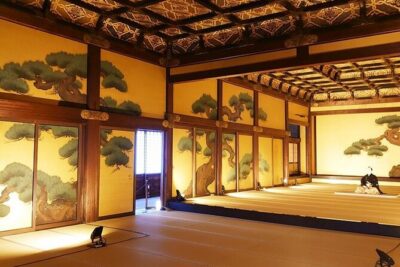
Nijo Castle World Heritage Guided Tour with Admission
Read our review →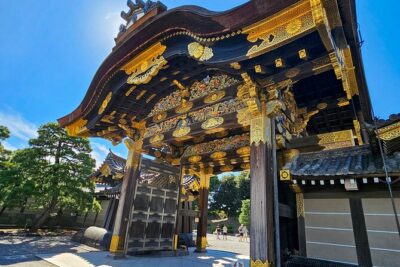
Kyoto Imperial Palace & Nijo Castle Guided Walking Tour – 3 Hours
Read our review →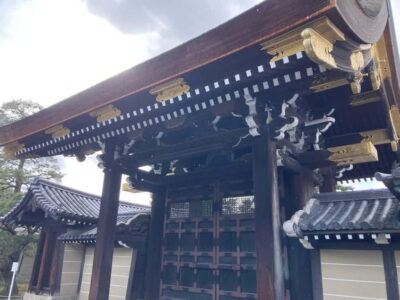
Nijo Castle and Kyoto Imperial Palace Guided Tour
Read our review →
Golden Pavilion, Nijo Castle, & Nishiki Market Half day tour
Read our review →Browse the lists this tour appears in