
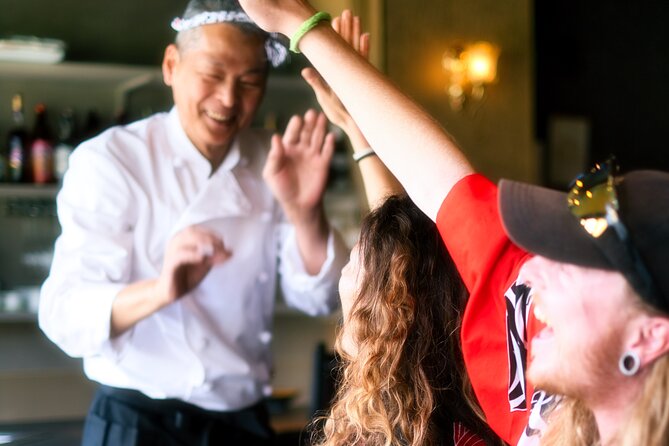
Reviewed · KYOTO SUSHI MAKING CLASSES
Kyoto Making Wagyu Sushi experience
Making sushi from scratch is fun. Making wagyu sushi in a Kyoto steak restaurant is the unusual twist here. In about 75 minutes, you shape the rice, add toppings, roll maki, make gunkan sushi, and then eat what you prepared with tempura and red miso soup.
I like the family-friendly format, since children can take part, and I like the small capacity of no more than 10 people. Chef Yoshi also prepares fresh ingredients for the session, which gives the meal a personal touch.
The main drawback is finding the restaurant. The address is in a multi-story building, and the correct elevator is not obvious from the street. This is not the kind of activity where you want to arrive at noon and start solving a building puzzle.
Key points to know before booking
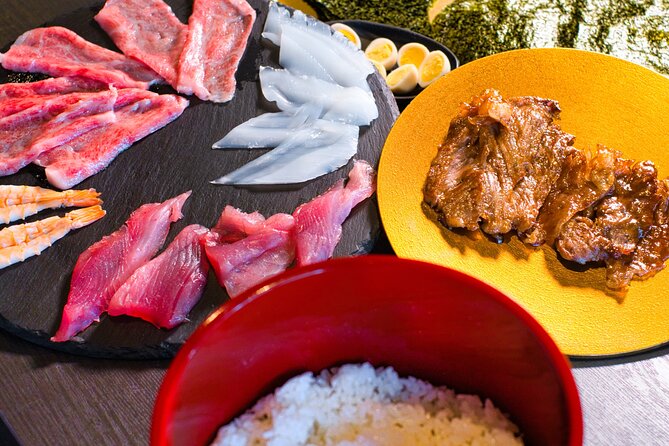
- Wagyu takes the place of ordinary sushi toppings, giving the class a distinctly Kyoto steakhouse angle.
- You make three sushi styles, including nigiri, maki rolls, and gunkan sushi.
- Lunch is included, with your sushi, tempura, red miso soup, pickles, and a soft drink.
- Chef Yoshi leads the food preparation, including fresh ingredients selected that morning.
- Children can participate, making this a useful family activity as well as a date idea.
- The meeting point can be tricky to locate, so plan extra time for the Kyoto Golden Building.
Wagyu sushi in a Kyoto steakhouse
The activity takes place at Cocotte Alpha Premium Wagyu Teppanyaki Kyoto Pontocho, at 175 Zaimokucho, Kyoto Golden Building, third floor. The setting matters. You are not simply learning a standard sushi recipe in a cooking classroom. You are making sushi in a steak restaurant, with wagyu as part of the meal.
That gives the experience a playful Kyoto identity. Sushi is familiar to most visitors, but wagyu sushi feels less routine. You get to think about how a prized beef ingredient works with seasoned rice, nori, wasabi, and the other toppings provided for the class.
The experience begins at noon. That timing works well if you want a hands-on lunch before spending the afternoon around Kyoto. It also means you should eat breakfast lightly, since the finished food becomes a full meal rather than a small sample.
The class lasts about one hour and 15 minutes. That is long enough to learn several techniques without turning lunch into an all-day project. If you prefer a detailed culinary course with many dishes, this will feel brief. If you want a focused activity that fits neatly into a sightseeing day, the length is useful.
More sushi making classes in Kyoto:
- Sushi Making in Kyoto! Same-day bookings welcome!
★ 5.0 · 713 reviews - The Original Small-Group Sushi Making Class in Kyoto
★ 5.0 · 436 reviews - Kyoto: Small-Group Authentic Sushi Making Workshop
★ 5.0 · 137 reviews
Finding the third-floor meeting point
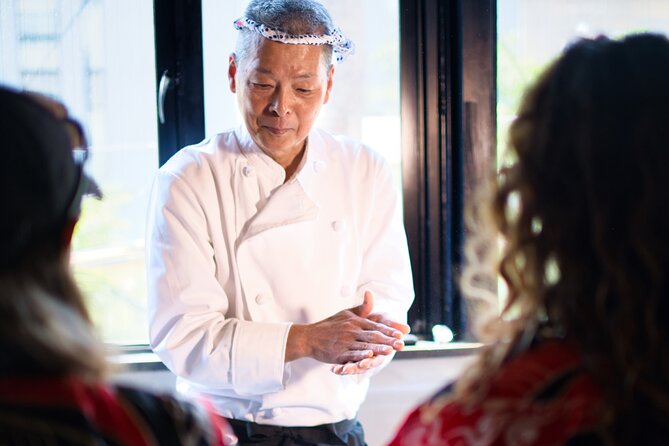
The restaurant is near public transportation, but the building entrance deserves attention. The Kyoto Golden Building has more than one elevator area, and the elevator visible from the street may not be the one you need.
I would arrive early and look carefully for the entrance serving the third floor. One family using the activity found the location difficult to identify, even though Google Maps brought them to the correct area. Their practical lesson is simple: do not rely on the map pin alone once you reach the building.
This is a small issue, but it matters because the start time is fixed at 12:00 p.m. Give yourself extra minutes to check the building directory and elevator signs. The restaurant is in Pontocho, an area where narrow streets and closely packed buildings can make addresses less obvious than they appear on a map.
The activity ends back at the same meeting point. You do not need to arrange a separate return transfer, and you can continue sightseeing from the Pontocho area after lunch.
Putting on a happi coat and preparing the rice
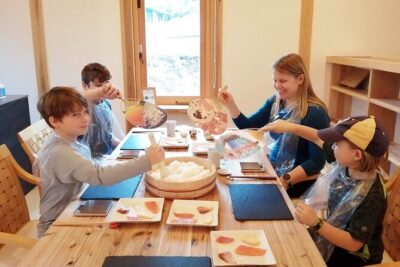
A special happi coat is provided so you can enjoy a traditional Japanese visual touch while making lunch. It is a small detail, but it helps the class feel like an event rather than a quick demonstration at a restaurant table.
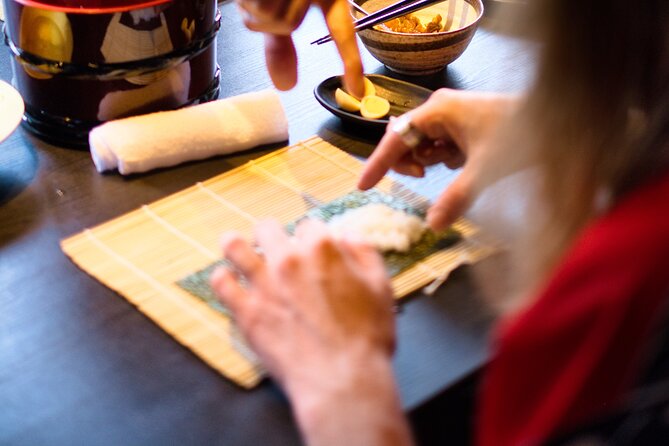
The first practical step is washing your hands. You then learn how to prepare the rice for nigiri sushi. The rice is not just a base to pile food onto. Its shape, size, and firmness affect how easy the sushi is to pick up and eat.
The class provides hints and techniques intended to help you form better sushi. You will not need to arrive with prior experience. The instructions are designed for beginners, and children can take part as well.
For families, this section gives children a clear job. They can shape rice, choose toppings, and watch a meal develop piece by piece. Adults should still expect to help younger children with the finer movements, especially when handling rice and arranging small ingredients.
Making nigiri with wagyu and wasabi
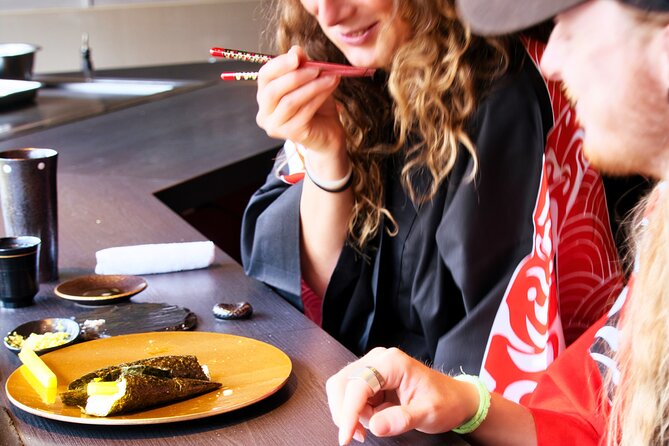
After preparing the rice, you place the toppings on top to form nigiri. You can add wasabi according to your preference, so you have some control over the heat. That is useful for a mixed group, since one person may enjoy a sharp wasabi kick while another may prefer none.
The basic process is simple to describe but takes a little care: shape the rice, place the topping, and complete one piece. The pleasure comes from repetition. Your first piece may look slightly lopsided, while later pieces become easier to handle.
This is also where the wagyu theme comes into focus. The activity combines a sushi technique with the restaurant’s beef specialty. It is a good choice if you want a meal connected to Japanese ingredients but are not looking for a standard fish-focused sushi lesson.
The information provided does not specify every sushi topping, so you should not book this expecting a fixed list of fish or seafood. You will make wagyu sushi along with other sushi styles, but the exact ingredient selection may depend on what Chef Yoshi prepares for the session.
A few more Kyoto tours worth putting on the shortlist
- PERFECT KYOTO 1-Day Bus Tour
★ 5.0 · 13,518 reviews - Kyoto: Fushimi Inari, Kinkakuji, Bamboo Grove 1 Day Bus Tour
★ 4.8 · 4,316 reviews - Kyoto: Tea Ceremony in a Traditional Tea House in Kiyomizu
★ 4.9 · 3,519 reviews - Kyoto Geisha Walking Tour: Gion District & Hidden Gems
★ 4.7 · 3,273 reviews
Rolling maki and shaping gunkan sushi
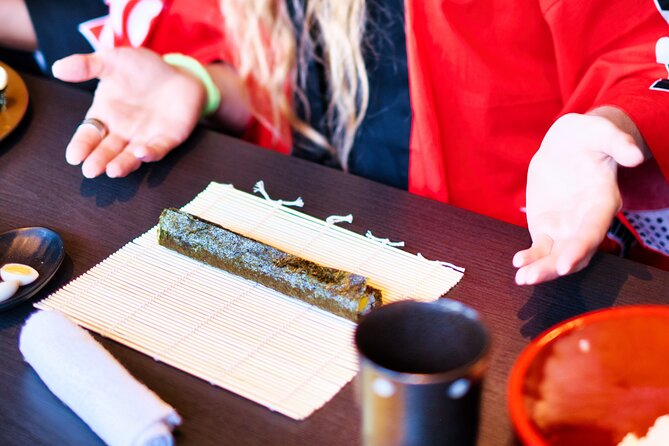
Next comes maki sushi. You add the ingredients, roll the sushi, and then hand the finished roll to the chef for cutting. That last step is useful because clean slicing can be harder than it looks. A roll that seems secure on the mat can flatten or loosen if cut poorly.
The chef cuts the roll for you, so the final presentation should be easier to manage. You still get the satisfaction of assembling and rolling it yourself without being judged on professional knife skills.
You also make gunkan sushi. This style uses a different shape of nori, and the activity points out that the seaweed size changes depending on the sushi type. That is a worthwhile detail for beginners. Sushi is not one single method, and the nori is cut and wrapped to suit the form.
Making nigiri, maki, and gunkan in one short session gives you a useful introduction to the basic differences. Nigiri is shaped rice with a topping. Maki is rolled. Gunkan is formed with a seaweed band around the rice, leaving space for its topping.
You will not become a sushi chef in 75 minutes, but you will leave understanding why the forms are made differently.
Sitting down for the finished lunch
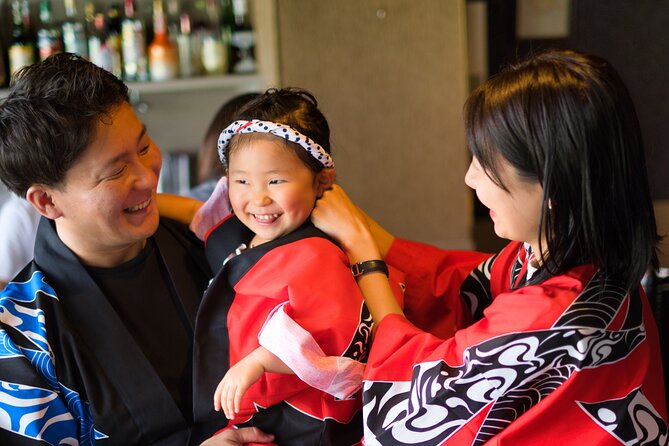
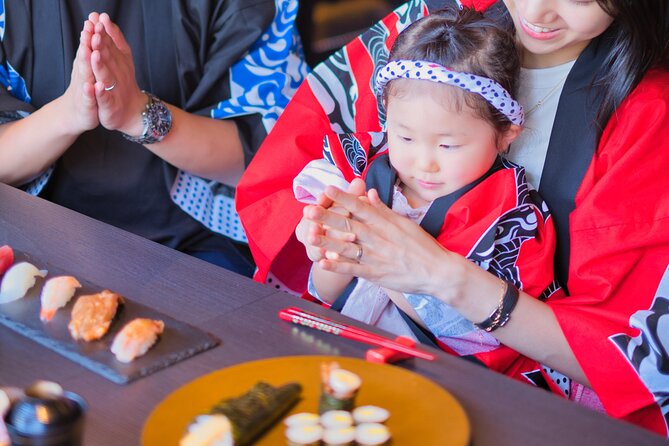
Once the sushi is prepared, you arrange it and say itadakimasu before eating. The meal includes the sushi you made, tempura prepared by the chef, red miso soup, pickles, and a soft drink.
That menu makes the price easier to judge. At $70 per person, this is not a cheap lunch, especially if several family members are attending. But you are paying for instruction, ingredients, a guided activity, the special clothing, and a complete meal rather than only a plate of sushi.
The tempura is an important part of the value. It gives you a cooked dish alongside the sushi and means the meal does not depend entirely on how your own pieces turn out. If your first rolls look more homemade than restaurant-ready, the chef’s tempura helps round out lunch.
Red miso soup and pickles add familiar Japanese meal elements without extending the class. The soft drink is included as well. The provided information does not say which soft drink is served, so do not book with the expectation of a particular brand or type.
The meal is also a pleasant way to finish the activity. You have handled the ingredients, learned the shapes, and then get to eat the result immediately. There is no long gap between cooking and tasting.
Chef Yoshi and the personal feel
Chef Yoshi is the named chef connected with the experience. He selects fresh ingredients in the morning for the session, which adds a personal element to the class. The exact ingredients can vary, but the morning preparation suggests that the food is not treated as an afterthought to the lesson.
One couple booked the activity as a lunch date and found the session private for the two of them rather than a large shared class. You should not assume every booking is private, since the maximum group size is 10 people, but smaller bookings may have a more personal format.
That capacity is a useful middle ground. Ten people is small enough for instruction to remain manageable, while the class can still work for a family or small group of friends. If you are booking for two, check the arrangement at booking if a private session matters to you.
The atmosphere should suit people who want guidance without a formal culinary-school setup. You are learning by doing, with the chef handling the parts that require more advanced technique, such as cutting the maki and preparing the tempura.
Who will enjoy this most
I would recommend this for families with children who want a meal-based activity in Kyoto. The class is participatory, and the different sushi shapes give children several tasks rather than one long demonstration.
It also works well as a date idea. The food gives you something to do together, and the lunch afterward keeps the experience from feeling rushed. A smaller booking may make the session especially comfortable for two people.
Food-focused visitors will appreciate the combination of sushi technique and wagyu. This is not the best match if your main goal is to study traditional sushi at an advanced level, learn extensive knife skills, or spend several hours covering rice seasoning in depth.
It may also suit you if you have already seen Kyoto’s major temples and want a midday activity with a clear beginning and end. The class is short enough to fit around other plans, though you should allow time to find the building before it starts.
Guests with allergies need to take care of one important detail. Egg and shrimp allergies must be reported in advance. The information specifically calls out those two ingredients, so tell the provider before the session rather than waiting until lunch.
Price, timing, and booking value
At $70 per person, the cost sits above a normal casual lunch, but it includes more than food. You receive the sushi lesson, ingredients, a happi coat, chef instruction, tempura, soup, pickles, and a soft drink.
The value is strongest when you want an activity as well as a meal. If you only want to eat wagyu in Kyoto, you can find simpler ways to spend $70. If you want a family project or a date with food at the center, the price covers several parts of the outing at once.
The activity is often reserved about 40 days ahead. That is a useful signal for planning. If this is important to your Kyoto schedule, book well before arrival rather than waiting until the week of your trip.
A mobile ticket is provided, and confirmation comes at booking. The experience has a maximum of 10 people. It starts at noon and returns you to the same location, so the basic planning is straightforward once you solve the building entrance.
The cancellation rule is strict. The booking is non-refundable and cannot be changed for any reason. The stated exception is poor weather, in which case you are offered another date or a full refund. Since this is an indoor activity, the weather rule may seem unusual, so check the conditions before booking and avoid reserving it when your schedule is likely to change.
Should you book the Kyoto wagyu sushi experience?
Book it if you want a short, hands-on Kyoto food activity that ends with lunch. Families, couples, and beginners are the best match. The chance to make nigiri, maki, and gunkan gives you more variety than a class focused on one sushi style, and the included tempura makes the meal feel complete.
I would be more cautious if you are mainly seeking a low-cost lunch, an advanced sushi course, or a fully flexible booking. The price is reasonable for an activity plus a meal, but not for food alone. The difficult building entrance and strict cancellation policy also call for careful planning.
For the right person, this is a cheerful way to spend a Kyoto noon: wash your hands, shape the rice, wrap the nori, let the chef cut the roll, and then sit down to eat what you made.
FAQ
Where does the wagyu sushi experience take place?
It takes place at Cocotte Alpha Premium Wagyu Teppanyaki Kyoto Pontocho, Kyoto Golden Building, third floor, 175 Zaimokucho, Nakagyo Ward, Kyoto, Japan.
What time does the activity start?
The activity starts at 12:00 p.m.
How long does the experience last?
It lasts approximately one hour and 15 minutes.
What types of sushi will I make?
You will make nigiri sushi, maki sushi, and gunkan sushi. You will also learn how the nori size differs for each style.
What food is included with lunch?
Lunch includes the sushi you make, tempura prepared by the chef, red miso soup, pickles, and a soft drink.
Can children join the activity?
Yes. Children can take part, making the experience suitable for families.
What should I do about egg or shrimp allergies?
You must notify the provider in advance if you have an egg or shrimp allergy.
Newest Kyoto experiences on the site
- Whisk Your Own Matcha: A Zen Matcha Experience at Temple★ 3.6 · 7 reviews
- Treasures of Kyoto: Gion & historical Walking Tour★ 5.0 · 6 reviews
- Kyoto tea town for matcha lovers★ 5.0 · 16 reviews
- Uji: Private immersion into Kyoto’s tea and reglious culture★ 5.0 · 17 reviews
- Kyoto Matcha Green Tea Tour★ 4.5 · 23 reviews
- Uji and Wazuka Matcha Farm Half Day Private Guided Tour★ 5.0 · 21 reviews
- Utilising upcycled Matcha! Creating matcha incense (Uji, Kyoto)★ 5.0 · 6 reviews
- Sacred Temple Yoga Experience in Japan★ 5.0 · 3 reviews
Kyoto Sushi Making Classes, compared.
The Original Small-Group Sushi Making Class in Kyoto
Read our review →
Sushi – Authentic Japanese Cooking Class – the best souvenir from Kyoto!
Read our review →
Private Kyoto Sushi Cooking Class & Tea Ceremony with Emika
Read our review →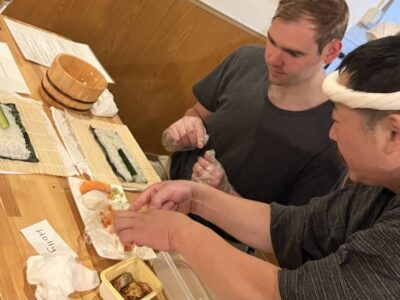
Enjoy Sushi & Market Tour! Best for Family & Couple!
Read our review →
Sushi or Traditional Japanese Cuisine in a Kyoto Home with Emika
Read our review →
Kyoto Sushi Making Experience with a Professional Sushi Chef
Read our review →Browse the lists this tour appears in