
Reviewed · GION DISTRICT TOURS
Kyoto : Chopsticks Making Workshop in Gion with Engraving Option
Making chopsticks from rough wooden blanks gives you a much better souvenir than another shop-bought trinket. At ZEN Chopsticks Making Workshop in Gion, you use a traditional kanna hand plane to shape the wood yourself, then sand, oil, and finish the pair.
I like the calm, hands-on pace, and I like that the result is useful rather than merely decorative. The optional Japanese or native-language engraving adds a personal touch. One thing to keep in mind: the workshop can feel a little like a production line, and wood choices may not always match the full advertised selection.
Key points at a glance
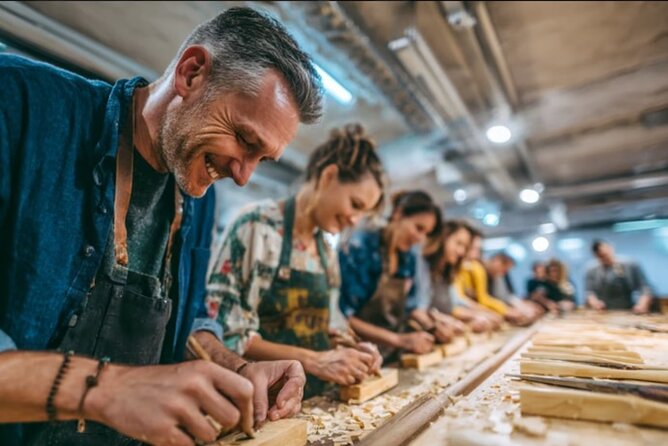
- Traditional hand-plane work: Shape raw wooden blanks with a Japanese kanna under clear instruction.
- Two wood types included: Choose from the available Japanese woods, with premium options offered for an added cost.
- A practical Kyoto souvenir: Take home the chopsticks you made instead of buying a ready-made pair.
- Optional engraving: Add your name in Japanese or your own language for a more personal finish.
- One-hour format: The short session fits neatly into a day of sightseeing around Gion.
- English-speaking help: Staff guide first-timers through each stage, so woodworking experience is not needed.
Shaping rough wood in the heart of Gion
This workshop takes place at 禅, or ZEN Chopsticks Making Workshop, on Yasaka Koji South in Kyoto’s Higashiyama Ward. That puts you in Gion, one of Kyoto’s most atmospheric sightseeing areas, so the class is easy to pair with other plans before or after.
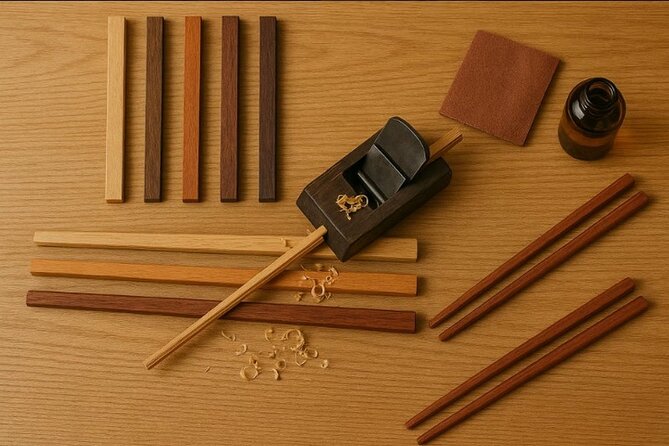
The activity begins with simple wooden blanks. These are not finished chopsticks waiting for a quick coat of varnish. You take the plain pieces and gradually turn them into a matched pair with your own hands. That change is the heart of the class.
You place the wood on a stand and use the kanna to remove thin shavings. The tool lets you feel the grain as the shape develops. This is slower and more tactile than working with a machine, but that is exactly why the process has appeal. You can watch the wood change under each careful pass.
The instructor explains how to hold and use the tool, then helps you make progress step by step. The workshop is designed for beginners, so you do not need prior woodworking skills. English-speaking staff are available throughout the class, which matters when you are learning how much pressure to use and how to keep the pieces even.
More ways to walk Gion:
- Kyoto Geisha Walking Tour: Gion District & Hidden Gems
★ 4.7 · 3,273 reviews - Kyoto: Gion Magical Night Walking Tour with Geisha Trivia
★ 4.9 · 2,393 reviews - Kyoto: Gion Geisha District Walking Tour – Stories of Geisha
★ 4.7 · 2,187 reviews
Choosing wood by color, grain, and feel
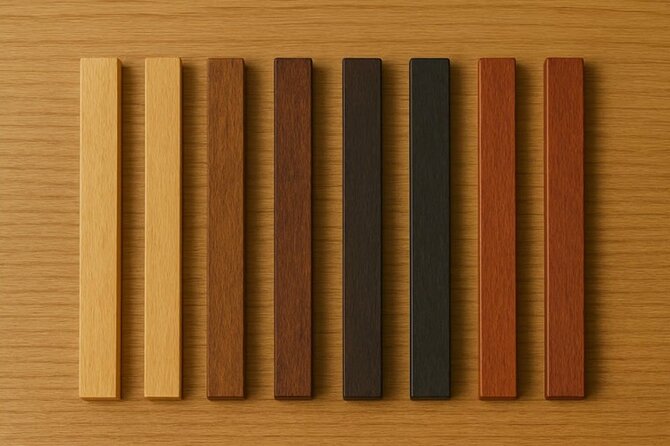
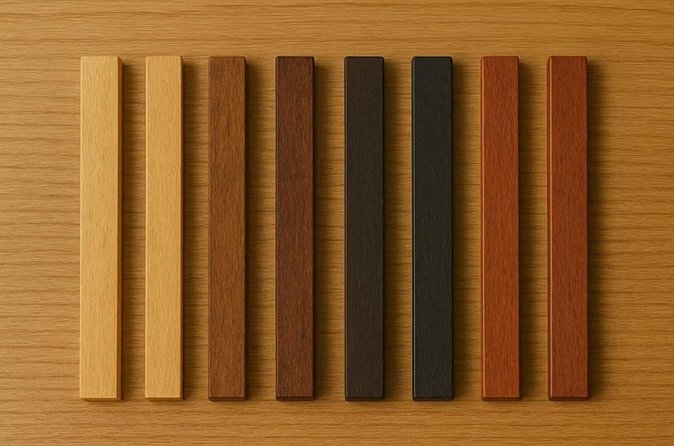
Before the carving begins, you choose your wood. The available Japanese woods differ in natural color, texture, aroma, and grain. You might prefer a pale pair with a light, clean look, or a darker wood with more visual weight.
Two wood types are included in the basic price. Premium woods can be selected for an additional charge if you want a more distinctive material. The exact choice available on the day may vary, so I would treat the wood selection as a pleasant choice rather than a guarantee of every option shown in promotional material.
This is one area where it pays to ask before you start. If a particular color or wood matters to you, check what is currently available. One person found that only one of the two advertised wood choices was on hand, which was disappointing. That does not ruin the activity, but it is worth knowing if you have your heart set on a specific finish.
The wood choice also gives the class a small cultural lesson. Japanese craftsmanship often lets the material speak for itself. Instead of covering the wood with a heavy color, the finishing process brings out its own grain and warmth.
Using the kanna, one shaving at a time
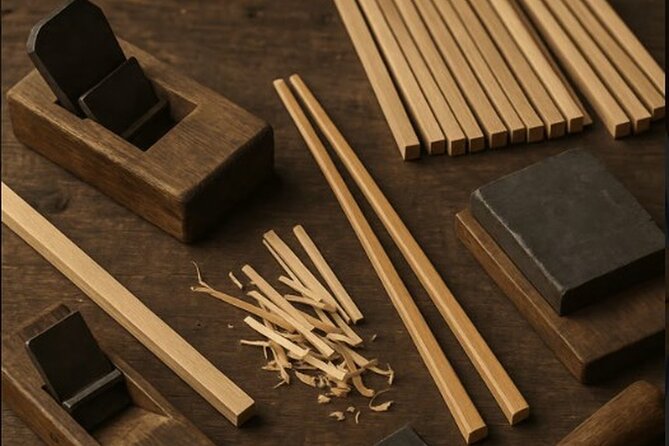
The hand-plane stage is the most distinctive part of the workshop. A kanna is a traditional Japanese hand plane, and using one feels quite different from sanding a pre-cut souvenir. You make the form gradually, with the grain guiding the work.
The instructor takes you through the rough shaping first. You work toward a comfortable chopstick profile, paying attention to the thickness and edges. The task is simple enough for a first attempt, but it still rewards patience. If you hurry, the shape can become uneven. If you take your time, the repeated motion becomes quiet and satisfying.
This is not a serious woodworking course. In about an hour, you will not learn every skill needed to make fine furniture or master a hand plane. You will, however, get a clear taste of a traditional tool and the satisfaction of making a daily object from raw material.
The group limit is listed as 32 people. That is a fairly large maximum for a craft class, and it helps explain why the session may feel organized and production-like rather than intimate. Staff attention remains part of the setup, but this is not a private artisan lesson. If you want a slow, one-on-one workshop, keep the group size in mind.
Sanding for comfort and balance
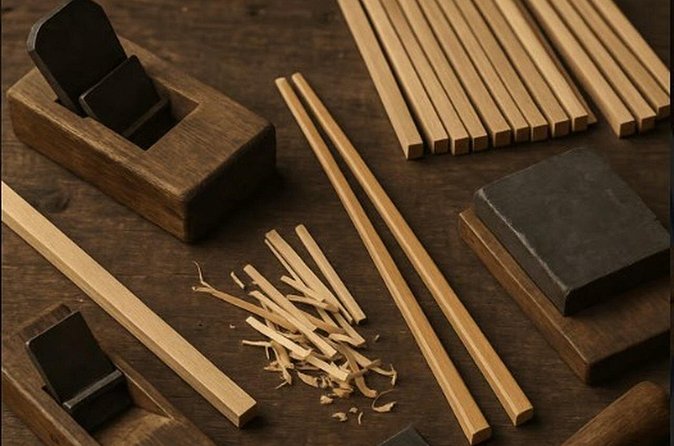
After the rough carving, you smooth the chopsticks with sandpaper. This stage may sound less exciting than the hand plane, but it is where the pair starts to feel like something you can use.
You smooth the surface and soften the edges, removing rough spots left by the carving. The goal is not just a polished appearance. Chopsticks need to feel comfortable between your fingers, and this is the stage that makes that possible.
You also have a chance to even out small differences between the two pieces. The process remains beginner-friendly, but it rewards attention. Look at the pair together as you work, rather than treating each chopstick as a separate object.
I like this part because it slows the class down. The hand plane creates the shape, while sanding lets you refine it. You can feel the difference under your fingers as the wood becomes smoother.
More craft workshops in Kyoto:
- Authentic knife making experience at a blacksmith in Kyoto
★ 4.8 · 350 reviews - Roketsu dyeing experience: M course Roketsu Dyeing Experience
★ 5.0 · 163 reviews - Kyoto: Beginner Knife Sharpening & Handle Fitting Workshop
★ 4.9 · 141 reviews - Kyoto: Small-Group Authentic Sushi Making Workshop
★ 5.0 · 137 reviews
Oil brings out the natural wood
The final basic finishing step is a coat of natural oil. This protects the wood and gives it a soft, polished look. It also brings out the color and grain you chose at the start.
The oil does not turn the pair into a flashy souvenir. The appeal is more restrained: natural wood, a simple form, and evidence of the work you did yourself. That makes the finished chopsticks easy to use at home and easy to remember as a Kyoto keepsake.
The practical side matters here. You are not leaving with a fragile ornament that must sit on a shelf. You are making an everyday dining tool, and each meal gives you another reminder of your time in Kyoto.
The workshop information does not specify every care instruction for the finished chopsticks, so ask the staff how to maintain your pair. That is especially sensible if you choose a premium wood or plan to use them often.
Adding a name with optional engraving
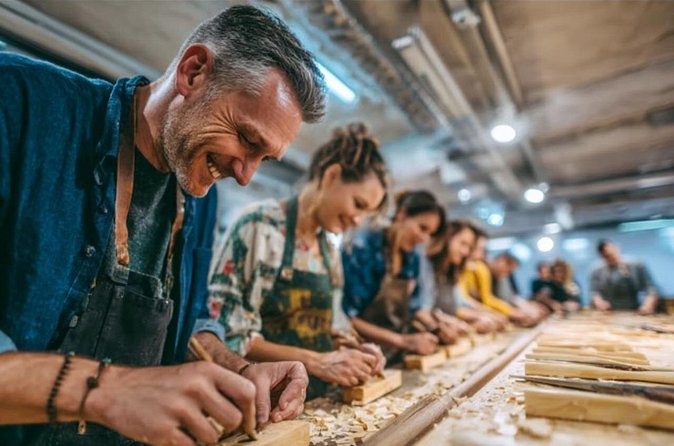
Engraving is an optional extra, not part of the base price. You can have your name engraved in Japanese or in your native language, turning the pair into a more personal souvenir.
The engraving is done after the chopsticks have been shaped and finished. It gives families and couples a simple way to tell pairs apart, and it adds meaning without changing the natural look of the wood.
This option is especially appealing if you are buying few souvenirs or want something connected to a particular trip. A name on a handmade object feels more personal than a standard Kyoto logo.
Because the engraving costs extra, check the price before choosing it. The supplied information confirms that it is available, but does not give the additional fee or explain the exact lettering options. Staff can clarify those details at the workshop.
What the one-hour schedule means for your Kyoto day
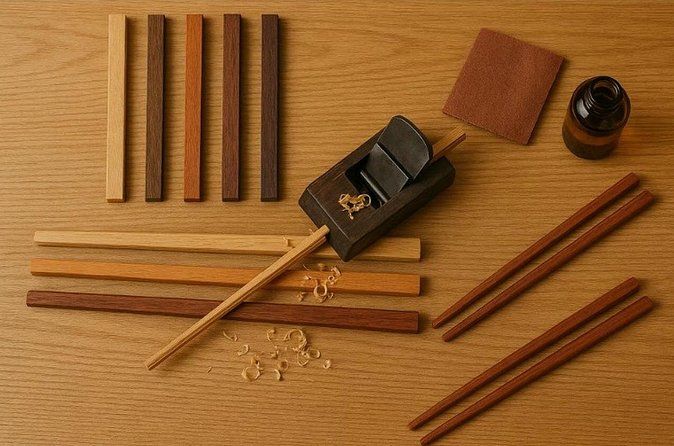
The session lasts about one hour, and both the start and finish are at the ZEN workshop. That makes the timing easy to manage. You do not lose time moving between several locations, and you can continue sightseeing in Gion afterward.
A one-hour class is long enough to make the activity feel substantial without taking over your day. I would place it between other plans rather than treating it as a full-day event. The location near public transportation also helps when you are organizing a busy Kyoto schedule.
The short format has a trade-off. You get an introduction to chopstick making, not an extended study of Japanese woodworking. The steps are focused and guided, with little room for wandering off into your own design. For most visitors, that is a fair exchange for a useful handmade item in a compact time slot.
The mobile ticket makes arrival simple, and booking confirmation is provided at the time of booking. The meeting point is the workshop itself at Yasaka Koji South, machi-71-13 Tamamizu, Higashiyama Ward, Kyoto 605-0851. Since the class ends where it begins, you do not need to arrange a separate pickup or final destination.
Price and value at $15.25
At $15.25 per person, this is one of the more affordable hands-on activities you can add to a Kyoto itinerary. The value comes from the combination of instruction, materials, use of traditional tools, and a finished pair of chopsticks to take home.
That price looks strongest if you want an activity rather than another sightseeing stop. You are paying for time with the material and the chance to make the souvenir yourself. If you only want inexpensive chopsticks, a shop will offer simpler choices. If you want a personal object linked to your day in Gion, the workshop makes more sense.
Remember to budget for optional extras. Premium wood and engraving may cost more, and the base price includes two wood types rather than every available option. Ask about those upgrades before beginning if you are keeping close track of spending.
The activity is also family-friendly in the broad sense that the instruction is patient and the process is accessible to beginners. The information does not set a specific minimum age, so families should confirm age details when booking if that matters for their children.
Who will enjoy this most
I would recommend the workshop to you if you like making things, prefer useful souvenirs, or want a gentle break from temples and crowded sightseeing streets. It also suits couples, families, and solo visitors who want an activity with a clear beginning and end.
It is a good pick for first-time woodworkers because the staff explain each step and remain available in English. You do not need to arrive with technical knowledge. The finished pair gives you a small accomplishment without requiring a full day of instruction.
You may want to skip it if you dislike repetitive hand work, want a private class, or have very specific expectations about wood choice. The maximum group size is 32, and the workshop can feel organized for a steady flow of participants. The advertised wood selection may also change with availability.
Free cancellation is available if you cancel at least 24 hours before the local start time. Cancellations or changes made within 24 hours are not accepted for a refund.
Should you book the Gion chopsticks workshop?
Book it if you want a low-cost, hands-on Kyoto activity that leaves you with something you can use. The kanna work, natural wood finish, and optional engraving give the souvenir a real connection to the making process.
I would be cautious only if a certain wood is essential to your plans or if you expect a quiet private lesson. Otherwise, the one-hour format, central Gion location, English-speaking help, and $15.25 starting price make this a sensible addition to a Kyoto day.
FAQ
Where does the chopsticks workshop take place?
It takes place at ZEN Chopsticks Making Workshop, Yasaka Koji South, machi-71-13 Tamamizu, Higashiyama Ward, Kyoto 605-0851, Japan.
How long does the activity last?
The workshop lasts approximately one hour.
Where does the activity end?
It ends back at the meeting point, at the same workshop in Gion.
How much does the workshop cost?
The listed price is $15.25 per person.
Is the workshop suitable for beginners?
Yes. The process is taught step by step, and no woodworking experience is required.
Is English assistance available?
Yes. English-speaking staff are available to help during the workshop.
What tool do I use to make the chopsticks?
You use a traditional kanna, a Japanese hand plane, to shape the wooden blanks.
How many wood types are included?
Two wood types are included at no extra cost. Premium woods may be available for an additional charge.
Can I engrave my chopsticks?
Yes. Optional engraving is available in Japanese or your native language.
Can I cancel for a full refund?
Yes, if you cancel at least 24 hours before the experience start time. Cancellations made less than 24 hours ahead are not refunded.
Newest Kyoto experiences on the site
- Treasures of Kyoto: Gion & historical Walking Tour★ 5.0 · 6 reviews
- Whisk Your Own Matcha: A Zen Matcha Experience at Temple★ 3.6 · 7 reviews
- Kyoto tea town for matcha lovers★ 5.0 · 16 reviews
- Uji: Private immersion into Kyoto’s tea and reglious culture★ 5.0 · 17 reviews
- Kyoto Matcha Green Tea Tour★ 4.5 · 23 reviews
- Uji and Wazuka Matcha Farm Half Day Private Guided Tour★ 5.0 · 21 reviews
- Utilising upcycled Matcha! Creating matcha incense (Uji, Kyoto)★ 5.0 · 6 reviews
- Sacred Temple Yoga Experience in Japan★ 5.0 · 3 reviews
Gion District Tours, compared.

Kyoto Geisha Walking Tour: Gion District & Hidden Gems
Read our review →
Gion Magical Night Walking Tour with Geisha Trivia
Read our review →
Gion Geisha District Walking Tour – Stories of Geisha
Read our review →
Best of Kyoto: Gion, Geisha, Pagodas & Cobblestones
Read our review →

Kyoto Night Foodie Tour in Gion (9+ dishes + 6 Sake tastings)
Read our review →
Kyoto Gion Geisha District Walking Tour – The Stories of Geisha
Read our review →
Kyoto Gion: 2-Hour Geisha Culture & History Walking Tour
Read our review →Browse the lists this tour appears in