
Reviewed · KYOTO CRAFT WORKSHOPS
Calligraphy & Digital Art Workshop in Kyoto
Japanese brushwork meets modern tablet art in this compact Kyoto workshop. You begin with ink, paper, and the calm rhythm of Japanese calligraphy or suibokuga, then switch to an iPad to create digital Japanese picture letters called etegami. Ami, a digital artist known as amity_sensei, and her team lead the session.
I like the clear contrast between old and new, and I like that the class is private, so only your own group takes part. Tea and Japanese snacks add a pleasant pause, while the iPad lets you take a creative skill home without needing to pack brushes and ink.
The main drawback is the short format. Ninety minutes gives you a good introduction, but not enough time for serious calligraphy practice. You also need to arrange your own way to Studio Aya in central Kyoto.
Key points
- Traditional and digital in one session: Practice Japanese calligraphy or ink painting before creating artwork on an iPad.
- Ami’s creative approach: The workshop is led by digital artist Ami, known online as amity_sensei, and her professional artist team.
- Etegami postcard art: Learn the Japanese style of combining simple pictures and letters into a handmade-looking message.
- A calm studio setting: Tea and Japanese snacks are served during the break.
- Private group format: Only your party participates, which makes it easier to ask questions and work at your own pace.
- Good for families: Children can practice kanji, brush strokes, paper art, and digital drawing in one short activity.
Why this Kyoto workshop feels different
Kyoto offers plenty of traditional cultural activities, but this one does not stop with a brush and ink. You get a short lesson in an old Japanese art form, then see how the same ideas work on an iPad.
That change is the heart of the class. Traditional calligraphy depends on pressure, speed, brush angle, and the amount of ink on the brush. Digital art removes some of those physical limits, but it still asks you to think about line, balance, spacing, and expression.
I find that useful for visitors who want more than a souvenir-making session. You are not just copying a design. You are introduced to the thinking behind Japanese writing and picture letters, then given a modern tool for making your own version.
The setting is Studio Aya, operated by Ami and her team. Ami studied digital art in the United Kingdom and runs the YouTube channel amity_sensei, which has more than 340,000 subscribers. She also founded iPadmate kids, a creative school that teaches children how to use the iPad for art.
You do not need to know her online work to enjoy the class. Still, her background helps explain why the workshop gives equal weight to paper-based art and tablet drawing.
More calligraphy classes in Kyoto:
- Kyoto: Calligraphy class at Buddhist temple in city center
★ 5.0 · 167 reviews - Kyoto: Japanese Calligraphy Class
★ 4.8 · 89 reviews - Kyoto: Japanese Calligraphy Workshop
★ 4.7 · 84 reviews
Starting with brush, ink, and Japanese characters
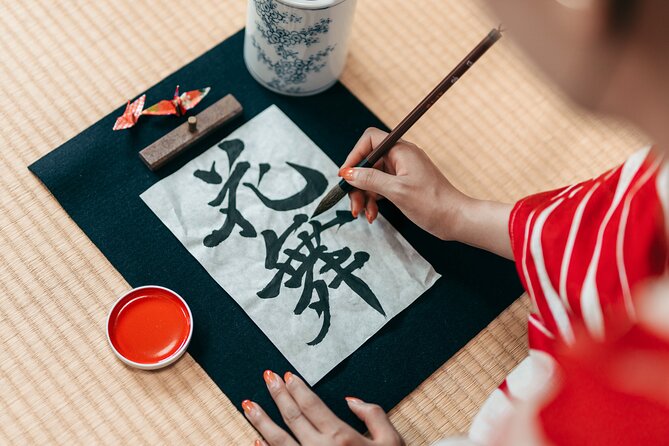
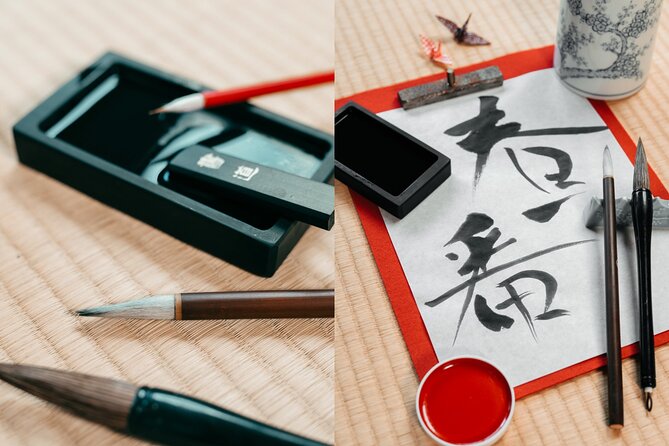
The first part lasts about 30 minutes. After greetings and an introduction, you work with traditional calligraphy or suibokuga, Japanese ink painting.
The calligraphy portion gives you a feel for kanji and brush strokes. The point is not to produce museum-quality writing in half an hour. Instead, you learn how the brush behaves and how a character can change with a small shift in pressure or movement.
If you choose suibokuga, the focus moves from written characters toward ink painting. This can be a good choice for anyone who finds formal writing intimidating. Japanese ink work often depends on restraint. A few lines and changes in tone can suggest a great deal, and the simplicity makes each mark easy to notice.
One especially useful part of the lesson is the explanation of the Zen approach to calligraphy. That does not turn the class into a philosophy seminar. It gives you a reason to slow down and pay attention to the act of making each stroke.
I would keep your expectations sensible. The workshop is not designed to train you as a calligrapher. You will have time to improve your brush work and understand the basics, but the session is short and shared with several activities.
For families, this section gives children a direct connection to Japanese culture. Kids can learn a few kanji and write them on paper before trying the same ideas digitally. That progression keeps the traditional material from feeling too distant or formal.
The tea break is part of the rhythm
After the first 30 minutes, the class pauses for about 15 minutes. Japanese tea and snacks are included.
This break matters because brush work takes concentration, especially for children or anyone unused to calligraphy. It also gives you time to look at what you have made, ask a quick question, and reset before the tablet session.
Do not think of the tea as a full refreshment stop. It is a simple, pleasant part of the workshop rather than a meal. If you need substantial food, eat before arriving.
The break also helps the class feel less rushed. A 90-minute creative session can pass quickly, so the pause creates a natural division between the traditional and digital sections.
Switching from paper to iPad
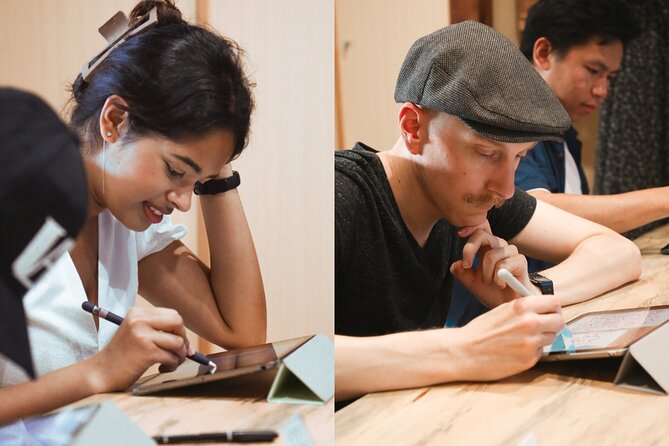
The digital art portion lasts about 30 minutes. An iPad is provided, so you do not need to bring your own device.
Here you create calligraphy or suibokuga artwork on the tablet. The digital tools let you experiment without wasting paper or ink. You can make changes, try different marks, and explore how a traditional Japanese style translates to a screen.
That is particularly helpful if you already enjoy drawing on a tablet. At the same time, the activity is intended for beginners, so you do not need advanced digital art skills.
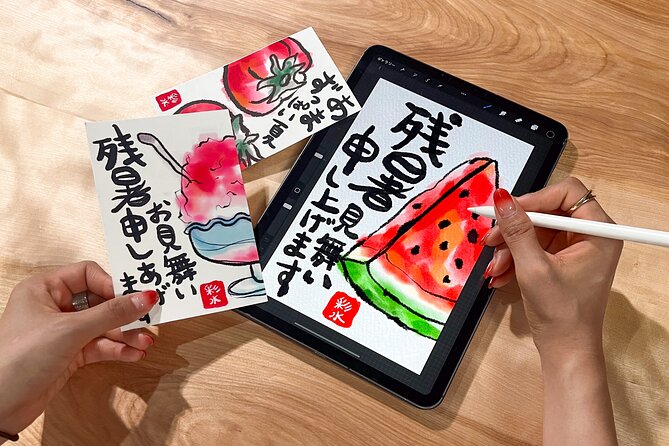
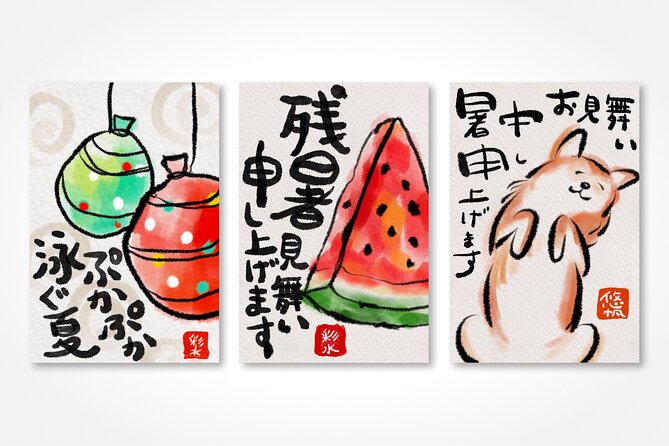
The workshop also introduces etegami, Japanese picture letters. Etegami combines an image with words, often in a simple, personal format suited to a postcard or small greeting. The charm comes from the directness of the image and the hand-made feel of the message.
Creating etegami on an iPad gives you a modern way to work in this style. You can practice the relationship between image and writing without worrying about ruining a final postcard. The result may feel less traditional than paper and ink, but that is the point: the workshop shows how Japanese visual ideas can continue in a digital setting.
If you are hoping to bring home a physical postcard, check your expectations. The details provided describe making digital artwork on an iPad, not printing or mailing a finished piece. You should view the digital section as a creative lesson, not a guaranteed physical souvenir.
More craft workshops in Kyoto:
- Kyoto : Chopsticks Making Workshop in Gion with Engraving Option
★ 5.0 · 958 reviews - Authentic knife making experience at a blacksmith in Kyoto
★ 4.8 · 350 reviews - Roketsu dyeing experience: M course Roketsu Dyeing Experience
★ 5.0 · 163 reviews - Kyoto: Beginner Knife Sharpening & Handle Fitting Workshop
★ 4.9 · 141 reviews
Fifteen minutes for questions and personal help
The final 15 minutes are set aside for questions and answers. This is a useful feature in a short class because it gives you a chance to clarify anything that moved too quickly.
You might ask about a brush stroke, the meaning of a kanji, or how a traditional technique relates to the digital tools. Families can also use this time to help children finish their artwork or ask about creative work on the iPad.
The private format makes this portion more useful. Only your group participates, so you are not competing with a large crowd for the instructor’s attention. The activity is still structured, but it has room for questions suited to your own interests.
Do not expect a long private coaching session. The full workshop remains about 90 minutes, including the break. Still, the question period gives the class a proper ending rather than stopping immediately after the last digital exercise.
What the private format means for you
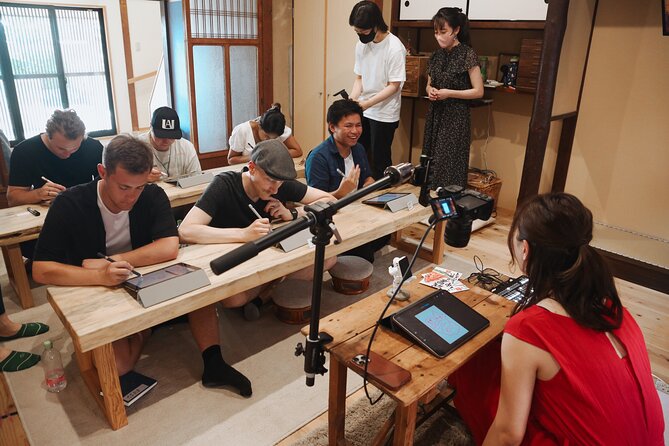
This is a private activity, meaning only your group takes part. That can make a big difference if you are booking for a family, a couple, or a small group of friends.
A private class often feels easier for beginners. You can ask basic questions without worrying about holding up strangers, and children can work at their own speed. The instructors can also respond to the interests of your group, within the limits of the scheduled time.
The format is less ideal if you want to meet other visitors or enjoy the energy of a large class. This workshop is more personal and contained. You go to the studio, work with your own group, and finish back at the same location.
Most people can participate, and service animals are allowed. The studio is near public transportation, but private transportation is not included. The meeting address is iPadmate kids47 Daikokuyachō, Kamigyo Ward, Kyoto, 602-8055, Japan. The stated start time is 3:00 pm, so leave enough time to find the studio before the class begins.
Is $72 a fair price?
At $72, this is not the cheapest short activity in Kyoto. The value depends on how much you care about having both traditional and digital art in the same class.
The price includes the iPad, Japanese tea, and snacks. You are also paying for a private group format and instruction from Ami’s creative team. That makes the cost easier to justify for a small group that wants a focused activity rather than a large public demonstration.
For a solo visitor, $72 may feel high for 90 minutes. The session is an introduction, not an in-depth course, and you will not spend the whole time practicing one technique.
For a couple or family, the calculation improves. A shared private activity can be a good break from temples, shopping, and sightseeing. Children receive a hands-on introduction to kanji and Japanese art, while adults get to try the same work with a contemporary digital angle.
I would compare it with what you want from a cultural class. If you want a long traditional calligraphy lesson with extensive brush practice, this is probably too short. If you want a compact, low-pressure activity that connects Japanese art with technology, the price is more reasonable.
Who will enjoy this most?
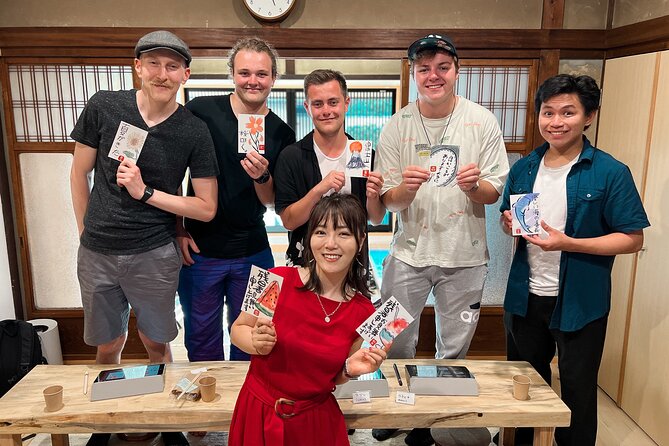
I would recommend the workshop to families looking for a cultural activity that children can actually do. The paper-to-iPad progression gives kids several ways to stay involved, and the digital section can feel familiar to them.
It also suits couples and friends who want a shared activity with a clear beginning and end. You do not need to prepare, bring special equipment, or commit half a day. The tea break keeps the pace comfortable.
Solo visitors can enjoy it too, especially if they like drawing, writing, or creative technology. The private format may feel slightly unusual for one person, but it also means you can ask questions freely.
This is less suited to someone seeking a serious study of calligraphy. You will get an introduction to brush work, ink painting, and etegami, not a full course in any one of them. The short schedule favors variety over depth.
Timing, cancellation, and practical planning
The workshop lasts approximately 1 hour and 30 minutes and begins at 3:00 pm. Since the activity ends back at the meeting point, plan your later Kyoto sightseeing around the studio rather than expecting a drop-off elsewhere.
Confirmation is provided when you book. You can cancel for a full refund up to 24 hours before the local start time. Cancellations or changes made less than 24 hours before the start are not refunded or accepted.
The class is near public transportation, but the information does not name a particular station or provide private transfers. Use the full address when planning your route, and allow time to locate the studio.
The best reason to book
The strongest part of this activity is the connection between old Japanese brush traditions and modern iPad art. You get to feel the difference between paper, ink, and a digital screen instead of hearing about it in a museum.
I also like the way etegami gives the lesson a personal goal. Japanese picture letters are simple enough for beginners, but they still ask you to think about how an image and a few written words work together.
The workshop has earned a 5.0 rating from 18 published ratings, with 100 percent recommending it. The praise focuses on the friendly instruction, the enjoyable traditional opening, the digital artwork, and the way children can take part. Those are the same qualities I would use to judge the class: it should feel welcoming, varied, and easy to follow.
Should you book Studio Aya?
Book it if you want a short, private Kyoto activity that mixes Japanese culture with creative technology. It is especially useful for families, couples, and friends who want to make something together without spending a full day in a class.
Choose another activity if your main goal is advanced calligraphy practice or a long traditional art lesson. At $72, the workshop needs to earn its price through variety, personal instruction, the supplied iPad, tea, snacks, and the private setting.
For the right audience, the format makes sense. You try brushwork, learn about kanji or ink painting, make digital art, and explore etegami in one relaxed visit. Just remember that the lesson is an introduction, not a complete course, and arrange your own transport to the Kyoto studio.
FAQ
Where does the workshop take place?
The workshop takes place at iPadmate kids47 Daikokuyachō, Kamigyo Ward, Kyoto, 602-8055, Japan.
What time does the activity start?
The stated start time is 3:00 pm.
How long does the workshop last?
The workshop lasts approximately 1 hour and 30 minutes, including the break.
What will I learn during the traditional art section?
You will be introduced to Japanese calligraphy or suibokuga, Japanese ink painting. The session includes practice with brush strokes and an introduction to kanji or ink painting techniques.
What is etegami?
Etegami is a Japanese art style that combines picture letters, simple images, and writing. During the workshop, you learn to create etegami-style digital artwork on an iPad.
Is an iPad provided?
Yes. An iPad is included for the digital art session.
Are tea and snacks included?
Yes. Japanese tea and snacks are provided during the 15-minute break.
Is the activity private?
Yes. This is a private activity, so only your group participates.
Can I cancel for a full refund?
Yes. You can cancel at least 24 hours before the local start time for a full refund. Cancellations and changes made less than 24 hours before the start are not accepted or refunded.
Newest Kyoto experiences on the site
- Treasures of Kyoto: Gion & historical Walking Tour★ 5.0 · 6 reviews
- Whisk Your Own Matcha: A Zen Matcha Experience at Temple★ 3.6 · 7 reviews
- Kyoto tea town for matcha lovers★ 5.0 · 16 reviews
- Uji: Private immersion into Kyoto’s tea and reglious culture★ 5.0 · 17 reviews
- Kyoto Matcha Green Tea Tour★ 4.5 · 23 reviews
- Uji and Wazuka Matcha Farm Half Day Private Guided Tour★ 5.0 · 21 reviews
- Utilising upcycled Matcha! Creating matcha incense (Uji, Kyoto)★ 5.0 · 6 reviews
- Sacred Temple Yoga Experience in Japan★ 5.0 · 3 reviews
Kyoto Craft Workshops, compared.
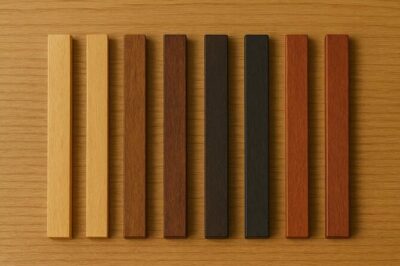
Chopsticks Making Workshop in Gion with Engraving Option
Read our review →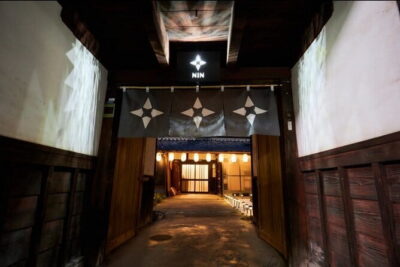
Authentic knife making experience at a blacksmith in Kyoto
Read our review →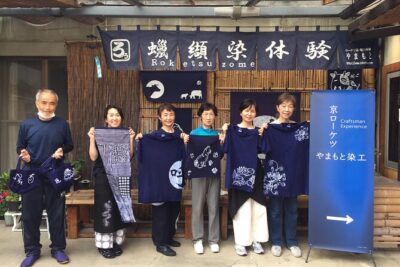
Roketsu dyeing experience: M course Roketsu Dyeing Experience
Read our review →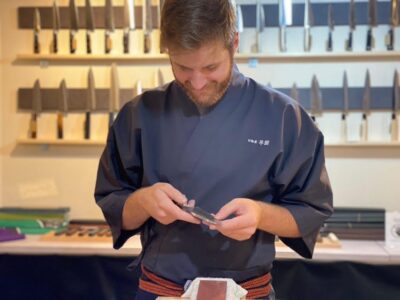
Beginner Knife Sharpening & Handle Fitting Workshop
Read our review →
Japanese Archery Workshop with Experienced Instructor
Read our review →
Kyoto Michelin Ramen Workshop or Painting Ramen Essentials
Read our review →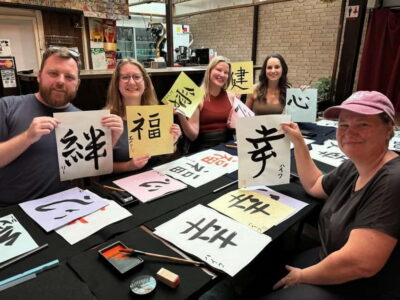
Browse the lists this tour appears in