
Reviewed · OSAKA DAY TRIPS
Kyoto Afternoon Tour from Kyoto or Osaka
Kyoto’s best-known sights arrive in a neat afternoon package here: Fushimi Inari’s red torii gates, Sanjusangendo’s hall of 1,001 Kannon statues, and Kiyomizu-dera’s famous view over the city. The mix of Shinto shrine and Buddhist temples gives you a useful first look at how Japanese religious traditions share the same city.
I like the included transport and entrance fees, especially when Kyoto’s roads are crowded and summer heat turns a temple circuit into hard work. I also like the guides, who are often praised for being warm, funny, and good at explaining customs. The catch is time: 30 minutes at Fushimi Inari and Sanjusangendo can feel brisk, and a late arrival at Kiyomizu-dera may leave you seeing the view at dusk or after dark.
Key points to know before booking
- Three major Kyoto sights in one afternoon: You visit Fushimi Inari, Sanjusangendo, and Kiyomizu-dera without arranging separate tickets or transport.
- Fushimi Inari requires a walk: The bus parking area is about 15 minutes from the shrine each way.
- Sanjusangendo is the quiet powerhouse: Its long wooden hall and 1,001 statues offer the most unusual stop on the route.
- Kiyomizu-dera brings the big view: The climb through the pottery shops leads to a terrace overlooking Kyoto.
- The group may be large: Up to 40 people can join, so stay close to the guide and listen carefully.
- The schedule can shift: Traffic and crowd levels may change the order and arrival times.
Three Kyoto landmarks in less than five hours
This is a sightseeing circuit for the traveler who has limited time, not a slow temple walk. In about 4 hours 40 minutes, you cover three important sites with an English-speaking national government licensed guide, transportation, and admission included.
That arrangement has real value in Kyoto. The city is spread out, roads can slow to a crawl, and the most famous sites draw heavy crowds. You still need to walk, but you are not spending your short afternoon figuring out bus routes, buying tickets, or finding the correct entrance.
The tour begins in the afternoon at the Avanti Tour Desk near Kyoto Station. The office can be tricky to find because it is in the basement of a large building, so give yourself extra time. Kyoto Station is huge, and arriving at the wrong side of the building can turn a simple meeting into a rushed start.
The tour accepts mobile tickets, and confirmation is sent within 48 hours, subject to availability. The advertised price is $82.58 per person. That is not the cheapest way to see these temples, since you could visit them independently, but it covers transport, admission, and a guide. For a first afternoon in Kyoto, the price is reasonable if you value structure and want to avoid solving the city’s transport puzzle yourself.
More days that pair Kyoto with Osaka:
- Osaka/Kyoto:Kinkakuji,Arashiyama,FushimiInariShrine,NaraPark
★ 4.1 · 1,596 reviews - Kyoto/Osaka: Nara, Fushimi Inari Taisha, Arashiyama Bus Tour
★ 4.7 · 1,275 reviews - One-Day Tour of Kyoto’s Highlights from Osaka/Kyoto
★ 4.5 · 1,092 reviews
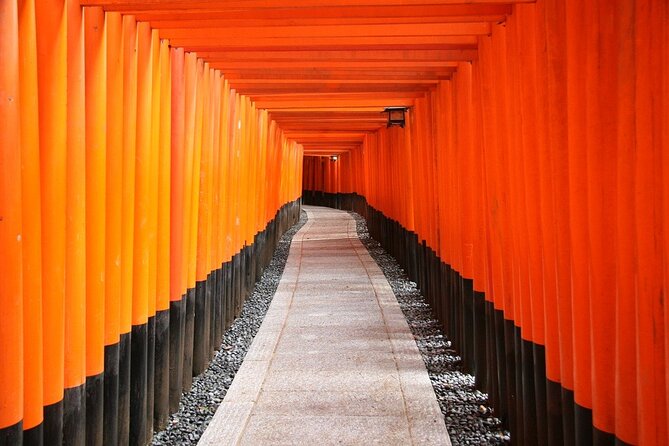
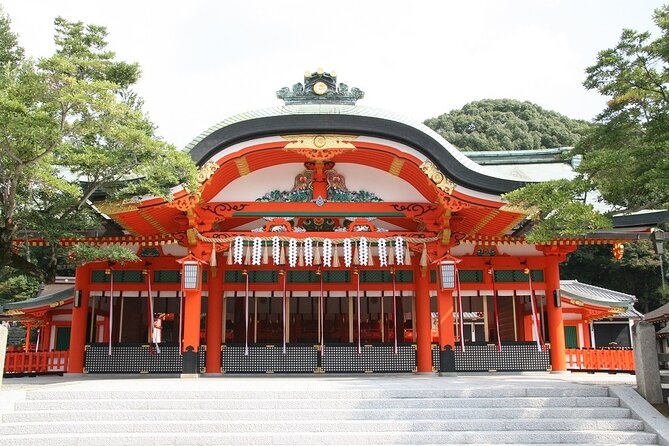
Fushimi Inari and its famous red gates
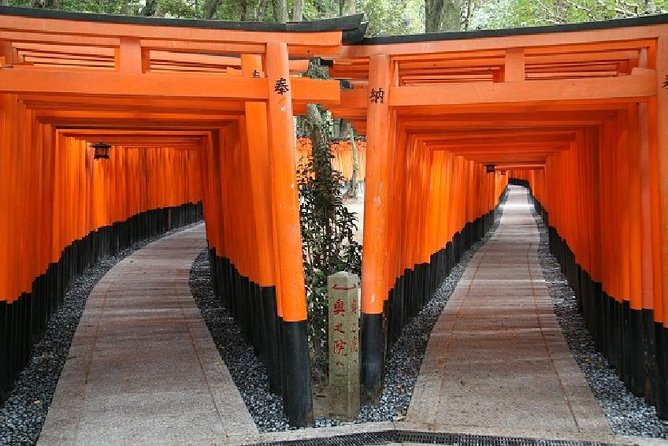
Fushimi Inari-taisha is the head shrine of roughly 40,000 Inari shrines across Japan. Its signature attraction is the Senbon Torii, a long run of bright red gates that climbs the wooded hillside behind the shrine.
You will not have time to walk the entire mountain route on this tour. The scheduled stop is about 30 minutes, and the walk from the bus parking area to the shrine takes about 15 minutes each way. That means the actual time near the shrine can feel short, especially if the group moves together.
The setting is still striking. The red gates create one of Kyoto’s most recognizable scenes, and the shrine provides plenty of good photo opportunities. The grounds also include gardens and ponds, though the tour does not enter the Shin-en garden. Keep that limitation in mind if the garden is a major reason you want to visit.
Fushimi Inari can be crowded and noisy near the entrance. You may need patience for clear photographs, and you should keep track of the guide as the group moves through the gates. Comfortable shoes matter here, even though this is not a full mountain hike.
Sanjusangendo’s hall of 1,001 statues
Sanjusangendo is the tour’s most distinctive stop. The temple’s name refers to the 33 bays in its long wooden hall, which stretches about 394 feet, or 120 meters. It is described as Japan’s longest wooden structure.
Inside, 1,001 life-size statues of Kannon, the Buddhist bodhisattva of compassion, line the hall. The central figure is surrounded by hundreds of other statues, creating a powerful sight that is very different from the open-air torii gates at Fushimi Inari.
You get about 30 minutes here. That is enough to enter the hall, take in the statues, and hear the guide explain the religious setting. It is not enough for a leisurely look at every detail, so focus on the scale and the repeated faces and forms rather than trying to inspect everything.
This stop does not offer the same easy photography as the other two. Photography inside the hall may be restricted, and the value comes from being present in the space. Several guides receive praise for explaining Sanjusangendo particularly well, and this is the place where a good explanation adds the most.
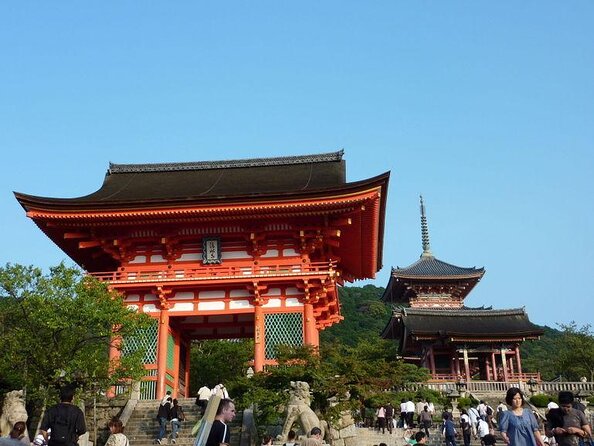
Kiyomizu-dera and the view over Kyoto
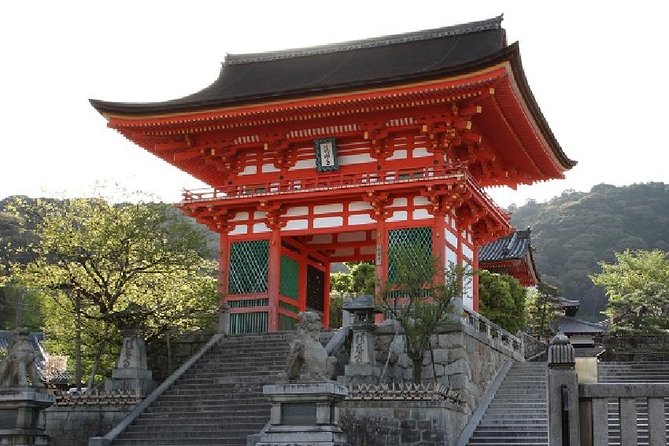
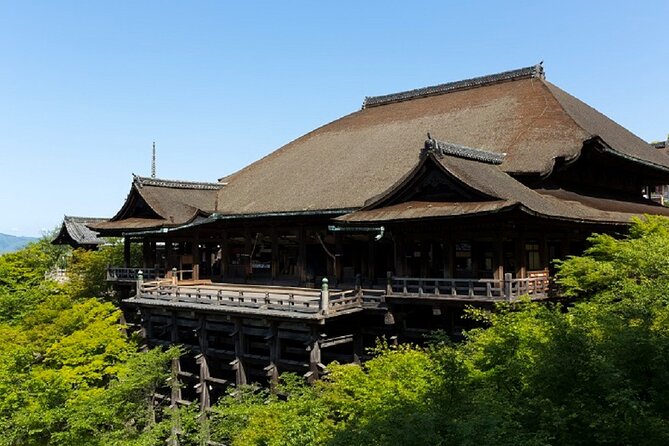
Kiyomizu-dera is the finale, with about 1 hour and 10 minutes scheduled at the temple and the approach road. The route leads through rows of pottery shops and other small stores before reaching the World Heritage temple.
The name Kiyomizu means pure water, and the temple is known for its large wooden terrace high on the eastern hills of Kyoto. From the terrace and nearby paths, you get broad views across the city. This is the most scenic stop, and it is also the place where the extra walking feels most worthwhile.
The approach includes a climb, which can be strenuous on a hot, sunny day. You will also deal with crowds in the narrow shopping lanes. The group may move at a set pace, so you might have time for a quick ice cream or a little shopping, but not a relaxed afternoon browsing every store.
Timing matters more here than at the other stops. Because this is an afternoon tour, arrival may be around 4:30 p.m. depending on traffic and the day’s schedule. In autumn, a late arrival can mean missing the best daylight for foliage and seeing the Kyoto view at dusk or after dark. If you care most about daylight photographs, check the expected timing before you book.
The tour may allow you to stay behind at Kiyomizu-dera, according to the guide’s arrangements, but do not assume you can leave the group without asking. If you plan to explore the shopping street after the tour, confirm the procedure with your guide.
A few more Kyoto tours worth putting on the shortlist
- PERFECT KYOTO 1-Day Bus Tour
★ 5.0 · 13,518 reviews - Kyoto: Fushimi Inari, Kinkakuji, Bamboo Grove 1 Day Bus Tour
★ 4.8 · 4,316 reviews - Kyoto: Tea Ceremony in a Traditional Tea House in Kiyomizu
★ 4.9 · 3,519 reviews - Kyoto Geisha Walking Tour: Gion District & Hidden Gems
★ 4.7 · 3,273 reviews
Why the guide matters on a short route
A short temple circuit can easily become a simple bus ride from one famous site to another. The guide is what turns it into a useful introduction to Kyoto.
Guides named in tour feedback include Yoshi, Momo, Donna-san, Jessie, and Amy. The strongest pattern is clear: guides are often friendly, funny, organized, and willing to explain Japanese customs rather than recite dates. Yoshi, in particular, is praised for keeping the afternoon entertaining while still sharing useful information.
A guide can also help you understand the difference between a Shinto shrine and a Buddhist temple. Fushimi Inari introduces you to the Inari faith and its red torii gates. Sanjusangendo and Kiyomizu-dera show different sides of Japanese Buddhism. Seeing the three in one outing gives you helpful context for the rest of your Kyoto stay.
Still, a large group changes the experience. The maximum is listed as 40 people, and a group that size can make it hard to hear every explanation. One poor experience involved a much larger group in which the guide’s comments were difficult to understand. Stay near the guide, move promptly, and ask questions during walking sections when the group is less compressed.
Walking, buses, and the pace of the afternoon
The tour uses transportation between the sites, but it is not a sit-down sightseeing experience. You walk from the parking area to Fushimi Inari, through temple grounds, along the Kiyomizu approach, and up toward the terrace.
Wear shoes with good support. The Kiyomizu climb is the hardest section, especially in warm weather. Food and drinks are not included, so carry water and plan to buy snacks only if the schedule gives you enough free time.
Seats on the bus may not be assigned. If you are traveling with family or friends, do not count on sitting together unless the tour staff arranges it. Children up to age five may join free, but they do not receive a bus seat unless you book the child rate.
The order of the sites and arrival times can change because of traffic and congestion. That flexibility is practical in Kyoto, but it also explains why the final stop may happen close to sunset. The tour is best for someone who prefers an organized outline over complete control of the clock.
Who gets the best value from this Kyoto tour
I would choose this tour if you have one afternoon in Kyoto, are staying in Osaka and want a guided introduction, or would rather spend your energy looking at temples than managing local transport. It also works well as a first-day orientation, giving you a sense of the city’s major religious sights and its east-side hills.
Families can benefit from the air-conditioned bus, particularly during hot and humid weather. Older travelers and anyone with limited stamina should note the walking and incline at Kiyomizu-dera. The tour is not described as inaccessible, and most people can participate, but the climb and group pace may be tiring.
Independent explorers may find the schedule too tight. You could spend much longer at Fushimi Inari, walk farther up the torii trail, linger inside Sanjusangendo, or take your time among Kiyomizu’s shops if you go alone. The tour saves time, but it gives up freedom.
The experience is also less suitable if your main goal is quiet photography. These sites are popular, and the fixed schedule may put you at Kiyomizu-dera during the busiest or darkest part of the day. For first contact with Kyoto, though, the trade-off is fair.
Practical details that affect your decision
The tour includes the licensed English guide, entrance fees, and transportation. It does not include hotel pickup or drop-off, meals, or drinks. You meet near Kyoto Station, so plan your route carefully and do not arrive at the last minute.
Free cancellation is available up to 24 hours before the start time. Changes or cancellations made less than 24 hours before departure are not accepted for a refund, with cut-off times based on local time.
Service animals are allowed, and the meeting point is near public transportation. Participants under 18 need written parental permission. Anyone under 15 or not yet enrolled in middle school must be accompanied by a parent or guardian.
The tour has a strong overall rating of 4.5 out of 5 and a 92 percent recommendation rate. That fits the experience: the organization and guides are usually the main strengths, while the fixed pace and crowded sights are the main compromises.
Should you book this afternoon tour?
Book it if you want to see three major Kyoto sights in one organized half-day, especially on a short visit. The included bus, tickets, and guide make the $82.58 price fair for convenience, and the contrast between Fushimi Inari, Sanjusangendo, and Kiyomizu-dera gives you a useful first taste of Kyoto.
Skip it if you want long, quiet visits or plan to spend serious time photographing the torii gates and Kiyomizu’s view. In that case, go independently and give each site its own window of time. For everyone else, this is a practical way to get your Kyoto bearings fast, as long as you accept a brisk pace and possible dusk at the final temple.
FAQ
How long does the Kyoto afternoon tour last?
The tour lasts approximately 4 hours and 40 minutes.
Where does the tour begin?
You meet the guide in the afternoon at the Avanti Tour Desk near Kyoto Station.
Which places does the tour visit?
The route includes Fushimi Inari-taisha Shrine, Sanjusangendo Temple, and Kiyomizu-dera Temple.
Is transportation included?
Yes. Transportation between the tour stops is included.
Are entrance fees included?
Yes. Admission to Sanjusangendo and Kiyomizu-dera is included, and the tour includes entrance fees generally.
How much time is scheduled at each stop?
The schedule lists about 30 minutes at Fushimi Inari, 30 minutes at Sanjusangendo, and 1 hour 10 minutes at Kiyomizu-dera.
Does the tour enter the Shin-en garden at Fushimi Inari?
No. The tour does not enter the Shin-en garden.
How much walking is required?
You walk about 15 minutes each way from the parking area to Fushimi Inari. The Kiyomizu-dera approach also includes an uphill climb.
Is food included?
No. Food and drinks are not included.
Can young children join the tour?
Children up to age five may join free, but they do not receive a bus seat unless you book the child rate. Participants under 15, or anyone not yet enrolled in middle school, must be accompanied by a parent or guardian. All participants under 18 need written parental permission.
How large can the group be?
The tour can have a maximum of 40 participants.
Can I cancel for a full refund?
Yes, if you cancel at least 24 hours before the experience start time. Cancellations or changes made less than 24 hours before the start time are not accepted for a refund.
Newest Kyoto experiences on the site
- Treasures of Kyoto: Gion & historical Walking Tour★ 5.0 · 6 reviews
- Whisk Your Own Matcha: A Zen Matcha Experience at Temple★ 3.6 · 7 reviews
- Kyoto tea town for matcha lovers★ 5.0 · 16 reviews
- Uji: Private immersion into Kyoto’s tea and reglious culture★ 5.0 · 17 reviews
- Kyoto Matcha Green Tea Tour★ 4.5 · 23 reviews
- Uji and Wazuka Matcha Farm Half Day Private Guided Tour★ 5.0 · 21 reviews
- Utilising upcycled Matcha! Creating matcha incense (Uji, Kyoto)★ 5.0 · 6 reviews
- Sacred Temple Yoga Experience in Japan★ 5.0 · 3 reviews
Osaka Day Trips, compared.
Kinkakuji,Arashiyama,FushimiInariShrine,NaraPark
Read our review →
Nara, Fushimi Inari Taisha, Arashiyama Bus Tour
Read our review →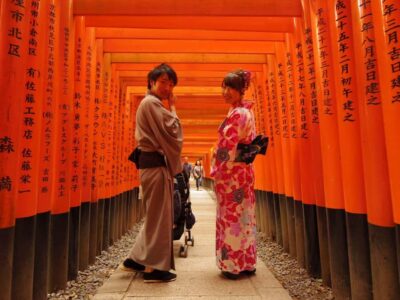
Arashiyama, Nara & Fushimi Inari Shrine w/Lunch
Read our review →
Full Day Guided Tour to Kyoto and Nara from Osaka by Van
Read our review →
Nara Park, Osaka & Kobe from Kyoto Full Day tour
Read our review →Browse the lists this tour appears in