
Reviewed · WORKSHOPS
Sekka Cotton Furoshiki Class
The best part of this Kyoto experience is that you do not simply look at Japanese textile art behind glass. You fold and dye your own furoshiki, using the sekka shibori method, then watch the pattern appear when the cloth is opened. It is a small craft lesson with a useful souvenir at the end.
I like the private format, which keeps the class personal and makes it easy to ask questions. I also like the two-part design: while the cloth dries for about 30 minutes, you see the museum’s tools, samples, and textile displays instead of waiting around.
The main consideration is that the craft portion is quite structured. Folding and dyeing are straightforward, so anyone hoping for a long, open-ended workshop may find the hands-on work brief. The museum visit supplies much of the experience’s depth.
Key points to know before booking
- Your group has a private lesson: Only your party participates, making this a good fit for families, couples, and small groups.
- You create a useful souvenir: The finished cotton furoshiki measures about 86 by 89 centimeters and can be used as a wrapping cloth.
- The class has two parts: Dyeing comes first, followed by museum viewing while the fabric dries.
- The craft is beginner-friendly: You choose a color, fold the fabric, place it between boards, and dye it.
- The museum adds real context: You can see shibori art, tools, samples, and an exhibition connected with 50 artisans and 50 years of work.
- Plan for about one hour: Individual classes generally take 30 to 60 minutes, and the experience begins and ends at the Kyoto Shibori Museum.
Folding a Kyoto souvenir at the Shibori Museum
Furoshiki are square cloths used in Japan to wrap and carry items. They are practical, reusable, and much more appealing than buying a generic souvenir that will sit in a drawer. Here, you make one yourself rather than simply picking one from a shop shelf.
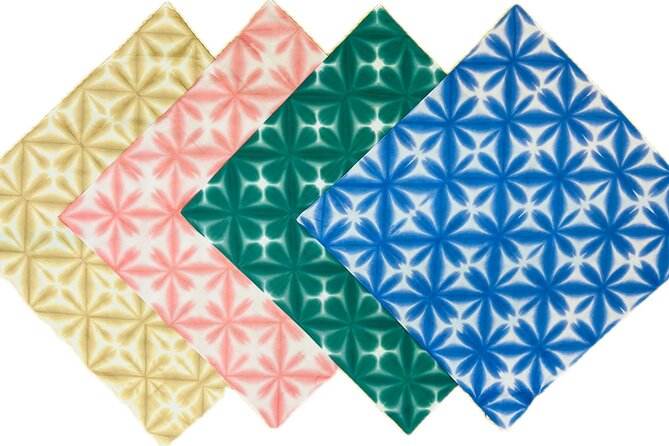
The cloth used in this class is a generous 86 by 89 centimeters. That is large enough to make the finished piece useful for wrapping gifts or carrying belongings, though the exact pattern will depend on how the cloth folds and takes the dye.
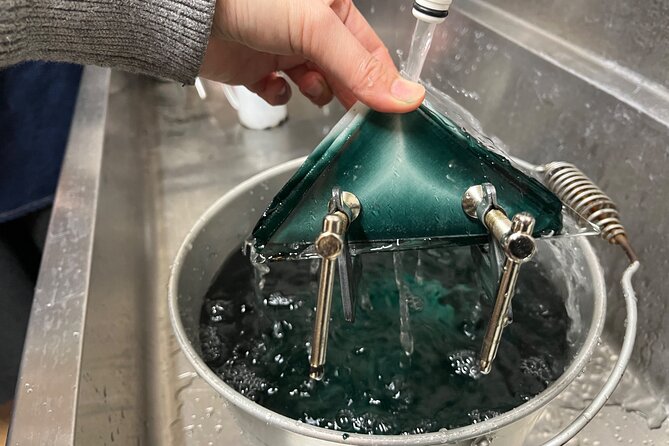
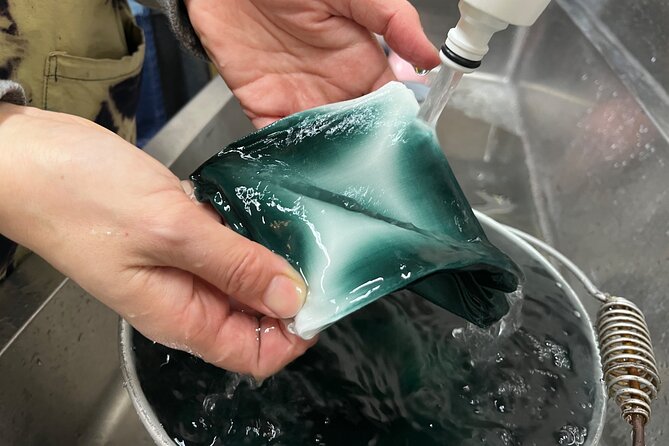
The technique is sekka shibori, one form of shibori resist dyeing. You fold the fabric in a particular way, place it between two boards, and apply the dye. The boards help control where the color reaches the cloth, producing a repeated pattern when the fabric is opened.
You do not need previous sewing, textile, or art experience. The instructions are laid out step by step, and the private setting means you can ask for help without holding up a larger class. Several staff members speak English, which is useful when you want to understand the folding sequence or ask about the displays afterward.
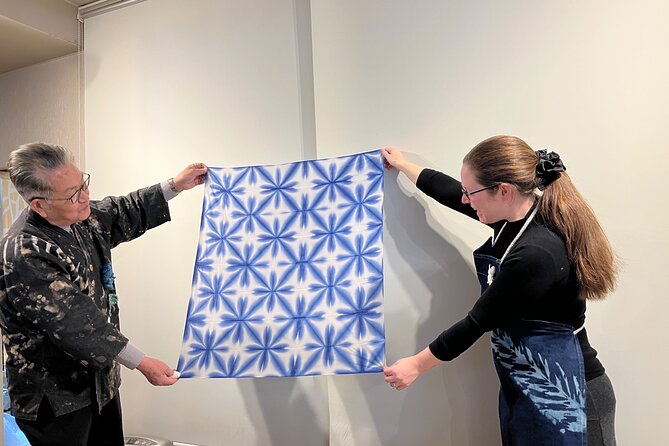
The process is simple enough for children and teens, but it is not childish. The satisfaction comes from the reveal. A folded bundle looks fairly plain before dyeing, then opens into a patterned cloth that reflects the folding method you followed.
More craft workshops in Kyoto:
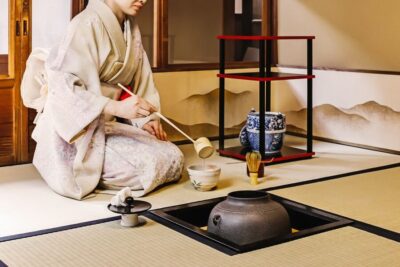
- Kyoto: 45-Minute Tea Ceremony Lesson Experience
★ 4.3 · 2,378 reviews - Ramen Cooking Class at Ramen Factory in Kyoto
★ 5.0 · 1,937 reviews - Kyoto : Chopsticks Making Workshop in Gion with Engraving Option
★ 5.0 · 958 reviews
How the one-hour class works
The class begins at the Kyoto Shibori Museum, at 135-5 Shikiamicho in Nakagyo Ward. The activity ends at the same location, so you do not need to arrange transport between separate stops.
First, you choose your preferred color. This is a small decision, but it gives the finished cloth a personal touch. If you are taking the class with family or friends, choosing different colors also helps each person leave with a clearly individual souvenir.
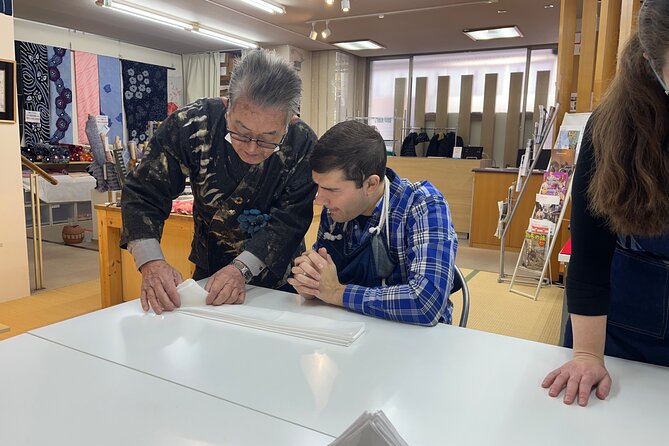
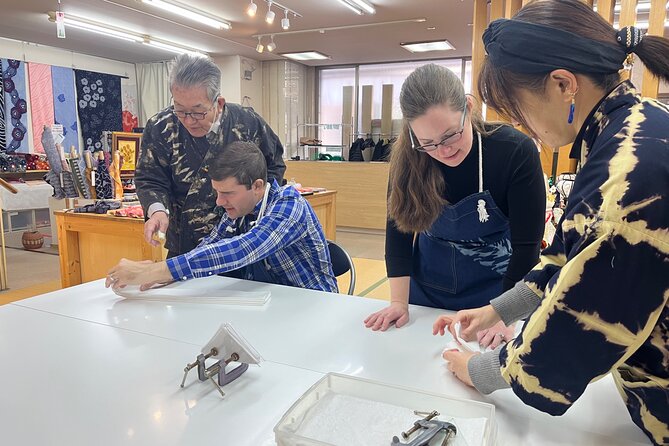
Next comes the folding. This is the most important part of the craft because the folds determine how the dye reaches the fabric. Your teacher shows you how to fold the cloth, then how to place it between two boards.
The dyeing itself is quick and controlled. That is good news if you want a compact activity during a busy day in Kyoto. It also explains the main drawback: the hands-on portion may feel standardized. You are learning a set method, not designing every detail of the textile from scratch.
Once the cloth has been dyed, it needs about 30 minutes to dry. This is not dead time. You use it to see the museum, including textile pieces, tools, examples, and displays about shibori production.
Classes can take from 30 to 60 minutes, depending on the pace of your group and the amount of time spent looking through the museum. I would allow about an hour rather than trying to squeeze it into a tight gap between major sightseeing stops.
Why the museum visit matters
The museum gives the workshop a useful setting. Without it, the class would be a pleasant craft activity but a fairly short one. The displays help explain why careful folding, dye control, and repeated patterns matter in Japanese textile work.
You can see shibori art, tools, and sample fabrics while your own cloth dries. The museum also presents an exhibition of shibori fabrics connected with 50 artisans and 50 years of work. That display gives you a chance to compare your beginner’s piece with the patience and precision of professional textile makers.
An educational video is also part of the museum experience. It adds background to the craft and helps you understand how shibori fits into traditional kimono-making techniques.
The museum is not huge, based on the short length of the activity, so you should not expect a full-day cultural institution. Its value comes from the way it complements the class. You first make a simple piece, then see more complex examples and the tools used to produce them.
I especially like this order. Looking at advanced textile work before trying the craft could make the process feel remote. Making your own cloth first gives you a reason to notice the folds, resist patterns, and dye effects in the museum displays.
What you take home
Your finished cotton furoshiki is the main souvenir. Because you folded and dyed it yourself, it carries a memory of the activity rather than only the name of Kyoto printed on it.
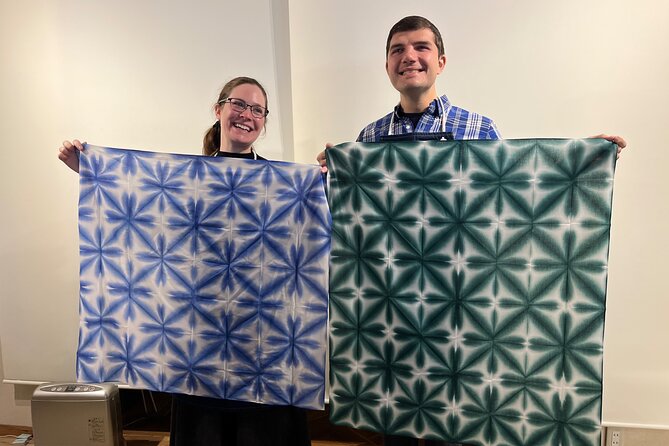
The cloth is also practical. You can use it as a wrapping cloth, bring it home as a decorative textile, or give it to someone as a handmade gift. Its size, about 86 by 89 centimeters, makes it more useful than a tiny keepsake.
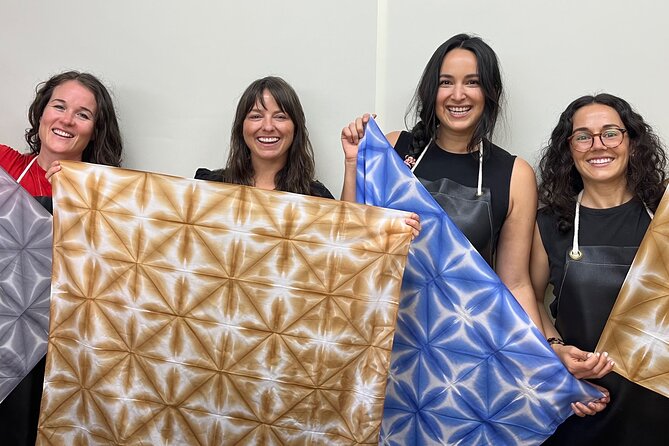
Do not expect every piece to look identical. The method is guided, but the results can vary slightly with the folds and dye placement. That variation is part of the appeal. A perfectly uniform factory product would not carry the same connection to the class.
The museum shop sells additional shibori items, fabrics, souvenirs, and other goods. You may want to budget extra if you are interested in textile gifts. The class price does not appear to include shop purchases, so keep those separate when planning your spending.
A few more Kyoto tours worth putting on the shortlist
- PERFECT KYOTO 1-Day Bus Tour
★ 5.0 · 13,518 reviews - Kyoto: Fushimi Inari, Kinkakuji, Bamboo Grove 1 Day Bus Tour
★ 4.8 · 4,316 reviews - Kyoto: Tea Ceremony in a Traditional Tea House in Kiyomizu
★ 4.9 · 3,519 reviews - Kyoto Geisha Walking Tour: Gion District & Hidden Gems
★ 4.7 · 3,273 reviews
Is $43.35 a fair price?
At $43.35 per person, this is not the cheapest short activity in Kyoto. It is also more than you would pay for a ready-made souvenir. The value comes from the private instruction, the finished cloth, and the museum visit combined.
For a one-hour booking, the price may feel high if you judge it only by the time spent handling the fabric. The dyeing steps are fairly quick, and the method is easy to follow. If you want an advanced textile course with several techniques, this is not that kind of class.
The price looks better if you value three separate things: a private lesson, a handmade souvenir, and access to a specialist museum. You are paying for a compact cultural activity rather than simply buying a piece of cloth.
It also works well for a family or small group that wants an activity everyone can do together. Several people can make their own cloths, choose their own colors, and compare the results. The private booking keeps the pace centered on your party.
This experience is usually booked about 19 days in advance. That suggests you should reserve before your Kyoto schedule fills up, especially if you need a particular day or time. Confirmation is provided when you book, and the mobile ticket makes it easy to keep the booking on your phone.
The private format and who it suits
The private setup is one of the strongest features. Only your group takes part, so the session feels more like a personal workshop than a demonstration with strangers gathered around a table.
That matters most if you are traveling with children, teens, or relatives who need different amounts of help. One person can ask about the folding pattern while another works at a slower pace. The teacher can focus on your group rather than dividing attention among several unrelated parties.
The activity is also a good choice for couples and friends who want a quiet break from temples, shopping streets, and crowded sightseeing areas. It gives you something to do with your hands and leaves you with a shared memory.
Most people can participate, and the activity is near public transportation. The supplied information does not describe specific accessibility arrangements, so anyone with mobility or hand-use concerns should confirm details with the provider before booking.
English support is available among the staff, according to the experience information. The instruction is practical and visual, which helps even when you do not know textile terms.
What may disappoint you
The main weakness is the limited creative freedom. You choose the color and carry out the folding and dyeing steps, but the process is carefully set. You are not choosing from a wide range of patterns or inventing a complex design.
That is not a serious flaw for a first introduction. In fact, the clear format makes the activity suitable for families and people who do not consider themselves artistic. Still, experienced textile artists may want a longer workshop with more control over the resist pattern and finishing process.
The class is also short. The museum makes the visit feel fuller, but the hands-on work itself does not occupy an entire afternoon. If you have only one free hour, that is an advantage. If you are specifically seeking a serious craft course, you may find it too basic.
The museum shop can add to the cost. It sells attractive textiles and souvenirs, so decide in advance whether you want to browse only or set aside money for another purchase.
Planning this stop into your Kyoto day
The museum is in Kyoto’s Nakagyo Ward and near public transportation. The meeting point and end point are the same, which keeps the logistics simple.
Because the class lasts about 30 to 60 minutes, it can fit between other central Kyoto plans. Still, I would avoid booking it with only a few minutes between activities. The cloth needs drying time, and you will want enough time to see the museum rather than rush through it.
The experience is best treated as a focused cultural stop, not as a quick transaction. Arrive ready to follow the folding instructions, ask questions, and spend time looking closely at the displays.
A mobile ticket is provided, and confirmation arrives at booking. You can cancel for a full refund up to 24 hours before the start time. Changes or cancellations made less than 24 hours before the activity are not accepted for a refund, with cut-off times based on Kyoto local time.
Who should book the Sekka Cotton Furoshiki Class?
I would choose this class if you want a personal Kyoto souvenir, enjoy learning by doing, or need a family-friendly activity that does not require a full day. The private format, helpful staff, and museum viewing make it more rewarding than a basic craft table at a souvenir shop.
It is also a good match for anyone curious about kimono-making and Japanese textile traditions but short on time. You get a simple introduction, a finished cloth, and a look at serious shibori work in one stop.
I would think twice if you want advanced instruction, lots of design choices, or several hours of hands-on work. The craft is guided and fairly easy, and the museum supplies much of the cultural content.
For most visitors, the balance is strong. You leave with something useful, learn the basic logic of sekka shibori, and see textile art that gives the process context. Book it if that combination sounds more appealing than another hour of passive sightseeing.
FAQ
Where does the Sekka Cotton Furoshiki Class take place?
The class takes place at the Kyoto Shibori Museum, located at 135-5 Shikiamicho, Nakagyo Ward, Kyoto, 604-8261, Japan.
How long does the activity last?
Classes usually take between 30 and 60 minutes. The fabric dries for about 30 minutes while you view the museum displays.
Is the class private?
Yes. Only your group participates, so the lesson is private and personalized.
What will I make?
You will dye a cotton furoshiki measuring about 86 by 89 centimeters using the sekka shibori method.
Do I need previous craft experience?
No previous experience is stated as a requirement. The class guides you through choosing a color, folding the fabric, placing it between boards, and dyeing it.
What can I do while the cloth dries?
You can explore the Kyoto Shibori Museum, including shibori art, tools, fabric samples, an educational video, and an exhibition connected with 50 artisans and 50 years of work.
Is the activity near public transportation?
Yes. The museum is near public transportation.
Can I cancel my booking?
You can cancel up to 24 hours before the start time for a full refund. Cancellations or changes made less than 24 hours before the activity are not accepted for a refund.
Newest Kyoto experiences on the site
- Treasures of Kyoto: Gion & historical Walking Tour★ 5.0 · 6 reviews
- Whisk Your Own Matcha: A Zen Matcha Experience at Temple★ 3.6 · 7 reviews
- Kyoto tea town for matcha lovers★ 5.0 · 16 reviews
- Uji: Private immersion into Kyoto’s tea and reglious culture★ 5.0 · 17 reviews
- Kyoto Matcha Green Tea Tour★ 4.5 · 23 reviews
- Uji and Wazuka Matcha Farm Half Day Private Guided Tour★ 5.0 · 21 reviews
- Utilising upcycled Matcha! Creating matcha incense (Uji, Kyoto)★ 5.0 · 6 reviews
- Sacred Temple Yoga Experience in Japan★ 5.0 · 3 reviews
Workshops, compared.
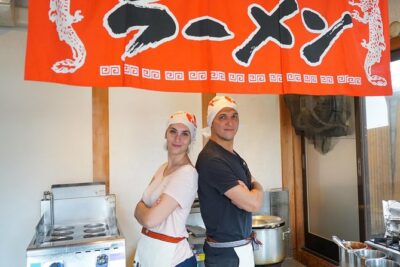
Ramen Cooking Class at Ramen Factory in Kyoto
Read our review →
Chopsticks Making Workshop in Gion with Engraving Option
Read our review →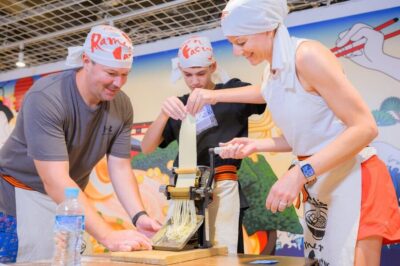
Ramen Cooking Class at a Ramen Factory with Souvenir
Read our review →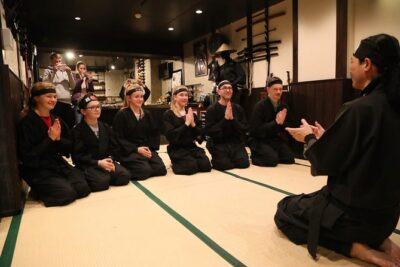
Ninja 1-hour Hands-on Lesson by Japanese master in Kyoto -Entry
Read our review →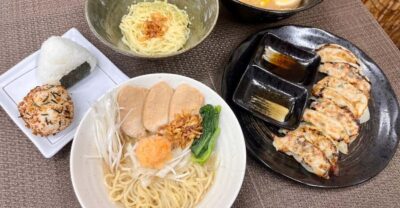
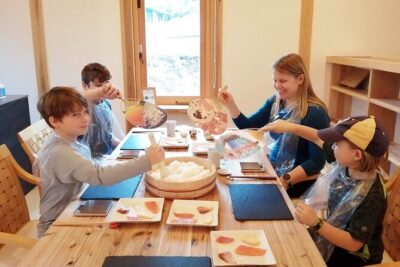
The Original Small-Group Sushi Making Class in Kyoto
Read our review →
Japanese Washoku Bento Small Group Cooking Class
Read our review →Browse the lists this tour appears in