
Reviewed · FUSHIMI INARI TOURS
Sacred Treasure Fushimi Inari and Kiyomizu Dera Tour
Fushimi Inari’s endless red torii gates and Kiyomizu-dera’s wooden hillside stage give you two of Kyoto’s most memorable sights in one compact outing. The tour also brings you through Ninenzaka and Sannenzaka, where old wooden buildings, teahouses, and craft shops make a pleasant finish.
I like the strong contrast between Shinto and Buddhist Kyoto, and I like having a guide explain the rituals, symbols, and stories instead of simply pointing at the scenery. The $30 price is reasonable if the advertised temple admissions are honored and you value help with navigation.
The main concern is organization. Some reports describe changed plans and unexpected requests to pay transport or entrance fees, while the published inclusions say those temple tickets are covered. Confirm the meeting details and what is included before setting out.
Key points at a glance
- Two major Kyoto sights in three hours: Fushimi Inari Taisha and Kiyomizu-dera form the heart of the visit.
- A useful religion lesson: The route helps you compare Shinto customs at Fushimi Inari with Buddhist traditions at Kiyomizu-dera.
- A downhill-style cultural finish: Ninenzaka and Sannenzaka add shops, teahouses, and traditional streets after the temple visit.
- A walking tour, not a bus tour: Private transportation is not included, and transportation fees are separate.
- Small price, mixed execution: At $30, the tour can be good value, but the current 3.3 out of 5 score calls for sensible expectations.
- Named guides have included Andrea, Robert, Joanes, and Ricardo: Guide quality appears to matter a great deal on this experience.
Two sides of Kyoto in one morning
This tour puts two of Kyoto’s most famous religious sites together: Fushimi Inari Taisha, a Shinto shrine tied to rice, prosperity, and business, and Kiyomizu-dera, a Buddhist temple known as the Pure Water Temple.
That pairing is the tour’s best idea. The buildings, customs, and religious symbols are different, so you get more than a photo stop at two famous places. A good guide can help you understand why visitors bow, how shrine and temple visits differ, and what the sacred water at Kiyomizu-dera represents.
You also get a short walk through Ninenzaka and Sannenzaka. These streets are close to Kiyomizu-dera and lined with preserved wooden buildings, souvenir shops, teahouses, and traditional craft stores. They are tourist-friendly, but they still offer a useful sense of old Kyoto.
The whole experience lasts about three hours. That is enough time to see the main points, but not enough for a slow, thorough visit to every corner of either religious site. I would treat this as a first look and a way to get your bearings, not as a full study of southern Higashiyama.
More ways to walk the Fushimi Inari gates:
- Kyoto: Fushimi Inari, Kinkakuji, Bamboo Grove 1 Day Bus Tour
★ 4.8 · 4,316 reviews - Fushimi Inari Hidden Hiking Tour (Private Option Available)
★ 5.0 · 1,750 reviews - Osaka/Kyoto:Kinkakuji,Arashiyama,FushimiInariShrine,NaraPark
★ 4.1 · 1,596 reviews
Fushimi Inari and the long red corridor
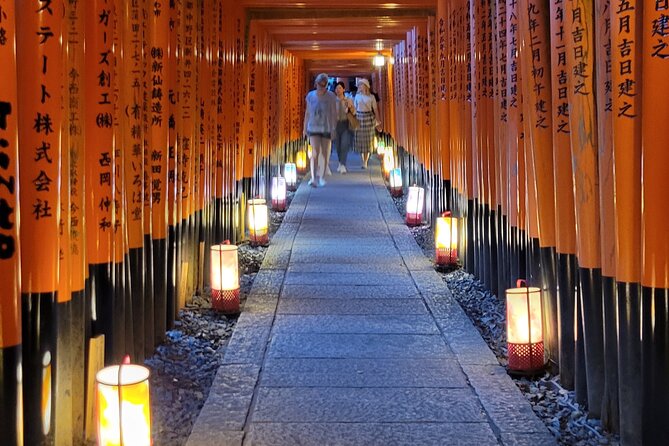
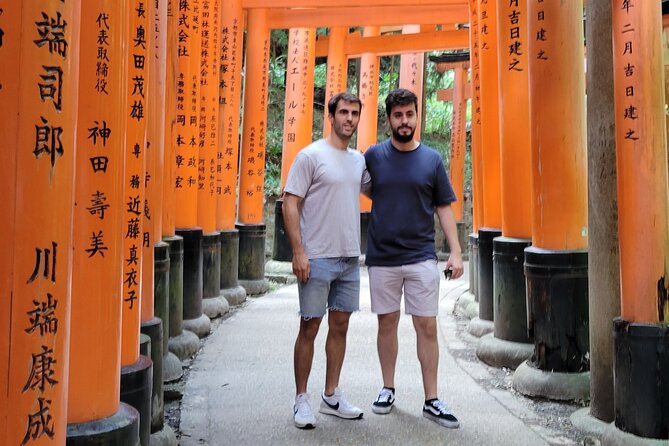
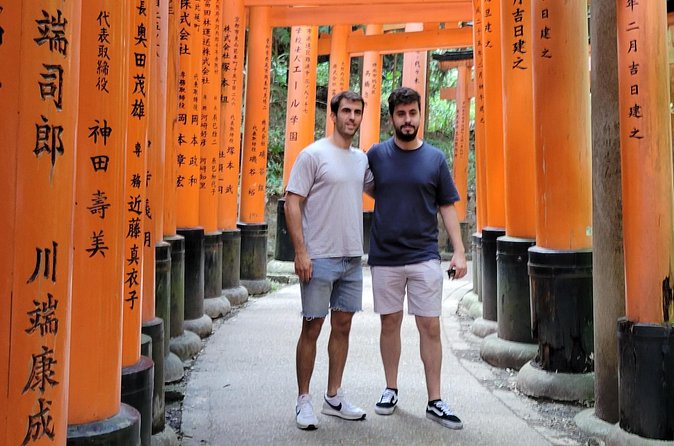
The tour begins at Fushimi Inari Taisha, with about an hour allocated to the shrine. The famous feature is the long succession of vermilion torii gates, which create a striking corridor up the wooded slopes.
The gates were donated in connection with prayers for prosperity and success. That detail helps explain why Fushimi Inari feels different from a single grand temple building. The torii route is the main attraction, and the repeated red frames give the walk a steady rhythm.
You will likely spend much of this hour walking, listening, and taking photographs. The short time limit means you should not expect to cover every part of the shrine grounds. Fushimi Inari can reward a longer visit, but this tour gives you a clear introduction without asking you to spend half a day on the hill.
I like this first stop because it begins with movement rather than a long explanation in front of one building. You see the religious setting while walking through it. A guide can also point out the connection between Inari and business prosperity, which gives the shrine more meaning than its famous gates alone.
The practical point is footwear. This is a walking tour, and the route at Fushimi Inari is not simply a flat plaza. You should be comfortable on foot, even though the supplied information does not give a precise distance or elevation gain.
Kiyomizu-dera and the wooden stage
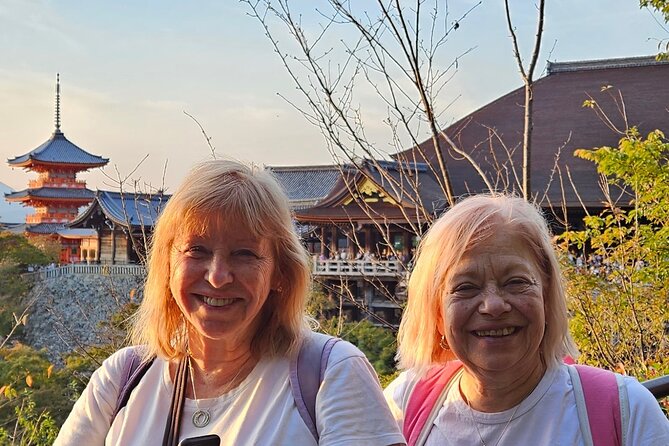
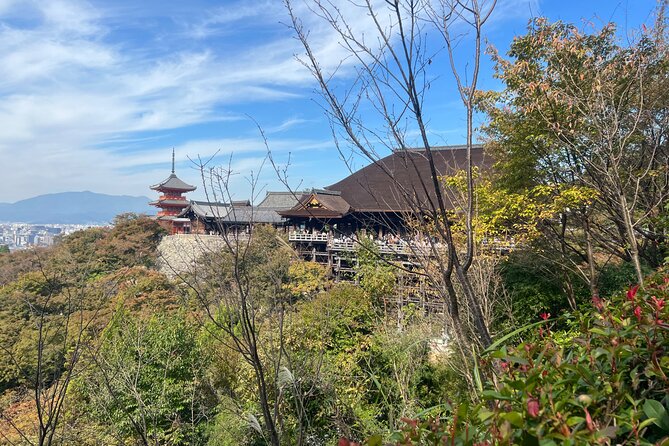
The largest portion of the tour, about one hour and 30 minutes, is devoted to Kiyomizu-dera. This is the more architectural stop, with its historic wooden stage projecting over the hillside and views across Kyoto.
Kiyomizu-dera is known as the Pure Water Temple because of the sacred waters associated with the site. The water is traditionally linked with health and longevity. Your guide can give this custom context, although the precise amount of time spent at the water and other temple areas will depend on the group and the guide.
This is the part of the tour where a guide can make a real difference. The temple complex has many details, and a short visit can otherwise turn into a scramble for photographs. Robert has been praised for explaining Japanese mythology and history, while Andrea was noted for helping with transport and navigation. Joanes and Ricardo have also been described as patient guides who added food advice to the outing.
The wooden stage is the visual star, but do not rush past the rest of the setting. Kiyomizu-dera connects the temple visit with the streets below, so the experience naturally continues into the old neighborhoods around the entrance.
One limitation is crowd control. The tour can hold up to 50 people, which is a large possible group for narrow streets and busy temple grounds. If the group reaches that maximum, staying close to the guide may matter more than usual. The quality of the visit will depend partly on how clearly the guide manages the group.
Ninenzaka and Sannenzaka after the temple
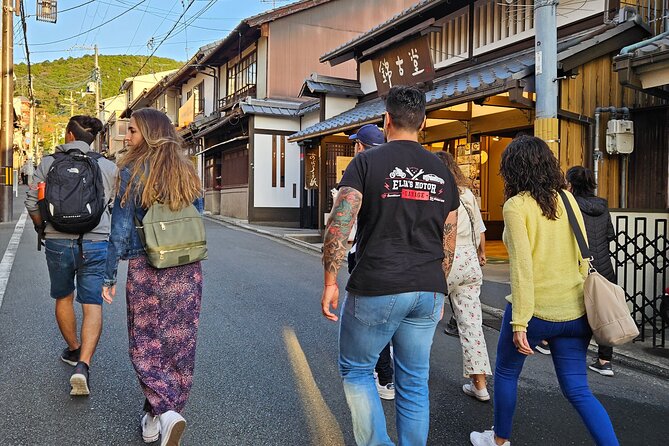
The final part includes roughly 15 minutes on Ninenzaka and 15 minutes on Sannenzaka. These historic streets are paved and lined with traditional wooden buildings, shops, teahouses, and craft stores.
Fifteen minutes per street is not long. You will get an introduction and a chance to see where you might return later, but you will not have time for a relaxed shopping session. This is useful if you want an escorted route to the shopping area, less useful if browsing is the main reason you want to book.
The tour ends around the Ninenzaka and Sannenzaka shopping streets, rather than returning you to Kyoto Station. That is a practical design choice. You can continue exploring, stop for coffee, or make your own way to another Kyoto sight.
I like ending here because it gives the morning a more everyday feel. The temples provide the grand religious setting, while the streets offer small shops and food stops. The contrast helps you understand how Kyoto’s historic areas function beyond the major monuments.
Keep your timing in mind. If you want to shop, eat, or take photographs without rushing, plan to stay after the official end. The tour does not provide a long free period for this.
More Kiyomizu-dera visits and hillside walks:
- Kyoto: Tea Ceremony in a Traditional Tea House in Kiyomizu
★ 4.9 · 3,519 reviews - Kyoto: Nijo Castle, Kiyomizu & Fushimi Inari Guided Tour
★ 4.7 · 700 reviews - Kyoto: Nijo, Kinkaku-ji, Arashiyama, Kiyomizu & Fushimi Inari
★ 5.0 · 699 reviews - Kyoto Tea Ceremony & Kiyomizu-dera Temple Walking Tour
★ 5.0 · 115 reviews
What the $30 price really gets you
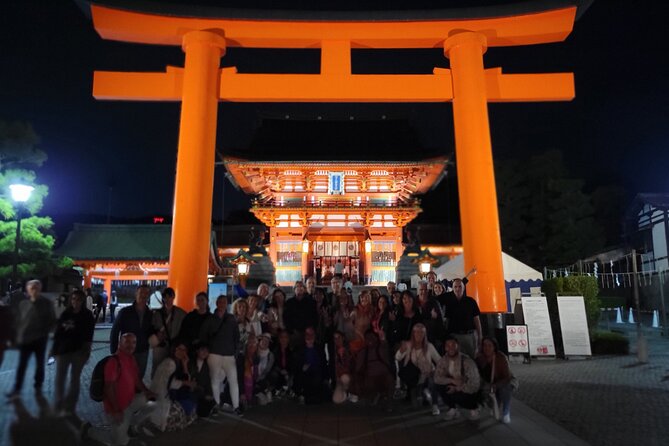
At $30 per person, this is an inexpensive way to combine two major Kyoto attractions with a guide. The price includes a certified guide, temple tickets, and the walking tour experience. If you want basic orientation and explanations, that is a fair package.
The value is strongest if you are new to Kyoto, short on time, or uncertain about getting between Fushimi Inari and Kiyomizu-dera. A guide can reduce the mental work of reading signs, finding the correct route, and understanding the religious setting.
Transportation is not included. The tour begins at Kyoto Station, and private transport is specifically excluded. Transportation fees are also listed separately, so you should budget for local travel during the route.
There is one important point to settle before you go. The published details say temple tickets are included, but one unhappy account describes being asked to pay entrance fees and transport costs after the plan changed. Another account describes a last-minute cancellation and difficulty obtaining a refund. Those reports do not match the stated inclusions, so I would save your confirmation and ask the operator to clarify exactly what you will pay on the day.
That caution matters because the tour’s low price can stop being low if extra costs appear. It also matters because a three-hour route leaves little room for confusion or a major change of plan.
The guide can make or break the morning
The strongest positive comments focus on learning. Robert was praised for explaining Japanese history and mythology, and one person described taking part in a temple ritual with help from the group. Andrea was appreciated for assistance with transport and navigation.
Joanes and Ricardo were also praised for explaining the temples patiently and offering food recommendations. Those details point to what you should hope to get from the tour: not just directions, but useful context and practical help.
Still, the guide experience may not be consistent. The tour can include as many as 50 people, and the posted score of 3.3 out of 5 is mixed. Some people found the outing informative and enjoyable, while others reported poor organization.
I would book this with the understanding that the guide is central to the value. If you get a guide who explains the religious customs clearly, the $30 feels worthwhile. If the route is changed or the explanations are thin, you may feel that you could have visited the sites independently.
Timing, meeting point, and walking demands
The meeting point is Kyoto Station at Higashishiokoji Kamadonocho in Shimogyo Ward. The exact meeting instructions on your mobile ticket should be checked carefully before leaving, especially because Kyoto Station is large and the tour begins at a specific point rather than simply anywhere inside the station.
The official end is at Kiyomizu-dera, with the route finishing around Ninenzaka and Sannenzaka. You are not returned to Kyoto Station. This lets you continue sightseeing in Higashiyama, but you will need to arrange your own onward transport.
The tour is near public transportation, and most people can participate. No special accessibility details are supplied, so I would ask the operator about the route if stairs, slopes, or extended walking are a concern.
A mobile ticket is convenient. Keep it easy to reach, and arrive with enough time to locate the guide. The tour is only about three hours, so a late start can cut directly into time at the sites.
Who should book this Kyoto tour?
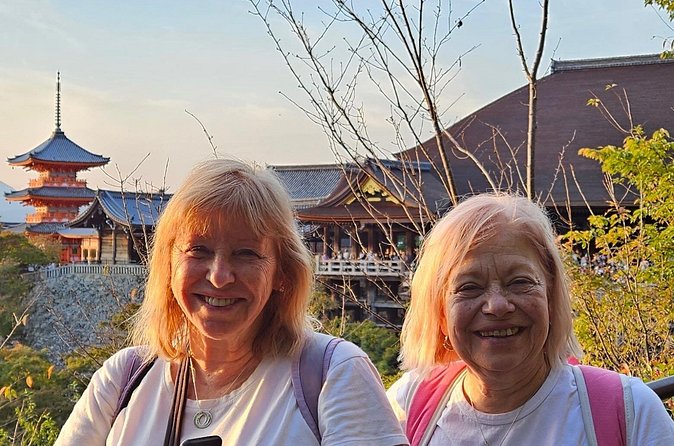
I would consider this tour if you are visiting Kyoto for the first time and want a guided introduction to two major sights. It suits you especially well if you prefer hearing the meaning behind rituals and symbols instead of visiting religious sites on your own.
It also works for people with limited time. Fushimi Inari and Kiyomizu-dera are both essential stops for many first visits, and the tour connects them with the historic streets around Kiyomizu-dera.
The outing is less suited to you if you want a quiet, unhurried visit. The schedule is tight, the group may be large, and the shopping streets receive only short timed stops. Independent visitors who enjoy setting their own pace may prefer to visit each site separately.
I would also think twice if unexpected costs or changing plans would cause stress. The mixed score and conflicting reports about included fees make it sensible to confirm the details in writing.
Cancellation and weather details
You can cancel up to 24 hours before the start time for a full refund. Changes or cancellations made less than 24 hours before the start time are not accepted for a refund.
The experience requires suitable weather. If poor weather causes cancellation, you will be offered another date or a full refund. The tour also requires a minimum number of participants, so a cancellation for that reason comes with the choice of another date or experience, or a full refund.
Should you book the Sacred Treasure Fushimi Inari and Kiyomizu-dera Tour?
Book it if you want a low-cost, guided introduction to Kyoto’s Shinto and Buddhist landmarks, and you are happy to keep the pace moving. The combination of red torii gates, Kiyomizu-dera’s wooden stage, and the old streets of Ninenzaka and Sannenzaka is well chosen.
Before paying, confirm the meeting point, transport arrangements, and whether the temple tickets are included as stated. I would also accept that the group could be large and that the guide’s performance may shape the whole morning.
For a first visit, the tour offers useful structure and strong sights for $30. For a slower, more personal day, visit the sites independently and give yourself extra time in the temple grounds and shopping streets.
FAQ
How long does the tour last?
The tour lasts approximately three hours.
Where does the tour begin?
It begins at Kyoto Station in Higashishiokoji Kamadonocho, Shimogyo Ward, Kyoto.
Where does the tour end?
It ends near Kiyomizu-dera, around the Ninenzaka and Sannenzaka shopping streets.
What sites are included?
The route includes Fushimi Inari Taisha, Kiyomizu-dera, Ninenzaka, and Sannenzaka.
Are temple admission tickets included?
Temple tickets are listed as included in the tour price.
Is transportation included?
No. Private transportation and transportation fees are not included.
Is the tour guided?
Yes. A certified guide leads the walking tour.
How many people can join?
The activity has a maximum capacity of 50 people.
Is the tour available with a mobile ticket?
Yes. A mobile ticket is provided.
Can I cancel for a full refund?
Yes, if you cancel at least 24 hours before the experience start time. Poor weather or failure to meet the minimum number of participants may also lead to an alternative date or a full refund.
Newest Kyoto experiences on the site
- Treasures of Kyoto: Gion & historical Walking Tour★ 5.0 · 6 reviews
- Whisk Your Own Matcha: A Zen Matcha Experience at Temple★ 3.6 · 7 reviews
- Kyoto tea town for matcha lovers★ 5.0 · 16 reviews
- Uji: Private immersion into Kyoto’s tea and reglious culture★ 5.0 · 17 reviews
- Kyoto Matcha Green Tea Tour★ 4.5 · 23 reviews
- Uji and Wazuka Matcha Farm Half Day Private Guided Tour★ 5.0 · 21 reviews
- Utilising upcycled Matcha! Creating matcha incense (Uji, Kyoto)★ 5.0 · 6 reviews
- Sacred Temple Yoga Experience in Japan★ 5.0 · 3 reviews
Fushimi Inari Tours, compared.
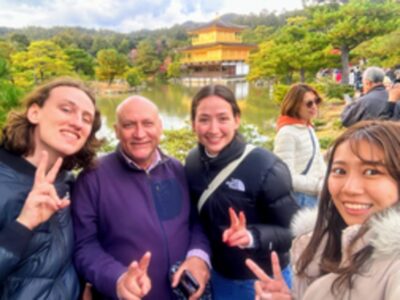
Fushimi Inari, Kinkakuji, Bamboo Grove 1 Day Bus Tour
Read our review →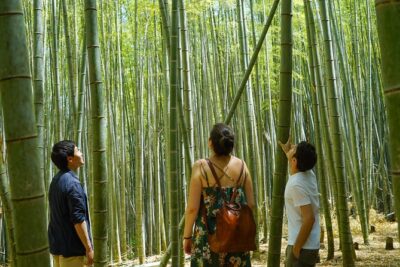
Fushimi Inari Hidden Hiking Tour (Private Option Available)
Read our review →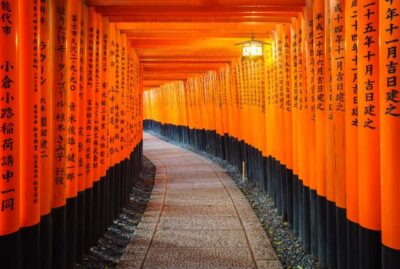
Kinkakuji,Arashiyama,FushimiInariShrine,NaraPark
Read our review →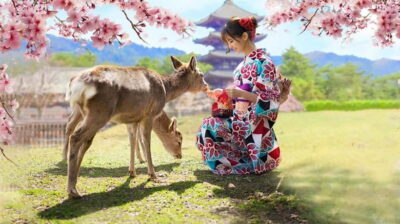
Nara, Fushimi Inari Taisha, Arashiyama Bus Tour
Read our review →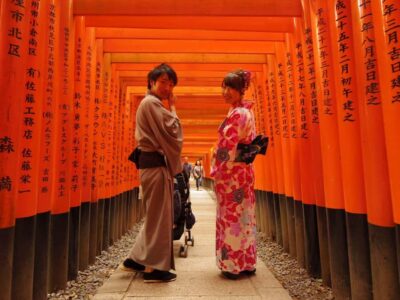
Arashiyama, Nara & Fushimi Inari Shrine w/Lunch
Read our review →
Nijo Castle, Kiyomizu & Fushimi Inari Guided Tour
Read our review →
Nijo, Kinkaku-ji, Arashiyama, Kiyomizu & Fushimi Inari
Read our review →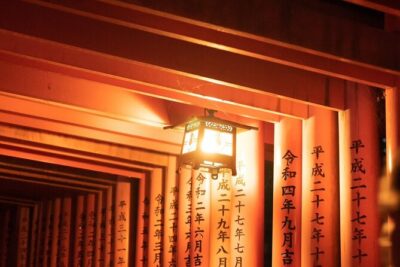
Browse the lists this tour appears in