
Reviewed · KYOTO SAKE TASTINGS
Private Pewter Sake Cup Experience with a Kyoto Artisan
The best part of this Kyoto experience is simple: you make a useful object instead of buying another souvenir. At Craft Gallery SALUK, artisan Kanako guides you as you hammer patterns into a pewter cup, shape its rim, and add initials or a date if you wish. Your cup is genuinely one of a kind, not just a factory item with a Kyoto label.
I like the quiet setting outside central Kyoto and the patient, hands-on teaching. I also like that the activity works for non-drinkers, since you can use the finished cup for green tea or other drinks. The main drawback is the location: allow extra travel time, since the workshop is outside the city and can take about an hour by scenic train from Kyoto Station.
Key points to know before booking
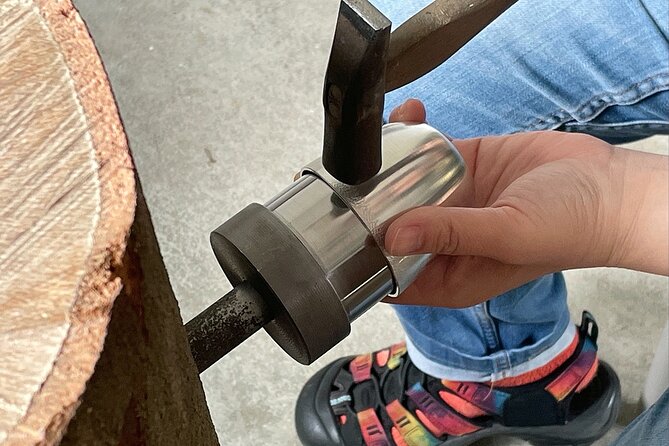
- You make the design yourself: Pick from several hammers and create the surface pattern by striking the cup as you rotate it.
- Kanako provides close instruction: The private format keeps the class personal and makes it easier to ask for help.
- You can add a personal mark: Stamp letters, numbers, initials, or a date onto the base.
- The finished cup is compact and useful: It measures about 64 millimeters across, is 53 millimeters tall, and holds roughly 90 milliliters.
- The workshop is outside central Kyoto: The peaceful setting is part of the appeal, but the journey takes planning.
- The price reflects a full craft session: At $144.96 per person, you are paying for instruction, materials, a handmade object, and a private experience.
Making a souvenir instead of shopping for one
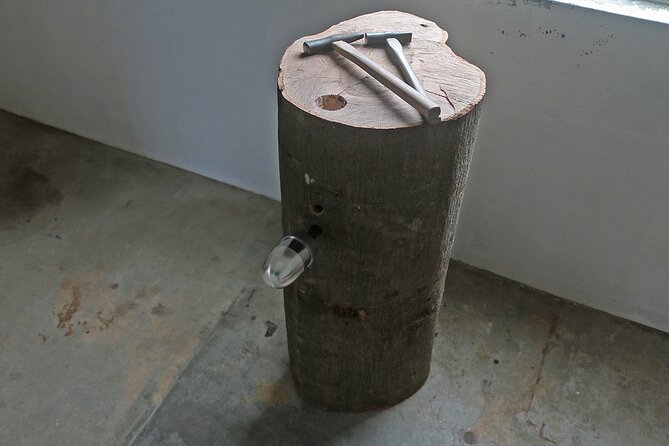
Kyoto is full of attractive souvenirs, but many are easy to forget once you get home. This workshop gives you something with a story attached to it. You remember the sound of the hammer, the first uneven marks, the small adjustments, and the moment the finished cup begins to look like your own work.
The process uses a prepared pewter cup, so you are not starting with a sheet of metal or a complicated mold. That is a sensible choice for a two-and-a-half-hour class. You spend your time shaping the character of the cup rather than waiting for basic construction work.
Pewter is valued here for its feel and appearance, but the experience is also about learning how a simple material changes under careful handwork. Every strike leaves a mark. The final surface depends on the hammer you choose, the force you use, and how steadily you rotate the cup.
That gives you plenty of creative control without requiring prior craft experience. You do not need to arrive with a design plan, special tools, or materials. Everything needed for the session is provided.
More sake tastings in Kyoto:
- Kyoto Night Foodie Tour in Gion (9+ dishes + 6 Sake tastings)
★ 5.0 · 1,762 reviews - 3-Hour Kyoto Insider Sake Brewery Tour with Tastings & Pairings
★ 5.0 · 917 reviews - Arashiyama Bamboo, Temple, Monkeys, or Secret Sake Brewery
★ 4.8 · 886 reviews
Kanako’s workshop and teaching style
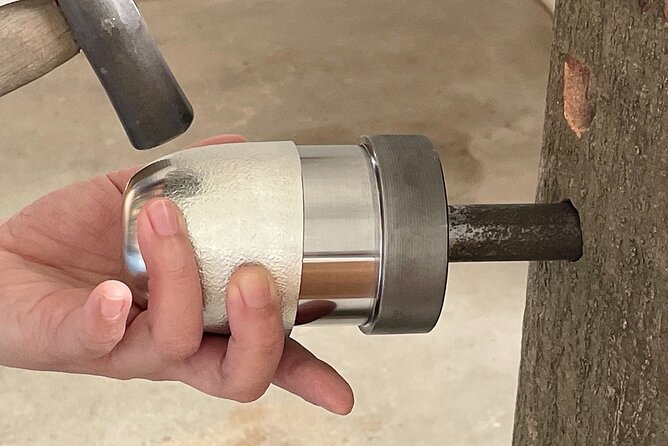
Kanako leads the class at Craft Gallery SALUK. The instruction is practical and beginner-friendly, with clear guidance in English. You receive help when a mark does not land as planned, and the process allows room for a personal design rather than demanding perfect repetition.
That matters because hammering metal can look easier than it is. A light tap may barely show. A harder blow can create a strong mark that changes the rhythm of the pattern. You learn by trying, checking the result, and adjusting your next strike.
The private setup is especially useful for couples, families, or friends who want to work at their own pace. Only your group takes part, so you do not have to keep up with a large class or compete for the instructor’s attention. It also makes the activity feel more like time in an artisan’s studio than a standard sightseeing stop.
Kanako’s role goes beyond giving instructions. The session includes conversation about Japanese craft, the material, and the objects made in the workshop. Tea and snacks have been provided during some sessions, though you should not treat that as a guaranteed part of the booking unless confirmed directly.
Step one: choosing a hammer and creating the pattern
The workshop begins with the most satisfying part: striking the pewter.
You choose from several kinds of hammers. Their shapes produce different marks, so the cup’s appearance develops from your choices. You place the cup on an anvil, begin tapping, and rotate it as you work around the surface.
You can use one hammer for a regular pattern or combine several for a more varied design. The method is forgiving in a useful way. A mark that looks slightly odd on its own may become part of an attractive overall texture once the cup is covered with repeated shapes.
This is also where patience matters most. You cannot rush the whole surface with a few heavy blows. The cup’s finish comes from many individual strikes, and the way you hold and turn it affects the result.
Some people will enjoy the calm repetition. Others may find the work more demanding than expected, especially if they want a very even design. I would approach it as handcraft rather than a precision test. Small variations are part of the finished cup’s character.
The shape is designed to sit comfortably in the hand. That gives the activity a practical goal: you are not decorating a display object that will never be used. You are making a small drinking vessel that can return to your table at home.
Step two: adding initials, numbers, or a date
Once the surface pattern is underway, you can personalize the base. Letters, numbers, initials, or a meaningful date can turn the cup into a stronger travel keepsake.
This option is particularly useful for couples and families. You might add a wedding date, the year of your Japan trip, or a set of initials. The personal mark stays subtle because it is placed on the bottom rather than dominating the design.
Think about your choice before the stamping begins. A short date or pair of initials is easier to fit neatly than a long message. The available information confirms that letters and numbers are possible, but it does not promise every font, symbol, or language, so keep the design straightforward.
The stamp also gives the cup a clear connection to your visit. Years later, you can turn it over and remember when and where you made it.
Same city, a completely different kind of day:
- PERFECT KYOTO 1-Day Bus Tour
★ 5.0 · 13,518 reviews - Kyoto: Fushimi Inari, Kinkakuji, Bamboo Grove 1 Day Bus Tour
★ 4.8 · 4,316 reviews - Kyoto: Tea Ceremony in a Traditional Tea House in Kiyomizu
★ 4.9 · 3,519 reviews - Kyoto Geisha Walking Tour: Gion District & Hidden Gems
★ 4.7 · 3,273 reviews
Step three: filing the rim and finishing the cup
After the decorative work, you use a file to adjust the cup’s height and bevel the rim. This is a small but important stage. A drinking vessel needs a comfortable edge, and filing lets you take part in the finishing work rather than stopping after decoration.
You will need to work carefully here. The goal is not to remove large amounts of metal, but to refine the shape and make the rim pleasant to touch. Kanako guides the process so beginners can understand what they are doing.
For safety, the final polishing is handled by the craftsperson with a rotary machine. That is a sensible division of labor. You get the satisfaction of making the important design choices and doing hands-on finishing, while the potentially more hazardous final step is left to an experienced artisan.
This also helps the finished cup look polished and ready to use. The result is not simply a rough object you take home for later repair.
The finished cup and how you can use it
The completed cup measures approximately 64 millimeters in diameter and 53 millimeters in height. Its capacity is about 90 milliliters, or 115 milliliters if filled to the rim.
That is a small serving size, suited to sake rather than a large drink. It can also hold whiskey, chilled green tea, and other beverages. One useful point from the workshop’s approach is that you do not need to drink alcohol to enjoy the activity. Green tea can be served in the finished cup instead.
You should also remember that the cup is handmade. Minor variations are not flaws in the same way they would be on mass-produced tableware. The patterns, marks, and small differences are evidence of the process you took part in.
The cup is intended to be a functional keepsake, but the information provided does not specify care instructions, dishwasher use, or special cleaning requirements. Ask Kanako about care before you leave, especially if you plan to use it often.
Why the setting matters
Craft Gallery SALUK is in northern Kyoto, away from the main sightseeing zone. The workshop’s rural setting is repeatedly described as peaceful, with mountain surroundings and, in one account, a nearby stream.
That quiet atmosphere changes the pace of the day. Central Kyoto can feel crowded and hurried, while this activity gives you time to sit, work, listen, and talk. The setting is not an added attraction with a formal sightseeing program, but it is part of why the workshop feels distinct from a craft class in a busy shopping district.
The tradeoff is transportation. One account describes the journey as about an hour by scenic train from Kyoto Station. Another mentions being dropped at a more convenient station afterward, which shortened the return trip, but you should not assume that a ride or station transfer is included for every booking.
Plan this as a half-day outing, even though the actual class lasts about two hours and 30 minutes. Check the meeting instructions carefully and allow time for the trip in both directions. The mobile ticket is convenient, but it does not remove the need to plan the route.
What the $144.96 price includes in practical terms
At $144.96 per person, this is not a cheap souvenir-making stop. The value comes from several parts working together: a private class, an artisan instructor, all materials, access to a workshop usually closed to the public, and a finished pewter cup that you made yourself.
For comparison, a standard cultural attraction may cost less, but it will not give you several hours of personal instruction or an object tied directly to your own effort. A ready-made pewter cup may also cost less or more depending on its craftsmanship, but buying one does not teach you how the pattern was made.
I think the price makes the most sense for someone who values process as much as the final object. It is a strong choice for a special trip, an anniversary, a family activity, or anyone who prefers local craft to another pass through a souvenir shop.
The value is less convincing if you want a quick activity close to Kyoto Station. You are paying in time as well as money, and the remote setting is part of the package. If your schedule is tight, the journey may make the experience feel expensive.
Who will get the most from this class
This workshop suits people who like working with their hands. You do not need to be artistic, but you should be willing to experiment and accept that your first marks may not be perfect.
I would especially recommend it for:
- Couples who want matching or coordinated cups
- Families seeking a shared keepsake
- People interested in Japanese craft and metalwork
- Visitors who prefer a quiet setting to a packed city schedule
- Non-drinkers who would use the cup for green tea or another beverage
- Anyone who values a personal souvenir over a mass-produced item
It can also suit people who already make things. The class has attracted participants interested in wood carving, textiles, photography, and other crafts, and the workshop leaves room for individual design choices.
You may like it less if you want a polished result with no visible irregularities. The instructor can help you correct mistakes and guide the finish, but the point is still to make the object yourself. Your cup should look handmade.
Practical details to keep in mind
The experience lasts approximately two hours and 30 minutes and ends back at the meeting point. Your group participates privately, and most people can take part. Service animals are allowed, and the studio is near public transportation.
Materials are provided, so you do not need to bring tools or supplies. Wear something you can work comfortably in, though no special clothing is listed as required.
The workshop is recommended for advance planning. It is booked about 37 days ahead on average, so I would not leave it until the last day of a short Kyoto visit. Confirmation arrives at booking, and the mobile ticket is useful for keeping the reservation on your phone.
Free cancellation is available up to 24 hours before the start time. Cancellations or changes made less than 24 hours ahead are not accepted for a refund, with cut-off times based on local time.
Should you book the pewter sake cup experience?
Book it if you want a quiet, personal Kyoto activity with a souvenir that carries your fingerprints, choices, and a little evidence of your patience. Kanako’s clear teaching, the private format, and the option to add initials or a date make this more meaningful than a standard craft demonstration.
Think twice if you have a packed itinerary or do not want to travel outside central Kyoto. The workshop itself is only two and a half hours, but the scenic journey can take about an hour each way, and the $144.96 price is best justified when you value instruction and the finished handmade cup.
For the right person, this is a fine way to spend part of a Kyoto day: a little hammering, a little tea or sake, and an object that will bring the trip back to mind whenever you use it.
FAQ
How long does the pewter sake cup experience last?
The activity lasts approximately two hours and 30 minutes.
Where does the experience take place?
It begins and ends at Craft Gallery SALUK, located at 35-2 Shizuichinonakachō, Sakyo Ward, Kyoto, 601-1122, Japan.
How much does the experience cost?
The listed price is $144.96 per person.
Is this a private activity?
Yes. Only your group participates.
Are materials provided?
Yes. You do not need to bring materials or tools.
Can I personalize the cup?
Yes. You can stamp letters, numbers, initials, or a date onto the base.
What size is the finished cup?
The cup measures about 64 millimeters in diameter and 53 millimeters in height. It holds approximately 90 milliliters, or 115 milliliters when filled to the rim.
Can I cancel for a full refund?
Yes, if you cancel at least 24 hours before the experience start time. Cancellations or changes made less than 24 hours in advance are not accepted for a refund.
More Bars and Sake Stops in Kyoto
- Kyoto: Izakaya Bars Guided Walking Tour
★ 4.9 · 815 reviews - Kyoto: Insider Sake Brewery Tour with Sake and Food Pairing
★ 5.0 · 704 reviews - Kyoto Sake Brewery & Tasting Walking Tour
★ 5.0 · 623 reviews - Kyoto Bar Hopping Night Tour
★ 5.0 · 613 reviews
Newest Kyoto experiences on the site
- Treasures of Kyoto: Gion & historical Walking Tour★ 5.0 · 6 reviews
- Whisk Your Own Matcha: A Zen Matcha Experience at Temple★ 3.6 · 7 reviews
- Kyoto tea town for matcha lovers★ 5.0 · 16 reviews
- Uji: Private immersion into Kyoto’s tea and reglious culture★ 5.0 · 17 reviews
- Kyoto Matcha Green Tea Tour★ 4.5 · 23 reviews
- Uji and Wazuka Matcha Farm Half Day Private Guided Tour★ 5.0 · 21 reviews
- Utilising upcycled Matcha! Creating matcha incense (Uji, Kyoto)★ 5.0 · 6 reviews
- Sacred Temple Yoga Experience in Japan★ 5.0 · 3 reviews
Kyoto Sake Tastings, compared.

Kyoto Night Foodie Tour in Gion (9+ dishes + 6 Sake tastings)
Read our review →
3-Hour Kyoto Insider Sake Brewery Tour with Tastings & Pairings
Read our review →
Arashiyama Bamboo, Temple, Monkeys, or Secret Sake Brewery
Read our review →
Insider Sake Brewery Tour with Sake and Food Pairing
Read our review →
1.5-Hour Kyoto Insider Sake Experience with 7 Tastings & Pairings
Read our review →
Insider Sake Experience with 7 Tastings and Snacks
Read our review →
Private Tea Ceremony and Sake Tasting in Kyoto Samurai House
Read our review →Browse the lists this tour appears in