
Reviewed · KYOTO WALKING TOURS
One-Day Walking Tour of Amazing 8th Century Capital Nara
Nara’s biggest reward is the way its past remains part of the day-to-day scene. Deer wander through Nara Park, wooden merchant homes line the old Naramachi streets, and Todai-ji holds one of Japan’s most famous giant Buddhas. This private tour gives you a guide to connect those places instead of leaving you to sort out the story on your own.
I like the private format, especially if you want to ask questions or adjust the pace. I also like the clear mix of old town streets, Shinto worship, Buddhist architecture, and deer. The main consideration is cost: $137.17 per person covers the guide, but you should budget another ¥2,000 for public transport and ¥1,500 for entry to Todai-ji and Kasuga Taisha.
Key points at a glance
- Naramachi opens the day with old merchant houses: Spend about 90 minutes among traditional latticed homes, some more than a century old.
- Kasuga Grand Shrine adds a major Shinto stop: Learn about the Fujiwara clan and the shrine’s long connection with Japan’s court.
- Todai-ji delivers the grand finale: See one of Japan’s largest wooden temple buildings and its enormous Buddha.
- Nara Park brings the deer close: The animals roam freely and are part of the city’s religious and cultural identity.
- Private guiding keeps the day flexible: Guides including Satomi, Noriko, Fumiko, Tomoko, and Emi have helped guests adjust the pace or add interests.
- Plan for a full walking day: The tour lasts about eight hours, begins at 8:30 a.m., and ends in a different location.
Why Nara makes a fine day from Kyoto
Nara was Japan’s capital in the eighth century, before the court moved to Kyoto. That earlier role explains the density of temples, shrines, old streets, and ceremonial spaces packed into a fairly manageable area.
You get a useful contrast with Kyoto. Kyoto often asks you to move between many separate sights. In Nara, the main stops link together naturally: the merchant quarter, the shrine in the wooded park, and Todai-ji with its huge temple precinct. A guide can make those connections clear as you walk.
The tour begins at 8:30 a.m., which is a sensible choice for a full day. You have time to cover the three main areas without reducing every stop to a quick photograph. The start is in Kyoto, but the activity takes place in Nara, so check the exact meeting details carefully before booking. The tour ends somewhere different from the starting point, which can be useful for continuing your afternoon, but you should not expect to return to the original meeting place automatically.
More day trips down to Nara:
- Osaka/Kyoto:Kinkakuji,Arashiyama,FushimiInariShrine,NaraPark
★ 4.1 · 1,596 reviews - Kyoto/Osaka: Nara, Fushimi Inari Taisha, Arashiyama Bus Tour
★ 4.7 · 1,275 reviews - Osaka/Kyoto: Arashiyama, Nara & Fushimi Inari Shrine w/Lunch
★ 4.4 · 754 reviews
Naramachi and the feel of old merchant Nara
Naramachi is the most intimate part of the route. The area began as a temple town in the eighth century and later became a merchant district. Its traditional houses, with their narrow fronts and lattice screens, give you a sense of how ordinary commercial life once fitted into the old capital.
You spend about 90 minutes here. That is long enough to do more than pass through a pretty lane. Your guide can explain how the district changed from a religious settlement into a working town, and why the design of the houses differs from the broad wooden compounds you may see elsewhere in Japan.
The strongest feature is the architecture at street level. Houses more than 100 years old preserve details that are easy to miss if you walk alone. Look for the relationship between the narrow frontage and the deeper house behind it. The appeal is not one famous monument, but the steady sequence of old facades and small urban details.
There is no admission charge for this part of the tour. That helps offset some of the day’s extra costs, though you should still allow time for walking rather than treating Naramachi as a quick introduction.
This is also a good place to ask your guide practical questions about Japanese homes, merchants, customs, and neighborhood life. Guides such as Fumiko have been praised for explaining culture and history in a way that makes the streets easier to understand. Satomi has also shown flexibility when a guest wanted to add the Nara National Museum, even though it was not part of the planned route.
That example comes with an important qualification. The tour is private, but it is not advertised as a fully customized tour. A guide may be able to adapt the day, but you should not assume that any additional museum or attraction will fit. If Naramachi interests you most, tell your guide early so the time is used well.
Kasuga Grand Shrine and the Fujiwara connection
The next major stop is Kasuga Grand Shrine, founded in the eighth century by the Fujiwara clan. The Fujiwara were one of the most powerful aristocratic families in Japanese history, and their connection gives the shrine a strong link to the imperial court and early Nara.
You spend about an hour here. Kasuga is not simply another old building to check off. It helps explain how Shinto worship, political power, and the protection of the capital were connected in early Japan.
Admission is not included. The stated entrance cost for Kasuga Taisha and Todai-ji together is ¥1,500 per person. Since the exact division between the two sites is not given, it is best to treat that amount as a combined admission budget rather than expect one single-ticket price.
Your guide can also explain the shrine’s continuing religious role. The head priest is described as a descendant of the Fujiwara family, which gives the site a living link to its founding story. That kind of detail is one reason a guide adds value here. Without context, a shrine visit can become a walk past gates and buildings. With context, you can see why this particular place mattered to the people who ruled Japan.
The shrine stop also places you within Nara Park, where the famous deer roam freely. The deer are not a separate zoo visit or a staged wildlife stop. They are part of the public setting, appearing around paths and open areas as you move between sights.
You should keep your attention on the animals and follow your guide’s instructions. The deer are a memorable part of Nara, but they are still wild animals. Their presence can make the route feel playful one moment and deeply traditional the next.
Nara Park’s deer are part of the story
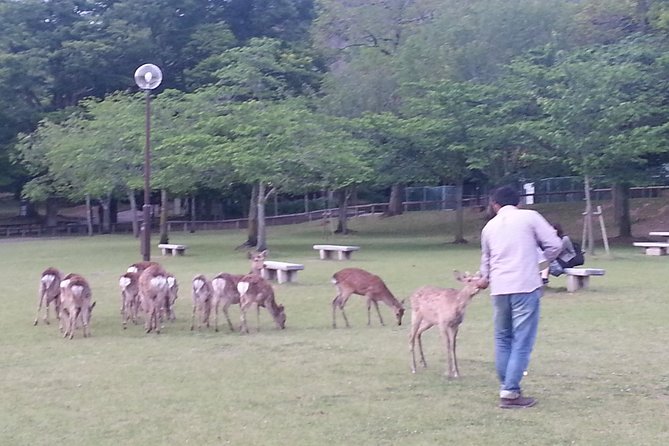
The deer are often the first image people associate with Nara, and the tour gives you a natural chance to see them during the route. You may find them near the paths, shrine grounds, and open park areas rather than in one controlled viewing area.
What makes the encounter worthwhile is its connection to place. The deer are not just a novelty added to a sightseeing schedule. They are tied to the religious identity of Nara and to the atmosphere around Kasuga Grand Shrine.
Allow some patience here. You may want photographs, but the best moments can come from watching the animals move through the park while your guide explains their importance. This is also one of the more relaxed parts of the day after the denser streets of Naramachi.
If you are traveling with children, the deer may be the easiest way to keep young attention focused between the historic sites. If you have mobility concerns, tell the guide at the start. One guide, Tomoko, was able to take extra care with a visitor whose husband had a bad knee, so the private format can help when the pace needs adjusting.
Still, this remains an eight-hour walking experience with some public transportation. A bad knee, heat, or rain can change how enjoyable it feels. Wear comfortable shoes and do not treat the deer stop as a rest day.
More walking tours in Kyoto:
- Kyoto Geisha Walking Tour: Gion District & Hidden Gems
★ 4.7 · 3,273 reviews - Kyoto: Gion Magical Night Walking Tour with Geisha Trivia
★ 4.9 · 2,393 reviews - Kyoto: Gion Geisha District Walking Tour – Stories of Geisha
★ 4.7 · 2,187 reviews - Night Walk in Gion: Kyoto’s Geisha District
★ 4.5 · 2,003 reviews
Todai-ji and the giant Buddha
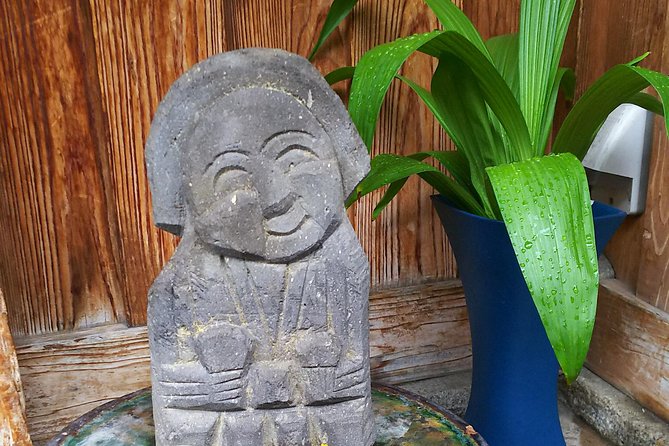
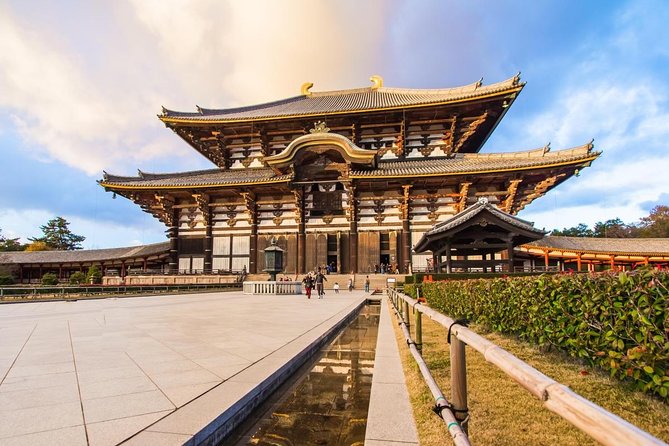
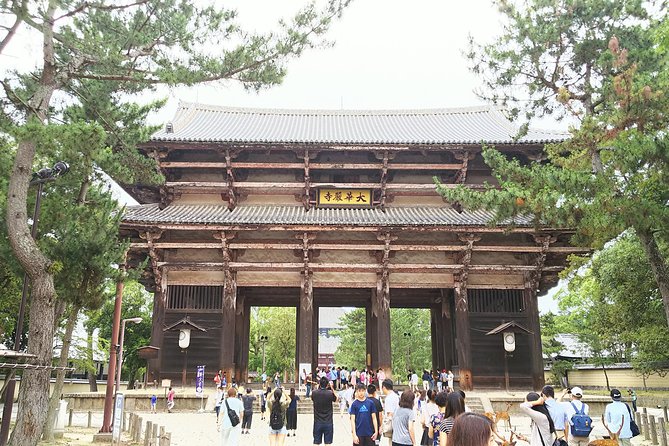
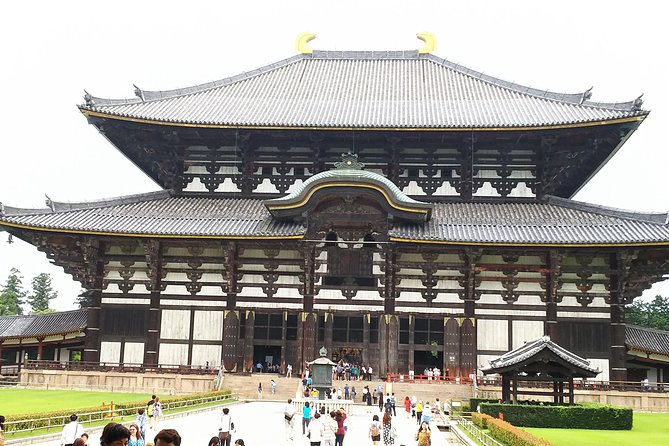
Todai-ji is the day’s largest visual moment. Founded by Emperor Shomu more than 1,300 years ago, the temple is a UNESCO World Heritage Site and one of Nara’s central sights.
The temple sits beneath Mount Wakakusa, within a large precinct that contains several historic buildings. You spend about an hour here, which gives you time to take in the scale of the main structure and hear the story behind it.
The most striking feature is the enormous wooden building that houses the giant Buddha. Its size can be difficult to judge from photographs. Seeing the building and statue together gives you a clear sense of the resources and religious ambition that early Japanese rulers brought to Nara.
A guide is particularly useful at Todai-ji because the scale can overwhelm the details. You can ask about Emperor Shomu, the temple’s founding, the architecture, and the role of Buddhism in the old capital. A good explanation turns a huge building into a place with a purpose, not just a famous backdrop.
Todai-ji admission is extra. Along with Kasuga Taisha, the stated entrance budget is ¥1,500 per person. The public transportation allowance is another ¥2,000 per person, so these additions matter when you compare the tour with a self-guided day.
The one-hour temple visit may feel short if Todai-ji is your main reason for coming to Nara. On the other hand, the tour also includes Naramachi, Kasuga, and the park, so the schedule is designed as a broad introduction rather than a slow study of one temple. If you want extensive museum time or long photography stops, ask about the pace before the day begins.
What the private guide adds
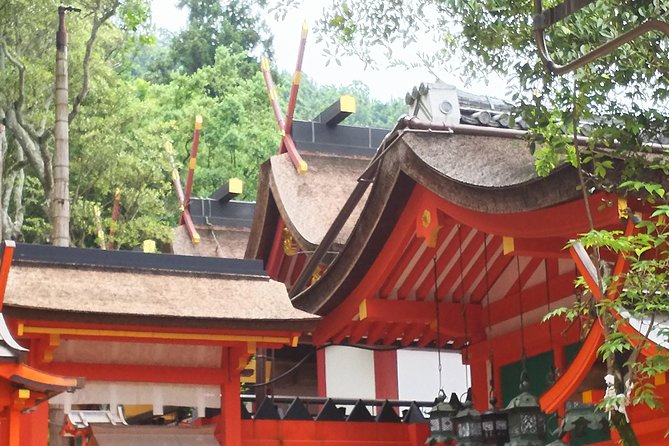
The guide is the heart of this experience. You are not joining a large group, and only your own party takes part. That gives you more room to ask questions, pause for photographs, or explain when you need a slower walk.
The strongest guide reports point to flexibility and personal care. Satomi helped a guest explore the Nara National Museum on the spur of the moment and even suggested a good place for dinner afterward. Fuji adapted the day to a guest’s interests and included lunch and additional sights. Noriko was praised for making the day fun, patient, and welcoming.
Emi was described as flexible and attentive, though her experience also highlights a useful distinction: private does not necessarily mean completely custom-built. The route has a planned structure, and the guide may not be able to reshape the whole day around a new request.
Fumiko’s strength was explaining Japanese culture and history while answering questions. That matters if you want more than directions between sights. Tomoko’s care with a visitor who had a bad knee suggests that the private setup can be helpful for mixed-ability groups.
Guide assignments can vary, so you should not book expecting one specific person unless the operator confirms it. Names associated with the experience include Satomi, Emi, Tomoko, Fumiko, Noriko, and Fuji. Their shared role is to make Nara understandable while handling the practical flow of the day.
Price, extra costs, and overall value
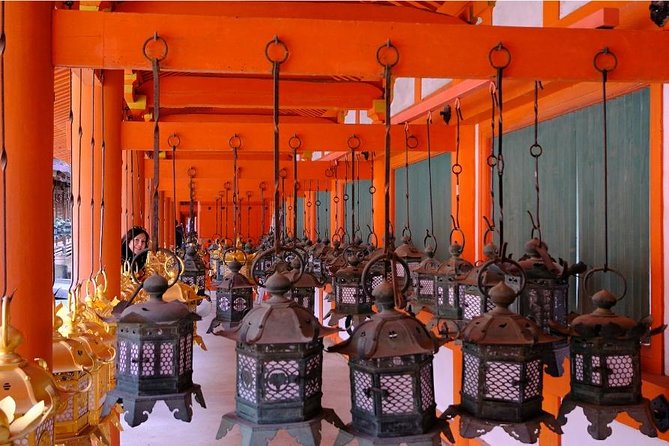
The listed price is $137.17 per person. That is not a bargain-basement walking tour, particularly once you add ¥2,000 for public transportation and ¥1,500 for admission to Todai-ji and Kasuga Taisha.
The value depends on how much you want from the guide. If you are happy to navigate trains, streets, shrine grounds, and temple precincts alone, a self-guided visit will cost less. Nara’s main sights can be visited independently, and the included guide does not cover meals, admissions, or transportation.
I think the price makes more sense for a first visit, a family group, or anyone who wants a single person to manage the route and explain the setting. Since the activity is private, the per-person cost may also feel more reasonable for a larger group than for one solo visitor. Group discounts are available, though the exact reduction is not provided.
The tour also saves you planning time. You do not need to build a route from Naramachi to Kasuga to Todai-ji, then work out when to move on. That convenience is the main thing you are paying for, along with local interpretation.
Free cancellation is available until 24 hours before the 8:30 a.m. start time. The experience requires good weather, so poor conditions may lead to a new date or a full refund. Last-minute cancellations or changes inside 24 hours are not refundable.
Who should book this Nara day
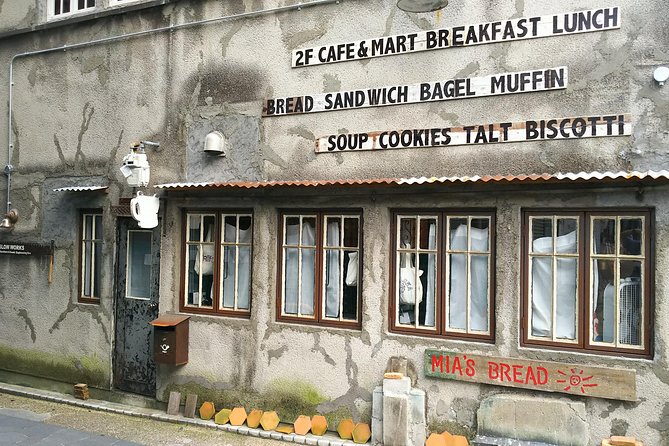
I would choose this tour if you want a guided introduction to Nara rather than a temple-only visit. It suits couples, families, and small private groups who value questions, flexible pacing, and help with navigation.
It is also a good fit if Japanese history, architecture, and culture are as important to you as photographs of deer. The route gives each subject its own setting: merchant houses for daily life, Kasuga for Shinto and aristocratic power, and Todai-ji for imperial Buddhism.
You may want something else if you prefer a very slow day at one site, a fully customized plan, or the lowest possible cost. The eight-hour schedule covers a lot, and the separate transport and admission charges should be part of your decision.
My practical advice is to wear supportive shoes, bring money for the extra fees, and tell the guide about knee or mobility concerns at the beginning. If you have a particular interest, mention it early, but understand that this is a planned private route, not an open-ended personal itinerary.
FAQ
Where does the tour begin?
The tour begins at 8:30 a.m. in Kyoto. The exact meeting point is provided with the booking details.
How long does the tour last?
The experience lasts approximately eight hours.
Is this a private tour?
Yes. Only your own group participates in the activity.
Is the tour fully customized?
No. It is a private tour with a planned route through Naramachi, Kasuga Grand Shrine, and Todai-ji. Guides may be flexible, but it is not described as a fully customized tour.
Are public transportation costs included?
No. Public transportation costs ¥2,000 per person and are not included in the tour price.
Are Todai-ji and Kasuga Grand Shrine admission fees included?
No. Entrance fees for Todai-ji and Kasuga Taisha cost ¥1,500 per person and are not included.
Will I see Nara’s deer?
Yes. The route includes Nara Park, where deer roam freely.
What happens if the weather is poor?
The experience requires good weather. If it is canceled because of poor weather, you can receive a different date or a full refund. You can also cancel for a full refund up to 24 hours before the start time.
Newest Kyoto experiences on the site
- Treasures of Kyoto: Gion & historical Walking Tour★ 5.0 · 6 reviews
- Whisk Your Own Matcha: A Zen Matcha Experience at Temple★ 3.6 · 7 reviews
- Kyoto tea town for matcha lovers★ 5.0 · 16 reviews
- Uji: Private immersion into Kyoto’s tea and reglious culture★ 5.0 · 17 reviews
- Kyoto Matcha Green Tea Tour★ 4.5 · 23 reviews
- Uji and Wazuka Matcha Farm Half Day Private Guided Tour★ 5.0 · 21 reviews
- Utilising upcycled Matcha! Creating matcha incense (Uji, Kyoto)★ 5.0 · 6 reviews
- Sacred Temple Yoga Experience in Japan★ 5.0 · 3 reviews
Kyoto Walking Tours, compared.
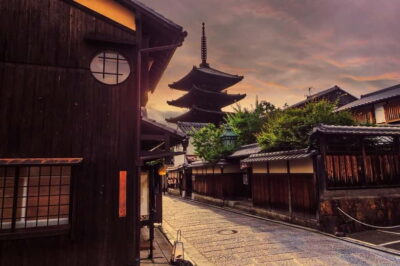
Kyoto Geisha Walking Tour: Gion District & Hidden Gems
Read our review →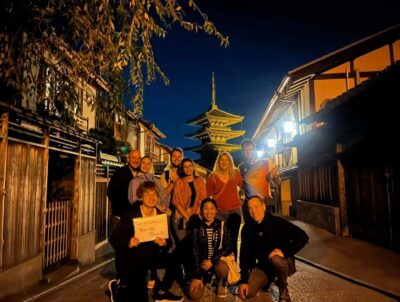
Gion Magical Night Walking Tour with Geisha Trivia
Read our review →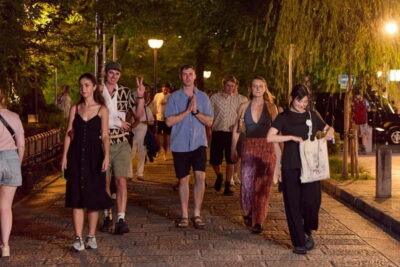
Gion Geisha District Walking Tour – Stories of Geisha
Read our review →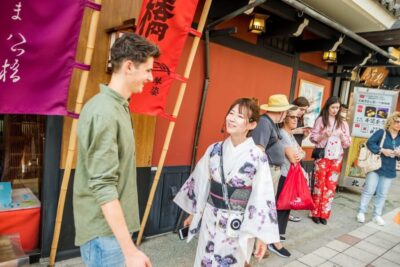
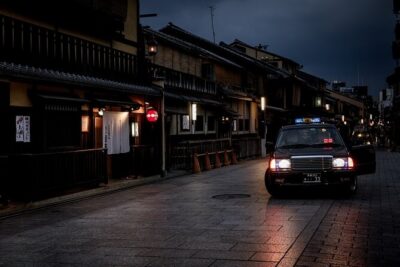
Kyoto Gion Geisha District Walking Tour – The Stories of Geisha
Read our review →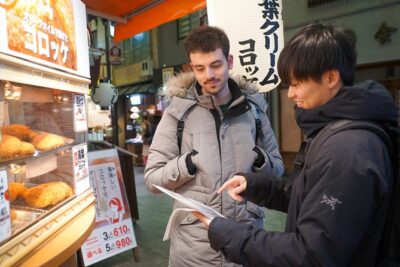
Nishiki Market Brunch Walking Tour (7 Tastings + Brunch)
Read our review →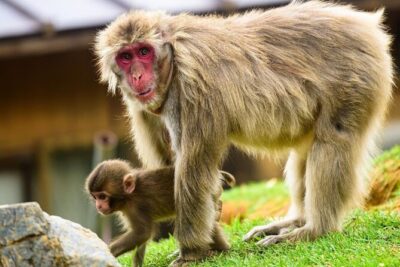
Kyoto Arashiyama Walking Tour: Bamboo, Monkeys, Gardens & Secrets
Read our review →
Kyoto Gion: 2-Hour Geisha Culture & History Walking Tour
Read our review →Browse the lists this tour appears in