
Reviewed · ARASHIYAMA BAMBOO GROVE TOURS
Kyoto:Quiet Arashiyama and Sagano Temples
Arashiyama is famous for its bamboo, but the more affecting part of this tour is the human story beneath the scenery. With guide Masa, you move through temples tied to abandoned lovers, forgotten dead, Buddhist devotion, and ordinary Kyoto life. Giou-ji and Adashino Nenbutsuji give the walk real emotional weight.
I like the private format, which gives Masa room to adjust the pace and explain customs in English. I also like the route through Saga Toriimoto, where farmhouses and machiya houses preserve a quieter side of Kyoto. The main caution is time: the walking is steady, and one guest felt the tour could have slowed down to allow more quiet reflection.
Key points to know
- Hear the tragic story behind Giou-ji: A small temple connected to Giou, a Heian-period dancer who became a nun after losing the favor of Taira no Kiyomori.
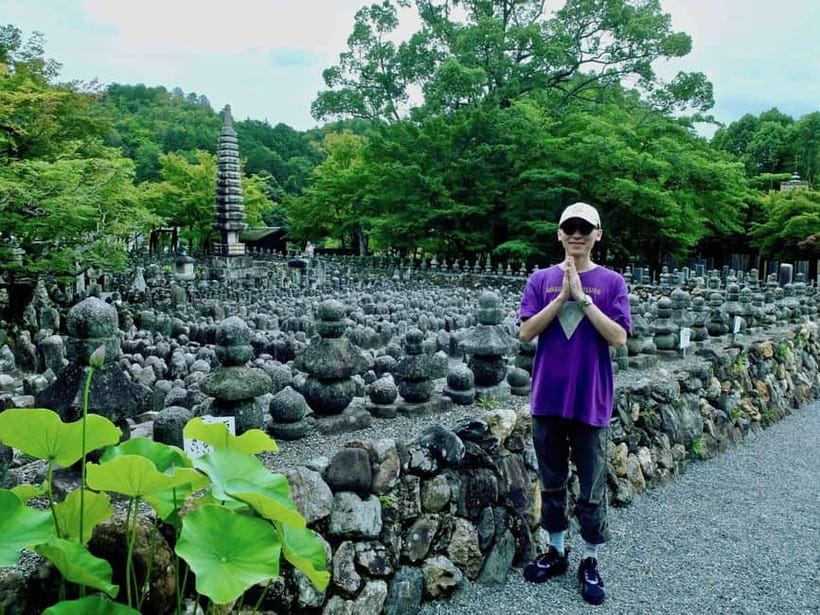
- See nearly 8,000 stone figures at Adashino Nenbutsuji: The statues honor people who died without relatives to pray for them.
- Walk through historic Saga Toriimoto: Old farmhouses and machiya houses line this preserved suburban street.
- Meet at the correct station: The starting point is JR Saga-Arashiyama, not Hankyu Arashiyama or Randen Arashiyama.
- Expect local guidance from Masa: He can explain prayer and meditation traditions and point out artisan shops along the way.
- Plan for lots of walking: Comfortable shoes, water, sun protection, and weather-ready clothing will make a real difference.
Why this Arashiyama walk feels different
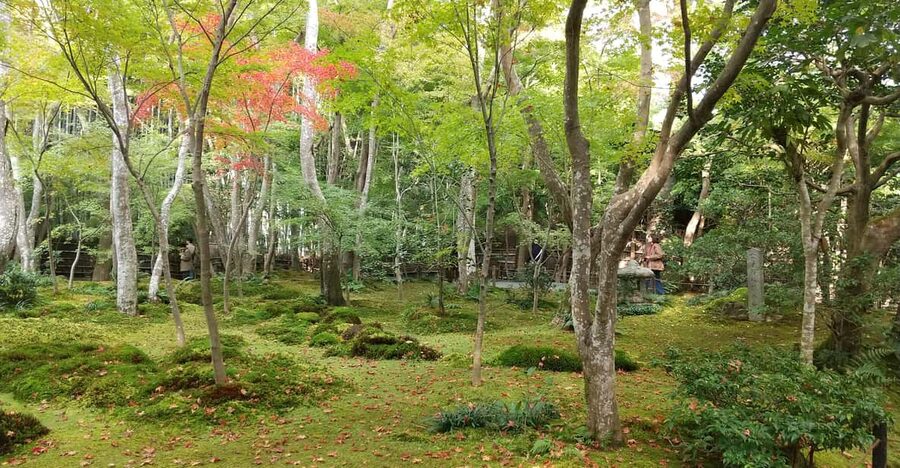
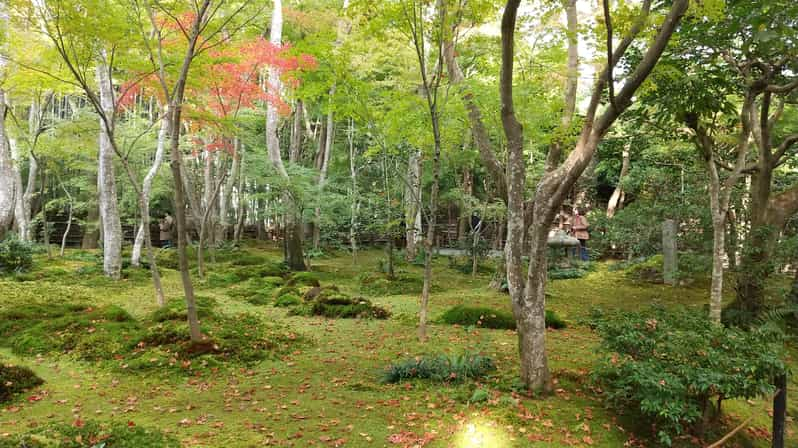
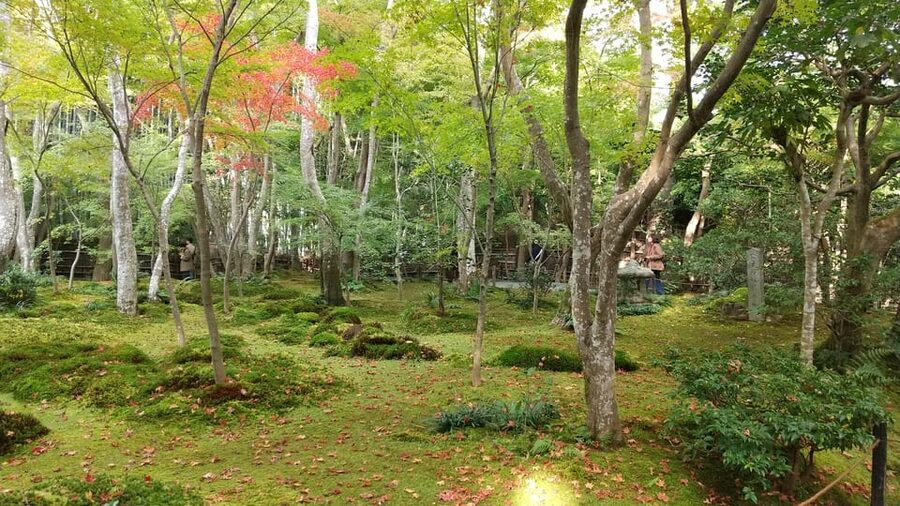
Many visits to Arashiyama begin and end with the bamboo grove. This tour gives you a broader view. You still see the bamboo, but the main focus is on temples, belief, memory, and the people connected to these places.
That change in focus matters. Arashiyama can feel crowded and hurried, especially around its best-known paths. This route leads you toward Sagano, where temple grounds and older streets give you more room to notice small details. You are not simply ticking off famous sights. You are hearing why each place exists and what it meant to people in earlier periods.
Masa is the guide named in the experience details, and the tour is conducted in English. His approach includes narrative explanations, along with hands-on opportunities at selected temples. He can demonstrate prayer and meditation traditions, giving you something to observe and practice rather than only a list of dates.
The group is private, which is useful in temples. You can ask questions without holding up a larger party, and the pace can change if you need help finding lunch or want more time at a particular stop. One guest appreciated that Masa arranged lunch when they arrived hungry. That is a small but practical sign of a guide who pays attention to the people in front of him.
More mornings in Arashiyama and the bamboo grove:
- Kyoto: Fushimi Inari, Kinkakuji, Bamboo Grove 1 Day Bus Tour
★ 4.8 · 4,316 reviews - Osaka/Kyoto:Kinkakuji,Arashiyama,FushimiInariShrine,NaraPark
★ 4.1 · 1,596 reviews - Kyoto/Osaka: Nara, Fushimi Inari Taisha, Arashiyama Bus Tour
★ 4.7 · 1,275 reviews
Starting at JR Saga-Arashiyama Station
The meeting point is the plaza just outside the ticket gates at JR Saga-Arashiyama Station. Masa holds a sign with your name. Take care here: this is not Hankyu Arashiyama Station and not Randen Arashiyama Station.
Arrive 15 minutes early. Arashiyama has several railway stations, and choosing the wrong one could turn a calm morning into a rushed start. You are responsible for reaching the meeting point, since transport to and from the station is not included.
JR Saga-Arashiyama is a sensible starting point for this route because the walk finishes back there. You will not need to arrange a separate ride after the tour. Still, the experience includes substantial walking, temple paths, and outdoor stretches, so wear shoes you can trust.
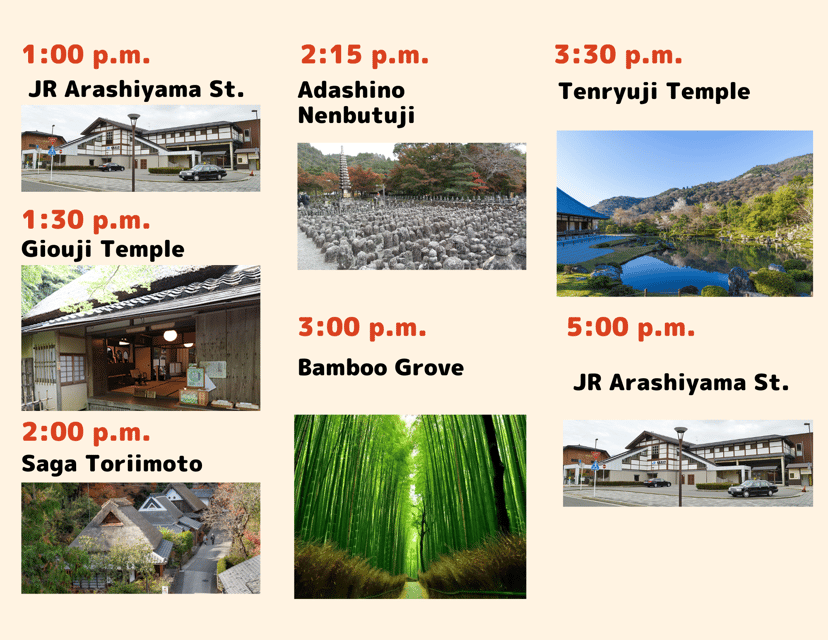
The advertised duration is three hours. The listed stops include 45 minutes at Adashino Nenbutsuji, 15 minutes along Saga Toriimoto, 30 minutes at another temple stop, 30 minutes through the bamboo grove, and 1.5 hours at Tenryuji. Since those times add up to longer than three hours, confirm the exact starting schedule and pacing when you book. The route is clearly full, and one guest specifically wished for more time to pause.
Adashino Nenbutsuji and the memory of the dead
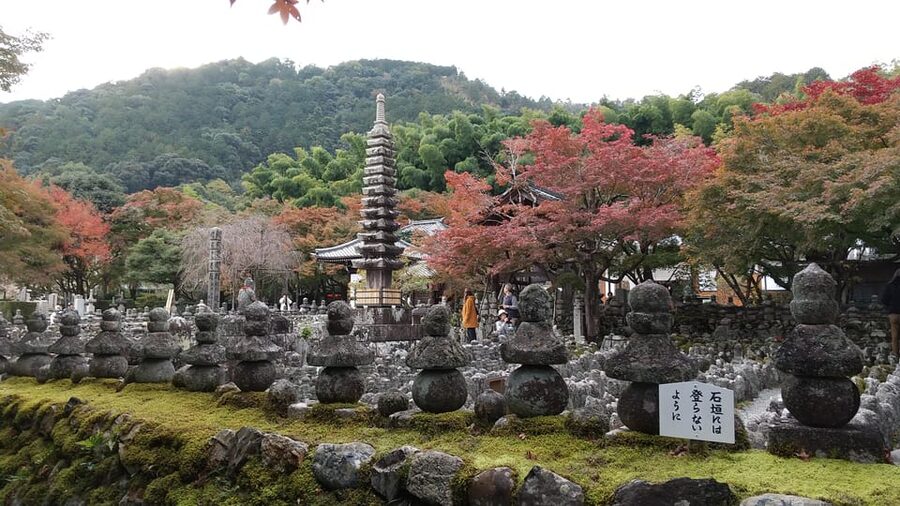
Adashino Nenbutsuji is one of the most serious stops on the walk. The temple was established in the Kamakura period, and the name Adashino refers to a vain or heartless field. The area was once associated with bodies left without proper family care or prayer.
The temple’s connection with Honen, who lived from 1133 to 1212, adds a religious dimension. Honen taught nenbutsu, the chanting of Buddhist scripture. Adashino Nenbutsuji became a place for muen botoke, the dead whose spirits had no relatives to pray for them.
Nearly 8,000 stone Buddha figures are gathered here. They were dug up and collected, rather than placed as one grand display from the beginning. That detail changes how you see them. Instead of treating the statues as decorative scenery, you begin to understand them as reminders of people who might otherwise have disappeared from memory.
Masa’s narrative is especially useful here. Without context, a field of stone figures can seem mysterious but distant. With the story of abandoned bodies, prayers, and permanent memorial offerings, the place becomes easier to read.
In August, the temple holds Sentou Kuyo, when thousands of candles are lit and flowers are offered. The tour does not promise that this event will be taking place during your visit, but knowing about it helps explain the temple’s continuing role. This is a place of remembrance, not just a photo stop.
You should expect a reflective atmosphere rather than a lively attraction. If you prefer to move quickly from one sight to the next, this portion may feel slow. If you want to understand how Japanese religious practice responds to death and loneliness, it is likely to be one of the most meaningful stops.
Saga Toriimoto’s old homes and quiet street
From Adashino Nenbutsuji, the walk continues through Saga Toriimoto Preserved Street. This short section lasts about 15 minutes, but it provides an important link between temple culture and daily life.
The street retains old farmhouses and machiya houses, built in a suburban part of Kyoto outside the city center. Their mixture gives the area a different feeling from central Kyoto, where temples and shopping streets often compete for your attention. Here, the old buildings help you picture a working community rather than a set of isolated monuments.
The stop is mainly a scenic walk, so do not expect a long formal visit inside each building. Its value comes from the transition. You move from Buddhist memorial grounds into an older residential setting, seeing how religious sites and lived-in neighborhoods fit together.
Masa can also show you artisan shops that you might miss on your own. This is one of the strongest practical reasons to choose a private local guide. You are not limited to the most obvious storefronts, and you can ask about the crafts or places that catch your eye.
More temples worth an hour in Kyoto:
- Kyoto: Tea Ceremony Ju-An at Jotokuji Temple
★ 4.9 · 3,207 reviews - Arashiyama Bamboo, Temple, Monkeys, or Secret Sake Brewery
★ 4.8 · 886 reviews - Kyoto: Arashiyama Bamboo Forest, Monkeys, Matcha & Temple Tour
★ 5.0 · 759 reviews - Kyoto Zen Meditation & Garden Tour at a Zen Temple with Lunch
★ 5.0 · 441 reviews
Giou-ji and a story of love, rejection, and retreat
The tour’s description highlights Giou-ji as another temple connected with tragedy. It was built in the 12th century during the Heian period. The name Giou comes from Giou, a woman who was a dancer and became favored by Taira no Kiyomori, a powerful military leader of the era.
At first, Kiyomori loved Giou. Later, his attention turned to another woman, Butsugozen. Giou was driven away and eventually became a nun. She lived at Giou-an with her sister and mother, and the three women practiced Buddhism together.
The story later took another turn. Butsugozen was also cast aside by Kiyomori and became a nun. She joined Giou, her family, and the others at the small house. The rival women ended up living together in religious retreat.
That story gives the temple its particular atmosphere. Giou-ji is not presented simply as an old building. It becomes a place where social power, beauty, rejection, and religious refuge meet. The women’s lives make the history personal and easy to remember.
You should listen closely here, since the stop gains much of its meaning from the explanation. The temple is small, and the visit may not satisfy someone looking for a large complex with grand halls. Its appeal is intimacy. It invites you to consider what happened to people who were famous or favored for a short time, then forced to rebuild their lives.
The supplied route information lists a 30-minute guided temple visit after the preserved street, which appears to correspond to this portion of the experience. Confirm the exact sequence with Masa, since the published timing and stop names leave some room for interpretation.
The bamboo grove without making it the whole story

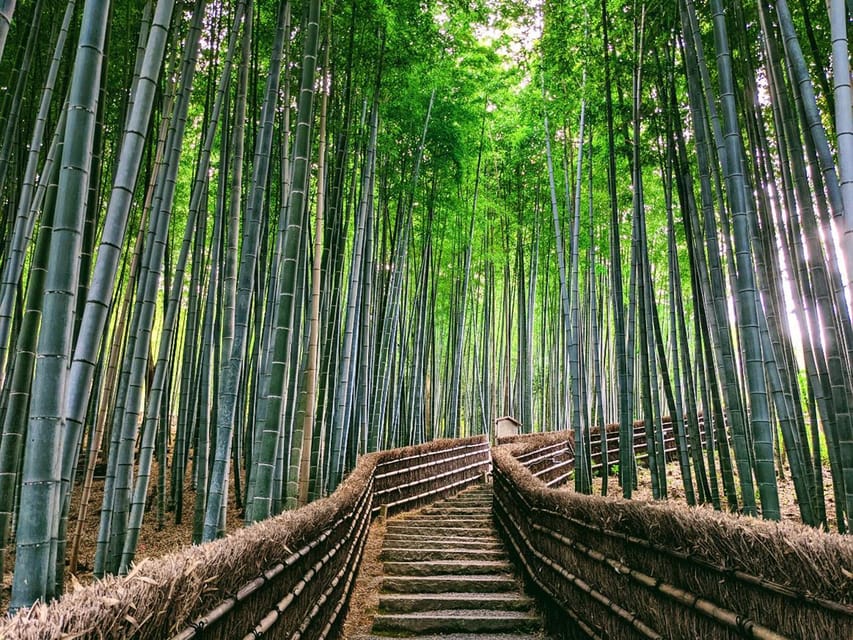
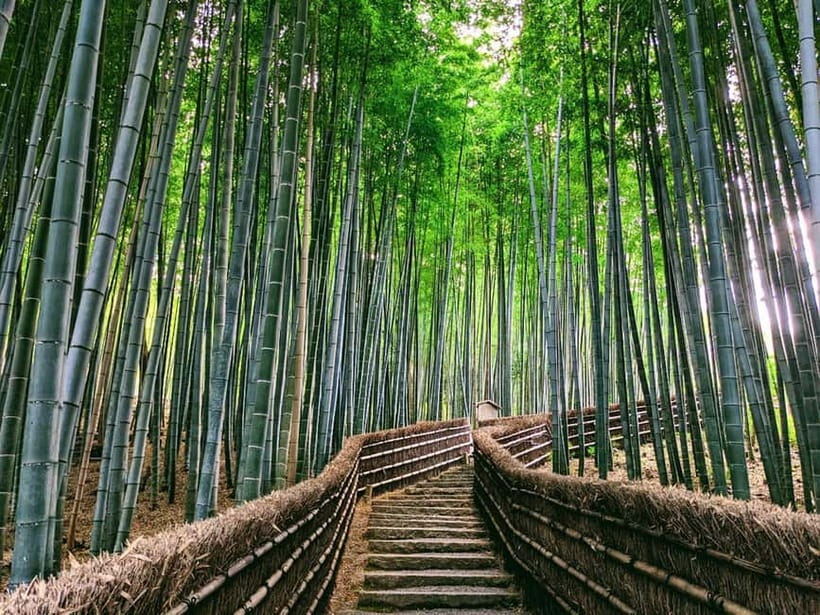
The Sagano Bamboo Grove receives about 30 minutes on the route. This gives you time to see one of Kyoto’s most recognizable settings without allowing it to swallow the entire visit.
The bamboo path is scenic, but it can also be crowded. The tour’s wider route helps put the grove in context. After hearing about temples, families, memorials, and old homes, the bamboo becomes one part of Sagano rather than the entire reason to come.
Bring your camera, but keep it ready for more than the famous path. The temple grounds and old street may offer quieter details than the bamboo itself. A hat, sunscreen, and water are sensible because portions of the walk are outdoors.
This is not a tour for avoiding all people at every moment. Arashiyama remains a major destination, and the bamboo grove is a known sight. The benefit is that you spend much of your time on a guided route with a clear historical purpose, rather than waiting for a perfect empty photograph.
Tenryuji and the long final temple visit
Tenryuji receives the longest scheduled visit, about 1.5 hours. That tells you something about the design of the tour: this is not a quick stop added at the end. You have time for a guided visit and for Masa to connect the temple with the wider religious and cultural story of Arashiyama.
The long visit is useful because temple grounds can seem confusing when you only have a few minutes. You can ask about what you are seeing, take in the setting, and reflect on the themes introduced earlier in the walk.
The exact activities described are guided sightseeing and hands-on experiences at selected temples. The tour does not promise a formal class or a specific ritual at Tenryuji, so treat the hands-on portion as something that may occur at appropriate temples along the route. Masa can demonstrate prayer and meditation traditions, according to the experience details.
This final stop may be the best place to slow down. One guest praised the amount learned but felt the overall pace could have been gentler. A private tour gives you a chance to state your preference at the start. If you want time for quiet observation, say so. If you need to keep moving, Masa can help maintain the schedule.
What the $38 price includes
At $38 per person, this is a strong value if you want a guided cultural visit rather than a simple walk through public streets. The price includes the English-language guide, admission to all temples visited, and hands-on experiences at selected temples.
Temple admissions can add up, and having them handled as part of the tour makes the cost easier to judge. You are also paying for local interpretation. The stories of Giou-ji and Adashino Nenbutsuji are not difficult to encounter online, but hearing them at the actual places gives the details more force.
The price does not include transport to JR Saga-Arashiyama, meals, drinks, or personal purchases. Bring water and eat beforehand unless you arrange food with Masa. The guide has shown flexibility around lunch, but meals are not part of the listed cost.
The private format improves the value for couples, families, or small groups who want to ask questions and set a comfortable pace. Solo visitors should consider the same price against the convenience of admissions and a personal guide. If your main goal is a fast bamboo grove photograph, you can spend less by visiting independently. If you want the religious and personal stories, the fee is easier to justify.
Who should book this walk
I would choose this tour if you want Kyoto explained through people and beliefs, not just architecture. It suits visitors who enjoy temples, local stories, historic homes, and thoughtful conversation.
It is also a good fit for a first visit to Arashiyama. Masa can help you get your bearings, show you places you might miss, and connect several sights into one clear route. His friendly manner and ability to adjust plans are useful benefits, especially for a private group.
You should think twice if you have difficulty walking or use a wheelchair. The experience is not suitable for people with mobility impairments or wheelchair users. Comfortable shoes are essential, and you should check the weather before setting out.
The tour may also disappoint you if you want a slow meditation retreat. It covers several locations in a limited time, and the scheduled pace is active. Ask for a slower rhythm if that matters to you, but understand that taking more time at one temple could reduce time elsewhere.
Free cancellation is available up to 24 hours before the tour for a full refund, and you can reserve now and pay later. Those terms help if your Kyoto plans are still changing.
Should you book it?
Book this walk if you want Arashiyama to feel like a lived-in place rather than a backdrop. The strongest parts are Adashino Nenbutsuji’s field of memorial stones, Giou-ji’s story of women pushed aside by power, Saga Toriimoto’s old homes, and Masa’s personal explanations.
Skip it if you only want the bamboo grove, dislike steady walking, or prefer to explore temples without a guide. For most visitors who want context, local access, and a private English-language experience at a modest price, this is a thoughtful way to spend three hours in western Kyoto. Just arrive early, wear good shoes, and ask Masa to leave room for pauses.
FAQ
Where does the tour begin?
It begins at JR Saga-Arashiyama Station, in the plaza just outside the station ticket gates. Look for the guide holding a sign with your name.
Is the meeting point at Hankyu or Randen Arashiyama Station?
No. The meeting point is JR Saga-Arashiyama Station, not Hankyu Arashiyama Station or Randen Arashiyama Station.
How long does the tour last?
The stated duration is three hours. The listed stops include Adashino Nenbutsuji, Saga Toriimoto, another temple visit, the Sagano Bamboo Grove, and Tenryuji.
What language is the tour conducted in?
The tour is conducted in English by a live guide.
Is this a private tour?
Yes. The group type is private.
Are temple admission fees included?
Yes. Admission to all temples visited is included in the tour price.
What should I bring?
Bring comfortable walking shoes, a hat, a camera, sunscreen, and water. Dress according to the weather forecast, and arrive 15 minutes before the tour begins.
Newest Kyoto experiences on the site
- Treasures of Kyoto: Gion & historical Walking Tour★ 5.0 · 6 reviews
- Whisk Your Own Matcha: A Zen Matcha Experience at Temple★ 3.6 · 7 reviews
- Kyoto tea town for matcha lovers★ 5.0 · 16 reviews
- Uji: Private immersion into Kyoto’s tea and reglious culture★ 5.0 · 17 reviews
- Kyoto Matcha Green Tea Tour★ 4.5 · 23 reviews
- Uji and Wazuka Matcha Farm Half Day Private Guided Tour★ 5.0 · 21 reviews
- Utilising upcycled Matcha! Creating matcha incense (Uji, Kyoto)★ 5.0 · 6 reviews
- Sacred Temple Yoga Experience in Japan★ 5.0 · 3 reviews
Arashiyama Bamboo Grove Tours, compared.
Fushimi Inari, Kinkakuji, Bamboo Grove 1 Day Bus Tour
Read our review →
Kinkakuji,Arashiyama,FushimiInariShrine,NaraPark
Read our review →
Nara, Fushimi Inari Taisha, Arashiyama Bus Tour
Read our review →
Kyoto Arashiyama Walking Tour: Bamboo, Monkeys, Gardens & Secrets
Read our review →
Arashiyama Bamboo, Temple, Monkeys, or Secret Sake Brewery
Read our review →
Arashiyama Bamboo Forest, Monkeys, Matcha & Temple Tour
Read our review →
Arashiyama, Nara & Fushimi Inari Shrine w/Lunch
Read our review →
Nijo, Kinkaku-ji, Arashiyama, Kiyomizu & Fushimi Inari
Read our review →Browse the lists this tour appears in