
Reviewed · KYOTO GEISHA & MAIKO EXPERIENCES
Kyoto: Try Nishijin Weaving in the Oldest Geisha District
Kyoto’s oldest geisha district is best understood on foot, and this three-hour experience gives you two strong reasons to come: a guided walk through Kamishichiken and hands-on work at a real Nishijin weaving workshop. You also visit Kitano Tenmangu, the shrine tied to the district’s beginnings.
I like the mix of quiet streets and practical craft. I also like that the weaving supports the culture of a living geisha district rather than treating it as a stage set. The main consideration is price: at $131 per person, this is not a quick sightseeing stop. You are paying for a private or small-group format, a guide, and a substantial workshop.
Key points at a glance
- Kamishichiken’s 400-meter street: Walk among traditional townhouses with latticework and learn about the geiko and maiko connected with the area.
- Kitano Tenmangu first: Begin at the shrine’s first grand torii, then see the main worship hall and other important cultural assets.
- A working weaving lesson: Try Tsuzure-ori, described as a 4,000-year-old textile technique and the oldest Nishijin weaving method.
- A personal souvenir: Choose an item from the workshop’s available selection and make your own one-of-a-kind piece.
- Warm, flexible guiding: English and Japanese tours are offered, with guide experiences led by people such as Kanako, Yayoi, or Juraj.
- A calmer side of Kyoto: Kamishichiken offers a quieter walk than the city’s busiest sightseeing areas, though the shrine itself can have seasonal activity.
Starting beneath Kitano Tenmangu’s first torii
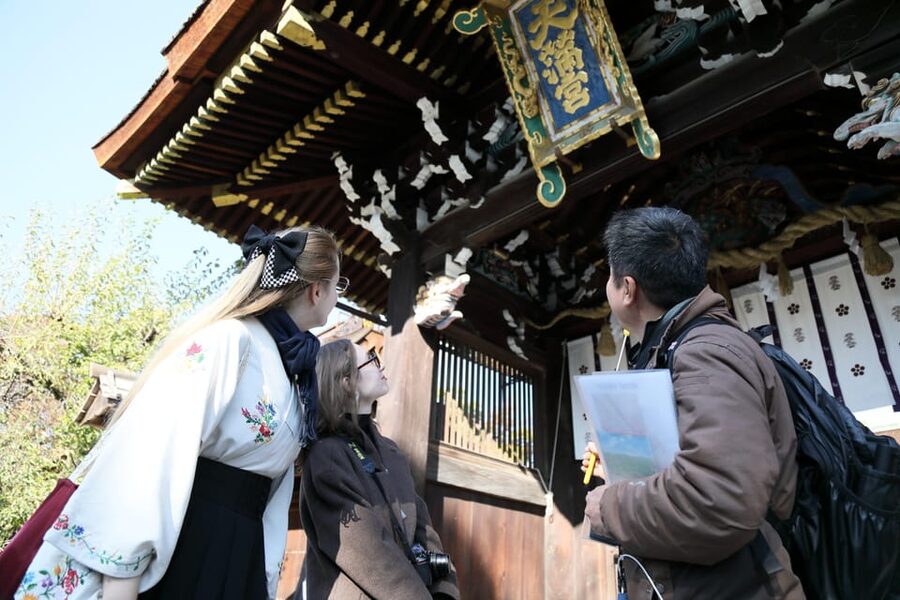
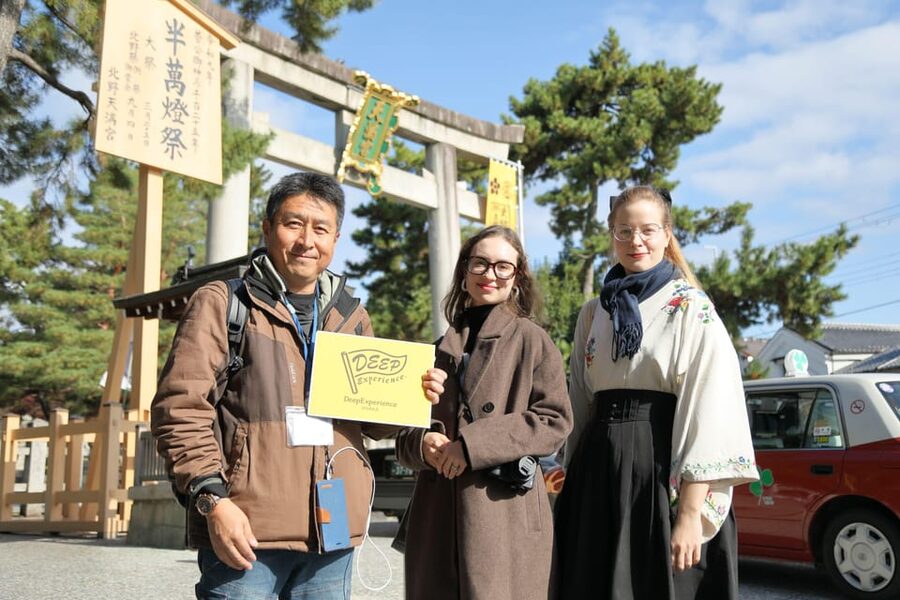
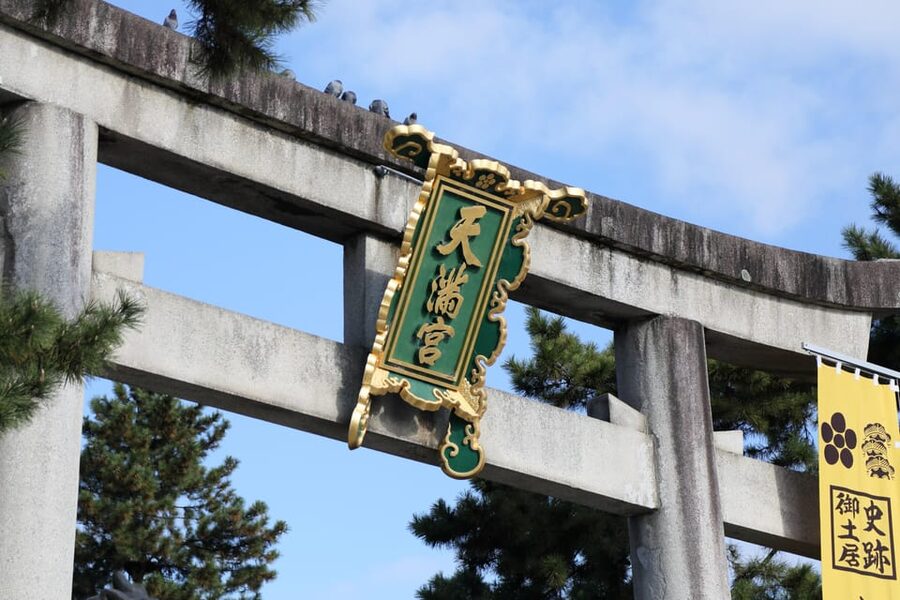
The meeting point is easy to identify: stand in front of the first grand torii gate of Kitano Tenmangu Shrine and look for a guide holding the yellow DeepExperience sign. This detail matters because Kitano Tenmangu is a large, active shrine complex, and meeting at the first torii prevents the usual Kyoto problem of wandering around the wrong entrance.
Your tour starts with the shrine rather than the weaving studio. That order works well. You first get a sense of the place that helped shape Kamishichiken, then see how textile work fits into the district’s wider culture.
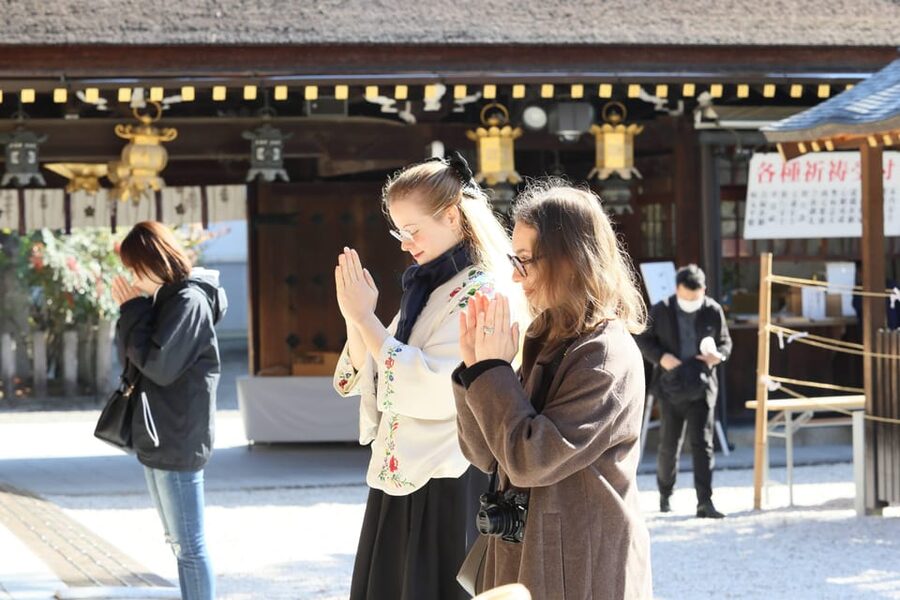
The guide leads a roughly 30-minute visit. You can expect an introduction to the shrine’s role as the guardian of the area, along with a look at the main worship hall and other important cultural assets and national treasures. Seasonal scenery is part of the appeal, so the mood and appearance of the grounds will change depending on when you visit.
I would give this stop your full attention even if you have seen several Japanese shrines already. The point is not only to admire the architecture. Your guide explains why this particular shrine matters to the neighboring hanamachi, or geisha district, and why the two places developed side by side.
More geisha and maiko evenings in Kyoto:
- Kyoto Geisha Walking Tour: Gion District & Hidden Gems
★ 4.7 · 3,273 reviews - Kyoto: Gion Magical Night Walking Tour with Geisha Trivia
★ 4.9 · 2,393 reviews - Kyoto: Gion Geisha District Walking Tour – Stories of Geisha
★ 4.7 · 2,187 reviews
Why Kamishichiken began around the shrine
Kamishichiken is Kyoto’s oldest hanamachi district. Its creation is linked to Kitano Tenmangu, and that connection is central to the tour rather than a side note.
The area developed as a place connected with entertainment and hospitality near the shrine. Over time, its streets became associated with geiko and maiko, the performers who preserve traditional arts through music, dance, conversation, and formal service.
You will not be watching a staged geisha performance on this tour. Instead, you are learning how the district works as a historic neighborhood. That distinction is useful. Kamishichiken is not simply a decorative old street. It remains tied to a demanding cultural tradition, and the walking portion helps you see the setting in which that tradition continues.
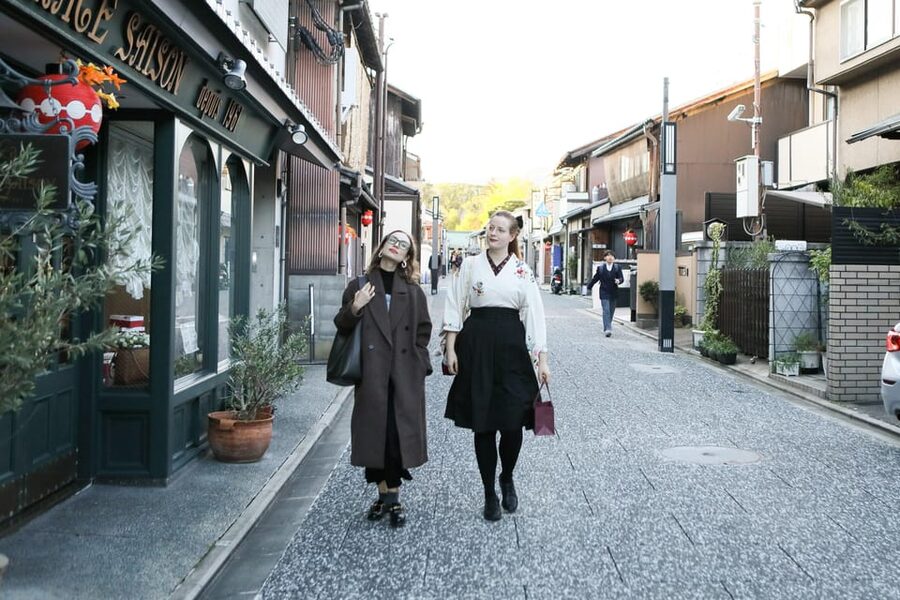
The preserved townscape is compact. A roughly 400-meter street is lined with townhouses featuring traditional latticework. Your guide points out places associated with local geiko and maiko and helps you notice details you could easily pass without context.
This is a good part of the experience for visitors who want a quieter Kyoto walk. You get old wooden facades, narrow streets, and a strong sense of continuity without spending the whole day in a major museum. Still, the district is not an open-air show. You should keep your voice low, avoid blocking entrances, and treat residents and working establishments with care.
Learning Tsuzure-ori from a working craftsman
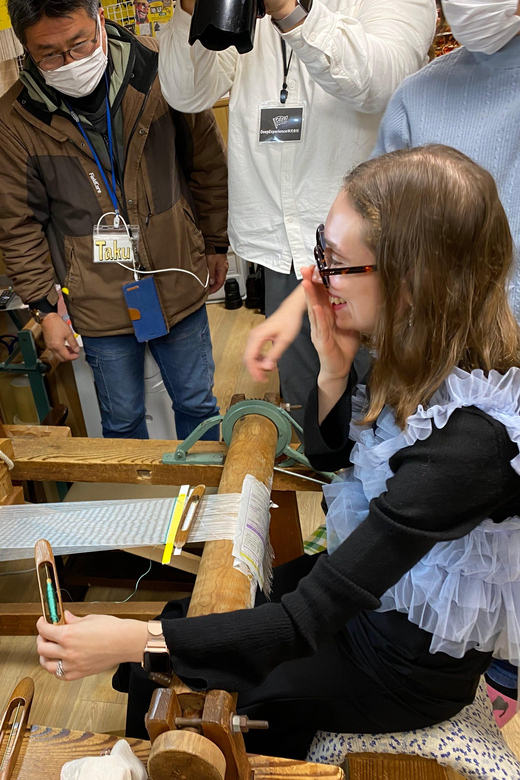
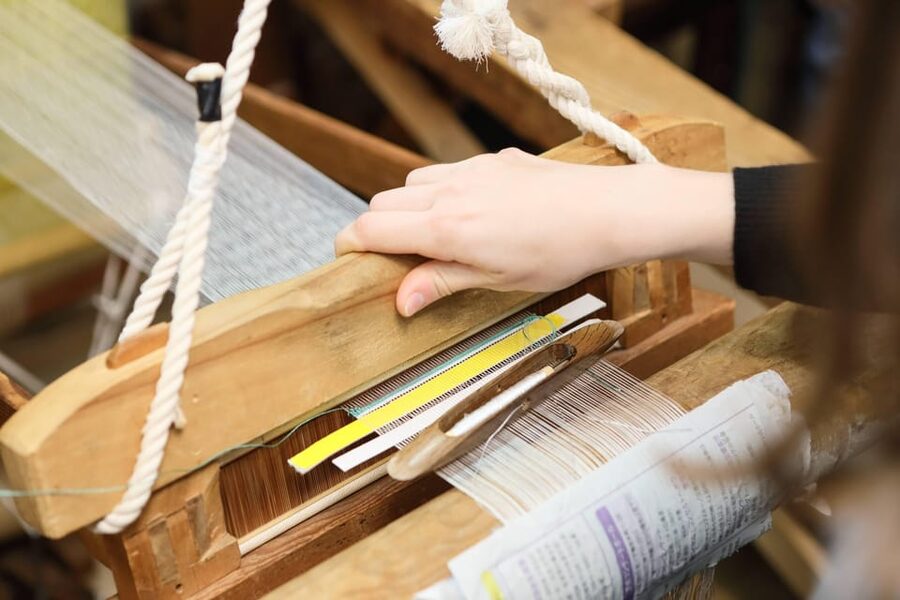
The workshop lasts about 90 minutes, making it the heart of the experience. You learn the basics of Tsuzure-ori weaving, presented here as a 4,000-year-old technique and the oldest Nishijin textile method.
Nishijin is Kyoto’s best-known textile tradition, and the lesson gives you a way to understand it with your hands. Instead of only looking at finished cloth behind glass, you work under the direction of a traditional craftsman in a real workshop.
You choose an item from the available selection, then use traditional techniques to create your own piece. The exact choice of items is not specified, so do not arrive expecting one particular product. The value is in the process and in leaving with something made by you.
The craft lesson is guided rather than self-directed. That is important for beginners. You do not need to arrive with weaving experience, and the instructor can show you the basic method as you work. The experience is also suited to people who already enjoy fiber arts and want a closer look at an old Kyoto technique.
Master weaver Hirano has been singled out for his patience, humor, warmth, and skill at teaching. Those qualities matter in a workshop. A craft can feel intimidating when the tools and motions are unfamiliar, but a patient instructor turns the lesson into a shared activity rather than a test.
Allow yourself time to make mistakes. The finished piece may not look like something produced by a professional textile studio, and that is part of its charm. You are making a personal work under expert guidance, not buying a factory-perfect souvenir.
What makes the weaving worth the price
The $131 cost deserves a clear look. It is high compared with a short shrine visit or a basic walking tour, but the package includes three distinct elements: a guided shrine visit, a 90-minute weaving lesson, and a guided walk through Kamishichiken.
The small-group or private format also changes the value. You are not simply standing at the back of a large demonstration. You have time to ask questions, receive help, and work directly with the instructor. For someone interested in textiles, traditional arts, or Kyoto’s geisha culture, that extra time can make the price reasonable.
I would be less quick to recommend it to someone who only wants a fast introduction to the neighborhood. The tour uses three hours, and the workshop is the main event. If you would rather pack in several temples, this activity may feel slow.
For the right person, though, the souvenir is more meaningful than a shop purchase. You have a physical reminder of the technique and the place where you learned it. You also support a form of craft connected with the local hanamachi culture.
One review from a fiber arts enthusiast described the workshop as the highlight of a full Japan trip. That reaction makes sense, but you do not need to be a serious craft fan to enjoy the lesson. The best fit is anyone who likes to make things, learn at a relaxed pace, or bring home something with a personal story.
A few more Kyoto tours worth putting on the shortlist
- PERFECT KYOTO 1-Day Bus Tour
★ 5.0 · 13,518 reviews - Kyoto: Fushimi Inari, Kinkakuji, Bamboo Grove 1 Day Bus Tour
★ 4.8 · 4,316 reviews - Kyoto: Tea Ceremony in a Traditional Tea House in Kiyomizu
★ 4.9 · 3,519 reviews - Kyoto: Tea Ceremony Ju-An at Jotokuji Temple
★ 4.9 · 3,207 reviews
Walking Kamishichiken beyond the postcard view
After the workshop, you return to Kamishichiken for a guided 30-minute stroll. The walk lets you connect what you have learned about textiles and traditional entertainment with the physical district.
The streets retain their historic character, with townhouses and latticework along the main route. Your guide helps you identify locations associated with local geiko and maiko and explains the character of the neighborhood.
I like this final walk because it turns the district into more than a backdrop for photographs. You begin to see why narrow entrances, wooden facades, and carefully preserved fronts matter. They are part of an active cultural area, not just old architecture preserved for display.
The walk is short, so do not expect a full architectural survey of northern Kyoto. It is enough to get your bearings and notice the district’s details after the shrine and workshop have given them meaning.
A dango tasting may also be available, but it depends on whether the shop is open and able to serve it. Treat this as a possible extra, not a guaranteed part of the tour. This is a useful example of why the experience feels connected to the neighborhood: small local stops can depend on real shop conditions rather than a fixed stage-managed schedule.
The guides can shape the experience
The tour is offered in English or Japanese, and the guide makes a real difference because the subject includes customs, history, and local etiquette.
Kanako has been praised for a warm and natural manner, which is valuable when the tour moves between formal shrine customs and a relaxed craft lesson. Yayoi has led the experience with clear explanations, while Juraj has combined interpretation with a strong interest in Japanese culture and daily life.
Your assigned guide may be different. Still, the format gives the guide room to interpret the district instead of rushing through a script. A good guide can explain why the shrine matters, help you communicate with the craftsman, and point out details in Kamishichiken that you might miss alone.
If you have particular interests, such as textile history, geisha districts, architecture, or Japanese religious sites, mention them early. The tour is small or private, so questions should have more room than they would on a large group outing.
Weather, seasons, and the pace of the day
The experience takes place partly outdoors, so dress for the season. You walk through the shrine grounds and along Kamishichiken’s streets before or after spending time inside the workshop.
Rain does not necessarily spoil the visit. A damp shrine courtyard can make the old streets feel especially atmospheric, though you will want suitable clothing and shoes. One tour took place on a cold, rainy day and still felt rewarding because the weather added character to the shrine scenery.
Seasonal changes are another reason to consider the tour at different times of year. Kitano Tenmangu’s grounds offer changing scenery, while Kamishichiken’s preserved buildings provide the steady visual appeal. The tour does not promise a particular seasonal display, so book it for the culture and craft first.
The three-hour length is well judged for the content. Thirty minutes at the shrine gives you context without turning the visit into a full temple tour. Ninety minutes allows enough time to learn the weaving basics. The final 30-minute walk ties the pieces together.
Who should book this Kyoto experience
I would recommend this tour most strongly to:
- People who enjoy traditional crafts and want to make something themselves
- Visitors curious about the history of Kyoto’s geisha districts
- Anyone who prefers small-group or private guiding
- Families or couples looking for a hands-on cultural activity
- Repeat Kyoto visitors who want a quieter neighborhood experience
- Fiber arts fans who want to meet a working craftsman
It is also a good choice if you want to leave Kyoto with more than photographs. The finished weaving piece may be small, but you will remember the method, the instructor, and the setting behind it.
I would think twice if your main aim is famous architecture, a performance, or a long shrine visit. This tour does not include a geiko or maiko show, and the shrine visit is only about 30 minutes. It is built around connection: shrine, craft, and neighborhood.
Book with the meeting point in mind. You must reach the first torii of Kitano Tenmangu, not simply the general area. Starting times vary, and cancellation is free up to 24 hours before the tour. You can also reserve now and pay later, which helps if your Kyoto schedule is still shifting.
Should you book the Nishijin weaving tour?
Book it if you want a personal, slower look at Kyoto’s oldest hanamachi and enjoy learning with your hands. The strongest features are the 90-minute lesson with a traditional craftsman, the calm walk through Kamishichiken, and the guide’s ability to connect Kitano Tenmangu with the district’s culture.
At $131, it is a considered purchase, not an impulse activity. The price makes the most sense for craft lovers, repeat visitors, and anyone who values a small-group experience over a checklist of sights.
Skip it if you want maximum sightseeing mileage or a formal geisha performance. Choose it if you want to understand a Kyoto tradition by meeting the people and visiting the streets that keep it going.
FAQ
Where does the tour meet?
Meet your guide in front of the first grand torii gate of Kitano Tenmangu Shrine. The guide will hold a yellow sign with the DeepExperience logo.
How long does the experience last?
The experience lasts three hours. It includes about 30 minutes at Kitano Tenmangu, 90 minutes for the weaving class, and 30 minutes walking through Kamishichiken.
What languages are available?
The tour is available with a live guide in English or Japanese.
Is the tour private or shared?
Private and small-group options are available.
What is included in the price?
The price includes an expert guide, a visit to Kitano Tenmangu Shrine, and the Nishijin weaving experience.
What weaving technique will I learn?
You will learn the basics of Tsuzure-ori, described as a 4,000-year-old patterned textile technique and the oldest Nishijin textile method.
Is the dango tasting guaranteed?
No. The dango tasting depends on the store’s availability.
Can I cancel the booking?
You can cancel up to 24 hours in advance for a full refund. You can also reserve now and pay later.
Newest Kyoto experiences on the site
- Treasures of Kyoto: Gion & historical Walking Tour★ 5.0 · 6 reviews
- Whisk Your Own Matcha: A Zen Matcha Experience at Temple★ 3.6 · 7 reviews
- Kyoto tea town for matcha lovers★ 5.0 · 16 reviews
- Uji: Private immersion into Kyoto’s tea and reglious culture★ 5.0 · 17 reviews
- Kyoto Matcha Green Tea Tour★ 4.5 · 23 reviews
- Uji and Wazuka Matcha Farm Half Day Private Guided Tour★ 5.0 · 21 reviews
- Utilising upcycled Matcha! Creating matcha incense (Uji, Kyoto)★ 5.0 · 6 reviews
- Sacred Temple Yoga Experience in Japan★ 5.0 · 3 reviews
Kyoto Geisha & Maiko Experiences, compared.

Kyoto Geisha Walking Tour: Gion District & Hidden Gems
Read our review →
Gion Magical Night Walking Tour with Geisha Trivia
Read our review →
Gion Geisha District Walking Tour – Stories of Geisha
Read our review →
Best of Kyoto: Gion, Geisha, Pagodas & Cobblestones
Read our review →

Kyoto Gion Geisha District Walking Tour – The Stories of Geisha
Read our review →
Kyoto Gion: 2-Hour Geisha Culture & History Walking Tour
Read our review →
Kyoto Gion Night Walk & Geisha District Guided Tour
Read our review →Browse the lists this tour appears in