
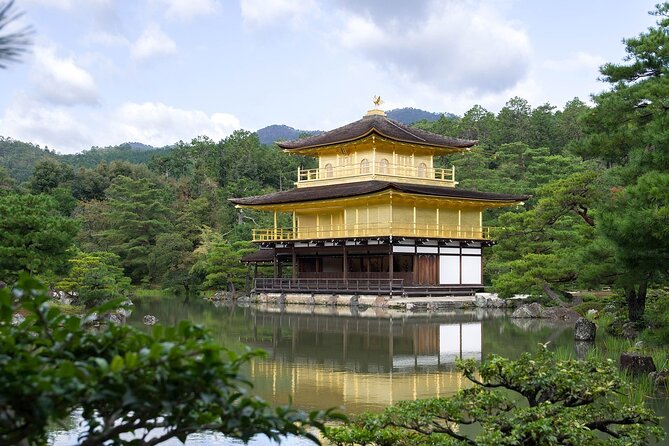
Reviewed · 3-HOUR EXPERIENCES
Kyoto: Private Flexible 3 hours tour with a local guide
Kyoto is easier to enjoy when someone else handles the route. This private three-hour tour lets you choose one to three places, from Fushimi Inari and Kiyomizu-dera to Gion, a market, or the bamboo forest. Guides such as Steven, Toshiki, Teppei, Nanako, and Kyoichi Mark have tailored walks to families, short visits, and specific interests.
I like the freedom to skip sights you have already seen, and I like having a local who can explain temple customs, answer personal questions, and help with taxis or translation. The catch is that transportation costs extra, and a short tour cannot cover all of Kyoto, especially if you try to combine distant sights.
- You choose the route: Select one to three locations instead of following a fixed sightseeing script.
- Private for your party: You do not share the guide or itinerary with another group.
- Useful local help: Your guide can assist with taxis, SIM cards, translation, bookings, and customs.
- Strong guide feedback: Steven, Toshiki, Teppei, Nanako, and Kyoichi Mark are praised for warmth, flexibility, and local insight.
- Walking and public transport: A private car and driver are not included, and transportation fees are extra.
- Best for short visits: Families, first-time visitors, and anyone wanting help choosing Kyoto highlights can get a lot from the format.
A Kyoto tour built around your priorities
The best feature here is control. Instead of being led from one standard stop to the next, you can tell the guide what matters most and build a route around it. You might focus on shrines, traditional streets, food, photography, family-friendly sights, or simply the places that are hardest to manage alone.
The tour is private, so the guide can adjust the pace for your group. That matters in Kyoto, where a child may need a break, an older visitor may prefer fewer stairs, or a first-time visitor may have a long list of questions about local customs.
The advertised price is $131.38 per person. That is not a bargain walking tour if you are traveling alone, but the value improves for a small private group, especially when several people share the guide’s time. Group discounts are offered, though the exact saving is not specified.
You should think of this as a guide service rather than an all-inclusive sightseeing package. Transportation, food, beverages, private car service, and the admission fee for Kiyomizu-dera are not included. The shrine at Fushimi Inari and the Gion district can be visited without an admission charge.
Choosing between Fushimi Inari, Kiyomizu-dera, and Gion
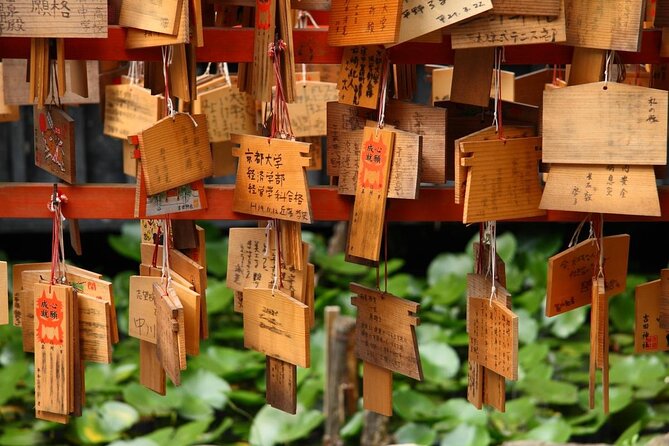
The main route options offer very different experiences. You can choose one to three locations, but fitting all three into a short session may be demanding. Distances, train rides, walking speed, crowds, and time spent taking photos all affect what is realistic.
A few more Kyoto tours worth putting on the shortlist
- 3-Hour Kyoto Insider Sake Brewery Tour with Tastings & Pairings
★ 5.0 · 917 reviews - Kyoto: 3-Hour Fushimi Inari Shrine Hidden Hiking Tour
★ 4.9 · 270 reviews - Kyoto Imperial Palace & Nijo Castle Guided Walking Tour – 3 Hours
★ 4.5 · 106 reviews
Fushimi Inari and its long tunnel of red gates
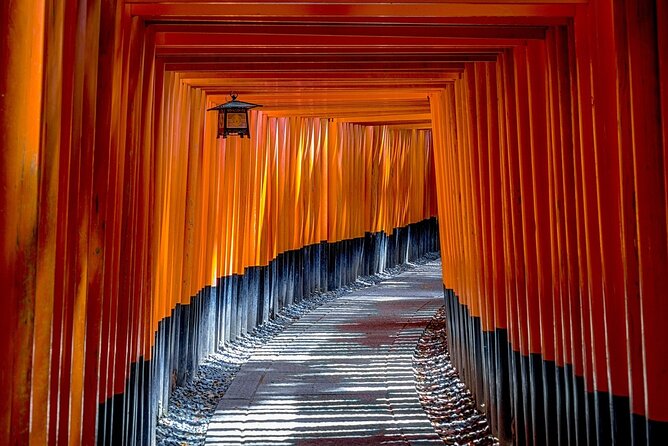
Fushimi Inari-taisha is one of Kyoto’s most recognizable sights. The route rises into the wooded mountain behind the shrine, passing through thousands of bright red torii gates. Even a short walk gives you the visual experience, but the full mountain path takes much longer and requires steady uphill walking.
The supplied timing allows about one hour here. That is enough for an introduction and a portion of the climb, not a leisurely hike to every level of the mountain. Tell your guide how far you want to walk before you begin.
This is a good pick if you want iconic Kyoto scenery, shrine customs, and a little exercise. It is less suitable if your group dislikes stairs, heat, or uphill paths. On a hot day, the guide’s practical help can matter. Kyoichi Mark was praised for bringing cooling wipes during a particularly hot visit, a small gesture that shows why a private guide can be useful beyond basic facts.
Kiyomizu-dera and the view over Kyoto
Kiyomizu-dera gives you a large temple structure, views across Kyoto, and the chance to stroll through the traditional streets around the approach. The temple itself requires an admission fee, which you pay separately.
Allow about an hour for the temple area if it is your chosen stop. The visit is not only about entering the main temple. The approach streets, nearby shops, and surrounding lanes are part of the experience, so rushing through can leave you feeling that you saw the building but missed the neighborhood.
I would choose Kiyomizu-dera if you want a major temple paired with old-style streets and shopping. Ask the guide to explain proper behavior at religious sites, since one of the useful parts of this tour is learning what to do rather than simply taking photographs.
Gion and Kyoto’s traditional streets
Gion offers a slower street walk. You can look at traditional buildings, browse shops, and take photographs while learning how the district fits into Kyoto’s cultural life. The area is free to walk through, although purchases and food are your responsibility.
Gion is a smart choice for a short Kyoto visit because it can give you a sense of the city without the physical demands of a mountain climb. It also pairs well with Kiyomizu-dera, since both are on the eastern side of the city, although your exact route depends on the guide and your chosen stops.
Keep your expectations sensible. A walk through Gion does not guarantee a meeting with geisha or maiko, and the experience is primarily about streets, architecture, shops, and atmosphere. Your guide can help you understand local customs and behave respectfully in a district where residents and working businesses share the same streets.
Same city, a completely different kind of day:
- PERFECT KYOTO 1-Day Bus Tour
★ 5.0 · 13,518 reviews - Kyoto: Fushimi Inari, Kinkakuji, Bamboo Grove 1 Day Bus Tour
★ 4.8 · 4,316 reviews - Kyoto: Tea Ceremony in a Traditional Tea House in Kiyomizu
★ 4.9 · 3,519 reviews - Kyoto Geisha Walking Tour: Gion District & Hidden Gems
★ 4.7 · 3,273 reviews
Adding Arashiyama, a market, or a food stop
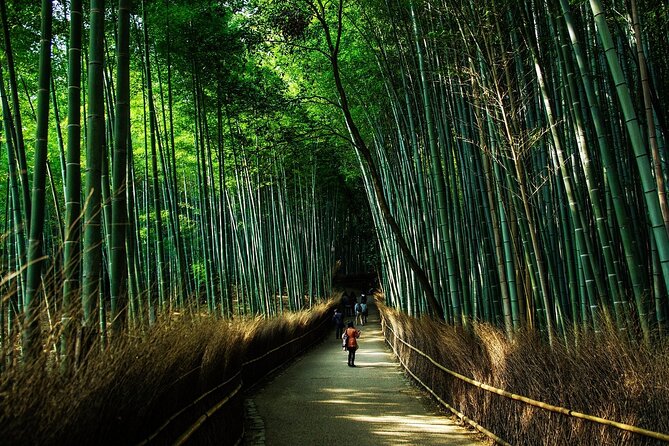
The examples include Arashiyama Bamboo Forest, and several tailored tours have also included a local market, temples, shrines, and ramen or other food stops. These additions show how broad the customization can be, but they also make timing important.
Arashiyama is not a natural add-on to every central Kyoto route. If you want the bamboo forest, make it the center of the tour rather than assuming you can squeeze it in with Fushimi Inari and Gion. The same rule applies to a market or a meal. A food stop can be a fine use of time if eating is a priority, but it reduces the time available for monuments.
One guide, Steven, included a ramen restaurant during a city tour. Another guide helped select food that was enjoyable without being too unusual. Those details are useful if you want more than sightseeing, but food is not included in the tour price.
Before the meeting, give the organizer a short list of priorities. For example:
- One major shrine and one traditional neighborhood
- Kyoto food and a local market
- Family-friendly sights with limited walking
- Temple customs and help with photographs
- A short introduction for a visitor with only a few hours
The clearer you are, the easier it will be for the guide to shape a workable route.
What the local guide adds
The guide is the main reason to book this rather than use a map app. The service includes local guidance plus practical support, such as help booking a taxi, buying a SIM card, and handling travel questions.
The strongest guide experiences have come from personal attention. Steven is praised for adjusting the route to different interests and for making a short visit work for families. Toshiki is described as patient, friendly, and willing to change plans, even joining a guest for a church service when that became part of the desired experience.
Teppei is noted for warmth and professionalism. Nanako led a focused walking tour of key Kyoto sights. Kyoichi Mark combined cultural information with practical care during extreme heat. These names help you understand the range of guides you might receive, although you should not assume that a particular person will be assigned unless the provider confirms it.
You can also ask questions that a standard group tour may not have time to address. Why do visitors purify themselves at a shrine? How should you behave at a temple? What does a particular neighborhood represent? Which local food is approachable for your group? A private guide can adjust the conversation to your interests.
There is one important warning. A poor guide experience is possible, and the tour format depends heavily on the individual assigned. One unhappy account described missed trains and little useful touring. That criticism does not match the much stronger overall rating, but it is a reason to confirm the meeting details, preferred sights, and transportation plan before the day begins.
Walking, trains, and the real cost of the tour
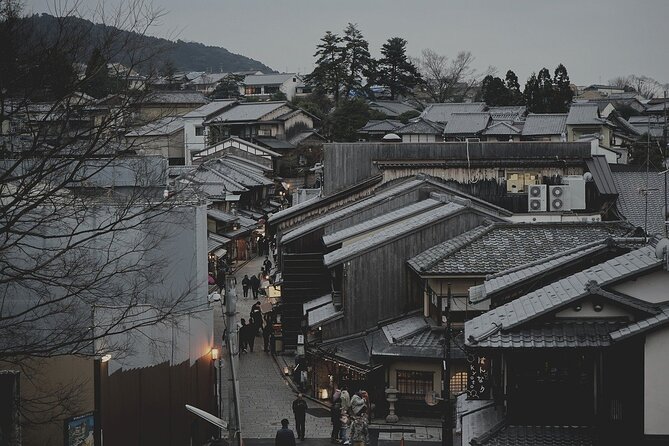
A private car and driver are not included. You pay transportation fees separately, and the tour may involve walking and public transport. This keeps the base price lower than a chauffeur-driven tour, but you need to budget for trains, buses, taxis, and any entrance fees.
The guide can help you navigate, which is valuable in Kyoto’s large and spread-out sightseeing network. Still, the guide cannot remove travel time. Fushimi Inari, Kiyomizu-dera, Gion, and Arashiyama are not one compact cluster.
At $131.38 per person, the price makes the most sense for two or more people who want a private guide and can split the cost. It is also more defensible for a family that needs a flexible pace or for a visitor with only a short window in Kyoto. A solo visitor interested in just one famous sight may find a self-guided visit cheaper.
The tour lasts about two to three hours, with the sample stops each given roughly one hour. Since the experience is customizable, treat those timings as a planning guide rather than a promise that all three stops will fit. If you choose three major places, you may spend much of the session moving between them.
Why families and short-stay visitors may like it
This format works well when your group does not move at the same speed. Families have used the tour for children as young as eight and eleven, with the guide adjusting walks and train rides to keep the outing manageable.
It also suits visitors arriving from another Japanese city who want help making sense of Kyoto quickly. A guide can connect the sights, explain local behavior, and answer questions that arise during the day. That is especially helpful if Kyoto is your first stop in Japan or if you have come from more modern urban areas and want older neighborhoods and religious sites.
The tour is not limited to people who know exactly what they want. You can arrive with broad interests and ask the organizer to help shape the route. Still, the more specific your priorities, the better the use of a short booking.
Most travelers can participate, service animals are allowed, and the meeting takes place in Kyoto. The experience is near public transportation, but the supplied details do not specify a single fixed meeting address, so confirm the exact starting point after booking.
How to get the most from your guide
Send your main requests before the tour. List the sights you have already visited, the places you want most, the walking pace your group can manage, and any food or cultural interests.
Do not ask to see everything. One visitor wanted all of Kyoto in a short session and understandably could not fit it all in. A better plan is one major sight plus one nearby district, or two related stops with enough time to look around.
Wear comfortable shoes and prepare for walking. Fushimi Inari includes an uphill route, and both temple areas and traditional districts are best explored on foot. In hot weather, carry water and tell the guide early if anyone is struggling.
Use the guide for more than directions. Ask for help with photographs, translation, shrine and temple manners, local food choices, and the simplest way to continue your day after the tour. These practical questions are part of what makes the private format worthwhile.
Cancellation is free up to 24 hours before the start time. Cancellations or changes made within 24 hours are not refunded, so make your plans carefully once the booking is close.
Who should book this Kyoto experience?
I would choose this tour if you want a private introduction, have limited time, are traveling with children, or care more about a personal route than a fixed checklist. It is especially useful if you want a local person beside you while using trains and walking between sights.
I would skip it if you want a luxury vehicle, guaranteed access to every major Kyoto attraction, or a fully fixed schedule with all admission and transport included. You may also prefer a self-guided day if your group is comfortable navigating and only wants one shrine or temple.
For the best value, book it for a small group, choose one to three realistic locations, and tell the organizer exactly what you want. If you do that, the tour can turn a short Kyoto visit into a focused introduction rather than a rushed race across the city.
FAQ
How long does the Kyoto private tour last?
The tour lasts approximately two to three hours.
How many locations can I choose?
You can create a route around one to three locations.
Which Kyoto sights can I visit?
Possible locations include Fushimi Inari-taisha Shrine, Kiyomizu-dera Temple, Gion, Arashiyama Bamboo Forest, shrines, temples, and local markets.
Is the tour private?
Yes. Only your group participates, and you do not share the experience with another party.
Is transportation included?
No. Transportation fees are extra, and a private car and driver are not included.
Are admission tickets included?
Admission is free at Fushimi Inari-taisha Shrine and in Gion. The admission fee for Kiyomizu-dera Temple is not included.
Is food included?
No. Food and beverages are not included, although a customized tour may include a food or restaurant stop.
Can the guide help with travel tasks?
Yes. Included support can cover matters such as booking a taxi, buying a SIM card, and other travel assistance.
Is the tour suitable for families?
Most travelers can participate, and the tour can be adjusted for family needs. Specific experiences have included children aged eight and eleven.
What is the cancellation policy?
You receive a full refund if you cancel at least 24 hours before the start time. Cancellations or changes within 24 hours are not accepted for a refund.
Newest Kyoto experiences on the site
- Treasures of Kyoto: Gion & historical Walking Tour★ 5.0 · 6 reviews
- Whisk Your Own Matcha: A Zen Matcha Experience at Temple★ 3.6 · 7 reviews
- Kyoto tea town for matcha lovers★ 5.0 · 16 reviews
- Uji: Private immersion into Kyoto’s tea and reglious culture★ 5.0 · 17 reviews
- Kyoto Matcha Green Tea Tour★ 4.5 · 23 reviews
- Uji and Wazuka Matcha Farm Half Day Private Guided Tour★ 5.0 · 21 reviews
- Utilising upcycled Matcha! Creating matcha incense (Uji, Kyoto)★ 5.0 · 6 reviews
- Sacred Temple Yoga Experience in Japan★ 5.0 · 3 reviews
3-Hour Experiences, compared.
3-Hour Kyoto Insider Sake Brewery Tour with Tastings & Pairings
Read our review →
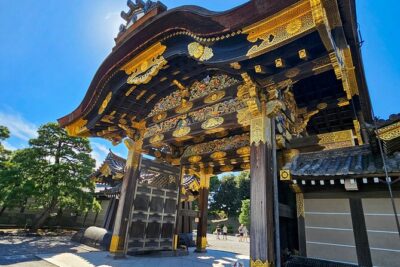
Kyoto Imperial Palace & Nijo Castle Guided Walking Tour – 3 Hours
Read our review →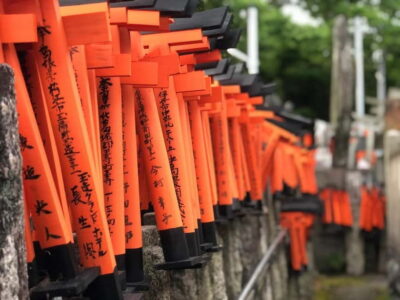

3 Hours Kyoto Insider Sake Experience | Tasting Konteki
Read our review →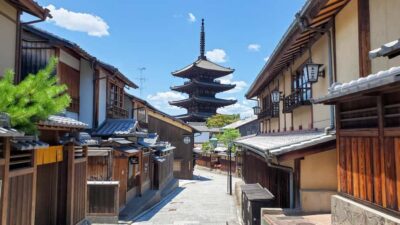
Flexible 3 hours Tour with a English Speaking guide.
Read our review →
Kyoto’s Arashiyama Bamboo Grove: 3-Hour Guided Tour
Read our review →
Browse the lists this tour appears in