
Reviewed · WORKSHOPS
Kyoto: Private Aerial Yoga Class
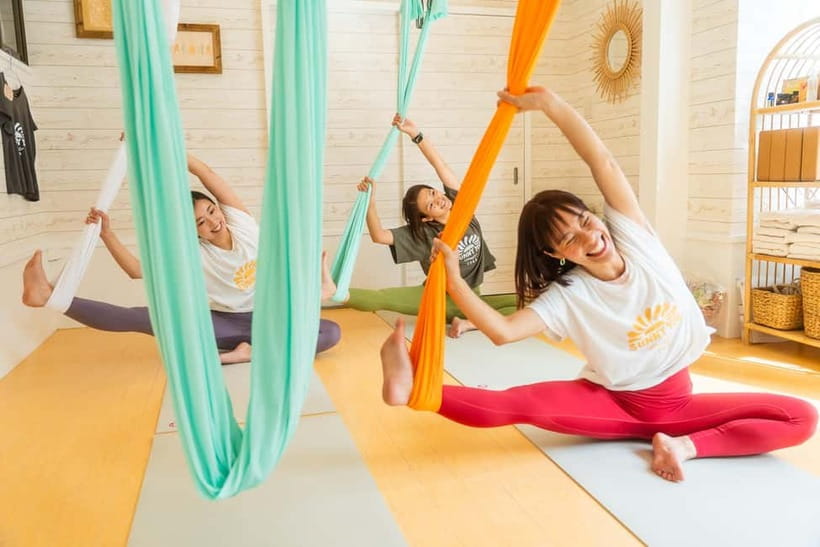
Kyoto’s private aerial yoga class gives you a rare chance to exercise in a hammock instead of on a standard mat. At SUNNY YOU Yoga Studio, you choose between a low setup that keeps part of your body on the floor and a waist-high class that lets you perform poses in the air. I like the private format and the choice of height, especially if you are new to aerial yoga. The main consideration is that this is not suitable for people with vertigo, high blood pressure, or a fear of heights.
I also like that the class is entirely in English, with the lesson adjusted to your physical and mental condition. Instructor Agasa-san has been praised for a warm manner and well-organized teaching. The one-hour session costs $61 per person, which is fair for private instruction, but it is more expensive than joining a large group yoga class.
Key points at a glance
- Pick your height: Choose low aerial yoga close to the mat or basic aerial yoga with the hammock at waist height.
- Private English lesson: You receive direct instruction rather than trying to follow a large class.
- Good for beginners: The low option supports your body and can make stretching less intimidating.
- A short walk from major transport: The studio is three minutes from Omuro-Ninnaji Station on the Randen line and five minutes from the Omuro-Ninnaji bus stop.
- Bring the right clothes: Pack a towel and water, and wear a T-shirt with long pants. Shorts and sleeveless tops are not allowed.
- Pair it with temple visits: The studio is close to some of Kyoto’s most beautiful temples, making it easy to add to a sightseeing day.
A different kind of yoga in western Kyoto
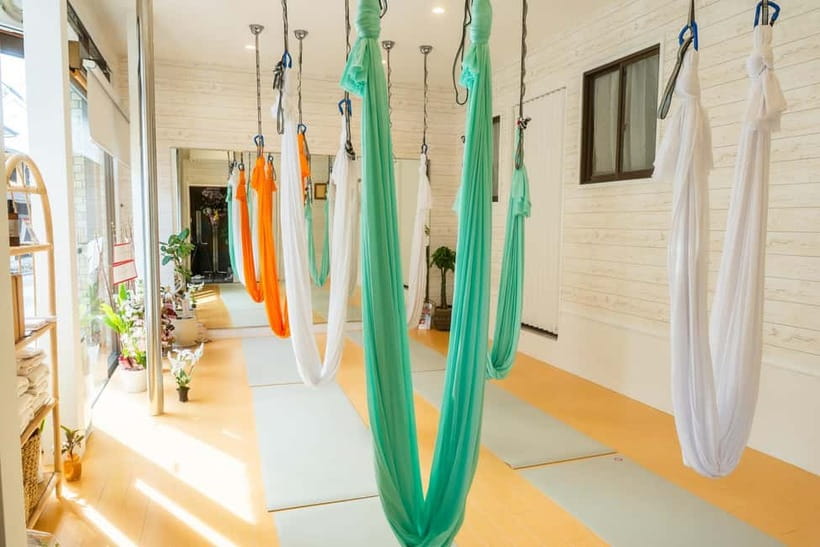
Aerial yoga uses a fabric hammock to support your body during stretches, balance work, and suspended poses. You still use your own strength, but the hammock changes the pressure on your joints and gives you a new way to work on flexibility.
I like the idea for a Kyoto trip because it offers a break from temple steps, crowded streets, and long days on your feet. You are not simply watching another cultural activity. You are doing something active and personal, while still enjoying a distinctly Japanese studio setting.
The class lasts one hour, so it fits neatly into a morning or afternoon plan. It is also private, which matters if you feel self-conscious trying an unfamiliar activity. You can ask questions, work at your own speed, and tell the instructor if a movement feels uncomfortable.
This is not a performance or a formal aerial-silk show. The focus is yoga, body awareness, stretching, strength, and relaxation. You may use the hammock to support a pose, create a sense of weightlessness, or help your body release into a stretch.
More craft workshops in Kyoto:
- Kyoto: 45-Minute Tea Ceremony Lesson Experience
★ 4.3 · 2,378 reviews - Ramen Cooking Class at Ramen Factory in Kyoto
★ 5.0 · 1,937 reviews - Kyoto : Chopsticks Making Workshop in Gion with Engraving Option
★ 5.0 · 958 reviews
Choosing between low and basic aerial yoga
The most important decision comes before class: select the low aerial option or the basic aerial option.
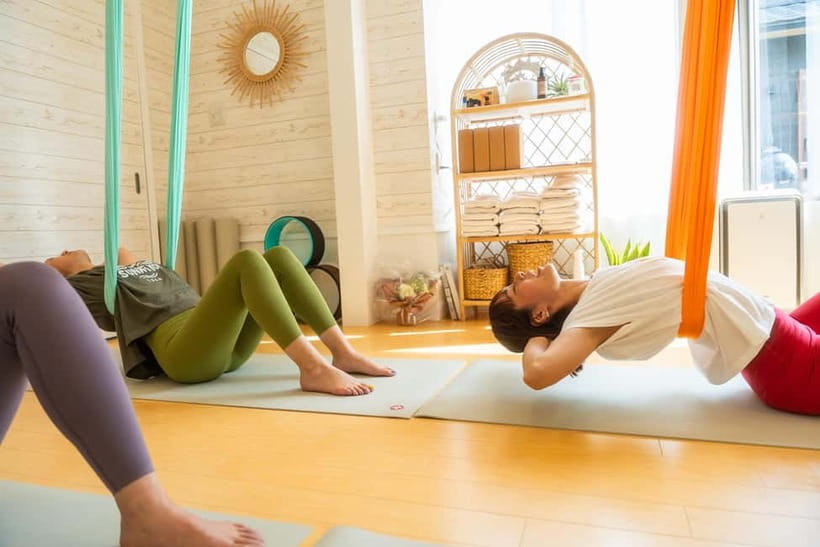
In the low aerial class, the hammock is set close to the ground. Part of your body can remain on the mat, so you have a steady point of contact throughout the session. I would choose this version if you have never tried aerial yoga, feel uneasy around heights, or want a gentler introduction.
This setup can also help if your body feels stiff or your mobility is limited. The fabric supports you while you stretch, which may make certain positions feel less demanding than they would on the floor. It does not remove all physical effort, but it can make the movements more approachable.
The basic aerial class places the hammock around waist height. Here, you can lift more of your body from the floor and experience the floating sensation that attracts many people to aerial yoga. You work your core as you stabilize yourself, while the class also aims to improve flexibility, posture, circulation, and relaxation.
Basic aerial yoga is still described as suitable for beginners, but it asks for more comfort with being off the ground. If you are uncertain, the low class is the sensible starting point. You can also use your private lesson to discuss your concerns with Agasa-san before trying a higher pose.
What the one-hour class feels like
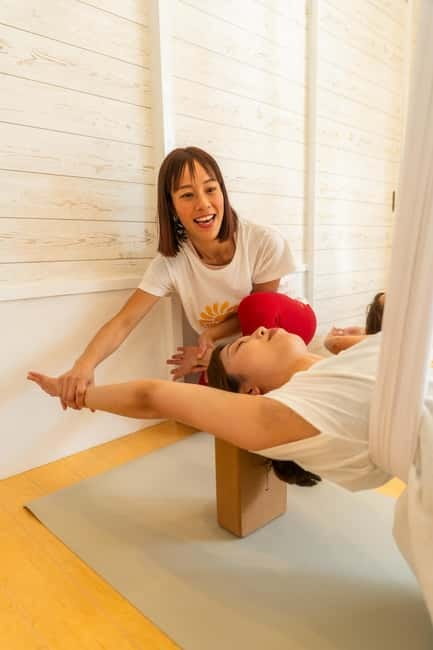
The class is designed around your current physical and mental condition. That wording matters. You are not being pushed through a fixed routine intended for a room full of people with identical abilities.
At the beginning, you can explain your experience level and choose the height that feels right. A private lesson gives the instructor room to adjust the pace and offer more direct help. This is particularly useful when you are learning how to trust the hammock.
From there, expect a mixture of supported stretches, yoga positions, and movements that use your core. The low class keeps you closer to the mat, while the basic class gives you more time in suspended positions. In both versions, the hammock becomes part of the pose rather than just a decoration.
The class also includes a relaxation element. The support of the fabric may help you settle into a stretch without carrying all your body weight. You still need to listen to your body, though. A hammock can make a pose feel easier in one way and unfamiliar in another.
The available feedback points to Agasa-san as a friendly, positive instructor who organizes an effective session. One person who attended more than once described the class as something they would gladly make a regular habit if they lived in Kyoto. That is useful information for you: this is not only a novelty activity, but a class with enough structure to appeal to people who already enjoy yoga.
Why private instruction changes the experience
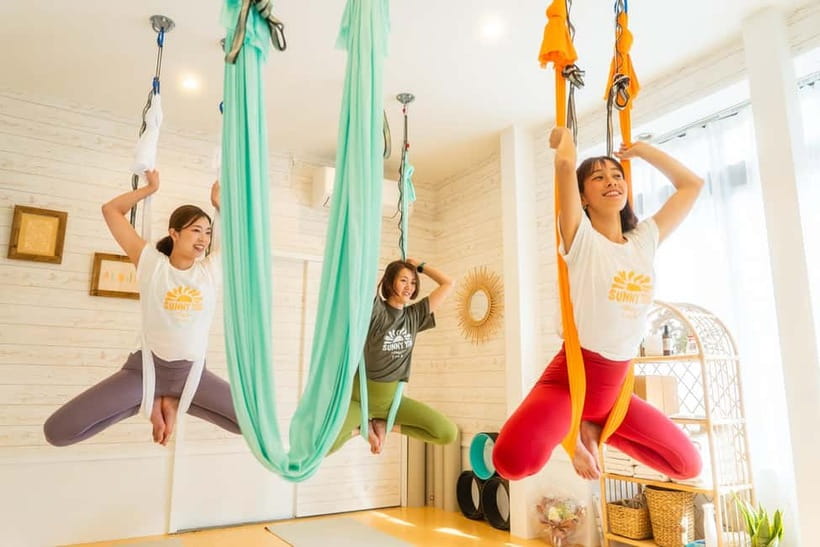
A private class costs more than a standard group session, but the format gives you several practical benefits.
First, you do not need to worry about keeping pace with strangers. If a movement needs explanation, you can stop and ask. If you are comfortable with a pose, you can spend more time refining it.
Second, you can choose the level that matches your mood that day. Perhaps you want a mild stretch after a long flight. Perhaps you want a stronger core workout. The class can respond to that better than a fixed public timetable.
Third, the private setting is helpful if you are nervous about looking awkward. Aerial yoga has a learning curve, and the hammock may not feel intuitive immediately. Direct support from the instructor can help you understand how to use it safely and calmly.
You can book the activity for a private group, making it a reasonable choice for couples, friends, or family members who want to try the same unusual activity together. The supplied details do not specify the maximum number of people, so you should confirm the exact group arrangement when booking.
A few more Kyoto tours worth putting on the shortlist
- PERFECT KYOTO 1-Day Bus Tour
★ 5.0 · 13,518 reviews - Kyoto: Fushimi Inari, Kinkakuji, Bamboo Grove 1 Day Bus Tour
★ 4.8 · 4,316 reviews - Kyoto: Tea Ceremony in a Traditional Tea House in Kiyomizu
★ 4.9 · 3,519 reviews - Kyoto Geisha Walking Tour: Gion District & Hidden Gems
★ 4.7 · 3,273 reviews
Location near Omuro-Ninnaji
SUNNY YOU Yoga Studio is in a small yellow brick-style building with a sign reading SUNNY YOU Yoga Studio outside. That detail is worth remembering because a small neighborhood studio can be easy to miss if you are hurrying.
The studio is about a three-minute walk from Omuro-Ninnaji Station on the Randen line. From the Omuro-Ninnaji city bus stop, allow about five minutes on foot. This makes the activity easy to reach from the western Kyoto sightseeing area.
If you arrive by taxi, note that the street in front of the studio is one way. You should get out promptly at the studio rather than expecting the driver to wait or turn around directly outside. I would save the Japanese name, 黄色いレンガ調の小さなヨガスタジオ, or show the studio name to your driver if needed.
The neighborhood is another reason to consider this location. It is close to some of Kyoto’s best-known temples, and you can combine the class with temple visits and a walk through the surrounding streets. The activity is not in the middle of the central shopping districts, so it works best as part of a western Kyoto day rather than a quick stop between downtown attractions.
A useful break from temple sightseeing
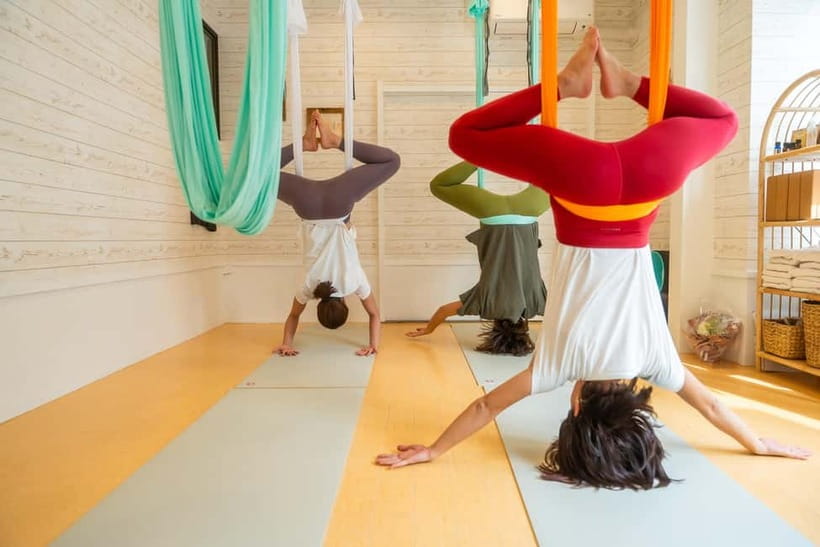
Western Kyoto can fill a full day with temples, gardens, and long walks. A one-hour yoga session gives your schedule a different rhythm.
You could place the class in the morning and then visit nearby temples afterward, when your body is awake and warmed up. You could also schedule it later, using the class as a slower interval after sightseeing. The best choice depends on your energy, but I would avoid treating it as a rushed add-on.
This is especially practical if your itinerary already includes Omuro-Ninnaji or other nearby religious sites. You do not need to cross the city for the activity, then cross back again. The class becomes part of a neighborhood visit rather than a separate transport project.
The setting may also appeal if you want a quieter side of Kyoto. The experience takes place in a yoga studio, not at a major attraction, so the appeal comes from the activity and the local area around it. You should not book it expecting a view, a temple tour, or a traditional ceremony.
What to wear and pack
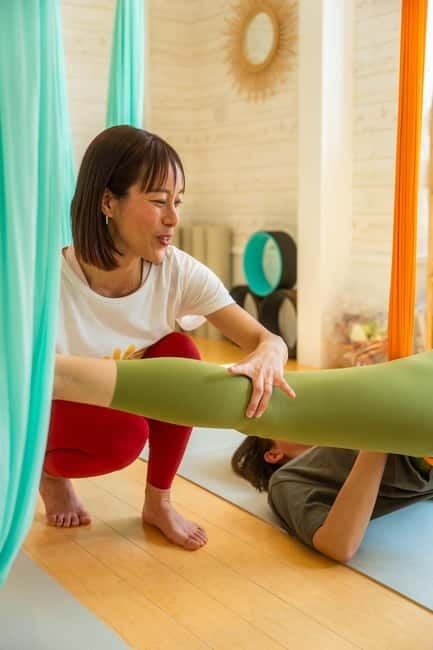
Bring a towel and water. Wear comfortable clothing, including a T-shirt and long pants.
Shorts and sleeveless shirts are not allowed. Long pants are also practical because the hammock presses against your legs during some movements. Loose, comfortable clothing should make it easier to stretch, but the supplied information does not specify a required fabric or footwear policy.
You receive a yoga mat, so you do not need to bring one. I would still arrive ready to move, rather than wearing clothing meant only for sightseeing.
Because this is a physical activity, think carefully about your condition before booking. The class is not suitable for people with vertigo, high blood pressure, altitude sickness, or a strong fear of heights. It is also not suitable for people over 70 years old or those weighing more than 209 pounds, or 95 kilograms.
These restrictions are important, even though the low class stays close to the floor. If you have a medical concern that is not listed, the supplied information does not give a specific medical consultation process, so you should use your own judgment before reserving.
Is $61 per person a fair price?
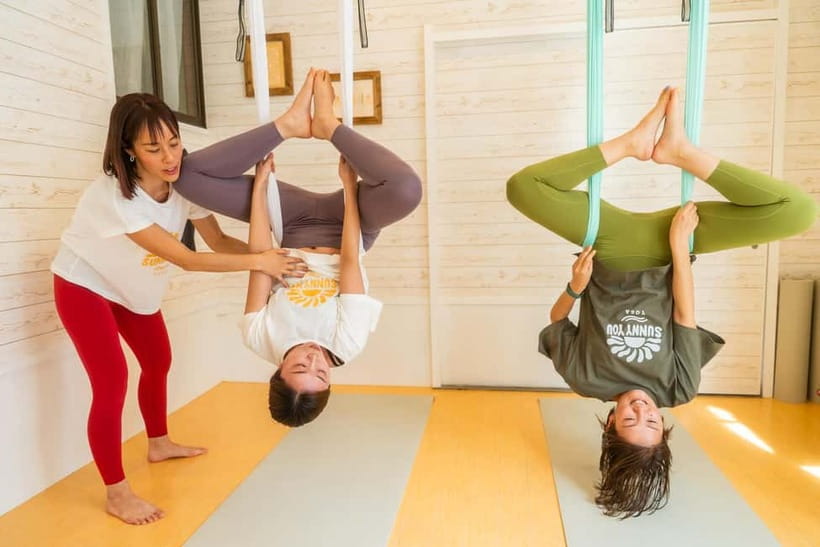
At $61 per person, this is not the cheapest way to spend an hour in Kyoto. You are paying for a private class, English instruction, a choice of aerial height, and a session adjusted to your needs.
I think the value is strongest if you are curious about aerial yoga but do not want to learn it in a crowded group. The private format can save frustration, especially during the first few minutes when you are learning how the hammock supports your body.
The price is also easier to justify if two people or a small private group are sharing the experience and want something more memorable than another café stop. If you already practice yoga and want a focused session, the direct instruction may be worthwhile.
On the other hand, I would skip it if you are only looking for a cheap, casual activity. A regular public yoga class would probably cost less, and this one-hour experience does not include transport, meals, temple admission, or any additional sightseeing.
Free cancellation is available up to 24 hours before the activity for a full refund. You can also reserve now and pay later, which gives you some flexibility if your Kyoto schedule is still changing.
What previous class details tell you
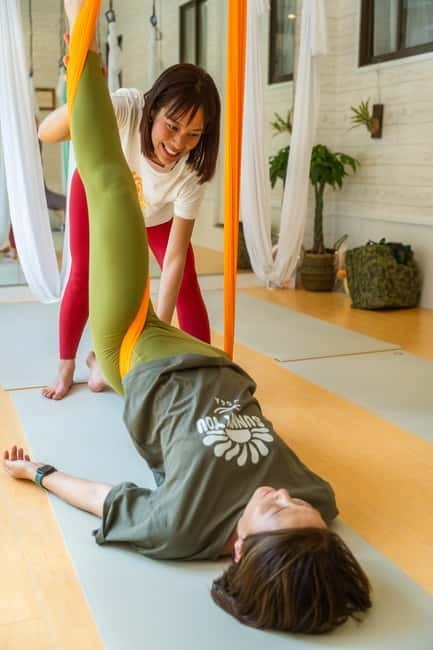
The feedback connected to this activity is unusually consistent in one area: the instructor receives strong praise. Agasa-san is described as lovely, positive, and effective at organizing the class. One person returned for another session, while another tried both low and high aerial silks and found the experience great fun.
That gives you a useful picture of the class style. You can expect warmth and encouragement rather than a stern, athletic boot camp. At the same time, the class is not presented as idle relaxation. It combines strength and flexibility, with particular attention to the core.
The studio itself has also been described as beautiful, and the nearby neighborhood adds appeal. The location puts you within reach of some notable temples, so your time in western Kyoto can include both movement and sightseeing.
The praise is enthusiastic, but the sample size is small. I would treat it as a strong sign of instructor quality, not a guarantee that aerial yoga will suit every body. Your comfort with heights and your physical condition remain the deciding factors.
Who should book this class?
I would recommend it to a first-time aerial yoga student who wants patient English instruction. The low class is the safest choice for a cautious beginner, especially if you dislike heights but still want to see what the hammock feels like.
It also suits couples or friends looking for a shared activity that is more unusual than a standard exercise class. You can laugh at the unfamiliar movements, then settle into the more relaxing parts without performing in front of a large group.
Experienced yoga students may prefer the basic class. The waist-high hammock offers more opportunity to work on balance, core strength, posture, and flexibility. You should still tell the instructor about your experience, since aerial yoga uses equipment in ways that ordinary floor yoga does not.
I would not recommend it if you have vertigo, high blood pressure, altitude sickness, or a strong fear of heights. The listed age and weight limits also matter. If you are close to those limits or have a health concern, this is a poor activity to book on impulse.
Should you book Kyoto’s private aerial yoga class?
Book it if you want a personal, English-language introduction to an unusual form of exercise and you will already be near western Kyoto. The low option makes the activity approachable, while the basic option gives you the floating sensation and a stronger core challenge.
I especially like the combination of private instruction, flexible height choices, and a location close to temples. Plan for the clothing rules, bring water, and leave enough time to find the small studio. If you are unsure about heights, choose low aerial yoga rather than trying to prove something to yourself.
Skip it if your priority is the lowest possible price, a major sightseeing landmark, or a completely passive cultural activity. For the right person, though, this one-hour class offers a memorable change of pace and a good reason to see another part of Kyoto.
FAQ
How long does the aerial yoga class last?
The class lasts one hour.
How much does the class cost?
The listed price is $61 per person.
Is the class taught in English?
Yes. The class is conducted entirely in English.
Can beginners join the class?
Yes. Both the low aerial and basic aerial options are suitable for beginners. Low aerial yoga is recommended if you are new to the activity or nervous about heights.
What is the difference between low aerial and basic aerial yoga?
Low aerial yoga uses hammocks positioned close to the ground, with part of your body remaining on the mat. Basic aerial yoga places the hammocks at waist height and includes poses performed in the air.
Where does the class meet?
The class meets at SUNNY YOU Yoga Studio, a small yellow brick-style studio with a SUNNY YOU Yoga Studio sign outside. It is about three minutes from Omuro-Ninnaji Station on the Randen line and five minutes from the Omuro-Ninnaji city bus stop.
What should I wear and bring?
Bring a towel and water. Wear comfortable clothes, a T-shirt, and long pants. Shorts and sleeveless shirts are not allowed. A yoga mat is provided.
Who should not take this class?
The activity is not suitable for people afraid of heights, people with vertigo, altitude sickness, or high blood pressure, people over 70 years old, or people weighing more than 209 pounds, or 95 kilograms.
Newest Kyoto experiences on the site
- Treasures of Kyoto: Gion & historical Walking Tour★ 5.0 · 6 reviews
- Whisk Your Own Matcha: A Zen Matcha Experience at Temple★ 3.6 · 7 reviews
- Kyoto tea town for matcha lovers★ 5.0 · 16 reviews
- Uji: Private immersion into Kyoto’s tea and reglious culture★ 5.0 · 17 reviews
- Kyoto Matcha Green Tea Tour★ 4.5 · 23 reviews
- Uji and Wazuka Matcha Farm Half Day Private Guided Tour★ 5.0 · 21 reviews
- Utilising upcycled Matcha! Creating matcha incense (Uji, Kyoto)★ 5.0 · 6 reviews
- Sacred Temple Yoga Experience in Japan★ 5.0 · 3 reviews
Workshops, compared.
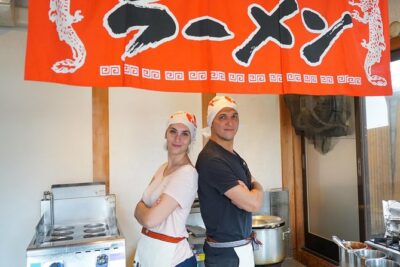
Ramen Cooking Class at Ramen Factory in Kyoto
Read our review →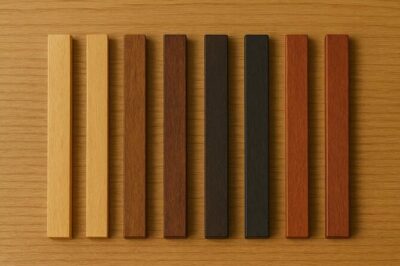
Chopsticks Making Workshop in Gion with Engraving Option
Read our review →
Ramen Cooking Class at a Ramen Factory with Souvenir
Read our review →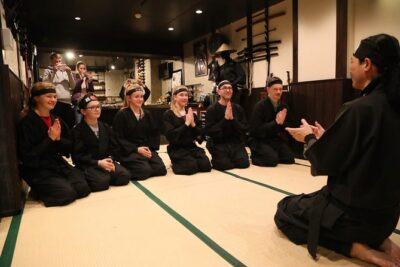
Ninja 1-hour Hands-on Lesson by Japanese master in Kyoto -Entry
Read our review →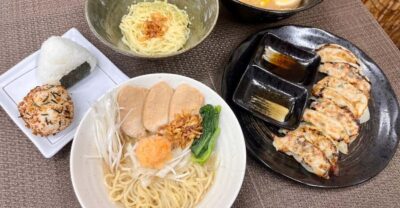
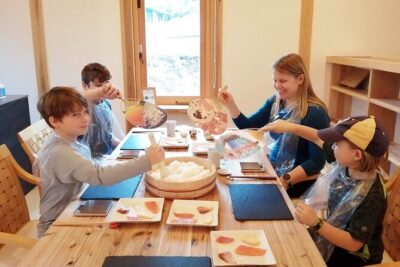
The Original Small-Group Sushi Making Class in Kyoto
Read our review →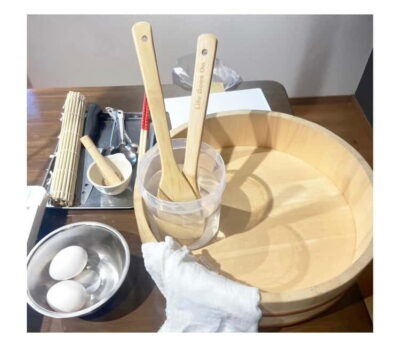
Japanese Washoku Bento Small Group Cooking Class
Read our review →Browse the lists this tour appears in