
Reviewed · KYOTO GEISHA & MAIKO EXPERIENCES
Kyoto: Maiko Happy Hour at a Historic Machiya
Kyoto’s Tondaya machiya gives this experience its strongest sense of place. You are not watching a maiko in a modern theater or hotel room, but entering a 140-year-old wooden townhouse filled with traditional objects and stories. I like that the visit pairs the setting with a tea ceremony, rather than treating the maiko performance as a stand-alone photo opportunity.
I also like the close contact built into the plan: you can ask questions, try traditional party games, and take commemorative photos at the end. The main drawback is the price. At $709 per person, with alcohol excluded and only two hours scheduled, this is a major splurge, and the value depends on how much you care about a rare, small-scale cultural encounter.
Key points to know before booking
- Tondaya is a 140-year-old machiya: The wooden townhouse is a cultural landmark, not just a backdrop for the performance.
- The program includes Uji matcha and Japanese sweets: A maiko hosts the tea ceremony before the dance.
- Buyō gives you a formal look at maiko arts: The traditional dance is performed with classical music.
- Party games make the meeting more interactive: The maiko explains the rules and answers questions about her culture.
- Photography is part of the planned experience: You have time for commemorative photos with the maiko.
- Bring socks and expect firm booking rules: Stockings are not accepted, the activity is not wheelchair accessible, and cancellations made less than 10 days before the appointment are not refundable.
Entering Tondaya, a 140-year-old Kyoto townhouse
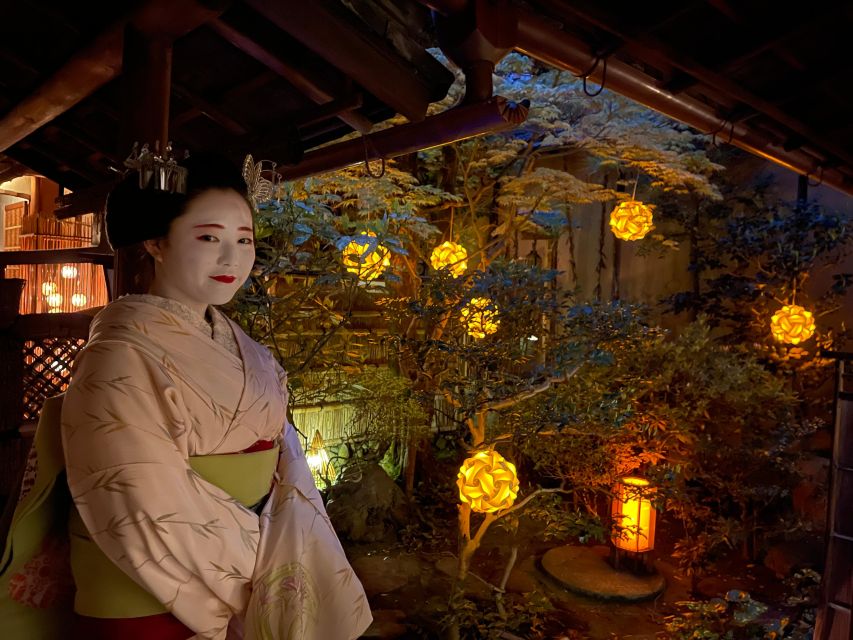
The visit begins at Tondaya-Nishijin Japanese Cultural Experience Museum, in a traditional machiya that has survived for about 140 years. This matters because Kyoto’s old townhouses are more than pretty wooden buildings. Their narrow layouts, timber details, rooms, and household objects show how a Kyoto merchant home functioned across generations.
A guide leads you through the building and points out its artifacts and stories. The tour is not simply a walk through empty rooms. Tondaya is presented as a place where traditional arts, domestic life, and formal hospitality meet.
I would give this first section your full attention. The building helps explain why the tea ceremony and dance feel different here than they would in a hotel ballroom. You are seeing the arts in a setting that matches their historical mood.
The published information describes Tondaya as a nationally registered cultural landmark and a property designated as culturally significant by the Kyoto City Government. That gives the visit more weight than a standard entertainment show, although the quality of the introduction depends on the person guiding you and the translation available that day.
Staff members work with traditional arts including kimono, tea ceremony, calligraphy, and ikebana. Not every staff member speaks English, so an interpreter or translation device may be used. If cultural explanation is central to your decision, keep that point in mind. The setting is strong, but communication may not always be smooth.
More geisha and maiko evenings in Kyoto:
- Kyoto Geisha Walking Tour: Gion District & Hidden Gems
★ 4.7 · 3,273 reviews - Kyoto: Gion Magical Night Walking Tour with Geisha Trivia
★ 4.9 · 2,393 reviews - Kyoto: Gion Geisha District Walking Tour – Stories of Geisha
★ 4.7 · 2,187 reviews
Tea, matcha, and the first meeting with the maiko
After the machiya tour, you meet an authentic maiko. A maiko is an apprentice geisha, still training in the arts of dance, music, etiquette, and traditional hospitality. The meeting is special because maiko generally have limited contact with the public outside carefully arranged settings.
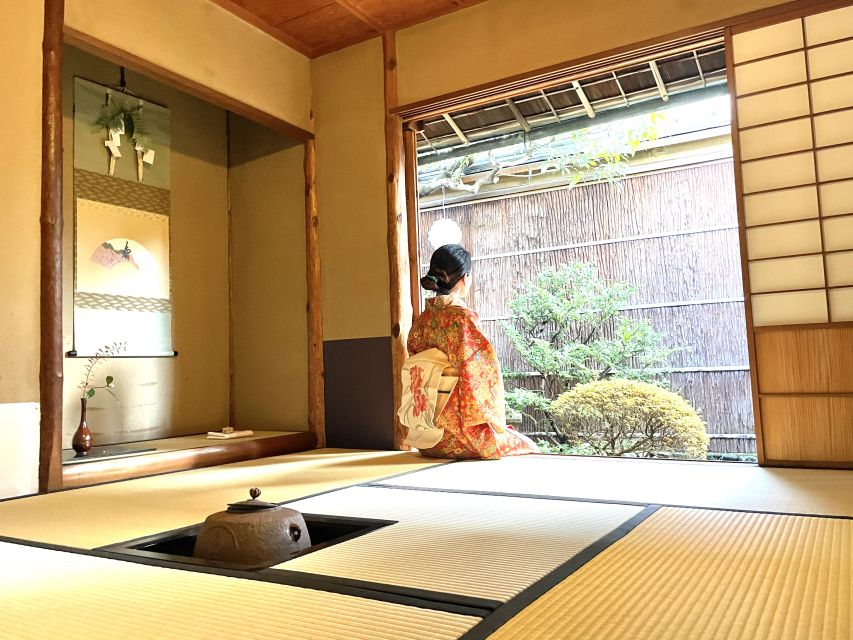
The maiko hosts a tea ceremony and serves Uji matcha with Japanese sweets. This is a compact introduction to Japanese tea culture, not a full course in tea ceremony technique. You will see the careful preparation and presentation, and you can enjoy the tea in the same formal setting where the rest of the program takes place.
The tea portion also gives you a chance to settle into the rhythm of the afternoon. Instead of moving straight from a building tour into a performance, you begin with a quieter ritual. I like that sequence. It lets you observe the maiko’s movements and manner before the more theatrical dance begins.
There is one practical point worth checking. The scheduled program includes tea and sweets, but one past booking account described an experience where no tea was served. That does not change the stated program, but it does mean you should confirm the tea portion with the staff if it is an important reason for booking.
Buyō dance in a late-Edo-style setting
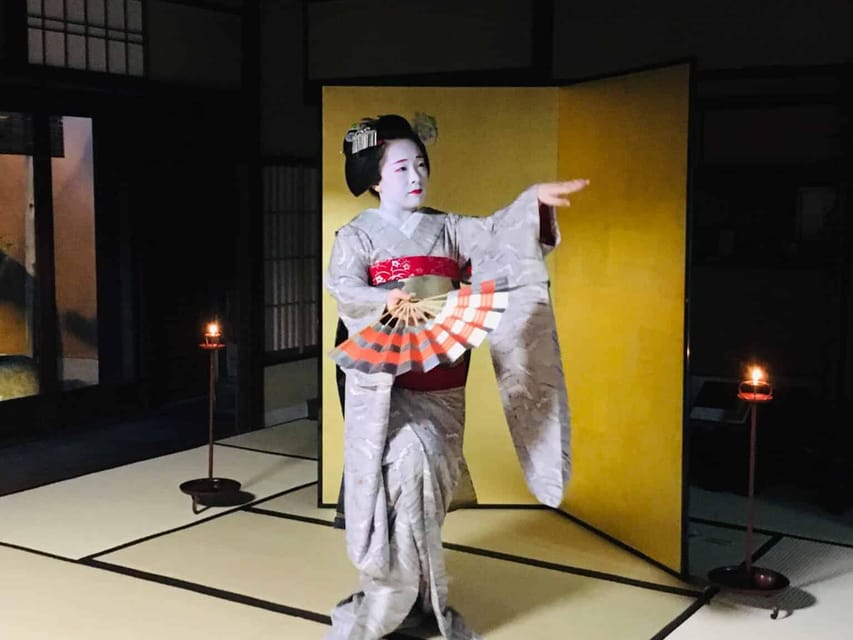
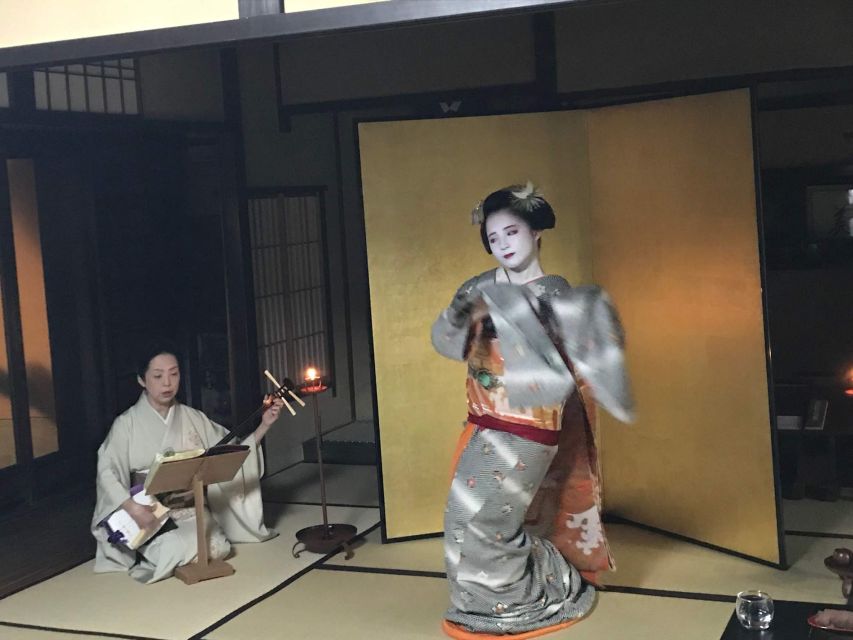
The main performance is buyō, a refined form of traditional Japanese dance accompanied by classical music. Expect controlled gestures, deliberate movement, and formal presentation rather than a fast stage show.
The setting is key. Tondaya’s wooden rooms are meant to evoke the atmosphere of watching traditional entertainment in a machiya during the late Edo period. You are not being asked to imagine a grand theater. The appeal is the intimacy of the room and the small scale of the performance.
For some people, this will be the most memorable part of the visit. The dance is a chance to see the discipline behind the maiko’s public image. Every movement has a measured quality, and the formal costume, music, and architecture work together.
For others, the performance may feel brief or quiet. This is not a high-energy show with constant narration. If you prefer a long concert or a full evening of entertainment, two hours may feel short. One past account described a visit lasting barely an hour, so I would arrive on time and ask about the full schedule if the program seems to be moving quickly.
The experience information does not promise a specific dance title, musical instrument, or performance length. That is useful to know before you book. You are paying for the setting, the presence of the maiko, the traditional arts, and the personal interaction, not for a fixed theater production with a detailed printed program.
Traditional party games and questions about maiko life
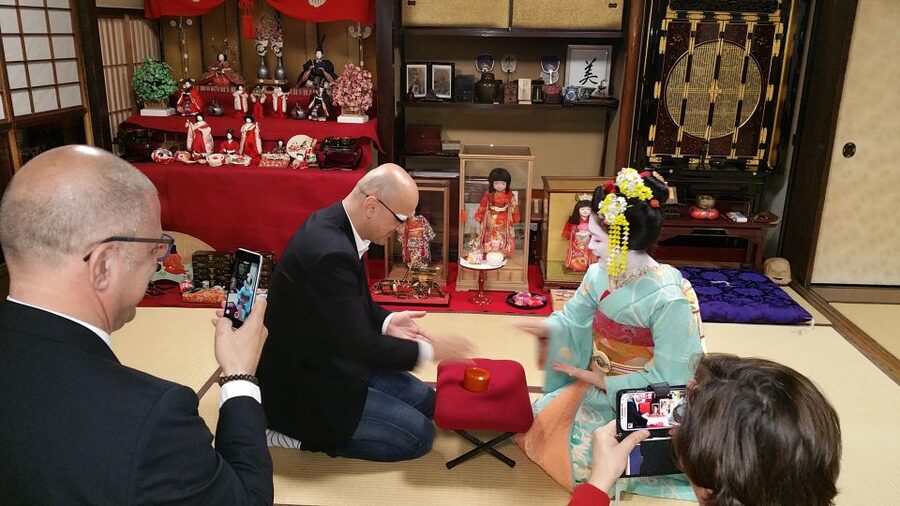
After the dance, the tone becomes less formal. The maiko explains traditional party games and plays them with you. These games are part of the entertainment associated with geisha and maiko gatherings, where social skill and timing matter as much as the rules.
This section gives the visit its most direct human contact. You are not only watching a performance from a respectful distance. You can take part, laugh at your mistakes, and ask questions about maiko culture.
The exact games are not named in the available information, so you should not expect a particular activity. Their value lies in the interaction. If you are curious about training, daily customs, clothing, performance, or the difference between a maiko and a geiko, this is the time to ask.
Language support deserves attention here. Japanese, English, and Chinese are listed as available languages, but the staff may use an interpreter or translation device. One past account described a polite staff member who struggled to translate what the maiko said. That kind of gap can affect the games and the question period more than the dance itself.
I would keep your questions short and specific. Simple questions are more likely to survive interpretation clearly. You should also expect the conversation to be guided by the available language support, rather than functioning like a long, free-flowing interview.
More history-led days in Kyoto:
- Kyoto Gion: 2-Hour Geisha Culture & History Walking Tour
★ 5.0 · 1,186 reviews - Kyoto Gion Historical Walking Tour
★ 5.0 · 188 reviews - Historical Kyoto E-Bike Tour
★ 5.0 · 181 reviews - Kyoto: Nijo Castle World Heritage Guided Tour with Admission
★ 5.0 · 128 reviews
Commemorative photos with the maiko
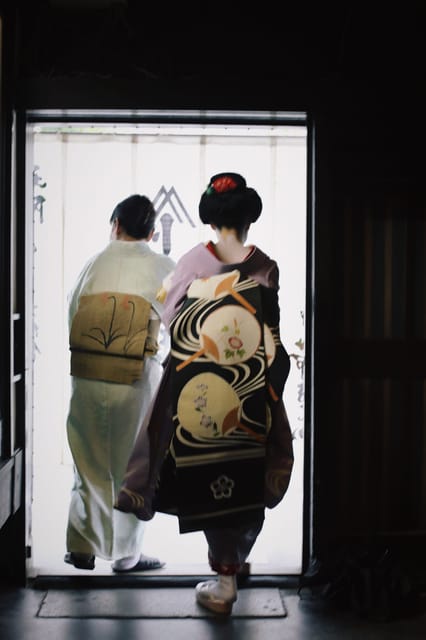
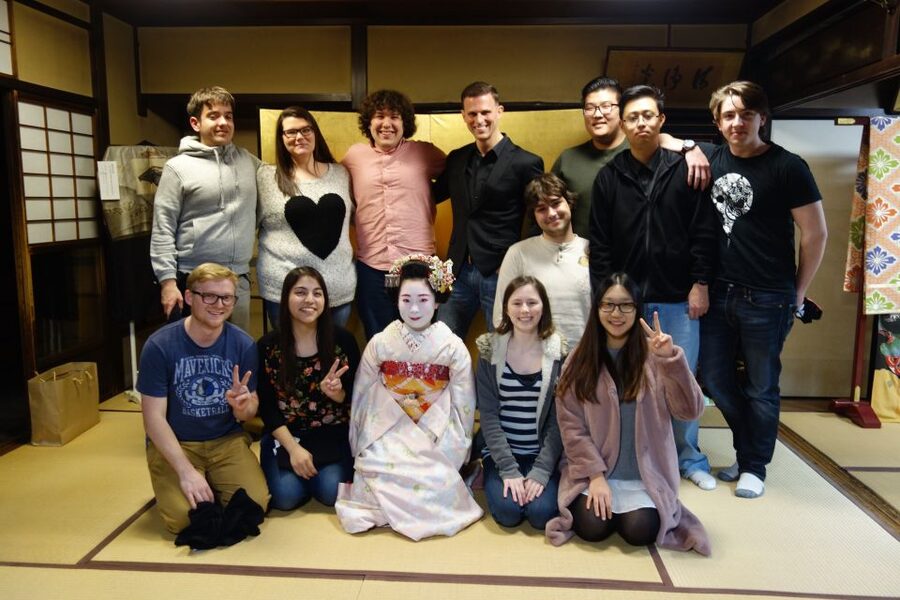
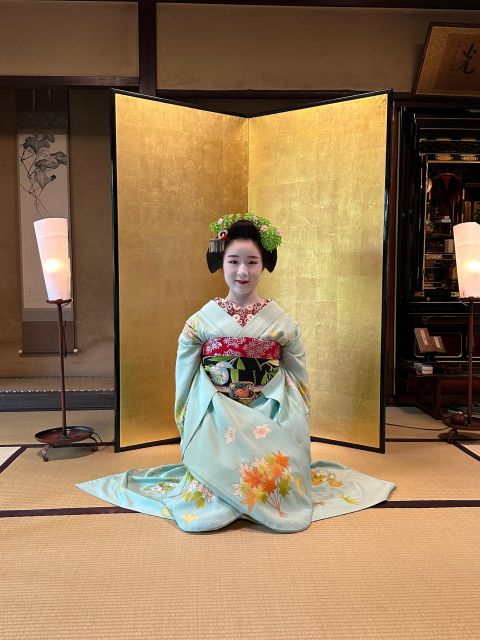
The experience ends with time for photos. This is not an incidental snap taken while the maiko is leaving. Photography is built into the program, and you are invited to take commemorative pictures with her.
That opportunity is unusual. Maiko are generally not permitted to pose for photographs with the public in ordinary circumstances, so the planned photo time is one of the clearest reasons this experience costs more than a museum visit or a standard cultural demonstration.
Be respectful and follow the staff’s instructions. The maiko is working, and the photo session is part of a formal cultural program. You can enjoy the chance without treating her costume or appearance as a novelty.
If you are traveling with family or friends, decide in advance how you want to share the photo time. The available information does not state a group size, number of images, or whether staff take the pictures for you. Bring a charged phone or camera, but do not assume that professional photographs or digital files are included.
What $709 buys you, and what it does not
The listed price is $709 per person, and reservations require at least two participants. That means the minimum booking comes to $1,418 before any alcoholic drinks. At this level, you should judge the experience as a private or highly specialized cultural occasion, not as a casual afternoon activity.
The cost covers the guided machiya tour, tea ceremony, maiko dance, party games, photography opportunities, and a lesson on Kyoto and maiko culture. Alcoholic drinks are not included.
The value is strongest if you place a high price on access. Meeting a maiko in a historic townhouse, asking questions, taking photos, and joining the games is far more personal than watching a short public performance from a distance. Tondaya itself also adds something that a restaurant setting would not.
The value is weaker if your priority is food, drinks, or a long performance. This is not a dinner, and the description does not include a meal. A past account also described the event as expensive for the amount of time and said that tea and food were absent on that occasion. The published program says tea and sweets are included, but you should not book expecting a full meal or an evening of entertainment.
Prices and currency conversions can change, so treat $709 as the current stated price at the time of booking, not a permanent rate. Given the non-refundable policy, check the final total, inclusions, and date carefully before paying.
Timing, clothing, and access details that matter
The scheduled duration is two hours, with starting times available according to the date. Arrive on time. The maiko must be reserved in advance, and a late arrival could cut into the portion you most want to see.
Wear socks. Tondaya specifically asks visitors not to wear stockings, and bare feet are not suitable for the traditional interior. This is an easy detail to miss and an easy problem to avoid.
The venue is not suitable for wheelchair users. If you have mobility concerns, check the route and room access before booking, since no accessibility arrangement is promised.
The venue closes from December 31 through January 1. You cannot reserve a maiko appointment from December 29 through January 10. These holiday dates matter because the Kyoto New Year period is busy, but this particular program has a clear break in service.
A maiko must be reserved at least 10 days ahead. Cancellations made less than 10 days before the scheduled appointment are subject to the strict non-refundable rule because Tondaya has already committed to the maiko’s booking. The activity itself is listed as non-refundable, so do not book until your Kyoto plans are firm.
Depending on availability, a geiko may be arranged instead of a maiko. You cannot choose between the two. Both are highly trained traditional entertainers, but if meeting specifically a maiko is essential, accept that the final arrangement may differ.
Who will get the most from this experience
I would recommend this to someone with a strong interest in Kyoto’s traditional arts, historic homes, tea ceremony, or geisha culture. It is especially suited to a special-occasion trip where you are willing to pay for access and atmosphere rather than quantity.
It can also work well for a first-time visitor who wants a structured introduction. The sequence is easy to follow: townhouse tour, tea, dance, games, questions, and photos. You do not need prior knowledge of maiko customs to participate.
I would be more cautious if you are traveling on a tight budget, expect a substantial meal, or want a long stage show. The price is high, the visit lasts only two hours, and interpretation may be uneven. You should also be comfortable with a formal setting and with plans that may change from maiko to geiko depending on availability.
For couples or small groups, the photo and question time may feel especially worthwhile. Since two participants are required, solo visitors cannot reserve this as a one-person activity.
Should you book the Maiko Happy Hour?
Book it if the chance to meet a maiko in a 140-year-old machiya feels like a rare highlight of your Kyoto trip. The strongest parts are the setting, the tea ceremony, the close performance, the party games, and the planned photo session. Taken together, they offer access that ordinary sightseeing does not.
Skip it if $709 per person feels out of proportion to two hours, or if you want a meal, alcohol, or a guaranteed long performance. Before paying, confirm the total price, language support, tea service, exact duration, and whether a maiko or geiko is expected. With those points clear, you can decide based on what this really is: a costly but unusually personal introduction to Kyoto’s traditional entertainment world.
FAQ
Where does the Maiko Happy Hour take place?
It takes place at Tondaya-Nishijin Japanese Cultural Experience Museum in Kyoto, inside a 140-year-old machiya.
How long does the experience last?
The scheduled duration is two hours. Starting times depend on availability.
What activities are included?
The experience includes a guided machiya tour, tea ceremony, maiko dance performance, traditional party games, photography opportunities, and a lesson about Kyoto and maiko culture.
Is tea included?
The program includes a tea ceremony with Uji matcha and Japanese sweets. Alcoholic drinks are not included.
Is a meal included?
No meal is listed as included. Alcoholic drinks are also excluded.
Which languages are available?
Japanese, English, and Chinese are listed as available languages. An interpreter or translation device may be used when needed.
Can I choose a maiko instead of a geiko?
No. A geiko may be arranged instead of a maiko depending on availability, but preferences cannot be accepted.
What should I bring?
Bring socks. Stockings should not be worn.
Is the experience wheelchair accessible?
No. The experience is not suitable for wheelchair users.
Can I cancel for a refund?
The activity is listed as non-refundable. Because the maiko must be reserved at least 10 days ahead, cancellations made less than 10 days before the appointment are not refundable.
Newest Kyoto experiences on the site
- Treasures of Kyoto: Gion & historical Walking Tour★ 5.0 · 6 reviews
- Whisk Your Own Matcha: A Zen Matcha Experience at Temple★ 3.6 · 7 reviews
- Kyoto tea town for matcha lovers★ 5.0 · 16 reviews
- Uji: Private immersion into Kyoto’s tea and reglious culture★ 5.0 · 17 reviews
- Kyoto Matcha Green Tea Tour★ 4.5 · 23 reviews
- Uji and Wazuka Matcha Farm Half Day Private Guided Tour★ 5.0 · 21 reviews
- Utilising upcycled Matcha! Creating matcha incense (Uji, Kyoto)★ 5.0 · 6 reviews
- Sacred Temple Yoga Experience in Japan★ 5.0 · 3 reviews
Kyoto Geisha & Maiko Experiences, compared.
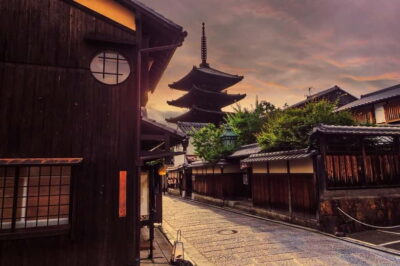
Kyoto Geisha Walking Tour: Gion District & Hidden Gems
Read our review →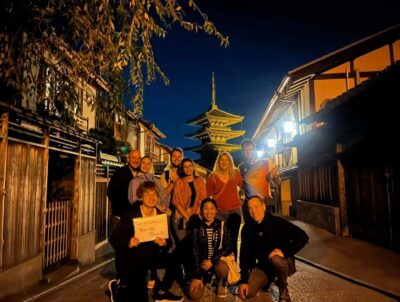
Gion Magical Night Walking Tour with Geisha Trivia
Read our review →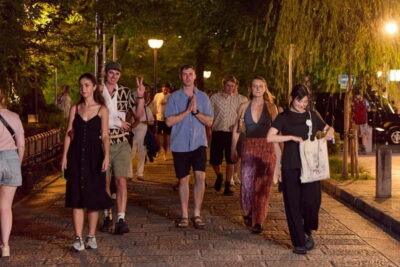
Gion Geisha District Walking Tour – Stories of Geisha
Read our review →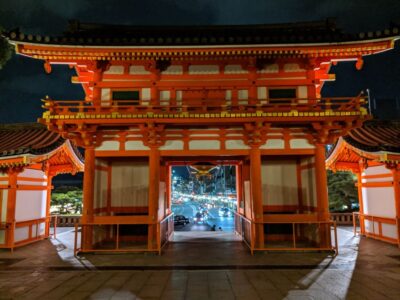
Best of Kyoto: Gion, Geisha, Pagodas & Cobblestones
Read our review →
Kyoto Gion Geisha District Walking Tour – The Stories of Geisha
Read our review →
Kyoto Gion: 2-Hour Geisha Culture & History Walking Tour
Read our review →
Kyoto Gion Night Walk & Geisha District Guided Tour
Read our review →Browse the lists this tour appears in