
Reviewed · GION DISTRICT TOURS
Kyoto: Gion Night Tour Stories of Geisha and Maiko
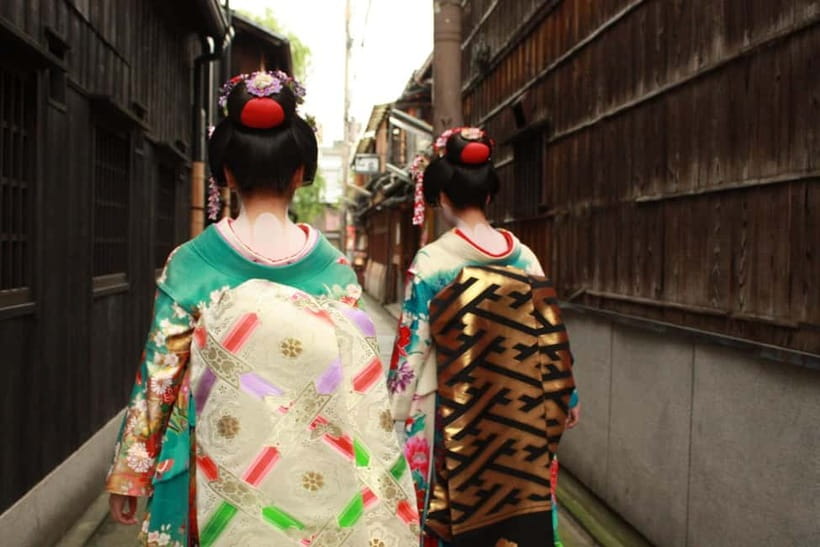
Gion is most atmospheric just as daylight fades, when the old lanes grow quieter and evening appointments begin. This two-hour walk gives you a useful introduction to geisha and maiko culture without turning the district into a stage show. You may even catch a brief glimpse of one, though sightings are never promised.
I like the small group limit of 15, and I like the route from the Shijo area to Yasaka Shrine, which mixes quiet canal streets with major landmarks. Guides Pedro and Manuel are praised for clear, lively explanations, and Pedro has also helped people choose places to eat afterward. The main consideration is language: the activity information lists Spanish as the live tour language, and children under 12 cannot join.
Key points to know before you book
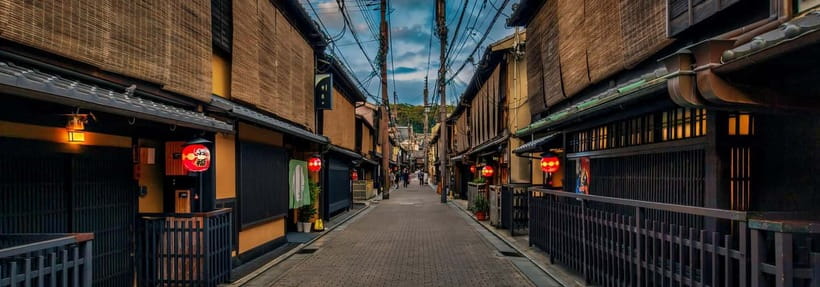
- Dusk is the right time: Gion feels calmer as the day fades, making the walk more pleasant and more atmospheric.
- Small groups matter: With no more than 15 people, you should be able to hear the guide and ask questions.
- The focus is cultural: You learn how to recognize teahouses, signs, and traditional symbols, not just where to take photos.
- Pedro and Manuel lead the experience: Pedro is praised for detailed, entertaining explanations, while Manuel also receives specific praise for explaining the sights.
- Sightings are possible, not guaranteed: You may see geisha or maiko heading to appointments, but respectful observation is the point.
- The walk finishes at Yasaka Shrine: That gives you an easy landmark for continuing your evening in eastern Gion.
Why Gion works best at sunset
Gion can feel very different depending on the hour. Earlier in the day, its lanes attract plenty of people looking for traditional Kyoto scenery. At dusk, the mood changes. The light softens, the crowds thin, and the district’s working side becomes easier to notice.
That timing is one of the best reasons to book this walk. You are not simply passing through pretty streets. You are learning why certain buildings, signs, and alleys matter while the district is beginning its evening routine.
The tour starts at Ben’s Cookies Kyoto Shijo. The guide carries a sign with the tour name, so the meeting point should be easy to identify. From there, you walk toward the Gion area with a guide rather than trying to decode the district on your own.
I would arrive a little early. The supplied information gives the meeting location, but not a detailed description of the exact street corner or a phone number for finding the guide. Having the meeting point saved on your phone is sensible.
More ways to walk Gion:
- Kyoto Geisha Walking Tour: Gion District & Hidden Gems
★ 4.7 · 3,273 reviews - Kyoto: Gion Magical Night Walking Tour with Geisha Trivia
★ 4.9 · 2,393 reviews - Kyoto: Gion Geisha District Walking Tour – Stories of Geisha
★ 4.7 · 2,187 reviews
The opening walk and Izumo-no-Okuni
The first guided portion lasts about five minutes. It is short, but it gets the group moving from the meeting point and sets up the rest of the evening.
The first named stop is the statue of Izumo-no-Okuni, where the guide spends about 15 minutes. This is a useful opening because it places Gion’s performing arts culture in a wider setting. Your guide can explain why this figure matters before turning to the more specific world of geisha and maiko.
I like stops such as this because they prevent the tour from becoming a simple search for people in traditional clothing. The cultural background gives you something to watch for as you continue through the district.
The stop is listed as a guided visit, not a long museum-style presentation. Expect a focused explanation outdoors. If you prefer a tour that keeps moving, this pace should suit you. If you want an hour at each site, this is not that kind of experience.
Shirakawa Canal at the quietest part of the evening
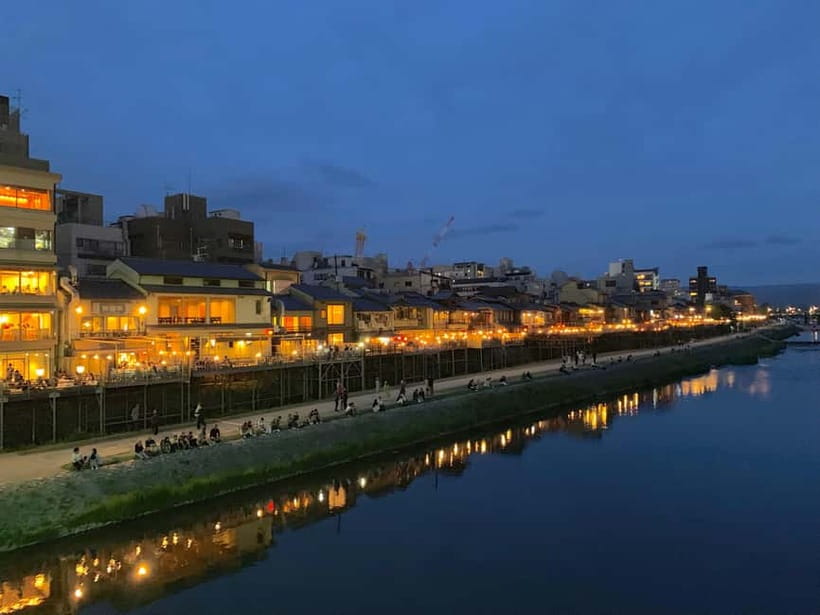
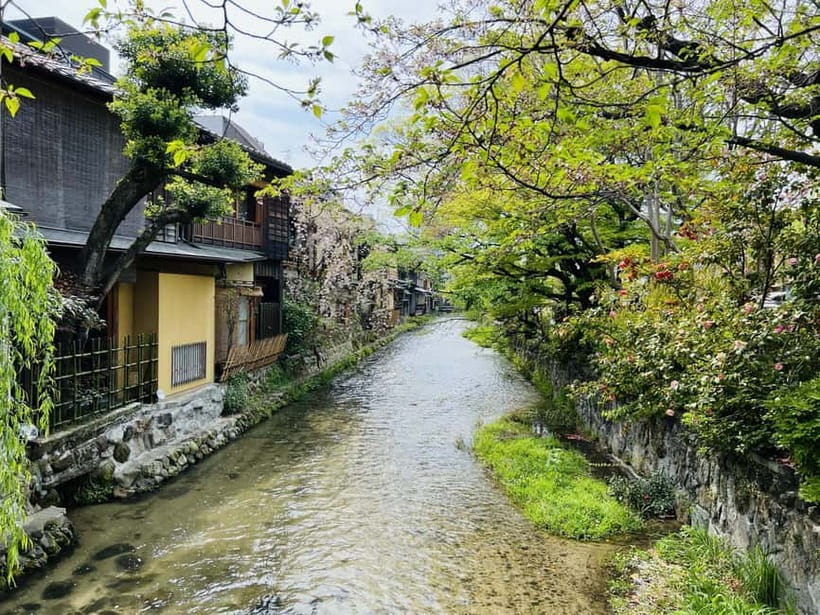
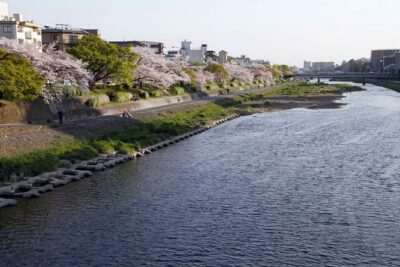
The group then reaches Shirakawa Canal for another 15-minute explanation. This is one of the more appealing parts of the route because water, traditional buildings, and evening light give the walk a strong sense of place.
The canal stop also helps you see why Gion is more than a collection of famous streets. Your guide can point out details that are easy to miss when you walk alone, including the relationship between the lanes, the teahouses, and the district’s traditional signs.
This is a photo stop, but you should treat photography as secondary. The useful part is learning how to look at the area. Once your guide explains what certain signs mean and how to identify a teahouse, the buildings become easier to read.
The route does not promise private access to teahouses. That is important. Many of these places operate as working establishments, not public attractions. You are viewing the exterior streetscape and learning about the customs around it.
A photo stop among Gion’s traditional streets
The next stop is listed as a visit and photo stop with about 15 minutes of guided explanation, but the supplied route does not name the location. That means you should not book this expecting a specific attraction at this point.
Instead, think of it as time to examine one of Gion’s traditional corners with context from the guide. This is where a local explanation can make a difference. A narrow alley may look attractive, but the guide can help you understand the signs, entrances, and patterns of use that reveal how the area functions.
I also like the built-in pause. Two hours of walking can pass quickly, especially in a district where you are looking up at architecture and down at stone lanes. A short stop gives you time to take a photo, listen, and catch up with the group.
Keep your camera ready, but avoid treating people as scenery. The purpose of the tour is to understand the culture, not to chase a photograph.
More geisha and maiko evenings in Kyoto:
- Best of Kyoto: Gion, Geisha, Pagodas & Cobblestones
★ 4.9 · 2,058 reviews - Night Walk in Gion: Kyoto’s Geisha District
★ 4.5 · 2,003 reviews - Kyoto Gion Geisha District Walking Tour – The Stories of Geisha
★ 5.0 · 1,441 reviews - Kyoto Gion: 2-Hour Geisha Culture & History Walking Tour
★ 5.0 · 1,186 reviews
Gion Corner and the question of performance
Gion Corner is the next named stop. The schedule allows about 15 minutes for a visit, photos, and explanation.
The information provided does not say that you attend a performance there or enter the building. Plan on an exterior visit and a guide-led explanation rather than a ticketed show. This distinction matters if you are comparing the walk with an evening theater program.
Gion Corner helps connect the district’s streets with its performing-arts identity. Your guide can explain how the area presents traditional arts and how that relates to the broader culture of geisha and maiko.
This is also a good place to ask questions. The group size is capped at 15, which should make it easier to speak with Pedro, Manuel, or the guide leading your departure. The reviews specifically praise explanations that are complete but easy to follow, so this is not designed as a dense academic lecture.
Yasaka Shrine gives the walk a clear finish
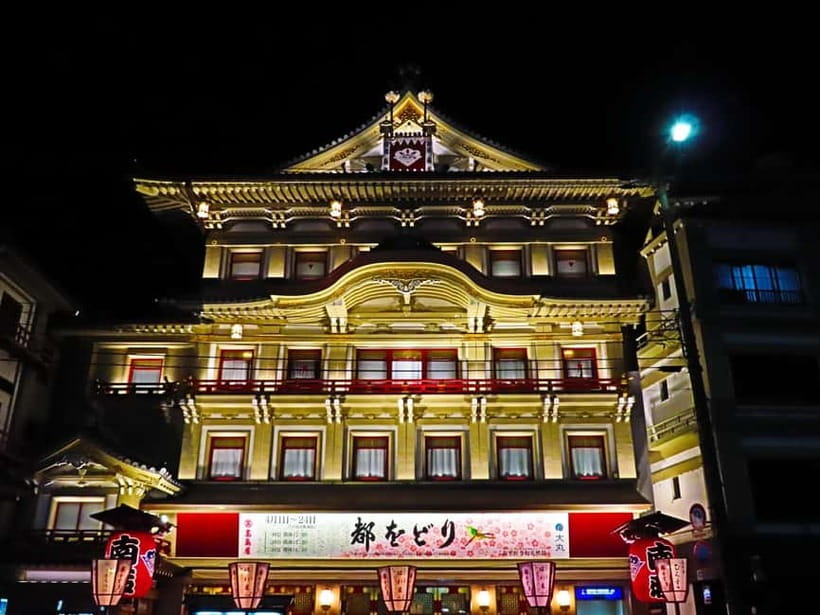
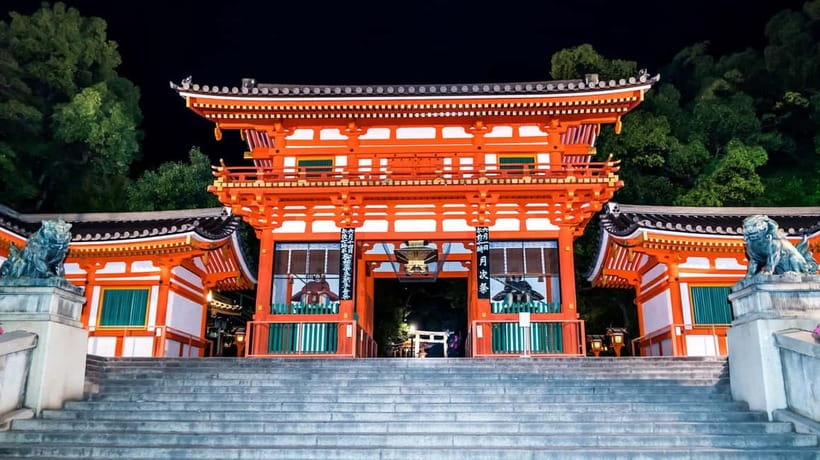
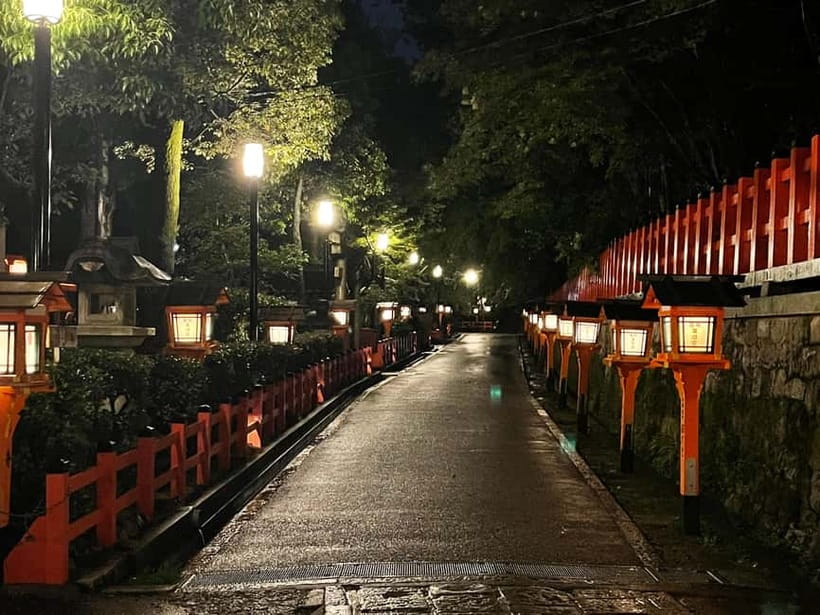
The tour ends at Yasaka Shrine after another 15-minute guided visit and photo stop. The shrine gives the route a definite finish instead of leaving you in an unnamed side lane.
Because the walk ends here, you can treat the tour as an evening introduction to eastern Gion. The activity does not provide onward transportation or a meal, but you finish at a major Kyoto landmark and can make your own plans afterward.
This ending also gives you a chance to put the evening in context. You have moved from the Shijo area through Gion’s canal streets and traditional lanes, then finished near a major shrine. The route is compact enough to complete in two hours, but varied enough that it does not feel like one repeated street.
The tour does not list shrine admission or a special ceremony. Expect a guided outdoor visit and photo opportunity.
What the geisha and maiko explanation adds
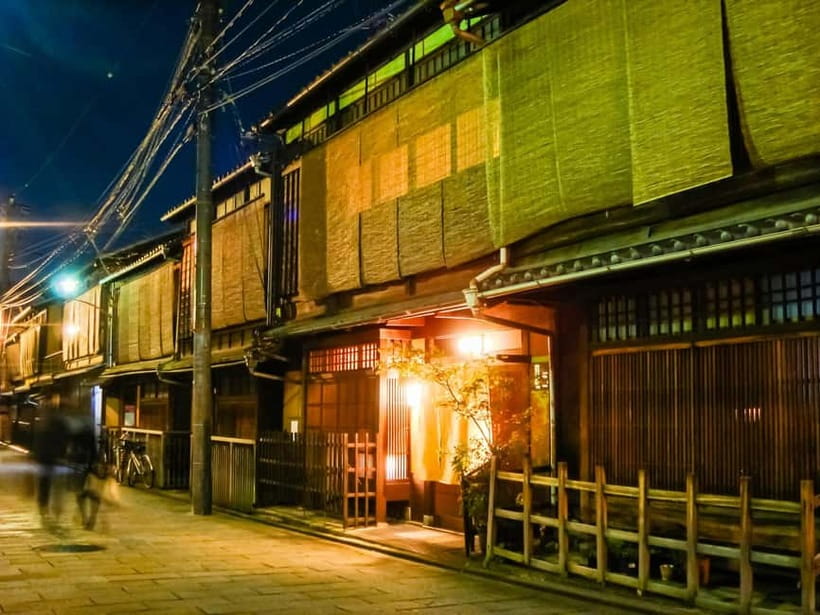
The strongest part of this experience is the interpretation. Without a guide, you might notice a woman in traditional dress and make assumptions. A good explanation gives you a better understanding of the difference between a geisha and a maiko, the role of teahouses, and the meaning of the signs around Gion.
The supplied information promises tips for identifying teahouses and traditional symbols. That is practical knowledge you can use after the tour, even if you return to Gion on your own.
You may also learn how to behave respectfully around working performers. The activity description says you may catch fleeting glimpses of geisha on their way to evening appointments. That wording is important. A sighting is a possible extra, not the product being sold.
Two of the strongest guide comments concern clarity and enthusiasm. Pedro is praised for explaining the streets and geisha culture in an entertaining, detailed way, and for recommending places to eat afterward. Manuel is also praised for sharing plenty of information about the places visited.
The exact guide depends on the date, so you should not assume Pedro will lead every departure. Still, the named feedback gives you a useful picture of the tour’s intended style: conversational, informative, and focused on the neighborhood.
Group size, pace, and age limits
A maximum of 15 people is a reasonable middle ground. It is small enough for a personal feel, but not a private tour. You should be able to hear the guide more easily than in a large sightseeing group, and questions are more practical than they would be with several dozen people.
The two-hour length also keeps the commitment manageable. You get several stops without giving up an entire evening. I would wear comfortable shoes because this is a walking tour through city streets, though the supplied information does not state the exact walking distance or surface conditions.
Children under 12 are not allowed. For older children and teenagers, the subject matter may work well if they are interested in Japanese culture, performance, or photography. The tour depends on listening and observation, so it is less suitable for anyone wanting a fast-moving attraction with hands-on activities.
The live language is listed as Spanish. Some content may appear in its original language, so confirm the language when you choose a departure. The general activity information also refers to an English-speaking guide, but the specific language field says Spanish. I would rely on the departure details shown at booking and check if language is important for your group.
Is $22 a fair price?
At $22 per person, this is reasonably priced for a two-hour guided walk in one of Kyoto’s most distinctive districts. You are paying for a local guide, cultural explanation, a small group, and a planned route rather than admission to a major attraction.
That price makes the tour especially useful early in your Kyoto stay. You can learn how Gion works, then return later with a better eye for teahouse signs and traditional symbols. It can also save you from spending an evening wandering without context.
The value is lower if you already know Gion well or mainly want guaranteed access to a performance. This walk does not include a meal, theater ticket, private teahouse visit, or guaranteed geisha sighting.
Flexible booking also helps. You can reserve now and pay later, and cancellation is free up to 24 hours before the tour for a full refund. Those terms are useful when your Kyoto schedule is still changing.
How to make the most of the evening
Book this for a time near sunset, as intended by the route, and keep the rest of your evening flexible. Since the tour ends at Yasaka Shrine, you can decide afterward whether to continue walking or find dinner nearby.
Bring a phone or small camera, but keep it away when the guide is explaining something. Gion is a working neighborhood, and respectful behavior matters more than collecting proof that you saw someone in traditional dress.
Ask about food at the end. Pedro has specifically recommended places to eat in the area, and this can be one of the more useful practical extras of a neighborhood tour. The guide may also help you make sense of a street or sign you noticed earlier.
Do not judge the experience by whether you see geisha or maiko. Judge it by what you learn about the district. If a sighting happens, it is a fortunate moment. The route, explanations, and quieter timing are the dependable parts.
Who should book this Gion walk?
I would recommend it to first-time visitors who want an approachable introduction to Kyoto’s geisha district. It suits you if you prefer a short, guided walk with cultural background rather than a formal show or a long lecture.
It is also a good pick for Spanish-speaking visitors, provided the selected departure confirms Spanish. The comments about Pedro and Manuel suggest that the explanations are lively and accessible, not dry lists of dates.
You may want a different experience if you need wheelchair-specific information, a child-friendly tour for under-12s, guaranteed indoor access, or a meal included in the price. Those features are not provided here.
For most people, the main question is simple: do you want to understand Gion, or only photograph it? If you want context, a manageable route, and the chance to see the district at its calmer evening hour, $22 is a sensible buy. If you want guaranteed entertainment or a private encounter, choose something else.
FAQ
Where does the Gion night tour meet?
The meeting point is Ben’s Cookies Kyoto Shijo. The guide will hold a sign with the name of the tour.
Where does the tour finish?
The walk finishes at Yasaka Shrine.
How long does the experience last?
The tour lasts two hours.
What language is the tour conducted in?
The live tour guide language is listed as Spanish. Some content may be shown in its original language. The activity information also refers to an English-speaking guide, so confirm the language for your chosen departure.
How large is the group?
The tour has a maximum of 15 participants.
Are children allowed to join?
Children under 12 are not suitable for this activity.
Does the tour guarantee a geisha or maiko sighting?
No. The experience says you may catch fleeting glimpses of geisha on their way to evening appointments, but a sighting is not guaranteed.
Is food included?
No food or meal is listed as included. A guide such as Pedro may recommend places to eat in the area after the walk.
Can I cancel for a refund?
You can cancel up to 24 hours in advance for a full refund. You can also reserve now and pay later.
More of Kyoto After Dark
- Kyoto Night Foodie Tour in Gion (9+ dishes + 6 Sake tastings)
★ 5.0 · 1,762 reviews - Kyoto Gion Night Walk & Geisha District Guided Tour
★ 5.0 · 786 reviews - Kyoto Ghost Tour: Dark Tales, Urban Legends, Bamboo Forest Night
★ 5.0 · 625 reviews - Kyoto Bar Hopping Night Tour
★ 5.0 · 613 reviews
Newest Kyoto experiences on the site
- Treasures of Kyoto: Gion & historical Walking Tour★ 5.0 · 6 reviews
- Whisk Your Own Matcha: A Zen Matcha Experience at Temple★ 3.6 · 7 reviews
- Kyoto tea town for matcha lovers★ 5.0 · 16 reviews
- Uji: Private immersion into Kyoto’s tea and reglious culture★ 5.0 · 17 reviews
- Kyoto Matcha Green Tea Tour★ 4.5 · 23 reviews
- Uji and Wazuka Matcha Farm Half Day Private Guided Tour★ 5.0 · 21 reviews
- Utilising upcycled Matcha! Creating matcha incense (Uji, Kyoto)★ 5.0 · 6 reviews
- Sacred Temple Yoga Experience in Japan★ 5.0 · 3 reviews
Gion District Tours, compared.
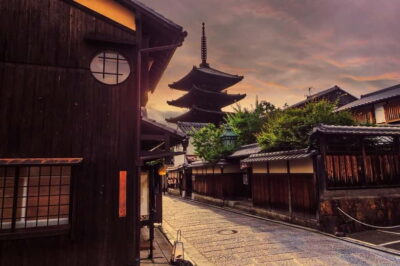
Kyoto Geisha Walking Tour: Gion District & Hidden Gems
Read our review →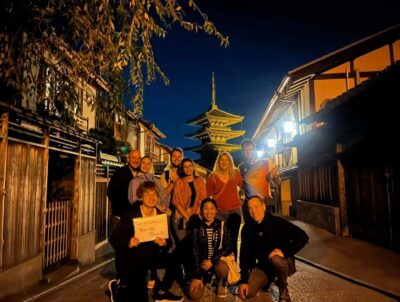
Gion Magical Night Walking Tour with Geisha Trivia
Read our review →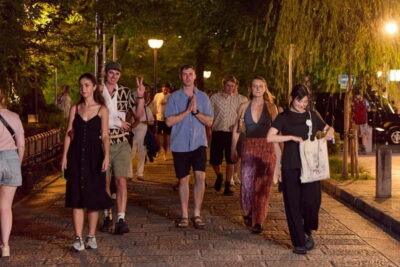
Gion Geisha District Walking Tour – Stories of Geisha
Read our review →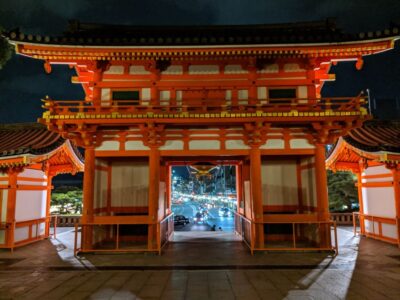
Best of Kyoto: Gion, Geisha, Pagodas & Cobblestones
Read our review →
Kyoto Night Foodie Tour in Gion (9+ dishes + 6 Sake tastings)
Read our review →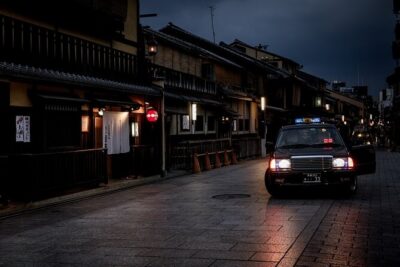
Kyoto Gion Geisha District Walking Tour – The Stories of Geisha
Read our review →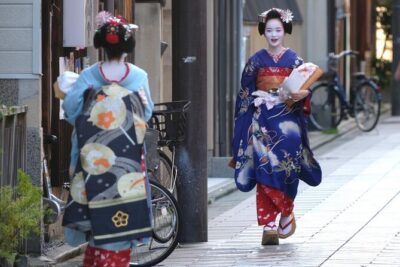
Kyoto Gion: 2-Hour Geisha Culture & History Walking Tour
Read our review →Browse the lists this tour appears in