
Reviewed · GION DISTRICT TOURS
Kyoto: Gion & Geisha District Night Time Walking Tour
Gion is at its most atmospheric after dark, when lanterns glow along old wooden streets and the crowds thin out. This two-hour walk takes you from Yasaka Shrine through Nene no Michi, Ninenzaka, and Hanamikoji Street, with stories about Kyoto’s shrines, samurai-era streets, and geiko culture along the way.
I like the small-group feel reported by several participants, including one couple who felt they had a private tour for the cost of a group outing. I also like the practical touch of guide-provided photos, especially if you are traveling alone. The main drawback is simple: you walk for two hours on stone lanes and slopes, and the tour is not suitable for wheelchair users.
Key points
- Nighttime Gion has a quieter mood: Lantern-lit lanes and fewer people make the district easier to appreciate than during the busiest daytime hours.
- The route links several classic sights: Yasaka Shrine, Maruyama Park, Nene no Michi, Ninenzaka, Yasui-Konpiragu Shrine, and Hanamikoji Street all fit into one walk.
- Geiko culture gets proper context: Your guide explains the training and work of geiko and maiko instead of treating the district as a photo backdrop.
- Yasui-Konpiragu adds a hands-on ritual: You can learn about the shrine’s Power Stone archway and its meaning before deciding if you want to crawl through it.
- English-speaking guides shape the experience: Majo, Pedro, Yuvia, Wilber, Sam, Jason, Amy, Bell, and others have led recent departures, with guide assignments varying by date.
- At $20, the value is strong: You are paying for local orientation, cultural explanation, and a well-planned route rather than admission to a paid attraction.
Why Gion works better after sunset
Gion is often presented as Kyoto’s geisha district, but that label only tells part of the story. It is also a place of shrines, gardens, old lanes, wooden townhouses, restaurants, teahouses, and long-standing religious customs. A good evening walk helps you connect those pieces.
The nighttime setting changes the pace. The streets can feel calmer, and the warm light around traditional buildings gives the area a softer look. You still need to share the lanes with other people, but the evening departure can help you avoid the heavier daytime crowds.
This is not a performance and it does not promise a meeting with a geiko or maiko. You might see one briefly on the way to an appointment, as some participants did, but that is a matter of timing and luck. The stronger reason to book is the explanation of the district itself.
Your guide talks about geiko and maiko as working artists with demanding training, not as characters in a tourist show. That distinction matters. Gion is a living neighborhood, and respectful behavior is part of understanding it.
More ways to walk Gion:
- Kyoto Geisha Walking Tour: Gion District & Hidden Gems
★ 4.7 · 3,273 reviews - Kyoto: Gion Magical Night Walking Tour with Geisha Trivia
★ 4.9 · 2,393 reviews - Kyoto: Gion Geisha District Walking Tour – Stories of Geisha
★ 4.7 · 2,187 reviews
Starting near Yasaka Shrine
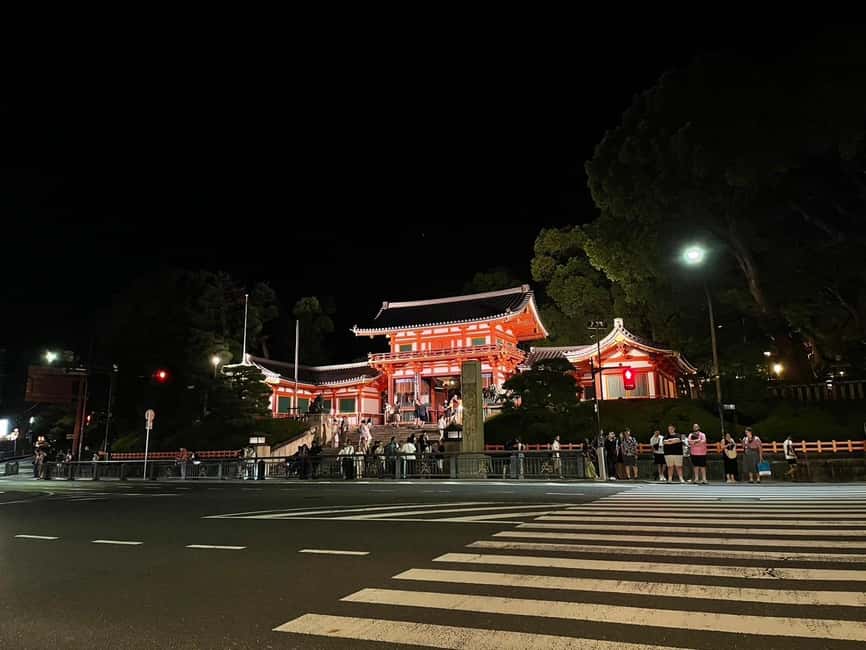
The meeting point is in front of Starbucks next to Kyoto Gion Hotel, at 35.0036732, 135.7760837. It is within walking distance of the Western Tower Gate entrance to Yasaka Shrine, so you should have little trouble linking the tour with an afternoon or evening in eastern Kyoto.
The start point is useful because Yasaka Shrine becomes the first major stop. You are not spending the opening section on a long transfer. Instead, the guide can begin setting the scene almost at once.
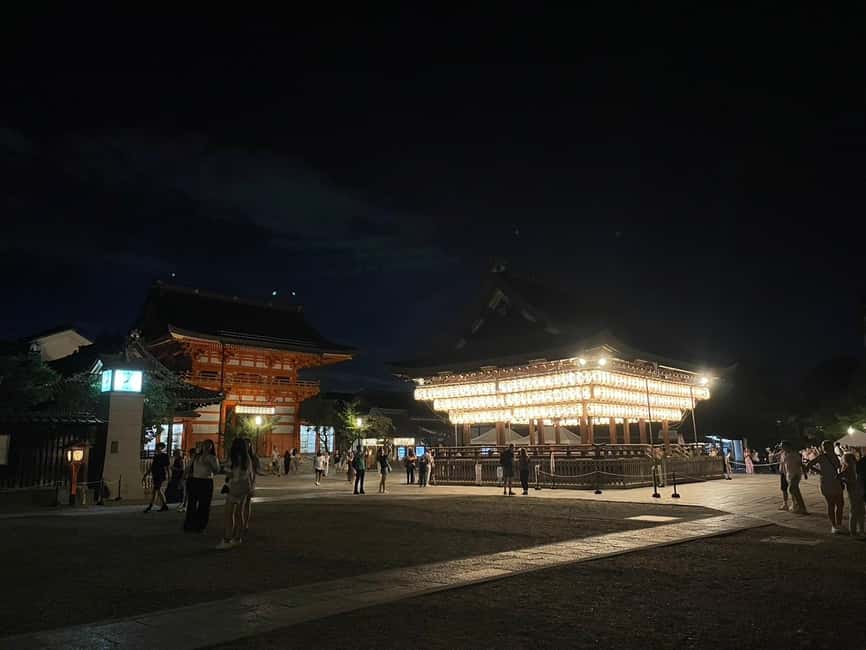
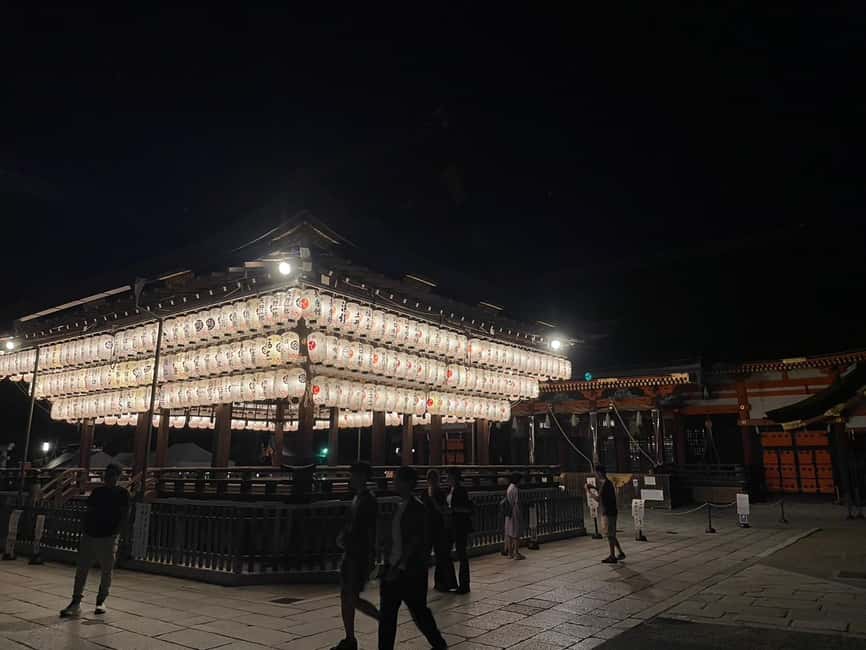
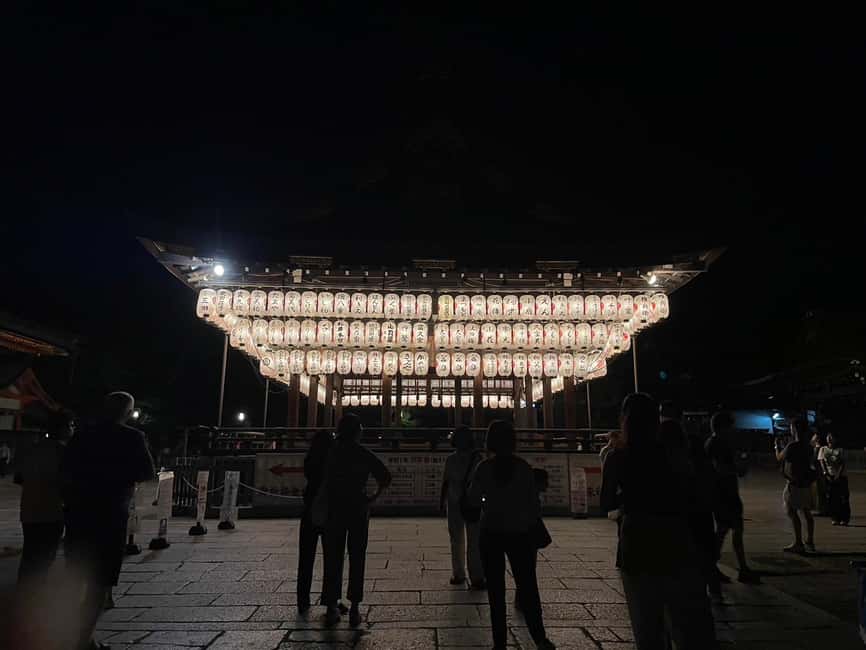
Yasaka Shrine is one of Kyoto’s key religious sites and has close ties to the city’s festivals. The tour gives you historical background and explains its connection to local traditions and geiko culture. That makes the shrine more than a quick photograph before the group moves on.
Plan to arrive early. A central meeting point can be easy to locate on a map but less obvious when you are standing among hotels, shops, and evening foot traffic. The supplied coordinates are worth saving before you leave your accommodation.
Yasaka Shrine and Maruyama Park: the spiritual opening
The first guided section in Gion lasts about 30 minutes, followed by around 20 minutes at Yasaka Shrine. These parts give the walk a useful foundation before the group turns onto narrower historic lanes.
Yasaka Shrine is a good opening stop because it connects public religious life with Kyoto’s seasonal celebrations. Your guide can explain details that are not always clear from signs alone, including why the shrine matters to the city and how its traditions relate to the surrounding district.
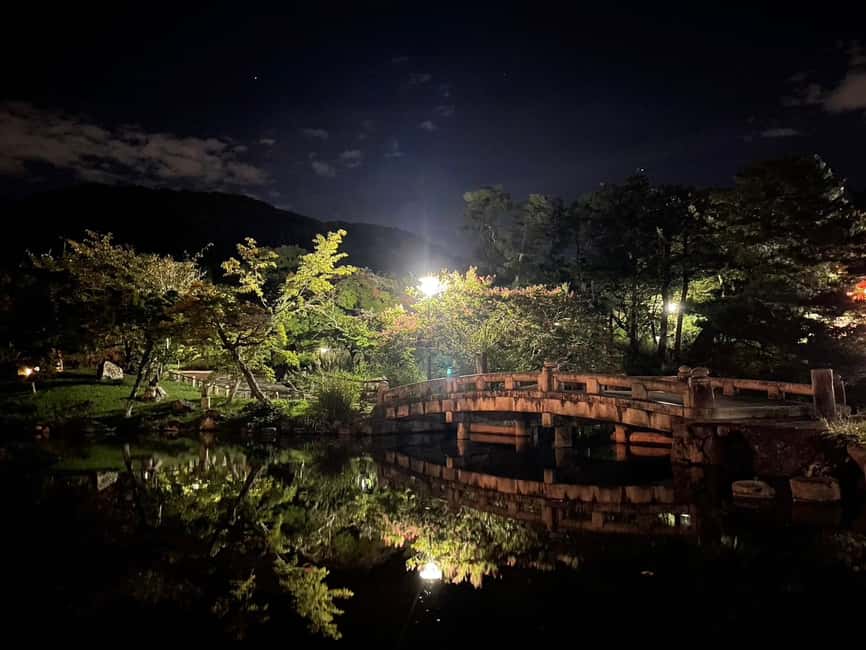
From there, the route includes Maruyama Park, Kyoto’s oldest public garden. The park offers a change of pace. After the shrine’s gates and buildings, you get a little open space and greenery before returning to the stone lanes of Higashiyama.
This pause is valuable on a walking tour. You can catch your breath, listen to the guide, and take in the contrast between a public garden and the tightly built streets nearby. In cooler months, bring a warm layer. One December participant specifically found the evening cold, even while enjoying the reduced crowds.
Nene no Michi and the old Higashiyama lanes
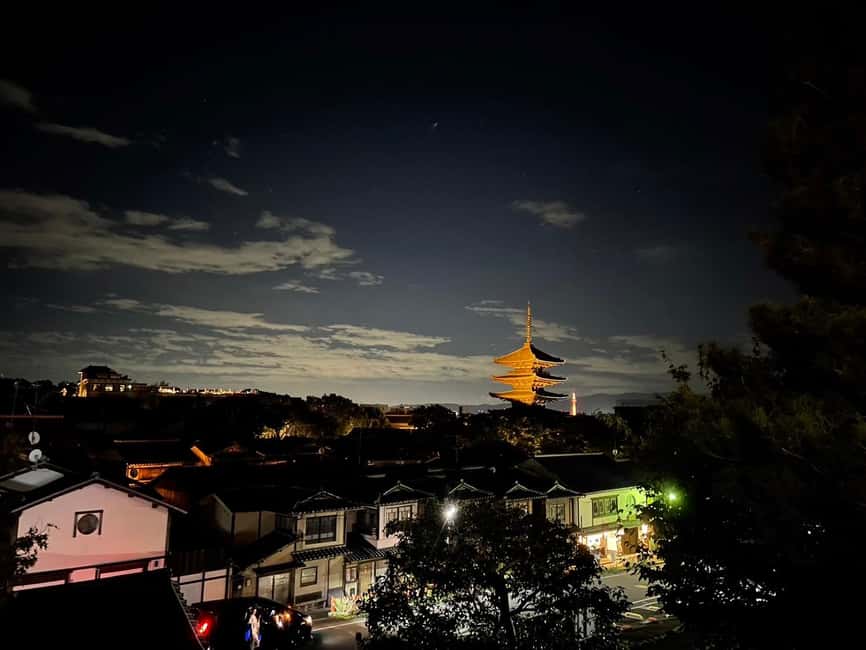
Nene no Michi is one of the prettiest parts of the route. The stone-paved lane takes its name from Nene, the wife of the samurai leader Toyotomi Hideyoshi. It passes traditional townhouses, small teahouses, and artisan shops.
The scheduled walking and explanation here take about 20 minutes. That is enough time to understand the lane’s setting and architectural character, though not enough for a long browse in every shop. Think of this section as a guided look at the district rather than a shopping stop.
I like this part because it shows how Kyoto’s appeal often comes from ordinary movement through an old neighborhood. You are not standing in one grand monument. You are noticing rooflines, wooden fronts, narrow paths, and the way commercial and religious spaces sit close together.
The stone surface also brings a practical concern. Wear shoes that are comfortable for walking and secure on uneven ground. The route is not described as difficult, but it is a walking tour, and some historic streets are sloped or irregular.
More geisha and maiko evenings in Kyoto:
- Best of Kyoto: Gion, Geisha, Pagodas & Cobblestones
★ 4.9 · 2,058 reviews - Night Walk in Gion: Kyoto’s Geisha District
★ 4.5 · 2,003 reviews - Kyoto Gion Geisha District Walking Tour – The Stories of Geisha
★ 5.0 · 1,441 reviews - Kyoto Gion: 2-Hour Geisha Culture & History Walking Tour
★ 5.0 · 1,186 reviews
Ninenzaka brings the postcard view
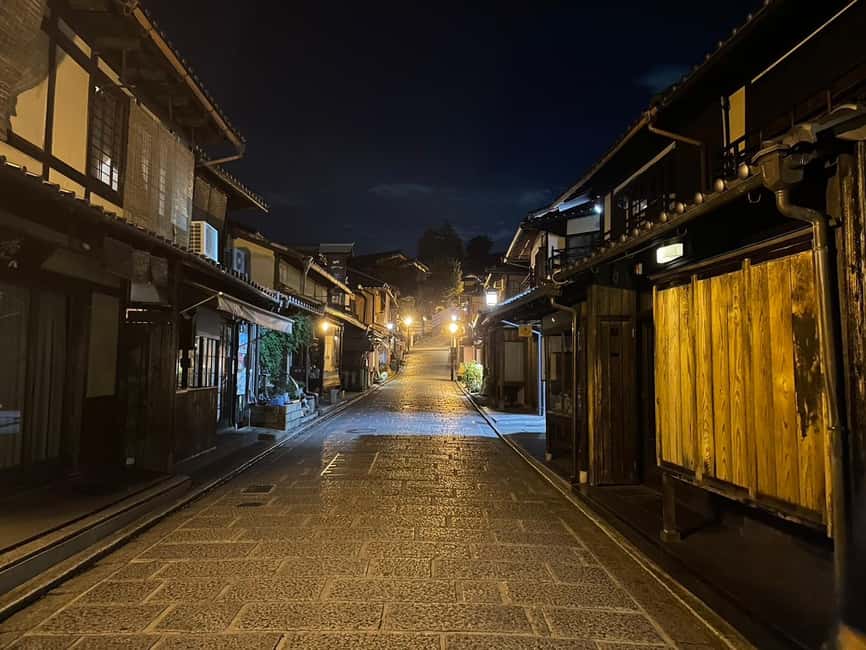
Ninenzaka is a historic slope lined with wooden buildings and small storefronts. It is one of the most recognizable sections of the Higashiyama area, and the tour allows around 20 minutes for a guided visit.
This is the place where your camera will get plenty of work. The lane has the old-Kyoto look many people hope to find: timber fronts, traditional forms, and a clear sense of an older street plan. At night, the atmosphere is different from the bright daytime version, with softer light and fewer people in the way.
Your guide adds value here by explaining what you are seeing. Without context, Ninenzaka can become a quick procession from one photo spot to the next. With a guide, the buildings and lanes become part of a larger story about Higashiyama and Kyoto’s old neighborhoods.
The tradeoff is that nighttime also means some storefronts may be less useful for browsing than during the day. If shopping is your main goal, visit the area earlier. If mood, history, and a calmer walk matter more, the evening timing works well.
Yasui-Konpiragu and the Power Stone ritual
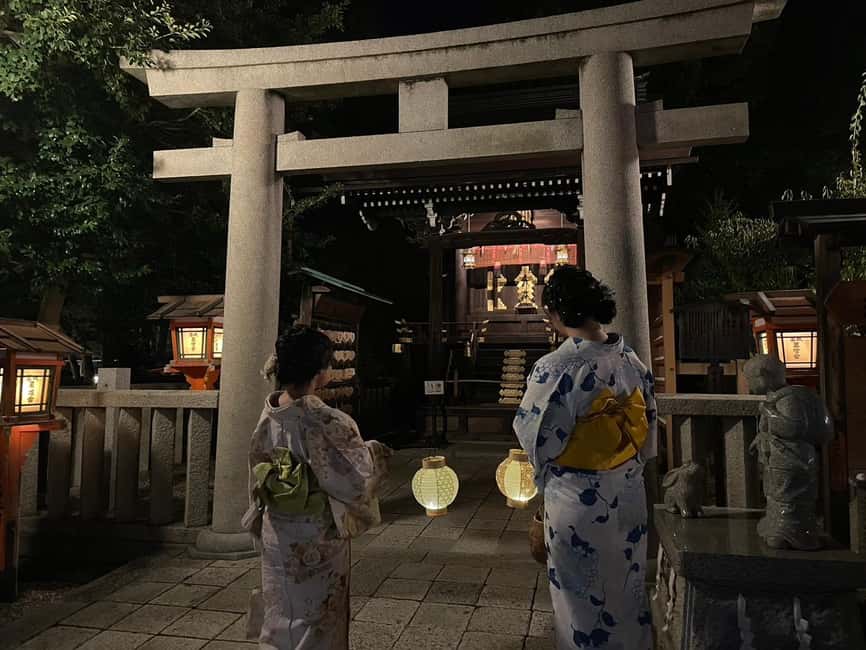
The next stop is Yasui-Konpiragu Shrine, known for its unusual Power Stone archway. The ritual involves crawling through the opening to pray for strong relationships or to leave unwanted ties behind.
This is one of the tour’s most distinctive moments because it gives you a direct look at a local custom rather than another view of a famous street. Your guide can explain the meaning before you decide if you want to take part.
The ritual is not required. You can simply observe and listen. That is useful if the archway is busy, if you are wearing clothing that makes crawling awkward, or if you prefer to keep the visit focused on the shrine’s history.
The stop also breaks up the visual rhythm of the walk. After several lanes and historic facades, you get an example of how religious practice remains part of daily Kyoto life. It is a small site, but it can leave a stronger impression than a larger monument because the custom is so specific.
Hanamikoji Street and geiko culture
Hanamikoji Street is the heart of Gion and one of the main reasons people choose this experience. Rows of preserved wooden teahouses line the street, and some continue to host Kyoto’s geiko.
This is where your guide’s explanation becomes especially important. The tour covers the lives, training, and artistic work of geiko and maiko, giving you a better sense of the discipline behind the clothing, makeup, music, dance, and formal service associated with the district.
You should keep expectations realistic. A geiko sighting is not guaranteed, and it should never be treated as a staged event. Some participants happened to see one briefly, but the tour’s real value is learning how the district functions and how to move through it respectfully.
Hanamikoji is also a place where good manners matter. Listen to your guide about photography and avoid blocking doorways or following anyone. The old teahouses are part of an active neighborhood, not a theme park set.
Several guides have received especially warm praise for making this material easy to follow. Majo is repeatedly described as cheerful, clear, and engaging. Pedro and Nay are noted for detailed explanations, while Wilber is praised for strong English communication and useful historical stories. Sam, Jason, Yuvia, Bell, Amy, and others have also led well-regarded tours. Since the guide depends on the departure, you should book for the route and format rather than one specific person.
What the two-hour pace feels like
The total duration is two hours, with time divided among several stops. That creates a lively evening rather than a slow, deeply detailed visit to one shrine.
You can expect a steady rhythm: stop, listen, walk, pause for photographs, then continue. The route includes enough variety to keep the evening moving, but it does not leave much room for long independent exploration.
That pace suits you if you want orientation on your first night in eastern Kyoto. It also works well if you prefer to hear the main story of Gion before returning later on your own.
It may feel brief if you want extensive temple interiors, long shopping stops, or a full lesson on geiko arts. Those are not the purpose of this walk. You are getting a broad introduction to several connected places.
Photos are included during the tour. That is a useful extra for solo visitors or couples who want a picture together without relying only on selfies. It also means you can keep your attention on the guide instead of constantly arranging your own camera.
The $20 price and what you receive
At $20 per person, this is a low-cost way to add structure to an evening in one of Kyoto’s most famous districts. You are not paying for entrance tickets or a formal cultural performance. You are paying for an English-speaking guide, historical interpretation, photos, and a route that connects sights you could otherwise pass without understanding.
The value is strongest if you are new to Kyoto. Yasaka Shrine, Nene no Michi, Ninenzaka, and Hanamikoji are easy to place on a map, but signs alone will not explain how they fit together. A guide can give you the background and answer questions as you go.
The price also compares well with the private feel that can happen in a small departure. One participant described a two-person outing as close to a private tour, while another group found the guide willing to answer restaurant questions after the formal walk. Group size is not specified, so you should not assume every departure will be this intimate.
You can reserve now and pay later, which helps if your Kyoto schedule is still changing. Cancellation is free up to 24 hours before the start for a full refund. Those terms reduce the risk of fitting the walk into a busy trip.
Who should book this Gion night walk
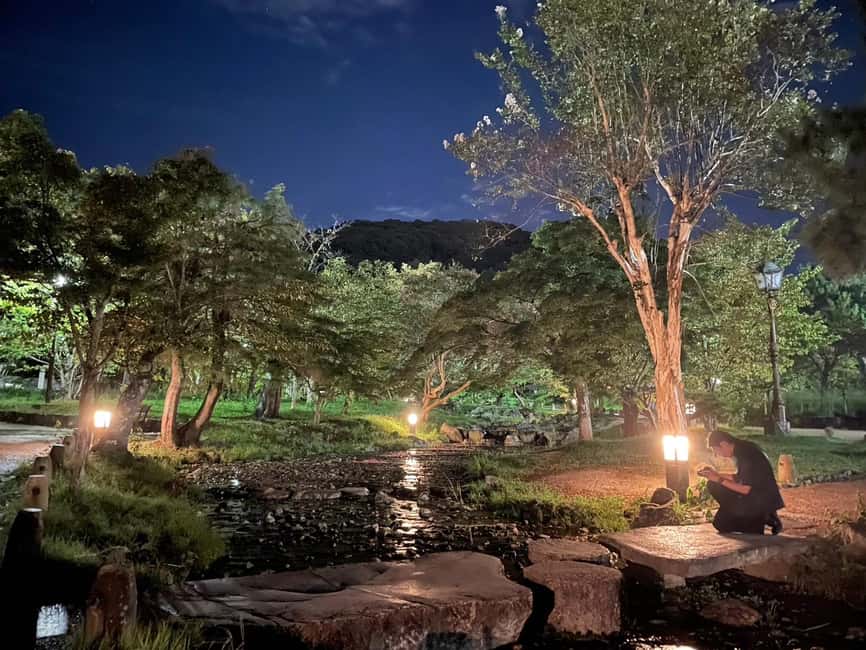
I would recommend it to first-time Kyoto visitors who want a clear introduction to Gion without spending a large amount. It is also a good match for solo visitors, couples, and anyone who prefers cultural explanation to simply collecting photographs.
You will get the most from it if you enjoy walking, asking questions, and noticing details in old streets. The guides have been praised for warmth, clear English, useful local suggestions, and the ability to make the evening feel personal.
Families with younger children should consider the two-hour walking pace and nighttime timing. The route is not described as difficult, but stone lanes and slopes can be tiring. Wheelchair users should not book this experience because it is specifically listed as unsuitable.
The tour is less useful if you have already spent a great deal of time in Gion and want access to private teahouses or a guaranteed geiko performance. It does not promise either. It is a public-street walking tour with cultural background and local stories.
Practical advice before you go
Wear comfortable shoes with good grip. Nene no Michi and Ninenzaka are attractive precisely because they retain old paving and slopes, not because they are smooth modern promenades.
Bring a warm layer during the cooler months. The evening can feel cold once you slow down at shrine stops, even if the walk itself keeps you moving.
Save the meeting point and coordinates before departure. The group meets in front of the Starbucks next to Kyoto Gion Hotel, near Yasaka Shrine’s Western Tower Gate.
Keep your camera ready, but use it thoughtfully. The included photos are helpful, and the old streets are highly photogenic, but Hanamikoji is also a working neighborhood. Follow your guide’s instructions around geiko, maiko, teahouses, and private entrances.
If your guide suggests food afterward, treat that as a useful local recommendation rather than part of the tour. Restaurant advice was one of the practical benefits noted by participants, but meals are not included.
Should you book this Kyoto Gion night tour?
Book it if you want an affordable, well-paced introduction to Gion after dark, with cultural background that you would probably miss on your own. The route covers many of Kyoto’s most recognizable eastern streets, while the guides add the human details that make the district easier to understand.
Skip it if you need a fully accessible route, extensive free time, or a guaranteed geiko sighting. For most visitors who have two spare hours and want more than a self-guided photo walk, the $20 price is easy to justify.
FAQ
How long does the Gion night walking tour last?
The tour lasts two hours.
How much does the tour cost?
The listed price is $20 per person.
Where does the tour start?
You meet in front of Starbucks next to Kyoto Gion Hotel. The meeting point is within walking distance of the Yasaka Shrine Western Tower Gate entrance. The coordinates are 35.0036732, 135.7760837.
Which sights are included on the route?
The route includes Gion, Yasaka Shrine, Maruyama Park, Nene no Michi, Ninenzaka, Yasui-Konpiragu Shrine, and Hanamikoji Street before returning to the Starbucks near Kyoto Gion Hotel.
Is the tour conducted in English?
Yes. The tour includes a live English-speaking guide.
Are photos included?
Yes. Photos during the tour are included.
Can wheelchair users join?
No. The activity is listed as unsuitable for wheelchair users.
Can I cancel for a full refund?
Yes. You can cancel up to 24 hours in advance for a full refund. You can also reserve now and pay later.
More Walking Tours in Kyoto
- Nishiki Market Brunch Walking Tour (7 Tastings + Brunch)
★ 5.0 · 1,355 reviews - Kyoto Arashiyama Walking Tour: Bamboo, Monkeys, Gardens & Secrets
★ 5.0 · 1,216 reviews - Kyoto: Izakaya Bars Guided Walking Tour
★ 4.9 · 815 reviews - Kyoto Sake Brewery & Tasting Walking Tour
★ 5.0 · 623 reviews
More of Kyoto After Dark
- Kyoto Night Foodie Tour in Gion (9+ dishes + 6 Sake tastings)
★ 5.0 · 1,762 reviews - Kyoto Gion Night Walk & Geisha District Guided Tour
★ 5.0 · 786 reviews - Kyoto Ghost Tour: Dark Tales, Urban Legends, Bamboo Forest Night
★ 5.0 · 625 reviews - Kyoto Bar Hopping Night Tour
★ 5.0 · 613 reviews
Newest Kyoto experiences on the site
- Treasures of Kyoto: Gion & historical Walking Tour★ 5.0 · 6 reviews
- Whisk Your Own Matcha: A Zen Matcha Experience at Temple★ 3.6 · 7 reviews
- Kyoto tea town for matcha lovers★ 5.0 · 16 reviews
- Uji: Private immersion into Kyoto’s tea and reglious culture★ 5.0 · 17 reviews
- Kyoto Matcha Green Tea Tour★ 4.5 · 23 reviews
- Uji and Wazuka Matcha Farm Half Day Private Guided Tour★ 5.0 · 21 reviews
- Utilising upcycled Matcha! Creating matcha incense (Uji, Kyoto)★ 5.0 · 6 reviews
- Sacred Temple Yoga Experience in Japan★ 5.0 · 3 reviews
Gion District Tours, compared.
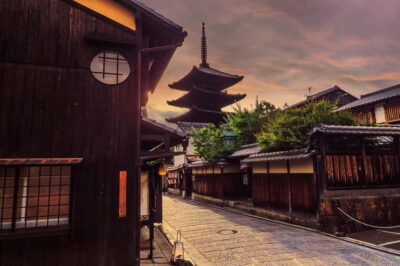
Kyoto Geisha Walking Tour: Gion District & Hidden Gems
Read our review →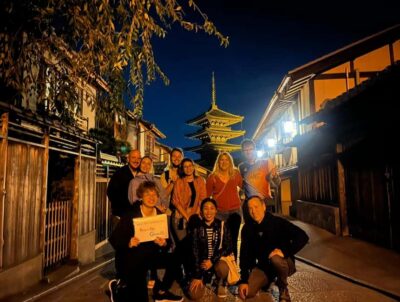
Gion Magical Night Walking Tour with Geisha Trivia
Read our review →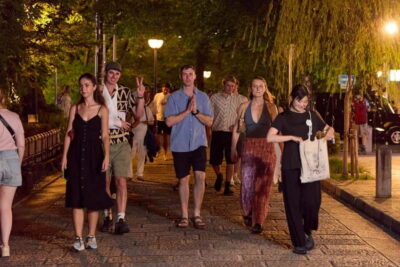
Gion Geisha District Walking Tour – Stories of Geisha
Read our review →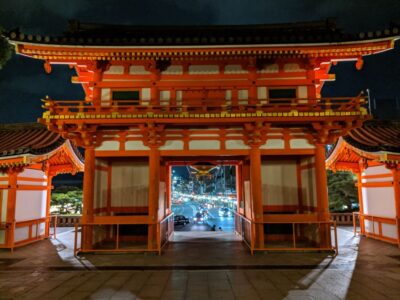
Best of Kyoto: Gion, Geisha, Pagodas & Cobblestones
Read our review →
Kyoto Night Foodie Tour in Gion (9+ dishes + 6 Sake tastings)
Read our review →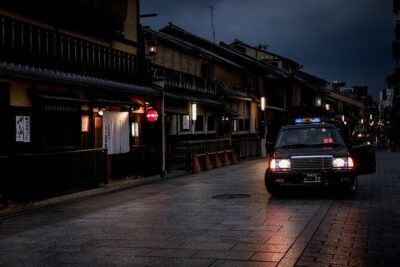
Kyoto Gion Geisha District Walking Tour – The Stories of Geisha
Read our review →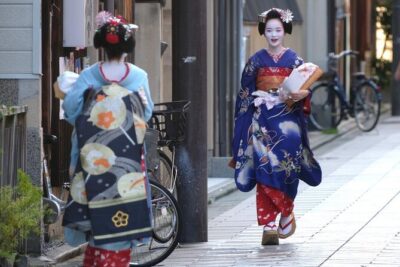
Kyoto Gion: 2-Hour Geisha Culture & History Walking Tour
Read our review →Browse the lists this tour appears in