
Reviewed · GION DISTRICT TOURS
Kyoto Gion Early Morning Walking Tour
Kyoto’s famous sights are far more enjoyable before the day gets rolling. This early-morning Gion walk takes you from willow-lined canals and old teahouse streets to Kiyomizu-dera, Sannenzaka, Yasaka Pagoda, and Yasaka Shrine, when the lanes are at their calmest.
I like two things here: the route gives you a useful first look at several major Kyoto sights, and the guides, including Hiro, Caleb, and Vincent, are praised for clear English, humor, and thoughtful answers. The main catch is timing. If you want Kiyomizu-dera truly quiet, an even earlier start would help, as the temple can already be crowded by the time the group arrives.
Key points at a glance
- Early access to Gion: Begin among the Shirakawa River, traditional machiya houses, and weeping willows before the afternoon crowds.
- Six well-chosen stops: The route links Gion Shirakawa, Hanamikoji Street, Kiyomizu-dera, Sannenzaka and Ninenzaka, Yasaka-no-To, and Yasaka Shrine.
- Small group format: No more than 12 people join, giving you a better chance to hear the guide and ask questions.
- Strong guide lineup: Hiro, Caleb, and Vincent are noted for their history knowledge, friendly manner, humor, and willingness to answer questions.
- Three hours on foot: You will cover a lot of ground, so comfortable walking shoes matter.
- Reasonable cost with one extra fee: The tour costs $49.42 per person, with ¥500 for Kiyomizu-dera paid separately.
Why an early start makes sense in Gion
The clever idea behind this tour is simple: visit Kyoto’s most photographed streets before they fill with people. Gion is a working neighborhood as well as a sightseeing district, and its appeal comes from small details: a narrow canal, wooden facades, a quiet shrine gate, or a glimpse of a traditional teahouse street.
By afternoon, Kiyomizu-dera and the lanes below it can become difficult to enjoy at an easy pace. You may still encounter people in the morning, especially at the temple, but an early start gives you a better chance at open views and clearer photographs.
This is also a useful orientation walk. You do not just see isolated attractions. You connect Gion with the hillside temple district, then return to the broad religious and cultural center of Yasaka Shrine. For a first day in Kyoto, that route helps you understand how the neighborhoods fit together.
The cost is $49.42 per person. That is not the cheapest way to walk around Gion, but the price includes an English-speaking guide for about three hours, navigation, and explanations at six important stops. Add the ¥500 Kiyomizu-dera entry fee, and the total remains fair if you value context and do not want to spend your first morning sorting out the route yourself.
More ways to walk Gion:
- Kyoto Geisha Walking Tour: Gion District & Hidden Gems
★ 4.7 · 3,273 reviews - Kyoto: Gion Magical Night Walking Tour with Geisha Trivia
★ 4.9 · 2,393 reviews - Kyoto: Gion Geisha District Walking Tour – Stories of Geisha
★ 4.7 · 2,187 reviews
Starting beside the Izumo-no-Okuni statue
The tour begins at the Statue of Izumo-no-Okuni in Kawaramachi, in Kyoto’s Higashiyama Ward. It does not include hotel pickup, so you need to reach the meeting point independently. The location is near public transportation, which makes the early start more manageable, but you should allow enough time to arrive before the group sets off.
The activity ends back at the meeting point. That gives you a useful choice afterward: continue exploring central Kyoto, find breakfast, or use public transportation to reach another part of the city.
The group maximum is 12 people. That is small enough for a guide to handle questions without relying on a microphone or shouting across a crowd. It also means the pace can feel more personal, though the exact group size can vary from one departure to another.
Gion Shirakawa brings a quiet first impression
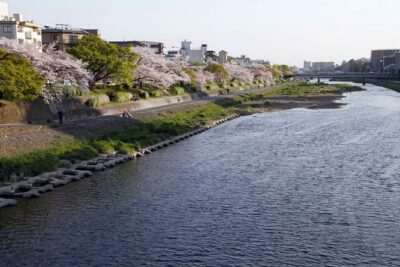
The first stop, Gion Shirakawa, lasts about 15 minutes. This is one of the prettiest introductions to Kyoto, with the Shirakawa River, traditional machiya houses, and drooping willow trees creating a calm old-town setting.
The short stop works well as an opening. You get a feel for Gion before moving into its more famous streets, and the early hour gives the canalside area a peaceful mood. This is a place for careful looking rather than a long lecture. Notice the wooden buildings, the water, and the way the street feels more like a neighborhood than a stage set.
Do not expect a long independent exploration here. Fifteen minutes is enough for an introduction and photographs, but not enough to wander every lane. The value comes from having the guide explain what you are seeing and how Gion functions within Kyoto.
Hanamikoji Street and the geisha district
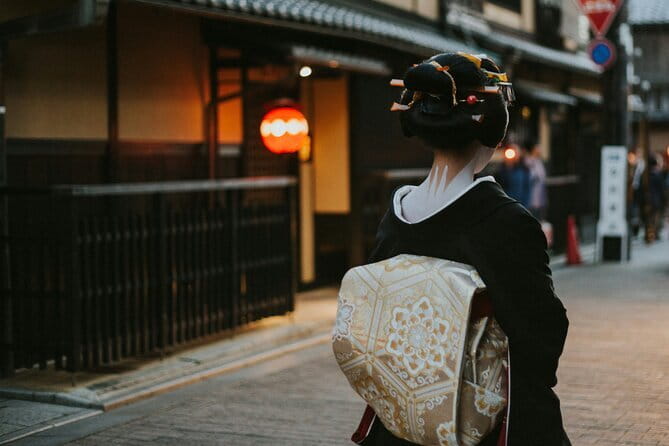
The walk continues to Hanamikoji Street for about 20 minutes. This historic road is lined with wooden machiya houses and traditional teahouses, known locally as ochaya. It is one of the clearest places to see the architectural character associated with Kyoto’s geisha district.
A guide adds useful context here. The street is not simply a backdrop for costumes and photographs. It is part of a living cultural district, and good behavior matters. Keep your voice low, follow instructions about photography, and do not treat people working in the area as part of the scenery.
This is one point where a small group helps. You can pause to ask about the difference between geisha and maiko, the role of ochaya, or the design of the wooden townhouses. Hiro is praised for placing Japanese history in a wider world context, while Caleb is described as an enthusiastic history buff. Those qualities can make an ordinary street walk much more rewarding.
More early starts in Kyoto:
- Kyoto Early Morning Tour with English-Speaking Guide
★ 5.0 · 1,427 reviews - Kyoto: Early Morning Tour with English-Speaking Guide
★ 4.9 · 1,128 reviews - Arashiyama Bamboo Forest & Hidden Gems Bike Tour (Early Bird)
★ 5.0 · 613 reviews - Kyoto Early Bird Walking Tour
★ 5.0 · 377 reviews
Kiyomizu-dera gives the morning its main view
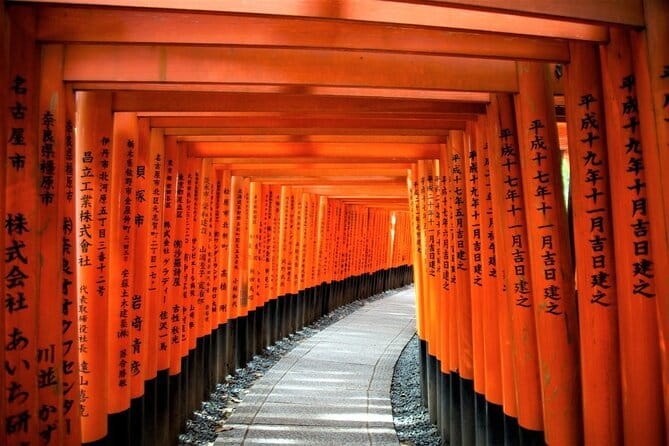
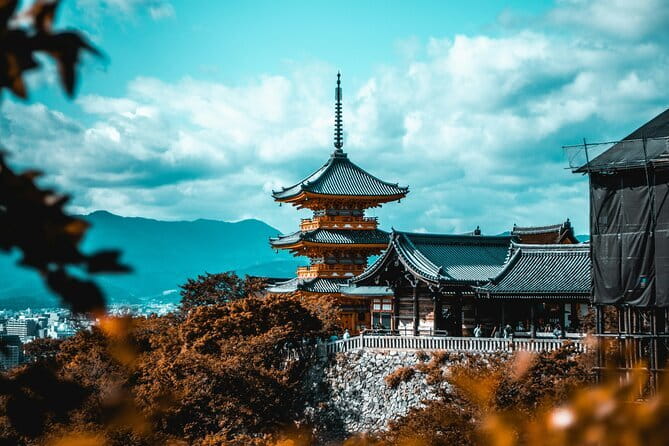
Kiyomizu-dera receives about an hour, the longest stop on the tour. You pay the admission fee separately, currently ¥500 per person. This is the part of the route most likely to justify the tour for first-time visitors.
The temple is famous for its large wooden stage and its views across Kyoto. Its setting changes with the seasons: spring brings blossoms, while autumn brings strong color. Even without a seasonal display, the temple offers an important look at Kyoto’s religious traditions and hillside setting.
The hour gives you time to see more than the entrance. Your guide can explain the site and help you make sense of what you are looking at, while you still have a little room to take photographs and enjoy the views. The exact balance between explanation and free time may depend on the guide and the group.
Here is the tour’s most important practical limitation: Kiyomizu-dera may not be empty. One person felt the temple was already swarming by the time the group arrived and wished the tour began an hour earlier. That is a fair warning. Early morning improves your odds, but it cannot guarantee solitude at Kyoto’s best-known temple.
If avoiding crowds is your top priority, ask yourself how much that matters. You may prefer visiting Kiyomizu-dera independently at opening time, then taking this walk for the surrounding streets and cultural explanation. If you want a guide to connect the temple with Gion and the old lanes below it, this tour remains useful.
Sannenzaka and Ninenzaka slow the pace
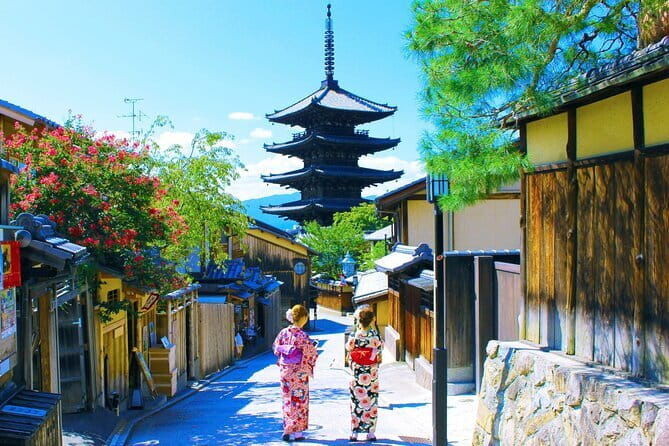
After Kiyomizu-dera, the group walks through Sannenzaka and Ninenzaka for roughly 30 minutes. These stone-paved lanes are lined with wooden townhouses, shops, and small places selling local goods and food.
This is one of Kyoto’s most attractive walking areas, but the sloped streets and stone paving make proper shoes important. You will be on your feet for most of the three-hour route, and the tour covers a fair distance.
The lanes are at their best when you can look up from the shops and notice the proportions of the buildings, tiled roofs, and changing views toward the temple district. The guide’s navigation is useful here because it keeps you moving through a maze-like area without wasting time on wrong turns.
You should not think of this as a dedicated shopping tour. The 30-minute stop is better for seeing the streets, learning why they are protected as part of Kyoto’s historic setting, and taking a few photographs. If you want to browse every shop, you will need to return on your own.
Yasaka Pagoda makes a strong photo stop
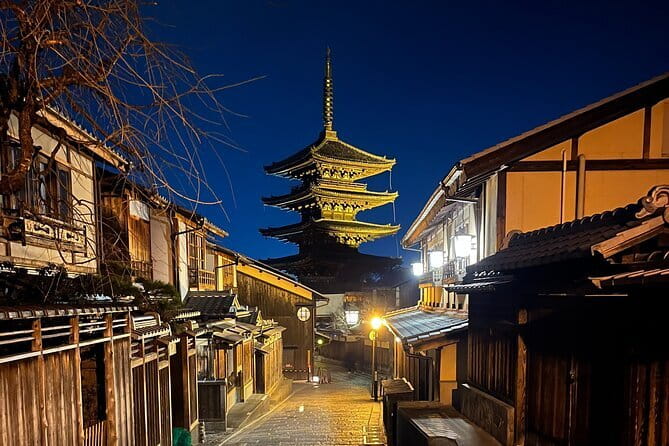
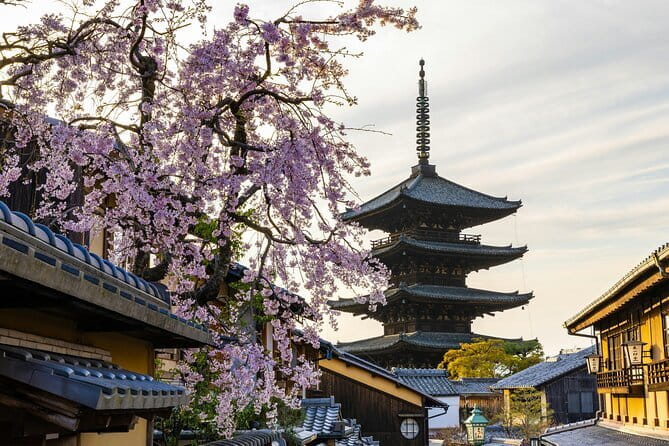
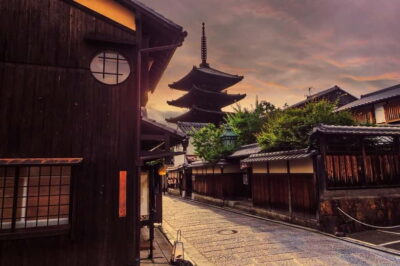
Yasaka-no-To, or Yasaka Pagoda, gets about 10 minutes. The pagoda is one of the most recognizable sights in this part of Kyoto, rising above the traditional streets around it.
The stop is brief, but that is reasonable. The pagoda works mainly as a visual landmark and photo opportunity rather than a long interior visit. Morning light and lighter foot traffic can make it easier to frame the tower with the surrounding wooden streets.
The guide can also help you understand how the pagoda fits into the neighborhood, rather than leaving you to see it as a detached monument. Ten minutes will not satisfy anyone wanting a detailed architectural study, but it keeps the overall route moving.
Yasaka Shrine closes the loop

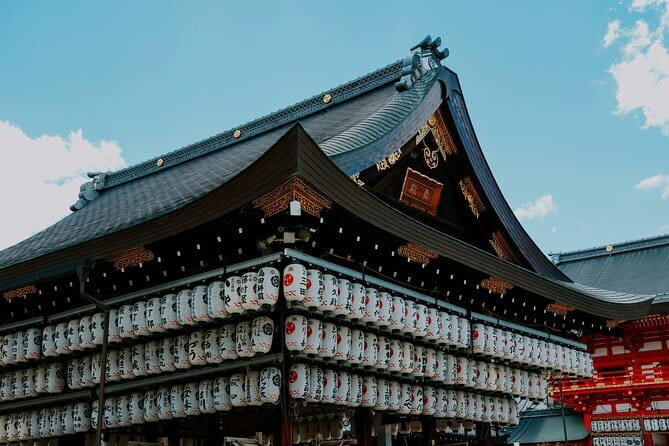
The final stop is Yasaka Shrine, with about 30 minutes set aside. This is one of Kyoto’s best-known Shinto shrines, recognized by its vermilion gate and lantern-lit dance stage. The shrine has long been connected with the protection of Kyoto and with local religious traditions.
Ending here gives the walk a good sense of place. You have moved from Gion’s canals and teahouse streets through a temple district and back to a major Shinto site. The contrast between Kiyomizu-dera and Yasaka Shrine helps show that Kyoto’s cultural identity is not limited to one type of religious building.
The shrine is free to enter, and the stop is long enough to look around without feeling rushed. As with the other sites, the early hour may offer a calmer visit than later in the day, though the tour cannot promise an empty shrine.
The guides are a major part of the value
The tour includes an English-speaking guide, and the guide can shape the experience as much as the route. Hiro is praised for strong knowledge of Japanese history, an ability to place events in a global context, and a good sense of humor. Caleb is described as friendly, passionate about history, and willing to make the early start feel worthwhile. Vincent is praised for explaining things carefully and answering questions, including questions outside the planned route.
That range matters because this is not a silent photo walk. You are paying for interpretation, local context, and help making sense of places that can otherwise blur together. A guide who welcomes questions can turn a quick look at a shrine or street into a clearer understanding of Kyoto.
The small group limit of 12 supports that style. You are more likely to hear the explanation and ask a follow-up question than you would in a large coach group. Still, no group tour can guarantee a private experience, and the pace will be shared with the other people on your departure.
Who should book this Kyoto walk?
I would point this tour toward first-time Kyoto visitors who want a guided introduction to Gion and the major sights around Kiyomizu-dera. It suits you especially well if you like history, want help with navigation, and would rather spend one morning seeing several essential places than plan the route yourself.
It also works for visitors who are short on time. In three hours, you see a canal district, a geisha neighborhood, a major Buddhist temple, two historic lanes, a pagoda, and a major Shinto shrine. That is a lot, but the route has a clear geographic logic.
You should think twice if you dislike early mornings, have trouble walking for three hours, or want long stretches of unstructured time. The tour includes slopes, stone streets, and a steady sequence of stops. It is not designed for deep shopping, extended temple meditation, or sitting in one place.
I would also be cautious if your only goal is to see Kiyomizu-dera without crowds. The early start helps, but the temple can become busy before the tour reaches it. In that case, an independent visit at the earliest possible hour may better match your priorities.
Practical details before you reserve
Your confirmation arrives when you book, and the tour uses a mobile ticket. Most people can participate, and the activity is near public transportation. Hotel pickup is not included, so plan your own way to the Izumo-no-Okuni statue.
Wear comfortable walking shoes and expect to be outdoors for the full route. Bring water, especially in warm weather, and keep the separate ¥500 temple entry fee in mind.
Free cancellation is available if you cancel at least 24 hours before the start time. Cancellations or changes made less than 24 hours ahead are not accepted for a refund, and the cut-off follows local Kyoto time.
Should you book the Gion Early Morning Walking Tour?
Book it if you want a well-organized first morning in Kyoto, with a guide linking Gion’s streets to Kiyomizu-dera and Yasaka Shrine. The combination of an early start, a maximum group size of 12, and guides such as Hiro, Caleb, and Vincent gives the tour real value.
Skip it if you want total freedom, a very late start, or a near-empty Kiyomizu-dera guaranteed by the schedule. For most first-time visitors who enjoy walking and want cultural context without handling the route themselves, $49.42 plus the ¥500 temple fee is a sensible way to get oriented.
FAQ
How long does the Kyoto Gion Early Morning Walking Tour last?
The tour lasts approximately three hours.
What places does the walking tour visit?
The route includes Gion Shirakawa, Hanamikoji Street, Kiyomizu-dera Temple, Sannenzaka and Ninenzaka, Yasaka-no-To, and Yasaka Shrine.
How large is the group?
The activity has a maximum of 12 travelers.
Is an English-speaking guide included?
Yes. An English-speaking guide is included in the tour.
How much does the tour cost?
The listed price is $49.42 per person.
Is the Kiyomizu-dera admission fee included?
No. Kiyomizu-dera admission costs ¥500 per person and is paid separately.
Where does the tour begin?
The meeting point is the Statue of Izumo-no-Okuni in Kawaramacho, Higashiyama Ward, Kyoto.
Where does the tour end?
The activity ends back at the meeting point.
Is hotel pickup included?
No. Hotel pickup is not included, so you need to reach the meeting point yourself.
More Walking Tours in Kyoto
- Night Walk in Gion: Kyoto’s Geisha District
★ 4.5 · 2,003 reviews - Kyoto Gion Geisha District Walking Tour – The Stories of Geisha
★ 5.0 · 1,441 reviews - Nishiki Market Brunch Walking Tour (7 Tastings + Brunch)
★ 5.0 · 1,355 reviews - Kyoto Arashiyama Walking Tour: Bamboo, Monkeys, Gardens & Secrets
★ 5.0 · 1,216 reviews
Newest Kyoto experiences on the site
- Treasures of Kyoto: Gion & historical Walking Tour★ 5.0 · 6 reviews
- Whisk Your Own Matcha: A Zen Matcha Experience at Temple★ 3.6 · 7 reviews
- Kyoto tea town for matcha lovers★ 5.0 · 16 reviews
- Uji: Private immersion into Kyoto’s tea and reglious culture★ 5.0 · 17 reviews
- Kyoto Matcha Green Tea Tour★ 4.5 · 23 reviews
- Uji and Wazuka Matcha Farm Half Day Private Guided Tour★ 5.0 · 21 reviews
- Utilising upcycled Matcha! Creating matcha incense (Uji, Kyoto)★ 5.0 · 6 reviews
- Sacred Temple Yoga Experience in Japan★ 5.0 · 3 reviews
Gion District Tours, compared.
Kyoto Geisha Walking Tour: Gion District & Hidden Gems
Read our review →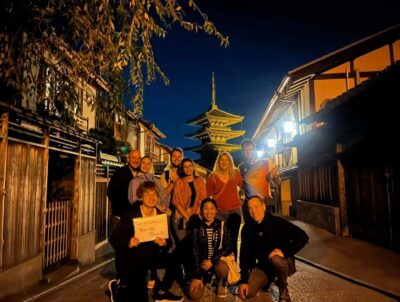
Gion Magical Night Walking Tour with Geisha Trivia
Read our review →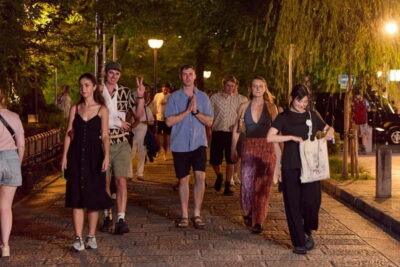
Gion Geisha District Walking Tour – Stories of Geisha
Read our review →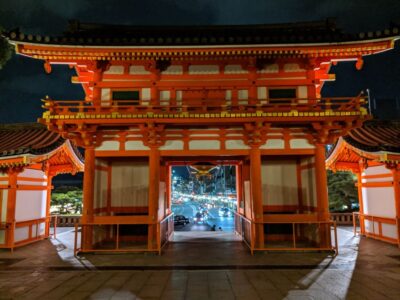
Best of Kyoto: Gion, Geisha, Pagodas & Cobblestones
Read our review →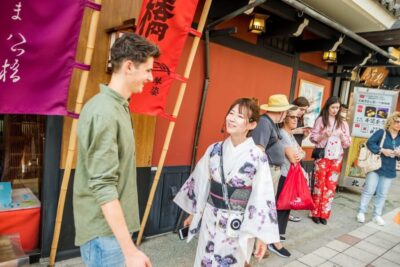
Kyoto Night Foodie Tour in Gion (9+ dishes + 6 Sake tastings)
Read our review →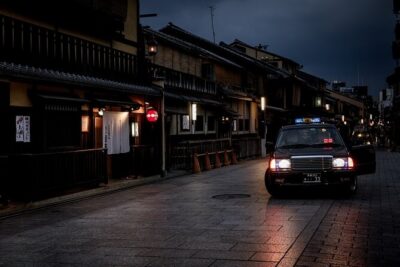
Kyoto Gion Geisha District Walking Tour – The Stories of Geisha
Read our review →
Kyoto Gion: 2-Hour Geisha Culture & History Walking Tour
Read our review →Browse the lists this tour appears in