
Reviewed · WORKSHOPS
Fish cutting class
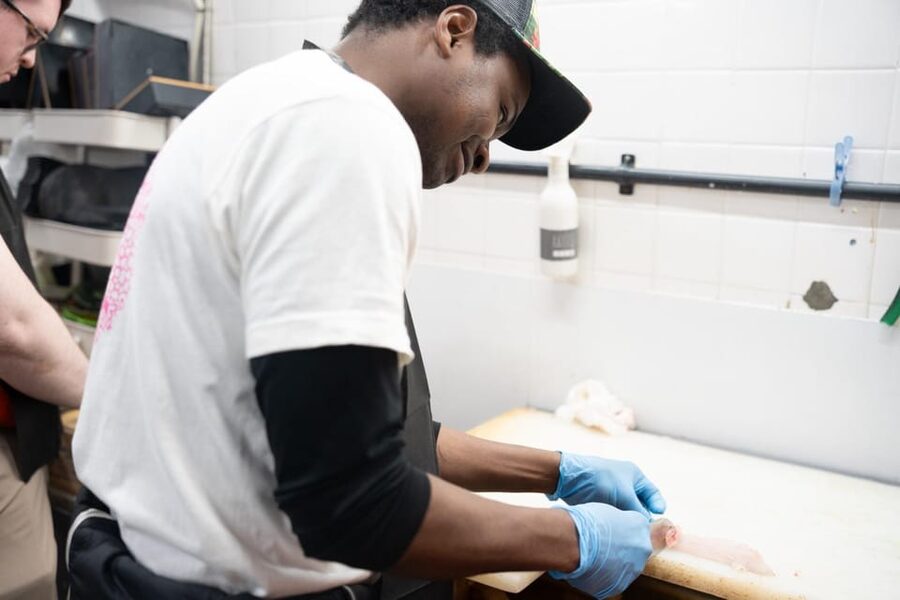
The most memorable part of this Kyoto food class is also the messiest: you start with a whole fish, learn to fillet it, then eat the fish you prepared. I like the setting, a fish shop in Nishiki Market that has been operating for 400 years, and the small group size, capped at eight people. It feels more useful than a standard sushi-rolling lesson because you learn the preparation that comes first.
I also like the way instructor Masashi gives careful, hands-on corrections instead of simply demonstrating and moving on. The main drawback is that fish cutting requires focus, knife work, and clothes that can get dirty. This is not the best choice if you want a quick, tidy tasting or if raw fish is not your thing.
Key points to know before booking
- You cut the fish from the beginning: This is a fish-preparation class, not just a sushi-making demonstration.
- The setting is Kimura fish shop: Meet inside a Nishiki Market shop with 400 years of business behind it.
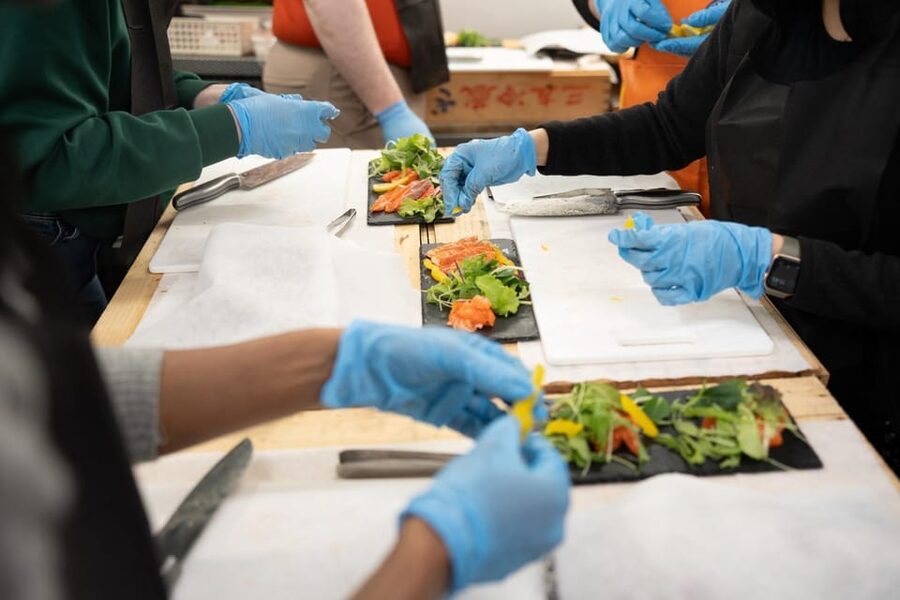
- You eat your own work: The class ends with sashimi, carpaccio, rice, and sauces made from the fish you handled.
- Masashi teaches in English: He demonstrates first, then guides each participant through the knife work.
- Small groups keep it practical: A maximum of eight people leaves room for individual help.
- Dietary options are available: Gluten-free and halal soy sauce can be provided if you ask in advance.
Why this Kyoto class is different from a sushi workshop
Kyoto offers plenty of food classes, but many focus on assembling sushi. This one begins earlier in the process. You learn what happens before fish reaches the neat slices on a restaurant plate.
That difference matters. Filleting a fish forces you to pay attention to its shape, bones, skin, and texture. You are not just following a recipe. You are learning a basic skill that helps explain why Japanese sashimi is cut with such care.
I like this direct approach. You handle the ingredient, work with a knife, and then taste the result. The meal is not separate from the lesson. It is the reward for doing the work.
The class takes place at Kimura fish shop in Nishiki Market. The shop’s long history gives the activity a strong sense of place without requiring a formal museum-style tour. You are learning food preparation in a working fish shop, not in a generic cooking studio.
That setting may be especially appealing if you have already walked through Nishiki Market and want to understand more about the seafood sold there. It also gives the class a distinctly Kyoto feel. The market is not just your meeting point. It forms part of the experience.
More craft workshops in Kyoto:
- Kyoto: 45-Minute Tea Ceremony Lesson Experience
★ 4.3 · 2,378 reviews - Ramen Cooking Class at Ramen Factory in Kyoto
★ 5.0 · 1,937 reviews - Kyoto : Chopsticks Making Workshop in Gion with Engraving Option
★ 5.0 · 958 reviews
Your first steps inside Kimura fish shop
Look for the blue and orange aprons at Kimura. The class is conducted in English, and the instructor begins by introducing himself and explaining how the session will run.
The shop setting is practical. You should not expect a polished restaurant classroom with lots of space around each work station. This is a fishmonger’s shop, so wear clothes that can handle splashes and food stains. An apron and rubber gloves are provided, along with the knife you use during the class.
The experience lasts 150 minutes, which gives the lesson enough time to move at a reasonable pace. You are not rushed through a quick demonstration. The structure allows you to watch, try the technique yourself, receive corrections, and then prepare the finished dishes.
The group limit of eight is important here. Knife skills are much easier to learn when the instructor can see what each person is doing. The small format also gives you a chance to work alongside other people without turning the class into a crowded production line.
Watching the fish being filleted
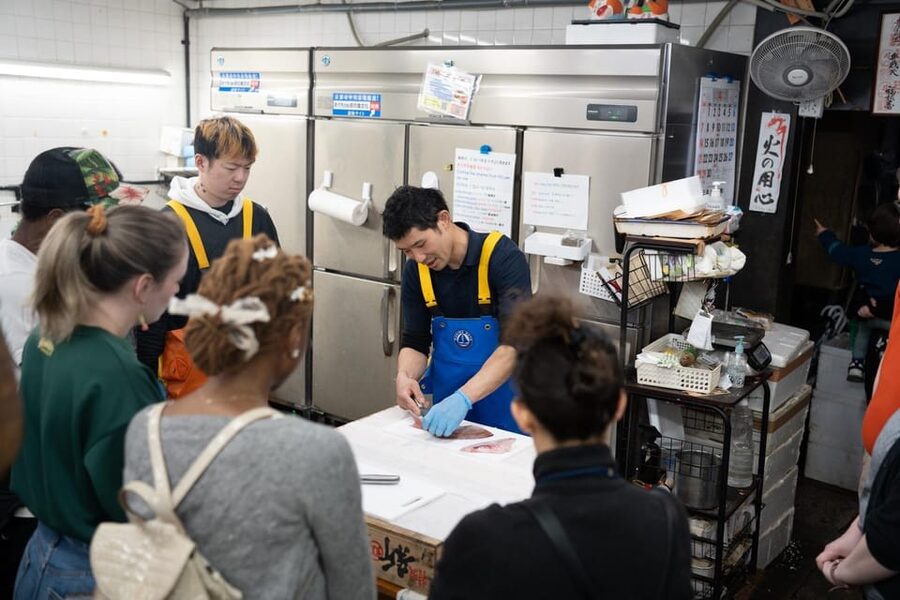
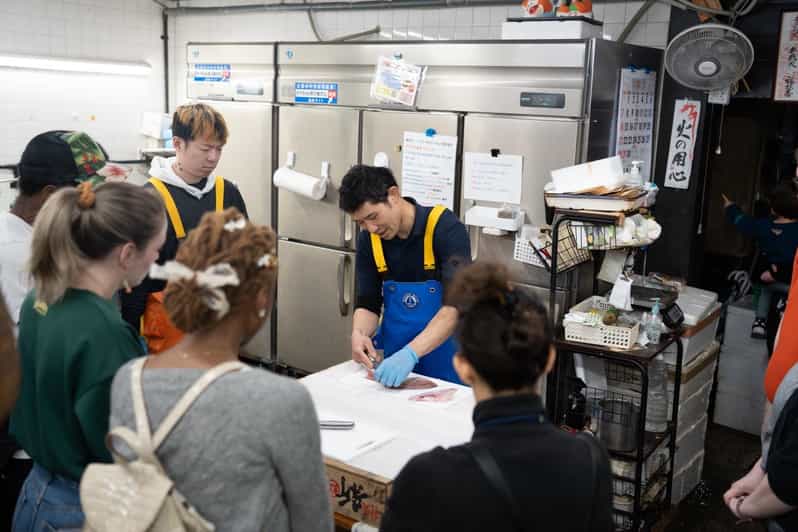
Masashi first fillets a fish while you watch. This demonstration is the foundation of the class, so pay close attention to the angle of the knife and the way he handles the fish.
At this stage, you can see the difference between simply slicing a fillet and preparing a fish properly. The technique may look simple when an experienced fishmonger does it, but it involves controlled movements and attention to the bones.
The class is designed for beginners, so you do not need previous fish-cutting experience. Still, beginner-friendly does not mean effortless. You will need to concentrate and accept that your first cuts may not be as neat as Masashi’s.
This is where the class earns its value. You are not expected to produce professional sushi-shop results. You are being shown the basic skills clearly enough to understand what you are doing and to practice the process yourself.
One participant described the class as especially useful for learning basic ingredient preparation and knife handling, rather than just assembling finished sushi. That is a good way to think about the session. You are learning a foundation, not trying to become a sushi chef in one afternoon.
Your turn with the knife
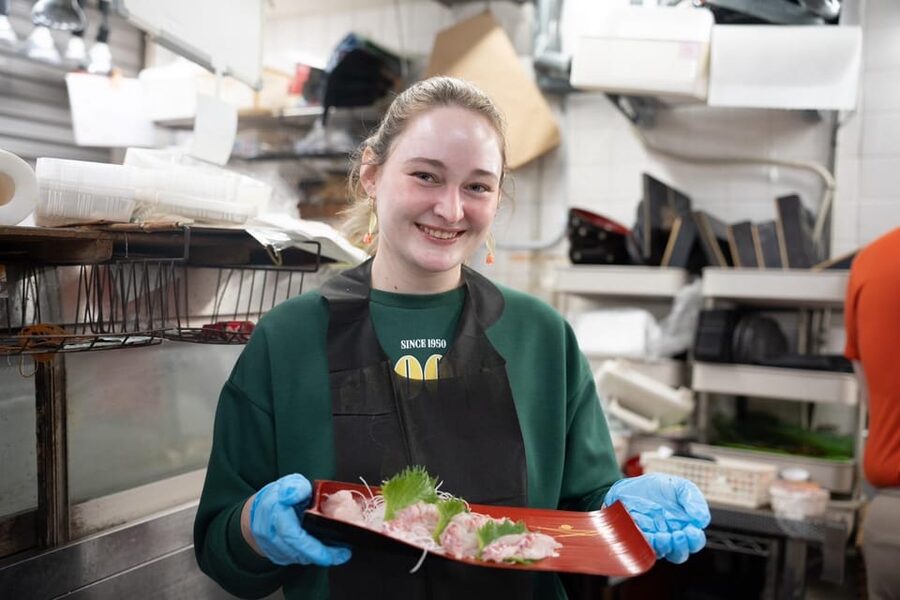
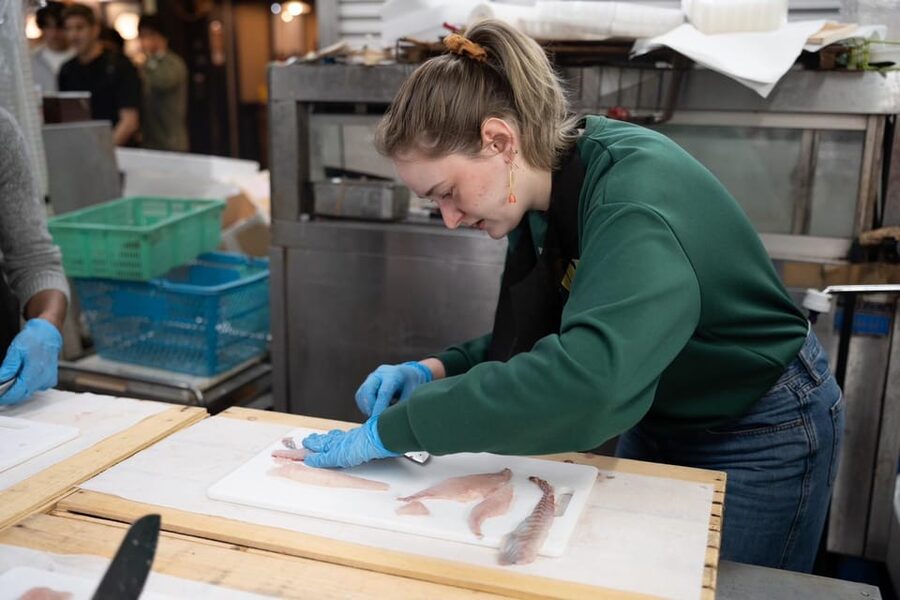
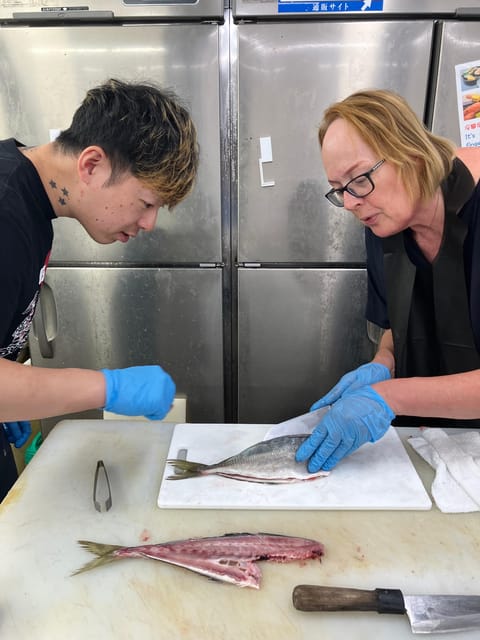
After the demonstration, you fillet your own fish. Masashi guides the process carefully and corrects mistakes as they happen. That direct help is valuable because knife technique is difficult to understand from spoken instructions alone.
You will probably find that the fish feels less cooperative than expected. It has an uneven shape, bones, and a slippery surface. That is part of the lesson. Handling the fish yourself gives you a better sense of the skill involved in professional preparation.
The work also makes the final meal more satisfying. You are not eating a dish prepared entirely by somebody else. You have taken part in the work from the raw ingredient onward.
A commemorative photo with the fish is included as part of the experience. It is a small touch, but a useful one. You can capture the unusual starting point before the fish becomes a plate of sashimi.
Wear practical clothes and avoid anything you would be upset to stain. An apron and rubber gloves are supplied, but they do not make this a perfectly clean activity. The class rules also state that nudity is not allowed, a straightforward reminder that this is a normal food workshop with ordinary dress expectations.
A few more Kyoto tours worth putting on the shortlist
- PERFECT KYOTO 1-Day Bus Tour
★ 5.0 · 13,518 reviews - Kyoto: Fushimi Inari, Kinkakuji, Bamboo Grove 1 Day Bus Tour
★ 4.8 · 4,316 reviews - Kyoto: Tea Ceremony in a Traditional Tea House in Kiyomizu
★ 4.9 · 3,519 reviews - Kyoto Geisha Walking Tour: Gion District & Hidden Gems
★ 4.7 · 3,273 reviews
Turning the fillet into sashimi and carpaccio
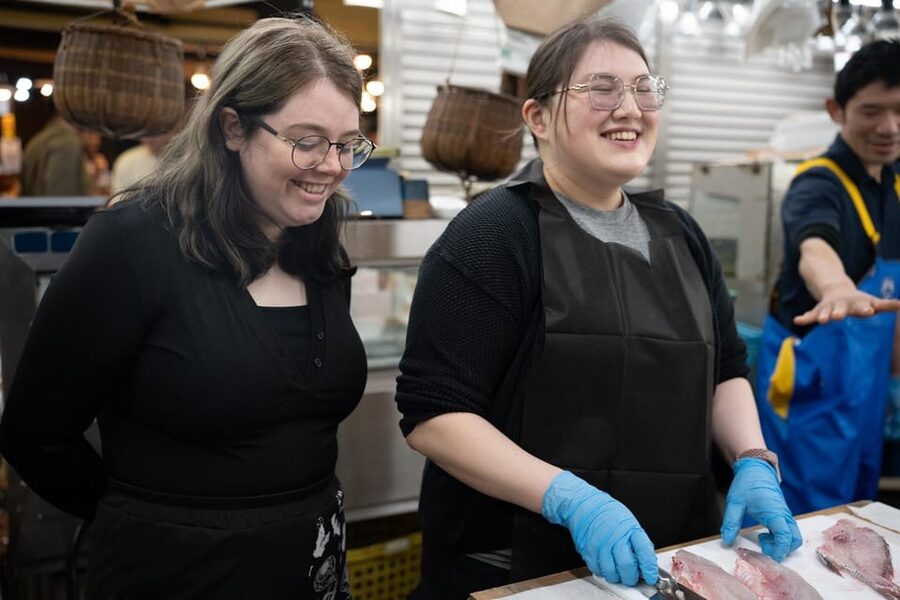
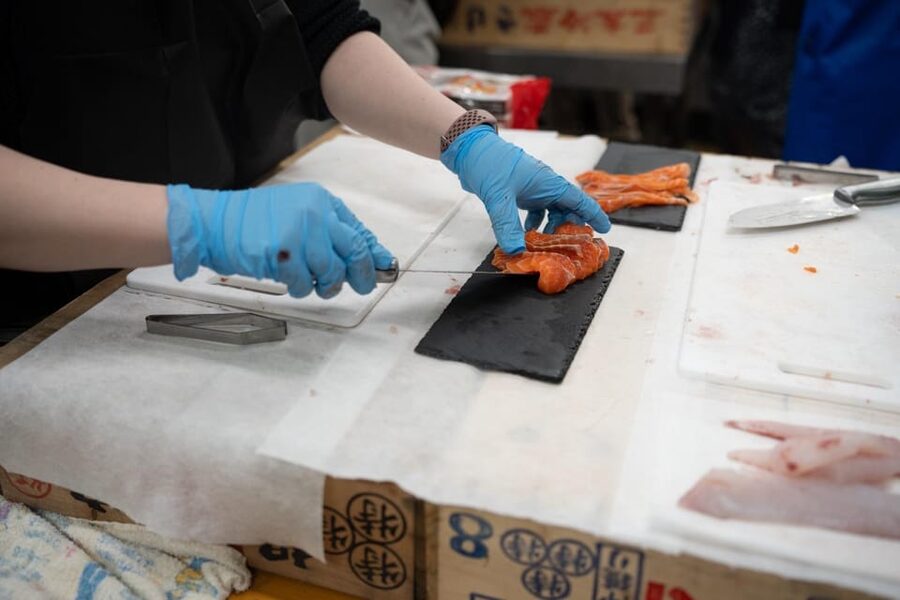
Once the fish has been filleted, you use it to make sashimi. This is the moment when the earlier knife work begins to make sense. The cuts need to be neat enough to serve and attractive enough to eat as sashimi.
You also prepare carpaccio from the fish. That gives you two different ways to experience the same ingredient. Sashimi keeps the preparation simple and direct, while carpaccio adds sauce and a different style of presentation.
Rice is included, along with soy sauce and carpaccio sauce. The fish you handle is included in the price as well, so you are not paying $77 for instruction alone and then buying lunch separately.
Some sessions may include additional dishes such as miso soup or tempura, as one class participant experienced. Since the stated activity focuses on sashimi and carpaccio, you should treat those extra dishes as possible additions rather than guaranteed parts of every class.
This is also the point where freshness becomes more than a marketing word. You have just prepared the fish yourself, and you can connect the taste with the work involved. The class gives you a practical reason to slow down and notice texture, cut, sauce, and seasoning.
Eating the meal you prepared
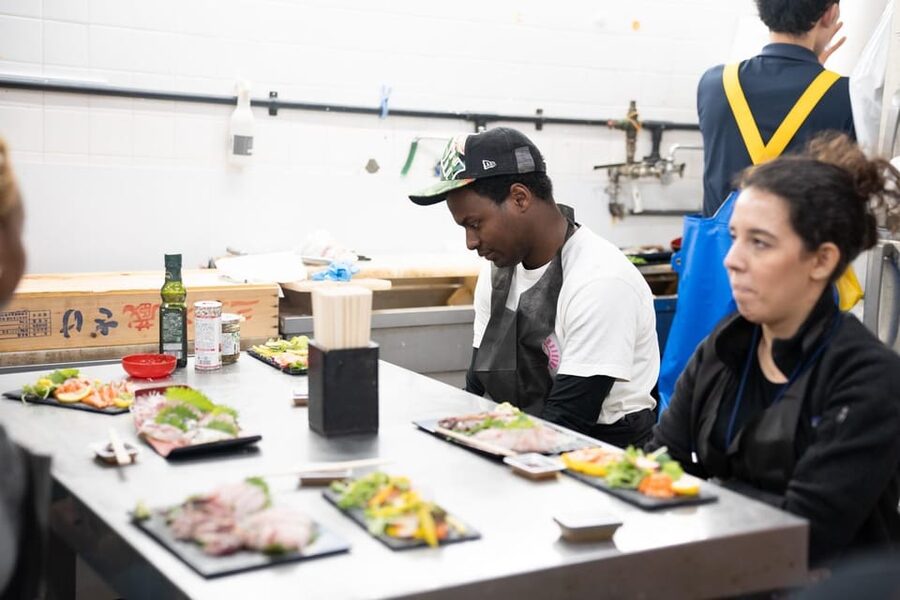
The class ends with lunch. You eat the sashimi and carpaccio you made, along with rice. Beer and other alcohol are not included, so plan on a food-focused meal rather than a drinks pairing.
The portion can be generous. One participant found there was more sashimi than they could finish. That may be welcome if you enjoy raw fish, but it is worth considering before booking. This is not a small tasting menu designed for someone who only wants one or two bites.
The meal also gives you time to appreciate the difference between seeing a technique and doing it. A professional fishmonger can make the process look effortless. Your own plate shows the less polished, more personal side of the work.
I like this finish because it avoids the common problem with short cooking workshops: you make something, take a quick taste, and leave before you can enjoy it. Here, eating is built into the class. The meal gives the lesson a clear ending.
If you want to take a commemorative photo, this is also a natural time to do so, along with the earlier photo opportunity involving the fish.
What $77 includes and what it does not
At $77 per person, the price is reasonable for a 150-minute small-group class in central Kyoto, especially because the fish, rice, equipment, protective clothing, soy sauce, and carpaccio sauce are included.
You also receive the knife used during the lesson and the fish you prepare. The value is strongest if you care about learning a practical food skill, not simply eating lunch.
The price is less attractive if your main goal is a large restaurant meal or a polished cooking show. This is hands-on work, and some of your time goes into preparation, cleaning, and learning basic technique. You are paying for instruction and participation as much as for the food.
Alcohol is not included. Transportation to and from the shop is also not provided. You meet at Kimura fish shop in Nishiki Market, and there is no hotel pickup or return service listed.
The flexible booking terms help if your Kyoto schedule is still moving. You can reserve now and pay later, and cancellation is free up to 24 hours before the activity for a full refund.
Dietary details and who should book
The class can provide gluten-free soy sauce and halal soy sauce. Contact the provider before the class if you need one of these options, rather than waiting until you arrive.
The central food is fish, and the class involves handling and eating it raw as sashimi. You should book only if that sounds appealing. If you dislike raw fish, the carpaccio may offer a different preparation, but the activity is still built around fish cutting and sashimi.
Beginners are welcome. You do not need prior knife skills, and Masashi’s teaching style includes correcting mistakes as you work.
The minimum age is 10. Children under 10 cannot take part, and the knife work means older children should be comfortable following careful instructions.
This class suits you best if you:
- Want a food activity connected to Japanese preparation methods
- Prefer doing the work yourself to watching a demonstration
- Enjoy sashimi and other raw fish dishes
- Like small-group classes with individual guidance
- Want a distinctive Nishiki Market experience
- Are curious about knife handling and basic filleting
It may not suit you if you want a relaxed sightseeing stop with no mess, if you need a fully vegetarian activity, or if you prefer not to handle raw fish.
Should you book the fish cutting class?
Book it if you want to understand Japanese food culture through preparation, not just consumption. The 400-year-old fish shop, small group, English instruction, and meal made from your own fish give the class a clear identity.
I would choose this over a standard sushi-rolling class if you already know how to assemble sushi or want a more basic lesson in handling ingredients. Masashi’s individual corrections are especially useful for beginners who want to remember the technique after returning home.
Skip it if you are looking for a quiet, polished lunch or if raw fish and knife work do not appeal to you. For the right person, though, the best part is simple: you learn where sashimi begins, then sit down and eat the result.
FAQ
Where does the fish cutting class take place?
The class takes place at Kimura fish shop in Nishiki Market in Kyoto, on Honshu.
How long does the class last?
The activity lasts 150 minutes.
How much does the class cost?
The listed price is $77 per person.
Is the class taught in English?
Yes. The instructor teaches in English.
Who teaches the class?
The instructor is Masashi.
How many people can join?
The class is limited to eight participants.
Is previous fish-cutting experience required?
No. Beginners are welcome.
What food is included?
The fish you handle, rice, soy sauce, carpaccio sauce, sashimi, and carpaccio preparation are included. Some sessions may also feature dishes such as miso soup or tempura.
Are equipment and protective clothing provided?
Yes. A knife, apron, and rubber gloves are provided.
Can I request special soy sauce?
Gluten-free soy sauce and halal soy sauce are available. Ask the provider about your needs before the class.
What should I wear?
Wear clothes that can get dirty.
Are children allowed to participate?
Children under 10 are not permitted to join.
Is alcohol included?
No. Beer and other alcohol are not included.
Can I cancel for a refund?
You can cancel up to 24 hours in advance for a full refund.
Can I reserve without paying immediately?
Yes. The reserve now and pay later option lets you book the class without paying at the time of reservation.
Newest Kyoto experiences on the site
- Treasures of Kyoto: Gion & historical Walking Tour★ 5.0 · 6 reviews
- Whisk Your Own Matcha: A Zen Matcha Experience at Temple★ 3.6 · 7 reviews
- Kyoto tea town for matcha lovers★ 5.0 · 16 reviews
- Uji: Private immersion into Kyoto’s tea and reglious culture★ 5.0 · 17 reviews
- Kyoto Matcha Green Tea Tour★ 4.5 · 23 reviews
- Uji and Wazuka Matcha Farm Half Day Private Guided Tour★ 5.0 · 21 reviews
- Utilising upcycled Matcha! Creating matcha incense (Uji, Kyoto)★ 5.0 · 6 reviews
- Sacred Temple Yoga Experience in Japan★ 5.0 · 3 reviews
Workshops, compared.
Ramen Cooking Class at Ramen Factory in Kyoto
Read our review →
Chopsticks Making Workshop in Gion with Engraving Option
Read our review →
Ramen Cooking Class at a Ramen Factory with Souvenir
Read our review →
Ninja 1-hour Hands-on Lesson by Japanese master in Kyoto -Entry
Read our review →
The Original Small-Group Sushi Making Class in Kyoto
Read our review →
Japanese Washoku Bento Small Group Cooking Class
Read our review →Browse the lists this tour appears in