
Reviewed · KYOTO SAKE TASTINGS
Advanced Kyoto Insider Sake Tasting Experience
The most interesting part of this Kyoto tasting is its unusual lineup. You will sample 10 carefully chosen sakes made with old methods, inventive fermentation, and local wood, then compare how each choice changes the drink in your glass.
I like the clear focus on side-by-side tasting, and I like the practical lesson on reading real sake bottles used in restaurants. The main caution is simple: snacks are not included, so eat lunch or brunch first, and do not arrive by car or bicycle if you want to drink.
Key points at a glance
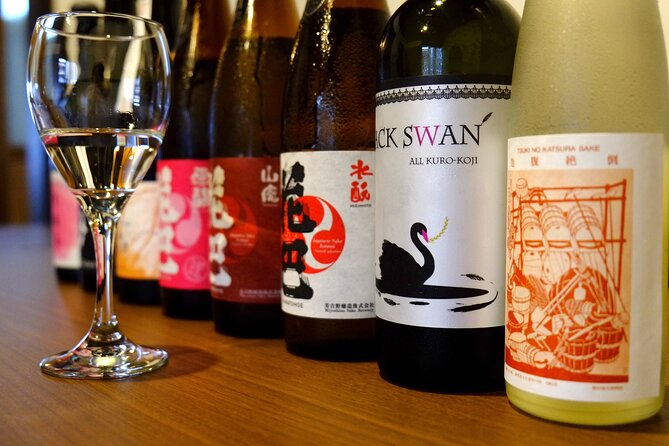
- Ten sake samples: Taste a wide range of bottles selected for unusual methods and distinct flavors.
- Beyond the basics: Learn how brewing ideas, ingredients, microorganisms, and local wood affect sake.
- Small expert-led class: The dedicated tasting room holds a maximum of 12 people.
- Useful bottle skills: Practice reading labels so restaurant sake lists become less mysterious.
- Good for mixed experience levels: Beginners can follow the class, while regular sake drinkers get more technical detail.
- Plan before you arrive: The experience lasts about two hours, costs $74.64 per person, and does not include food.
Why this Kyoto sake class takes a different route
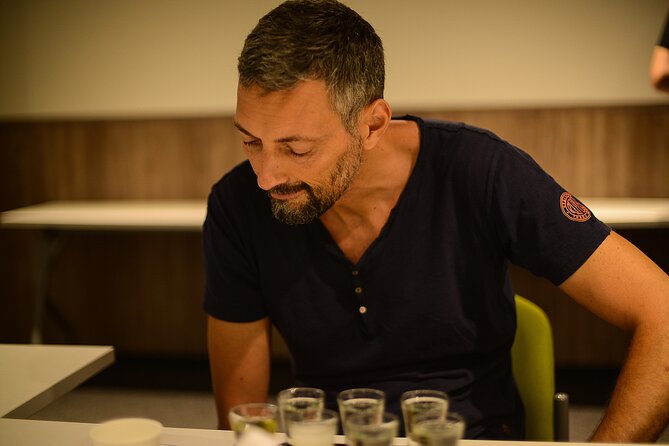
Many sake tastings are built around categories such as dry, sweet, fragrant, or rich. This one goes further by asking you to compare the ideas behind each bottle. That makes the experience less about drinking ten unrelated samples and more about seeing how production decisions shape flavor.
You will learn the basic stages of sake production and the main styles, but the class is aimed at people who want more than an introduction. The real subject is variation. Ancient brewing techniques may produce a different character from modern fermentation methods. Sake made with local wood can carry another regional note.
That approach gives you a better way to think about nihonshu. Instead of asking only if you like a particular bottle, you can begin asking why it tastes the way it does. Was the brewing method traditional or experimental? Did the ingredients or fermentation process push the sake toward fruit, earth, dryness, sweetness, or a fuller body?
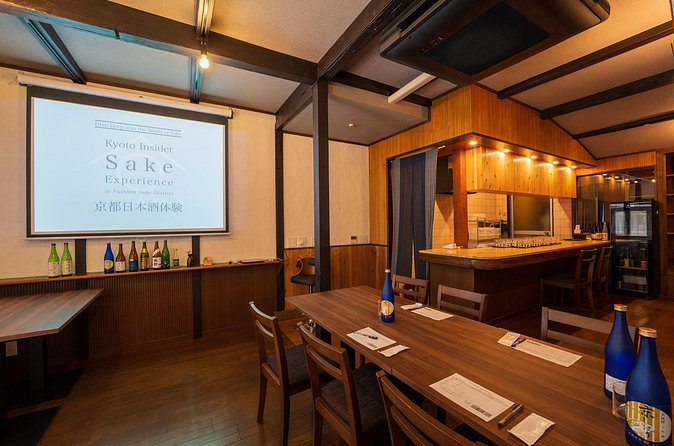
The setting is a dedicated tasting room in Kyoto’s Fushimi Ward. The address is 271-1 Kurumamachi, and the activity starts and ends there. You are not moving between several breweries, restaurants, or bars. That may sound less scenic, but it keeps the two-hour session focused and gives the instructor room to explain each pour.
More sake tastings in Kyoto:
- Kyoto Night Foodie Tour in Gion (9+ dishes + 6 Sake tastings)
★ 5.0 · 1,762 reviews - 3-Hour Kyoto Insider Sake Brewery Tour with Tastings & Pairings
★ 5.0 · 917 reviews - Arashiyama Bamboo, Temple, Monkeys, or Secret Sake Brewery
★ 4.8 · 886 reviews
Ten pours built for comparison
The tasting includes ten sake samples, selected for differences in brewing method and flavor. The exact bottles can change, so you should think of the lineup as a lesson in contrast rather than a fixed checklist of labels.
The number matters. With only three or four samples, you can enjoy the drinks but may not notice wider patterns. Ten gives you enough points of comparison to see how production choices affect aroma, texture, sweetness, dryness, and finish.
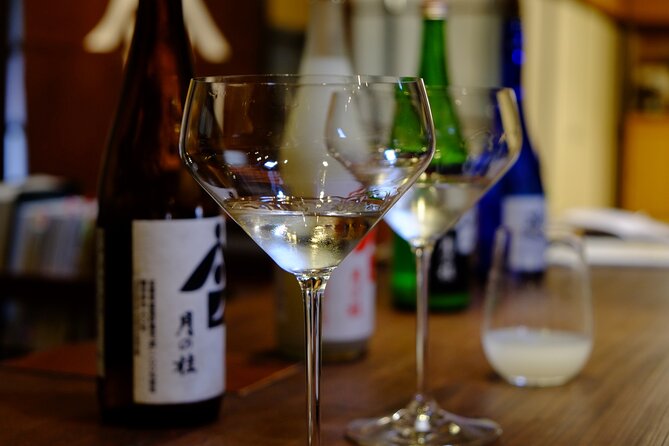
You may taste sake made through older techniques that challenge the modern idea of how the drink should be produced. You may also try bottles that use controlled fermentation in creative ways, showing how microorganisms can guide the final flavor. Another part of the selection focuses on local wood, which gives the sake a distinct sense of place.
The point is not to decide that one method is always best. Good sake can come from several approaches, and each method brings trade-offs. A traditional process may produce a flavor that feels earthy or unusual. An inventive fermentation may create a cleaner or more striking profile. Wood can add a regional character that changes how you read the drink.
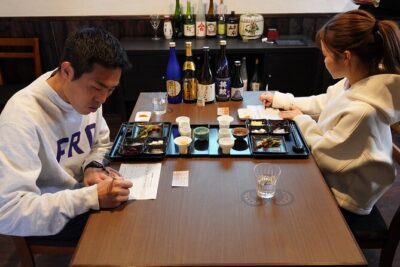
A useful tasting habit is to compare two samples before moving on. Notice which one feels lighter, which has more aroma, and which lingers longer. The instructor guides this process, so you are not left trying to invent a vocabulary from scratch.
What the sake lessons cover
The class explains sake styles, brewing methods, and flavor structure. You will get the basic framework first, then use the ten samples to test what you have learned.
That structure helps if sake labels usually leave you puzzled. You may have seen terms on bottles or restaurant menus without knowing what they tell you. Here, you practice reading actual bottles and labels used in restaurants. This is one of the most useful parts of the session because it connects the classroom to your next meal in Japan.
You will also learn that sake is not defined by a single taste. Some bottles may seem delicate and fragrant, while others may feel fuller, earthier, or more forceful. The class gives you a way to describe those differences without relying only on the vague phrase I like it.
The lesson also gives you a better sense of how brewing philosophy affects the drink. Two bottles can both be called sake, yet taste surprisingly different because of the rice, fermentation, wood, or production method. That is the central idea running through the experience.
This makes the class useful even if you do not plan to become a sake expert. You will leave with a clearer sense of what to order, how to compare bottles, and how to recognize the styles that suit your own taste.
A good fit for beginners and regular sake drinkers
The experience is described as advanced, but it is not limited to specialists. The fundamentals are included, and the instructor explains the process rather than assuming that you already know sake terminology.
If you are new to sake, the ten samples may feel like a lot of information in two hours. Still, the comparison format gives you a clear path through the tasting. You do not need to arrive with a trained palate. Curiosity is enough.
If you already drink sake, the unusual production methods are the main reason to book. Standard restaurant pours may have taught you what kinds of sake you prefer, but this class asks you to reconsider those preferences through less common examples.
It also works for a group with mixed experience. One person can learn the basics while another picks up more advanced detail about fermentation and brewing choices. The class does not require every member of your party to begin at the same level.
The maximum group size is 12 people. That is small enough for an interactive class rather than a large tasting where you simply listen and wait for the next sample. The actual atmosphere will depend on the group, but the capacity supports questions and conversation.
Same city, a completely different kind of day:
- PERFECT KYOTO 1-Day Bus Tour
★ 5.0 · 13,518 reviews - Kyoto: Fushimi Inari, Kinkakuji, Bamboo Grove 1 Day Bus Tour
★ 4.8 · 4,316 reviews - Kyoto: Tea Ceremony in a Traditional Tea House in Kiyomizu
★ 4.9 · 3,519 reviews - Kyoto Geisha Walking Tour: Gion District & Hidden Gems
★ 4.7 · 3,273 reviews
Why the dedicated tasting room matters
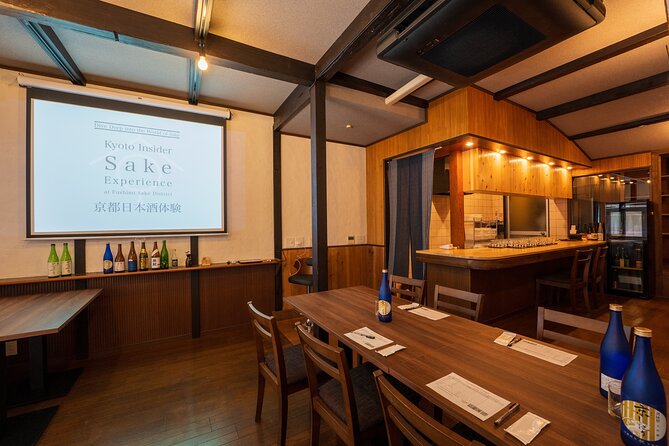
The class takes place in its own tasting room at the meeting address. That practical detail shapes the experience. You are not distracted by a busy restaurant service, and the instructor can arrange the bottles and samples around the teaching.
A dedicated room also suits the comparison method. With ten pours, you need time to look at labels, listen to explanations, taste, and revisit what is in the glass. A fixed location makes that sequence easier to follow.
The trade-off is that this is not a brewery tour. You should not expect a walk through production rooms or a broad sightseeing program in Fushimi. The value comes from guided tasting and explanation, not from visiting several sites.
The activity lasts about two hours. That is long enough for a serious lesson but short enough to fit beside other Kyoto plans. I would place it before dinner only if you eat first. Since food is not included, arriving hungry is a poor idea, especially when the focus is ten alcoholic samples.
Price and what you receive for $74.64
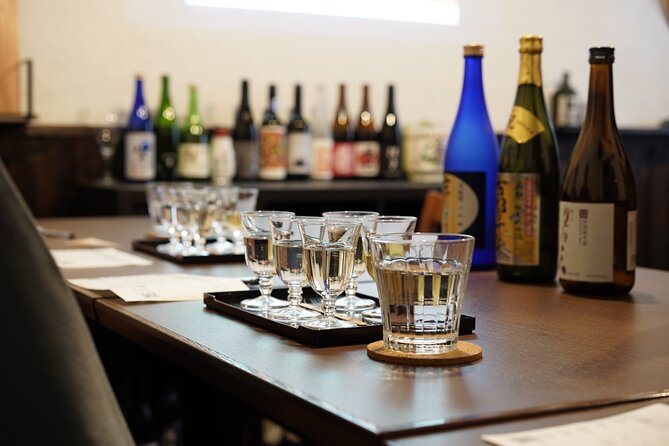
At $74.64 per person, this is not a casual drink stop. You are paying for ten samples, an expert-led lesson, printed tasting notes or reference material, and guided practice with sake labels.
The value depends on how you use the information. If you only want to enjoy a glass of sake, a bar may cost less and give you more freedom. If you want to understand why bottles differ and learn how to make better choices later, the class offers more lasting value.
Ten carefully selected samples also make the price easier to assess. You are not paying for one premium pour and a short explanation. You are tasting across a broad range of methods, with the instructor helping you compare them.
The reference materials are another practical benefit. They give you something to consult after the class, when you are facing a Japanese menu or choosing a bottle as a gift. The lesson is designed to help you make decisions later, not just enjoy the session in the moment.
Still, remember what is missing. Snacks and food pairings are not included. Plan brunch or lunch before the class, and budget separately for dinner or any additional drinks afterward.
The food question and responsible drinking rules
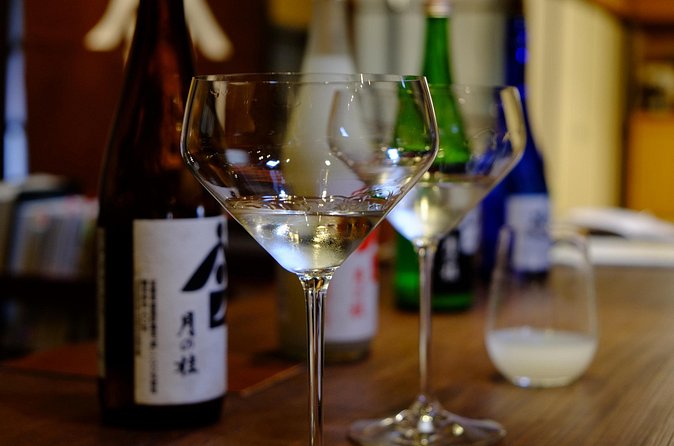
The operator recommends eating lunch or brunch before you arrive. Take that advice seriously. The tasting includes ten sake samples, and the session is about comparing flavor rather than consuming quickly.
You must be at least 20 years old to drink. That is Japan’s legal drinking age. People under 20 will receive non-alcoholic drinks instead, but children and people who are not participating cannot simply tag along without reservations.
There is also a firm transport rule. For safety and legal reasons, alcohol will not be served to anyone who arrives by car or bicycle. Non-alcoholic drinks are available, but there is no refund if you lose access to the sake tasting because of your transport choice.
Use public transportation or arrange another safe way to arrive. The meeting point is near public transportation, which makes that the sensible option. Since the session ends back at the same address, you do not need to arrange a separate pickup point.
Who should book this experience
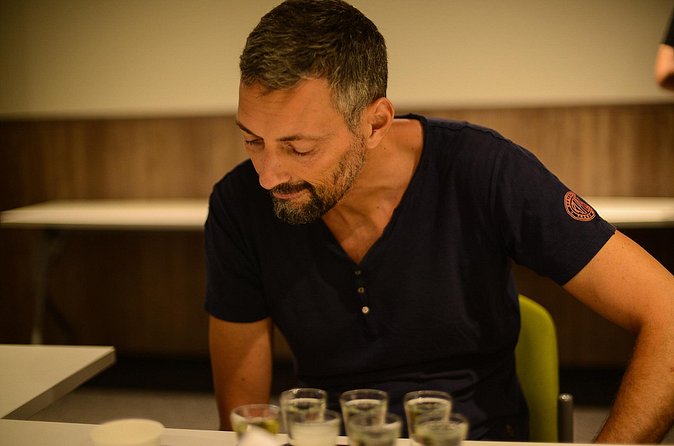
I would recommend this class to someone who already enjoys sake and wants to sharpen their taste. The focus on rare methods, fermentation, wood, and bottle labels gives regular drinkers more to think about than a basic introduction would.
It also suits a curious first-timer who likes structured lessons. You will not need prior knowledge, and the instructor covers the essentials before moving into more unusual examples.
This is especially useful for anyone planning several meals in Japan. Once you know how to read labels and compare styles, you can make more confident choices at restaurants and shops. The class may also help you explain your preferences to a server instead of pointing at a bottle and hoping for the best.
I would be less likely to choose it for someone who dislikes technical explanations or wants a relaxed drinking session with food. The tasting is built around learning, comparison, and discussion. There are no included snacks to soften the formal structure.
It may also be the wrong choice if you want a wider Fushimi sightseeing program. You meet at one location, complete the class there, and finish at the same place. The experience is focused rather than touristic.
Booking, timing, and cancellation details
The average booking time is 11 days ahead, so reserve early if your Kyoto schedule is fixed. The group limit is 12 people, and large parties should contact the operator if the available space does not cover everyone.
You receive confirmation at booking, and the ticket is mobile. That keeps arrival simple, though you should still check the address carefully before setting out.
Free cancellation is available up to 24 hours before the start time for a full refund. Changes or cancellations made within 24 hours are not accepted and are not refunded. Cutoff times use Kyoto local time.
The activity may also be canceled if the minimum number of participants is not met or if poor weather affects the operation. In that case, you will be offered another date or experience, or a full refund.
Final call: should you book the Kyoto sake tasting?
Book it if you want to understand sake rather than simply drink it. The ten-sample format, unusual brewing methods, label practice, and small tasting room give you a useful framework for exploring bottles on your own.
It is a particularly good choice for experienced sake drinkers, curious beginners, and groups with mixed knowledge. Eat first, use public transportation, and allow two focused hours in Fushimi.
Skip it if you want food pairings, a brewery walk, or a casual bar atmosphere. At $74.64, the value comes from instruction and comparison. If that sounds worthwhile, this is a strong way to give your Kyoto sake experience more depth and direction.
FAQ
How long does the Advanced Kyoto Insider Sake Tasting Experience last?
The experience lasts approximately two hours.
Where does the sake tasting begin and end?
It begins at Kyoto Insider Sake Experience, 271-1 Kurumamachi, Fushimi Ward, Kyoto, 612-8365, Japan. The activity ends back at the same meeting point.
How many sakes will I taste?
You will taste 10 carefully selected sakes chosen for comparison.
Is the tasting suitable for beginners?
Yes. The class covers sake fundamentals while also offering more advanced information about brewing methods, fermentation, and flavor structure.
What is the maximum group size?
The activity has a maximum of 12 participants.
Are food and snacks included?
No. Snacks and food pairings are not included. Eating lunch or brunch before the session is recommended.
What is the minimum age for drinking?
You must be at least 20 years old to receive alcoholic drinks. People under 20 will receive non-alcoholic drinks.
Can I arrive by car or bicycle?
You may arrive, but alcohol will not be served to anyone who arrives by car or bicycle. Non-alcoholic drinks are available, and there is no refund if you cannot take part in the sake tasting for this reason.
Is a mobile ticket available?
Yes. The experience includes a mobile ticket, and booking confirmation is provided at the time of reservation.
Can I cancel for a full refund?
Yes, if you cancel at least 24 hours before the experience starts. Cancellations or changes made less than 24 hours before the start time are not refunded.
More Bars and Sake Stops in Kyoto
- Kyoto: Izakaya Bars Guided Walking Tour
★ 4.9 · 815 reviews - Kyoto: Insider Sake Brewery Tour with Sake and Food Pairing
★ 5.0 · 704 reviews - Kyoto Sake Brewery & Tasting Walking Tour
★ 5.0 · 623 reviews - Kyoto Bar Hopping Night Tour
★ 5.0 · 613 reviews
Newest Kyoto experiences on the site
- Treasures of Kyoto: Gion & historical Walking Tour★ 5.0 · 6 reviews
- Whisk Your Own Matcha: A Zen Matcha Experience at Temple★ 3.6 · 7 reviews
- Kyoto tea town for matcha lovers★ 5.0 · 16 reviews
- Uji: Private immersion into Kyoto’s tea and reglious culture★ 5.0 · 17 reviews
- Kyoto Matcha Green Tea Tour★ 4.5 · 23 reviews
- Uji and Wazuka Matcha Farm Half Day Private Guided Tour★ 5.0 · 21 reviews
- Utilising upcycled Matcha! Creating matcha incense (Uji, Kyoto)★ 5.0 · 6 reviews
- Sacred Temple Yoga Experience in Japan★ 5.0 · 3 reviews
Kyoto Sake Tastings, compared.
Kyoto Night Foodie Tour in Gion (9+ dishes + 6 Sake tastings)
Read our review →
3-Hour Kyoto Insider Sake Brewery Tour with Tastings & Pairings
Read our review →
Arashiyama Bamboo, Temple, Monkeys, or Secret Sake Brewery
Read our review →
Insider Sake Brewery Tour with Sake and Food Pairing
Read our review →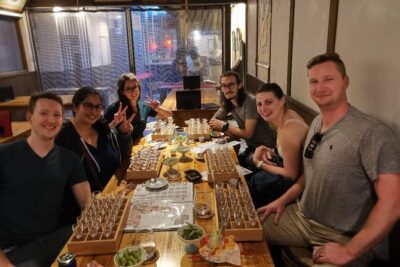
1.5-Hour Kyoto Insider Sake Experience with 7 Tastings & Pairings
Read our review →
Insider Sake Experience with 7 Tastings and Snacks
Read our review →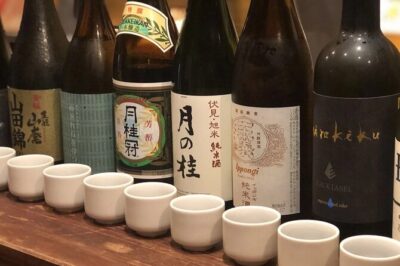
Private Tea Ceremony and Sake Tasting in Kyoto Samurai House
Read our review →Browse the lists this tour appears in