
Reviewed · KYOTO FOOD TOURS
Kyoto: Replica food making experience
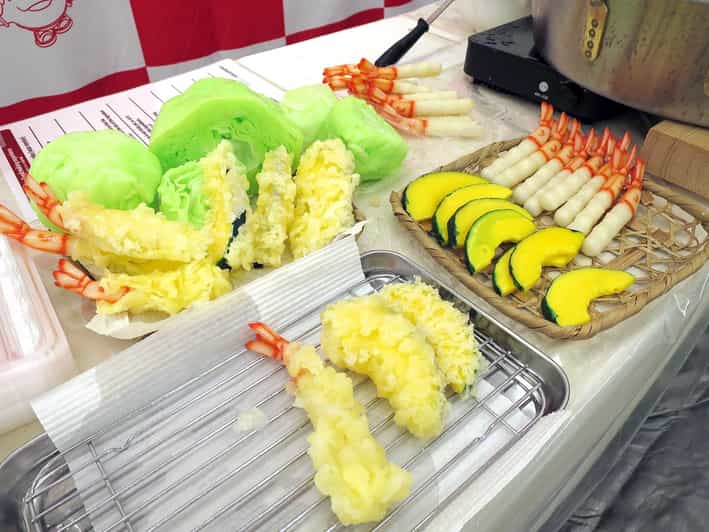
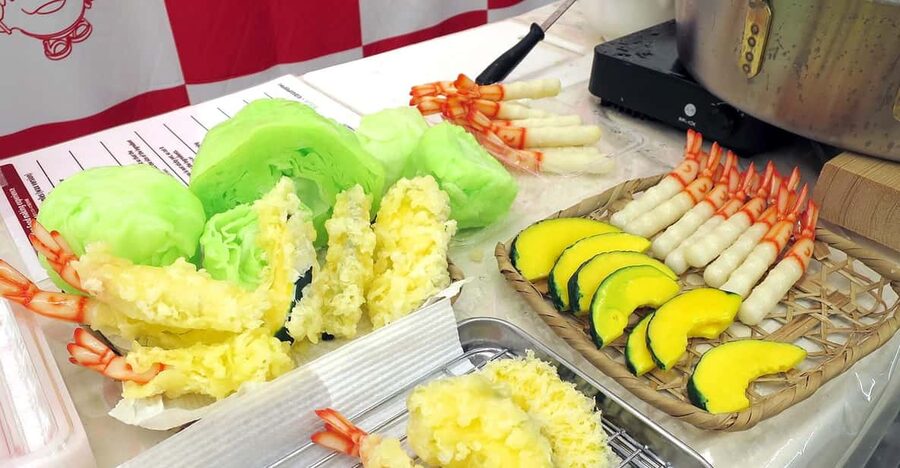
Kyoto’s restaurant displays are often filled with food that looks ready to eat. Here, you learn how those convincing replicas are made, using melted wax, hot water, and a surprising amount of hand skill. You shape shrimp and pumpkin tempura, then package the finished pieces like supermarket food.
I like the small group of four, which gives you room to ask questions and get help before the wax hardens. I also like that you leave with a real souvenir, not just a photo. The main consideration is that the wax and water are hot, so children need close help, and the activity is not suitable for anyone under six.
Key points to know before booking
- Make classic Japanese display food: Shape shrimp and pumpkin tempura with melted wax, with lettuce available as an optional extra.
- Learn a real Japanese craft: The workshop explains the replica food culture seen outside restaurants across Japan.
- Take home your own work: Your finished pieces are packed in a supermarket-style container, but they are strictly for display.
- Expect patient instruction: English and Japanese are offered, and the small group format makes the process easy to follow.
- Allow about one hour: Some sessions may finish in roughly 45 minutes, but plan around the full scheduled hour.
- Pair it with central Kyoto sightseeing: The meeting point is near the large crab sign at Kani Douraku, inside the Sanjo Meiten-gai shopping arcade and not far from Nishiki Market.
Why Kyoto’s fake food is worth your time
Food replicas, known in Japan as sampuru, are more than decoration. They help diners understand a restaurant’s menu before they sit down, especially when the menu is difficult to read or the dishes are unfamiliar. A bowl of noodles, a plate of tempura, or a colorful dessert can be understood at a glance.
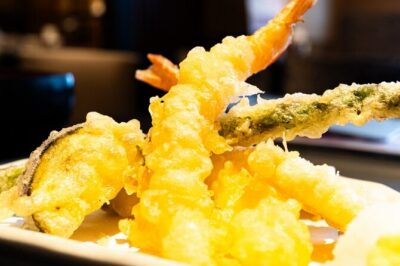
The craft also rewards close looking. A good replica needs the right color, shape, texture, and shine. Tempura batter cannot look like a smooth coat of paint. It needs irregular edges and light, crisp-looking folds. That is why the workshop feels more interesting than a simple make-and-take souvenir class.
You get a short lesson in this food culture while working with your own hands. The finished item is amusing, but the process gives you a better sense of the care behind the displays you see around Japan.
More food tours in Kyoto:
- Kyoto Night Foodie Tour in Gion (9+ dishes + 6 Sake tastings)
★ 5.0 · 1,762 reviews - Kyoto: Insider Sake Brewery Tour with Sake and Food Pairing
★ 5.0 · 704 reviews - Kyoto Nishiki Market Food and Culture Walking Tour
★ 5.0 · 412 reviews
Finding the workshop near the crab sign
The meeting point is diagonally across from Kani Douraku, the restaurant identified by its huge crab signboard. That landmark is useful in an area with many shops and signs, so I would keep the crab in mind as you make your way there.
The workshop is in the Sanjo Meiten-gai shopping arcade, with Nishiki Market close by. That makes the location handy for a half-day in central Kyoto. You can visit the market, explore the arcade, make your replica, and then continue to nearby shops and restaurants without spending much time crossing the city.
The exact meeting instruction matters. Arrive at the reserved time rather than wandering in late. The instructors explain the process to the group at once, and the wax work depends on timing. Missing the opening explanation could make the hands-on part harder to follow.
The one-hour tempura workshop
The session begins with an explanation of how replica food is made and what you will create. The main project is a tempura bowl featuring shrimp and pumpkin. You may also have the option to make a lettuce replica, depending on the workshop arrangement.
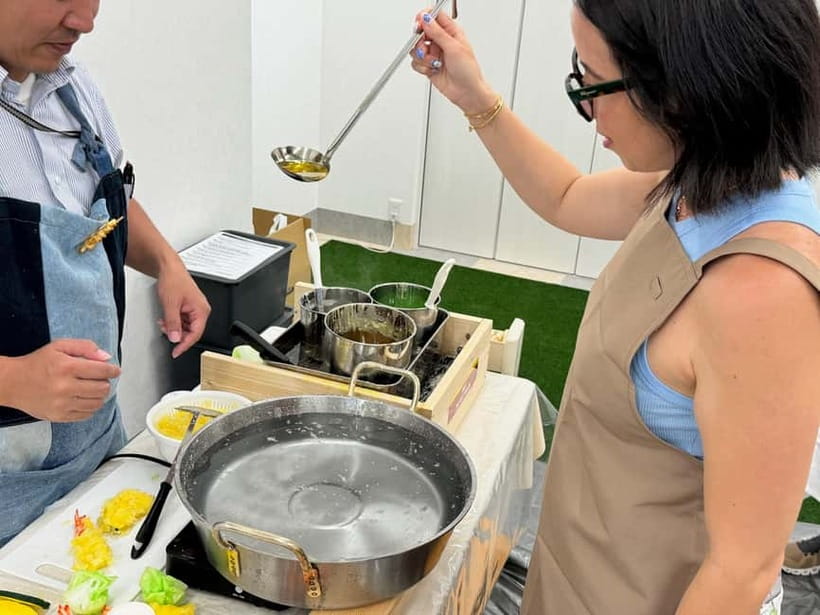
The unusual material is melted wax. You pour it into hot water, then shape it before it hardens. This is where the activity becomes a test of timing. The wax changes quickly, so you need to watch the instructor and work with purpose.
You learn how the height and movement of the pour affect the finished texture. A different pouring method can create a smoother surface or a more uneven batter edge. Those small choices help the replica look fried rather than molded.
The shrimp and pumpkin are then wrapped in the wax batter. This is not a fully automatic craft where every result looks perfect. Your pieces may have their own shape and texture, which is part of the fun. The instructors help with technique and offer tips as you work.
The session is listed as one hour, though one detailed account describes a workshop lasting around 45 minutes. I would schedule the full hour, especially if you want time for photos, questions, and careful packing.
Why the wax technique makes this more than a souvenir stop
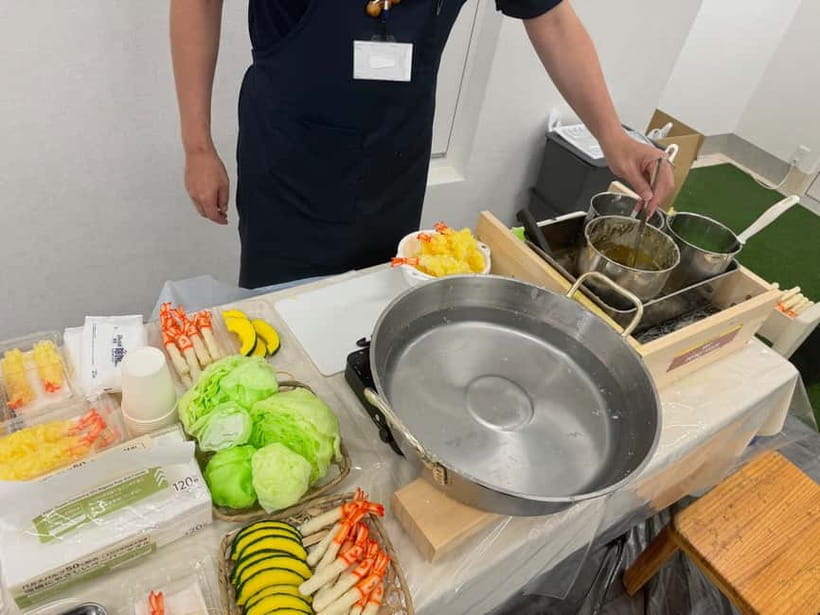
The materials give the activity its appeal. You are not simply decorating a pre-made object. You are watching a liquid material become a textured food shape in seconds, then learning how to guide it.
That process can be slightly tricky at first. If you rush, the wax may not form the texture you want. If you hesitate too long, it begins to harden. The instructors demonstrate the basic motion, and then you get a chance to try it yourself.
This also explains why the workshop needs a little concentration. It is playful, but it is not entirely passive. You need to listen, copy the technique, and accept that handmade work can have small differences.
The hot wax is the main safety point. Aprons and chef jackets may be available, and one participant recommended considering a change of clothes in case wax gets on you. Children need parental help, and the activity is not suitable for children under six.
Same city, a completely different kind of day:
- PERFECT KYOTO 1-Day Bus Tour
★ 5.0 · 13,518 reviews - Kyoto: Fushimi Inari, Kinkakuji, Bamboo Grove 1 Day Bus Tour
★ 4.8 · 4,316 reviews - Kyoto: Tea Ceremony in a Traditional Tea House in Kiyomizu
★ 4.9 · 3,519 reviews - Kyoto Geisha Walking Tour: Gion District & Hidden Gems
★ 4.7 · 3,273 reviews
Friendly teaching in English and Japanese
Instruction is available in English and Japanese. The strongest part of the teaching is the patient, hands-on approach. The instructors explain the steps clearly, demonstrate the technique, and give practical help while you work.
Communication does not need to be perfect for the activity to work. Some sessions have used simple directions, gestures, and translation apps when English and Japanese did not cover everything. The process itself is visual, so watching the demonstration carries much of the instruction.
That said, you should still arrive ready to pay attention. The wax waits for no one, and a translation app may not be quick enough to explain every movement in the moment. If you are unsure, pause and ask before pouring.
The small group limit of four is a real advantage. You are less likely to disappear in a crowd, and the instructor can notice when your batter needs help. It also suits families and couples who want a relaxed activity rather than a large class.
Taking home a convincing fake meal
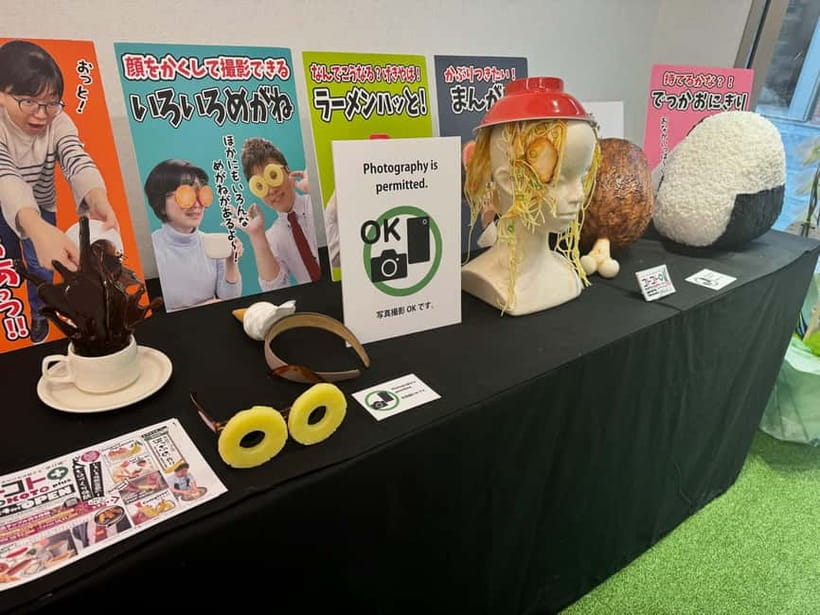
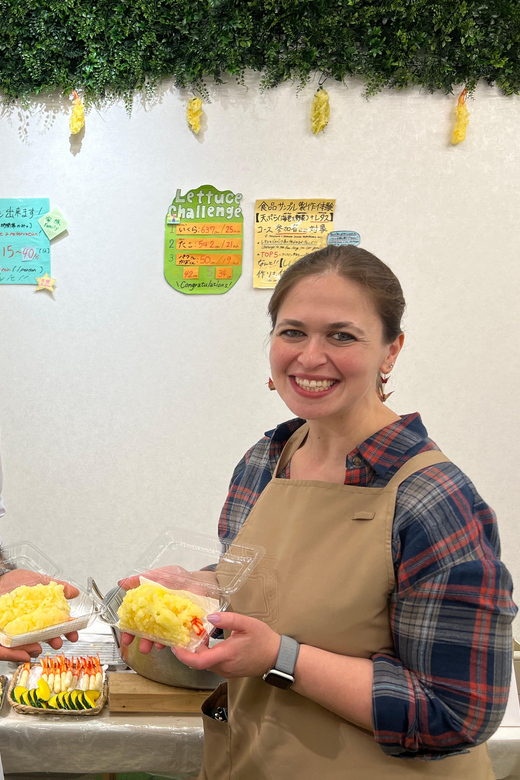
At the end, your replica food is packaged to resemble something from a supermarket or takeaway counter. That packaging is part of the charm. It makes the item feel like a tiny Japanese food product, even though the label should be clear enough to remind you that it is not edible.
The finished tempura can look surprisingly realistic. That makes it a good conversation piece at home and an easy way to show friends what you did in Kyoto. Just keep it away from the dinner table, pets, and anyone who might mistake it for actual food.
The item is also practical as a souvenir. It is smaller and more personal than many standard Kyoto gifts, and you made it yourself. If you choose the lettuce option as well, you can add another recognizable piece to the display.
One useful point is to think about luggage space. The replica is packaged for carrying, but it is still a physical object that needs some protection. One participant wished they had more room for an additional workshop, which suggests that the different food designs can be tempting if you enjoy this kind of craft.
Who will enjoy this activity most
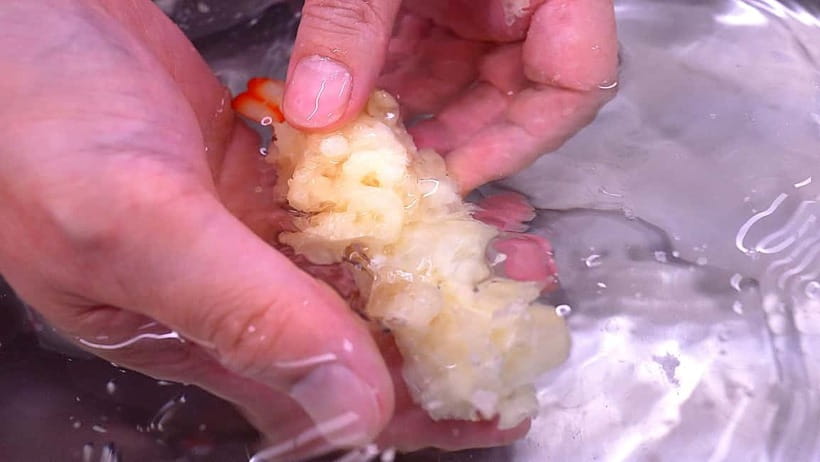
Families with children over six are a natural fit. The process is visual, the finished piece is immediate, and younger participants can take pride in carrying home something they made. Parents should expect to assist around the hot wax rather than simply watch.
Couples also have a good reason to book. The tempura bowl makes a personal honeymoon or anniversary souvenir, and the small group setting gives the session a more relaxed feel. It is also a good choice if you want a break from temples, shrines, and long walks.
Food lovers and design-minded visitors should pay attention to the details. The class connects everyday restaurant culture with craft, and it gives you a better eye for the displays you see elsewhere in Japan.
You may want to skip it if you dislike hands-on work, have very limited luggage space, or want a formal cultural lecture. The emphasis is on making, not on a long museum-style explanation. The cultural context is useful, but the main event is shaping wax.
Is $22 good value?
At $22 per person, this is a fair price for a one-hour activity that includes materials, instruction, and the replica you make. You are paying for more than a small object. You are also getting a guided introduction to a Japanese craft that is difficult to understand from a restaurant window alone.
The value is strongest when you want a souvenir with a story. A purchased trinket may be attractive, but this tempura bowl reminds you of the time you learned to pour and shape the wax. You can also take photos during the process, which adds to the memory without replacing the hands-on work.
The price may feel less compelling if you only want to see how replica food is made. In that case, restaurant displays are free to look at. The workshop earns its cost through participation, instruction, and the finished piece you carry home.
The ability to reserve now and pay later also helps if your Kyoto plans are still shifting. Free cancellation is available up to 24 hours in advance for a full refund, which gives you some flexibility when arranging a busy sightseeing schedule.
How to fit it into a Kyoto day
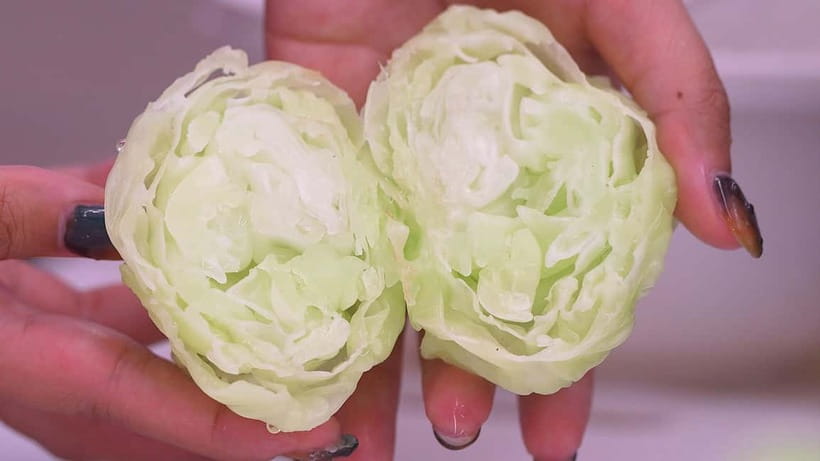
Because the workshop lasts about an hour and sits near Nishiki Market, it works well between larger sights. You can make it a planned stop during a shopping and food-focused day in central Kyoto.
Give yourself enough time to reach the crab sign and find the meeting point. The reserved start time matters, so do not cut it too close after a market visit or meal. A little spare time also lets you look around the arcade before or after the class.
This is not the sort of activity that needs a full day. It is a compact change of pace. After several hours of temples, gardens, and city walking, working with wax can feel refreshingly different.
The location also gives you an amusing food-related sequence: look at real dishes in the market, make fake tempura in the workshop, then eat a real meal afterward. The replica may leave you hungry, so plan accordingly.
What could be improved or may surprise you
The biggest surprise is how much technique is involved. The finished tempura looks simple, but getting the batter texture right takes timing and a steady hand. Do not expect every piece to look like a professional restaurant display on the first attempt.
The hot wax also means this is not a completely carefree children’s activity. The age limit is six, but younger children who attend still need close parental assistance. Adults should be prepared to help rather than assume the instructor can manage every child at once.
Language should not be a major barrier, but the workshop is practical rather than heavily verbal. English instruction is offered, yet demonstrations, gestures, and careful observation remain important. Ask questions early if you are unsure about a step.
Finally, the one-hour booking may not mean a full 60 minutes of continuous crafting. One session took around 45 minutes, while others included time for explanation, photos, and packing. That is still enough time for the project, but keep your schedule flexible.
Should you book the Kyoto replica food workshop?
I would book this if you want a short, hands-on activity with a souvenir that feels personal rather than mass-produced. The friendly instruction, four-person limit, central location, and simple but unusual wax technique make it especially good for families, couples, and anyone who wants a break from standard sightseeing.
I would be more cautious if you are traveling with a child under six, dislike hot materials, or have no space for a packaged keepsake. For everyone else, $22 is reasonable for the lesson and the finished replica.
Book it for the experience, not only the final tempura bowl. The best part is learning how a familiar piece of Japanese street and restaurant culture is made, then carrying your own slightly imperfect version home.
FAQ
What food will I make?
The main project is shrimp and pumpkin tempura made with melted wax. You may also have the option to create a lettuce replica.
How long does the activity last?
The scheduled duration is one hour. A detailed account describes one session lasting around 45 minutes, so allow the full hour when planning your day.
Where is the meeting point?
The meeting point is diagonally across from Kani Douraku, identified by its large crab signboard. The workshop is in the Sanjo Meiten-gai shopping arcade, not far from Nishiki Market.
Is the workshop available in English?
Yes. Instruction is offered in English and Japanese.
Can children take part?
Children aged six and older can take part, but parental assistance may be needed because the activity uses hot wax. Children under six are not permitted.
Can I eat the replica food?
No. The finished pieces are for display only and should not be served or eaten.
Can I cancel my booking?
Yes. You can cancel up to 24 hours before the activity for a full refund. You can also reserve now and pay later.
Newest Kyoto experiences on the site
- Treasures of Kyoto: Gion & historical Walking Tour★ 5.0 · 6 reviews
- Whisk Your Own Matcha: A Zen Matcha Experience at Temple★ 3.6 · 7 reviews
- Kyoto tea town for matcha lovers★ 5.0 · 16 reviews
- Uji: Private immersion into Kyoto’s tea and reglious culture★ 5.0 · 17 reviews
- Kyoto Matcha Green Tea Tour★ 4.5 · 23 reviews
- Uji and Wazuka Matcha Farm Half Day Private Guided Tour★ 5.0 · 21 reviews
- Utilising upcycled Matcha! Creating matcha incense (Uji, Kyoto)★ 5.0 · 6 reviews
- Sacred Temple Yoga Experience in Japan★ 5.0 · 3 reviews
Kyoto Food Tours, compared.
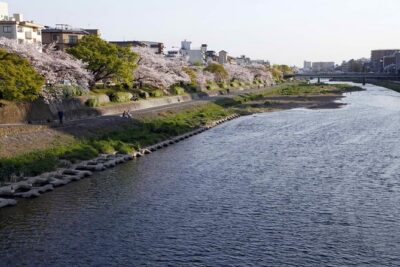
Kyoto Night Foodie Tour in Gion (9+ dishes + 6 Sake tastings)
Read our review →
Insider Sake Brewery Tour with Sake and Food Pairing
Read our review →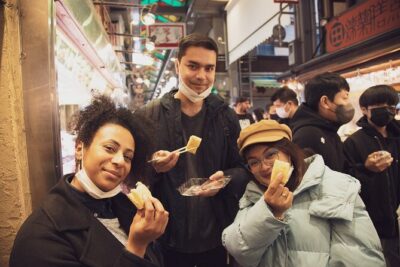
Kyoto Nishiki Market Food and Culture Walking Tour
Read our review →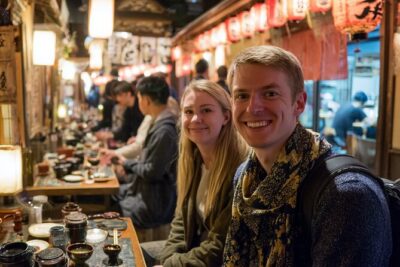
Browse the lists this tour appears in