
Reviewed · NIJO CASTLE TOURS
Kyoto: Nijo-jo Castle and Ninomaru Palace Guided Tour
Nijo Castle’s great surprise is that it feels less like a fortress and more like a carefully staged seat of power. The palace rooms, painted screens, creaking floors, and formal gates tell you how the shogun controlled a country from Kyoto. I like the way the guide turns decorative details into clues about politics and daily life, and I like the added access to areas normally closed to the public. The catch is that the 60-minute tour moves quickly, and the castle admission fee is extra.
The English-speaking guides are the heart of this experience. Guides such as Ai, Miki, Kaoru, Ayu, and Don have been praised for clear explanations, good humor, and patient answers. You will still want time afterward to wander the gardens on your own. Come early, bring water for hot weather, and remember that photography, food, and drinks are not allowed inside Ninomaru Palace.
Key points to know before you go
- See the shogun’s working palace: Ninomaru Palace preserves the rooms used for government, ceremony, meetings, and daily life.
- Look for restricted areas: The tour can include access to two spaces that ordinary castle visitors cannot enter.
- Understand the artwork: Your guide explains why animals, plants, dragons, tigers, and other images appear in particular rooms.
- Expect a political story: Nijo Castle was a center of authority and ceremony, not simply a military stronghold.
- Budget for admission: The $16 tour price does not include the castle ticket, which must be paid in cash at the site.
- Plan for the weather: Parts of the visit take place outside, and the palace has no air-conditioning.
Why Nijo Castle feels different from a typical Japanese castle
Nijo Castle was built in 1603 as the Kyoto residence of Tokugawa Ieyasu, the first shogun of the Edo Period. That date matters. The castle was not only a defensive structure. It was a statement that the Tokugawa government had authority in the imperial capital, where the emperor and court still lived.
You can see that purpose in the scale and decoration. Massive walls and moats protect the grounds, but the most memorable spaces are the formal gates, gardens, and palace interiors. The message is clear: power here depended on ceremony, rank, controlled movement, and carefully chosen images as much as on weapons.
After the Tokugawa Shogunate ended in 1867, Nijo Castle became an imperial palace. It was later given to Kyoto City and opened as a historic site. The buildings survived in unusually complete form, which helps you see how a feudal-era ruling household actually used its rooms.
The castle became a UNESCO World Heritage site in 1994. That label is useful, but it does not explain why a guide adds so much. Without help, you will see beautiful screens, polished wood, and old buildings. With help, you begin to understand who could enter each room, where people sat, what the paintings signaled, and how a visit to the shogun was managed.
More Nijo Castle visits:
- Kyoto: Nijo Castle, Kiyomizu & Fushimi Inari Guided Tour
★ 4.7 · 700 reviews - Kyoto: Nijo, Kinkaku-ji, Arashiyama, Kiyomizu & Fushimi Inari
★ 5.0 · 699 reviews - Kyoto: Imperial Palace & Nijo Castle Guided Walking Tour
★ 4.7 · 453 reviews
Entering through the East Main Gate
Your meeting point is inside the East Main Gate, at the reception area beside the General Reception. After entering, go to the left and tell the staff that you have arrived for the guided tour. The booking confirmation provides the exact meeting details and coordinates.
Give yourself extra time. The tour does not wait for late arrivals, and you must already be inside the castle grounds when it begins. You also need to pay the separate admission fee on site in cash. The tour price is $16 per person, but your total cost is higher once admission is added.
This arrangement can feel slightly awkward because you are paying for the guide separately from the attraction. Still, the price is reasonable if you want more than a self-guided walk. A basic castle visit gives you access to the site. This experience adds a structured explanation, a clear route, and access to rooms that may otherwise remain off-limits.
The tour is conducted only in English. That is important to know before booking. Headsets or earphones are provided to paid participants, which helps when the palace is crowded or the group is spread out. A paid adult may bring one child aged 0 to 12 free of charge, but the child must stay with an adult. Children do not receive an earphone unless you buy an adult ticket for them.
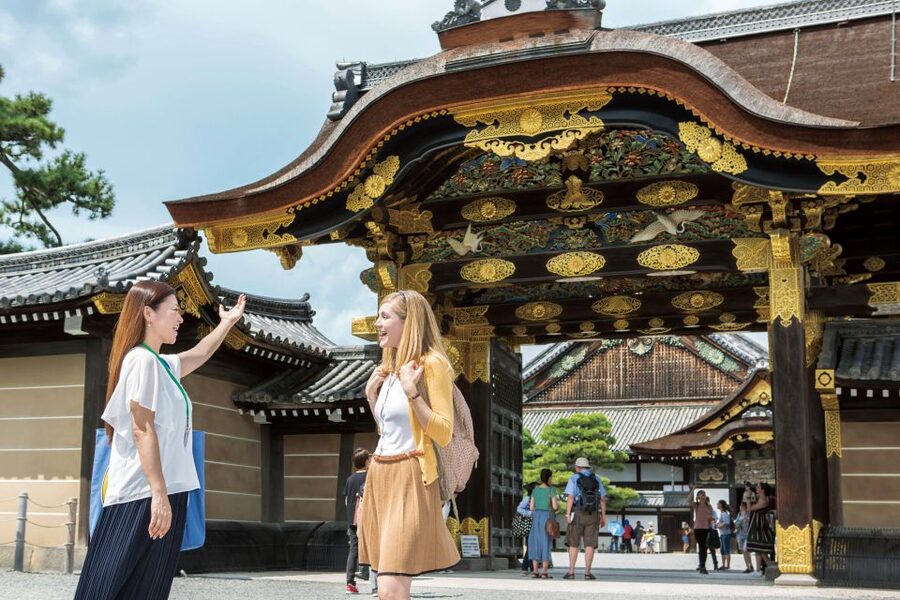
Karamon Gate, the entrance to the Ninomaru
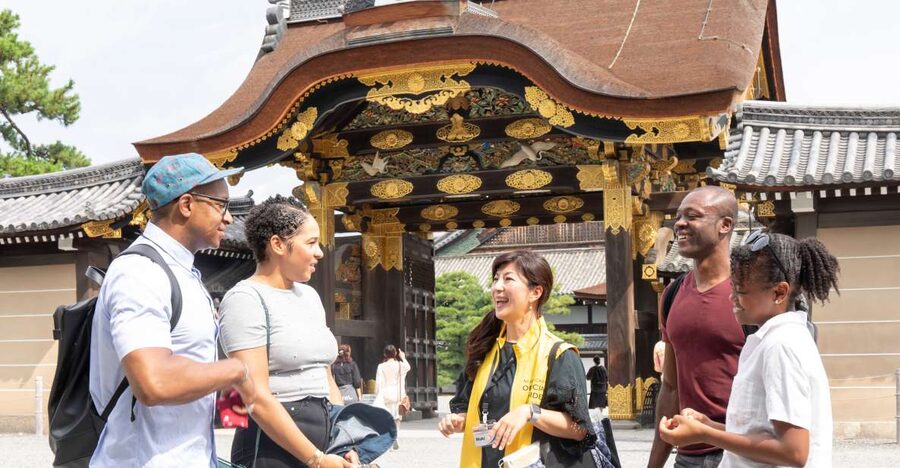
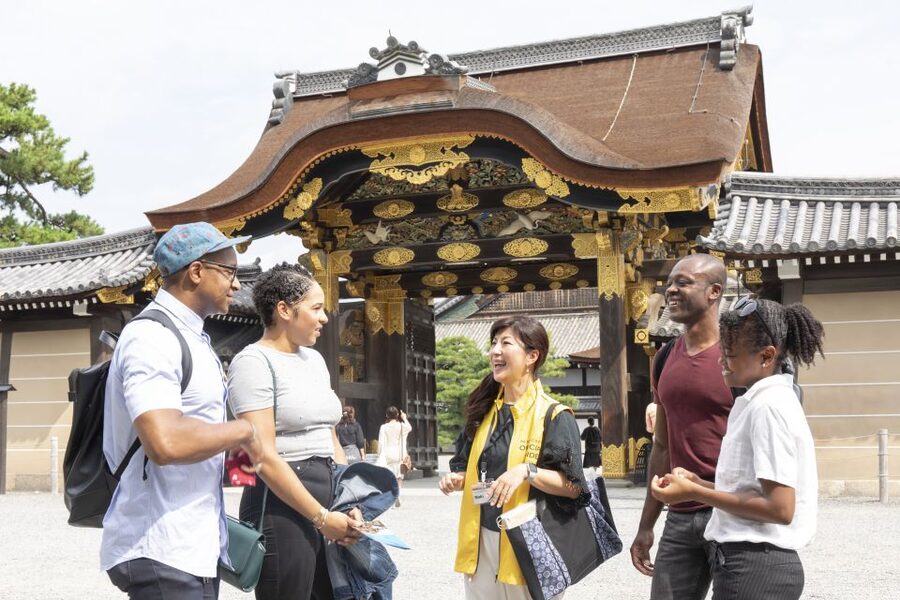
The route includes Higashi Ote-mon Gate and Karamon Gate before entering the Ninomaru area. Karamon is the more decorative of the two, with elaborate carving and color that announce the importance of what lies beyond.
This is a good place to listen closely rather than simply take a quick photo. The gate marks a change from outer defenses to the formal world of the shogun’s residence. Your guide may point out symbols in the carvings and explain how decoration helped communicate rank and authority.
The tour’s strongest guides make these details easy to follow. Ai has been praised for bringing energy to her explanations, while Kaoru is known for a lively style and clear English. Miki has been especially good at pointing out details that are easy to miss. The exact guide depends on the day, but the pattern is consistent: expect interpretation, not just directions from one stop to the next.
Ninomaru Palace and the sound of the floors
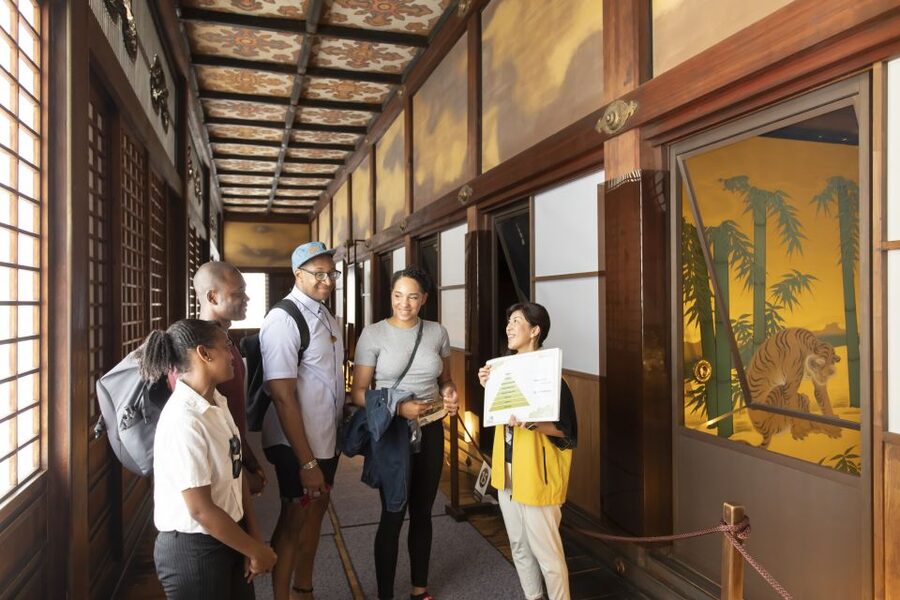
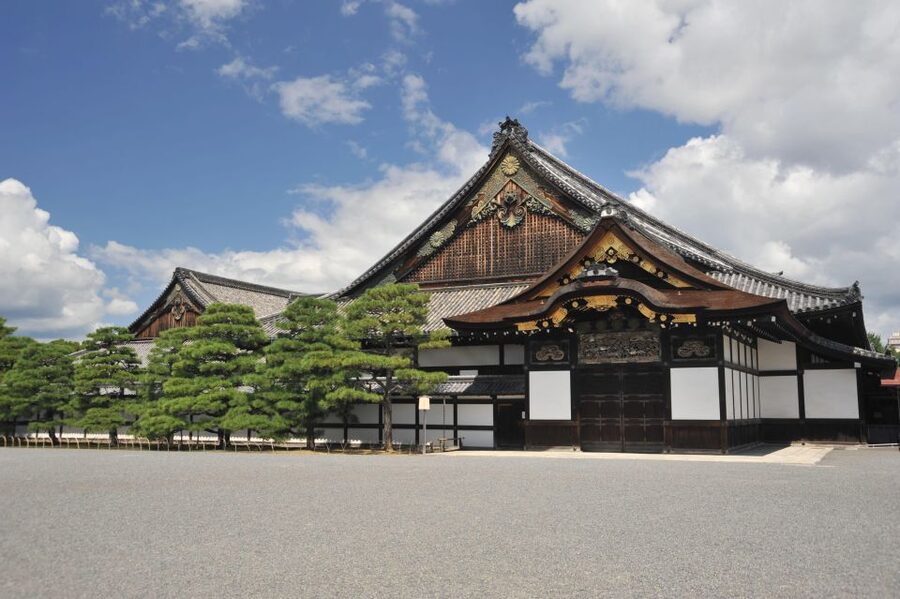
Ninomaru Palace is the main reason to book this tour. It served as the shogun’s residence and office during visits to Kyoto, and its rooms remain intact. You move through a series of formal spaces where the layout itself reveals the social order.
One of the best-known features is the nightingale floor. Its boards make a soft chirping sound as you walk. The effect is practical and theatrical at once, since the sound could alert occupants to movement inside the palace. It also reminds you that security in a residence like this did not rely only on walls, guards, or locked doors.
Inside, you will see painted panels and decorative themes connected to rank, nature, ceremony, and power. Guides have explained the meaning of dragons, tigers, pine trees, and other motifs, along with the reason certain paintings appear in rooms used for particular guests. Some visitors have even noticed links between the animal designs and familiar modern Japanese pop culture, though the historical symbolism is the real point.
You cannot take photos inside the palace, so pay attention while you are there. This restriction may disappoint anyone hoping for an interior photo record, but it also keeps the visit focused on the actual rooms. The palace can feel warm in summer, since there is no air-conditioning, and you cannot carry water or other drinks inside.
Your guide explains how the rooms were used by the shogun and his officials. You might hear about meetings, formal audiences, food preparation, court intrigue, and the risk of poisoning. These details make the building feel less like a museum display and more like a working political center.
A few more Kyoto tours worth putting on the shortlist
- PERFECT KYOTO 1-Day Bus Tour
★ 5.0 · 13,518 reviews - Kyoto: Fushimi Inari, Kinkakuji, Bamboo Grove 1 Day Bus Tour
★ 4.8 · 4,316 reviews - Kyoto: Tea Ceremony in a Traditional Tea House in Kiyomizu
★ 4.9 · 3,519 reviews - Kyoto Geisha Walking Tour: Gion District & Hidden Gems
★ 4.7 · 3,273 reviews
The extra rooms most visitors miss
A major benefit of this tour is the possibility of entering two additional areas that are normally closed to the public. The exact access can depend on the day and palace operations, but the experience is designed to show you parts of the shogun’s private quarters that ordinary visitors do not see.
This is the closest thing to an exclusive feature in the tour, and it gives the $16 guide fee a practical reason to exist. You are not paying only for a lecture beside the regular route. You may also see rooms and features unavailable to people walking through the palace alone.
Do not expect a large secret wing or a long private visit. The total guided portion lasts one hour, so the restricted access is a short addition within a carefully timed route. Still, it can be one of the most memorable parts of the morning or afternoon because it changes your sense of how much of Nijo Castle remains beyond the standard path.
Ninomaru Garden after the palace
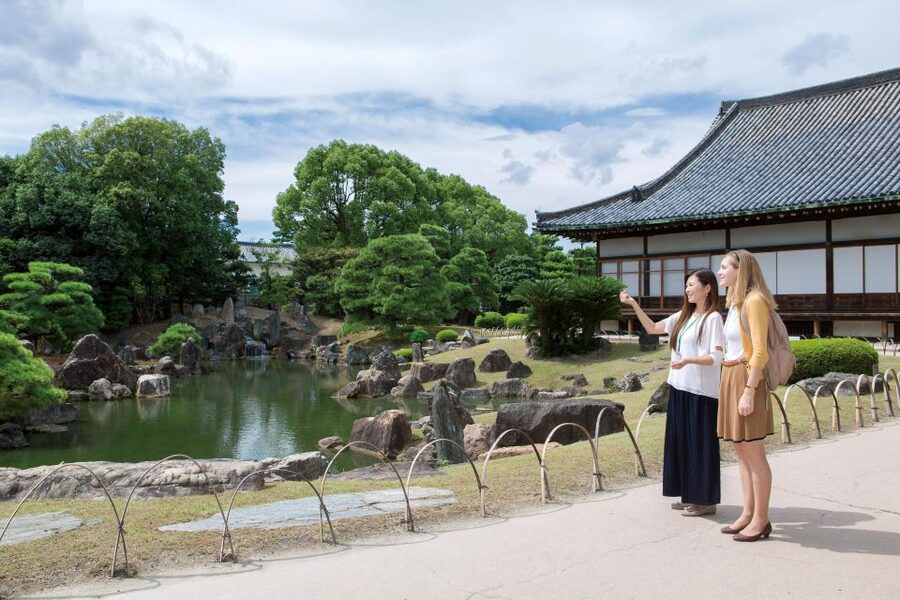
The route ends with Ninomaru Garden, included along with the gates and palace. The garden gives you a useful pause after the dense interiors and formal rooms. You can look back at the palace buildings, study the arrangement of the grounds, and understand how the castle balanced defense with ceremony.
The garden portion is guided, but you should allow extra time after the official hour if your schedule permits. One of the best ways to use this tour is to let the guide explain the main buildings first, then continue exploring independently. You can move at your own speed, revisit a gate, or spend longer in the garden without trying to keep up with a group.
The grounds are also where weather matters most. Kyoto can be hot and humid, especially in July and August. Several guides have taken care to slow down, answer questions, and check that people were comfortable in high heat, but you should still bring water for the outdoor sections and wear practical shoes.
A light drizzle will not ruin the visit, though parts of the route are outside. There is also no promise of shade at every stop. In warm months, an early time slot is likely to be more comfortable, if available.
How good is the one-hour format?
The short duration is both a strength and a limit. One hour fits neatly into a busy Kyoto day and gives you a useful framework before visiting another nearby sight. It also keeps the palace explanation from becoming an exhausting lecture.
The drawback is that Nijo Castle is large, and one hour cannot cover every corner. You will not receive a full-day study of the grounds, and you may wish the palace explanations lasted longer when the guide reaches an especially interesting subject.
The best approach is to treat the tour as an introduction rather than the entire visit. Arrive early enough to handle admission and find the meeting point. Take the guided route. Then stay on the grounds to explore the gardens and other areas yourself.
Small groups are possible, and several recent tour groups have been described as having only four people or as being manageable even in crowded palace rooms. Group size may vary, so do not assume every departure will be private. Some participants have had what felt like a private tour, while others have moved with a larger group.
The guides make the difference
The experience depends heavily on the person holding the microphone. A guide who simply recites dates would make the palace less memorable. The strongest guides connect the architecture to daily life and explain why the rooms were designed as they were.
Ai has been praised for clear explanations and thoughtful care in hot conditions. Miki is a good name to hope for if you want an energetic guide who handles questions well and points out small details. Kaoru has a warm, funny style and explains samurai customs and political history in a way that is easy to follow.
Other guides, including Ayu, Don, Kiku, Suzuki, and Kingo, have also been noted for strong English and engaging presentations. Kingo, for example, has explained the building’s decoration and the daily life inside the palace. Kiku has focused on court intrigue and power struggles. Don has made the historical background both educational and entertaining.
The names vary, and you cannot choose your guide from the information provided. What you can count on is a live English guide rather than a recorded audio track. That means you can ask questions, request clarification, and hear the explanation adjusted to the group.
Is the $16 guide fee good value?
I think it is good value for visitors who do not already know much about the Tokugawa period. The admission ticket gets you through the gates, but the palace is full of details that are easy to pass without understanding. The guide gives those details a purpose.
The fee is less compelling if you have already studied Nijo Castle, prefer to wander silently, or have very little time beyond the one-hour route. You also need to add the venue admission fee, paid in cash. One recent price reference put admission at 1,300 yen, but check the current amount when booking or arriving because attraction prices can change.
The possibility of restricted access improves the value. So does the chance to ask questions. If you are interested in Japanese architecture, the shogunate, samurai customs, or the relationship between the emperor and military government, the guide can save you a lot of reading and guesswork.
Families can also get good value if one paid adult brings one child aged 0 to 12 free. Keep in mind that only paid participants receive earphones, and additional children must have adult tickets. Children need to stay with an adult throughout the tour.
Practical details that affect your visit
Book only if you can attend at the confirmed start time. You cannot join after the tour has begun, so arriving at the East Main Gate early is essential. The reception area is inside the gate, next to General Reception, not outside the castle grounds.
The castle is closed for the Ninomaru Palace closure on Tuesdays in July, August, December, and January. It is also closed from December 26 through January 3. Check the operating date carefully if you are visiting during one of these periods.
Free cancellation is available up to 24 hours before the start time. Transportation is not included, so you must make your own way to Nijo Castle. The activity is conducted in English only.
Wear shoes suitable for walking. The route includes outdoor grounds and palace interiors, and some visitors may find the traditional floors tiring. In summer, carry a cold drink for before or after the palace visit, since drinks are not allowed inside and the building is not air-conditioned.
Who should book this Nijo Castle tour?
Book it if you want the palace to make sense, not just look beautiful. It is especially useful for a first visit to Kyoto, for anyone curious about the Tokugawa government, and for people who enjoy learning why buildings are designed in particular ways.
It also suits solo visitors. Guides have helped solo participants with photos and made sure they could follow the commentary. Families can benefit from the child policy, provided the children can stay with the group and manage an hour of historical explanation.
You may skip it if you prefer complete independence or if your visit falls on a very hot day and you do not want a guided pace. You should also skip it if you need photography inside the palace, since that is not permitted.
For most people, I would book the tour and then protect another half-hour or more for independent time in the gardens. The castle admission is extra, the meeting details require attention, and the one-hour route is only an introduction. But the guide gives you the key to the palace: its rooms stop being pretty surfaces and become evidence of how power worked in old Japan.
FAQ
How long is the Nijo Castle guided tour?
The guided tour lasts 60 minutes. You can continue exploring the castle grounds and gardens on your own afterward.
Is admission to Nijo Castle included?
No. The castle admission fee is separate and must be paid in cash on site.
What language is the tour conducted in?
The tour is conducted only in English with a live English-speaking guide.
Where do I meet the guide?
Enter through the East Main Gate and go to the reception area beside the General Reception, on the left after entering. Notify the staff that you have arrived for the tour.
Can children join the tour?
Each paid participant may bring one child aged 0 to 12 free of charge. The child must stay with an adult. Earphones are provided only to paid participants, so a child needing an earphone requires an adult ticket.
Can I enter parts of the castle that are closed to regular visitors?
The tour includes access to parts of the castle normally unavailable to the public. Access may include two additional areas connected with the shogun’s private quarters.
Newest Kyoto experiences on the site
- Treasures of Kyoto: Gion & historical Walking Tour★ 5.0 · 6 reviews
- Whisk Your Own Matcha: A Zen Matcha Experience at Temple★ 3.6 · 7 reviews
- Kyoto tea town for matcha lovers★ 5.0 · 16 reviews
- Uji: Private immersion into Kyoto’s tea and reglious culture★ 5.0 · 17 reviews
- Kyoto Matcha Green Tea Tour★ 4.5 · 23 reviews
- Uji and Wazuka Matcha Farm Half Day Private Guided Tour★ 5.0 · 21 reviews
- Utilising upcycled Matcha! Creating matcha incense (Uji, Kyoto)★ 5.0 · 6 reviews
- Sacred Temple Yoga Experience in Japan★ 5.0 · 3 reviews
Nijo Castle Tours, compared.
Nijo Castle, Kiyomizu & Fushimi Inari Guided Tour
Read our review →
Nijo, Kinkaku-ji, Arashiyama, Kiyomizu & Fushimi Inari
Read our review →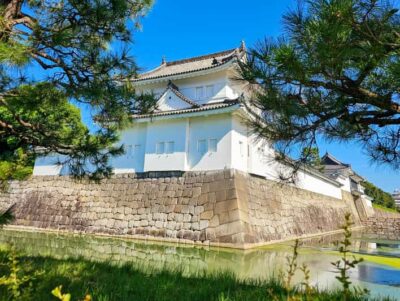
Imperial Palace & Nijo Castle Guided Walking Tour
Read our review →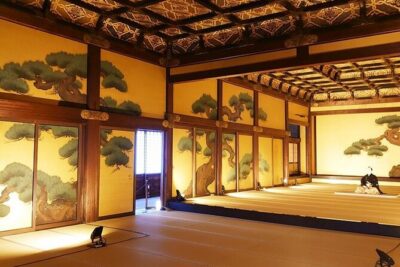
Nijo Castle World Heritage Guided Tour with Admission
Read our review →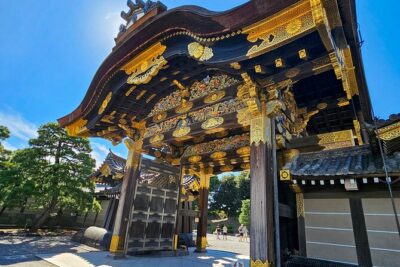
Kyoto Imperial Palace & Nijo Castle Guided Walking Tour – 3 Hours
Read our review →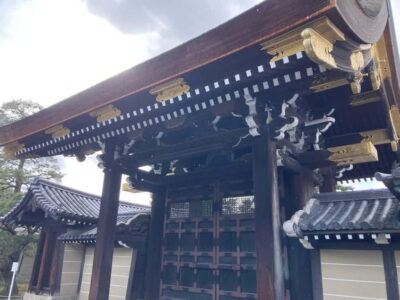
Nijo Castle and Kyoto Imperial Palace Guided Tour
Read our review →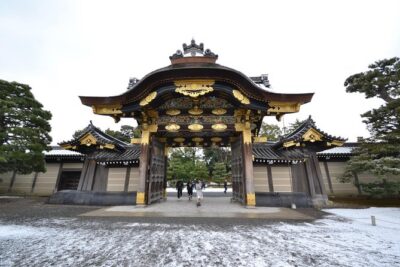
Nijo Castle and Imperial Palace Visit with Guide
Read our review →
Golden Pavilion, Nijo Castle, & Nishiki Market Half day tour
Read our review →Browse the lists this tour appears in