
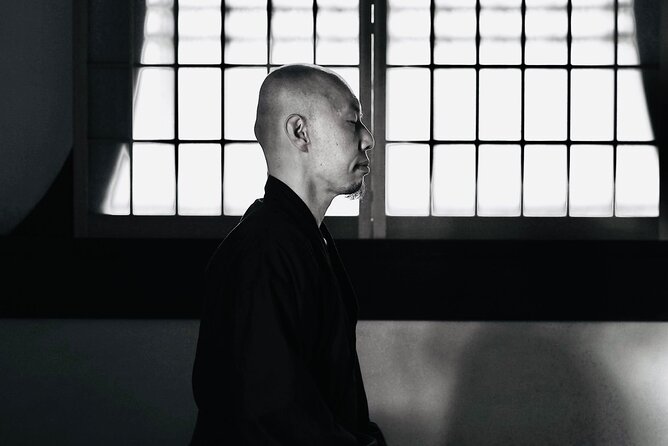
Reviewed · KYOTO ZEN MEDITATION
Morning Zen Meditation at a Kyoto Café
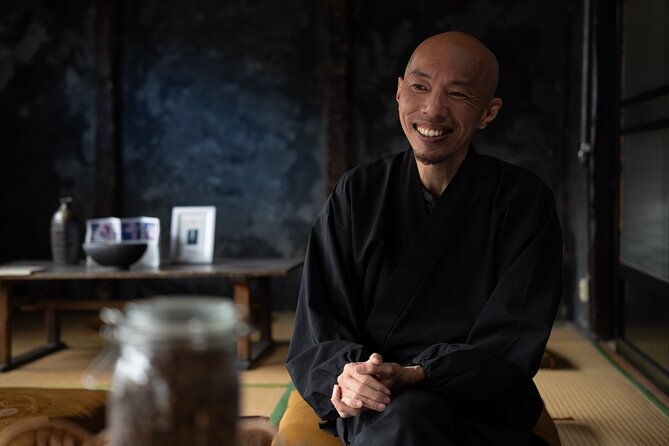
Kyoto’s Zen tradition can feel distant behind temple gates. This experience brings it into a traditional machiya café, where Uyesugi, a host trained at a Rinzai Zen temple, guides you through chanting, seated meditation, and coffee. It is a simple way to try Zen without committing to a formal temple program.
I like the four-person limit, which keeps the hour quiet and allows room for personal guidance. I also like the gentle finish: you do not rush out after meditation, but talk over a cup of single-origin coffee. The main consideration is timing. With only about an hour and 20 minutes of meditation, this is an introduction, not a full retreat.
Key points
- A small private setting: The activity is limited to your group, with no more than four participants.
- Rinzai Zen background: Uyesugi has practiced at a Rinzai Zen temple in Kyoto for more than three years.
- Two forms of meditation: You begin with about 10 minutes of vocal mantra chanting, followed by about 10 minutes of silent seated zazen.
- A machiya café setting: The traditional townhouse atmosphere gives the session a distinctly Kyoto feel without requiring a temple visit.
- Coffee and conversation: The hour ends with freshly brewed, single-origin specialty coffee and informal discussion.
- Easy booking terms: The price is $18.24 per person, mobile tickets are accepted, and cancellation is free up to 24 hours before the start time.
A quiet start inside a Kyoto machiya
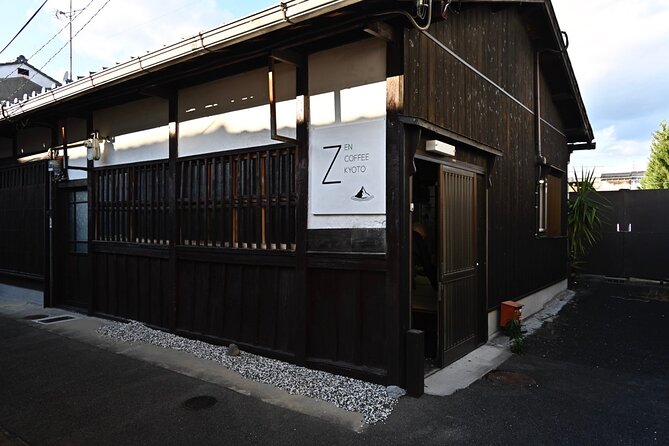
Zen Coffee Kyoto is at 650-18 Shimotenjinchō in Kyoto’s Kamigyo Ward. You meet at the café and return there at the end, so the experience has no complicated transfer or walking route built into it. The location is near public transportation, which matters for a morning booking when you want to arrive calm rather than hurried.
The machiya setting is part of the appeal. A machiya is a traditional Kyoto townhouse, and using one as a café gives the meditation a local frame without turning the session into a staged temple ceremony. You are not simply sitting in a generic studio. The room, café purpose, and traditional design create a useful link between everyday Kyoto and its spiritual practices.
I would give yourself enough time to find the address. The supplied information does not specify a particular station or walking time, so check your route before the morning begins. A mobile ticket makes entry easy, but it does not remove the need to plan your arrival.
This is a private activity, with only your group taking part. The group size is capped at four, and that is a major benefit for anyone who feels awkward trying meditation in a large class. You can ask a question, adjust to the pace, and take part without an audience.
More zen sittings and garden visits in Kyoto:
- Kyoto Zen Meditation & Garden Tour at a Zen Temple with Lunch
★ 5.0 · 441 reviews - Kyoto: Zen Experience in a Hidden Temple
★ 5.0 · 437 reviews - Kyoto: Tea Ceremony Meditation – Make Matcha with Tea Master
★ 4.8 · 406 reviews
Meeting Zen through a short introduction
The session begins with a brief explanation of Zen, given in English or Japanese. For a first encounter, this opening is important. Meditation instructions can seem vague when they are presented as a set of mysterious rules. A short introduction gives you a frame for what follows and helps you understand why the session uses both voice and silence.
Uyesugi has practiced Zen meditation at a Rinzai temple in Kyoto for more than three years. That background does not turn this one-hour meeting into formal temple training, but it does give the session a clear connection to a living practice. You are learning from someone with direct experience rather than simply receiving a tourist-friendly speech about Zen.
The information provided does not specify how long the introduction lasts. That is useful to keep in mind when planning expectations. The session is compact, so the emphasis is on trying the practices rather than receiving a long lecture about Buddhist schools, temple architecture, or Japanese culture.
The English or Japanese option also makes the experience more approachable. If you are new to Zen, an explanation in English can help you follow the instructions without guessing. If you prefer Japanese, that option is available as well. The language choice is a practical detail, especially in a meditation session where small instructions affect your comfort.
Ten minutes of mantra chanting
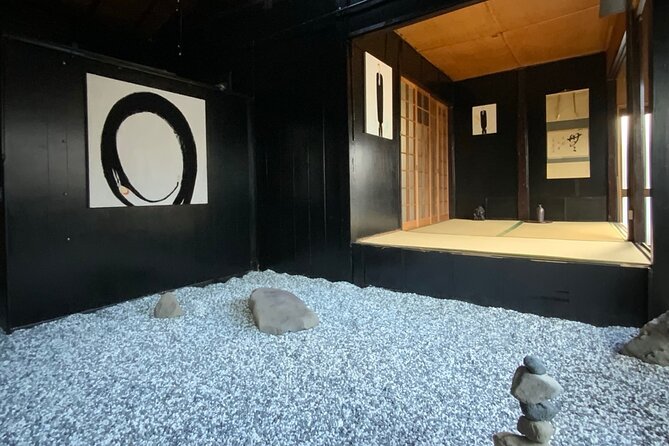
The first meditation practice is vocal. You spend about 10 minutes chanting a mantra, using the voice as the focus of attention. This can be easier for a beginner than starting with complete silence. The sound gives your mind something concrete to follow, and the repeated pattern can help settle the nervous energy that often comes with trying something unfamiliar.
Chanting also makes this more than a standard café mindfulness class. It introduces one of the sensory elements of Zen practice and lets you take part rather than simply listening to a guide describe meditation. You may find the vocal work more comfortable than expected, or you may find it takes a few minutes to stop feeling self-conscious. Either response is normal for a first session.
The supplied details do not state which mantra is used, so you should not expect a particular chant in advance. The important point is the format: this is guided vocal meditation, not a performance and not a concert. The goal is attention, rhythm, and participation.
The private size helps here. In a large room, chanting with strangers can feel exposed. With only your own group present, the activity has more room for a relaxed pace. That intimate format is one of the best reasons to choose this experience over a bigger introductory class.
Ten minutes of silent seated zazen
After the chanting, you move into silent seated meditation, known as zazen. The detailed schedule describes about 10 minutes of silent sitting, while the overall experience presents the meditation portion as a focused 20-minute block. In practical terms, expect the meditation to be split between vocal and silent work, with roughly 10 minutes for each.
For a beginner, 10 minutes of silence is a sensible length. It is long enough to notice how your attention moves, but not so long that the session becomes a test of endurance. You may notice your thoughts jumping to breakfast, sightseeing plans, or the last thing you read on your phone. The point is not to empty your mind perfectly. It is to return your attention when it wanders.
Zazen can sound simple, but sitting still with purpose is not always easy. If you have never meditated, you might appreciate having a host guide the process rather than being left alone with a timer. The experience is designed for beginners, and the small group allows the instructions to feel personal.
Still, keep the scale in mind. This is not a temple retreat, an all-day silent program, or an advanced practice session. If you already meditate regularly, you may find the 10-minute silent period brief. If you want a low-pressure first step, the length is more inviting.
More early starts in Kyoto:
- Kyoto Early Morning Tour with English-Speaking Guide
★ 5.0 · 1,427 reviews - Kyoto: Early Morning Tour with English-Speaking Guide
★ 4.9 · 1,128 reviews - From Kyoto: Nara Guided Morning Tour
★ 4.6 · 335 reviews - Kyoto Morning Tour from Kyoto or Osaka
★ 4.0 · 281 reviews
Coffee turns the practice into a conversation

The meditation ends with freshly brewed, single-origin specialty coffee. This is more than a drink added to the booking. It gives the session a natural landing point. After chanting and silence, you have a chance to return to ordinary conversation without breaking abruptly from the mood of the morning.
The coffee also makes the experience feel rooted in the café itself. You are not taking part in a meditation class and then being sent off to find breakfast. The final cup gives you time to ask about Zen, the host’s practice, Kyoto, or the café. The conversation is described as casual, so you should expect an informal exchange rather than a formal question-and-answer lecture.
The coffee is freshly brewed and single-origin, but the available details do not identify the origin, roast, or brewing method. If coffee matters to you, treat that as an appealing feature without expecting a specific bean or tasting menu. The main value is the combination of a carefully prepared cup and time to talk after the session.
This ending is especially useful for solo visitors. A morning meditation can feel private and inward, while a short conversation helps you reconnect with the city. One solo participant described the experience as a particularly good start to the day, and I can see why the format suits someone looking for a fresh activity beyond the usual sightseeing circuit.
What the $18.24 price gives you
At $18.24 per person, this is priced as a modest one-hour activity rather than a major day tour. The value comes from the combination of a trained host, a private group capped at four, the machiya setting, guided meditation, and specialty coffee.
You are not paying for transportation, a temple admission, a meal, or a long cultural lecture. That keeps the price focused, but it also defines the limits of the offer. If you want a full explanation of Zen history or a guided tour of Kyoto’s temples, this will not replace those experiences.
I think the price works best for someone who values access and atmosphere. A large class might cost less per person, but it would not provide the same small-group feel. Here, the host has space to guide a beginner and answer questions over coffee. That personal scale is the part of the price I would weigh most heavily.
The booking pattern also offers a useful planning clue. The experience is booked, on average, 18 days ahead. That does not guarantee it will sell out on every date, but the four-person limit means you should not assume you can decide at the last minute. If this is important to your Kyoto morning, reserve early.
Who will enjoy this morning most
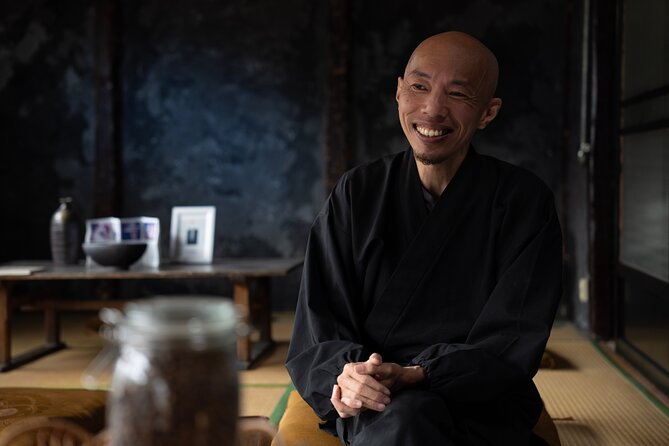
I would recommend this to you if you want a calm activity before a busy day of temples, markets, and city streets. It is also a good match if you are curious about Zen but do not want to commit to a formal retreat or an intimidating religious setting.
Solo visitors are well suited to the format. The private group and post-meditation conversation can make the experience feel more welcoming than attending a large class alone. Couples and small groups of friends may also appreciate having a quiet hour together that is different from standard sightseeing.
Beginners are the clear target. The introduction is short, the meditation is guided, and the activity uses both chanting and silent sitting. You do not need to arrive with previous meditation experience.
I would be more cautious if you want a long or highly technical meditation session. The zazen portion is brief, and the full activity lasts about one hour. You should also skip it if you want a broad temple tour, since the experience stays at the café and focuses on practice rather than sightseeing.
The language choice is another strength. The introduction is available in English or Japanese, so you can choose the option that lets you follow the guidance most comfortably.
Practical details for a smooth morning

The meeting point is Zen Coffee Kyoto, 650-18 Shimotenjinchō, Kamigyo Ward, Kyoto, 602-0074, Japan. The activity ends at the same place. Public transportation is nearby, but the supplied information does not name the closest stop, so confirm the route and allow time to locate the café.
A mobile ticket is provided, which keeps the booking simple. Confirmation arrives at the time of booking. Most people can participate, and the activity is private for your group.
Wear something that lets you sit comfortably. The supplied information does not specify a required posture, clothing rule, or equipment, so you should not assume that special meditation gear is supplied. If seated meditation is new to you, it is sensible to mention any concern to the host at the start.
The free cancellation policy is useful for a morning plan that may change. You can cancel for a full refund up to 24 hours before the local start time. Changes or cancellations made less than 24 hours ahead are not accepted for a refund, so check the local cut-off rather than relying on your home time zone.
Should you book Morning Zen Meditation at a Kyoto Café?

I would book this if you want a small, gentle introduction to Zen with a distinctly Kyoto setting. The strongest features are the four-person limit, Uyesugi’s Rinzai temple background, and the thoughtful finish with single-origin coffee and conversation.
The main question is not quality but purpose. At $18.24, this is good value for a quiet one-hour cultural activity, especially if you are traveling alone or want something personal and low-key. It is less useful if you are seeking advanced meditation, a full temple ceremony, or a longer study of Zen.
Reserve ahead if you know you want it, since the small capacity and typical 18-day advance booking suggest limited availability can matter. For a calm first appointment in Kyoto, this is a practical choice that gives you something to do with your attention, not just another place to photograph.
FAQ
Where does the meditation take place?
It takes place at Zen Coffee Kyoto, a traditional machiya-style café at 650-18 Shimotenjinchō, Kamigyo Ward, Kyoto, 602-0074, Japan.
How long does the experience last?
The activity lasts approximately one hour.
How many people can join?
The experience is private and limited to your group. The session is described as intimate, with a maximum of four participants.
Is the experience suitable for beginners?
Yes. It is designed as a beginner-friendly introduction to Zen meditation and includes guided instructions.
What activities are included?
The session includes a brief Zen introduction in English or Japanese, about 10 minutes of mantra chanting, about 10 minutes of silent seated zazen, and casual conversation over freshly brewed single-origin coffee.
Can I cancel for a full refund?
Yes. You can cancel at least 24 hours before the local start time for a full refund. Cancellations or changes made less than 24 hours before the start are not accepted for a refund.
Newest Kyoto experiences on the site
- Treasures of Kyoto: Gion & historical Walking Tour★ 5.0 · 6 reviews
- Whisk Your Own Matcha: A Zen Matcha Experience at Temple★ 3.6 · 7 reviews
- Kyoto tea town for matcha lovers★ 5.0 · 16 reviews
- Uji: Private immersion into Kyoto’s tea and reglious culture★ 5.0 · 17 reviews
- Kyoto Matcha Green Tea Tour★ 4.5 · 23 reviews
- Uji and Wazuka Matcha Farm Half Day Private Guided Tour★ 5.0 · 21 reviews
- Utilising upcycled Matcha! Creating matcha incense (Uji, Kyoto)★ 5.0 · 6 reviews
- Sacred Temple Yoga Experience in Japan★ 5.0 · 3 reviews
Kyoto Zen Meditation, compared.
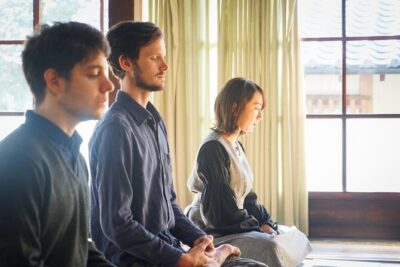
Kyoto Zen Meditation & Garden Tour at a Zen Temple with Lunch
Read our review →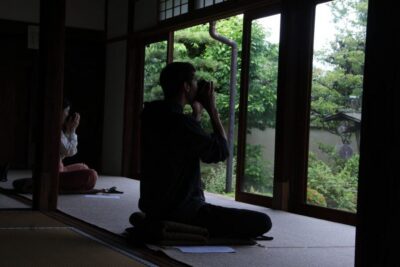
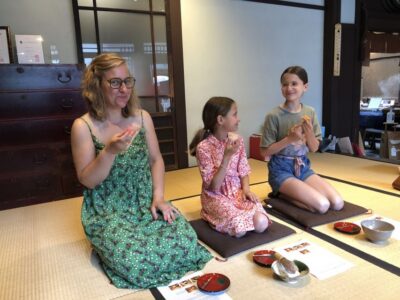
Tea Ceremony Meditation – Make Matcha with Tea Master
Read our review →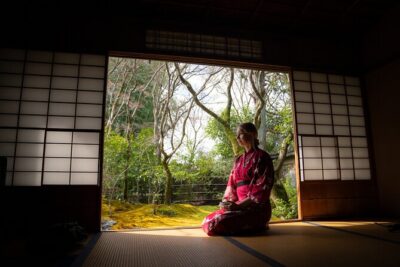
4.5-Hour Kyoto Bike Tour with Lunch and UNESCO Zen Temples
Read our review →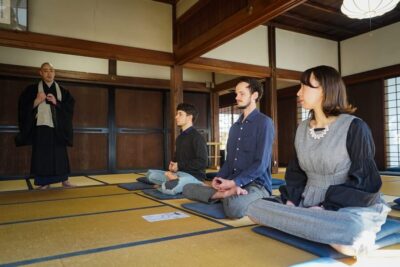
Zen Meditation and Garden Tour at a Temple with Lunch
Read our review →
Arashiyama Guided Tour, Bamboo, Monkey, Zen Temple
Read our review →Browse the lists this tour appears in